Peltigera rufescens
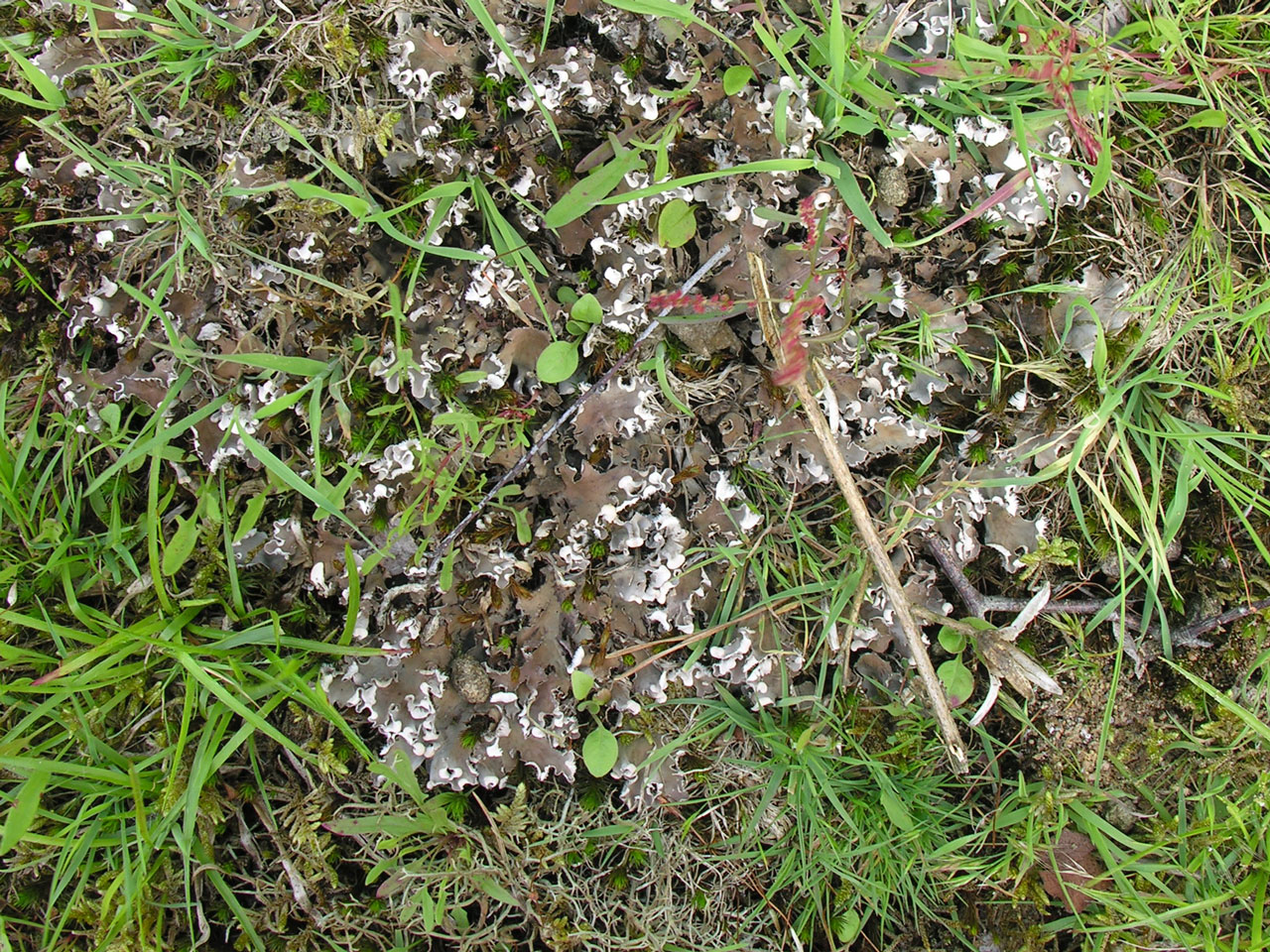
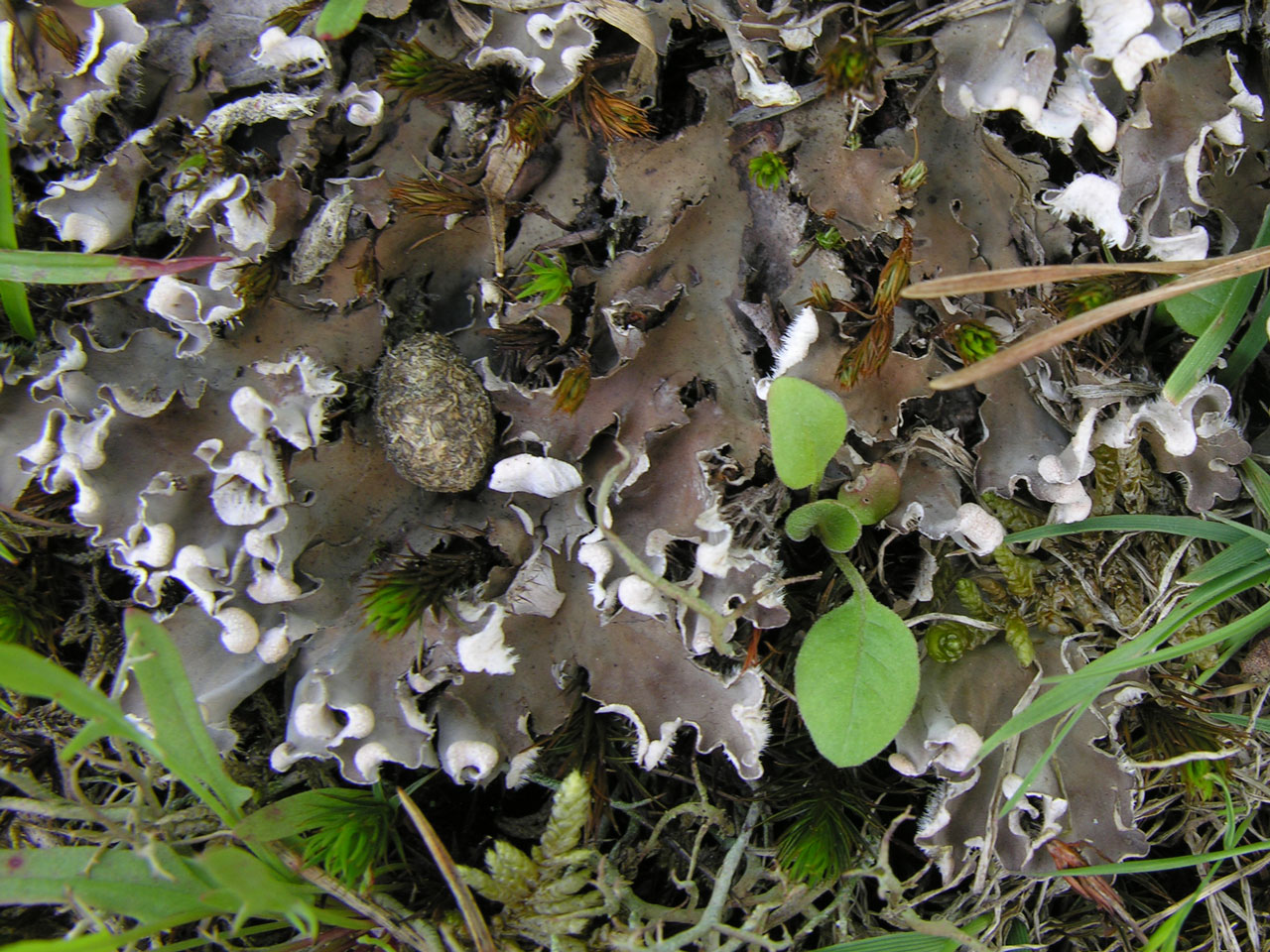
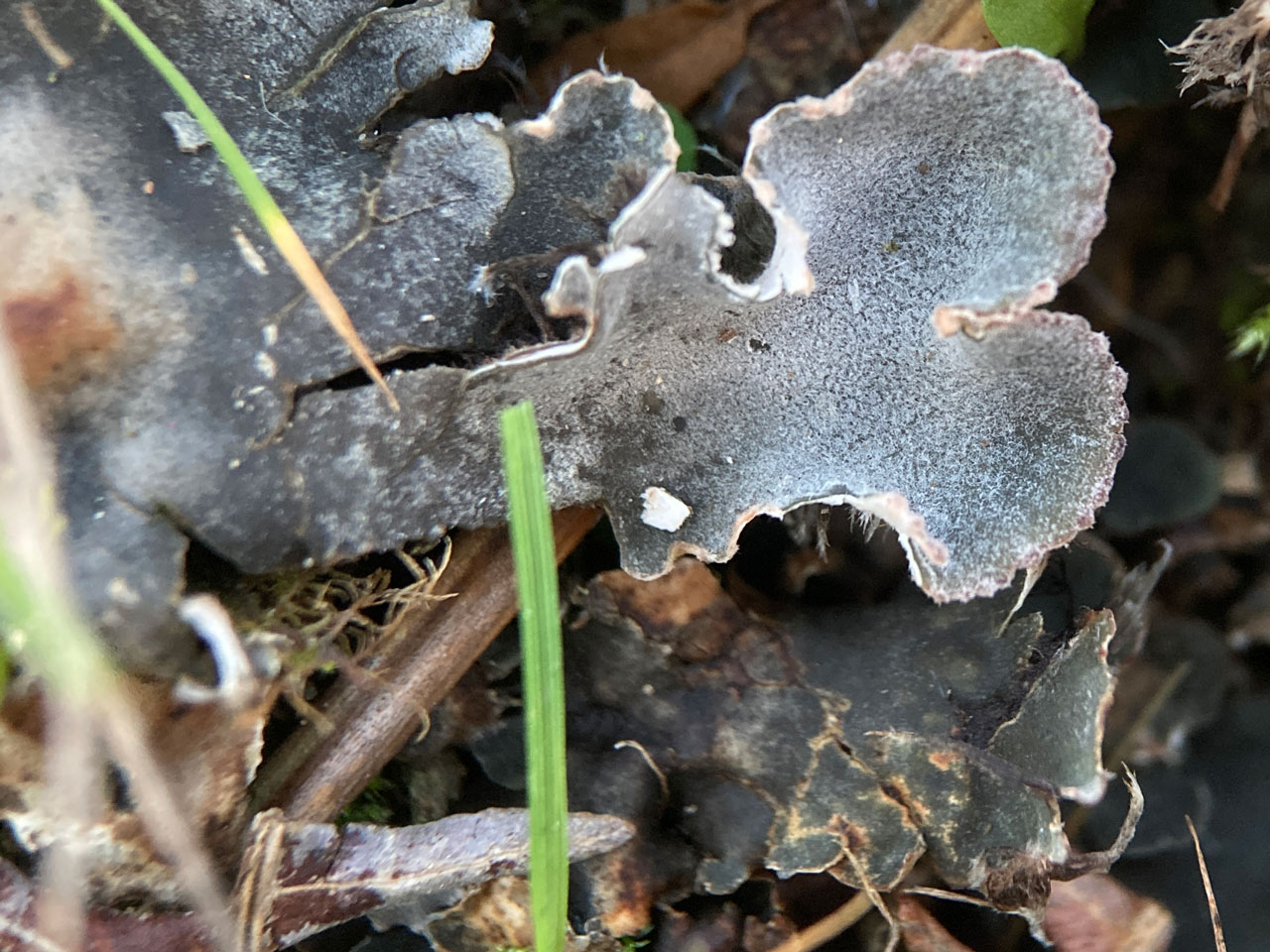
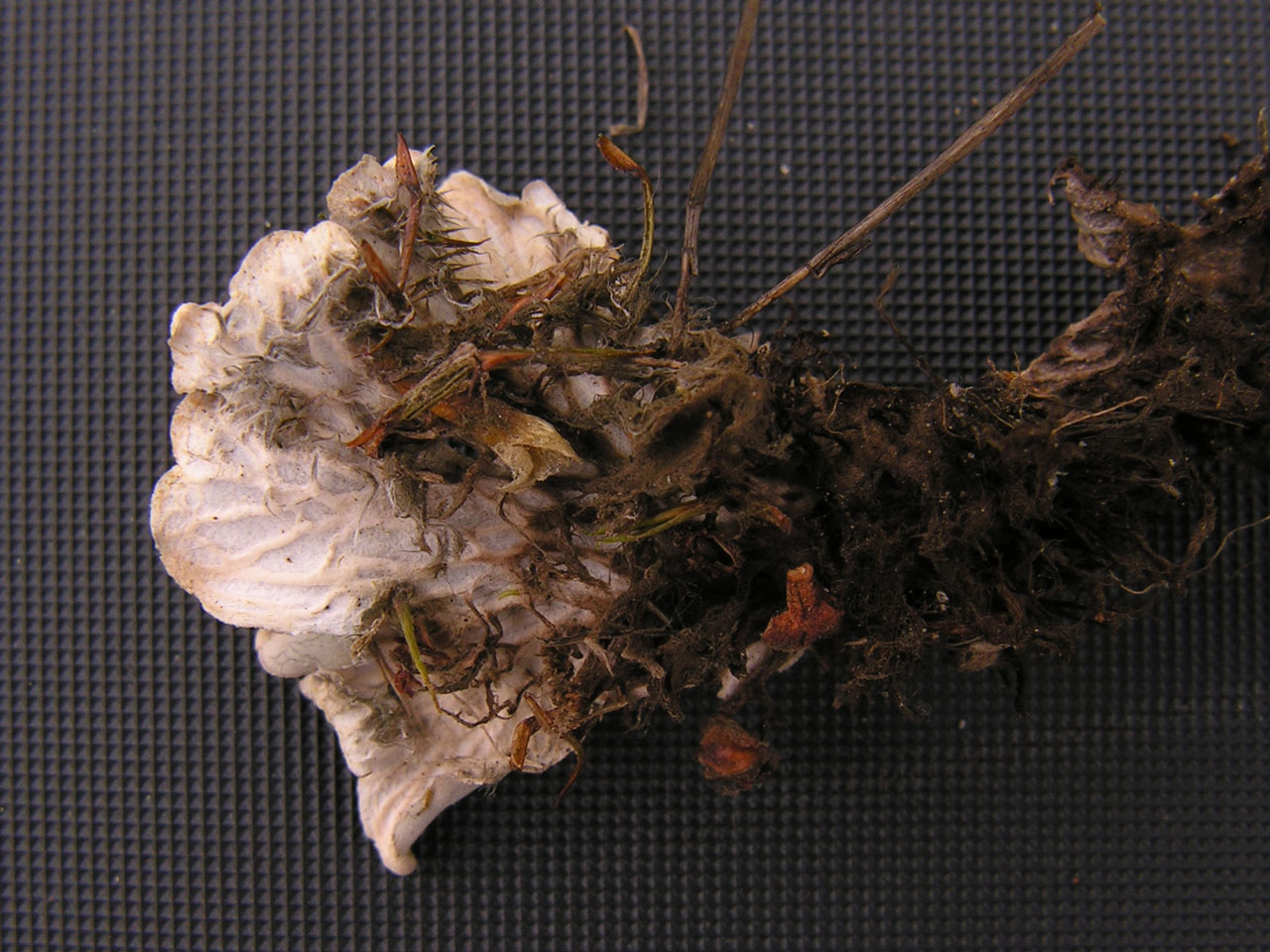
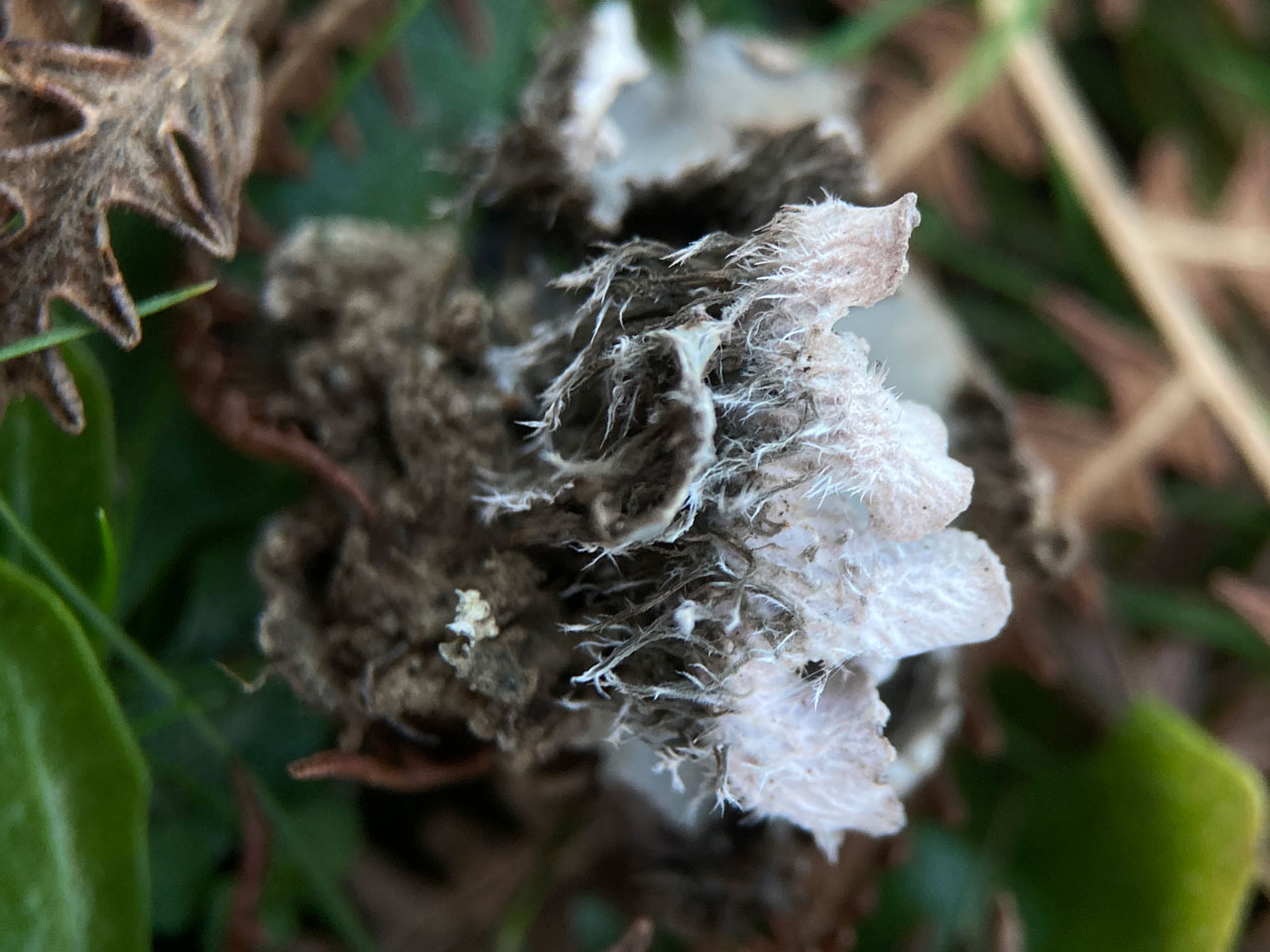

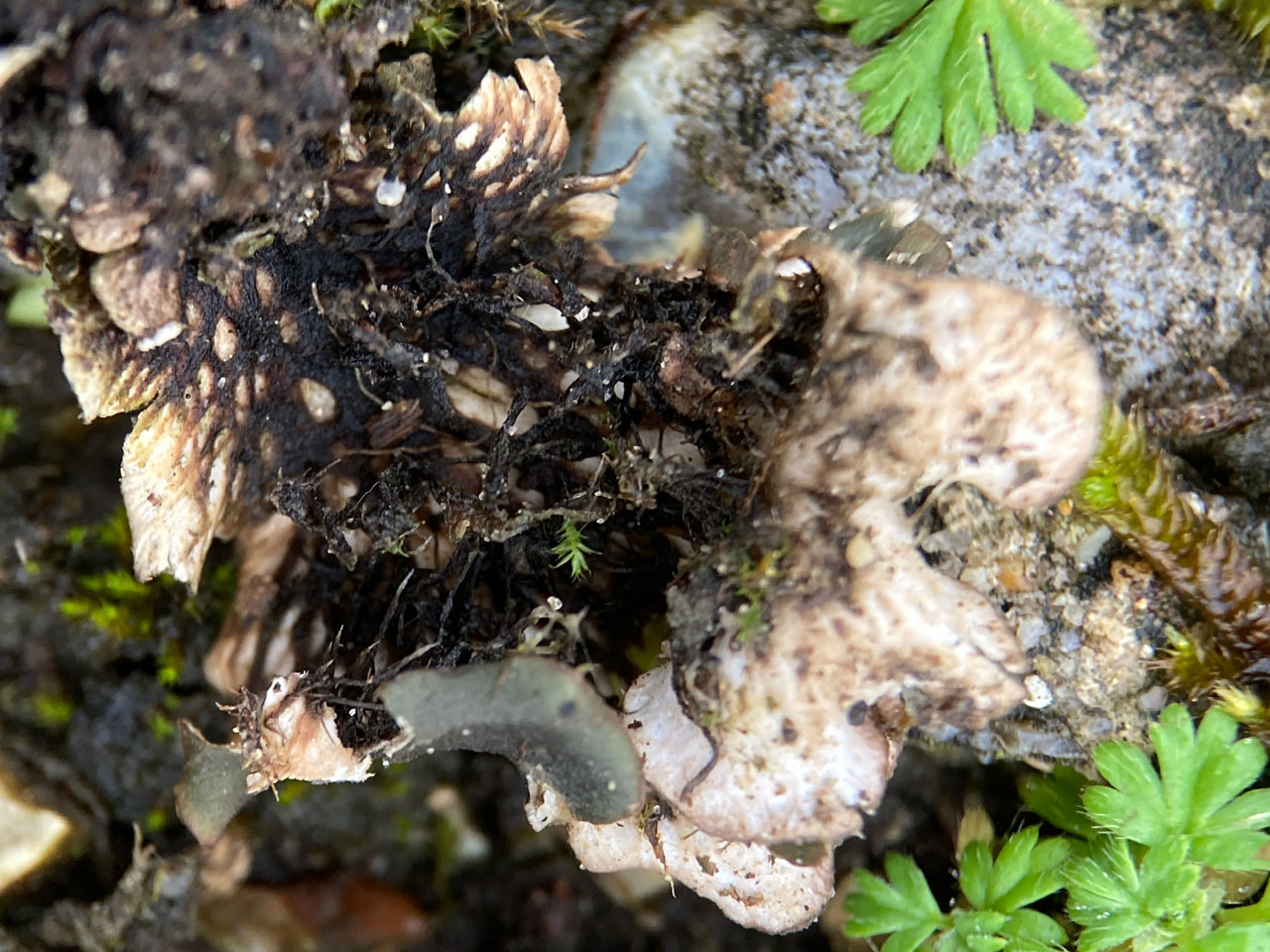
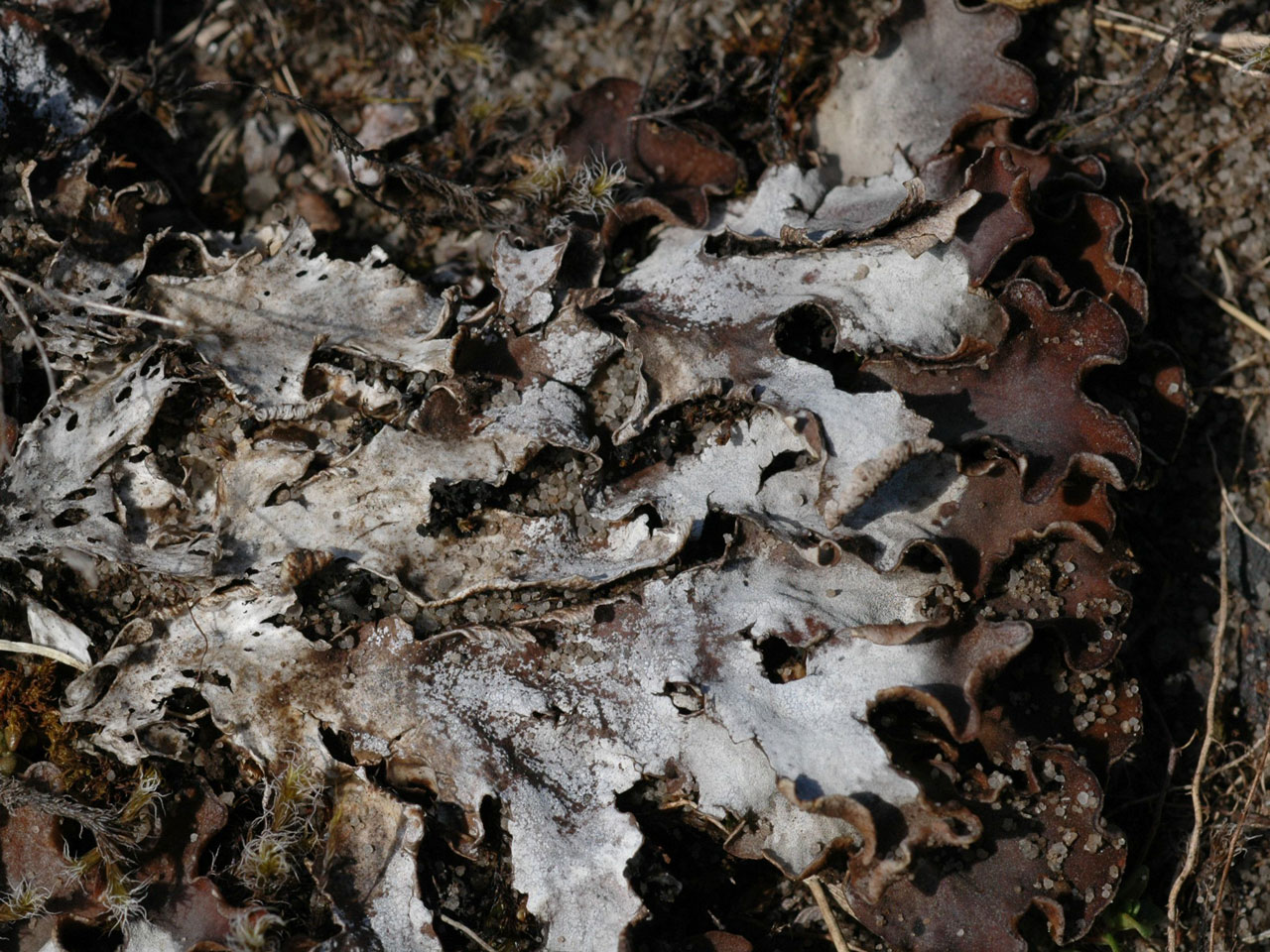
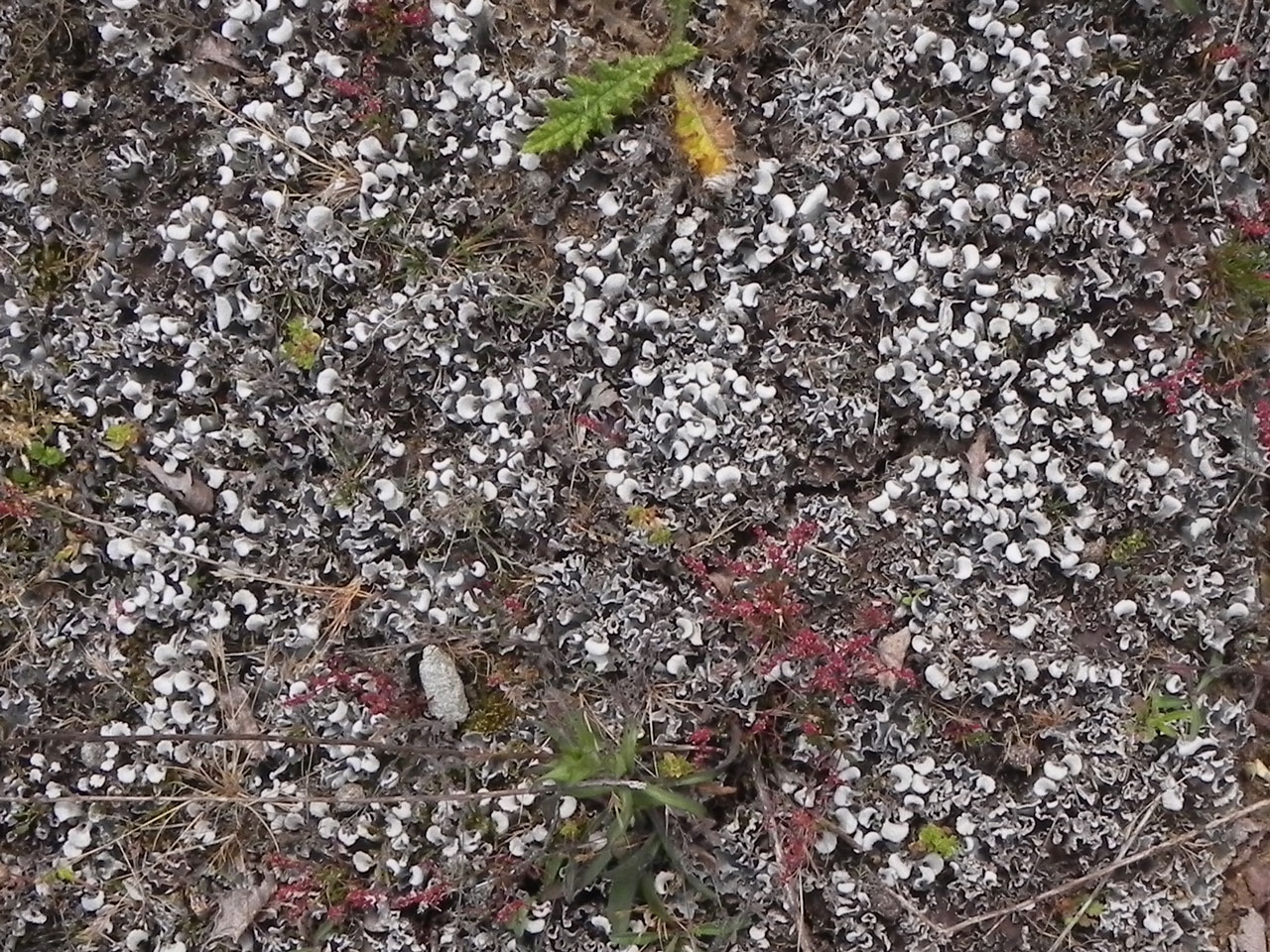
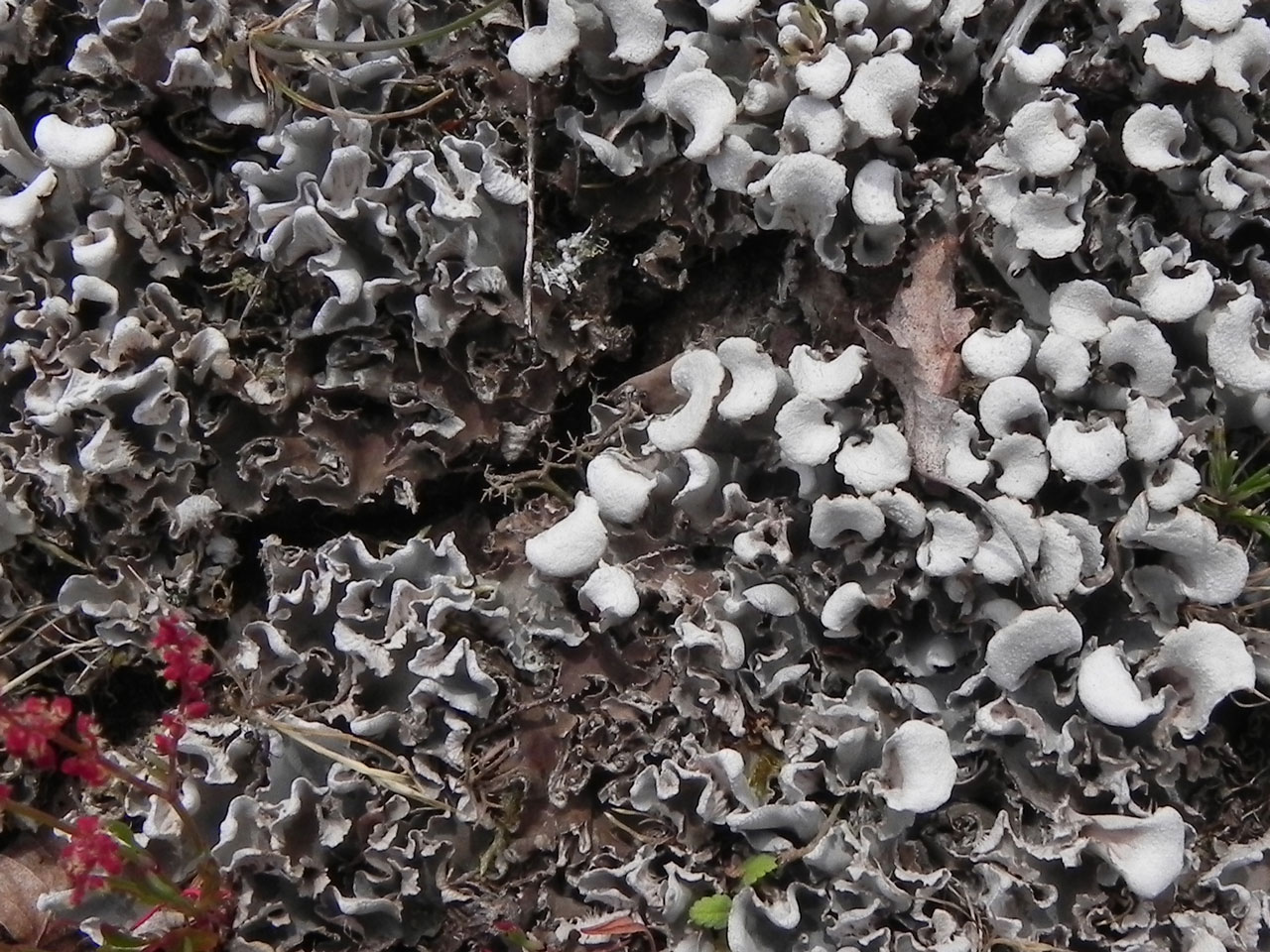
This widespread Dogtooth, the Frosted Dogtooth, forms conspicuous patches, often fertile, on base enriched dry soils, often in disturbed habitats. The upper surface is thickly tomentose, at least at the edges, but it can be separated from the Peltigera membranacea group by the narrower lobes, which do not exceed 1cm wide, with upturned margins. The underside darkens to the centre and has dark branched ± fasciculate rhizines.
Thallus to 20 cm diam. rosette-forming or fragmented; lobes to 0.5–1 cm broad and ca 4 cm long, ± radiating, contiguous or somewhat overlapping; margins even, crinkled or crisped, ± elevated, upturned, swollen; the centre appressed, often with adventitious lobules and small lobes; upper surface thickly tomentose especially towards the margins, brown, ± white-grey-pruinose or sometimes patchily frosted in older parts, flat or wavy, rarely ± bullate when well-developed; lower surface with numerous wide flattened veins, not conspicuously hairy, rarely somewhat scabrid, darkening towards the thallus centre and with dark branched ± fasciculate rhizines coalescing at the base. Apothecia frequent, often large and conspicuous, elevated and recurved, on lateral ends of main lobes, usually saddle-shaped with an inrolled, coarsely crenulate or denticulate, uneven thalline margin. Ascospores 40–70 × 3–5 µm, 3- to 5 (-6)-septate. Conidiomata occasional; conidia 7–10 × 2.5–4.5 µm. Thallus with negative reactions; no lichen products detected by TLC.
Peltigera rufescens is sometimes confused with fertile P. didactyla, which is generally less leathery and has smaller apothecia on narrow entire erect lobes. P. membranacea has a bullate thallus and down-turned thin margins; those in P. rufescens are upturned and ± swollen. P. rufescens also generally occurs in more basic, sunny habitats. In addition, it is worth looking out for specimens with entirely pale undersides; these are likely to be the probably overlooked Peltigera ponojensis.
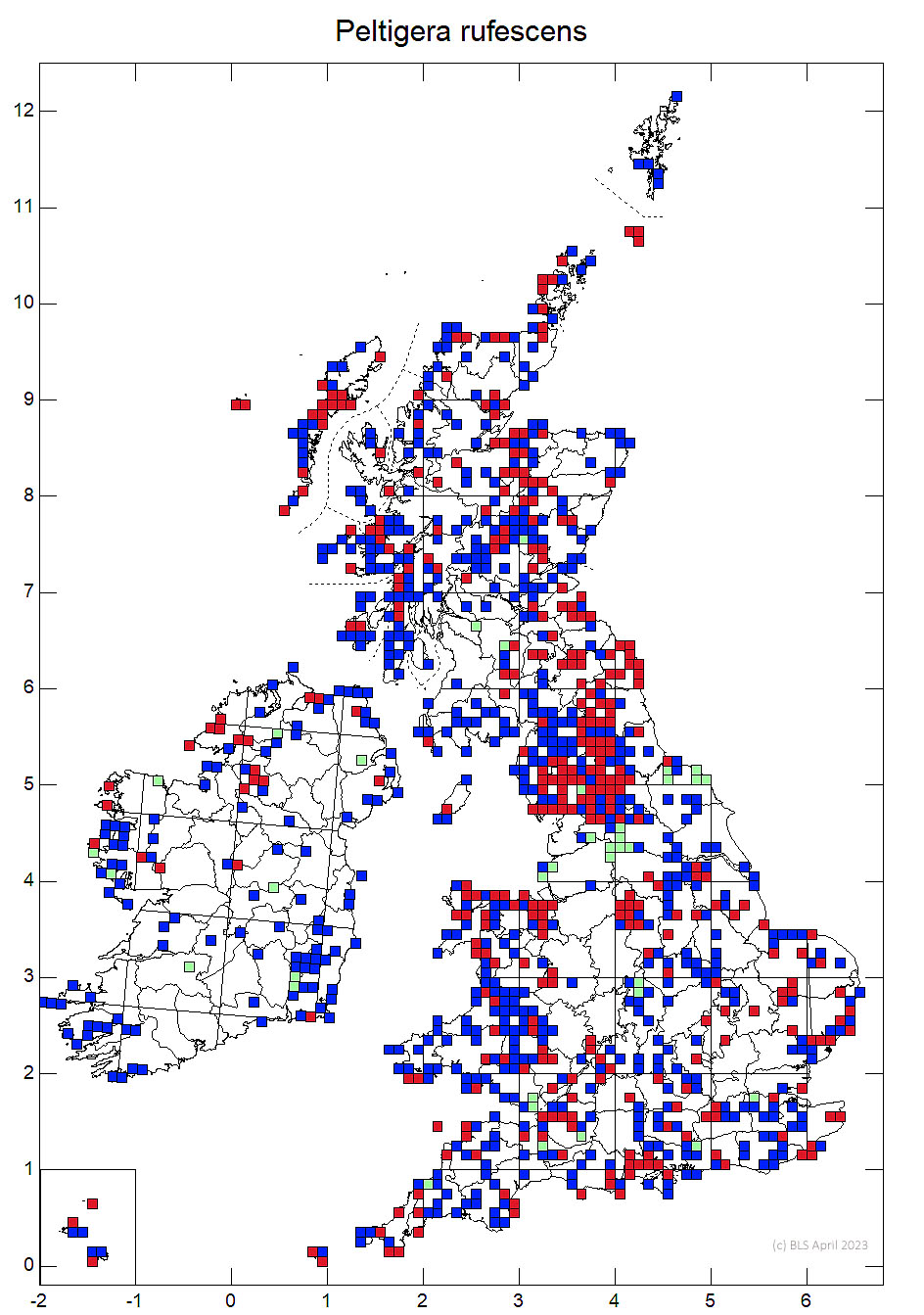


Most frequent in dry, sunny situations preferring ± basic soils, earth banks, dunes, post industrial habitats and disturbed areas in heathland. Often found with Peltigera canina.
Common and widespread. Throughout Britain and Ireland, but infrequent in central Ireland
Cannon, P., Magain, N., Sérusiaux, E., Yahr, R., Coppins, B., Sanderson, N. & Simkin, J. (2021). Peltigerales: Peltigeraceae, including the genera Crocodia, Lobaria, Lobarina, Nephroma, Peltigera, Pseudocyphellaria, Ricasolia, Solorina and Sticta. Revisions of British and Irish Lichens 20: 1-34.
Text by Neil A Sanderson based on Cannon et al (2021)