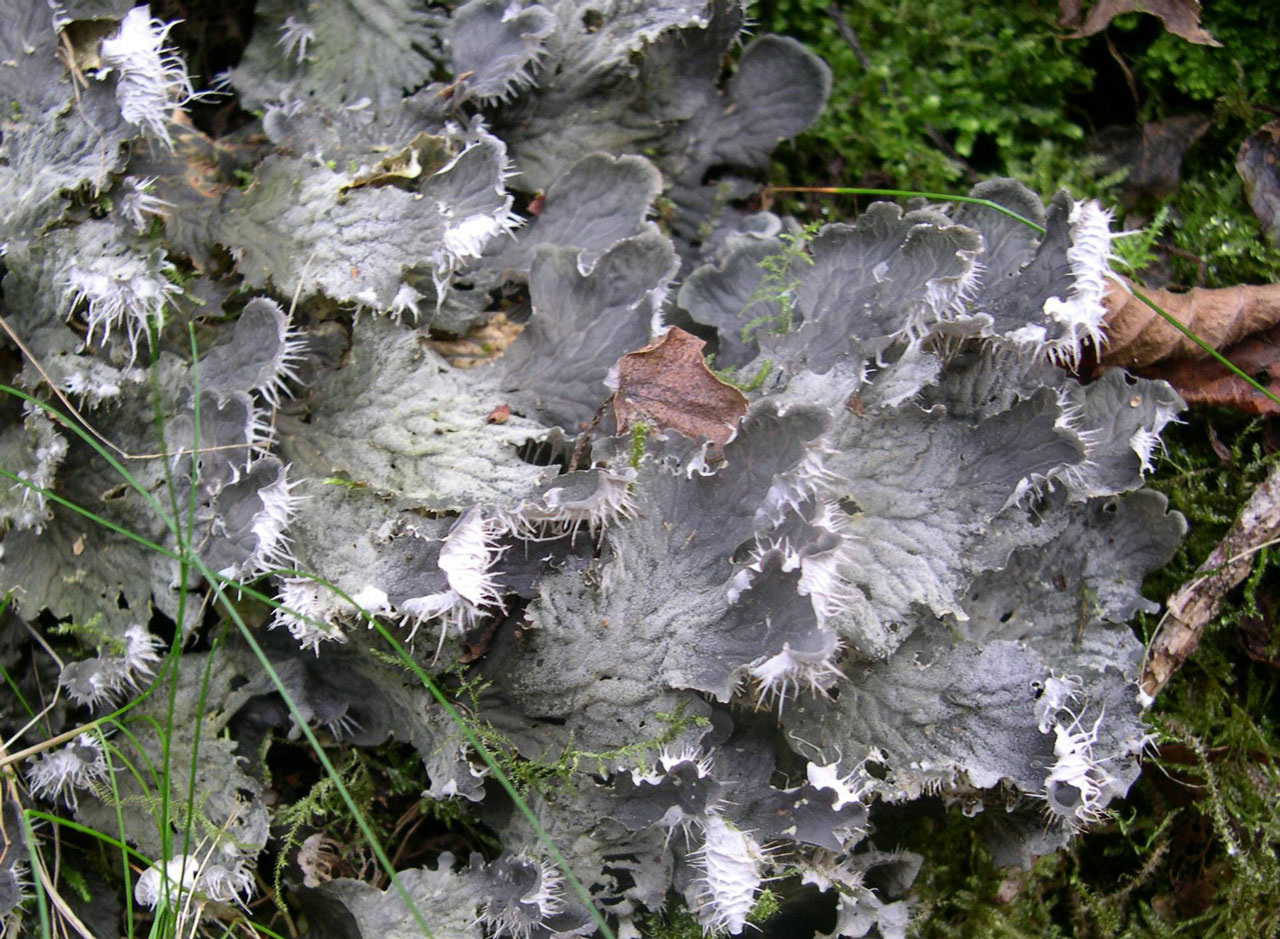
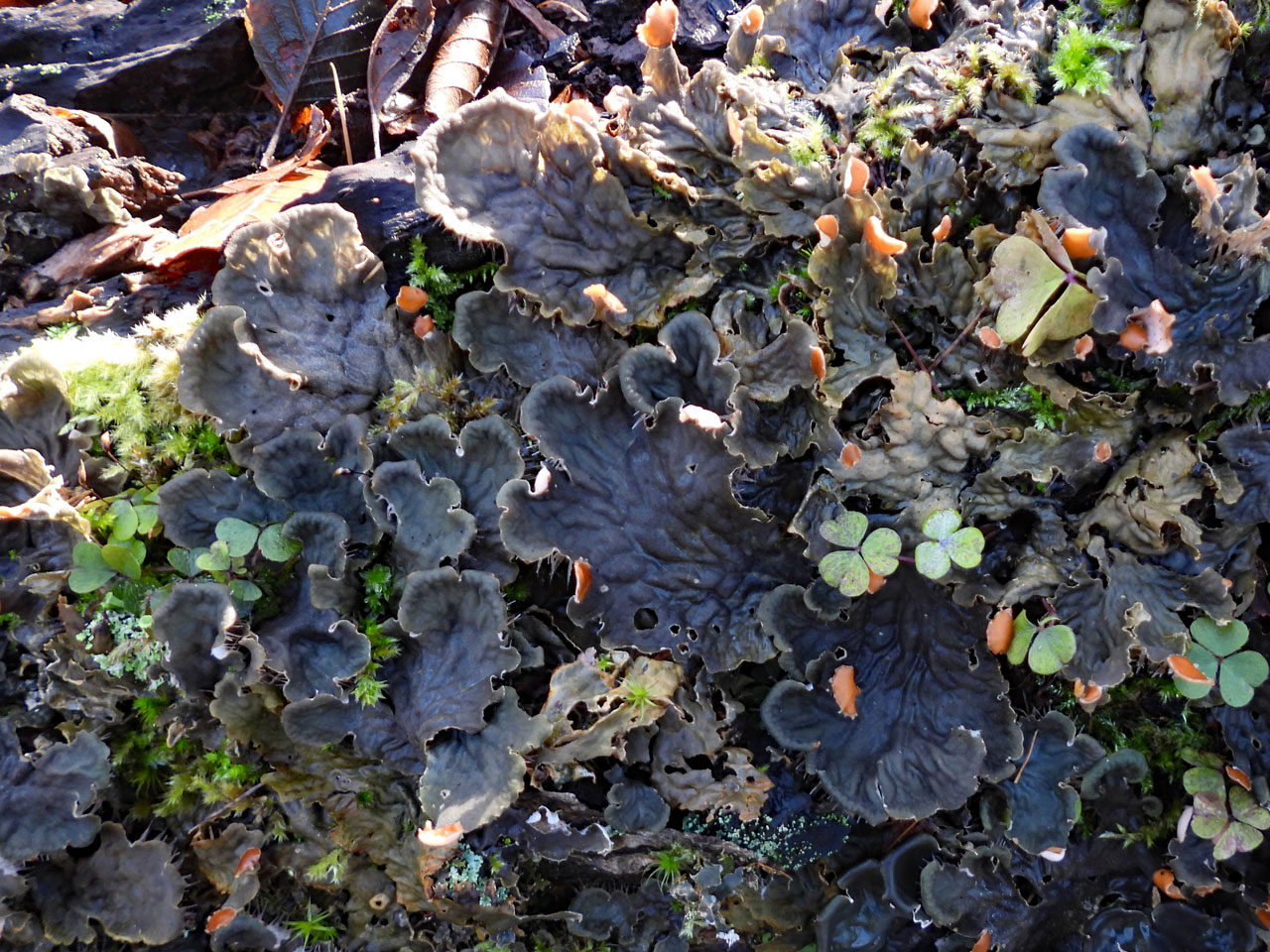
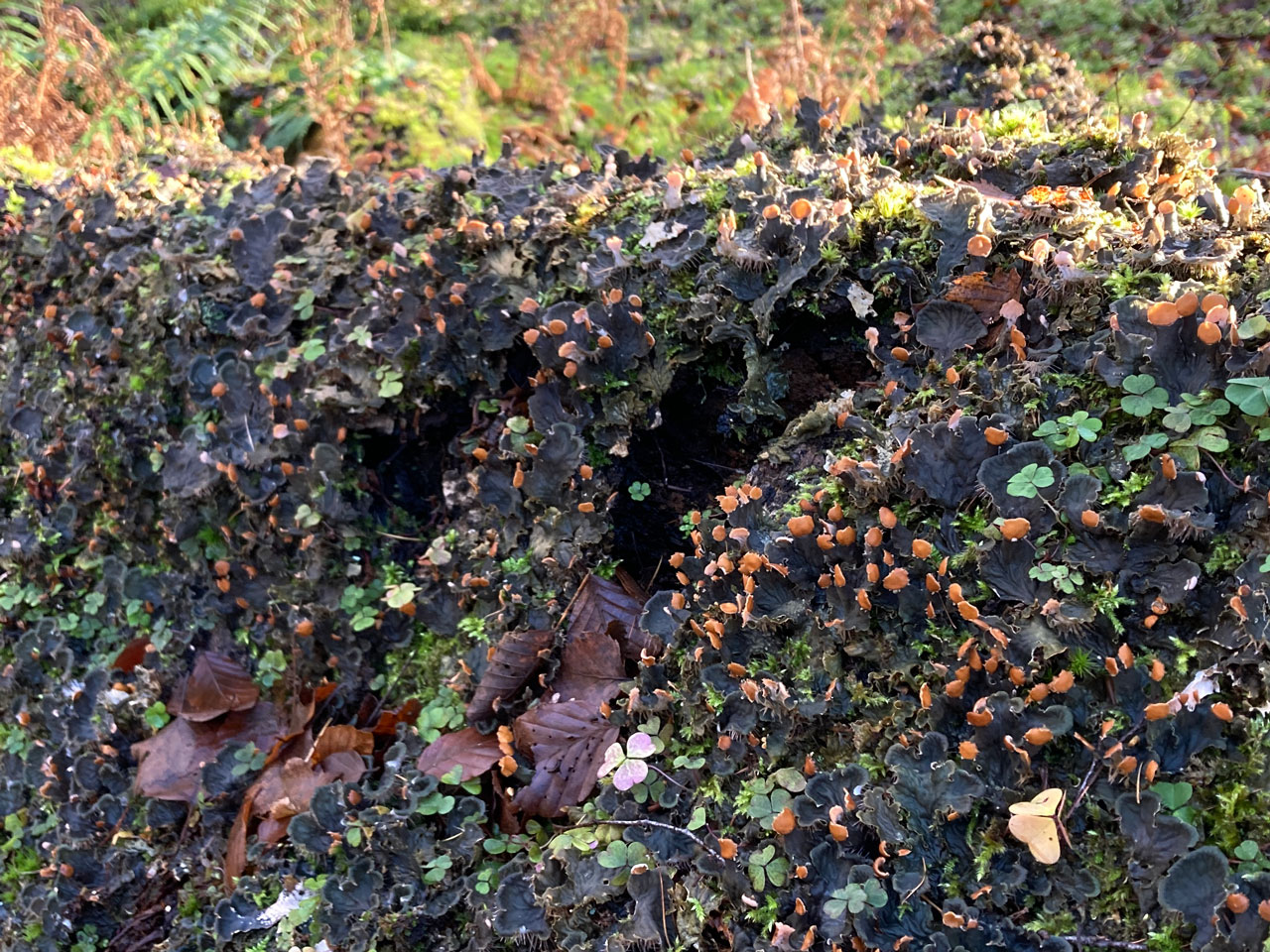
The classic Dogtooth, the Great Dogtooth, with a large voluminous bullate-ridged and tomentose upper surface and frequently fertile. Found in damp habitats through Britain and Ireland but rare in the English lowlands. Similar to Peltigera canina and P. praetextata but both are typically less strongly bullate-ridged and the former has bushy and woolly rhizines and the latter frequent marginal schizidia.
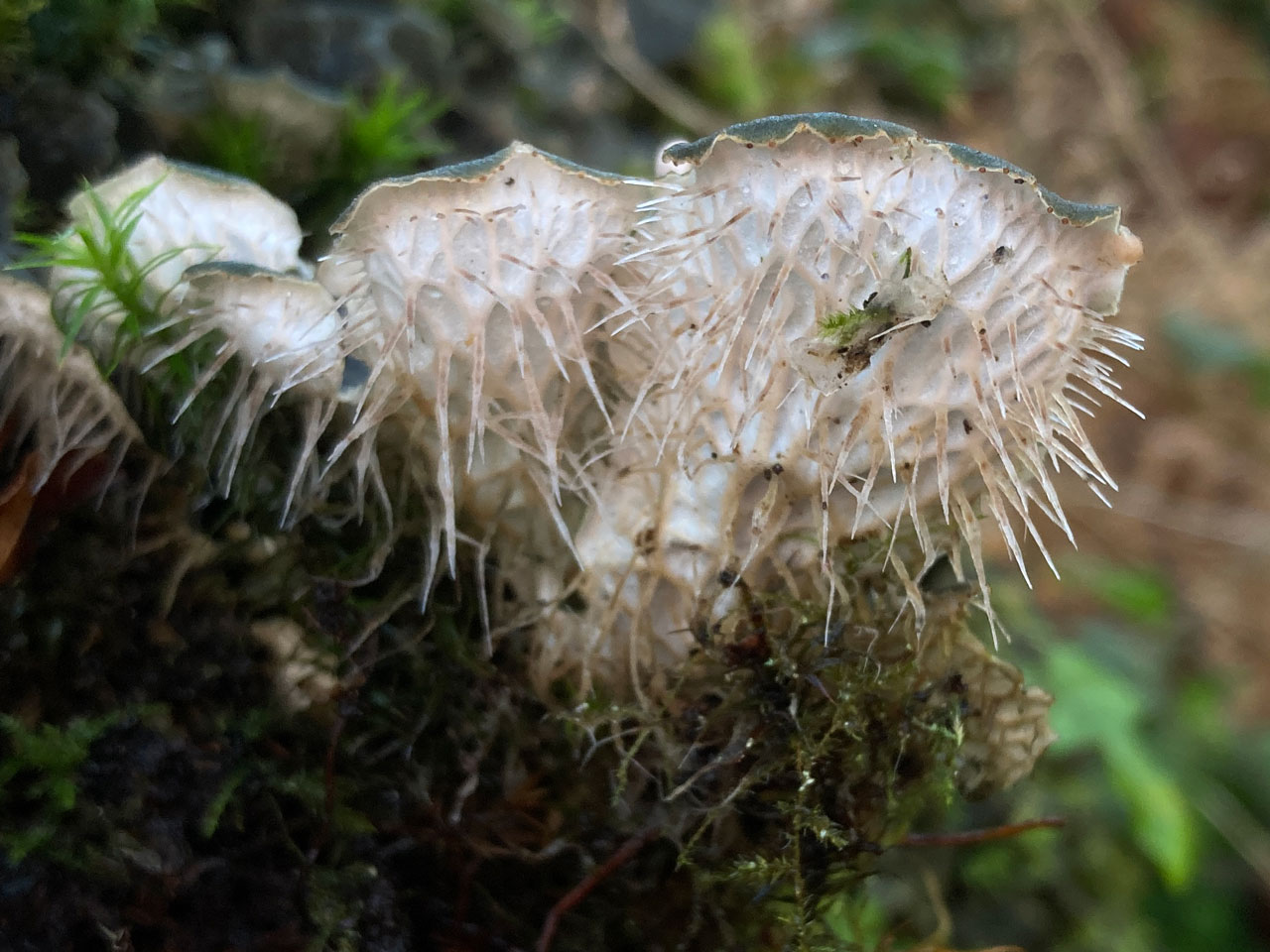
Thallus to 30 cm or more, often forming broadly radiating patches, grey or often brown-grey; lobes to 1–2 (–4) cm broad, discrete or more usually contiguous, thin; margins uneven, down-turned, entire, indented or lacerate and radiating; upper surface thinly to thickly white-grey tomentose, at least towards and at the margins, rarely flat, markedly bullate-ridged, without folioles but occasionally with swollen regenerative secondary lobules; lower surface uniformly whitish, with pale, raised veins and well-developed simple dispersed pubescent dagger-like rhizines. Apothecia common, rounded, becoming saddle-shaped, red-brown to brown. Ascospores 50–73 × 3.5–4µm, 3- to 5-septate, colourless or pale brown. Conidiomata unknown. Thallus with negative reactions; no lichen products detected by TLC.
Compare with Peltigera canina which has bushy, ± contiguous, beard-like rhizines. For specimens with schizidia, see P. praetextata.
Overgrowing or amongst mosses on the ground in woods and damp grasslands, mossy rock faces and buttresses, also tree trunks and damp fallen dead wood. Avoids dry grasslands where it is replaced by Peltigera canina.
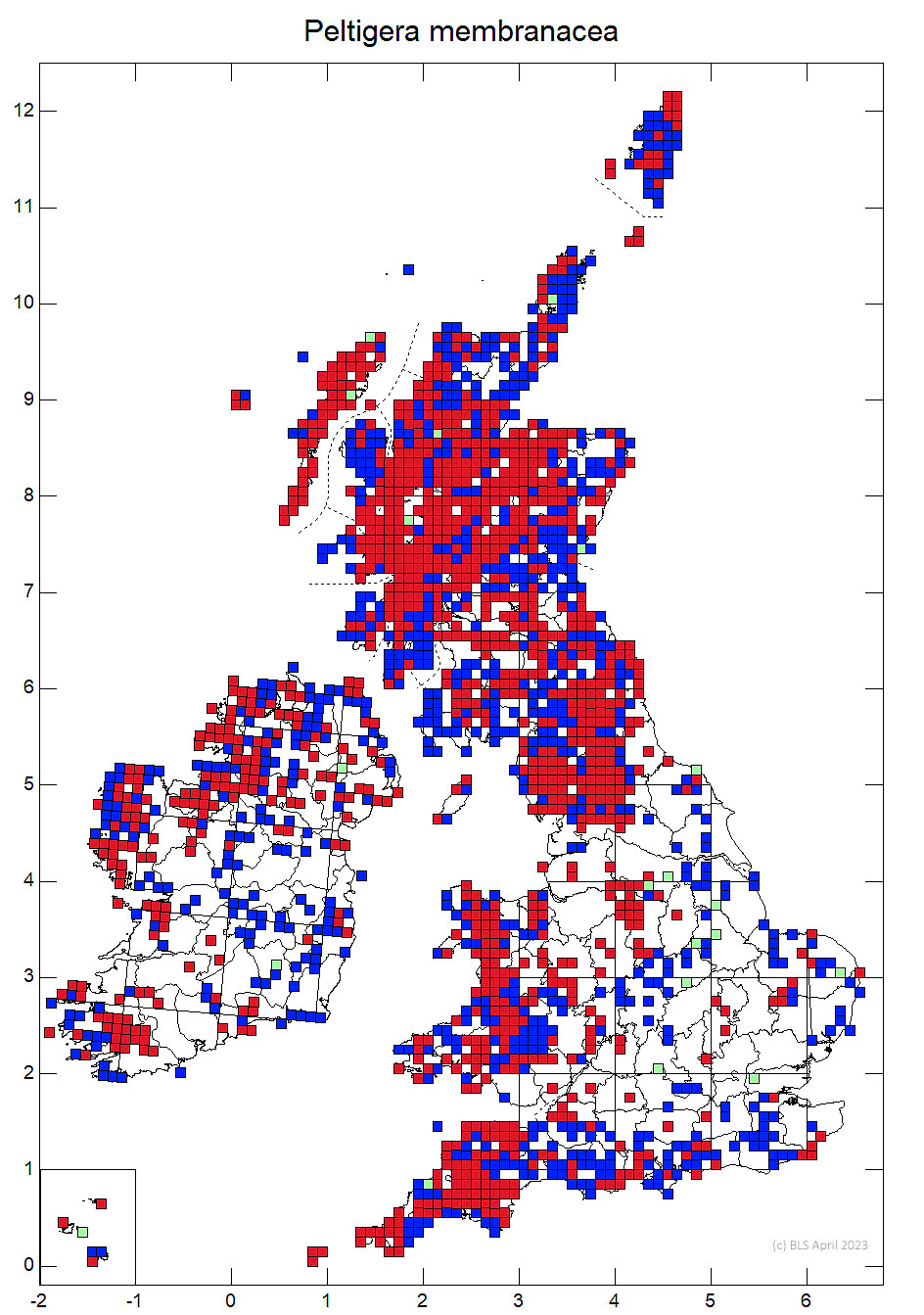


Common, throughout Britain and Ireland, rarer in the east.
Cannon, P., Magain, N., Sérusiaux, E., Yahr, R., Coppins, B., Sanderson, N. & Simkin, J. (2021). Peltigerales: Peltigeraceae, including the genera Crocodia, Lobaria, Lobarina, Nephroma, Peltigera, Pseudocyphellaria, Ricasolia, Solorina and Sticta. Revisions of British and Irish Lichens 20: 1-34.
Text by Neil A Sanderson based on Cannon et al (2021)