Peltigera ponojensis
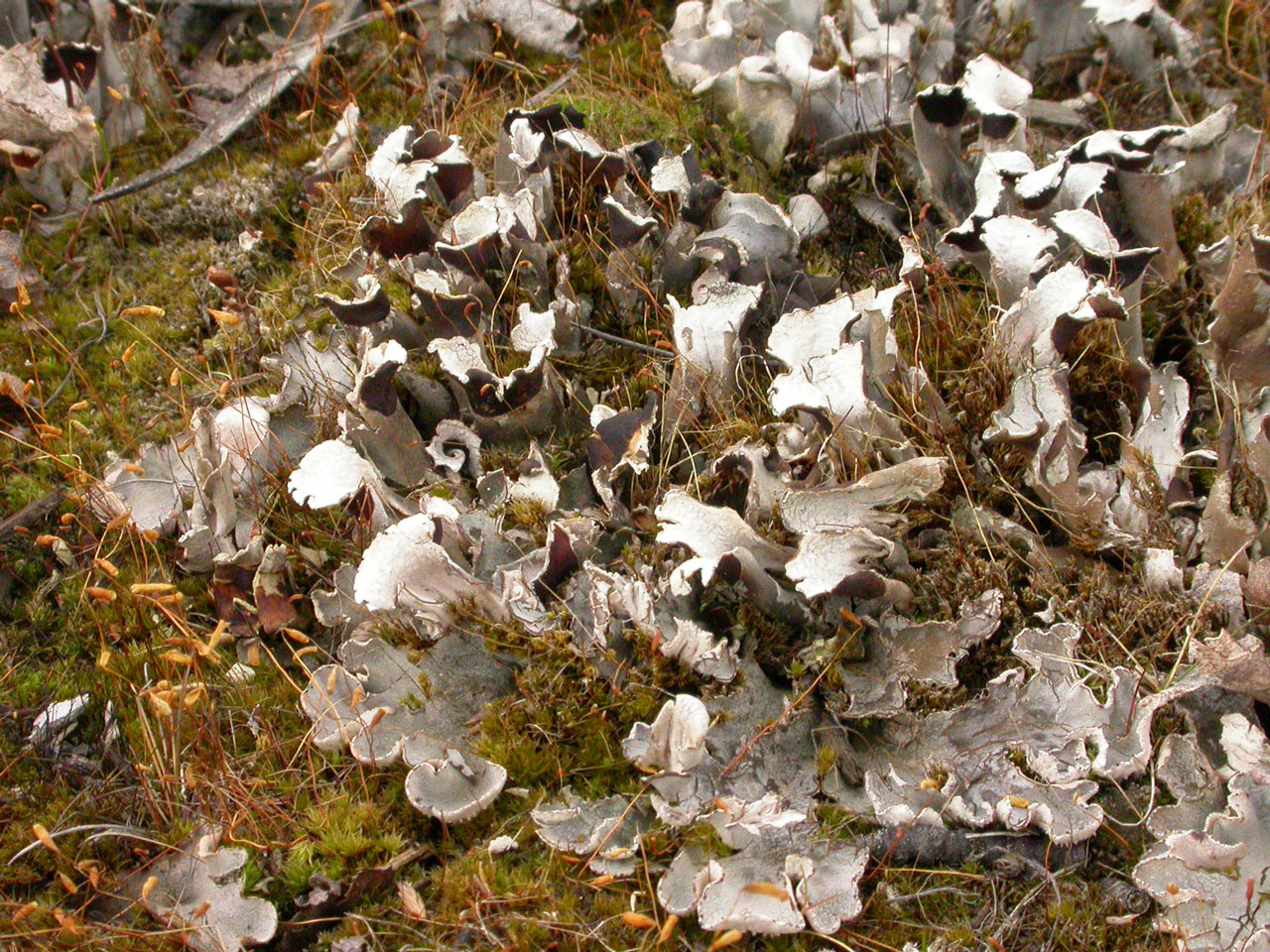
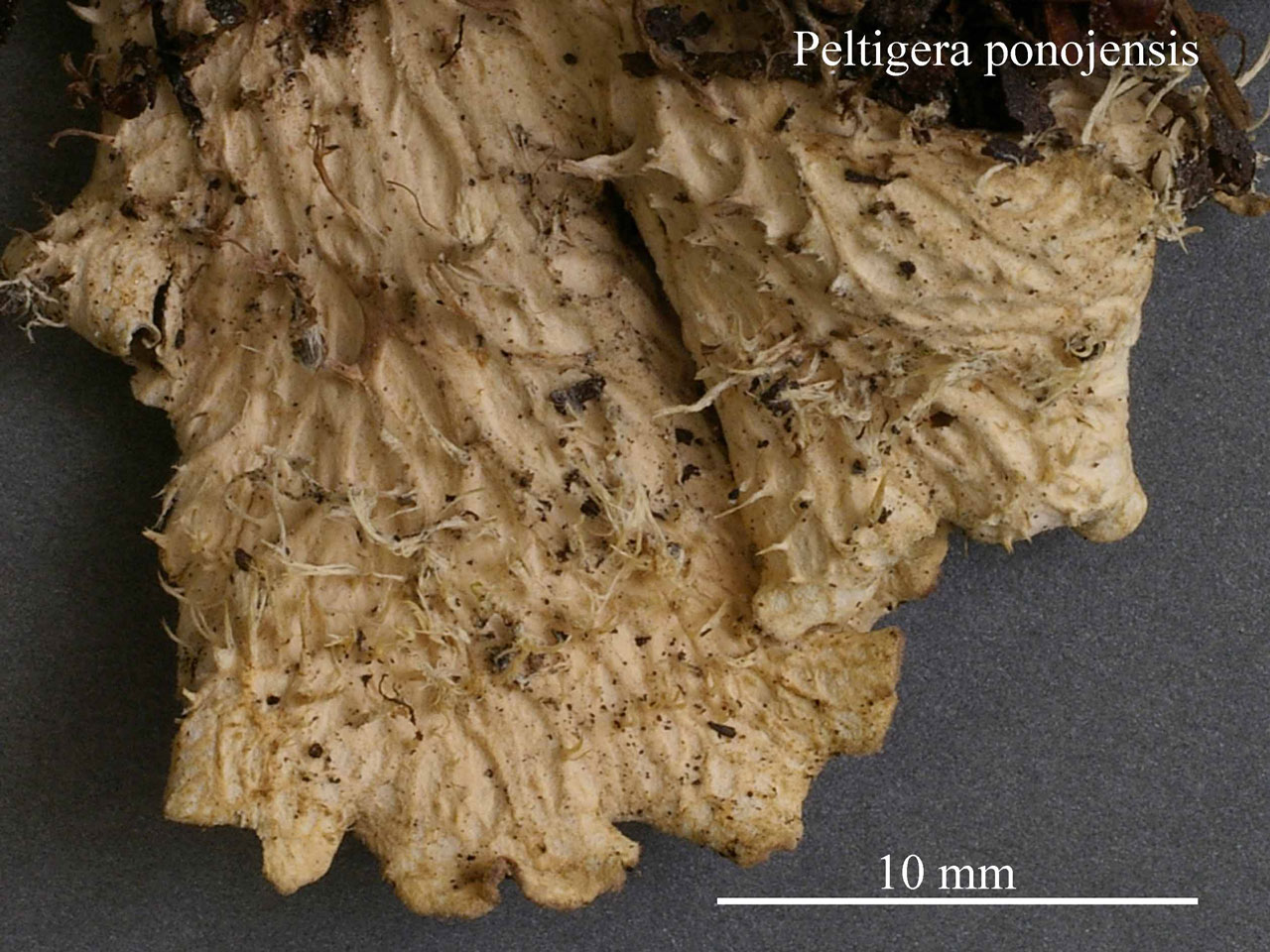
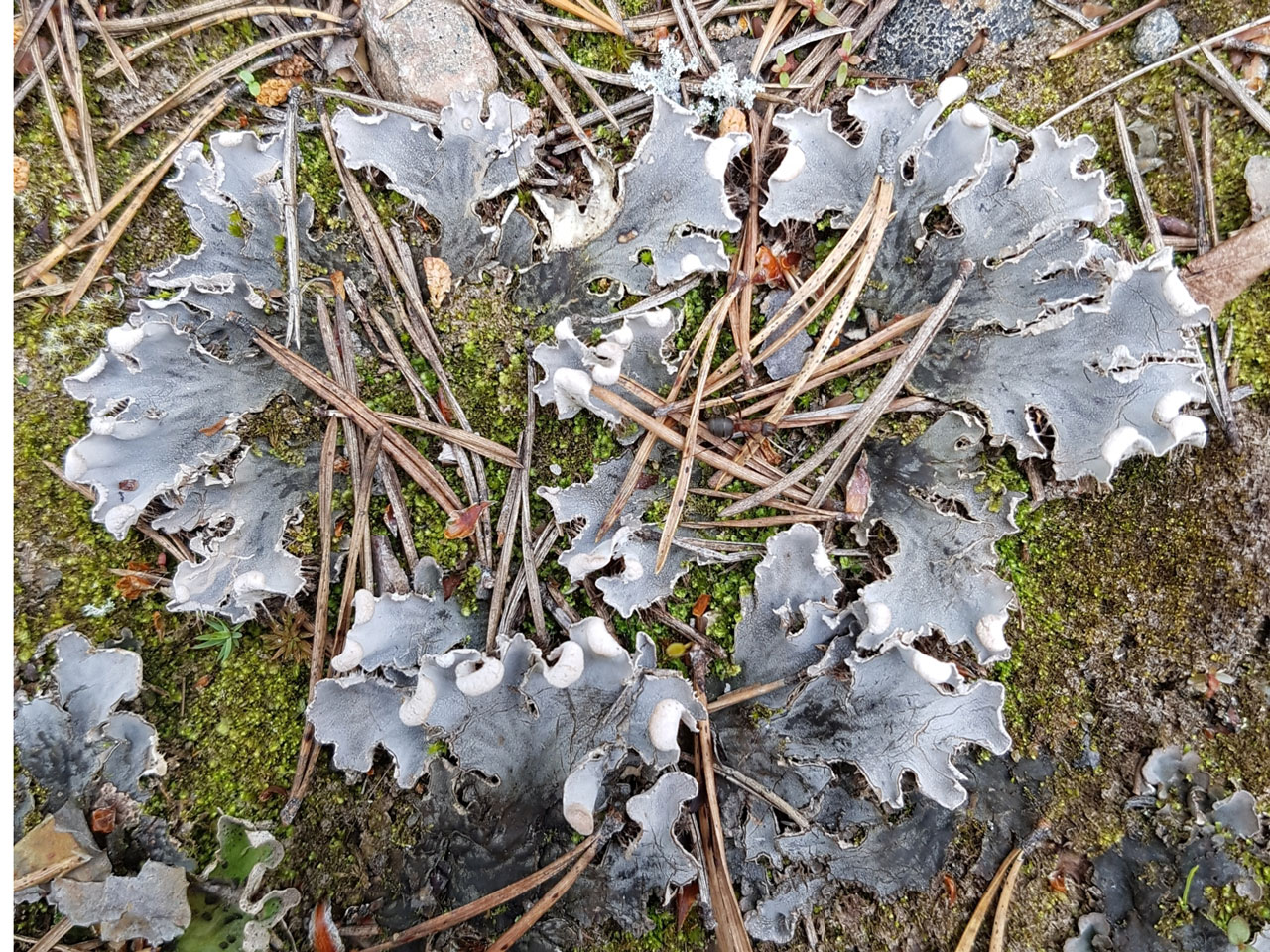
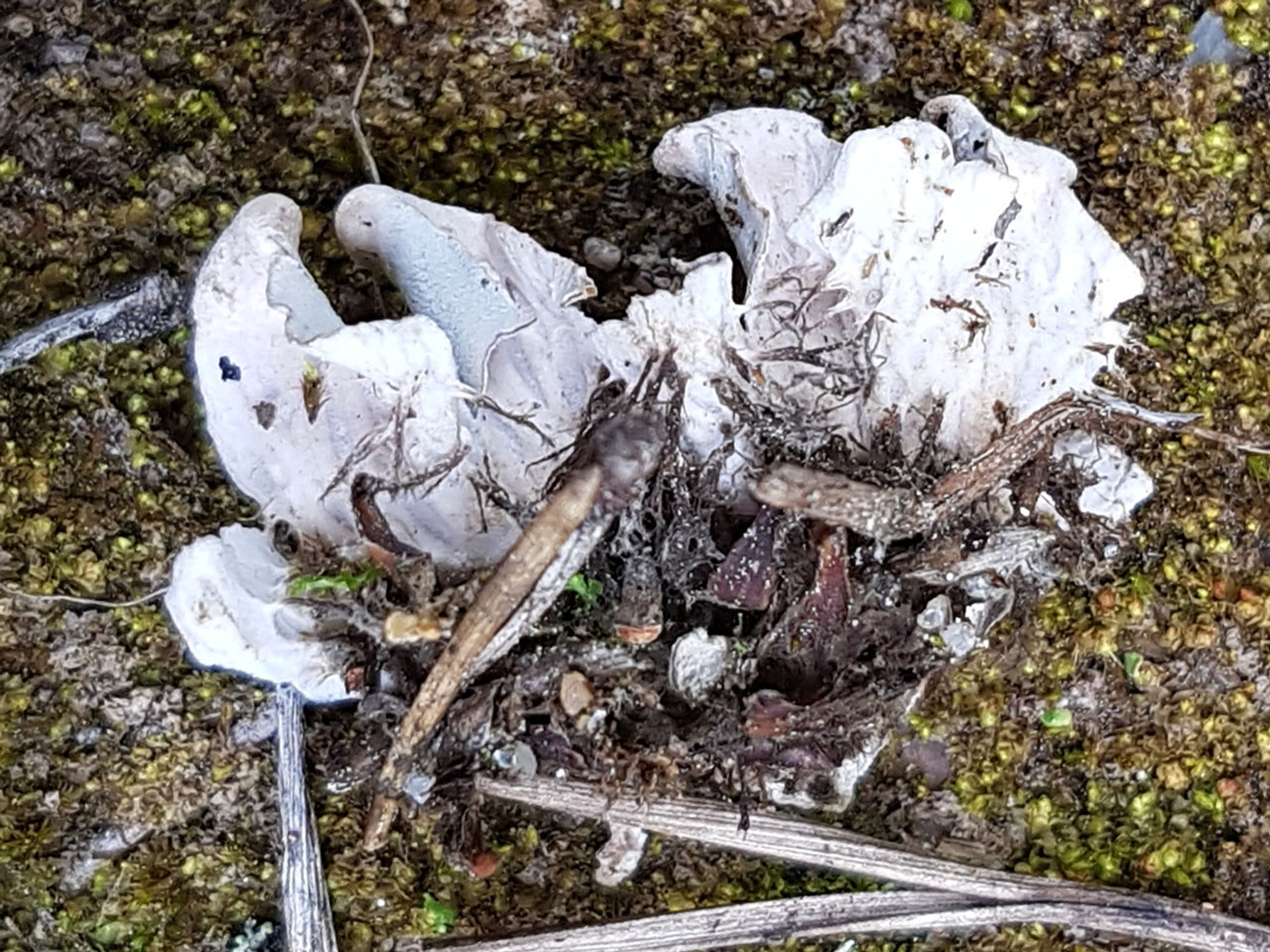
This is a little known Dogtooth, the Pale Frosted Dogtooth, is similar to Peltigera rufescens, but with paler undersides. It also seems to be found in more base rich habitats. Only ever recorded three times, but potentially rather overlooked as recorders are not familiar with the differences with P. rufescens. To be searched for!
Thallus 8–10 (–15) cm diam., radiating; lobes ca 1 cm broad and 5–6 cm long; upper surface tomentose, glossy or glabrous towards the centre, the margin raised, ± flexuose; lower surface white with pale, raised veins and pale simple scattered to aggregated rhizines. Apothecia rare, flat, convex to saddle-shaped; disc pale brown. Ascospores 43–63 × 3–5.2 µm. Conidiomata unknown. Thallus with negative reactions; no lichen substances detected by TLC.
Characterised by the elevated, pale-coloured veins with whitish, mainly simple rhizines, as well as large, flat apothecia with pale brown apothecial discs. The status of this species and its separation from Peltigera rufescens is in need of further study.
On chalk grassland, roadsides, metalliferous sites, alpine rocks, ± calcicole.
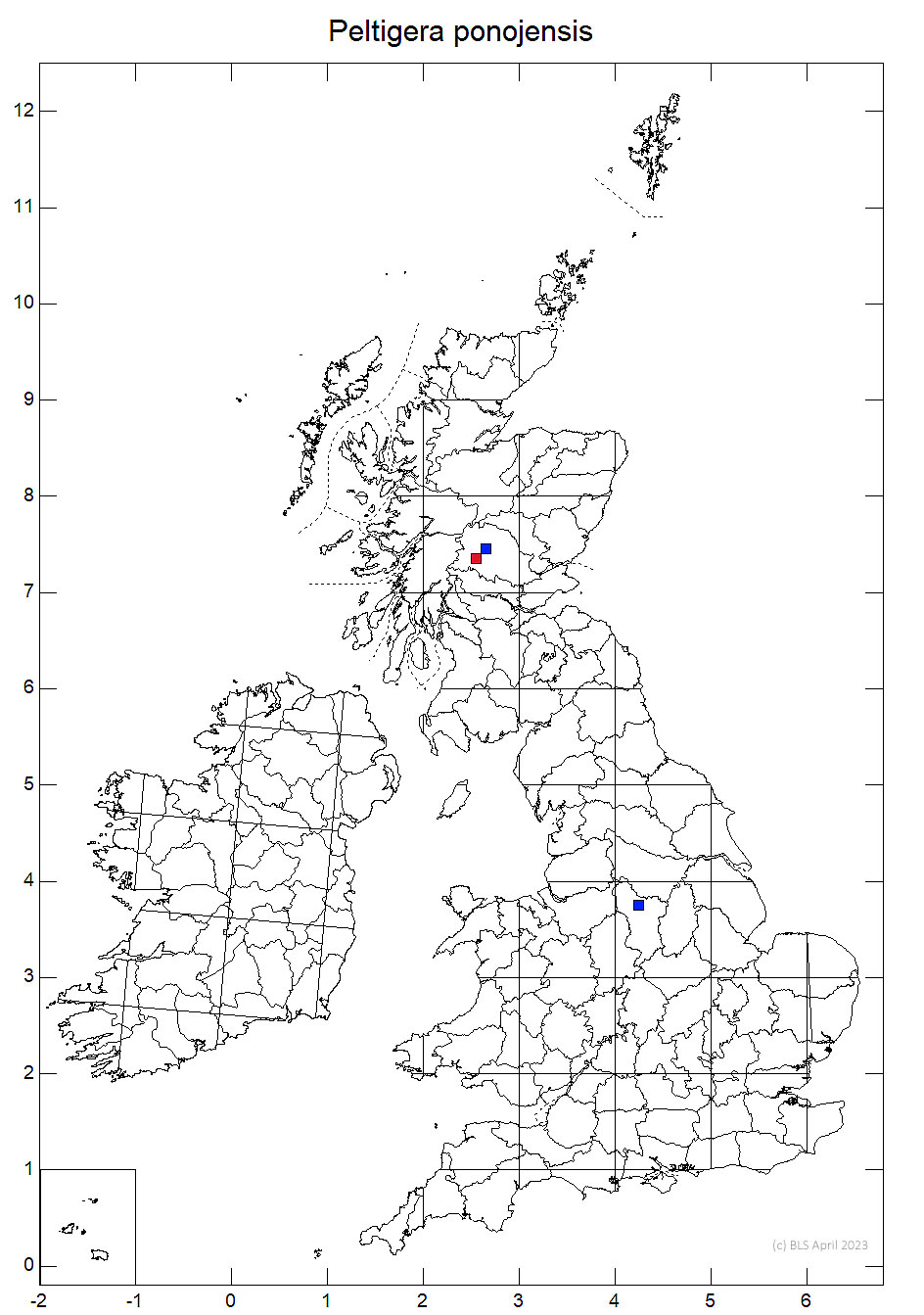


A poorly known species thought to be rare, with three widely scattered records across the country: S. England (Wiltshire, Fyfield Down), C. England (Derbyshire), C. Scotland (Breadalbane Mtns).
The wide range of locations and the habitats it has been found in, suggests this species is likely to be overlooked, rather than very rare. It is likely not common either; potentially a species that is not being recorded because recorders have no search image for it, as it is not encountered much, thus making appear rarer than it actually is. It potentially could still be threatened, so is assessed as Data Deficient.
Britain: Data Deficient & Notable
Scotland: Priority Taxon for Biodiversity in Scotland
Cannon, P., Magain, N., Sérusiaux, E., Yahr, R., Coppins, B., Sanderson, N. & Simkin, J. (2021). Peltigerales: Peltigeraceae, including the genera Crocodia, Lobaria, Lobarina, Nephroma, Peltigera, Pseudocyphellaria, Ricasolia, Solorina and Sticta. Revisions of British and Irish Lichens 20: 1-34.
Text by Neil A Sanderson based on Cannon et al (2021)