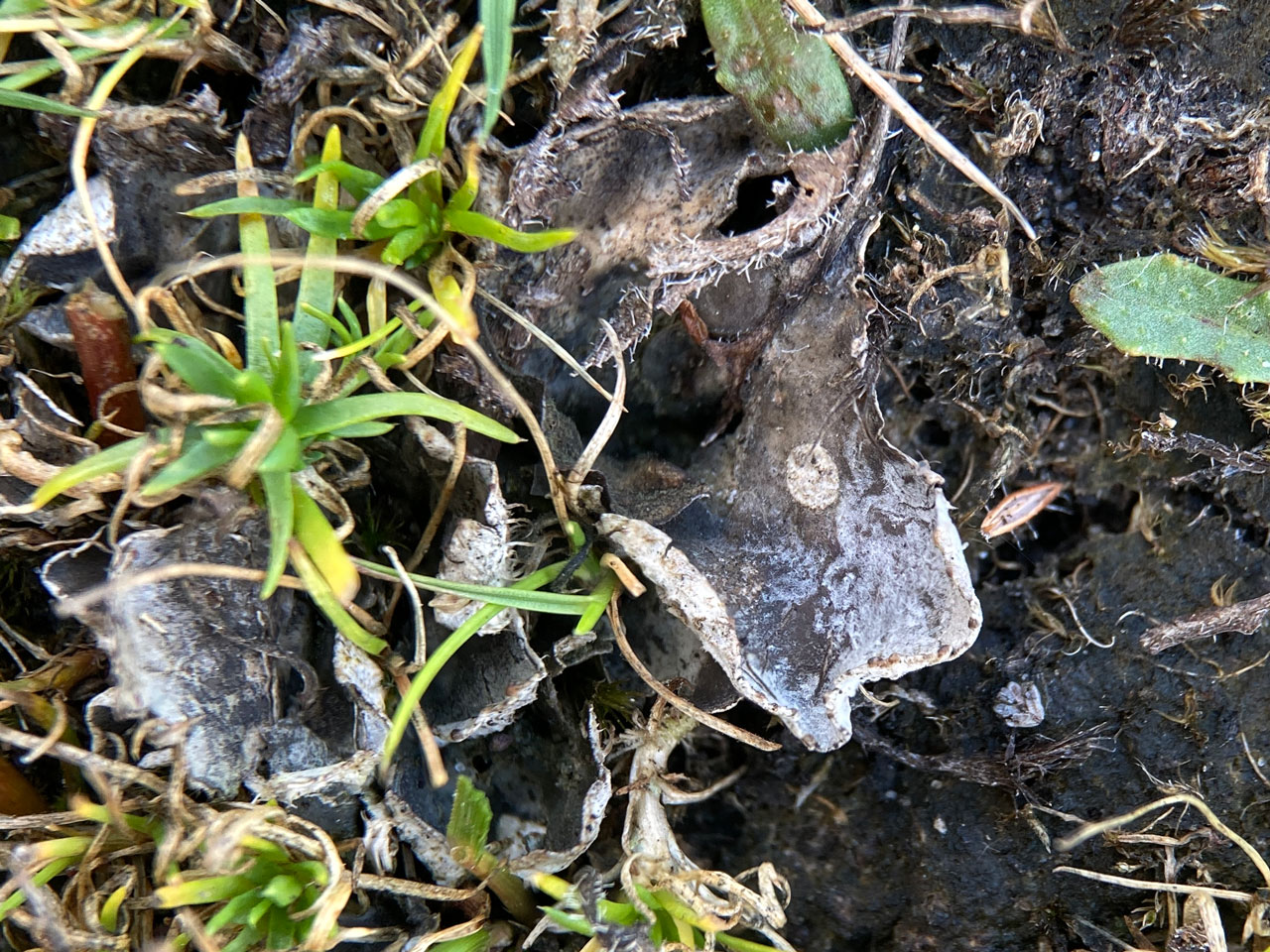
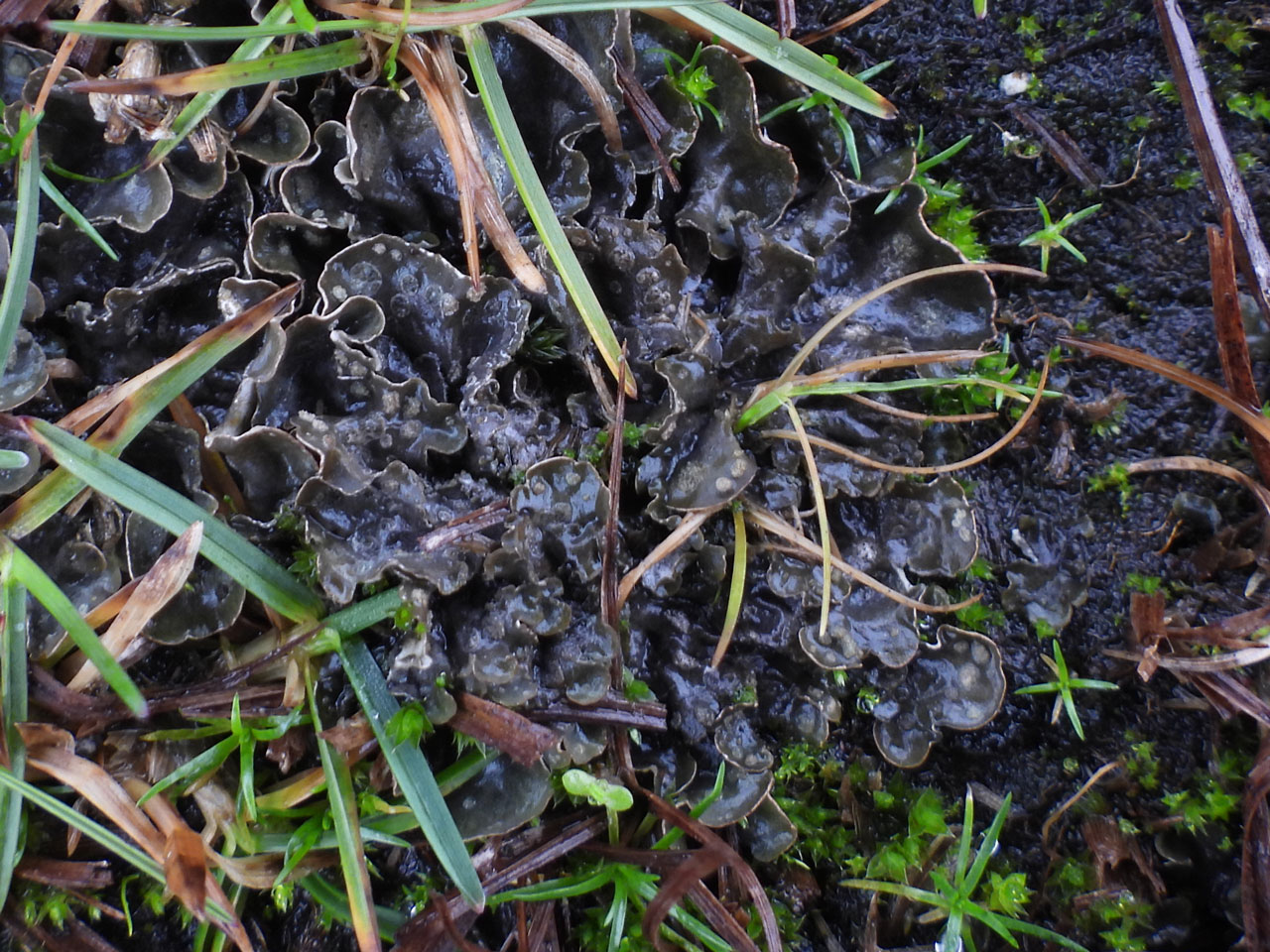
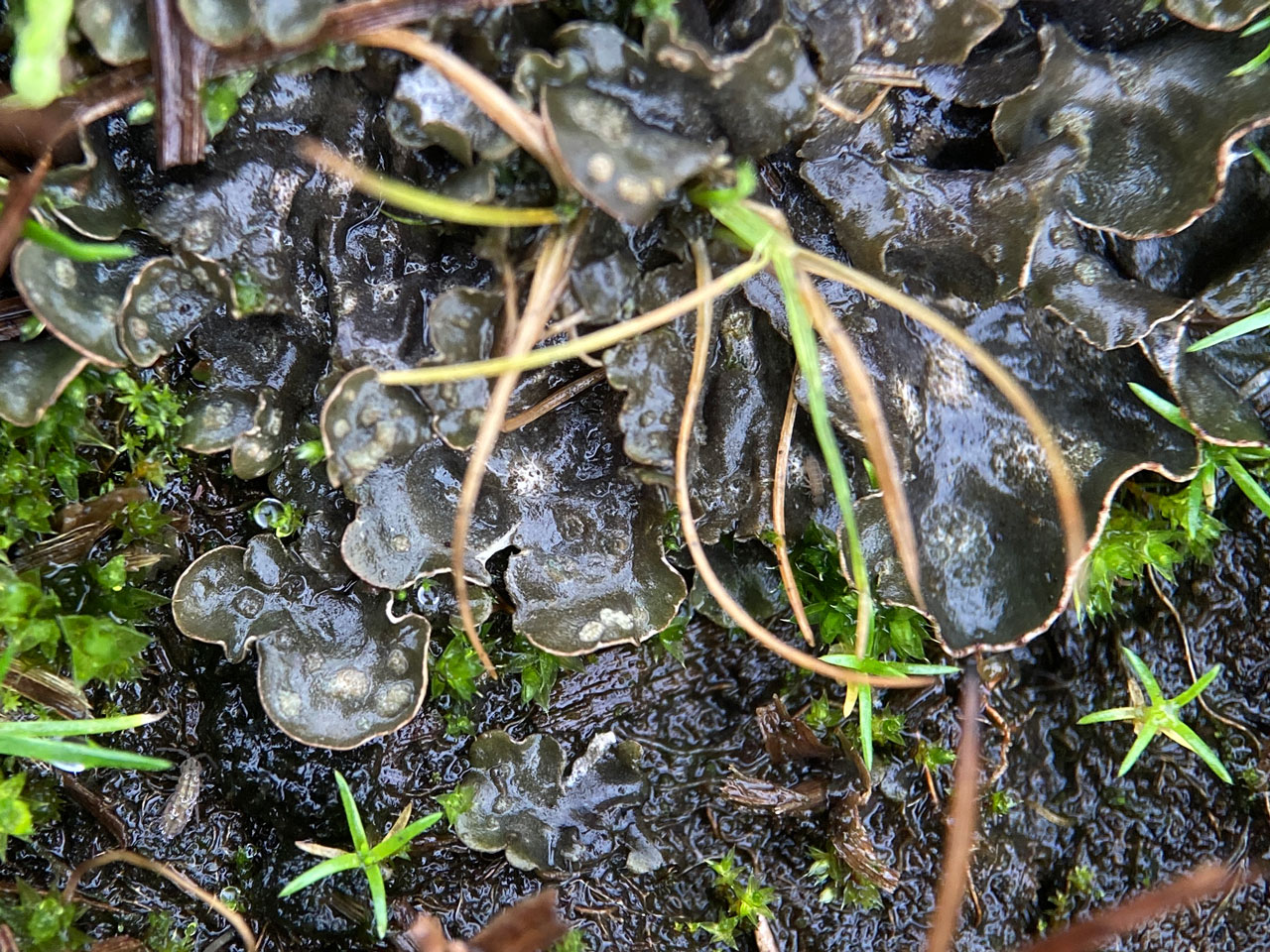
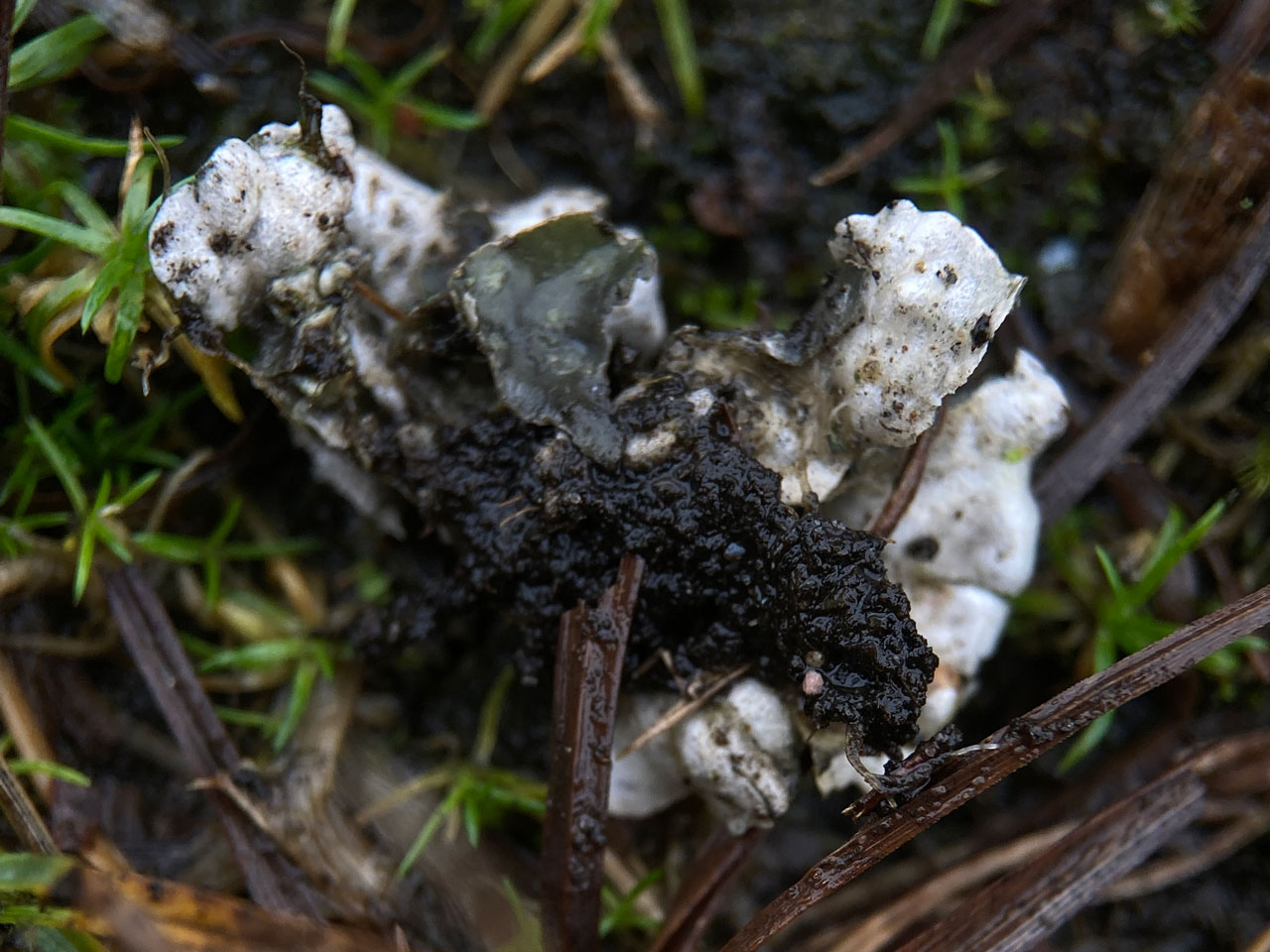
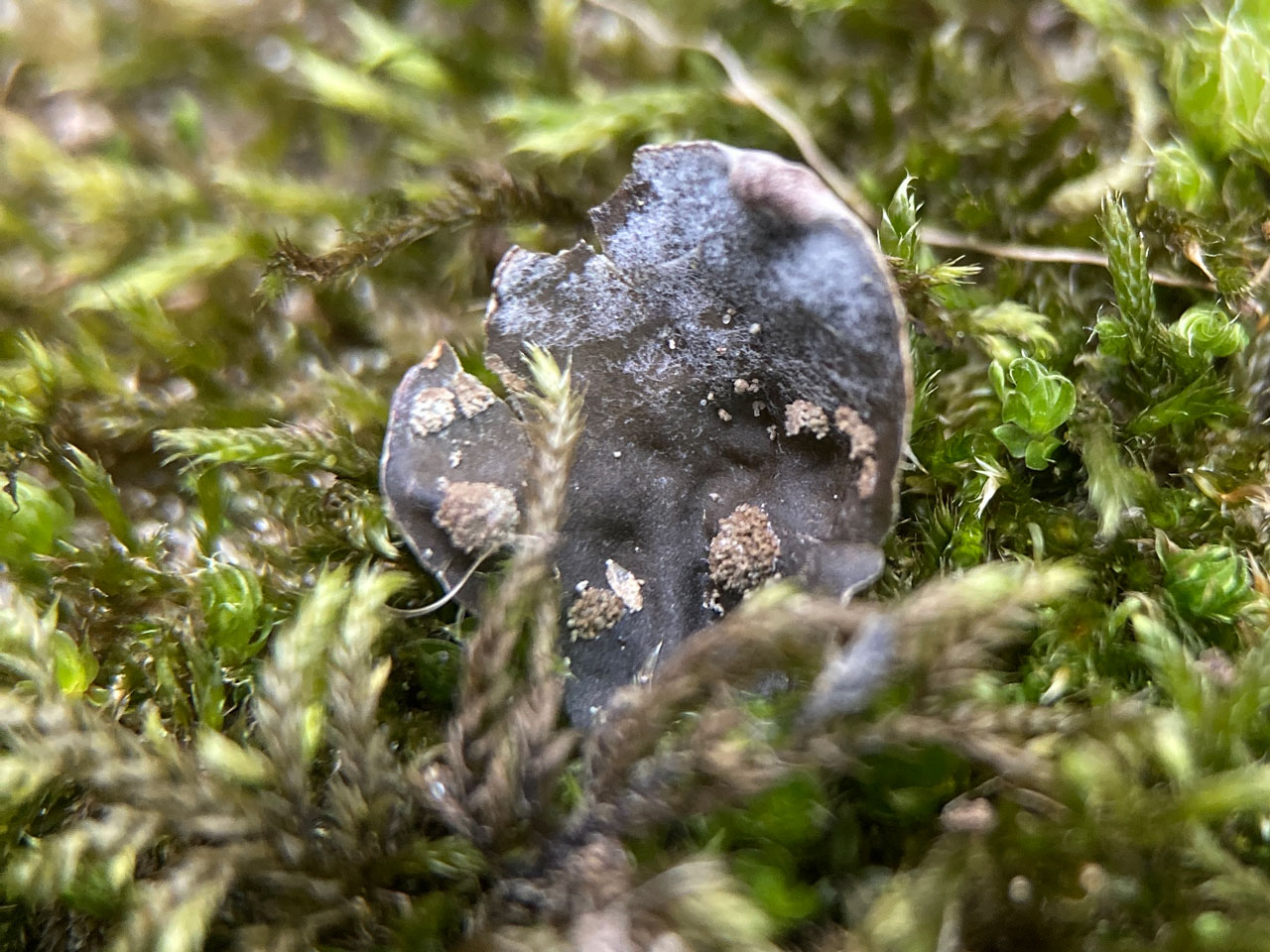
A widespread ephemeral Dogtooth, the Bonfire Dogtooth, of disturbed habitats, with old bonfire sites a classic place to find it. Peltigera didactyla is unusual in having sorediate juvenile sorediate state, which is superseded by a fertile non-sorediate state. The early sorediate thalli are easy to identify, but the mature thalli not so distinctive and can be overlooked.
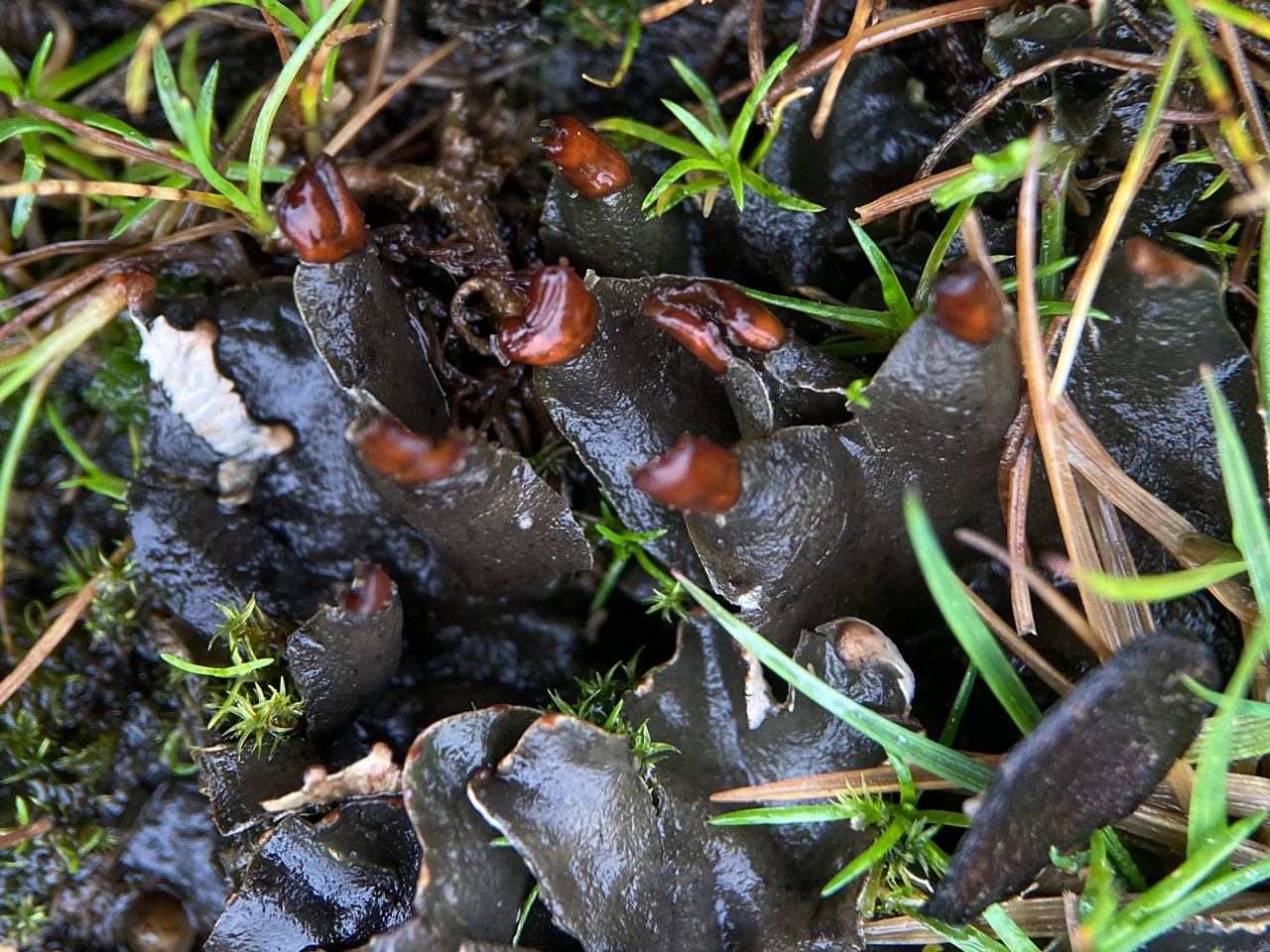
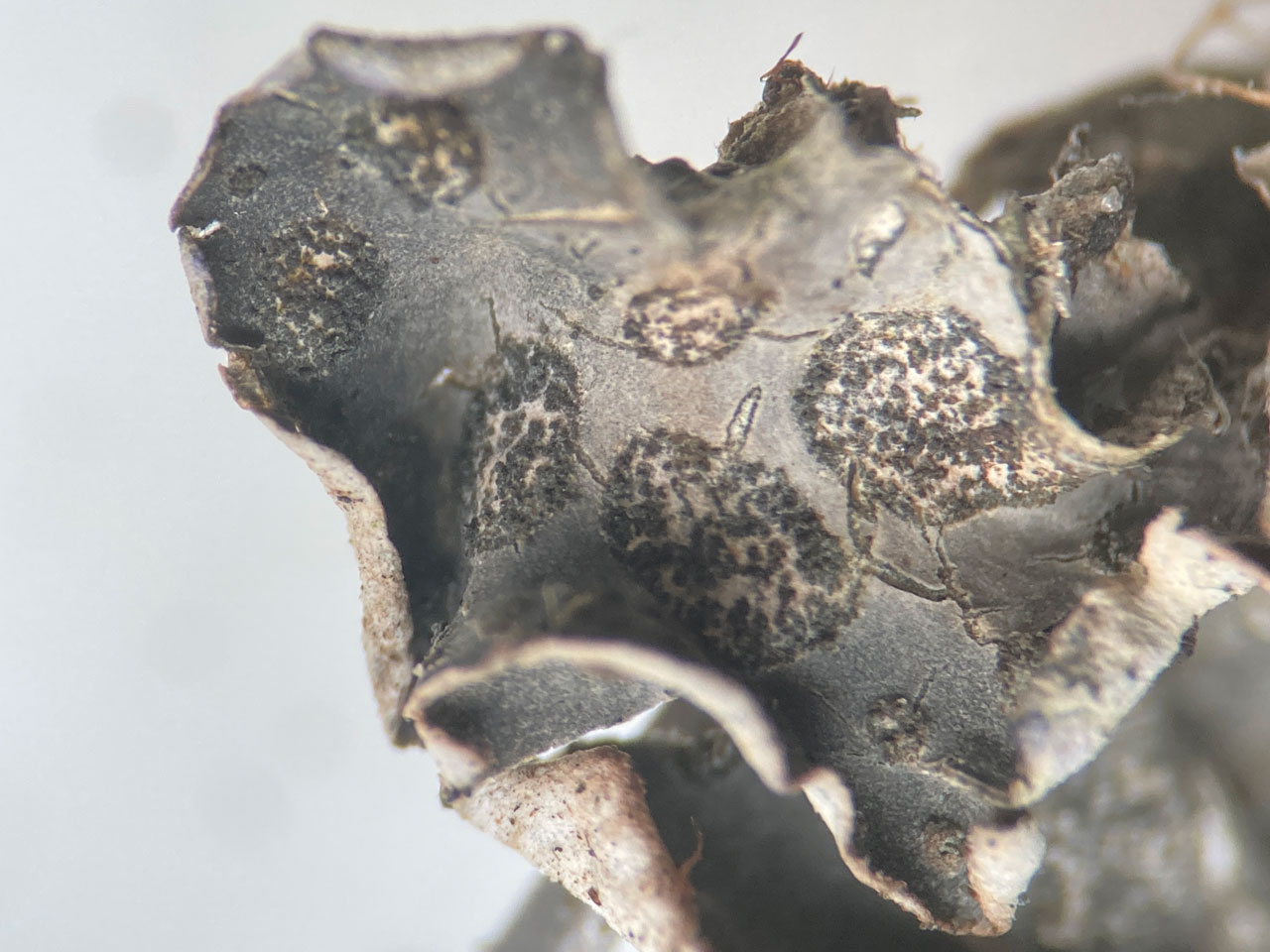
Thallus to 5 cm diam., rosette-shaped or consisting of a few coalescing lobes in small groups level with or sunk into the substratum; lobes small, 0.5–1 cm broad and 1–2 cm long, mouse-ear-shaped when young, becoming markedly ascending when fertile; upper surface finely grey-white tomentose especially towards the margins; when young, with laminal, rounded or irregular pale sorediose patches; soralia to 2.5 mm diam., discrete, later becoming confluent, filled with pale blue-grey to brown coarsely granular soredia, disappearing with the formation of apothecia; lower surface with distinct raised pale cream or faintly flesh-coloured to ochraceous veins, anastomosing with well-developed interstices; rhizines simple, downy, occasionally bottlebrush-like; apices often somewhat brush-shaped. Apothecia held vertically, ± oblong, saddle-shaped, red-brown or brown, delicately crenulate and denticulate at the margin. Ascospores 40–75 × 3.5–4.5 µm, 3- to 7-septate. Conidiomata rare; conidia 6–7.5 × 3–4 µm. Thallus with low concentrations of gyrophoric acid (C+ red) and methyl gyrophorate have been occasionally recorded in the soralia. No lichen products detected by TLC.
Can be confused with the more markedly horizontally spreading Peltigera rufescens, which has a thickly tomentose upper surface, often large and conspicuous apothecia, with inrolled and coarsely crenulate or denticulate thalline margin and dark branched ± fasciculate rhizines. Also with P. membranacea, which is larger and has a bullate upper surface. P. didactyla is unusual in that a juvenile sorediate state is superseded by a fertile non-sorediate state; as the thalli become fertile, the soralia are reduced to pale, non-sorediate scars that eventually disappear.
Characteristic of recently disturbed sites, including cuttings, earth banks, roadsides, lawns, old soil in flower pots, urban wasteland, mine spoil heaps, bonfire sites, quarries and grey dunes; occasionally found on trees and old tree stumps; common but ephemeral.
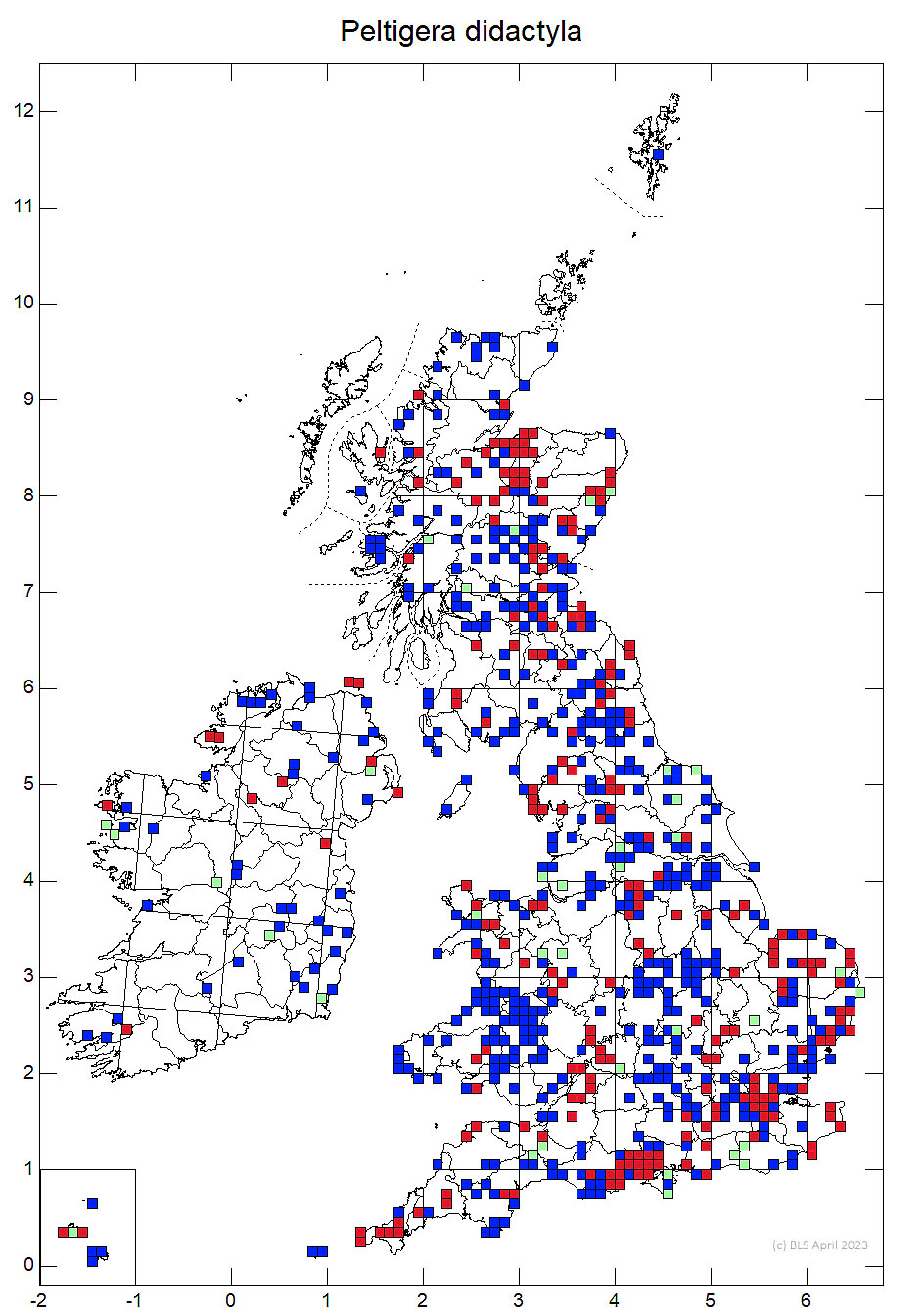


Scattered throughout Britain and Ireland.
Cannon, P., Magain, N., Sérusiaux, E., Yahr, R., Coppins, B., Sanderson, N. & Simkin, J. (2021). Peltigerales: Peltigeraceae, including the genera Crocodia, Lobaria, Lobarina, Nephroma, Peltigera, Pseudocyphellaria, Ricasolia, Solorina and Sticta. Revisions of British and Irish Lichens 20: 1-34.
Text by Neil A Sanderson based on Cannon et al (2021)