Lecanora chlarotera s. str.
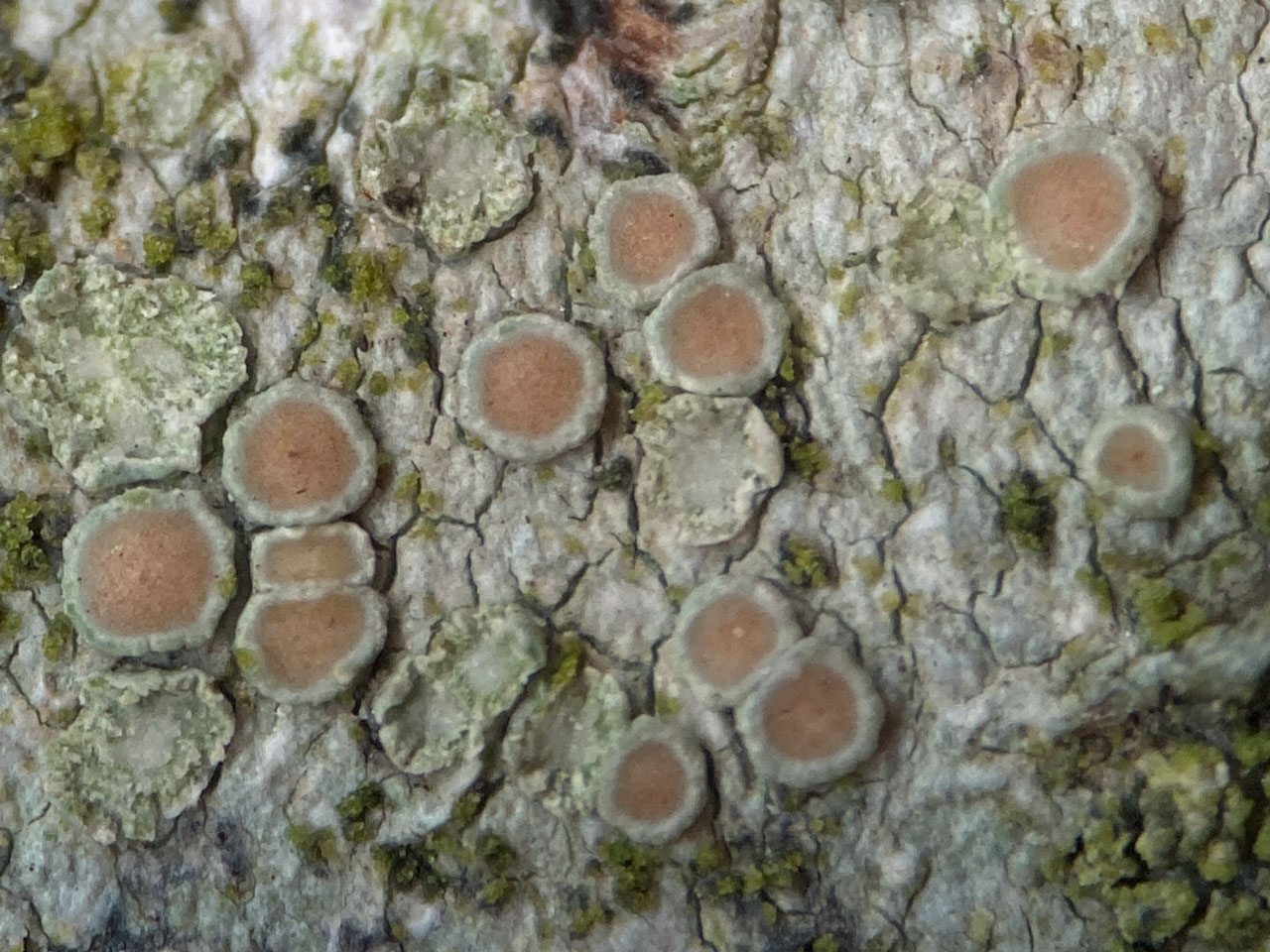
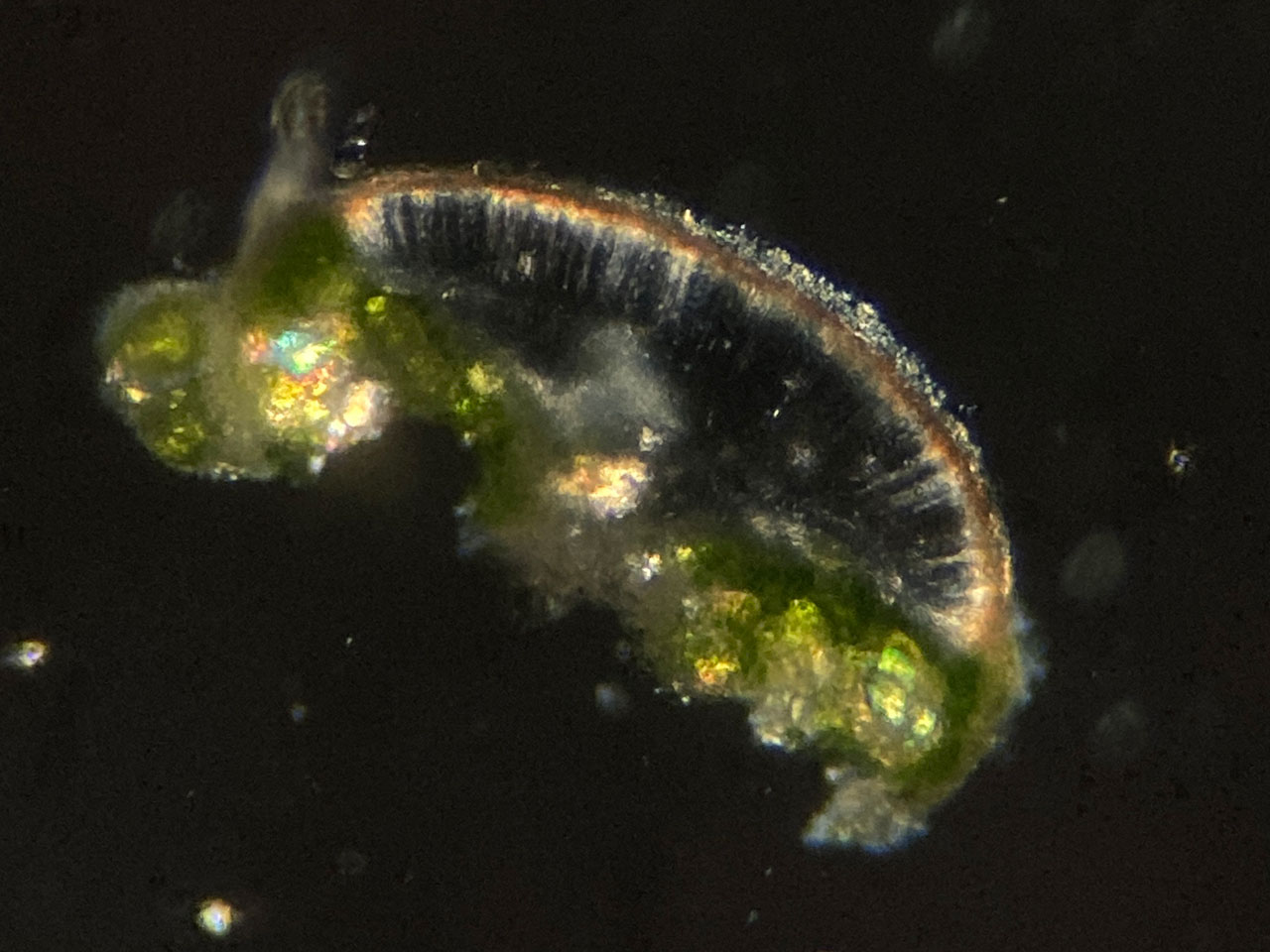
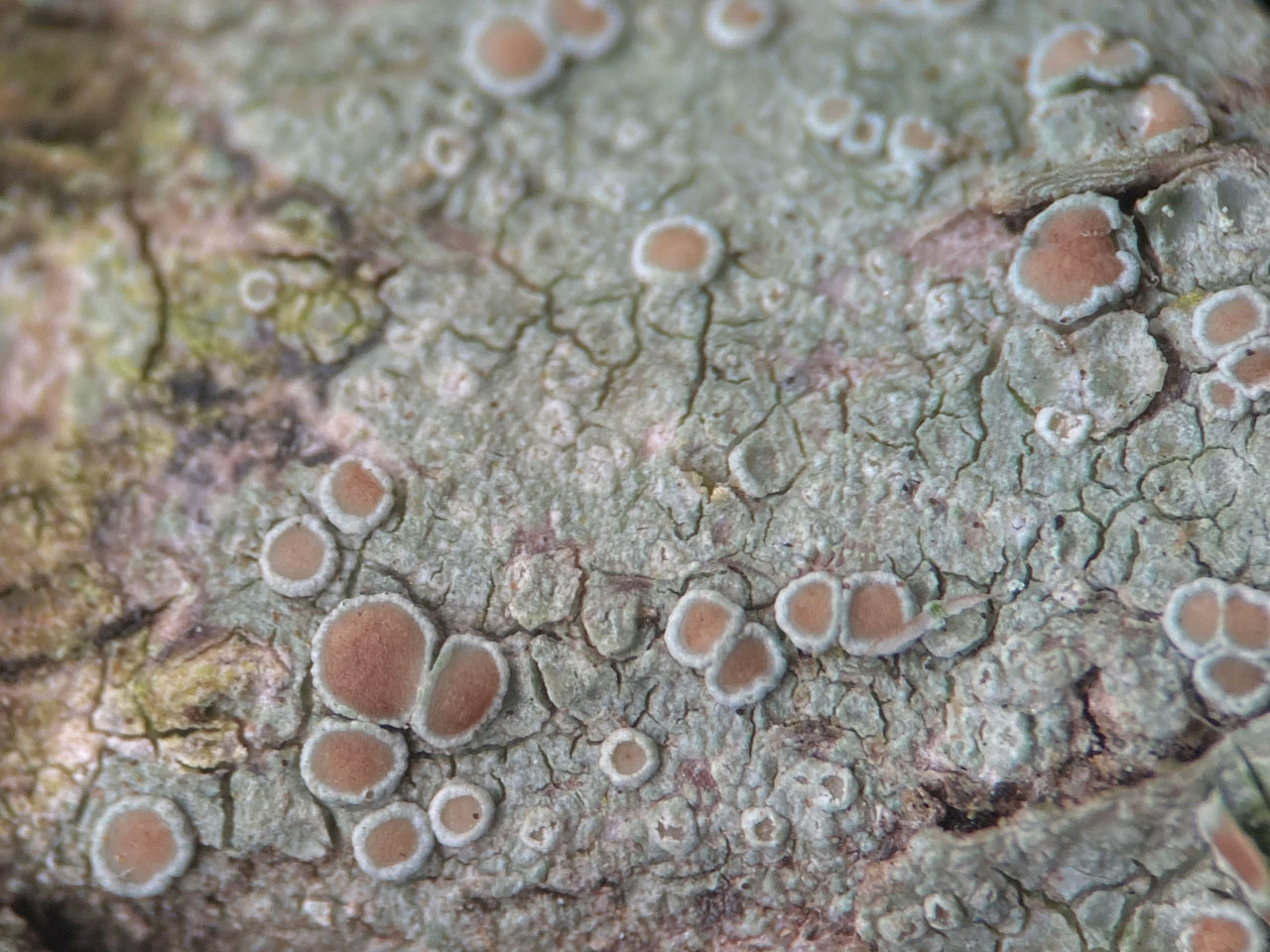
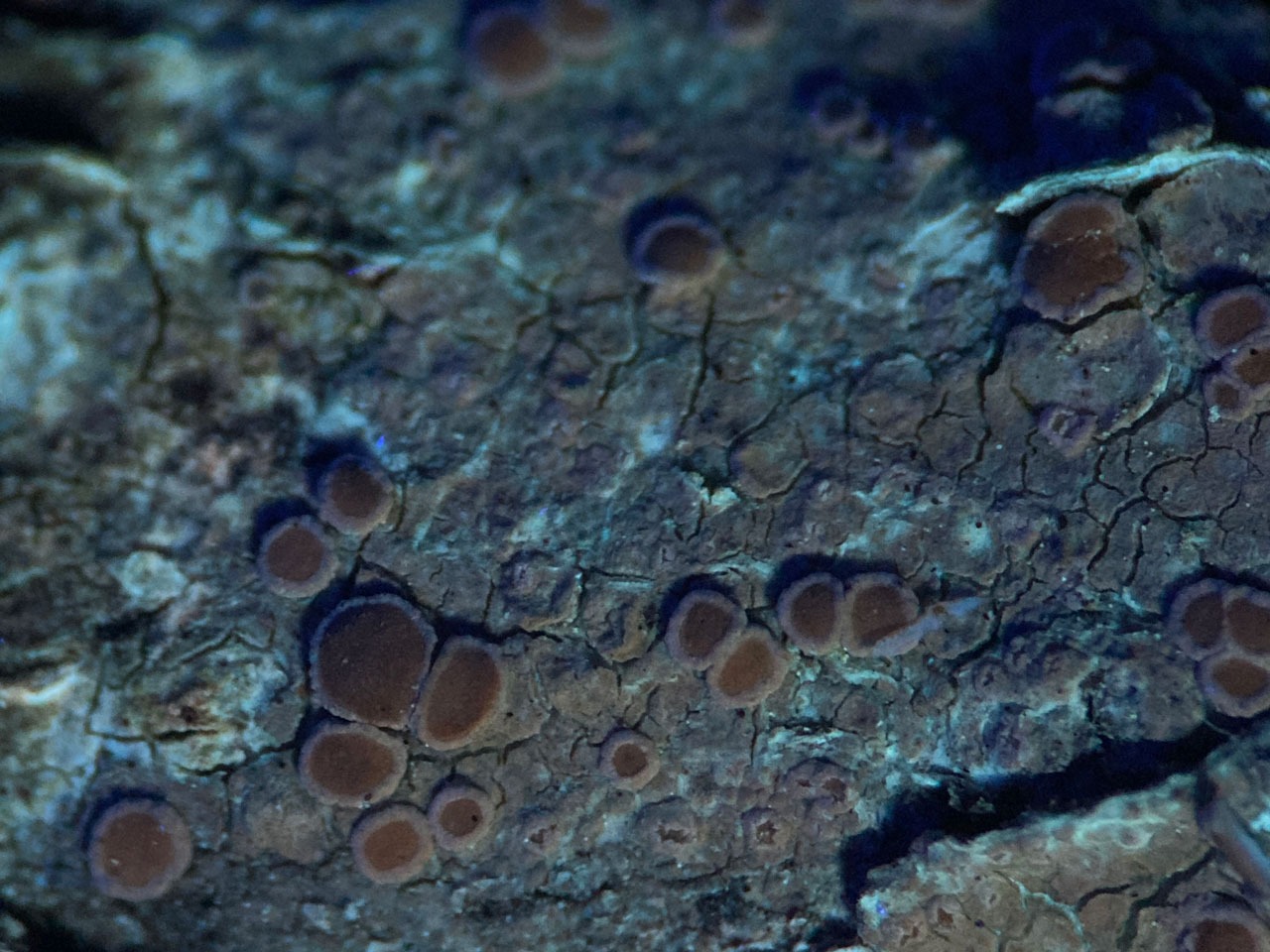
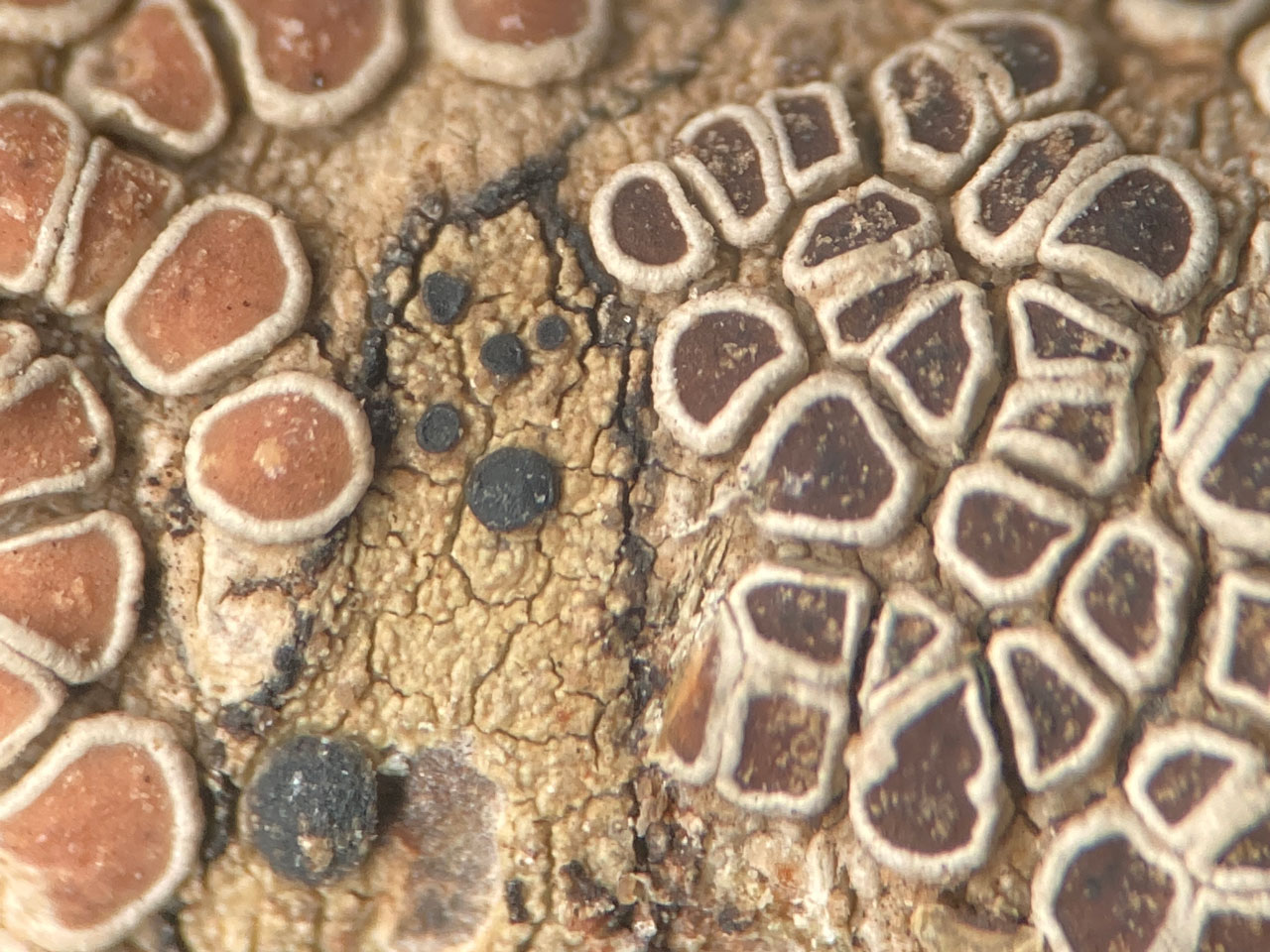
Lecanora chlarotera was often used as a catch all field name for epiphytic members of L. subfusca group, which were not clearly L. argentata. Closer examination has shown this concept of L. chlarotera s. lat. actually included the more frequent L. hybocarpa s. lat. (itself three cryptic species) and L. argentata with paler disks. Lecanora chlarotera s. str. requires microscopical examination for certain identification, but well developed material is somewhat field distinct in the clear mid orange-brown disk colour as opposed to the typically paler L. hybocarpa s. lat. disks and the darker disks of L. argentata and L. pseudargentata. Lecanora chlarotera s. str. occurs on well lit twigs and trunks and is frequent in the west but seems sensitive to ammonia pollution and appears to be largely, to completely, replaced by L. hybocarpa s. lat. in areas with significant ammonia pollution.
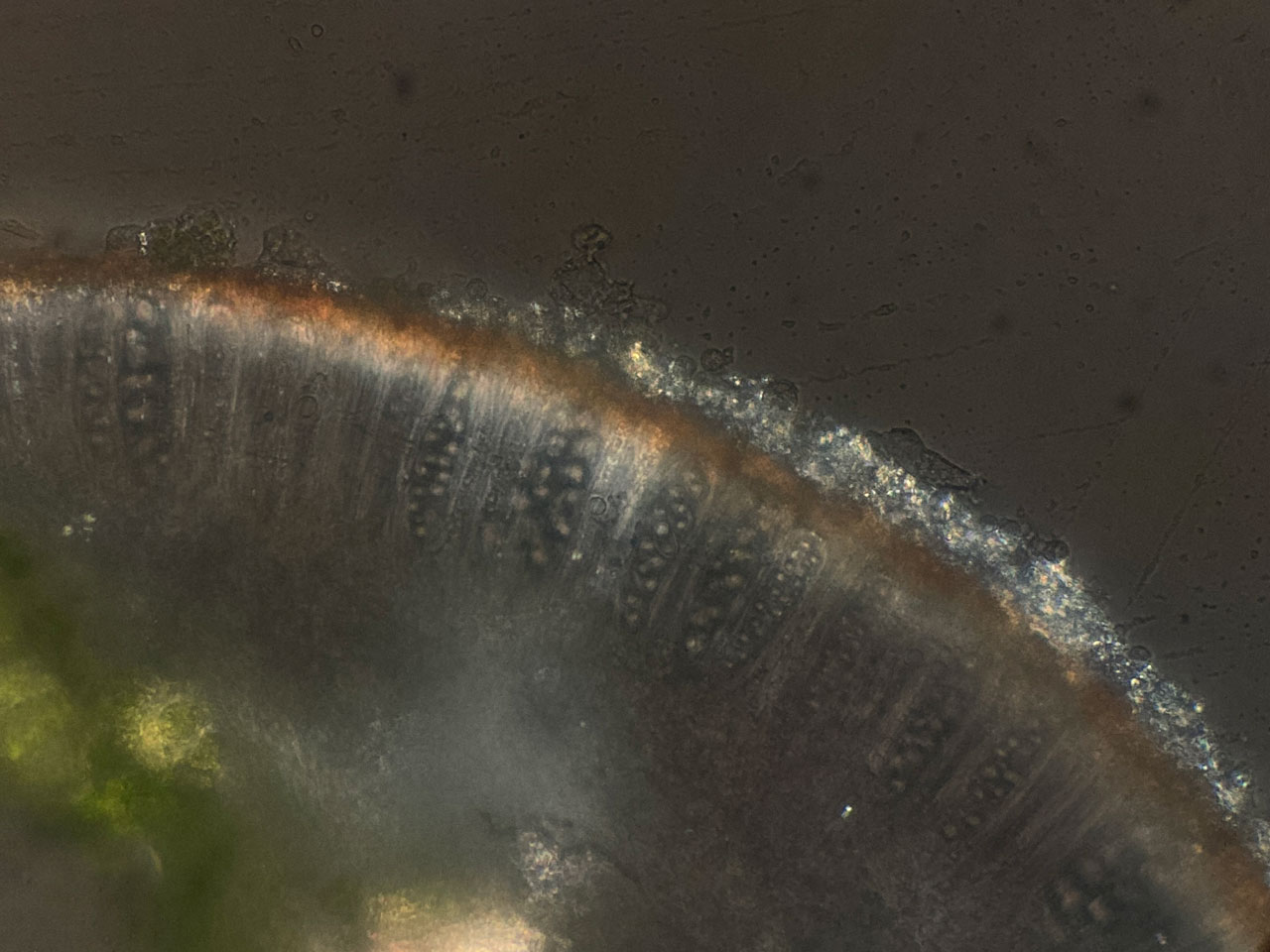
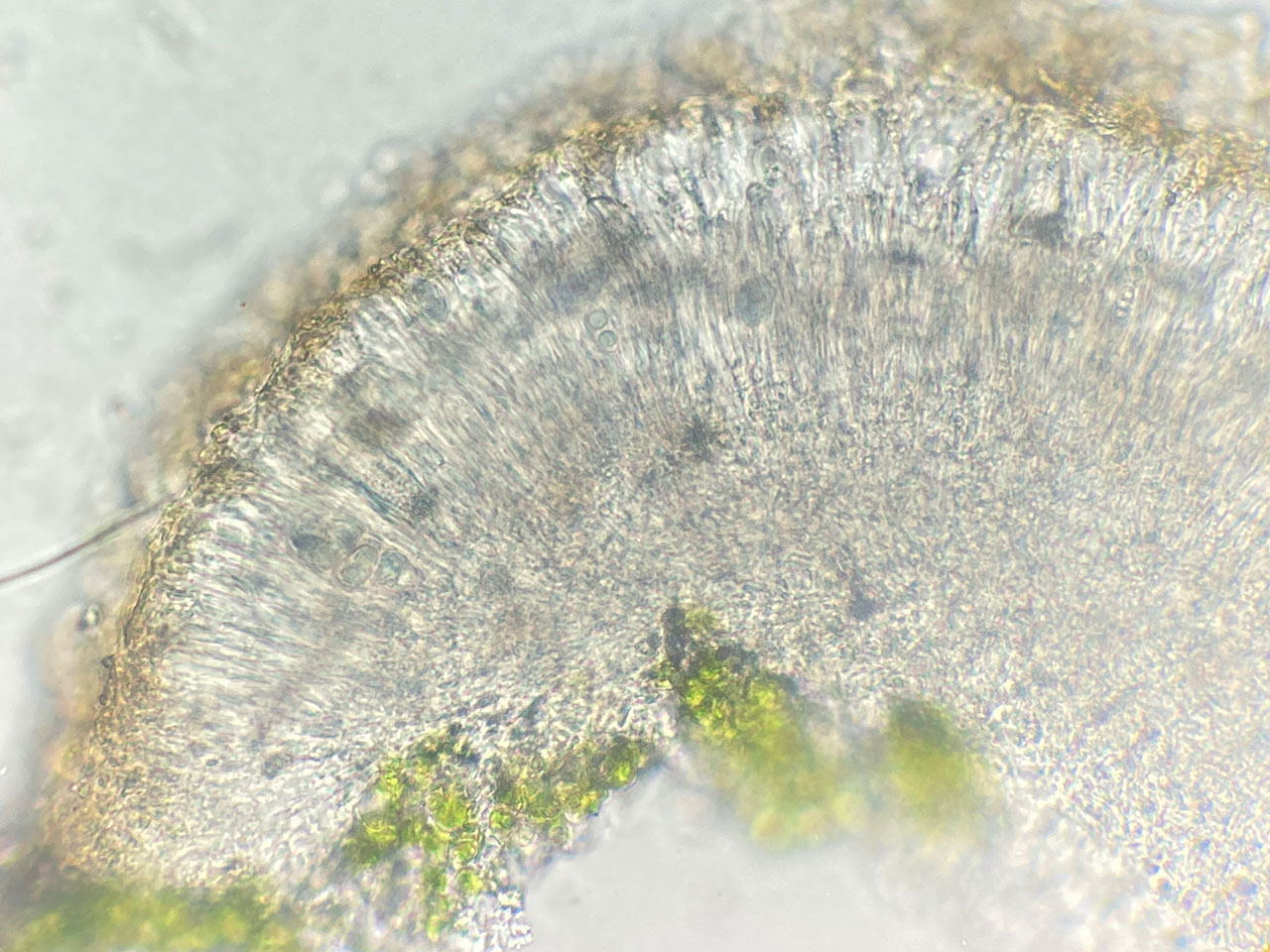
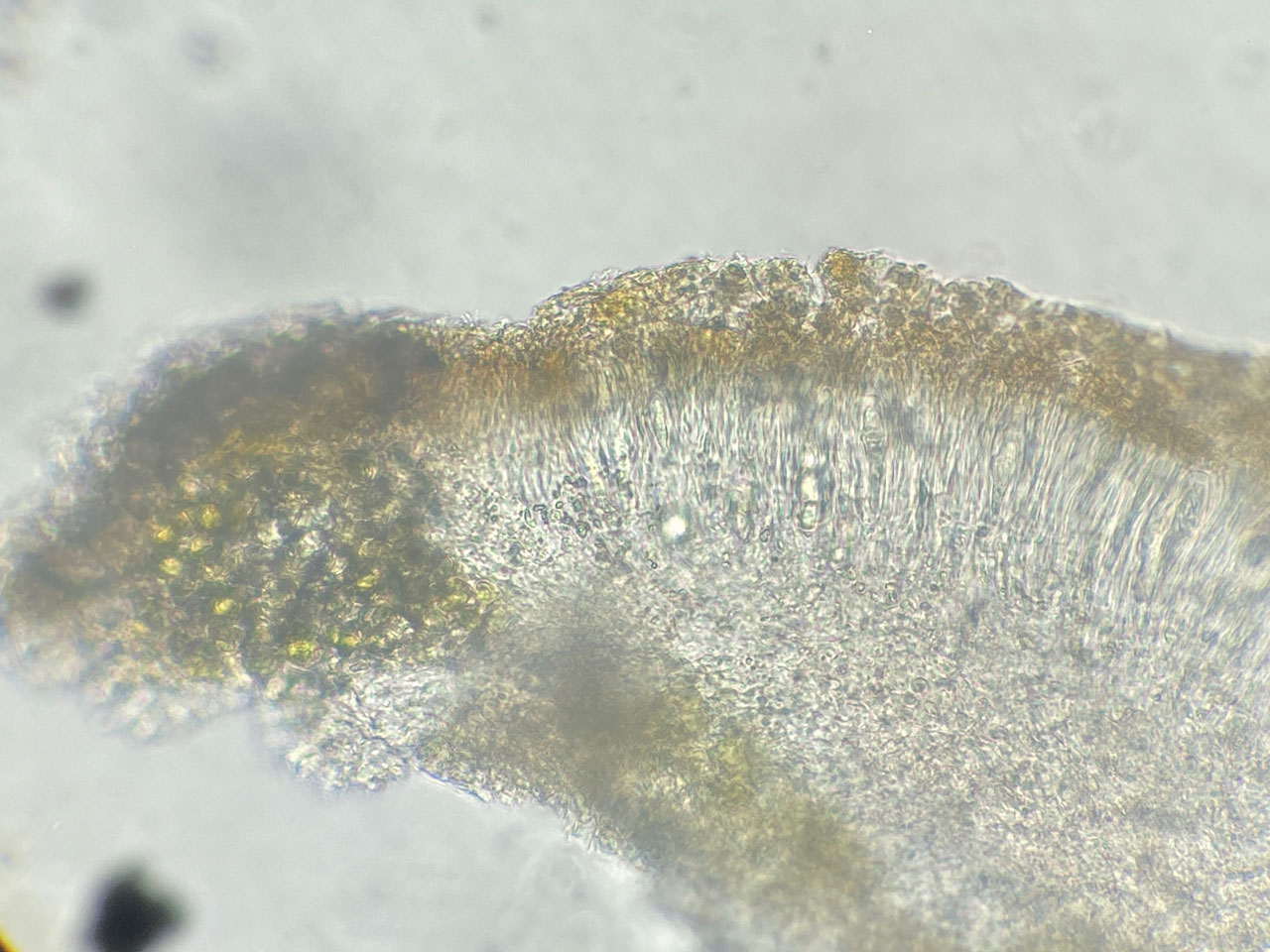
Thallus continuous, forming neatly delimited patches, smooth to roughened or warty, pale grey or sometimes yellow-grey; prothallus white, sometimes conspicuous in rapidly growing thalli. Apothecia 0.4–0.8 (–1.5) mm diam., sessile, often aggregated; thalline margin well-developed, peristent, entire to irregularly crenulate or slightly warted, the medulla with massive irregular crystal clusters not dissolving in K; disc flat, pale dull brown to rose- or orange- brown, sometimes very dark brown on twigs in the south, not or rarely slightly pruinose; epithecium usually beige to pale brown, with numerous coarse granules which do not extend down below the paraphysis tips and are soluble in K and slowly in N; hymenium 70–95 µm tall; paraphyses 1.5–2 µm diam., unbranched or sparsely branched, apices 2.5–4 µm diam., slightly swollen and yellow-brown, not capitate. Asci 65–80 × 10–15 µm, subcylindrical to elongate-clavate. Ascospores (9–) 11–15 × 6.5–7.5 (–8.5) µm, broadly ellipsoidal. Conidia 10–14 µm long, cylindrical. Thallus C–, K+ yellow, Pd–, UV reflecting mauve-purple or UV+ orange-brown (gangaleoidin chemotype) (atranorin, chlarotera-unknown, ± gangaleoidin with derivatives, ± roccellic acid).
Traditionally considered to be the commonest corticolous member of the L. subfusca group in the region, but Lecanora chlarotera s. lat. was extremely variable and subsequent studies indicated that overlooked taxa were included; the map of Lecanora chlarotera s. lat. should be interpreted with caution.
Much confused with L. hybocarpa s. lat., which has pale brownish crystals that extend down between the paraphyses that dissolve in K but not in N. L. hybocarpa s. lat. appears much more frequent than L. chlarotera in the south and eastern lowlands at least. Many woodland collections named L. chlarotera in the past prove to be L. argentata, which lacks a granular layer above the paraphysis tips. Care should be taken when separating the superficially similar and primarily saxicolous L. campestris; specimens of that species on timber or dust-impregnated bark can be distinguished by the presence of small crystals only in the thalline margin. L. pulicaris differs in the Pd+ red exciple and the red to orange-brown epithecium with fine granules, not soluble in N. A Pd– chemotype of L. pulicaris may occur but seems not to have been recorded in GBI. Lecanora pseudargentata also has has similar granules in the epithecium to L. chlarotera but has typically darker chestnut disks, which often have thin pruina on them which are UV+ blue-grey/mauve, a red-brown epithecium, smaller spores a more constantly UV+ orange-brown thallus.
Specimens with well-developed, irregularly warted thalline margin and coarsely uneven-warted thallus are sometimes called L. rugosella Zahlbr. (1928). Others with dark disks and olive epithecium have been called L. meridionalis H. Magn. (1932). See also L. horiza and Myriolecis populicola. Small-fruited specimens resemble Lecania fuscella.
Proven Lecanora chlarotera s. str. has recently mainly been found on twigs and non woodland trees in relatively clean air areas. It appears to be largely, to completely, replaced by Lecanora hybocarpa s. lat. in areas with significant ammonia pollution, which includes much of lowland England. The not infrequent records of Lecanora chlarotera s. lat. from calcareous sandstone, brick etc require checking, the probability is that these are also Lecanora hybocarpa s. lat. in the main.
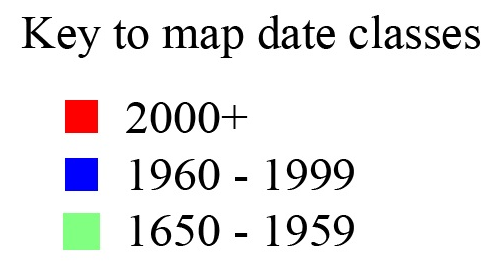
Lecanora chlarotera s. lat. is recorded throughout Britain and Ireland but over-recorded in many areas and Lecanora chlarotera s. str. appears rare to absent in parts of the lowlands, but is more frequent in the west and north.
Lecanora chlarotera s. str. appears frequent in clean air areas, but it is likely to have declined in areas with rising ammonia pollution. A study of historic specimens may shed light on this.
Cannon, P., Malíček, J., Ivanovich, C., Printzen, C., Aptroot, A., Coppins, B., Sanderson, N., Simkin, J. & Yahr, R. (2022). Lecanorales: Lecanoraceae, including the genera Ameliella, Bryonora, Carbonea, Claurouxia, Clauzadeana, Glaucomaria, Japewia, Japewiella, Lecanora, Lecidella, Miriquidica, Myriolecis, Palicella, Protoparmeliopsis, Pyrrhospora and Traponora. Revisions of British and Irish Lichens 25: 1-83.
Text by Neil A Sanderson based on Cannon et al (2022)