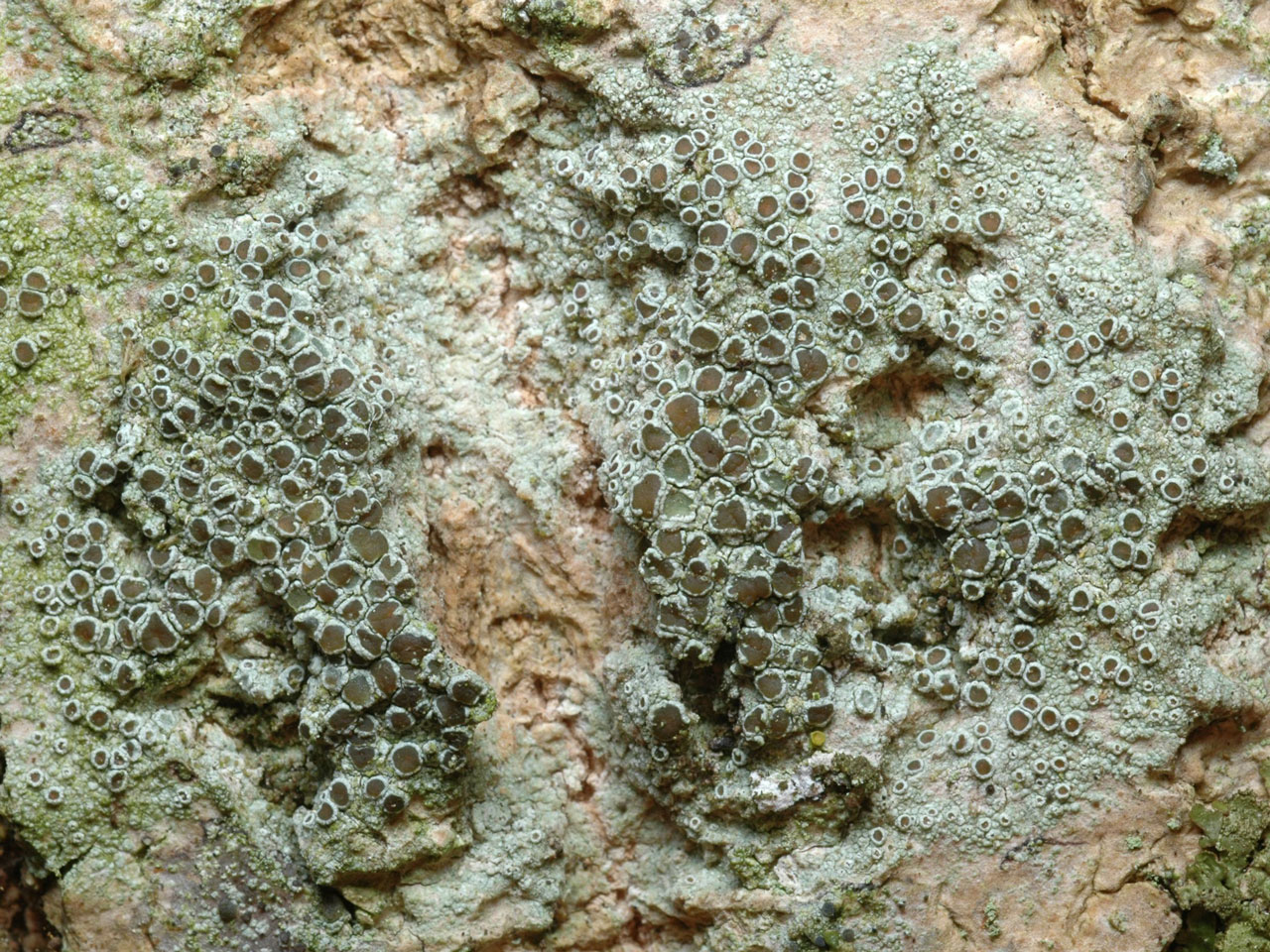
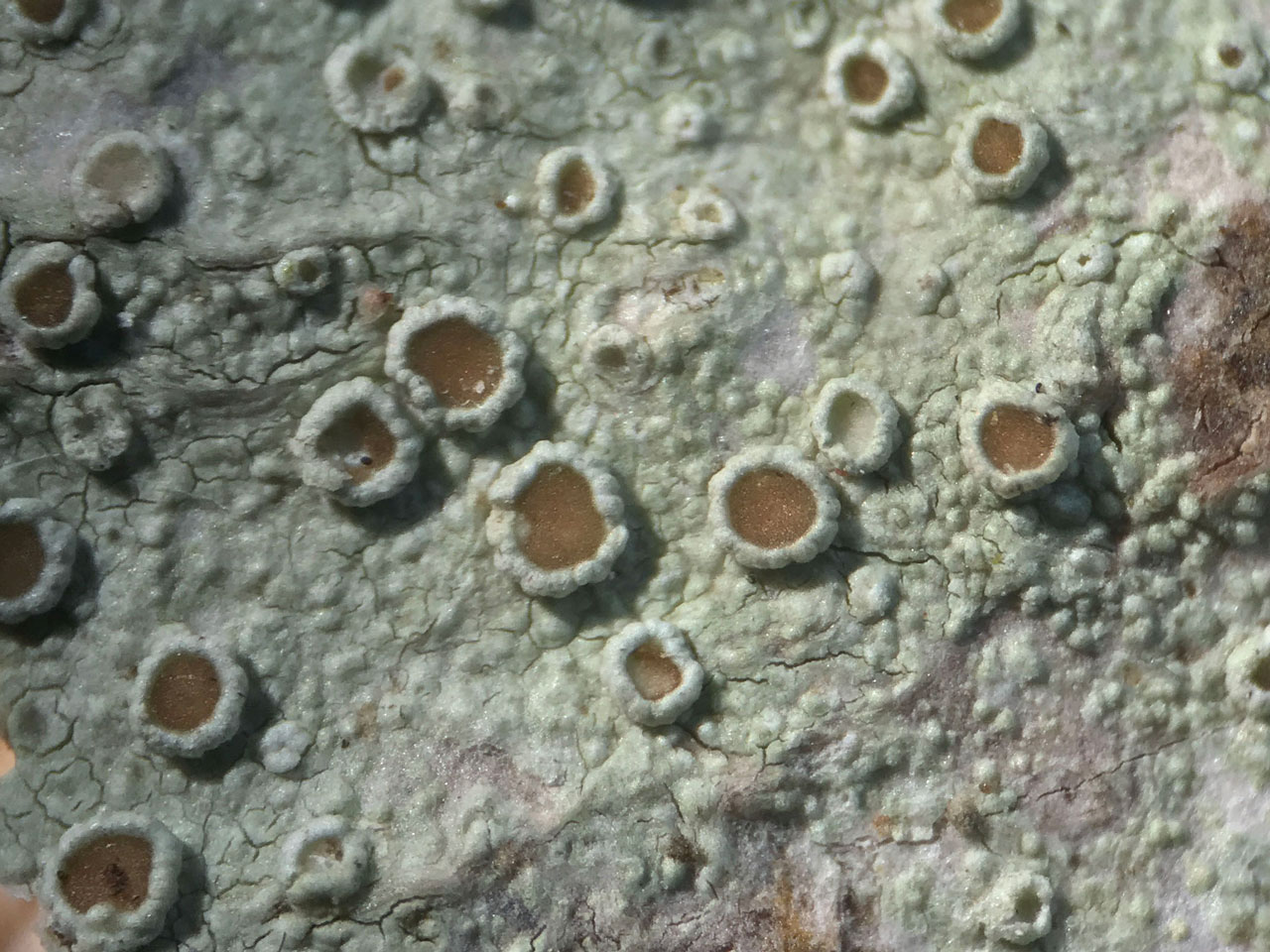
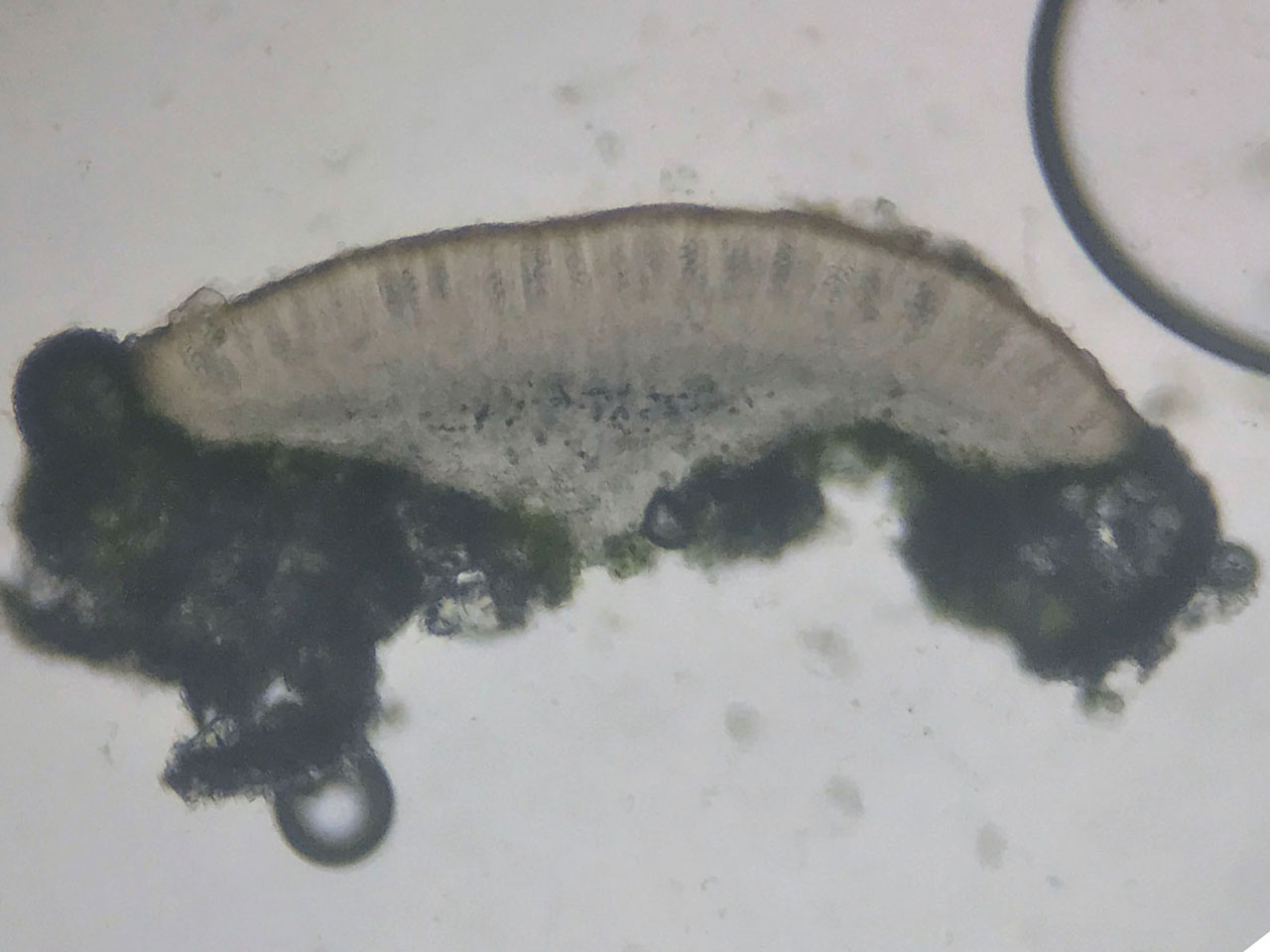
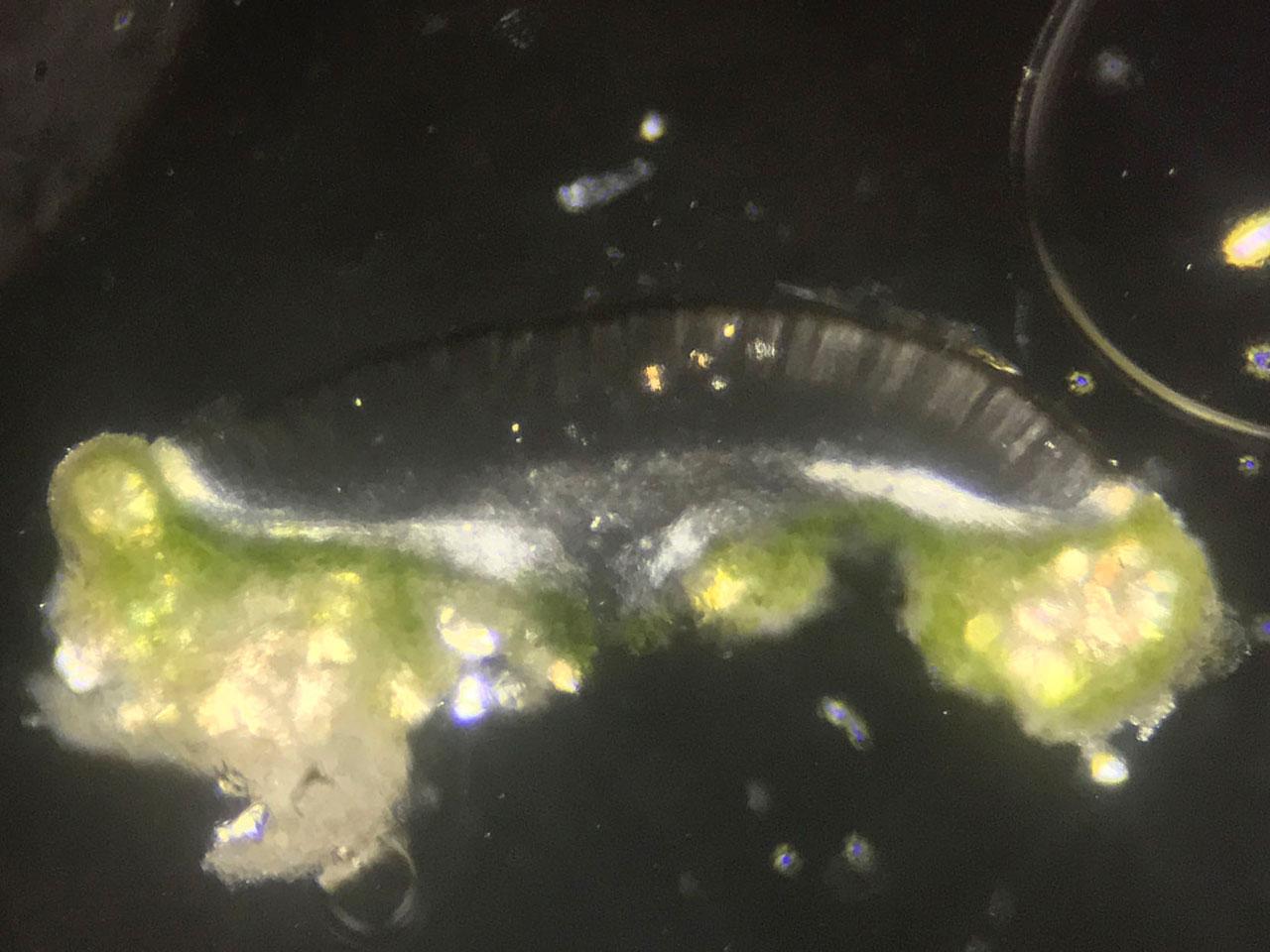
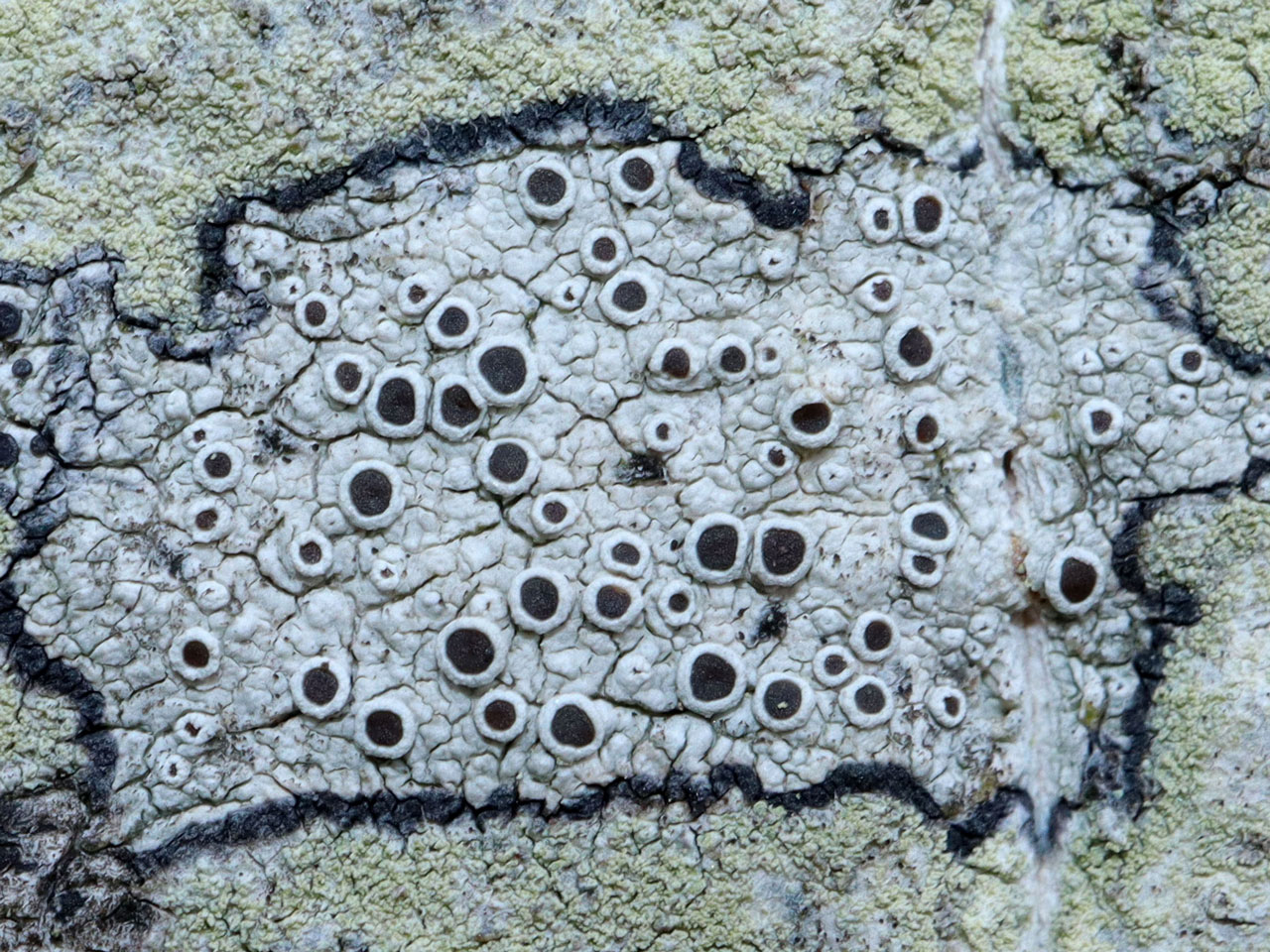
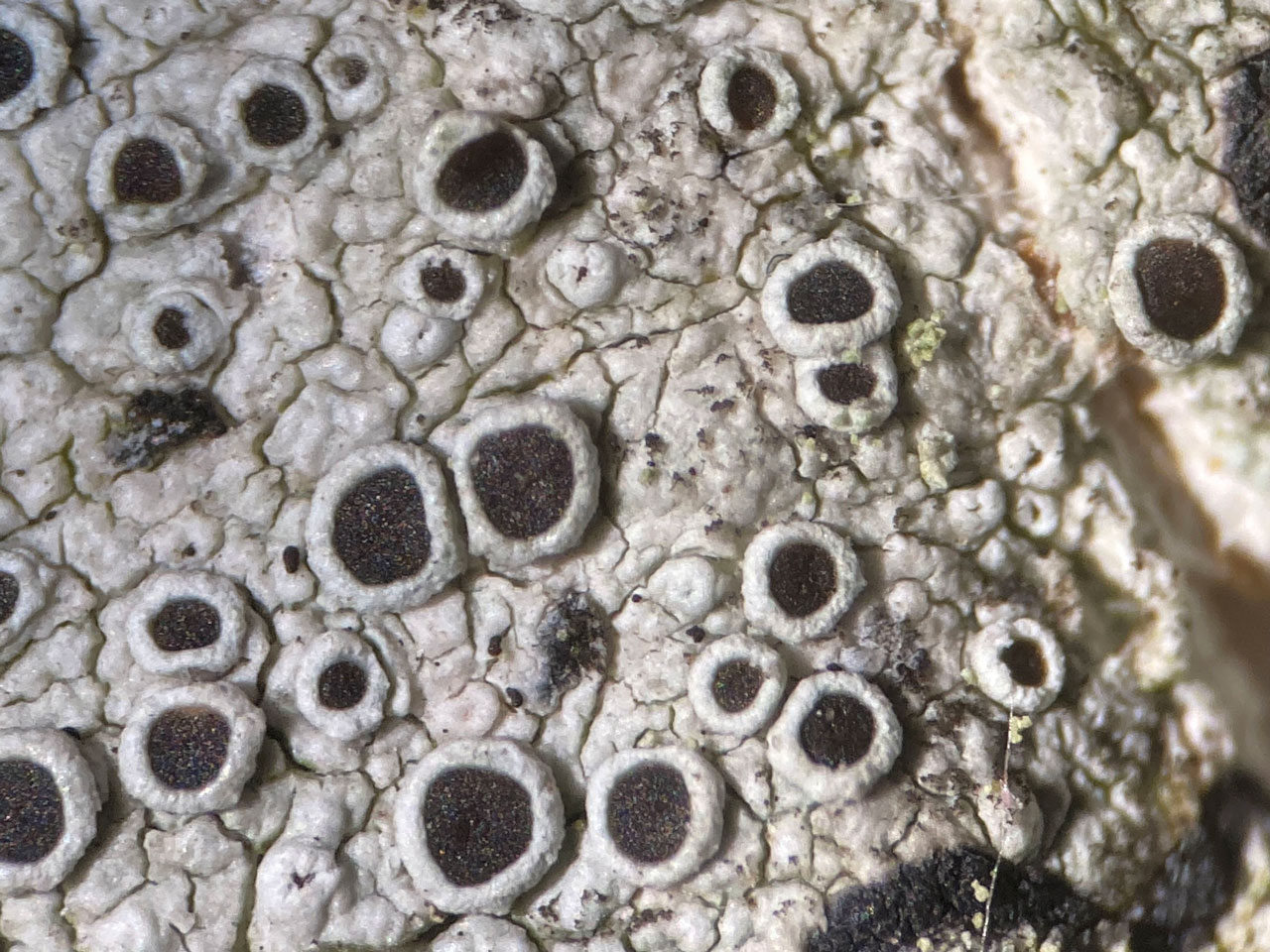
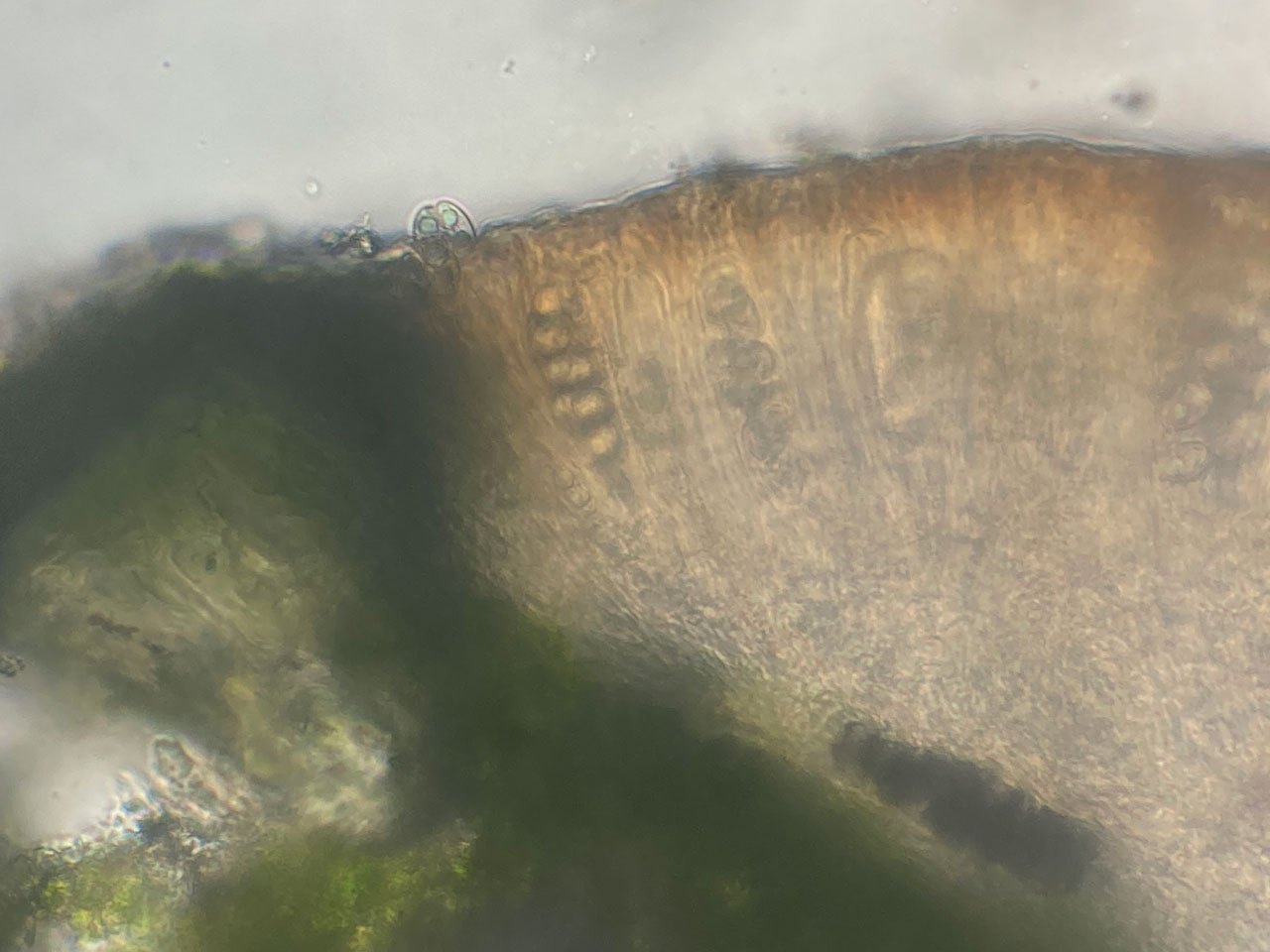
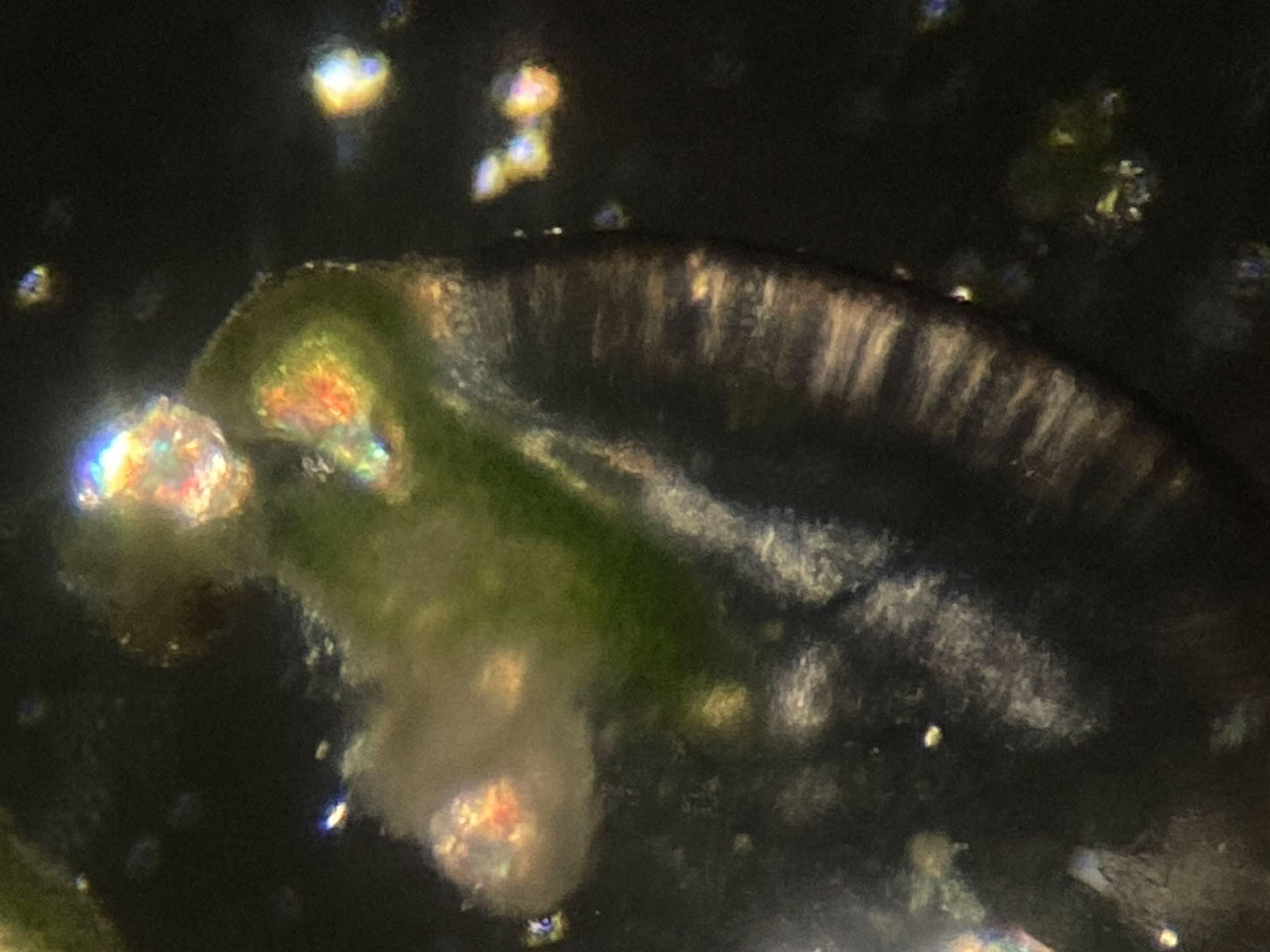
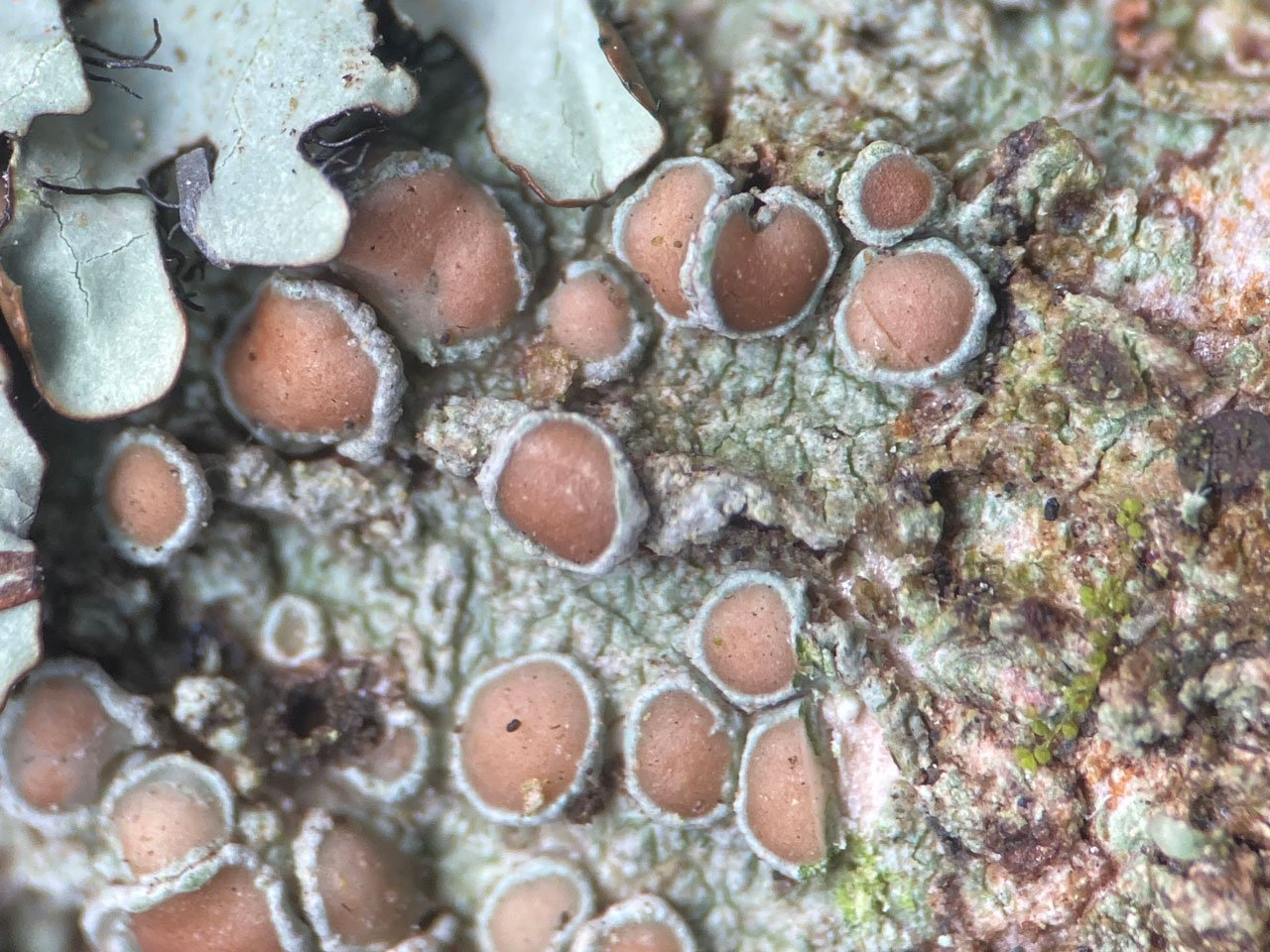
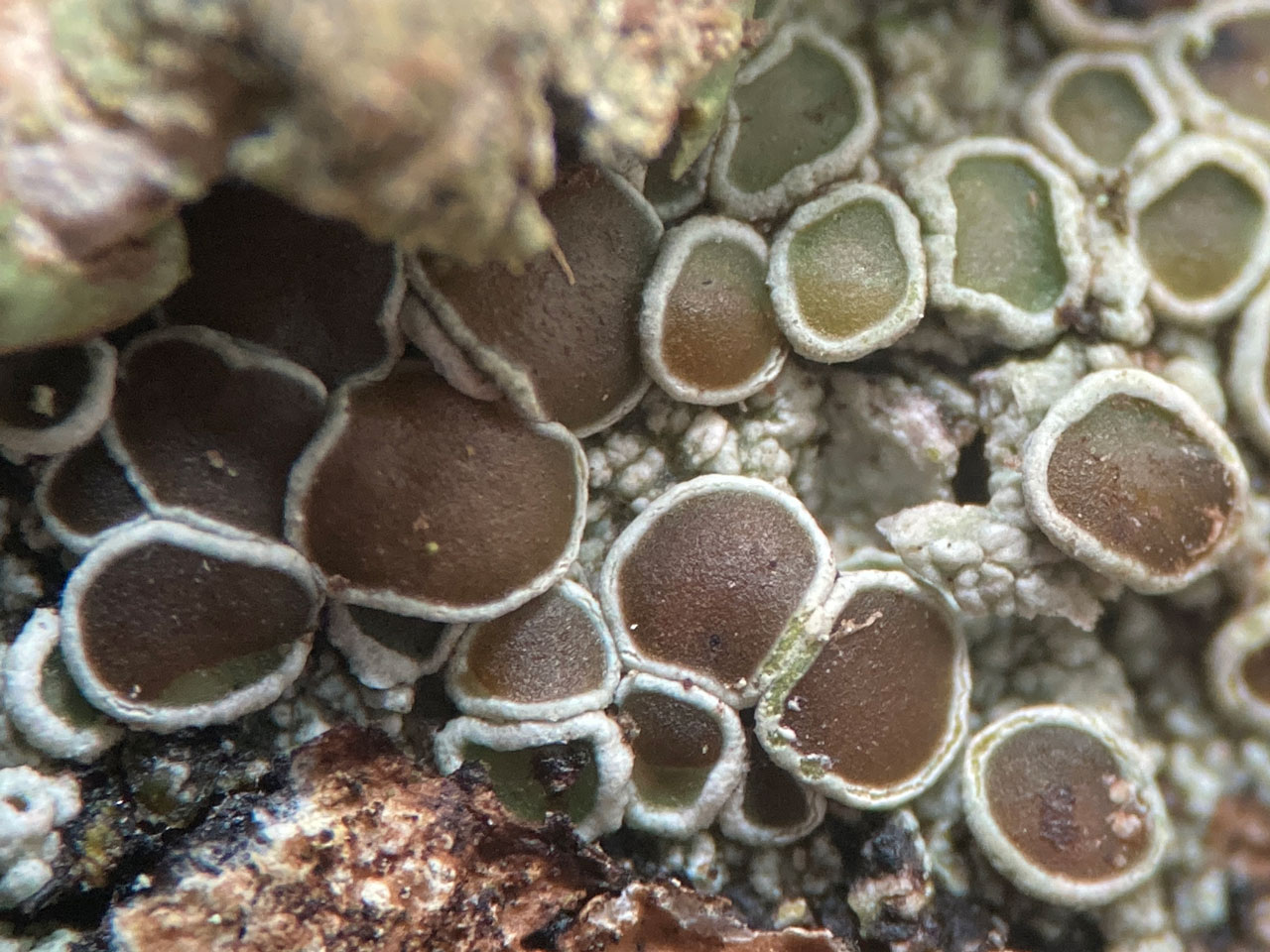
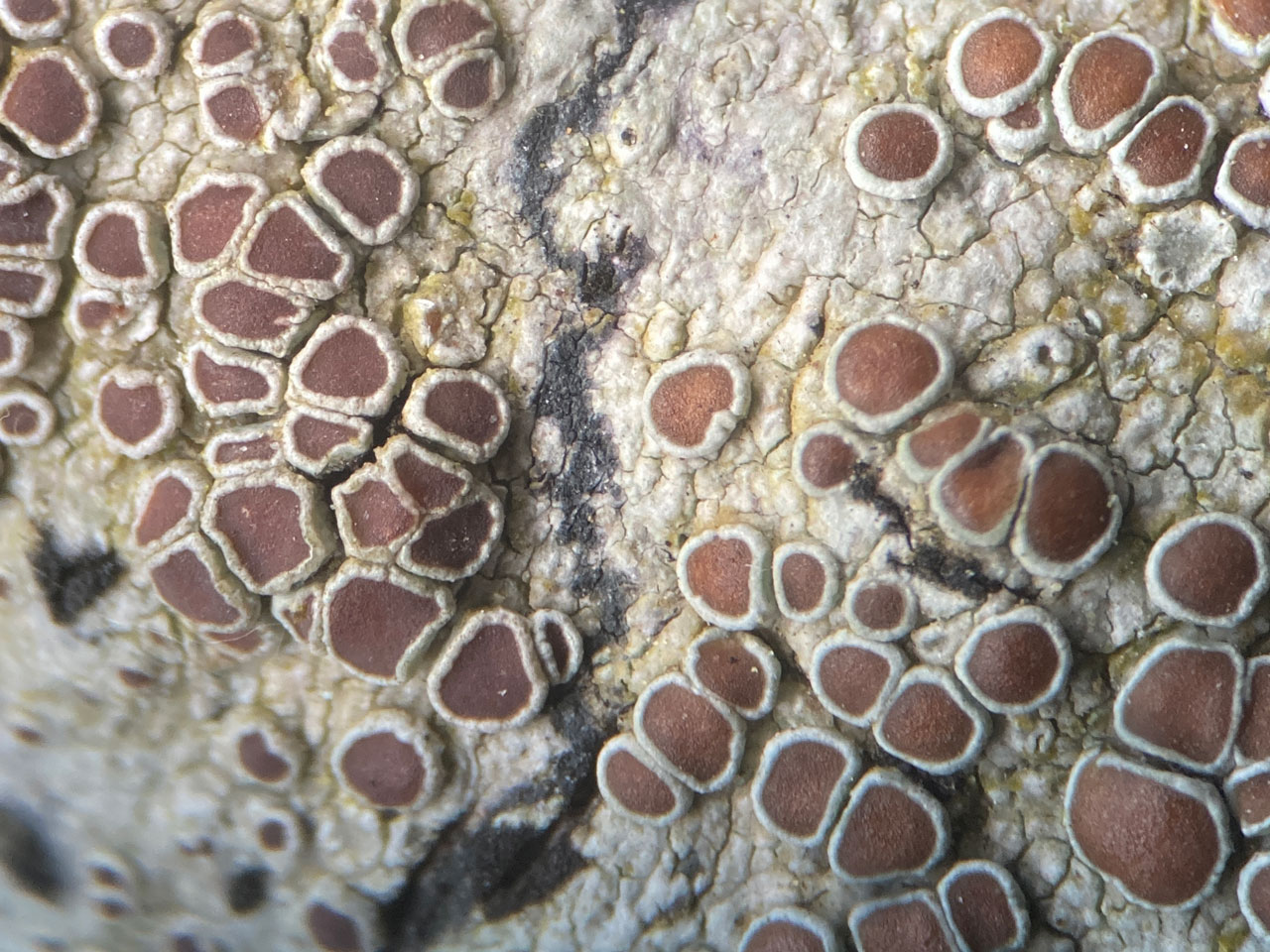
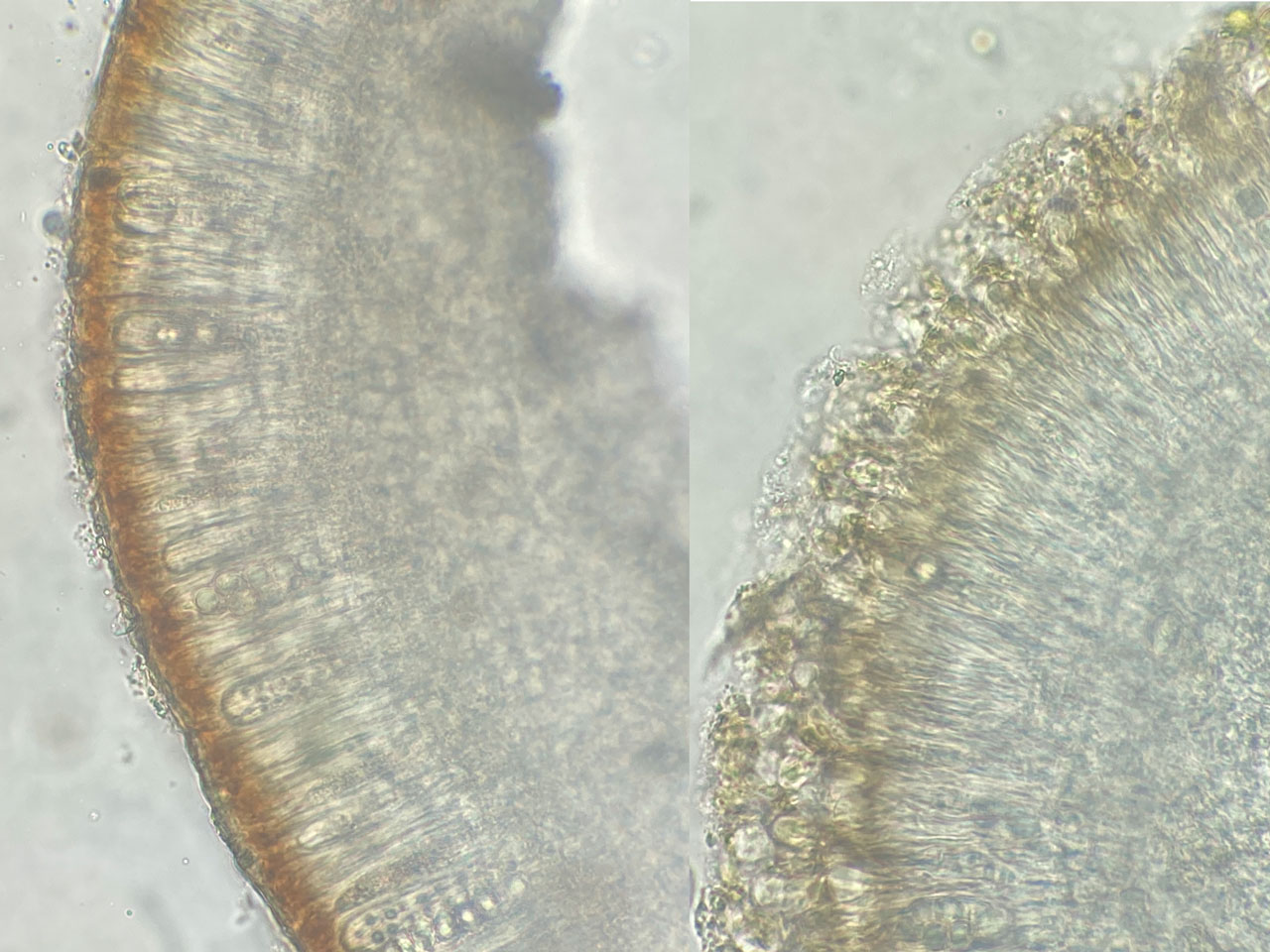
A distinctive member of the L. subfusca group, separated from L. chlarotera and allied species (Lecanora chlarotera s. lat.) by the absence of granules in the epithecium. Well developed material typically has darker brown disks than is typical of either L. chlarotera or L. hybocarpa s. lat. but poorly developed thalli with paler disks are less distinct. Lecanora pseudargentata and Lecanora pulicaris also typically have a dark brown disks but both have granules in the epithecium and have distinctive UV+ or Pd+ spot tests respectively. The dominant member of the L. subfusca group on the trunks of mature trees and generally within woodland in the west, but it does occur occasionally on twigs with other members of the L. subfusca group.
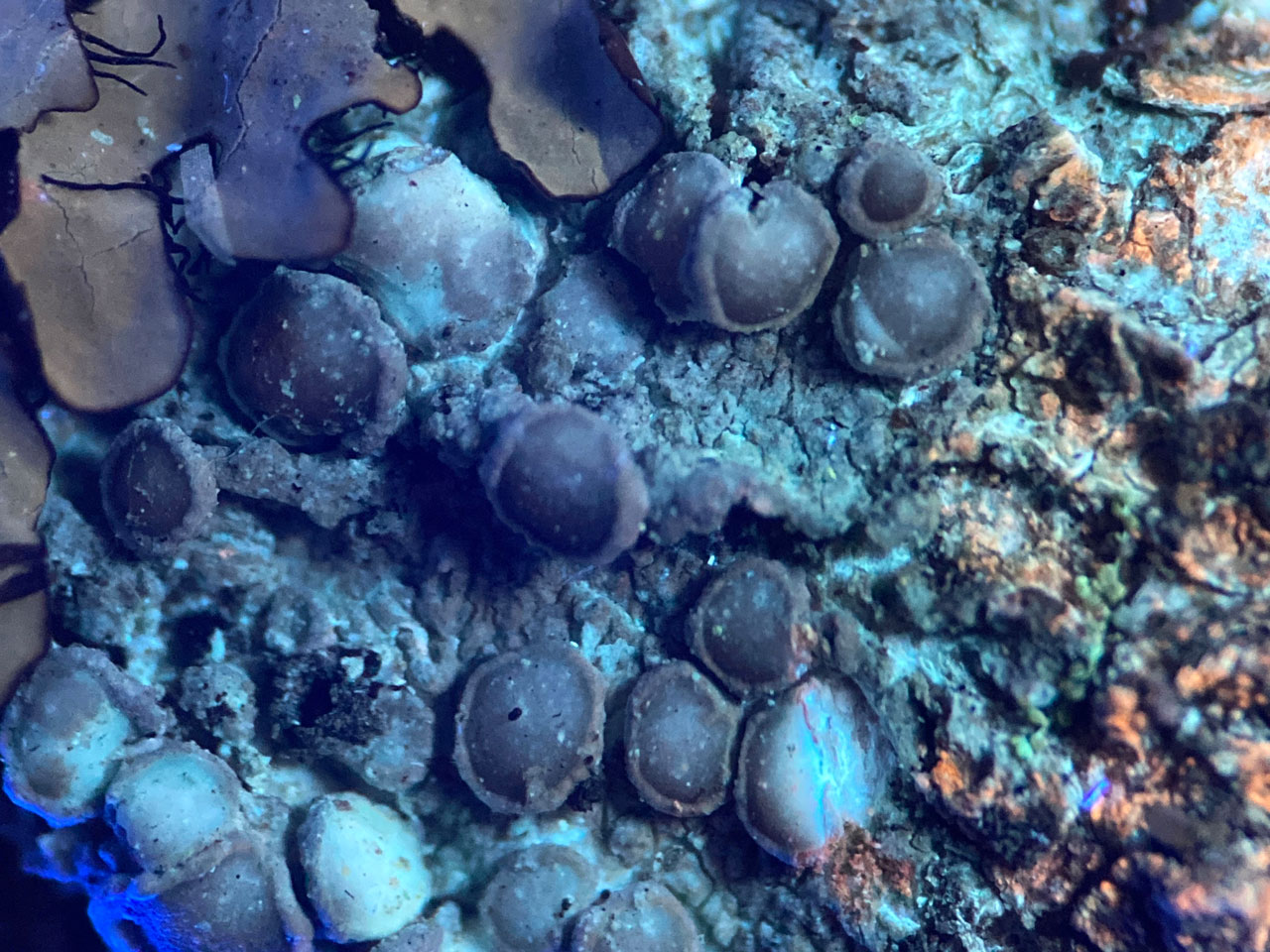
Thallus continuous, yellow- to green-white, smooth at the margins but uneven to warted centrally; prothallus usually black and well-developed. Apothecia 0.4–1 mm diam., sessile, dispersed or aggregated, constricted below; thalline margin persistent, smooth to strongly crenulate, containing massive crystals not soluble in K; disc red or dark brown, sometimes piebald; epithecium red-brown, pigment only partly disolving in K, without granules, not pruinose; hymenium (60–) 75–90 (–100) µm tall; paraphyses 1.5–2 µm diam., sparsely branched and anastomosed, apices to 3 µm diam., slightly swollen, faintly yellow. Asci 45–55 × 18–22 µm, broadly clavate. Ascospores (10.5–) 11.5–14.5 (–17.5) × (5.5–) 6–8.5 µm, broadly ellipsoidal, walls 0.5–1 µm thick. Thallus C–, K+ yellow, Pd+ weakly yellow, UV– or weekly UV+ orange-brown (from gangaleoidin) on the thaline margins (atranorin, gangaleoidin, usually traces of norgangaleoidin and rarely roccellic acid).
A distinctive member of the L. subfusca group, distinguished from L. chlarotera and allied species (Lecanora chlarotera s. lat.) by the absence of granules in the epithecium.
Typically noted in more mature habitats as having a brighter white thallus and darker disks than typical of either L. chlarotera or L. hybocarpa s. lat. but microscopic examination is recommended to confirm the identity. Lecanora pseudargentata has similar dark chestnut disks but has granules in the epithecium, a more strongly UV+ orange-brown thallus and often thin pruina on the disk which are UV+ blue-grey/mauve. Lecanora pulicaris also has a dark brown disk but has a Pd+ orange-red thalline margin, the epithecium has granules and it grows on more acidic substrates.
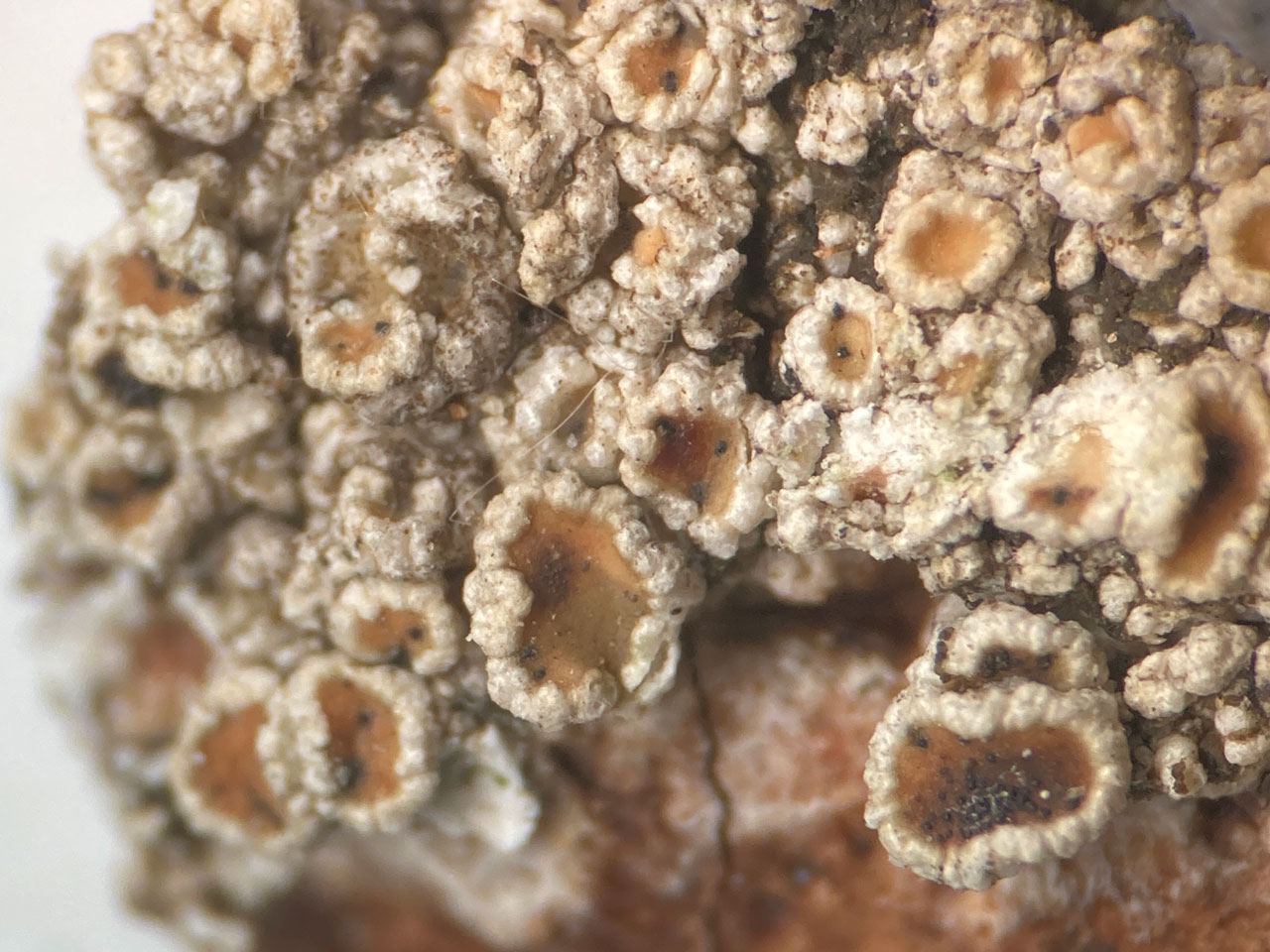
Specimens with well-developed, irregularly warted thalline margin and coarsely uneven-warted thallus occur and could be called Lecanora subrugosa Nyl. (1875) but this is now regarded as a morph of Lecanora argentata and it was never officially listed in Britain. Occurences were likely misrecorded as L. rugosella Zahlbr. (1928), now regarded as a morph of Lecanora chlarotera s. str.
Commonly host to Vouauxiella lichenicola, and more rarely to Skyttea lecanorae Diederich & Etayo (2000) and Lichenodiplis cf. pertusariicola (Nyl.) Diederich (2003). Other lichenicolous fungi may occur, but have only been recorded as growing on Lecanora chlarotera s. lat.
On bark of deciduous trees. The dominant member of the L. subfusca group on the trunks of mature trees and generally within woodland in the west, but it does occur occasionally on twigs with other members of the L. subfusca group.
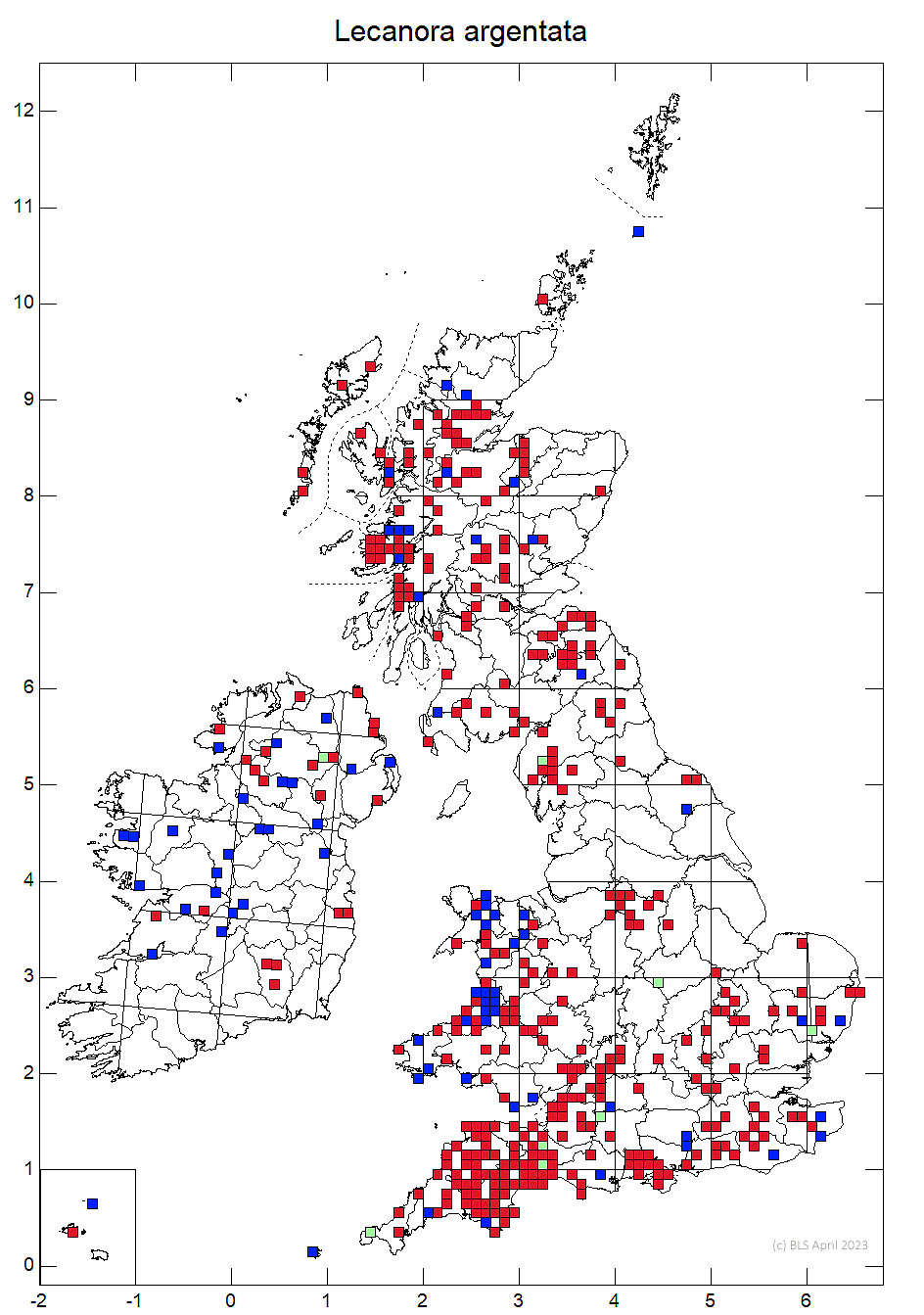


Much overlooked in the past and confused especially with Lecanora chlarotera s. lat. Records now much increased throughout Britain and Ireland, commoner in the west.
Cannon, P., Malíček, J., Ivanovich, C., Printzen, C., Aptroot, A., Coppins, B., Sanderson, N., Simkin, J. & Yahr, R. (2022). Lecanorales: Lecanoraceae, including the genera Ameliella, Bryonora, Carbonea, Claurouxia, Clauzadeana, Glaucomaria, Japewia, Japewiella, Lecanora, Lecidella, Miriquidica, Myriolecis, Palicella, Protoparmeliopsis, Pyrrhospora and Traponora. Revisions of British and Irish Lichens 25: 1-83.
Text by Neil A Sanderson based on Cannon et al (2022)