Lecanora pseudargentata
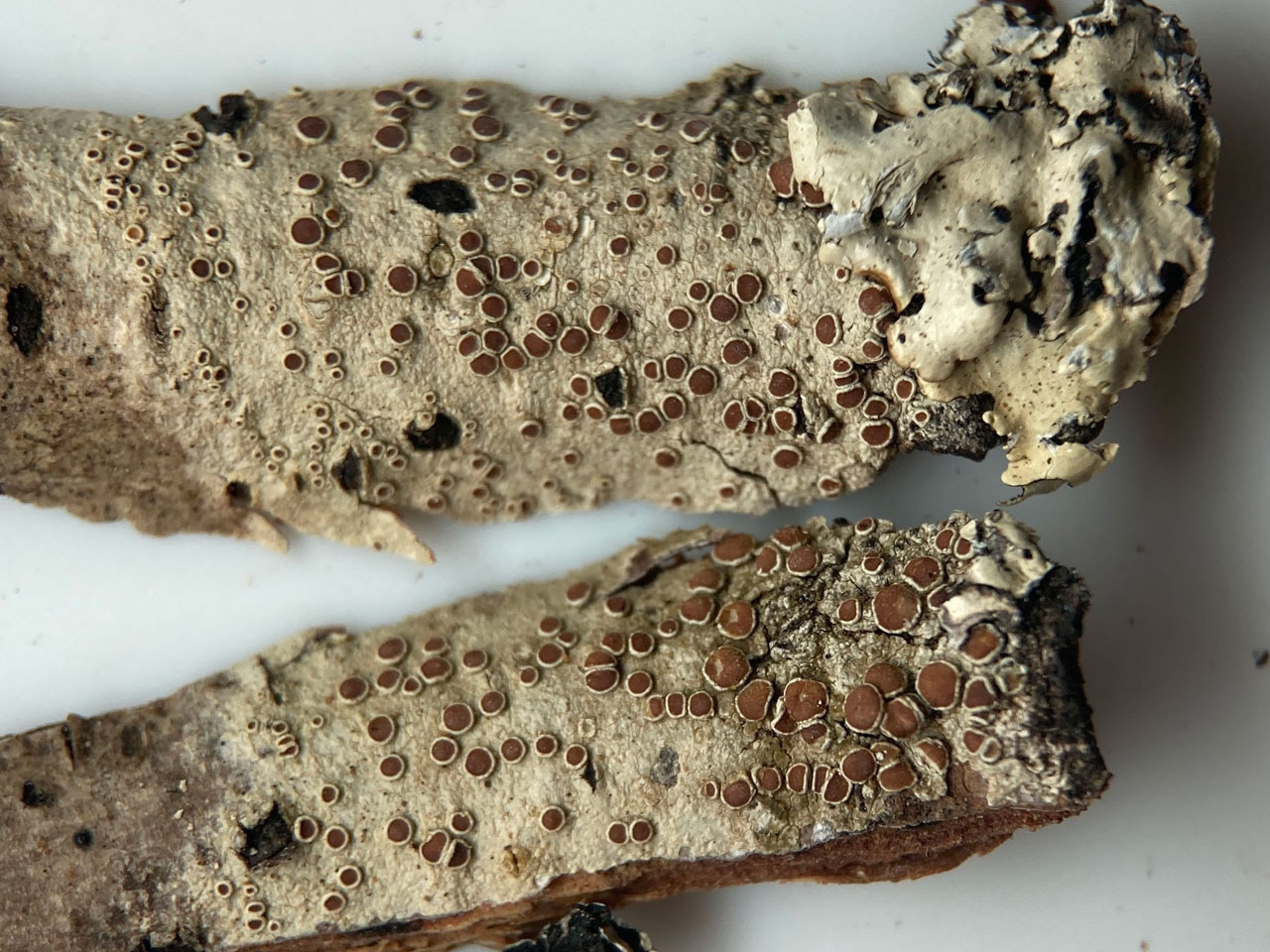
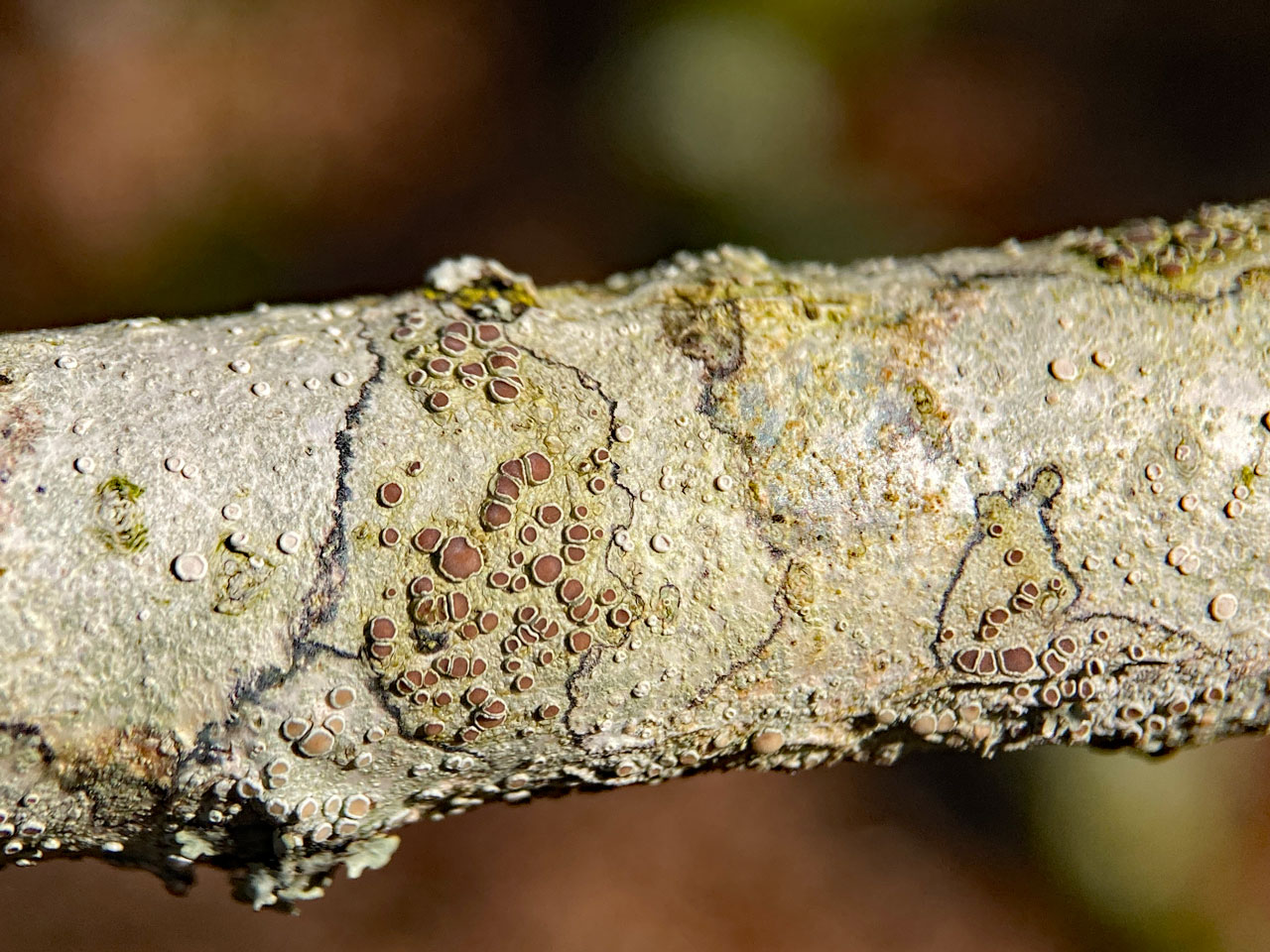
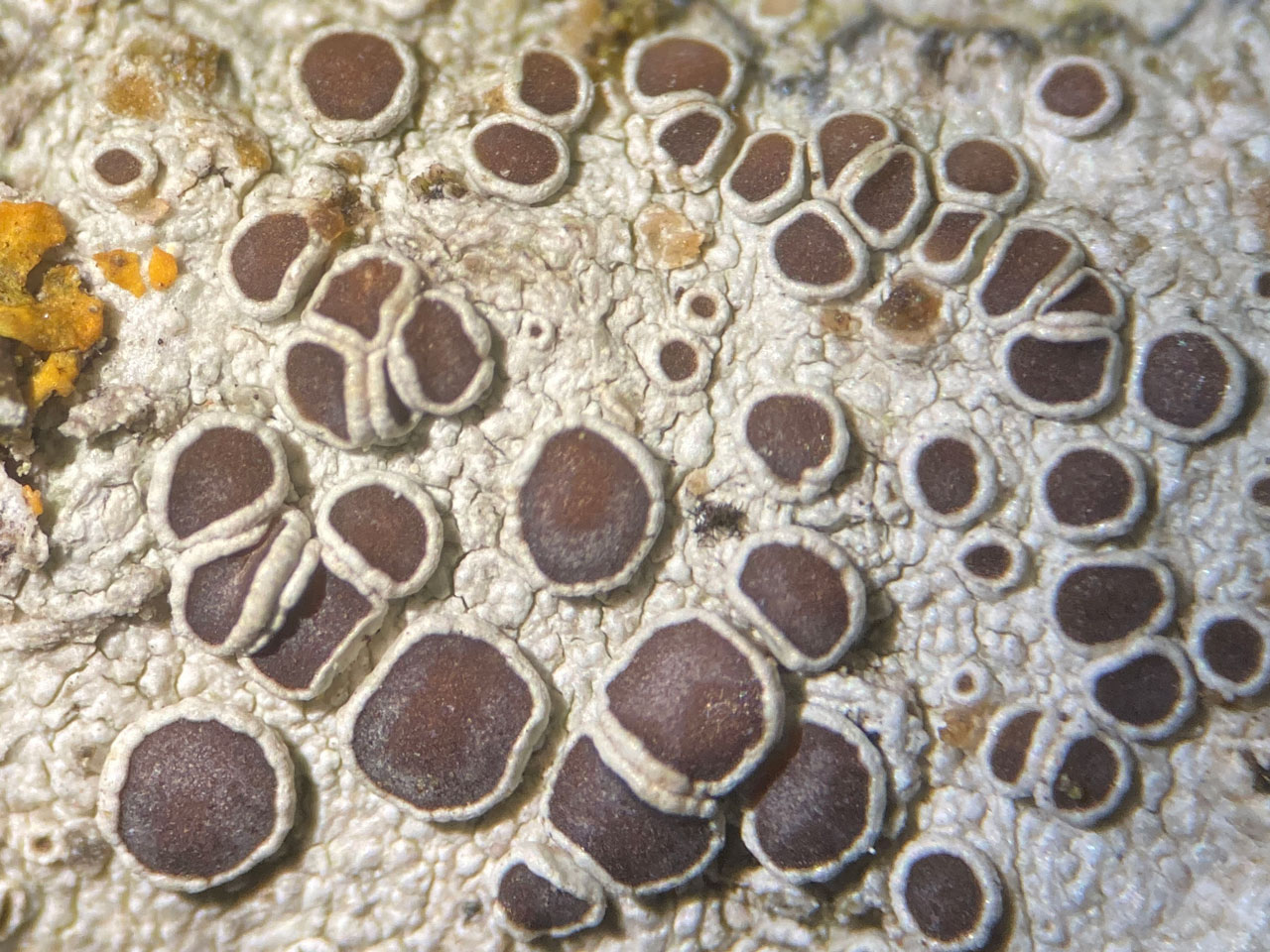
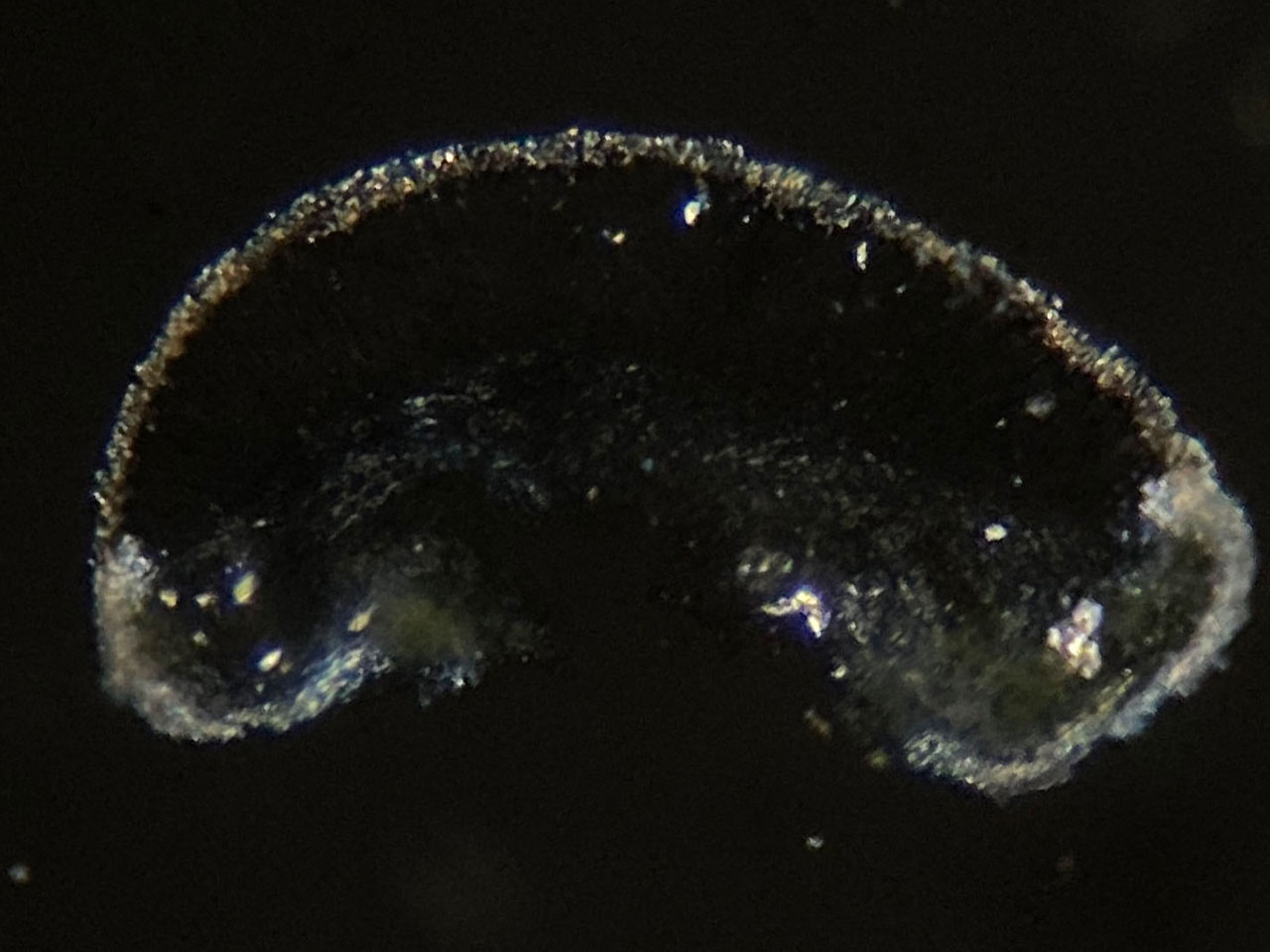
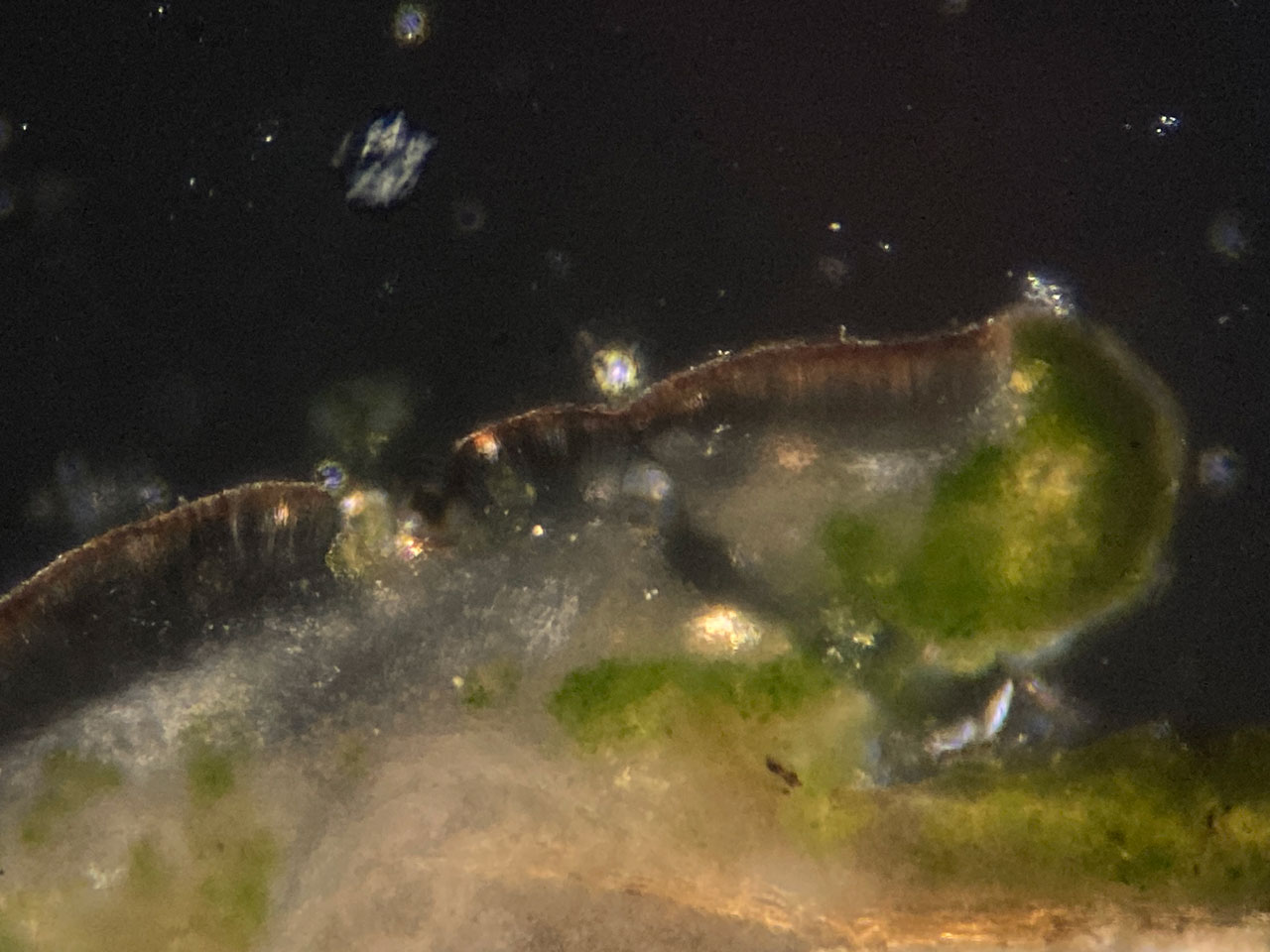
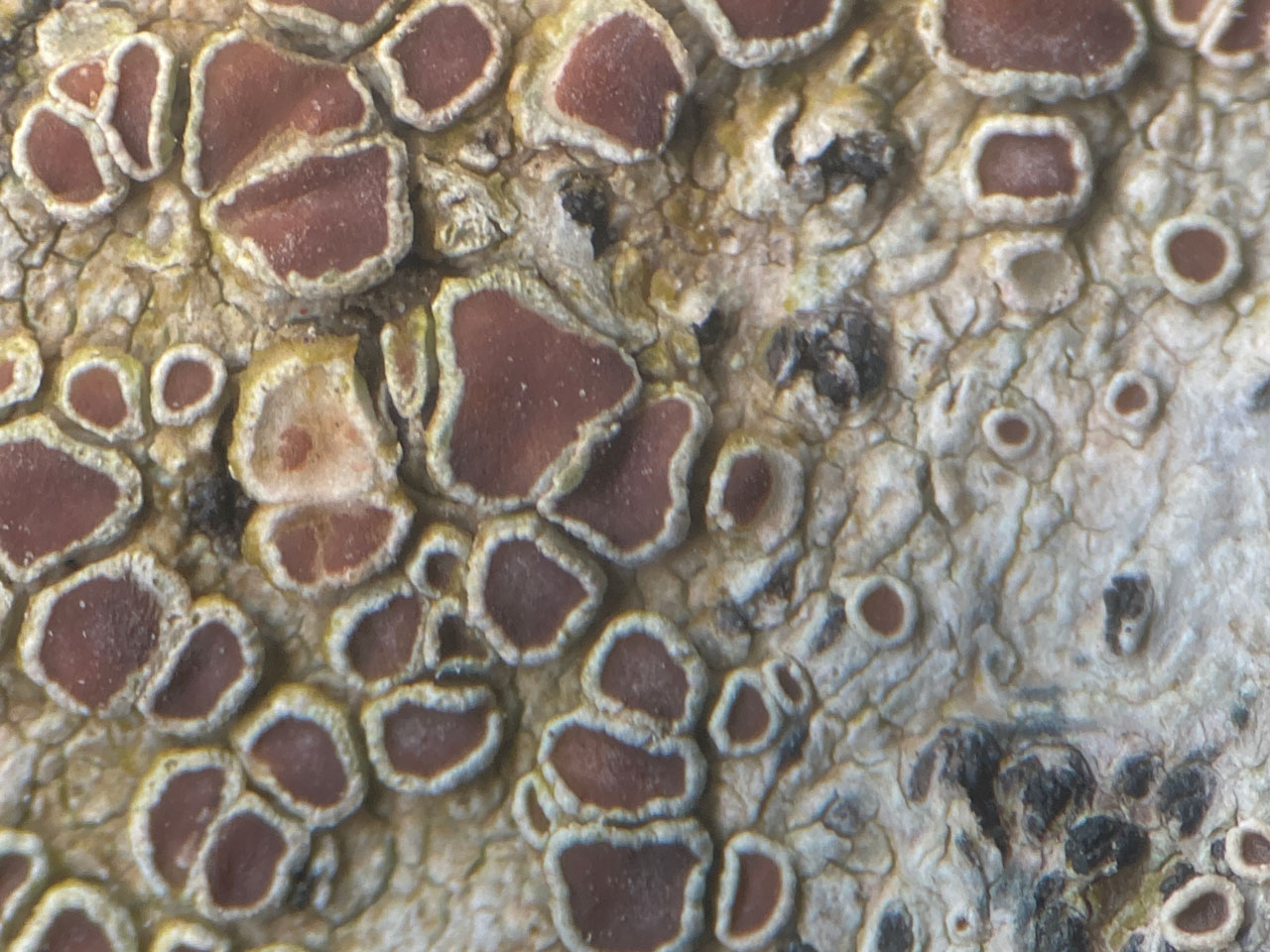
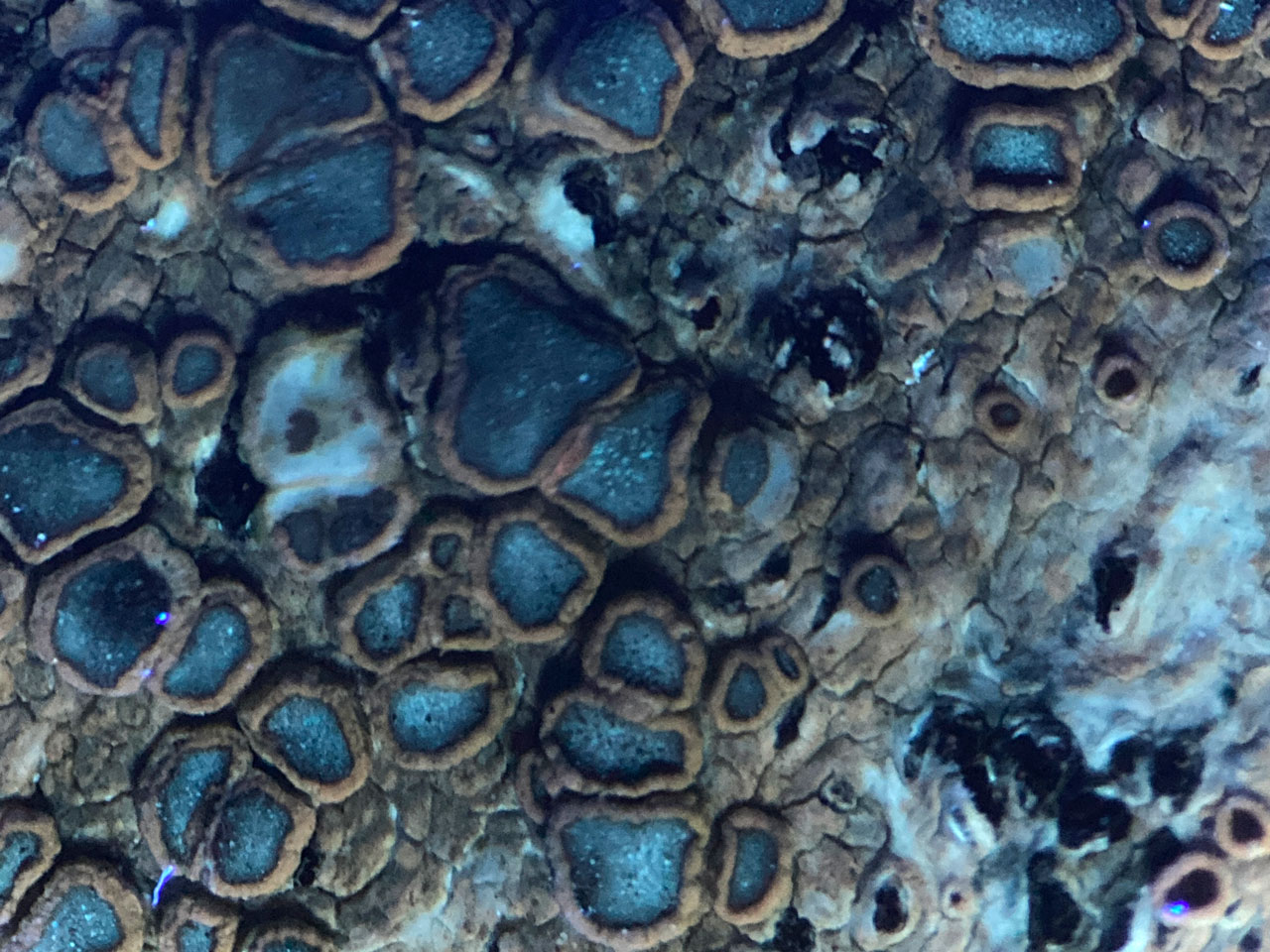
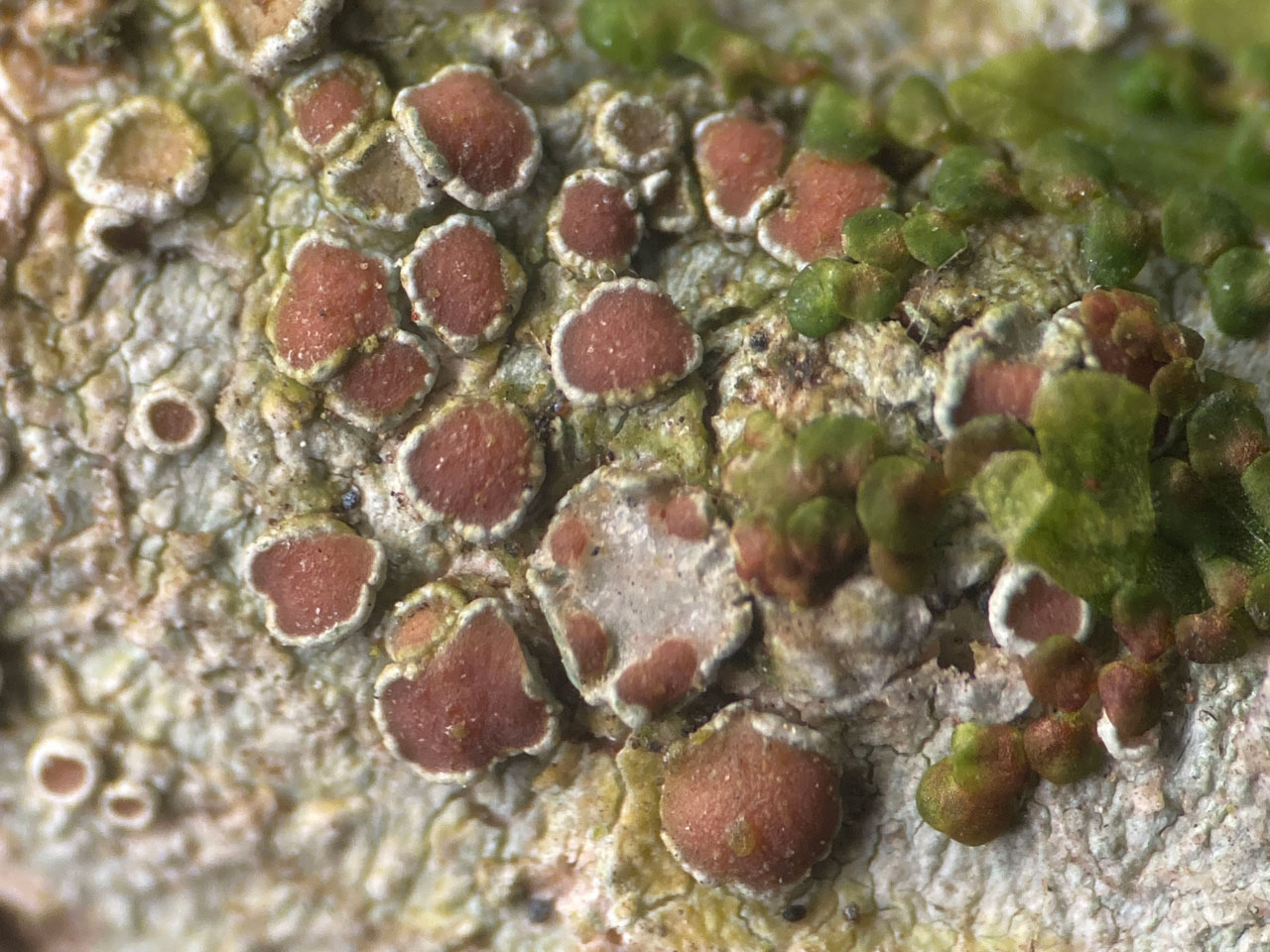
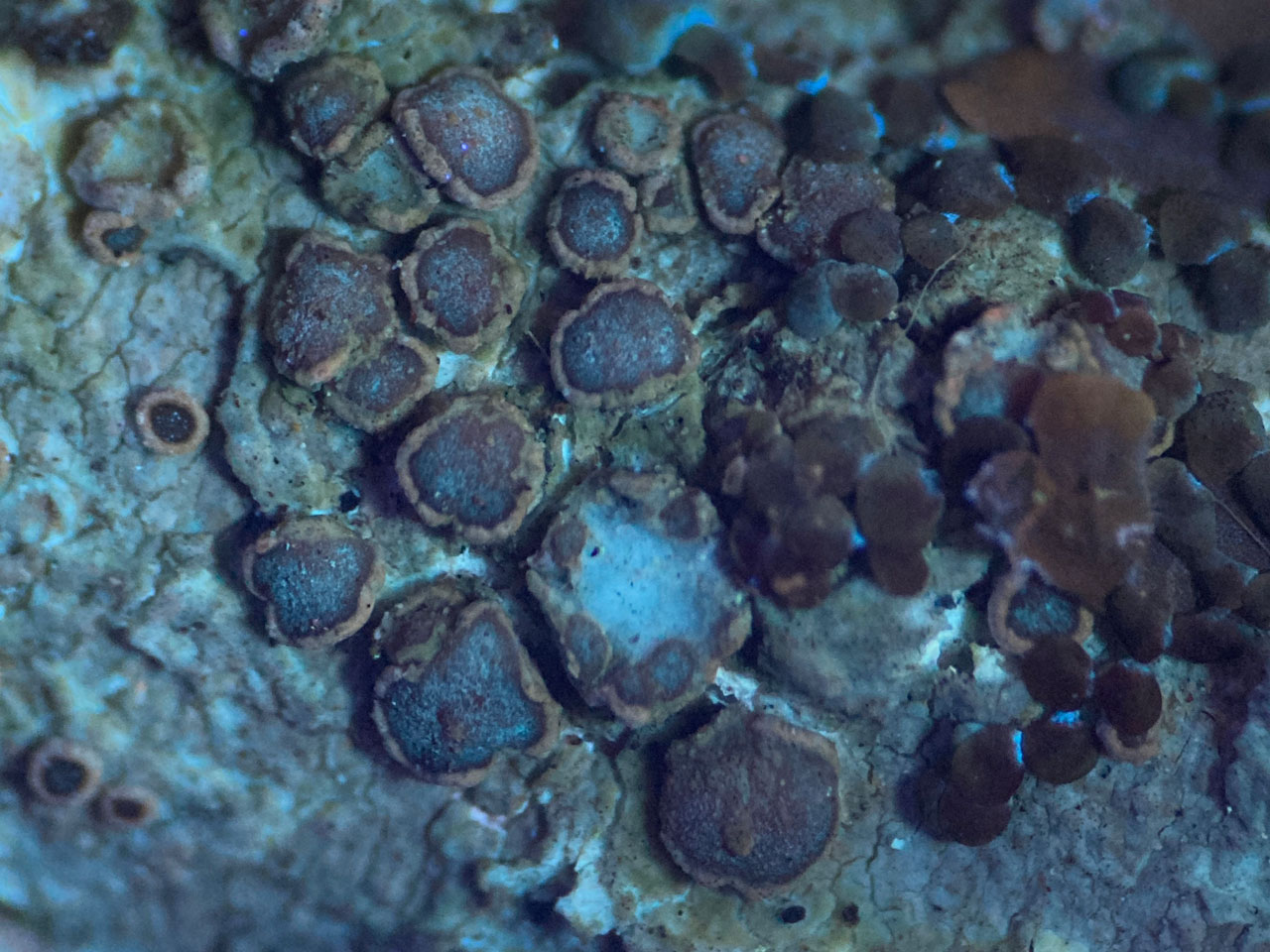
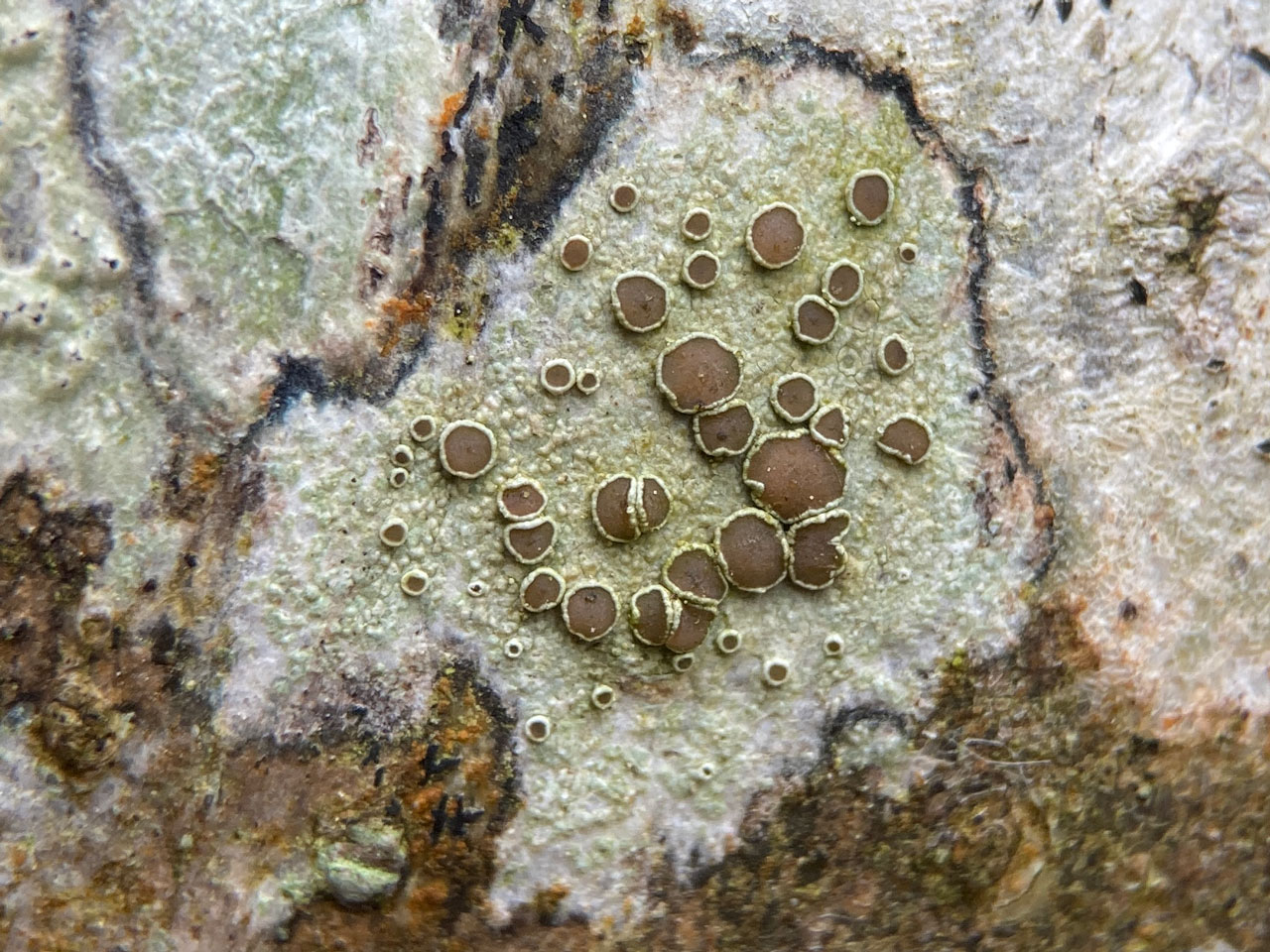
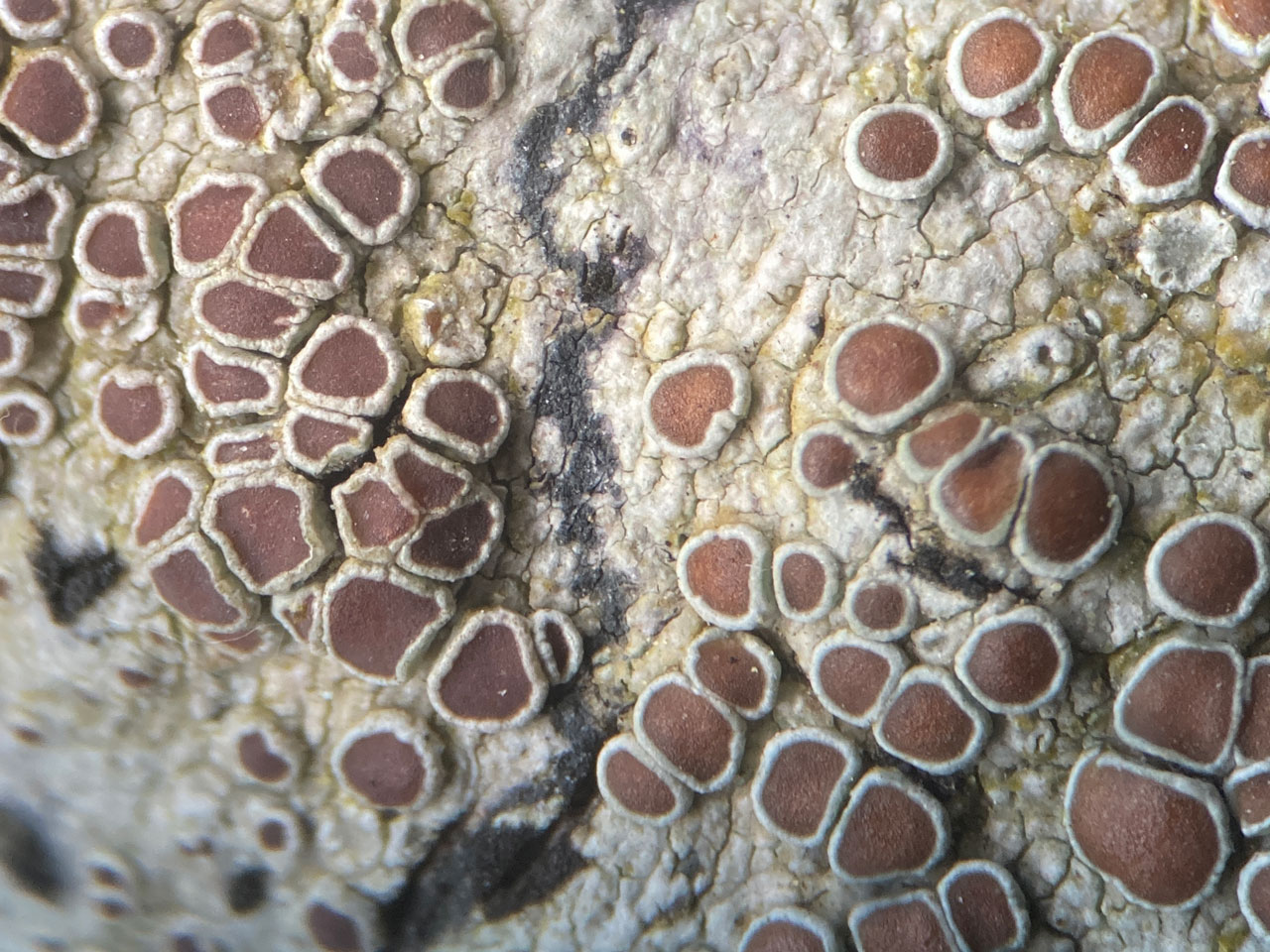
This taxon was known from low branches in humid glades in the New Forest pasture woodlands for some time, but its identity was revealed by sequencing at the 2023 BLS Bar Coding Workshop. A member of the L. subfusca group, which, in macro characteristics resembles L. argentata, with dark chestnut-brown discs but thalline margins are neatly crenulate, the disks often have a thin but variable pruina and the disk is UV+. Internally the crystal distribution is similar to L. chlarotera s. str. but this has paler and UV– discs and longer spores. Found on well lit and less acidic twigs in low N environments and most frequent in humid locations. Frequent in the New Forest and likely to occur beyond there.
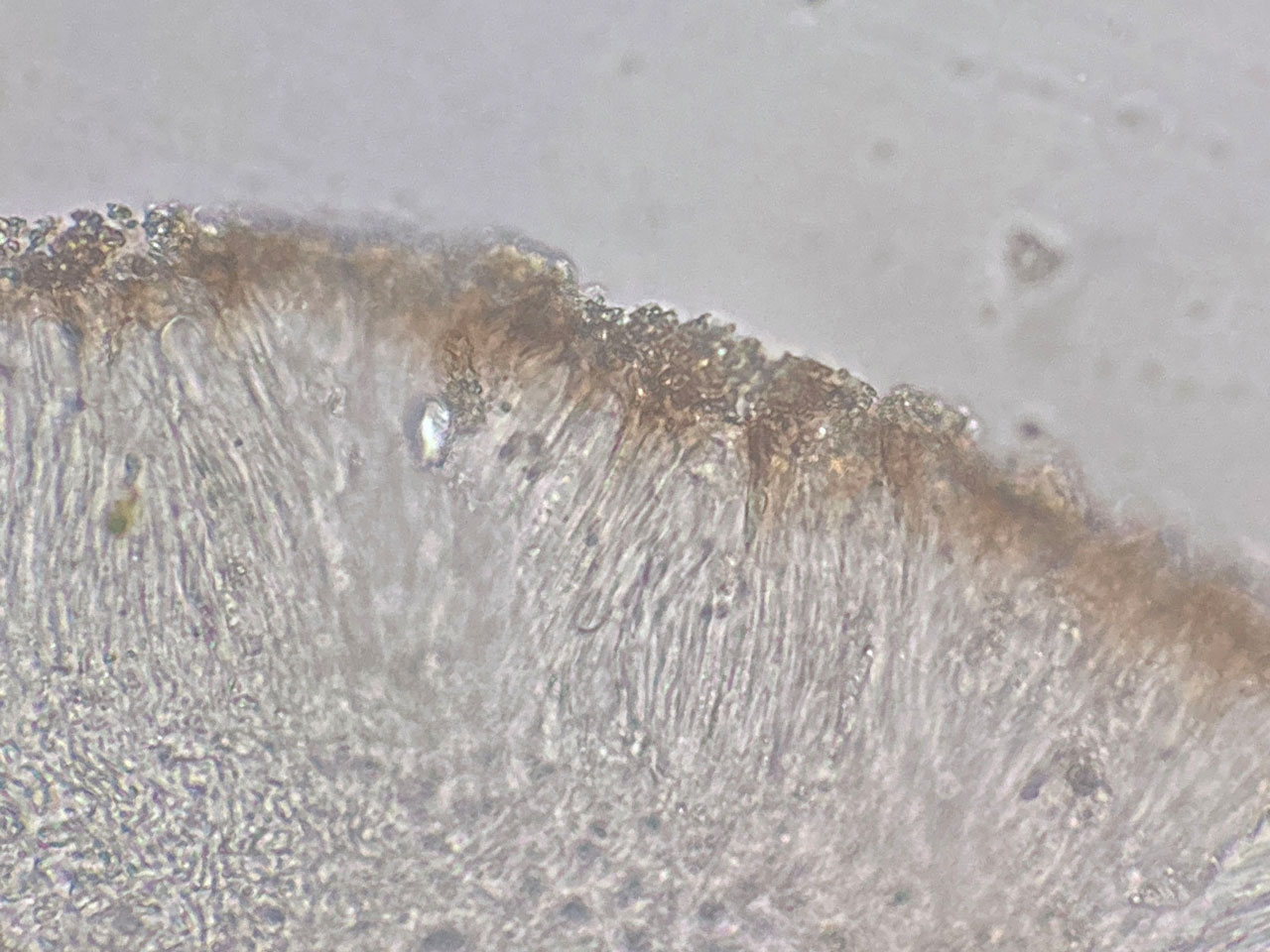
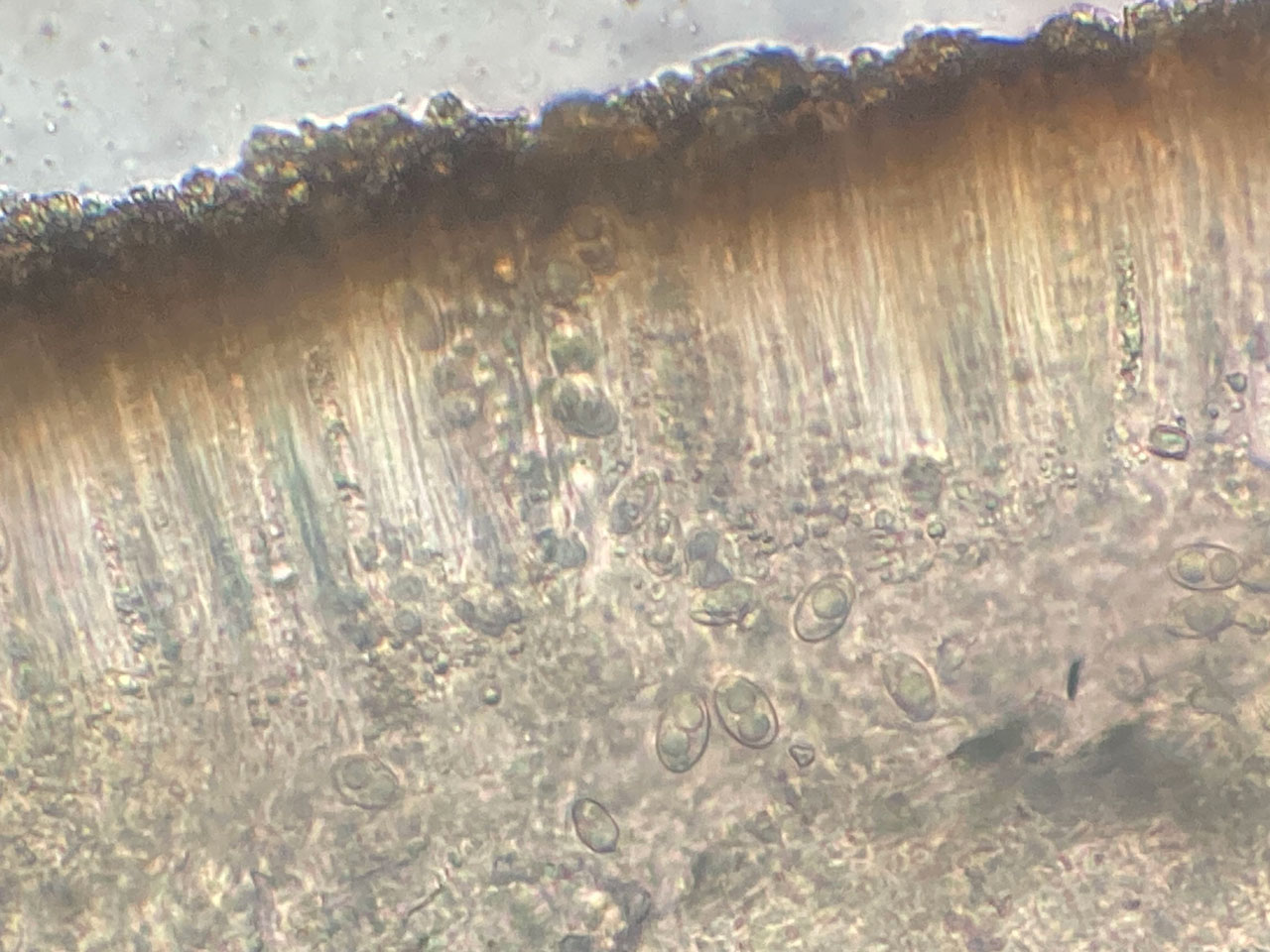
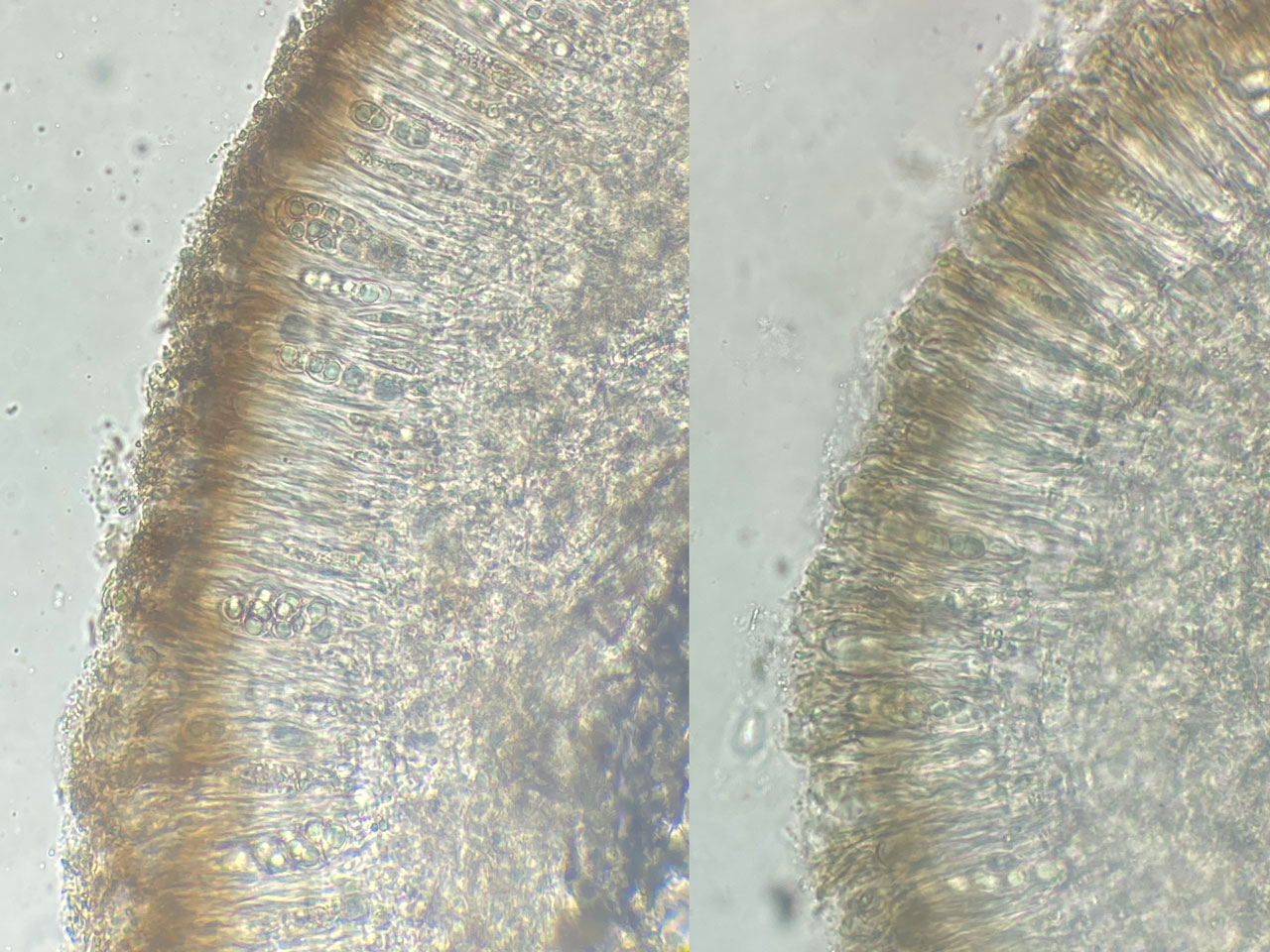
Thallus continuous often somewhat verruculose, yellowish white to whitish gray; prothallus white. Apothecia 0.3-1.0 mm diam., sessile to constricted at base, often aggregated when mature; thalline margin persistent, typically neatly crenulate, containing large crystals not soluble in K; disc red-brown to dark brown or orange-brown, not or slightly pruinose; epithecium red-brown, pigmentation only partly soluble in K; with numerous coarse granules which do not extend down below the paraphysis tips and are soluble in K and slowly in N; hymenium 75–85 µm tall; paraphyses 1.5 µm diam. weakly branched near their apices, with slightly thickened apices. Asci 45–55 x 13–17 µm clavate. Ascospores broadly ellipsoid to ellipsoid, 8.5–12.5 x 5.5–8.0 µm. Thallus C–, K+ yellow, Pd+ weakly yellow, UV+ orange-brown, strongest on thalline margin, disk pruina UV+ speckled grey-blue/mauve (atranorin, gangaleoidin, traces of chloroatranorin, 4-de-chlorogangaleoidin and norgangaleoidin).
A relatively distinctive member of the L. subfusca group, in macro characteristics it resembles L. argentata, with dark chestnut-brown discs on a white, often somewhat verrucose, thallus, but the discs often have a thin but variable pruina. The discs are typically somewhat more reddish than L. argentata, and the pruina fluoresces blue-grey/mauve giving a speckled effect but the intensity of this varies. The thalline margin are also typically neatly crenulate, while those of L. argentata are typically smooth. Difficult specimens can be separated by L. argentata lacking epithecium granules. Internally the crystal distribution is similar to L. chlarotera s. str. The darker UV+ disc with a red-brown epihymenial pigment, that only partly dissolves in K, and spores shorter than 12.5 µm separates it from Lecanora chlarotera s. str. The neatly crenulate margins are also a distinctive feature of L. pseudargentata.
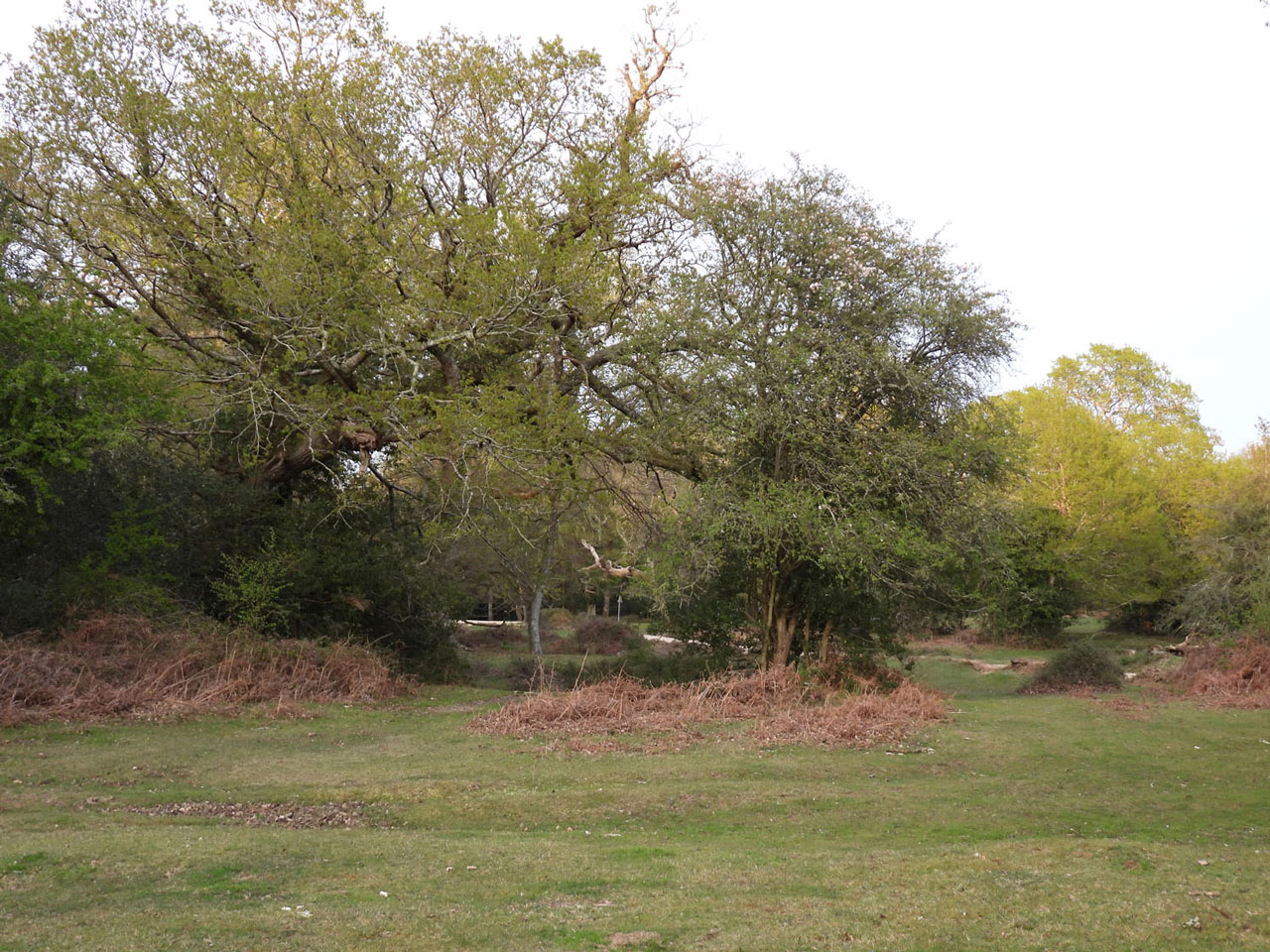
Known for sometime as a distinctive unnamed taxon from the New Forest where it is found well lit on less acidic twigs in low N environments, mainly on Oak but also on often on Beech, Hawthorn, Sallow and Crab Apple and rarely Alder Buckthorn and Holly, on low branches in humid locations on the edges of pasture woodlands. Wind blown twigs and the canopy branches of fallen trees, however, indicate that it does also occur higher up in the better lit parts of the canopy within woods, and it can be abundant to dominant here. This has not been observed in the crowns of isolated trees. It can dominate twigs in very humid glades, but rapidly becomes scarce or disappears as either exposure or nitrogen pollution increases. Rarely found on very well lit Beech and Oak trunks.
Since the identify was confirmed it has also be identified from herbarium specimens from an azalea twig by a pond in a woodland garden within an old woodland near the New Forest and from an Oak trunk from Ethy Park, a lichen rich landscape park in East Cornwall. In addition, two specimens have been identified from trees in pastoral farmland with low N levels in Co Cork, Ireland, with one on Ash. This data suggests that this species may be a widespread if local species of sheltered humid locations in farmland, parkland and pasture woodland with low ammonia pollution. A 2026 field record from a hedge tree in unimproved wet grassland in West Cornwall supports this, along with further records from sheltered woodland edges in the county.
In the New Forest found in a distinctive variant of the Twig Community Lecanoretum subfuscae, in which Lecanora albella replaces Glaucomaria carpinea. Extreem varients are domianted by L. pseudargentata and Phaeographis lyellii with frequent Pertusaria pustulata. The table below gives the associated species (found within 2cm) of Lecanora pseudargentata with their constancy (C) from five New Forest Oaks from a range of sites across the ecological tolerance of the species.
| Species | C | Species | C |
| Lecanora pseudargentata | V | Hypotrachyna afrorevoluta | I |
| Fuscidea lightfootii | V | Lecanora argentata | I |
| Lecidella elaeochroma | V | Lecanora confusa | I |
| Melanelixia subaurifera | V | Lecanora jamesii | I |
| Parmotrema perlatum | V | Mycoporum antecellens | I |
| Arthonia radiata | IV | Opegrapha vulgata | I |
| Lecanora albella | IV | Pertusaria leioplaca | I |
| Flavoparmelia caperata | III | Phaeographis dendritica | I |
| Hypotrachyna revoluta s. str. | II | Phaeographis lyellii | I |
| Lecanora chlarotera s. str. | II | Physcia aipolia | I |
| Lecanora hybocarpa s. lat. | II | Physcia tenella | I |
| Parmelia sulcata | II | Punctelia subrudecta s. str. | I |
| Candelariella rubrisoli | I | Ramalina farinacea | I |
| Evernia prunastri | I | Xanthoria parietina | I |
| Graphis elegans | I |
The Associated species include a number other of species of sheltered and humid locations such as Lecanora jamesii, Mycoporum antecellens, Pertusaria pustulata, Phaeographis dendritica, Phaeographis lyellii and Punctelia reddenda as well as species of nutrient enrich habitats occuring at low cover in more exposed sites.
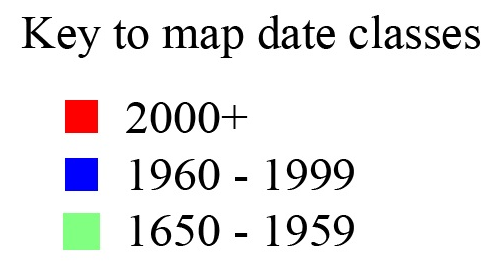
The identity of this taxon was worked out in 2026, so the distribution is still very unclear. It is locally frequent in the New Forest pasture woodlands in Hampshire and is likely to occur elsewhere in suitable habitat but may be local. There are records from East and West Cornwall in England and Co Cork in Ireland.
Not assessed, although locally frequent in parts of the New Forest, the species appears sensitive to ammonia pollution, so is likely to have decreased in recent decades. Past decline, however, would be difficult to prove.
Arup, U., Malíček, J., Schiefelbein, U., & Holien, H. (2025) Lecanora hybocarpa and similar European species. The Lichenologist 57: 239–255. Open access.
LaGreca, S. & Lumbsch, H. T. (2001) Three species of Lecanora new to North America, with notes on other poorly known lecanoroid lichens. Bryologist 104: 204–211.
Lumbsch, H. T. (1994) Die Lecanora subfusca-Gruppe in Australasien. Journal of the Hattori Botanical Garden 77: 1–175.
Text by Neil A Sanderson, species description based on Lumbsch (1994) & LaGreca & Lumbsch (2001) and observations on British material