Mycoblastus affinis
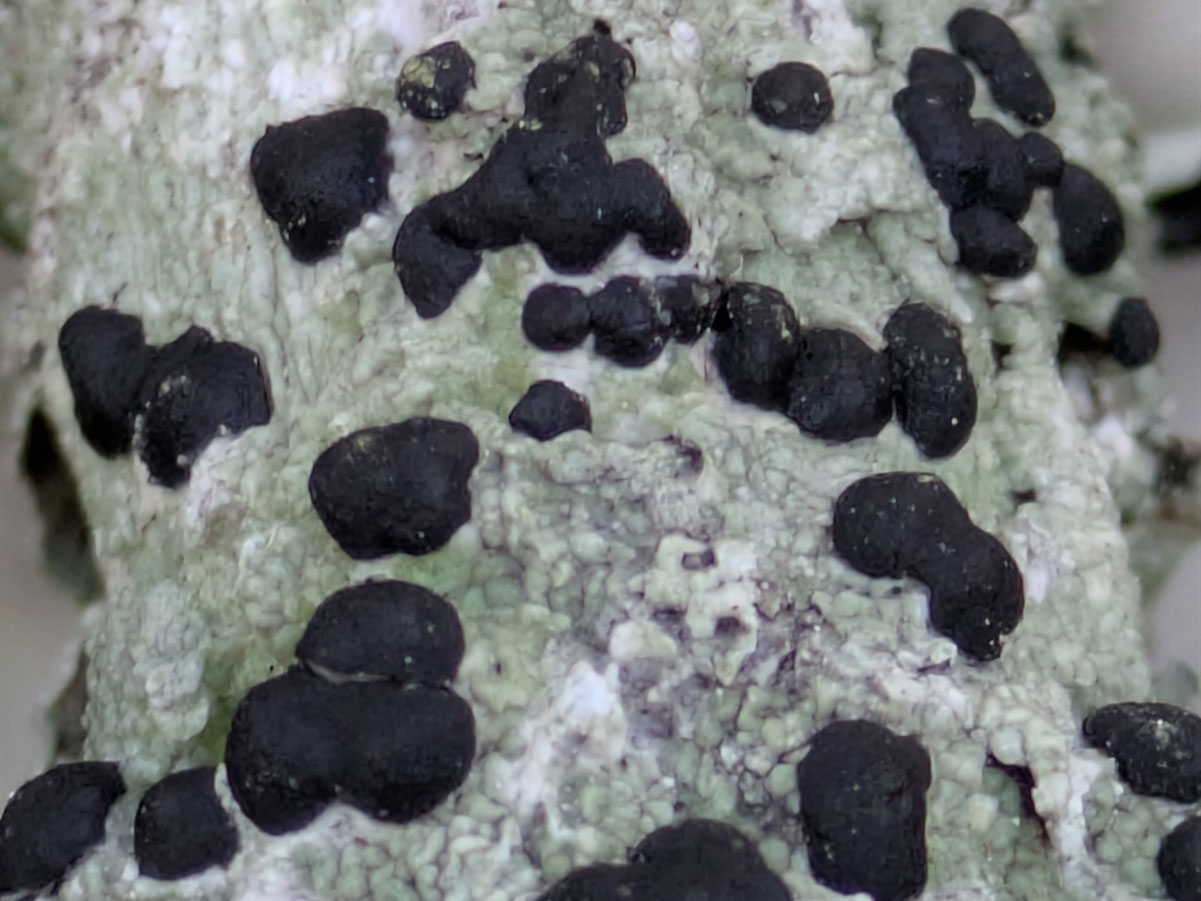
A local species of old woodlands in the north, easily overlooked as Mycoblastus sanguinarius or M. sanguinarioides but differs the pale base to the apothecia, the 2-spored asci and ellipsoidal, not cylindrical, ascospores.
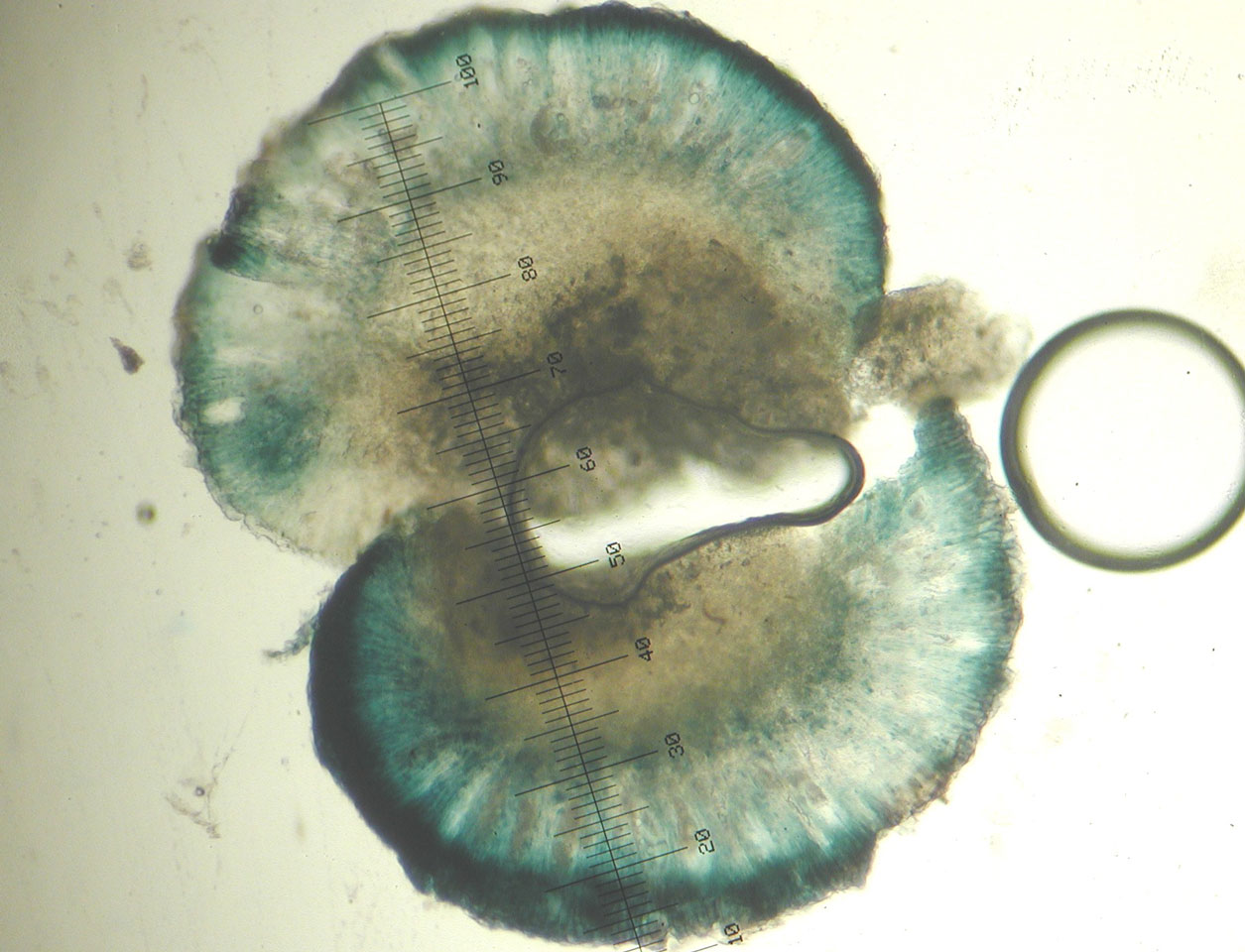
Thallus rather thick, irregular, granular-warted, pale grey or green-grey; soralia absent. Apothecia 0.5–1.5 mm diam., matt, black, strongly convex even when young, ± sessile; epithecium ± opaque, blue-black, rarely in part pale brown or olive-brown; hymenium paler below, K–; hypothecium colourless, pale straw or pale brown, intensifying in K, or K+ red-brown. Asci (1-) 2-spored. Ascospores (40–) 47–70 (–100) × (25–) 30–42 µm, ellipsoidal, thin-walled. Pycnidia often present. Cortex K+ yellow; medulla C–, K–, KC–, Pd–, UV+ white (atranorin, planaic acid).
Differs from Mycoblastus sanguinarius and M. sanguinarioides in the pale base to the apothecia, the 2-spored asci and ellipsoidal, not cylindrical, ascospores. See also M. alpinus.
On acid bark, especially of conifers or Birch, less frequently overgrowing mosses on rock, rarely directly on rock in well-wooded sites.
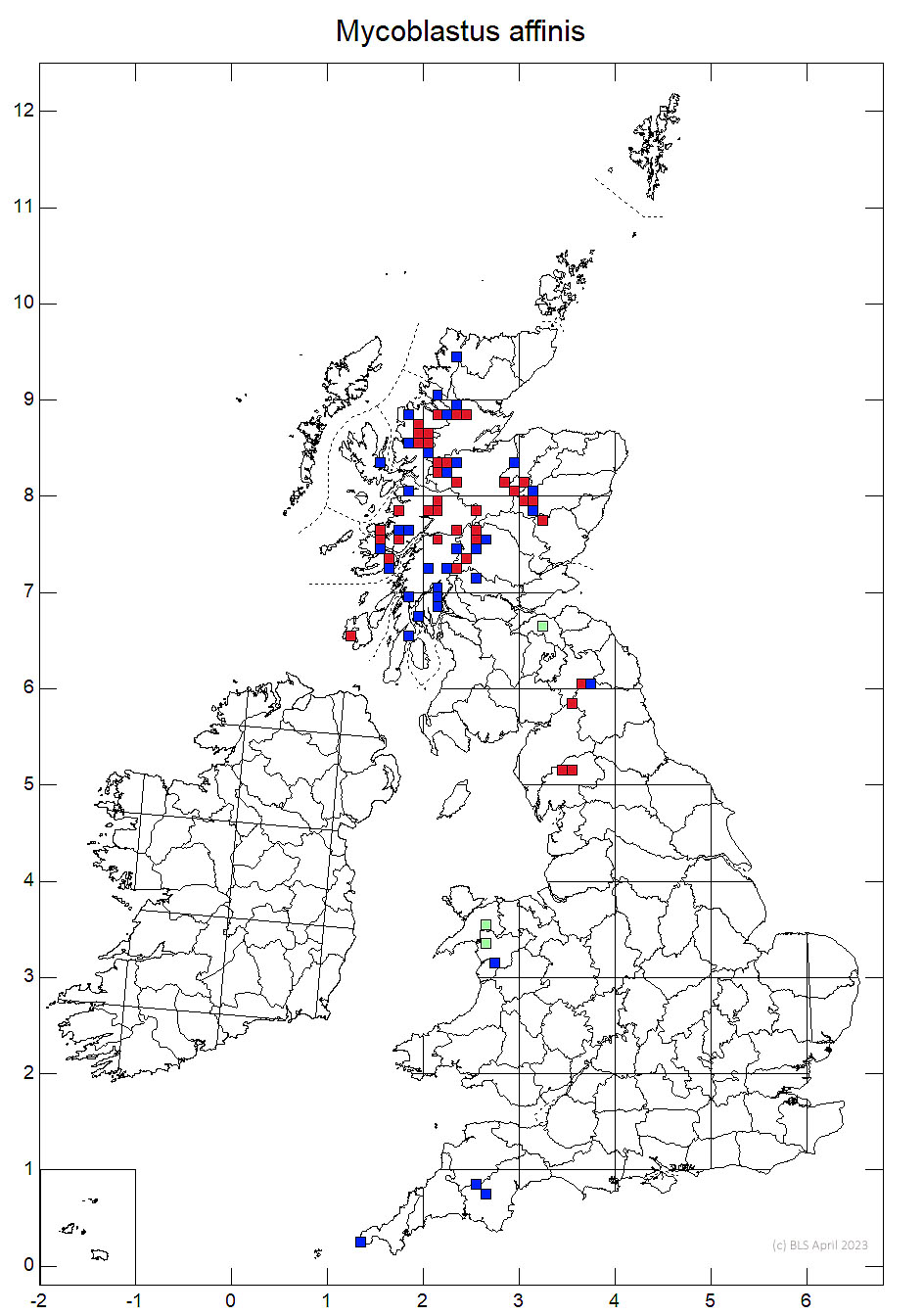


Local. S.W. England, Wales, C. & W. Scotland.
A local species of old woodlands in the north, rare in England and Wales.
Britian: Notable
Wales: Vulnerable
Cannon, P., Aptroot, A., Coppins, B., Orange, A., Sanderson, N. & Simkin, J. (2022). Lecanorales: Tephromelataceae, including the genera Calvitimela, Mycoblastus, Tephromela and Violella. Revisions of British and Irish Lichens 29: 1-10.
Text by Neil A Sanderson based on Cannon et al (2022)