Mycoblastus sanguinarioides
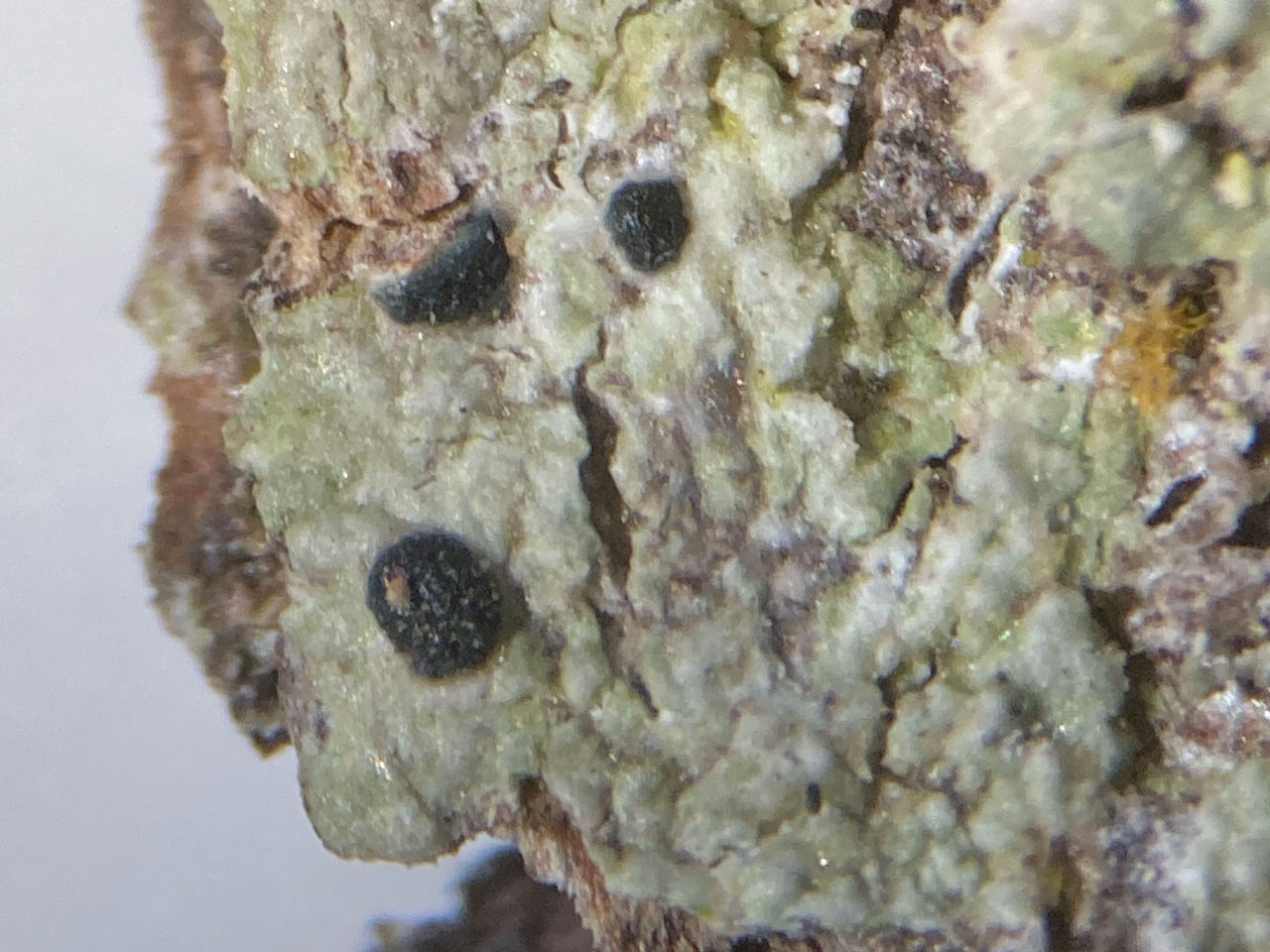
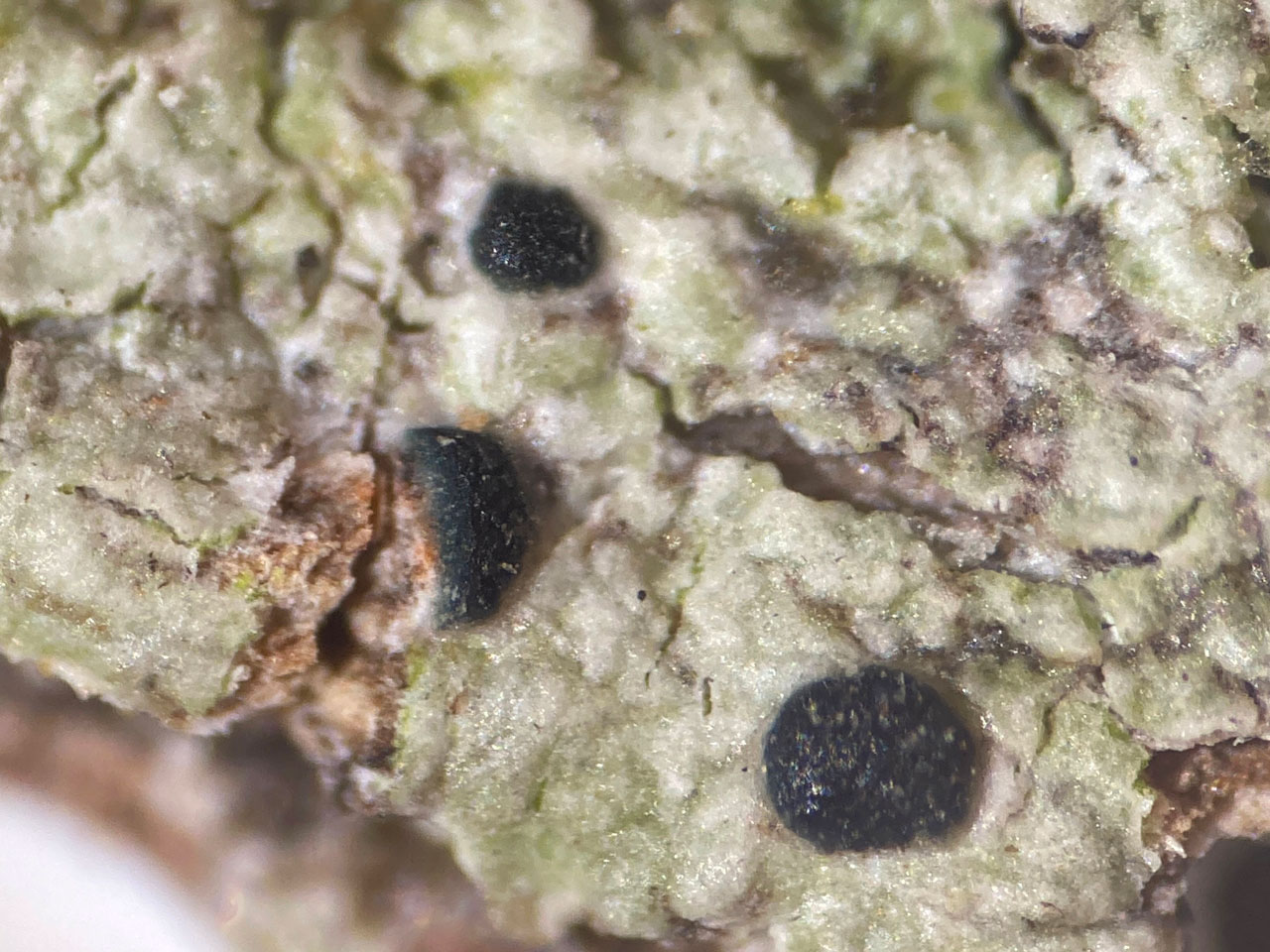
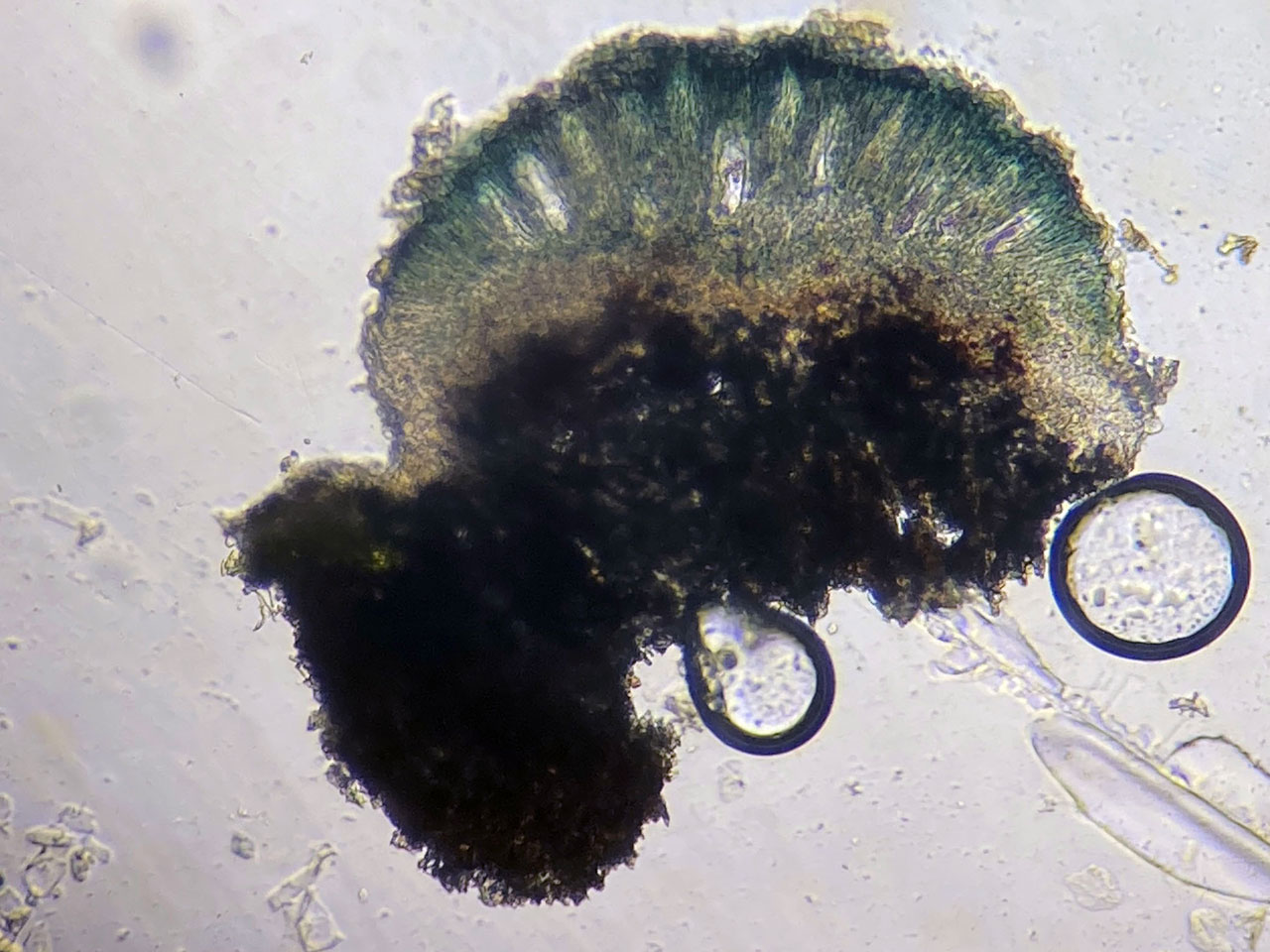
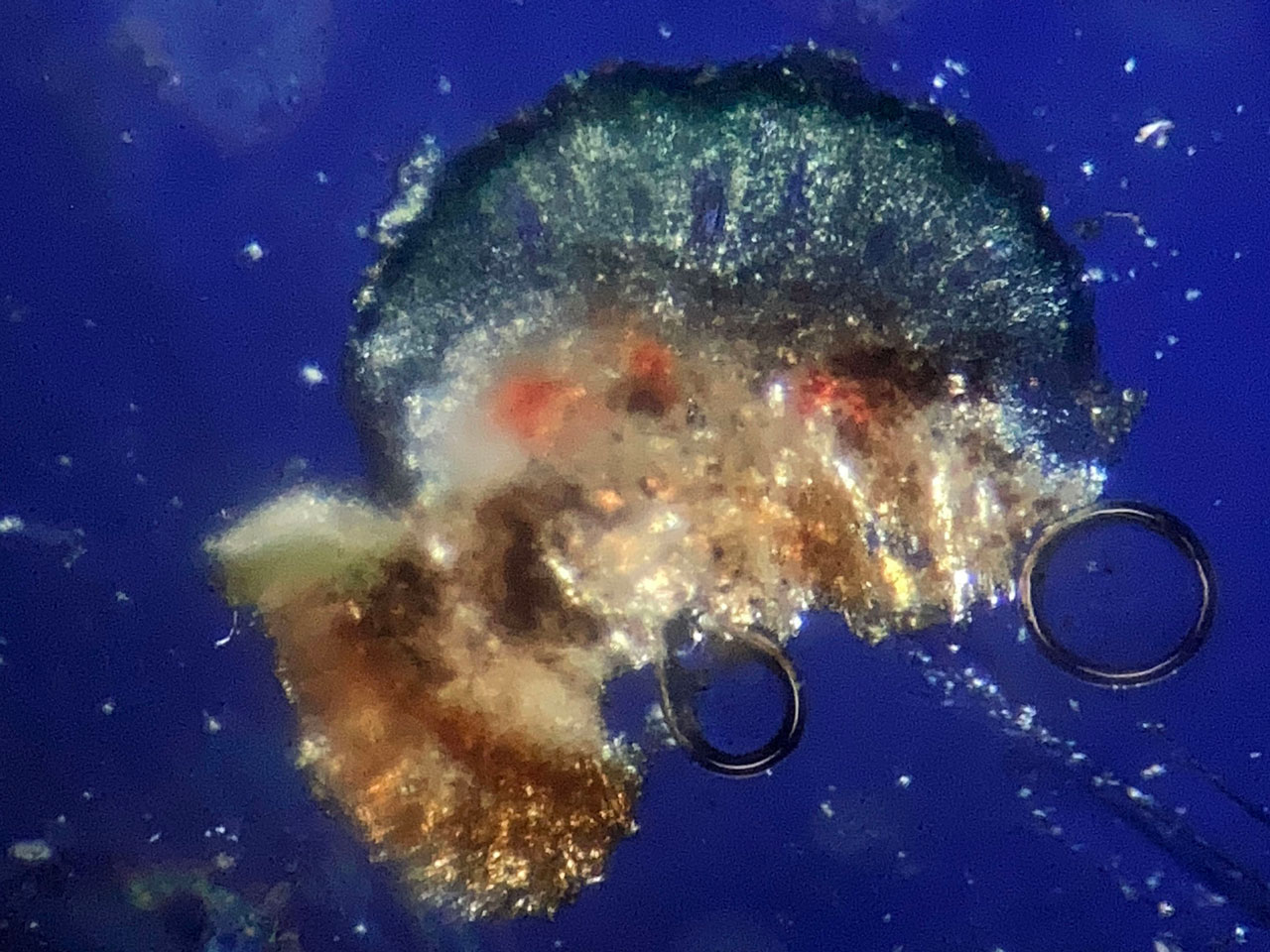
Very similar to Mycoblastus sanguinarius but the apothecia tend to be flatter when mature. The only clear separation, however, is by the presence of crystals in the hymenium that are visible in polarised light. These crystals are lacking in M. sanguinarius. As yet little known but sampling suggests that this species is confined to temperate rainforest in the west where it appears to replaced M. sanguinarius as an epiphyte.
Very similar to Mycoblastus sanguinarius but it tends to have pruinose young apothecia surrounded by whitish thalline material, and the apothecia are flatter when mature. The only clear separation, however, is by the presence of crystals in the hymenium that are visible in polarised light. These crystals are lacking in M. sanguinarius.
Mycoblastus sanguinarioides was originally described from Tasmania and recognised by Spribille et al. (2011) as also occurring in the northern hemisphere. They found it to more restricted to humid climates than M. sanguinarius. Subsequently M. sanguinarioides was confirmed from Britain as an epiphyte in temperate rainforests.
Recent sampling suggests that this species is confined to temperate rainforest in the west where it appears to replaced M. sanguinarius as an epiphyte, but the degree this occurs this is not yet clear. Recorded once on moss on rock within a woodland, but appears rare on rock and is replaced by M. sanguinarius on well lit rocks even in temperate rainforest areas.
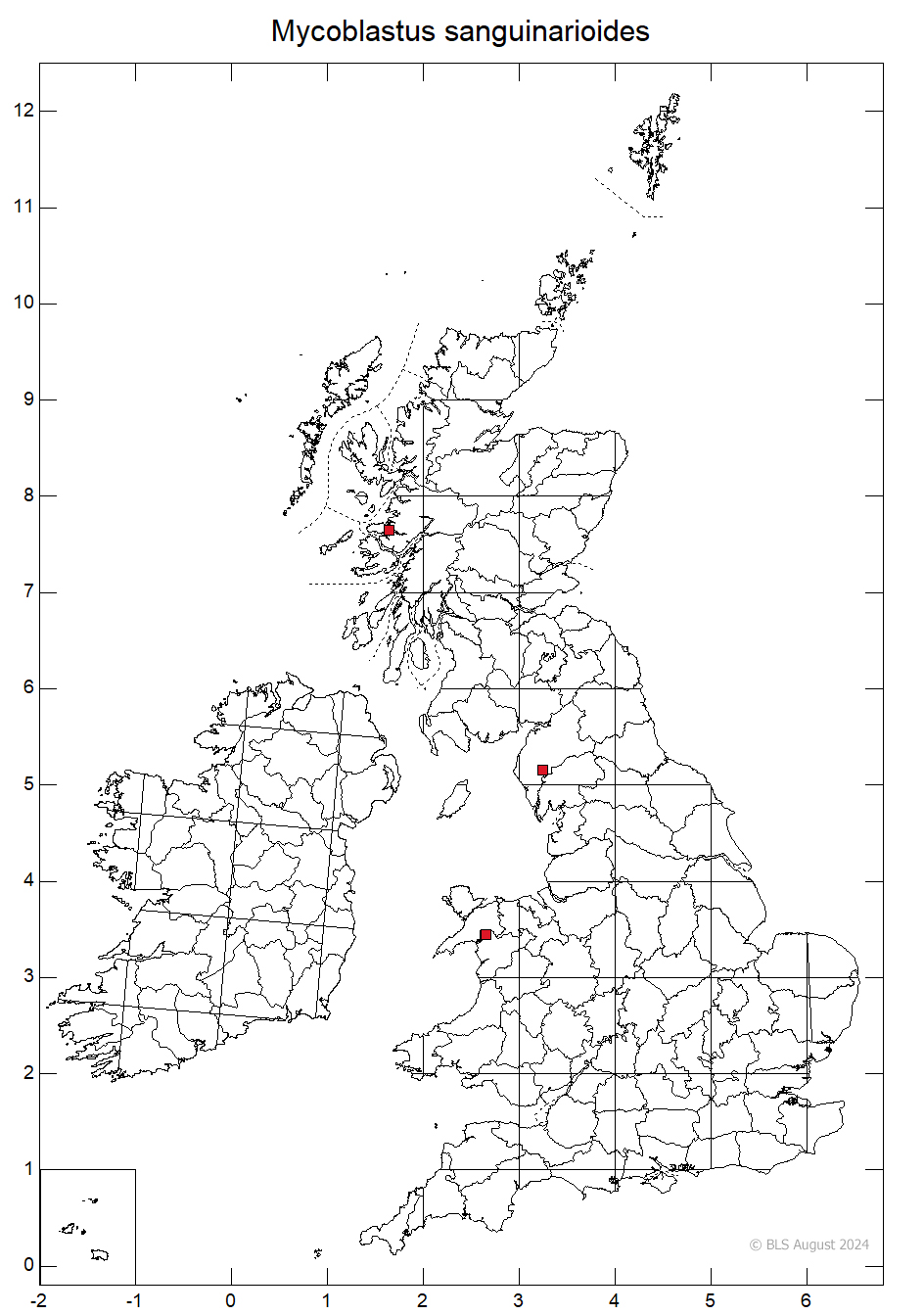

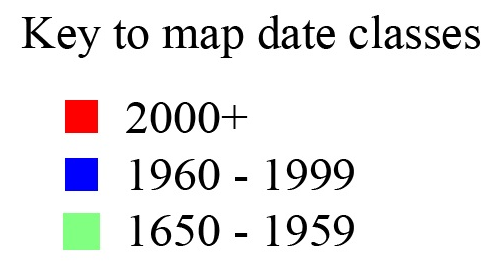
Sampling has confirmed Mycoblastus sanguinarioides from temperate rainforests in Dartmoor (Wistmans Wood), north Wales, The Lake District and the western Highlands of Scotland. The wide spread of records, and the ease at which it was found, suggests that is likely to be much more widespread in the west.
As yet little known, the wide spread of records suggests it is unlikely to be threatened, but it is likely to be a Notable species.
Spribille, T., Klug, B. & Mayrhofer, H. (2011). A phylogenetic analysis of the boreal lichen Mycoblastus sanguinarius (Mycoblastaceae, lichenized Ascomycota) reveals cryptic clades correlated with fatty acid profiles. Molecular Phylogenetics and Evolution 59: 603-614.
Text by Neil A Sanderson based on Spribille et al (2011)