Amandinea punctata
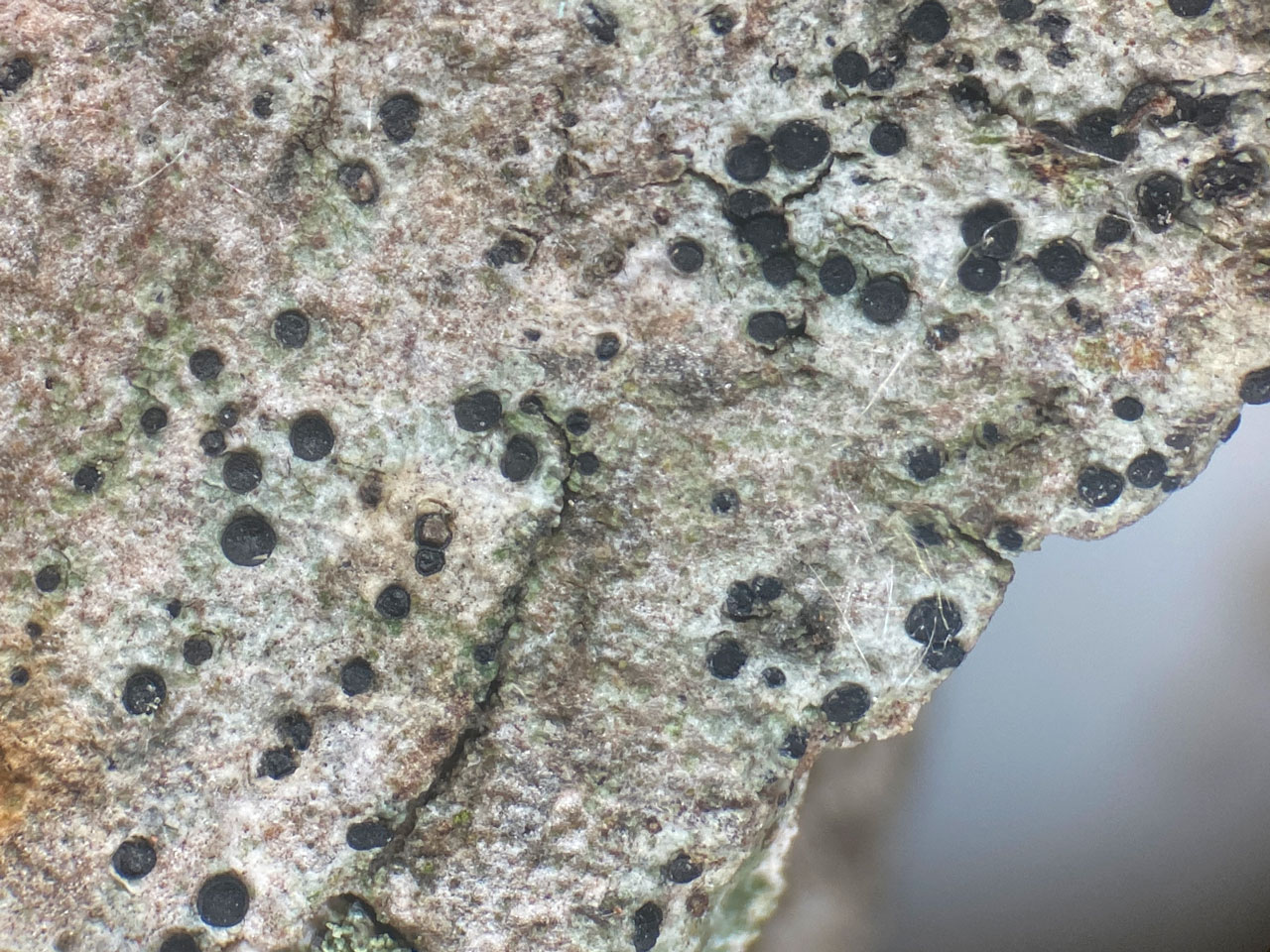
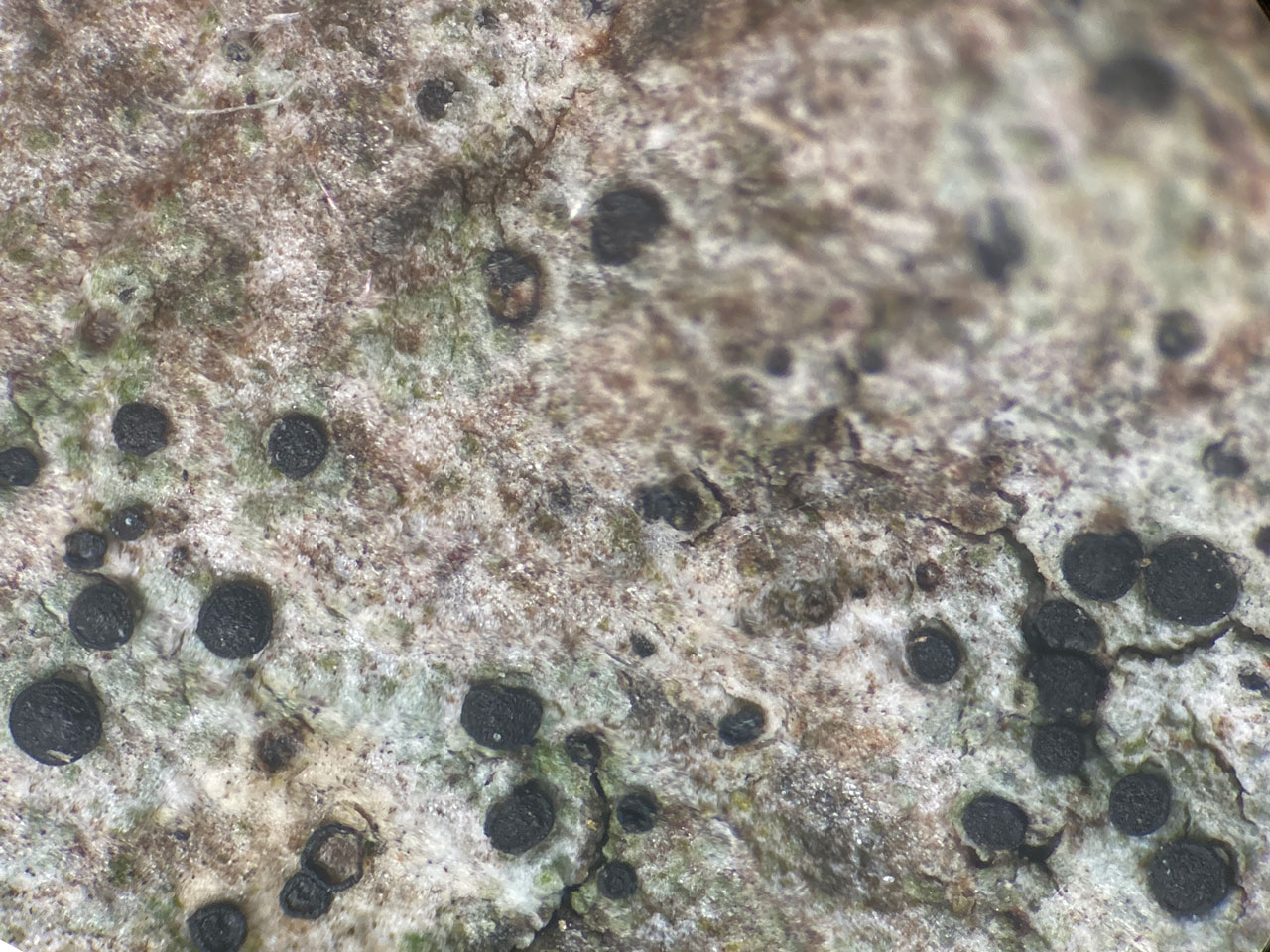
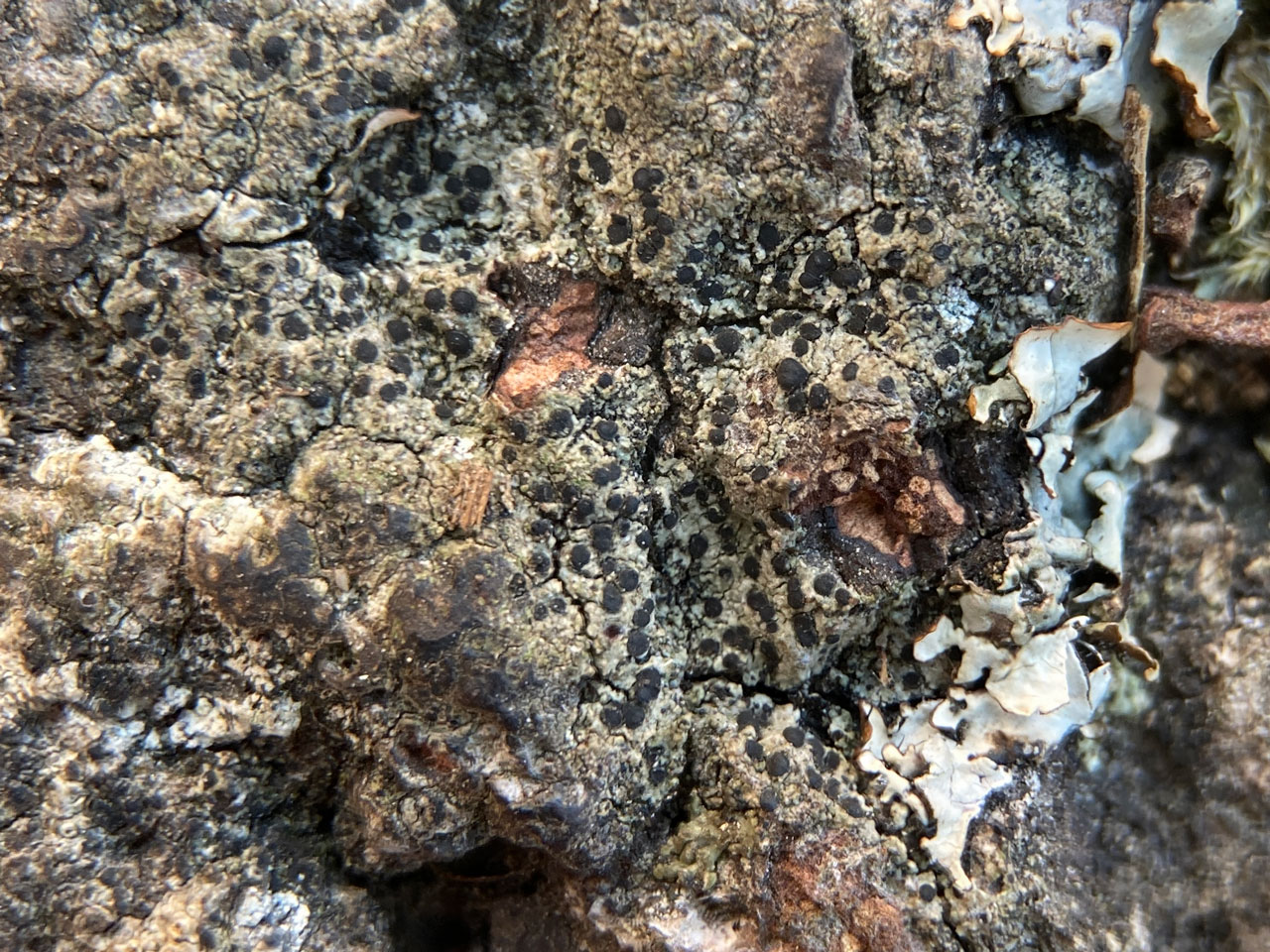
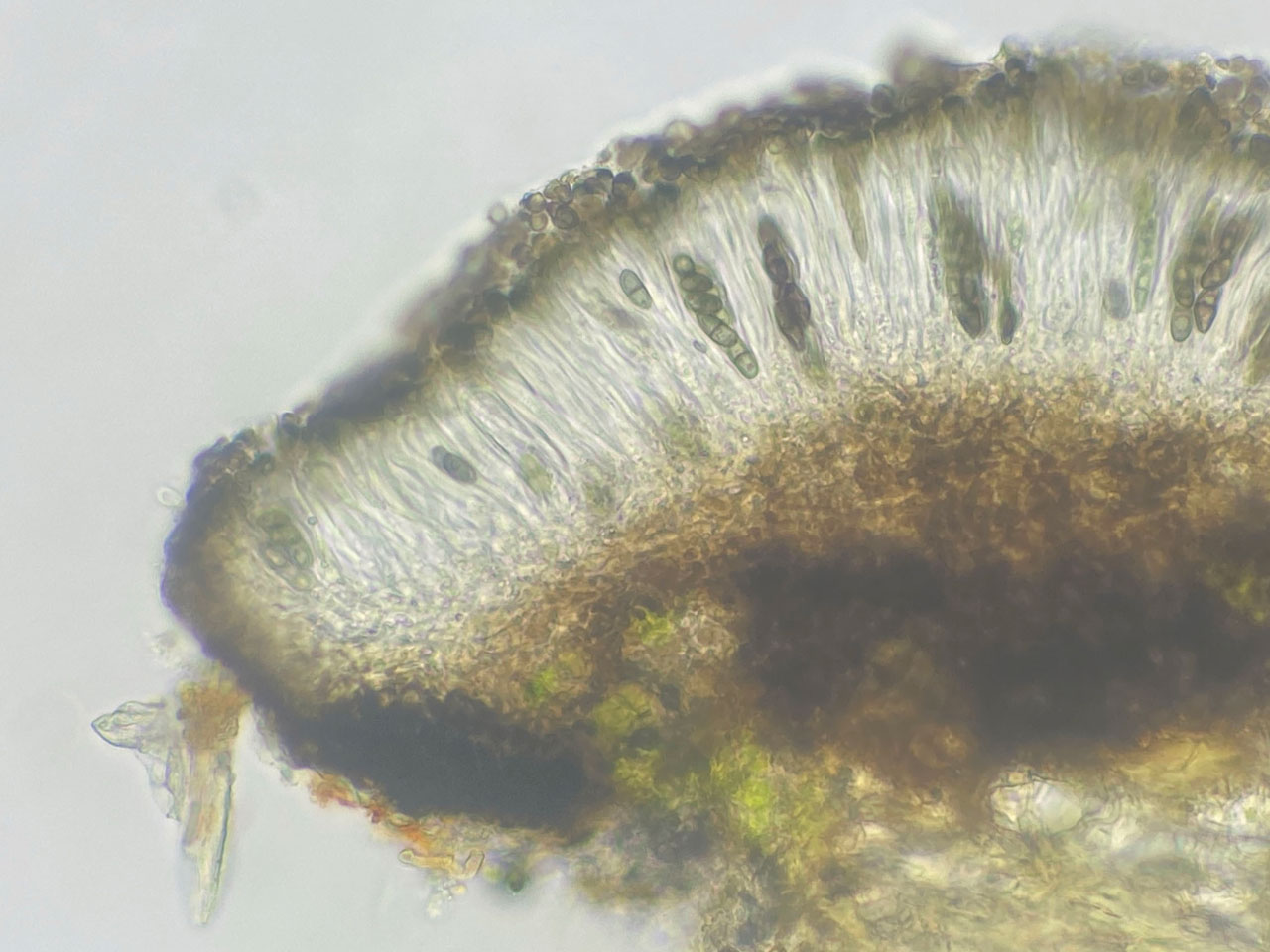
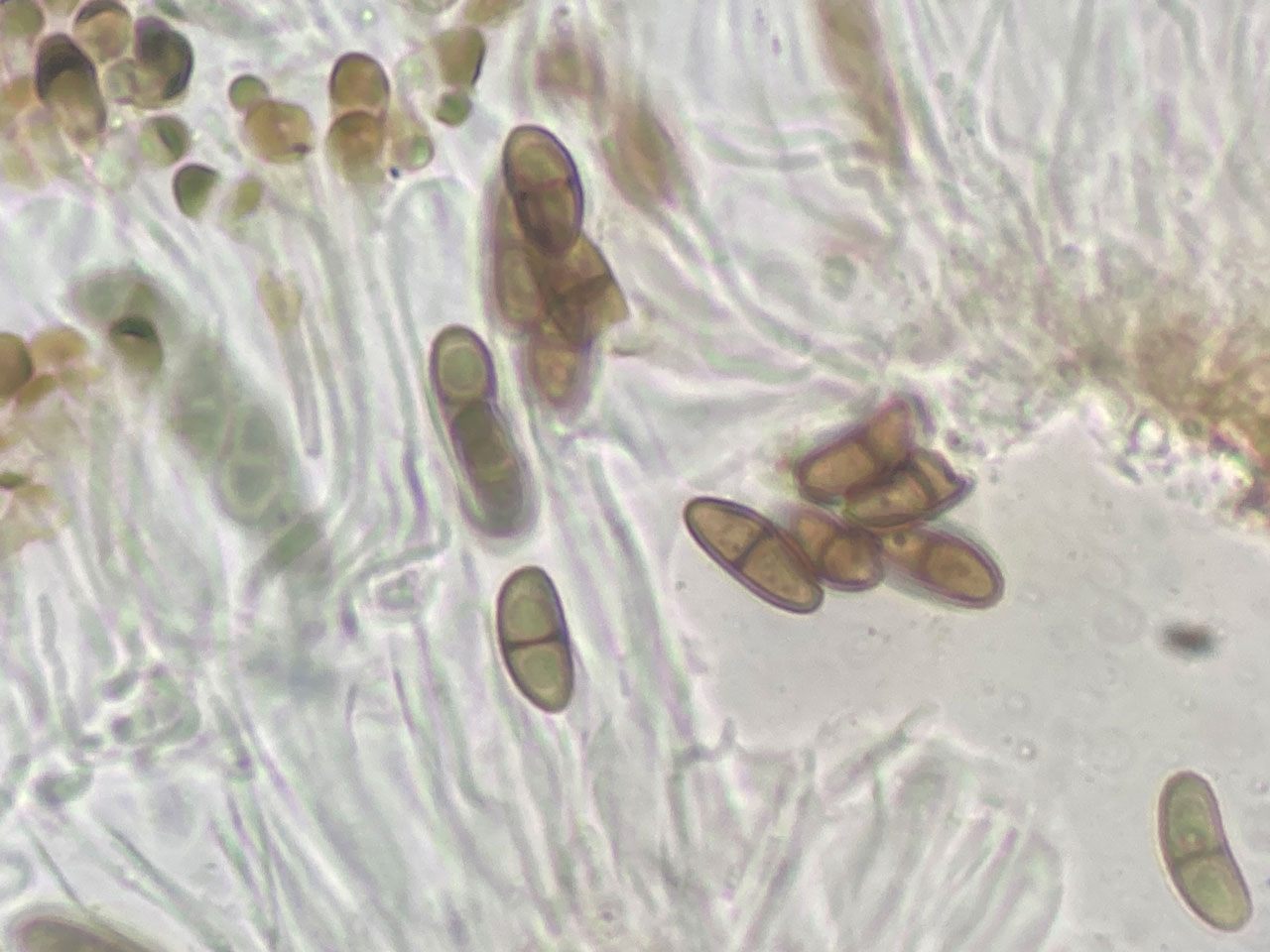
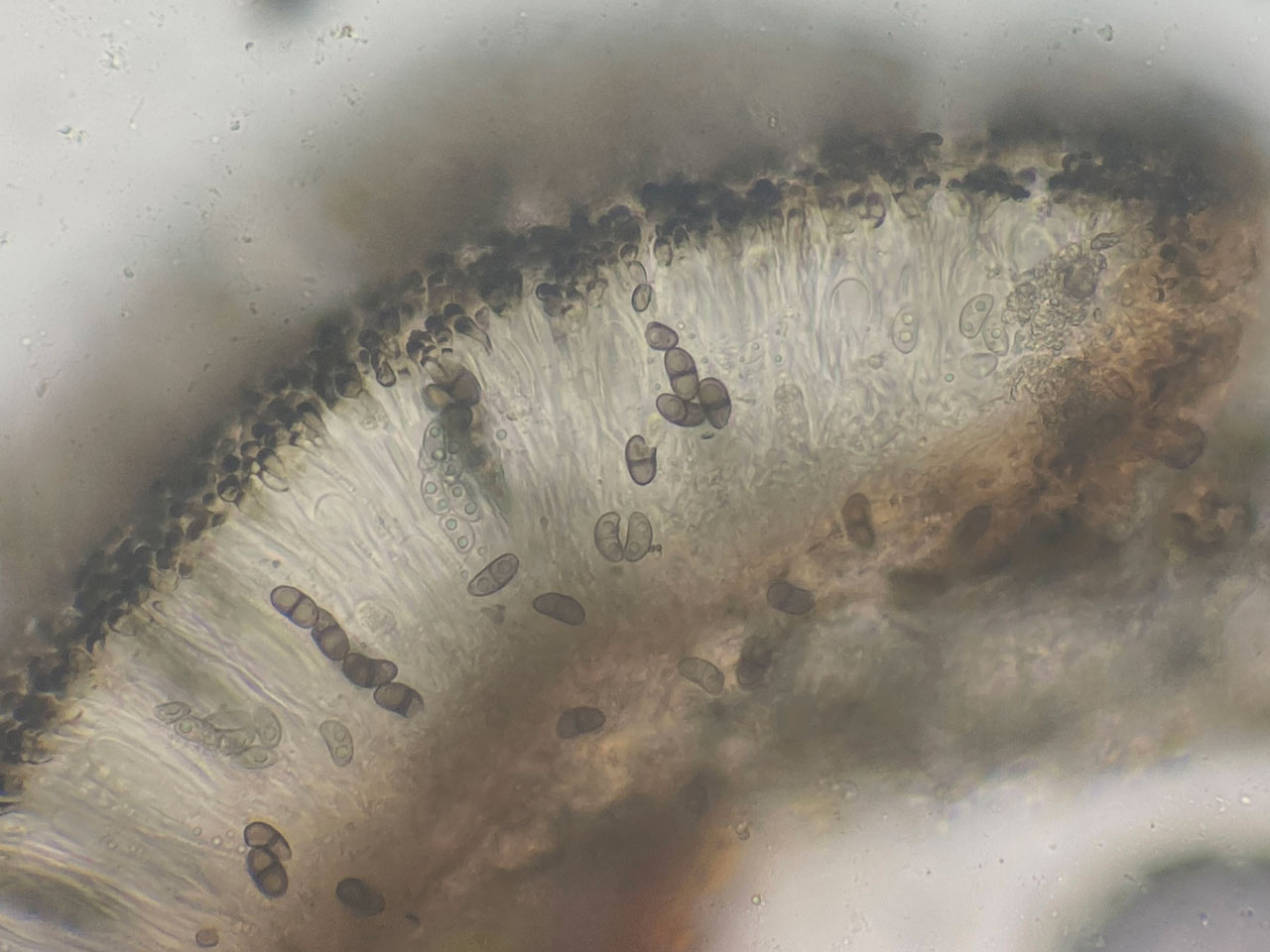
A common, and very variable lichen, with black discs lacking a thalline margin, on a pale to dark grey thallus, with brown, one septate spores with scarcely thicken walls at the septa. Found in nutrient enriched habitats on bark, wood and rocks. There are quite a lot of other similar lichens with black discs.
Thallus thin or inconspicuous to thickish, rarely more than 0.5 mm thick at the centre, smooth to rimose and often warted, pale to dark grey, rarely brown; a dark or grey prothallus rarely present; medulla I−. Apothecia numerous, 0.2–0.6 mm diam., superficial; disc flat to slightly convex, rarely strongly so; true exciple thin, persistent, sometimes later excluded; epithecium brown, N−; hypothecium pale to dark brown; hymenium without oil droplets. Ascospores (8.5–) 11.5–16 (–19.5) × (4.5–) 6–8 (–10.5) µm, usually slightly curved; wall scarcely thickened near the septum (Buellia-type when mature, may tend towards Physconia-type initially), smooth. Pycnidia sparse; conidia 14–20 × 0.5–1 µm, curved, thread-like.
Common and very variable. Many records on coastal rocks refer to Amandinea pelidna, which has internal wall thickenings near the septum. Similar, but rarer, species on rocks include A. coniops (thallus of aggregated brown areoles that are often warty), Buellia abstracta (thallus K+ yellow→red (crystals) & narrrower spores) and B. spuria (thallus K+ yellow-orange); and on bark or wood, B. pulverea (thallus C+ pink, effuse & powdery-granular,) and B. schaereri (smaller thin walled spores). Superficially similar species on twigs are Catillaria nigroclavata and Orcularia insperata, both have smaller disks and distinct spores. Lecidella elaeochroma which grows in similar habitats differs in the UV+ orange and C+ orange reaction of the thallus, the broad true exciple, particularly in young apothecia, and the unicellular spores. Buellia hyperbolica has a whiter Pd+ red-orange thallus and larger spores and found in less nutrient enriched habitats.
On nutrient-rich or -enriched bark, wood (including fence posts), rocky substrata and debris, bird-perching rocks (including gravestones); tolerant of SO2 pollution and inorganic fertilizers.
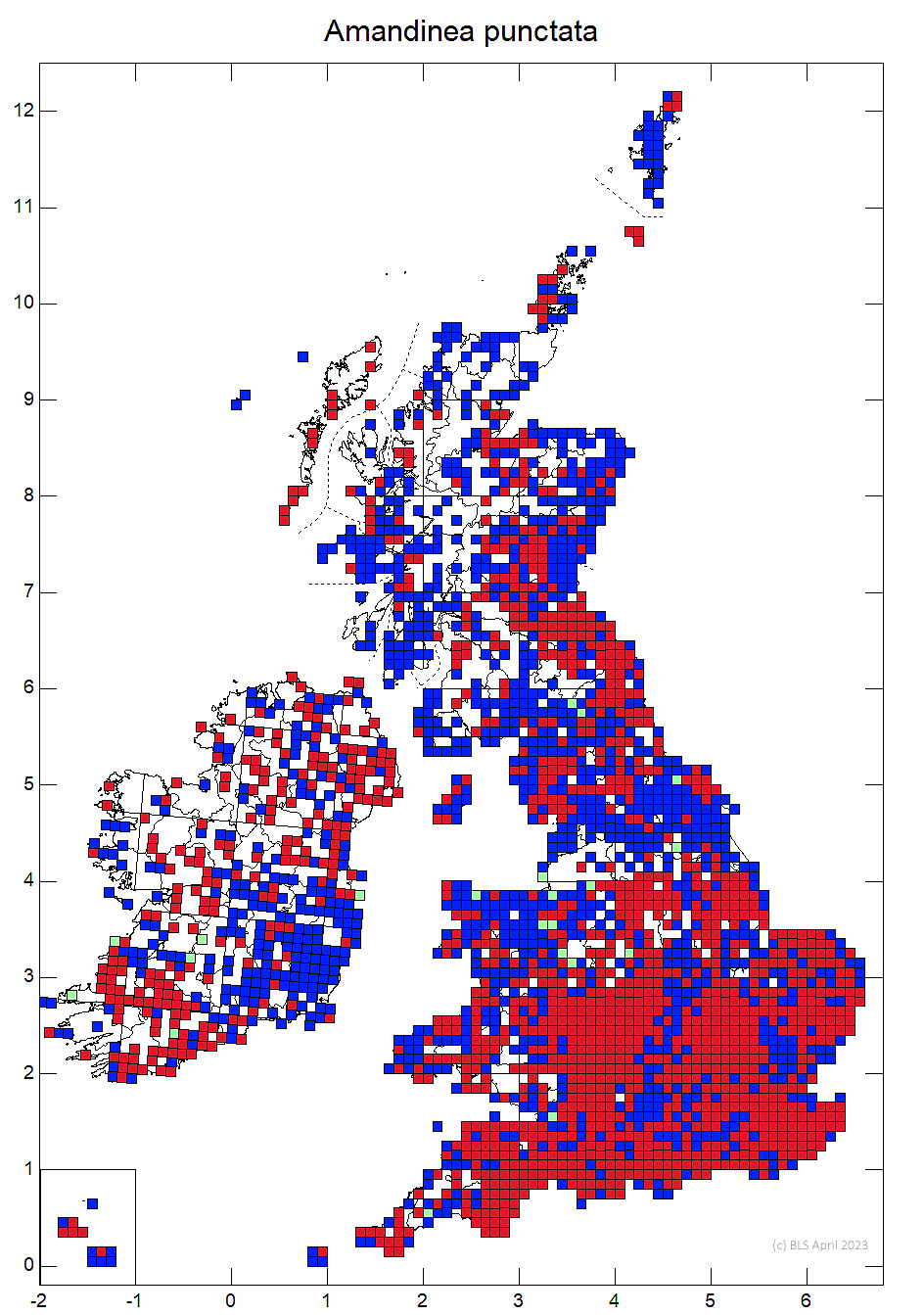


Abundant throughout the British Isles.
Cannon, P., Prieto, M., Coppins, B., Sanderson, N., Scheidegger, C. & Simkin, J. (2021). Caliciales: Caliciaceae, including the genera Acolium, Amandinea, Buellia, Calicium, Diploicia, Diplotomma, Endohyalina, Monerolechia, Orcularia, Pseudothelomma, Rinodina and Tetramelas. Revisions of British and Irish Lichens 15: 1-35.
Text by Neil A Sanderson based on Cannon et al (2021)