Buellia schaereri
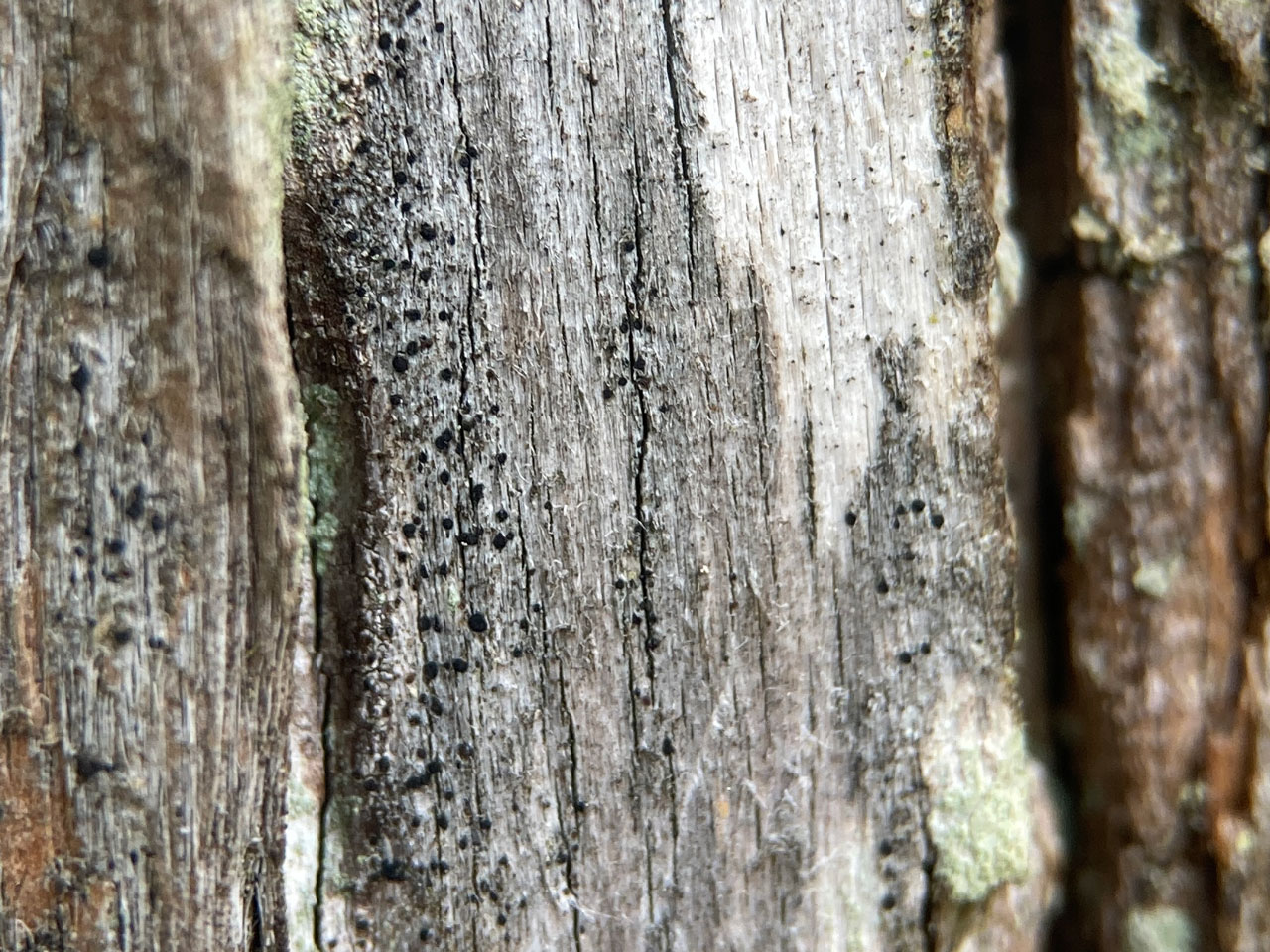
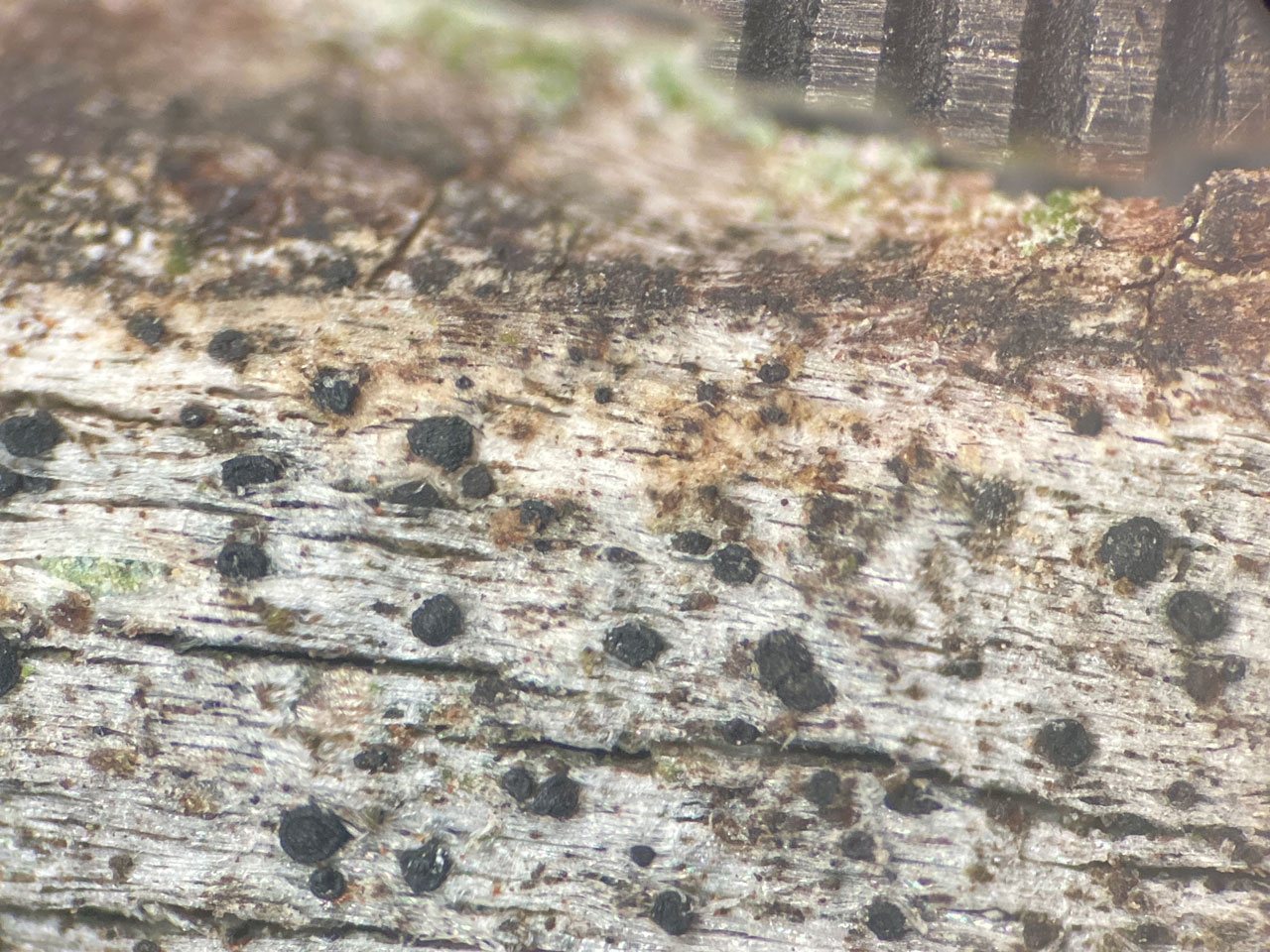
Resembles Amandinea punctata in the field, but can be suspected by the small black apothecia on a paler thallus, on very acidic bark and lignum areas with low nitrogen deposition. The smaller, thinner-walled ascospores will confirm the identification.
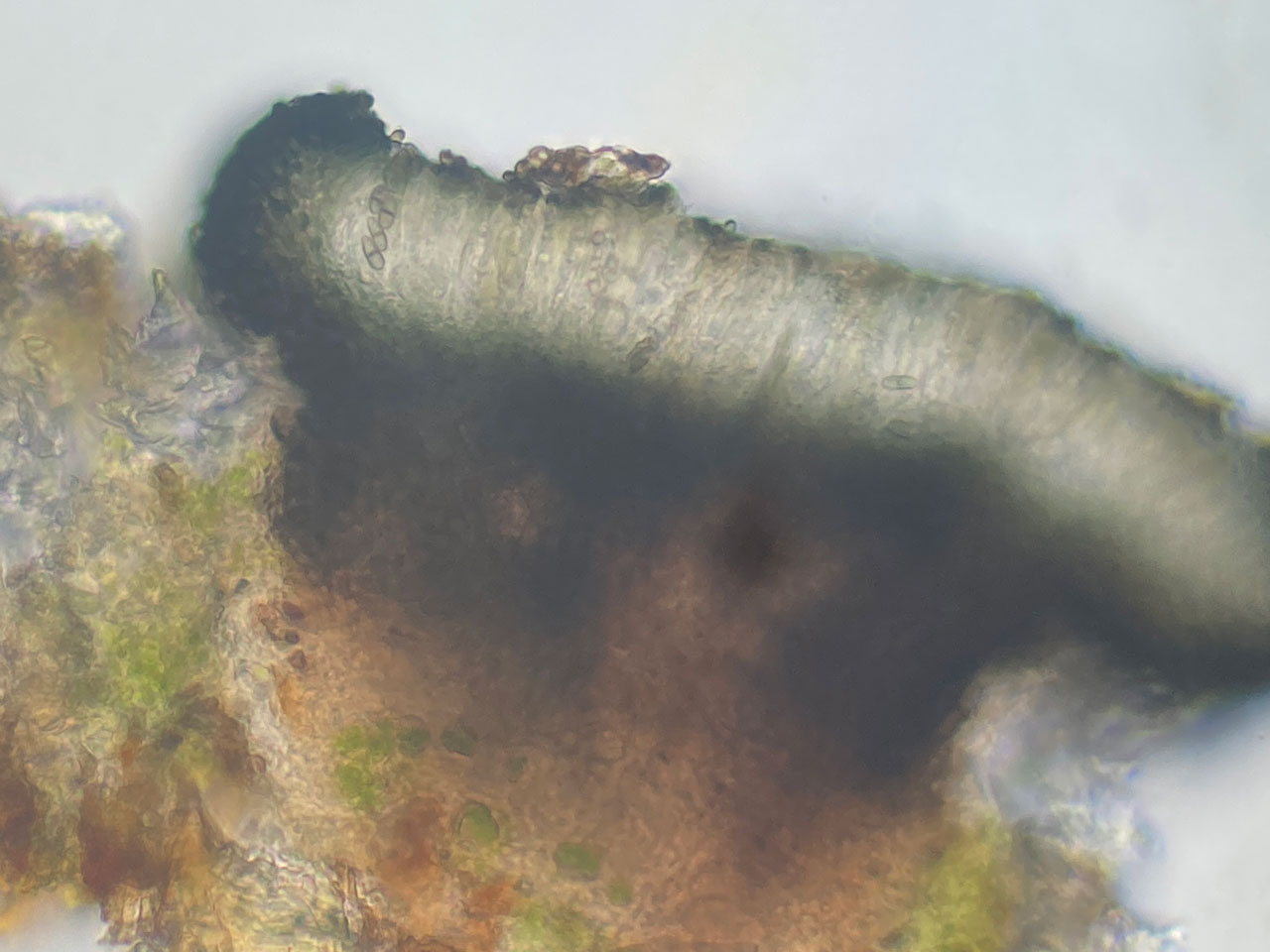
Thallus thin, continuous to slightly rimose-cracked or wrinkled, pale grey, effuse; medulla I–. Apothecia 0.2–0.3 (–0.5) mm diam., superficial; disc flat to convex; true exciple thin to excluded; epithecium brown, N–; hymenium 35–60 µm tall, without oil droplets; hypothecium brown. Ascospores 6–10 (–12) × 2.5–4 (–4.5) µm, 1-septate, uniformly thin-walled, smooth. Pycnidia often numerous, 50–70 µm diam.; conidia 2–3 × 1–1.4 µm, shortly cylindrical to ellipsoidal. Lichen substances not detected by TLC.
Distinguished from Amandinea punctata by the notably smaller, thinner-walled ascospores, paler thallus and shorter, ± cylindrical conidia
On acid bark and wood, especially of conifers and Oak.
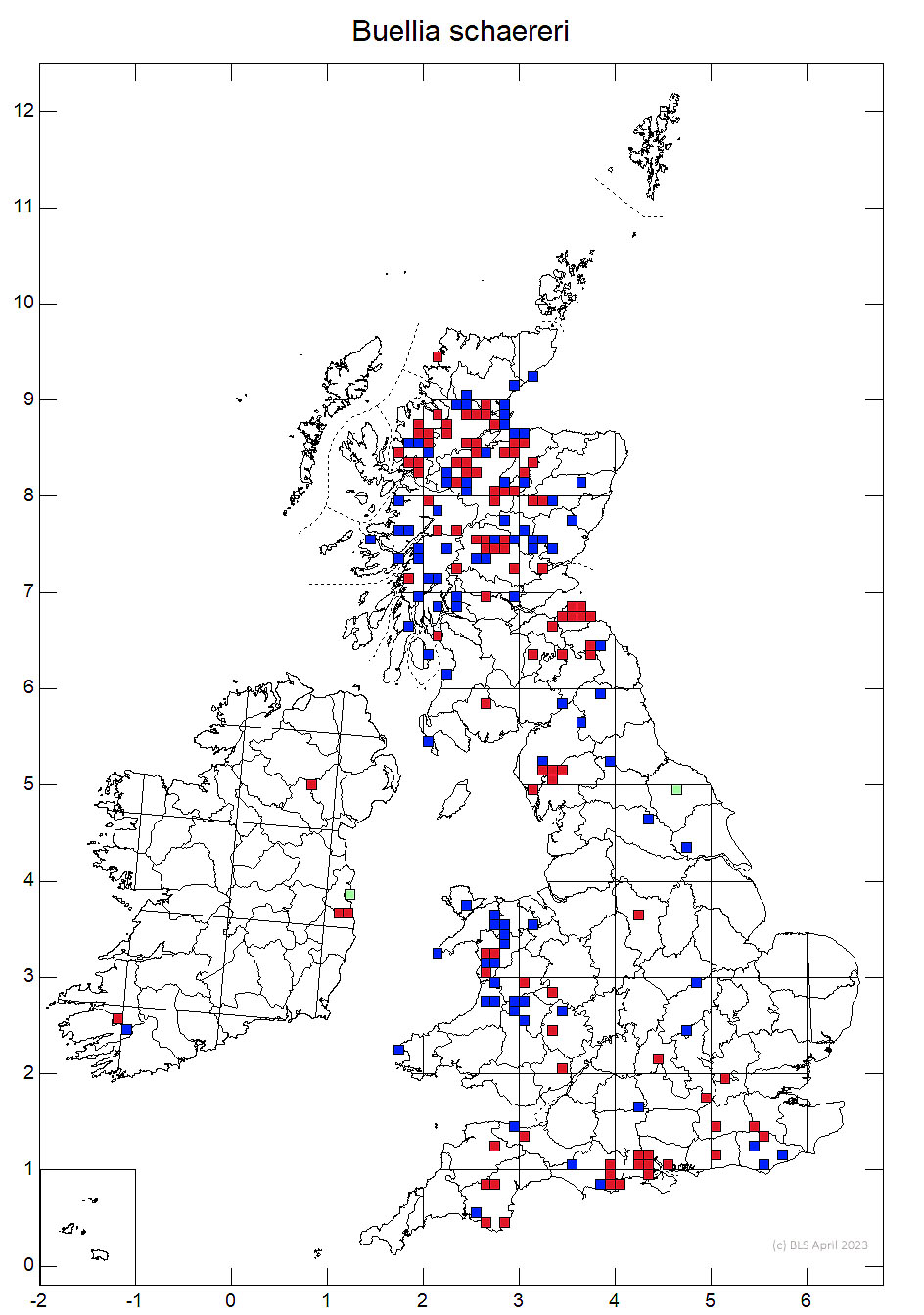


Scattered throughout Britain, common in Scotland; a few records from Ireland.
Cannon, P., Prieto, M., Coppins, B., Sanderson, N., Scheidegger, C. & Simkin, J. (2021). Caliciales: Caliciaceae, including the genera Acolium, Amandinea, Buellia, Calicium, Diploicia, Diplotomma, Endohyalina, Monerolechia, Orcularia, Pseudothelomma, Rinodina and Tetramelas. Revisions of British and Irish Lichens 15: 1-35.
Text by Neil A Sanderson based on Cannon et al (2021)