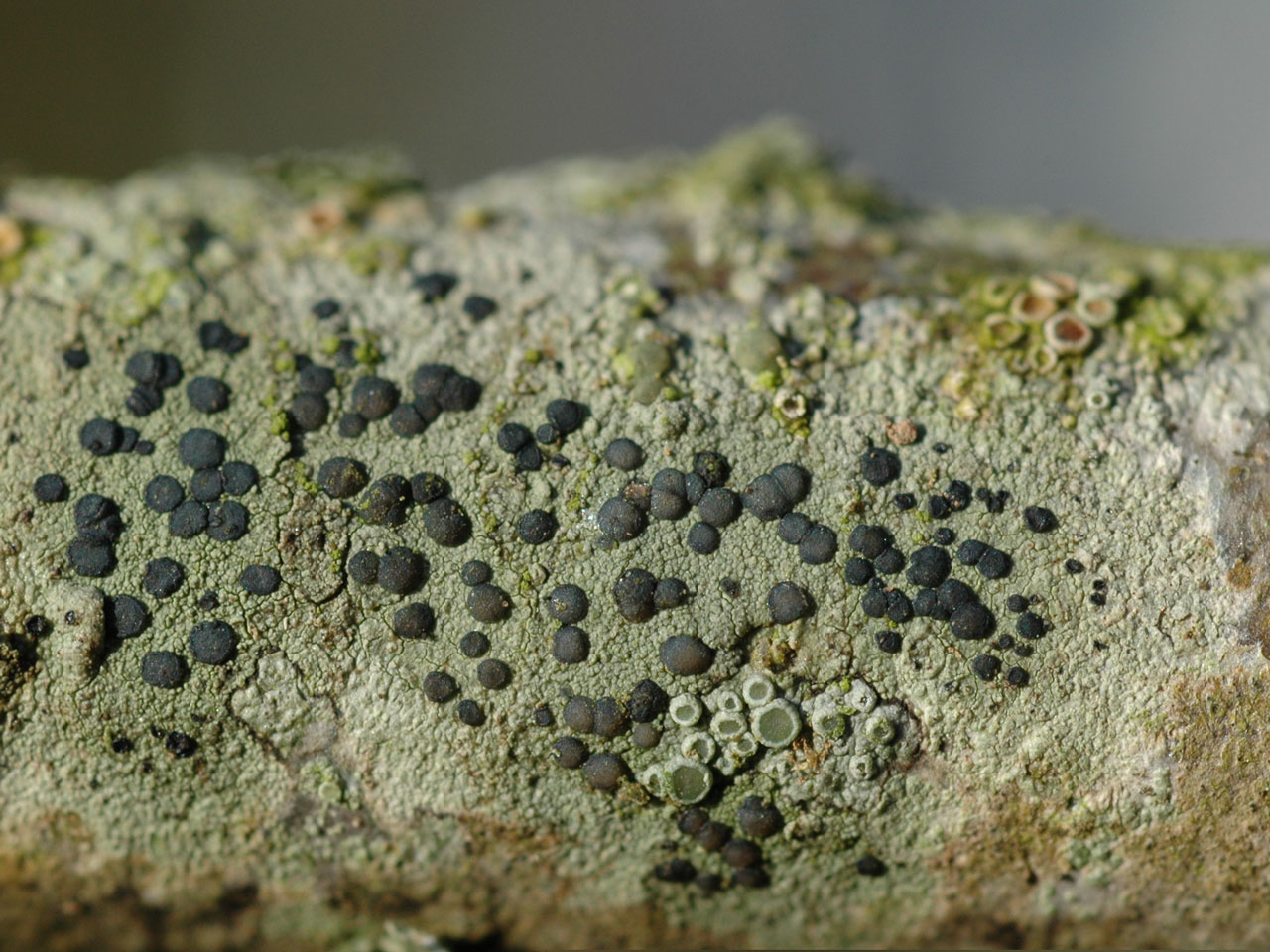
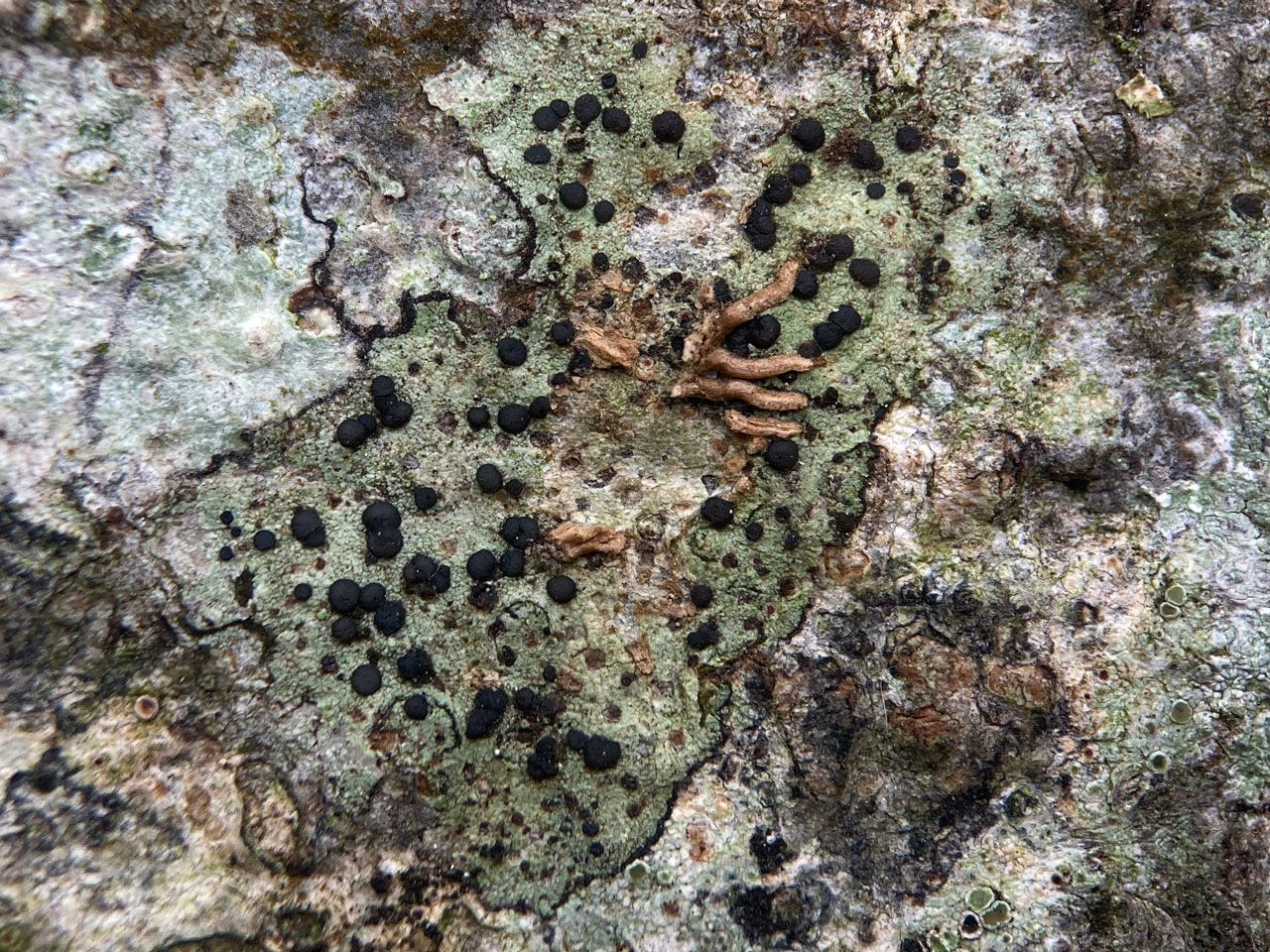
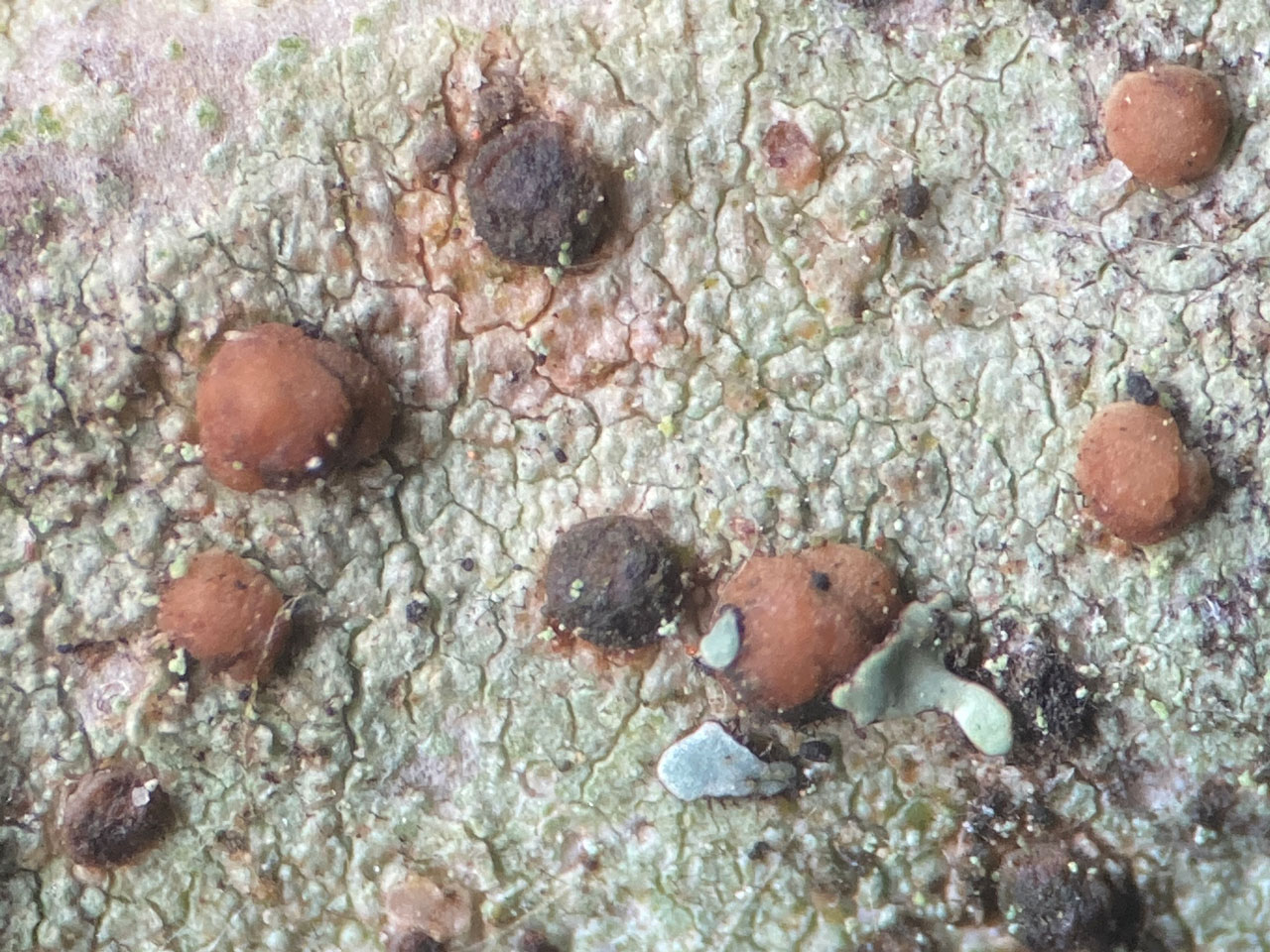
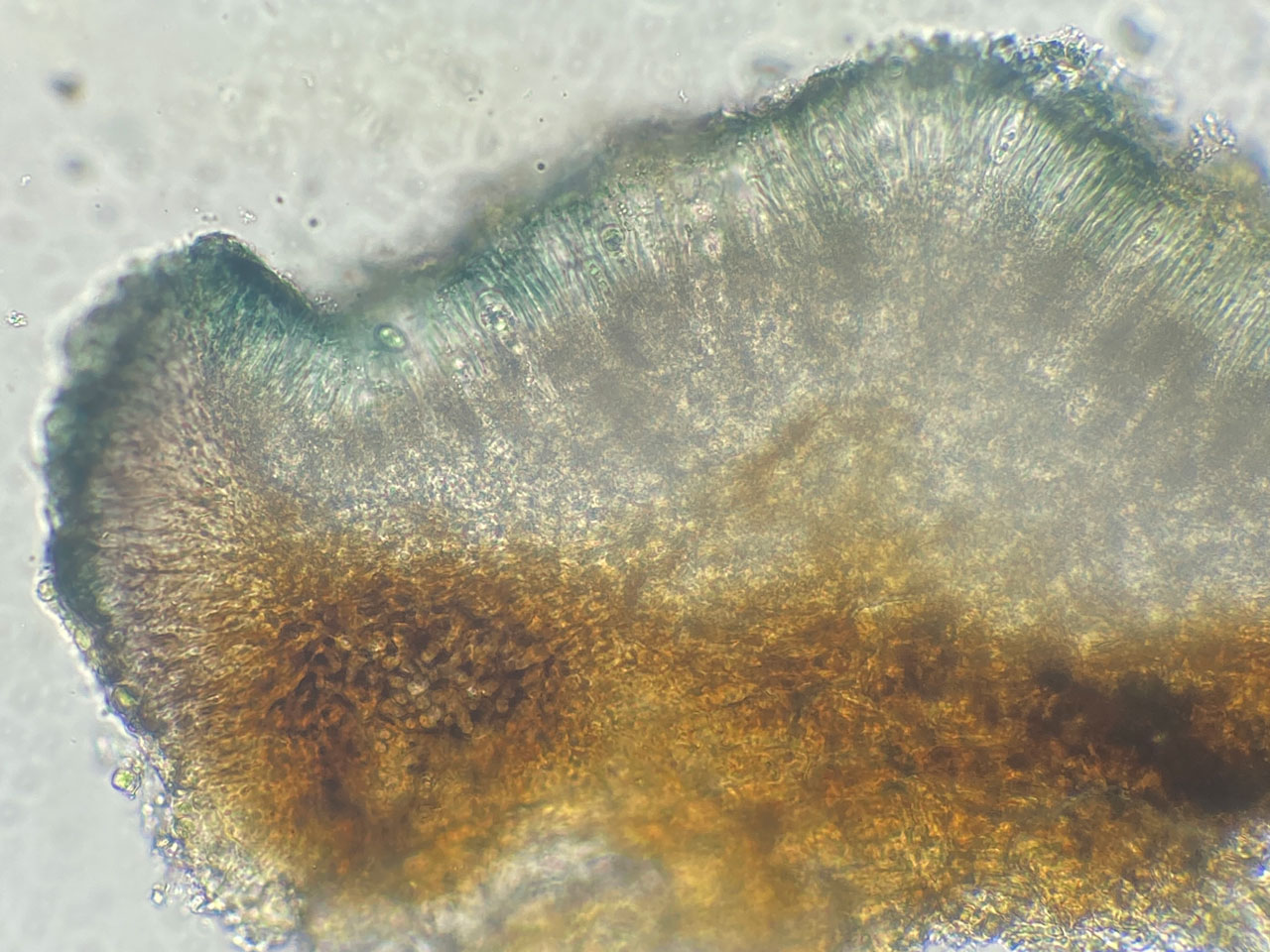
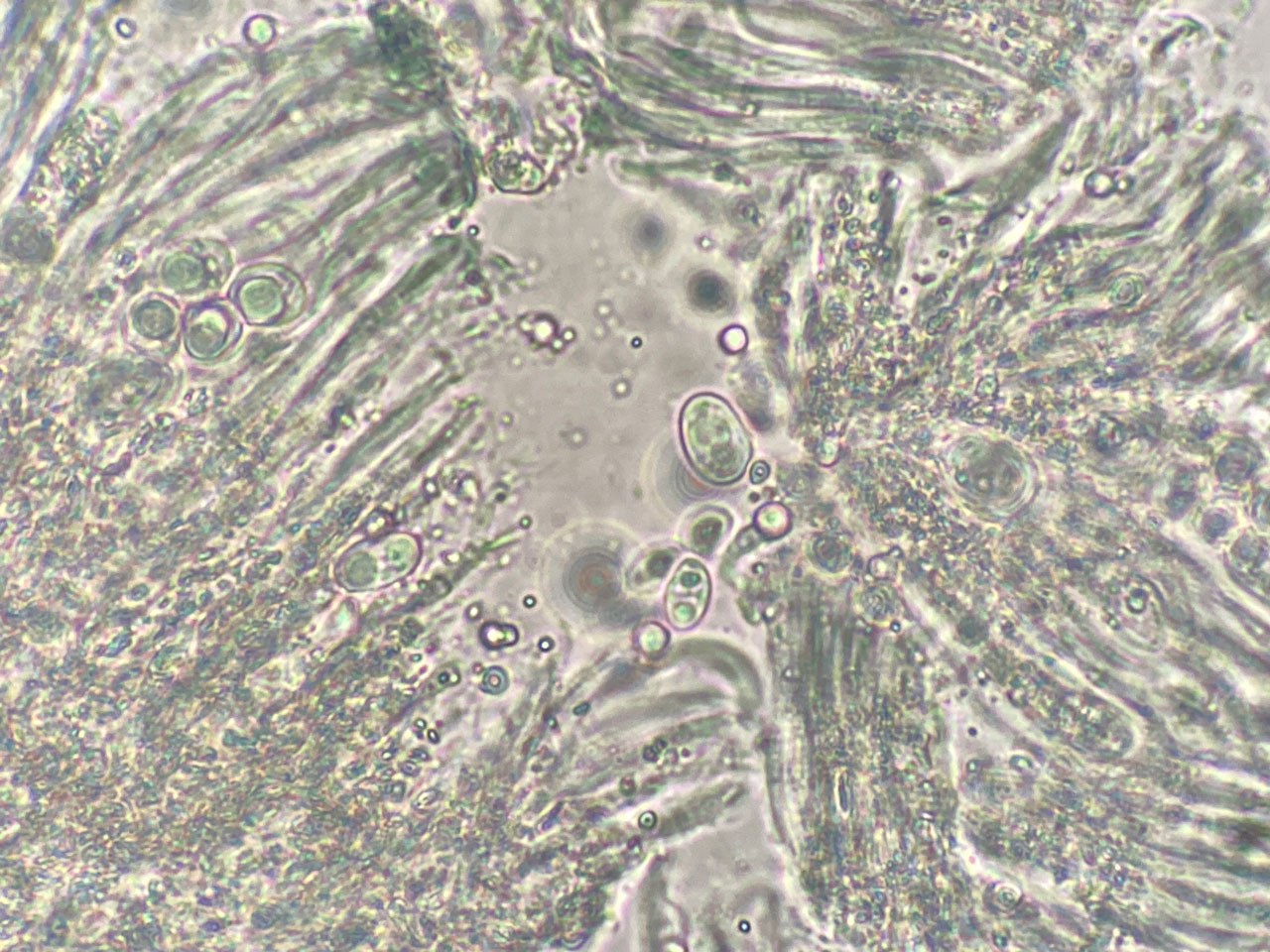
A very frequently encountered epiphytic lichen, which becomes easily recognised when growing in its typical forms. The thallus is yellow-grey to yellow-green in sunny exposed sites, becoming grey-green in shade with apothecia with disc blacks and the thallus is C+ orange. Odd forms are frequently encountered, however, with less strongly coloured or even piebald disks. The apothecia is very colourful in cross section and this and the somewhat oval simple spores are distinctive. See also link.
Thallus rather smooth, even and continuous or granular-verrucose, pale, yellow-grey to yellow-green in sunny exposed sites, becoming grey-green in shade, at times forming mosaics; prothallus black or blue-black. Apothecia to 1 mm diam., closely appressed, rounded to irregular, sometimes in small clusters, at first flat, later convex; disc black (especially in exposed, well-lit situations), but pale blue-black, brown-red or ± piebald morphs with a darker true exciple also exist; true exciple persistent, flexuose, finally excluded; epithecium and edge of true exciple sections blue-green to dull grey-blue, with crystals, crystals dissolving in K; hymenium 40–70 µm tall, with inclusions in the lower part and in the hypothecium; paraphyses lax, aseptate, non-capitate; hypothecium brown-orange, rarely colourless, intensifying to bright red-brown in K. Ascospores 10–17 × 6–9 µm. Thallus C+ orange, K+ yellow, KC+ yellow, Pd–, UV+ bright orange (reactions often faint, but the K/UV (wet)+ bright yellow-green test for xanthones is effective in such material); arthothelin, granulosin, ± 4,5 dichlorolichexanthone).
An extremely variable species as the pigmentation in the apothecia and thallus can be almost absent, especially in shaded situations. The species can be distinguished by the lax, unbranched paraphyses, the red-brown hypothecium intensifying in K, and at least a part of the thallus reacting C+ orange. Buellia disciformis is often confused with morphs of L. elaeochroma with a pale thallus. Megalaria grossa (Ramalinaceae) can appear like a large form of L. elaeochroma but is C–. The rare M. laureri can also superficially resemble some morphs of L. elaeochroma. The mainly continental and Asian L. euphorea (Flörke) Hertel (1980), distinguished by the thallus reactions C–, K+ yellow (?atranorin), is poorly understood and is probably not correctly recorded from Britain and Ireland; its status needs further research.
See Lecidella elaeochroma forma soralifera for the sorediate morph.
On well-lit smooth bark, especially twigs and small branches, also wood, often forming mosaics; also found on church walls etc.; moderately tolerant of both sulphur dioxide and ammonia pollution.
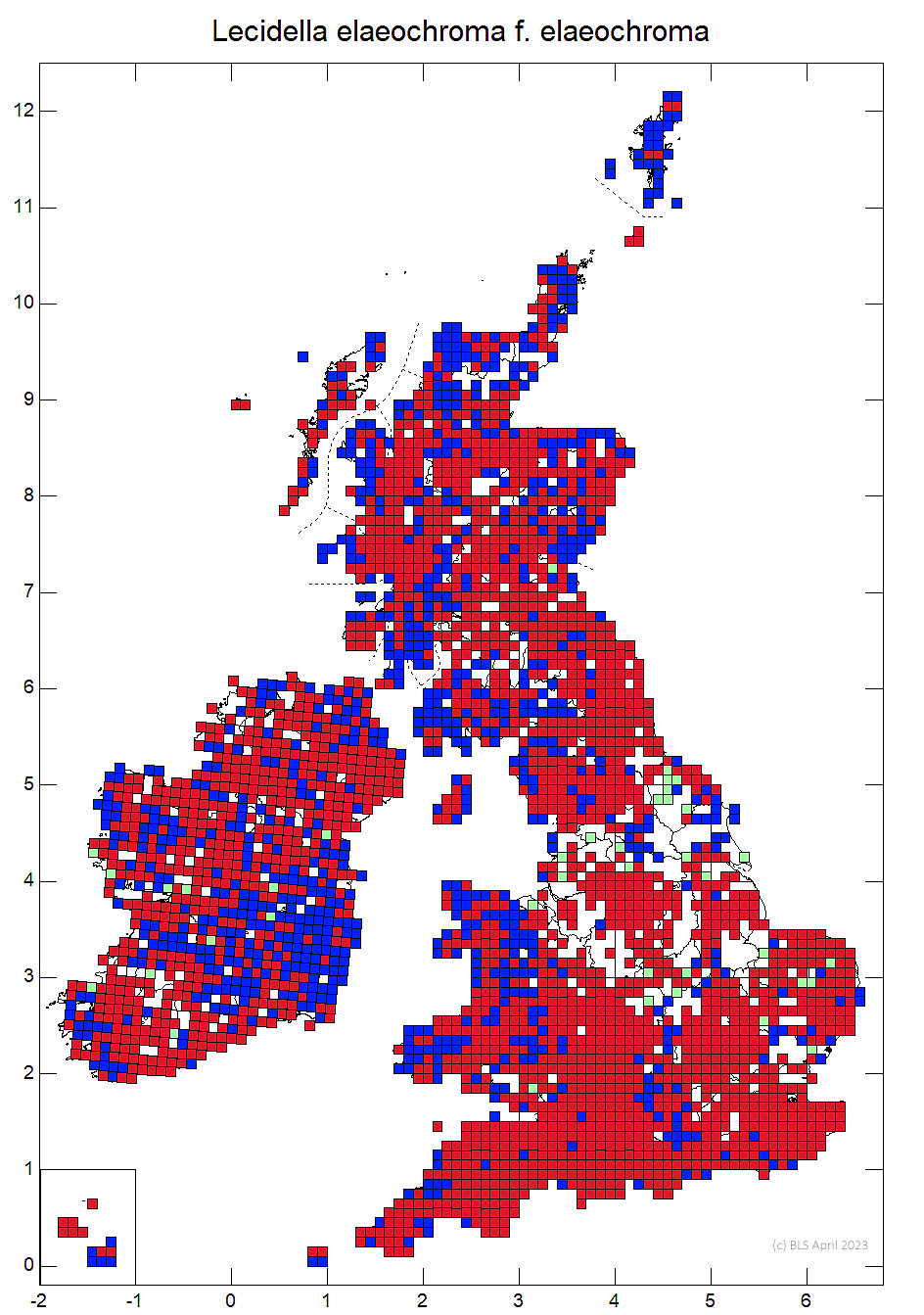

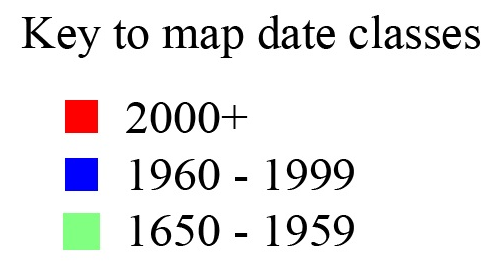
Very common, throughout Britain and Ireland.
Cannon, P., Malíček, J., Ivanovich, C., Printzen, C., Aptroot, A., Coppins, B., Sanderson, N., Simkin, J. & Yahr, R. (2022). Lecanorales: Lecanoraceae, including the genera Ameliella, Bryonora, Carbonea, Claurouxia, Clauzadeana, Glaucomaria, Japewia, Japewiella, Lecanora, Lecidella, Miriquidica, Myriolecis, Palicella, Protoparmeliopsis, Pyrrhospora and Traponora. Revisions of British and Irish Lichens 25: 1-83.
Text by Neil A Sanderson based on Cannon et al (2022)