Traponora varians
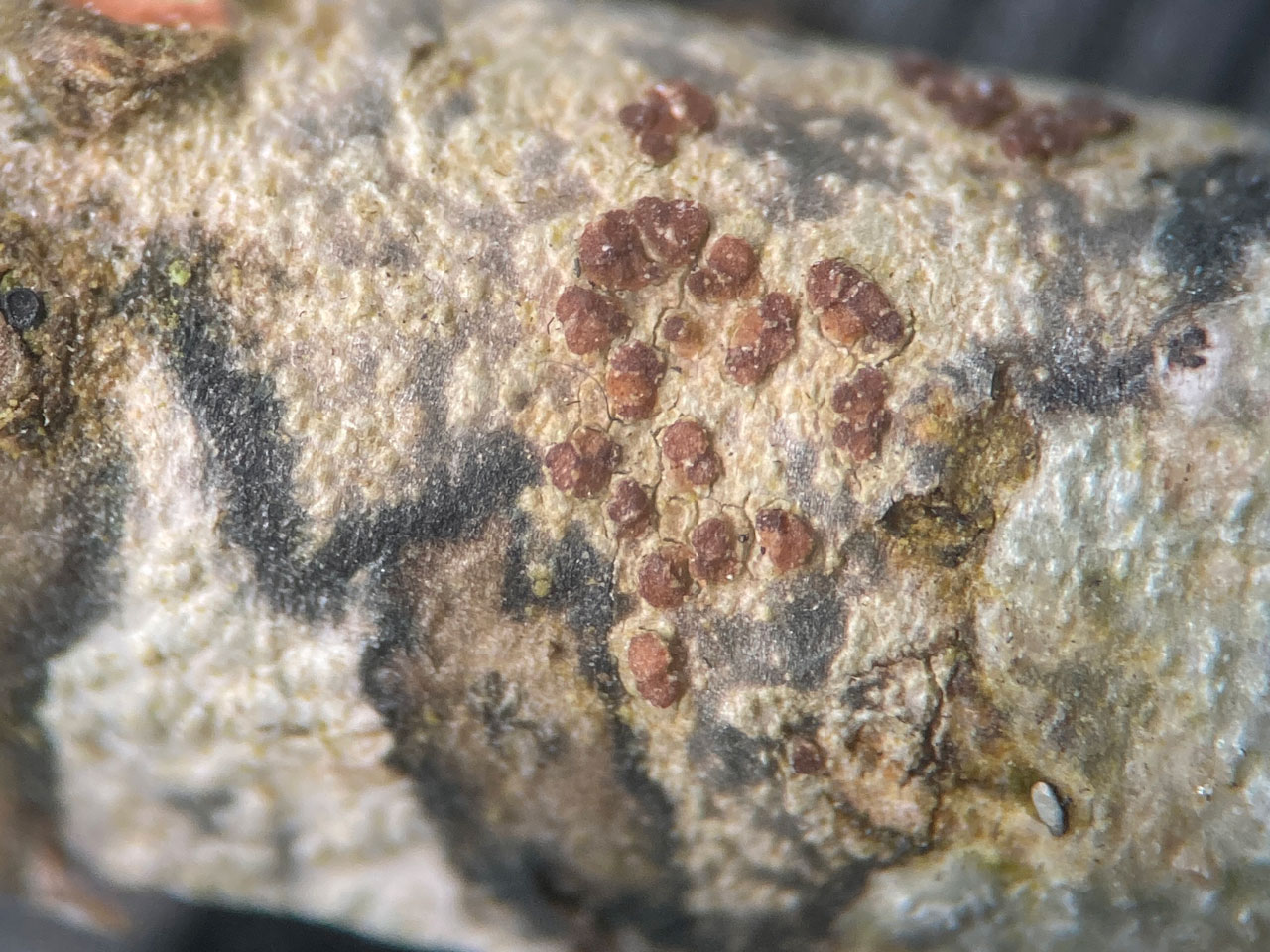
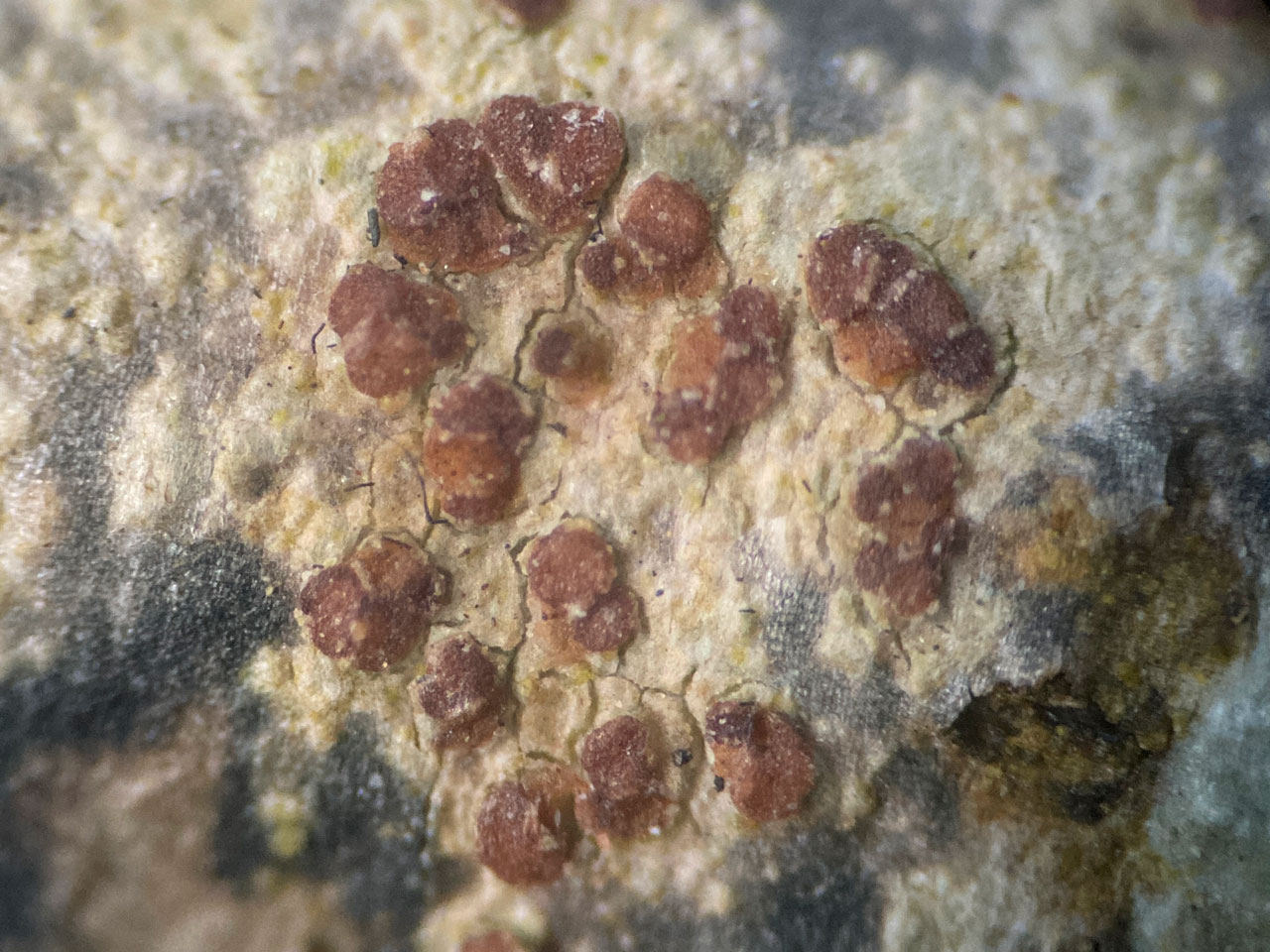
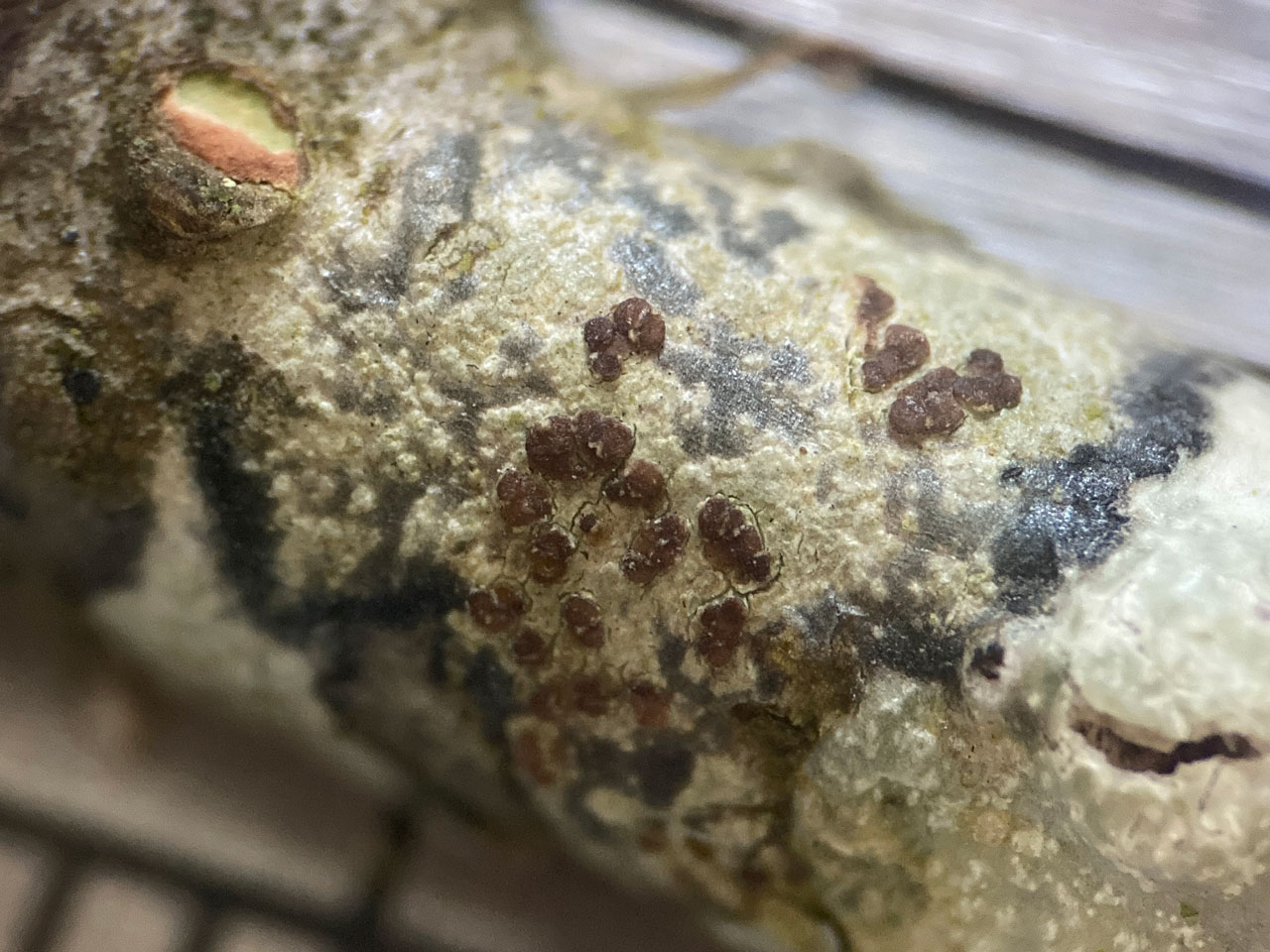
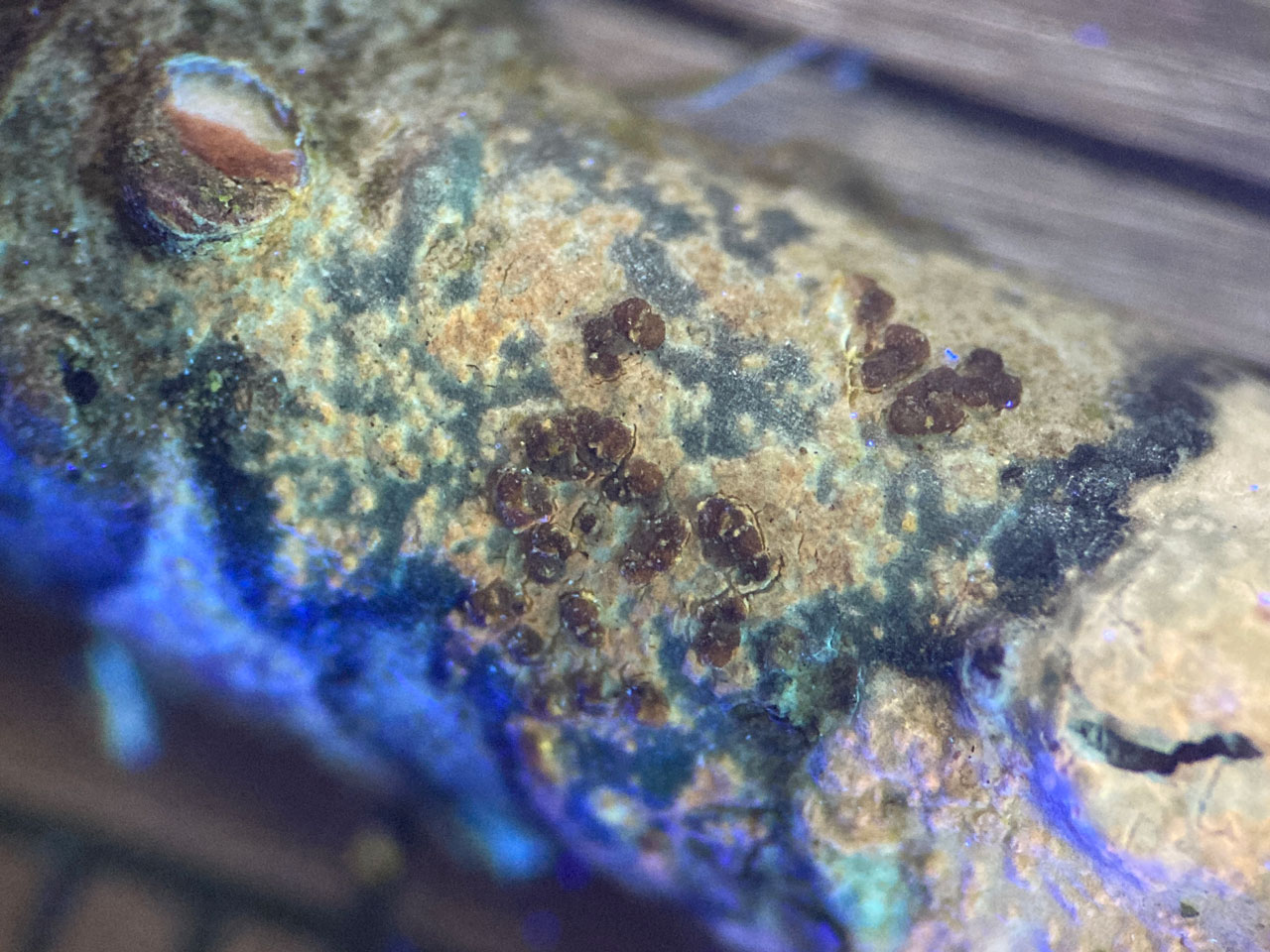
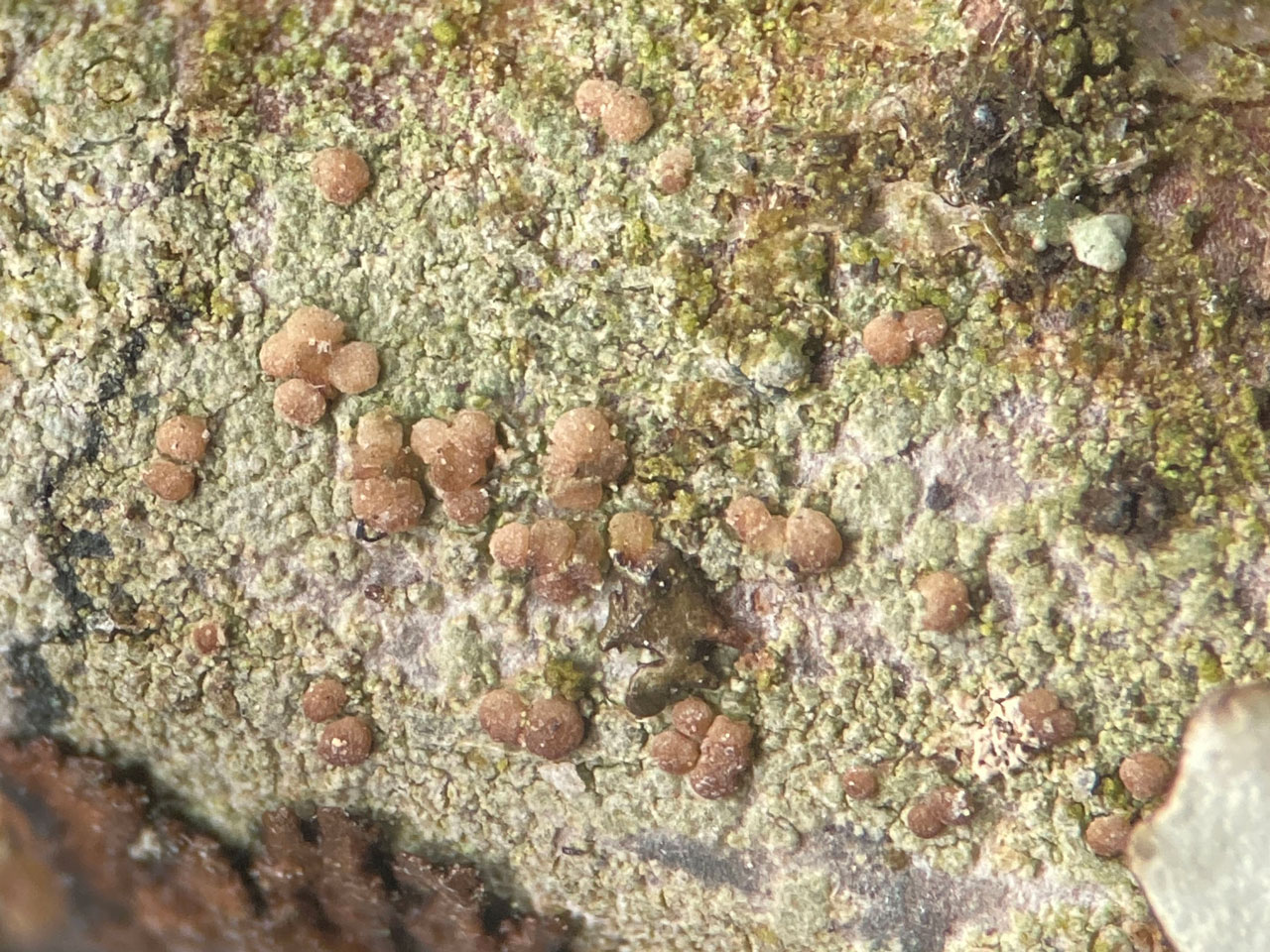
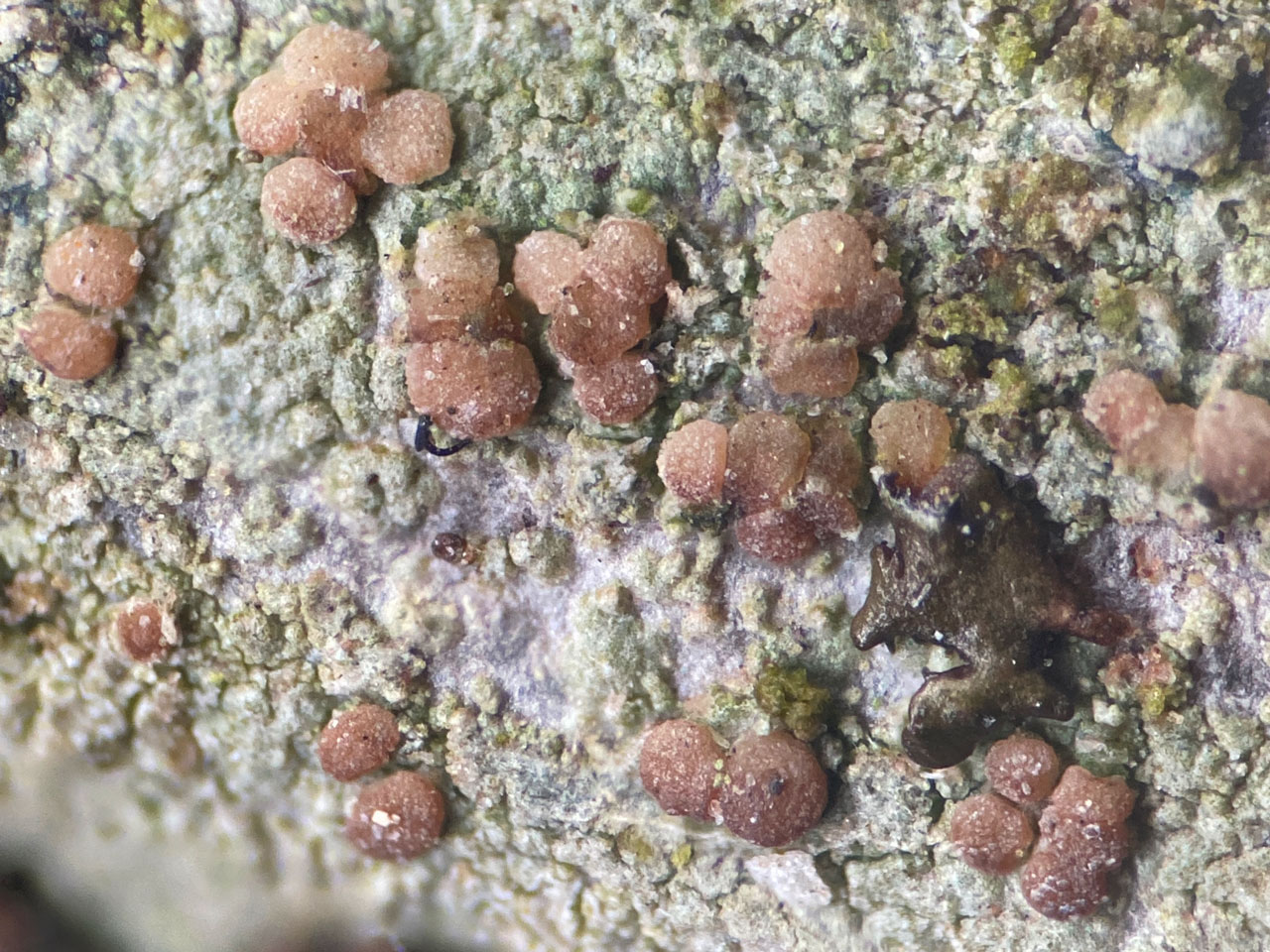
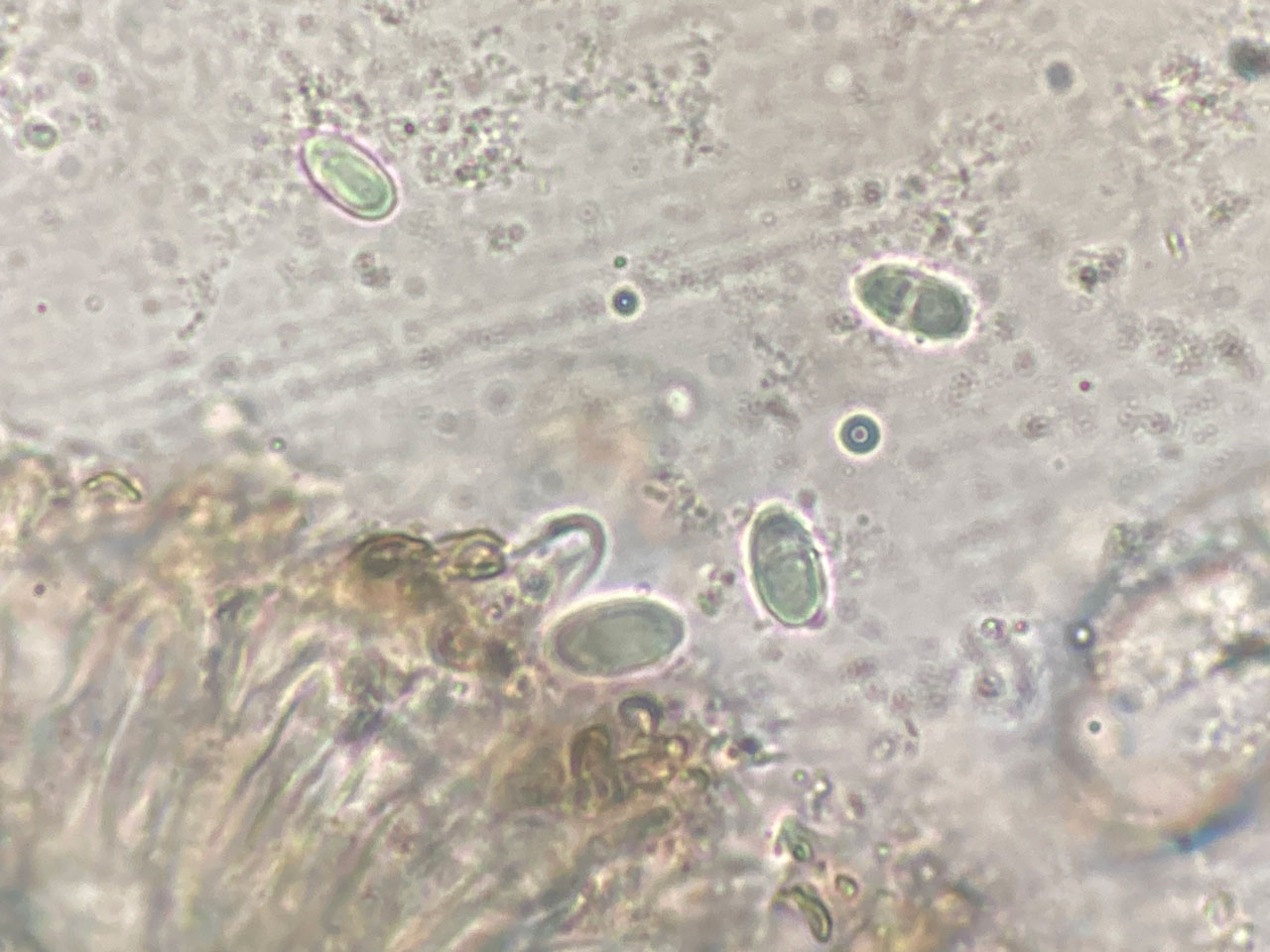
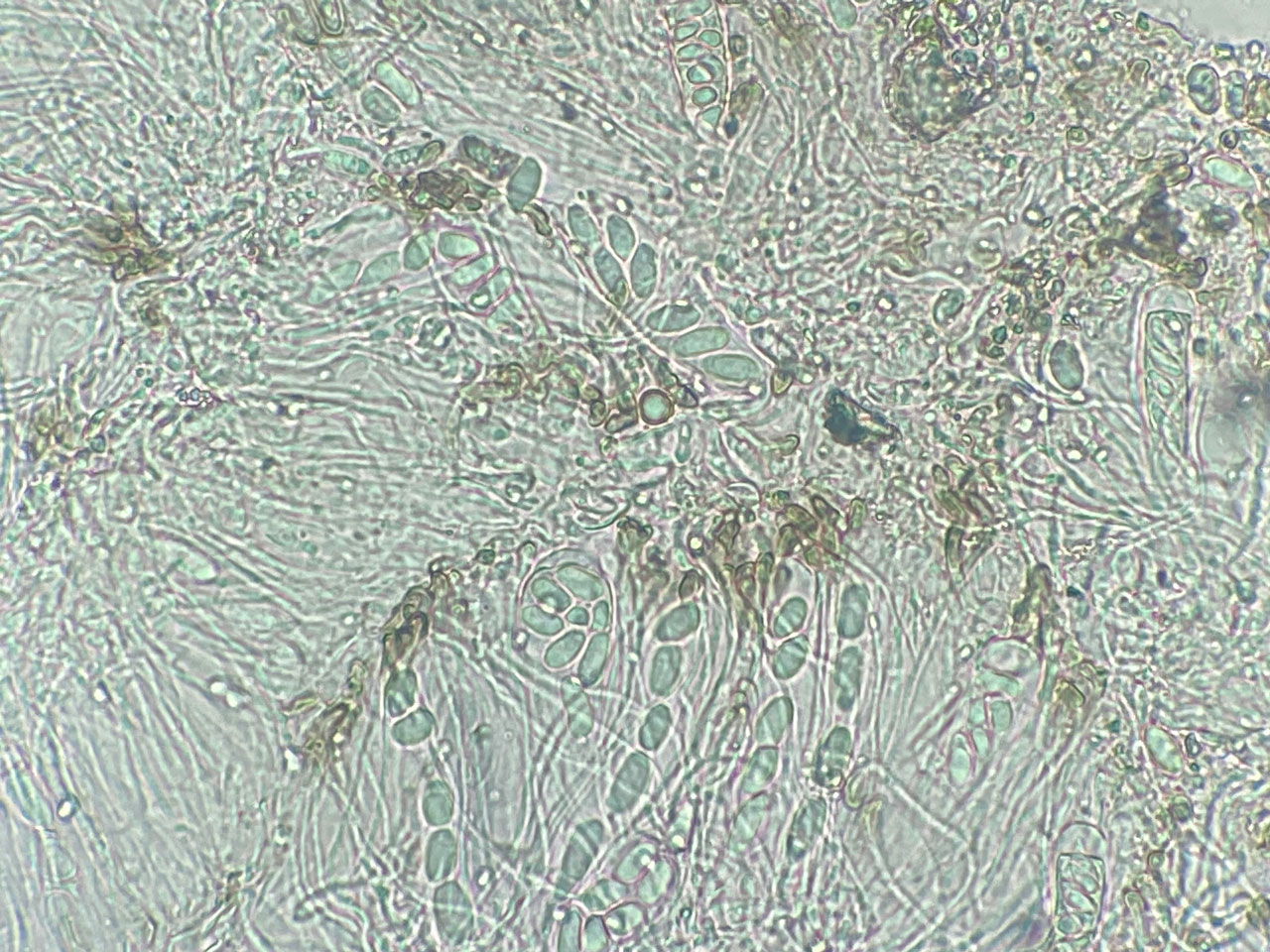
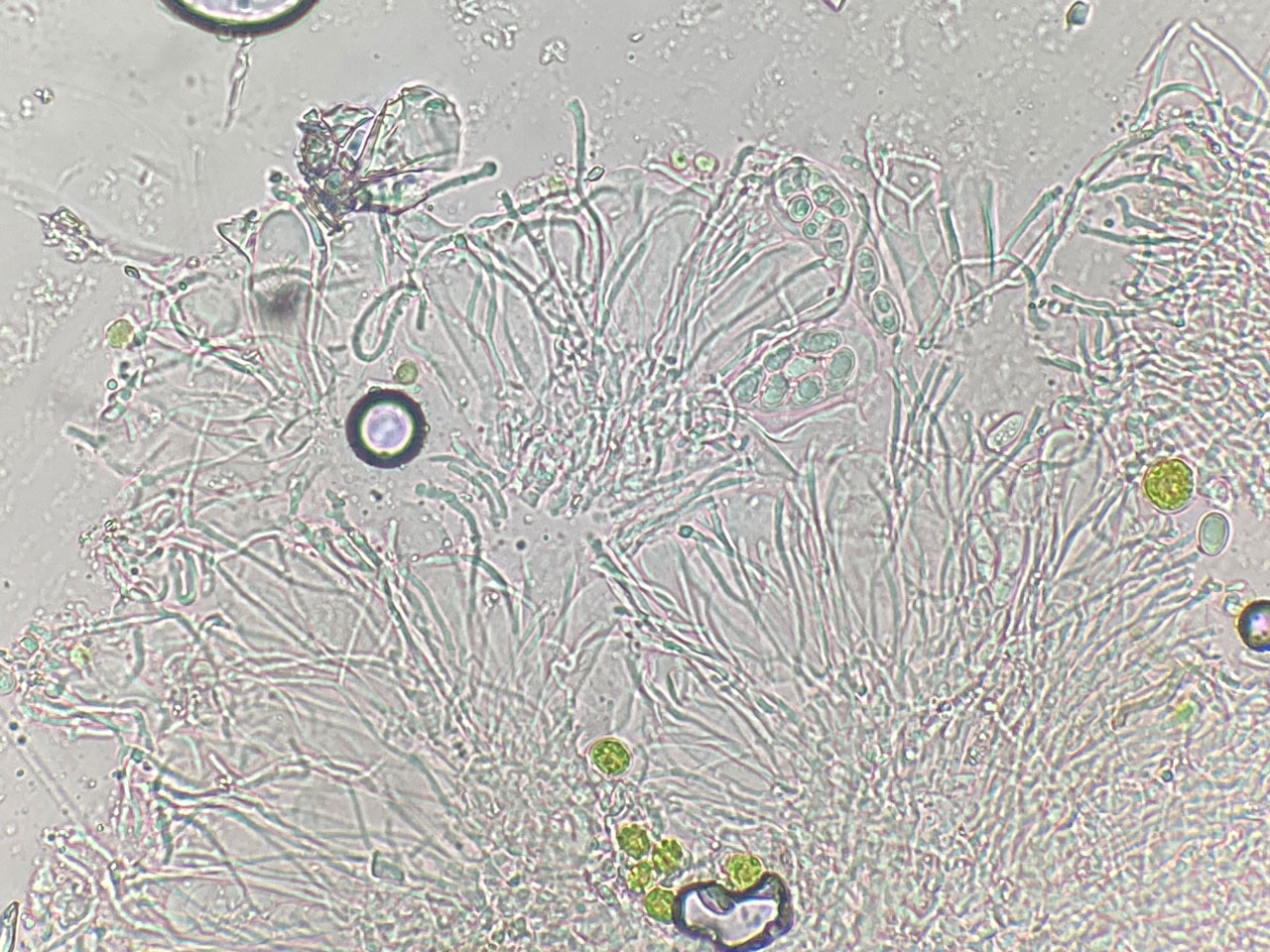
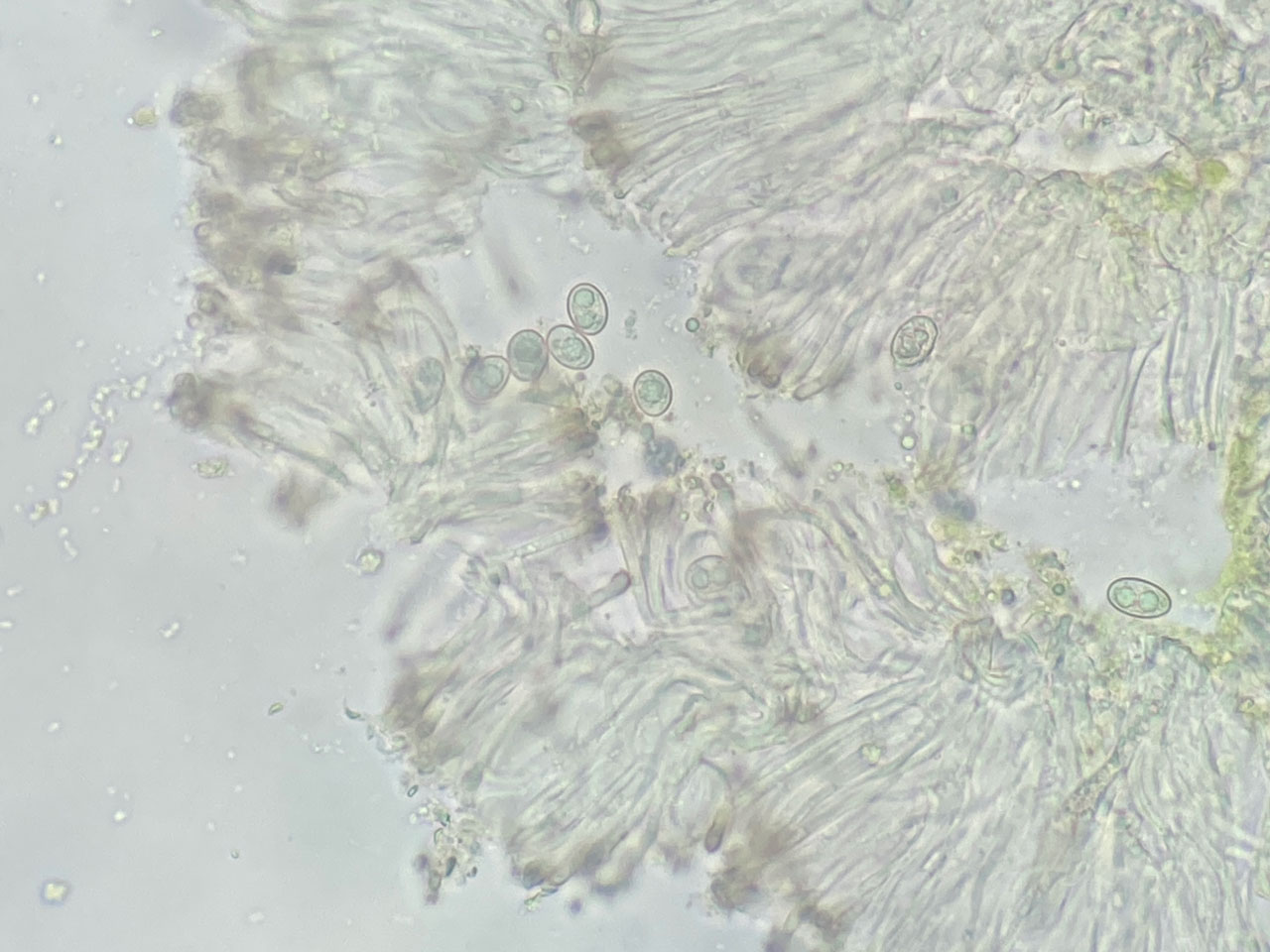
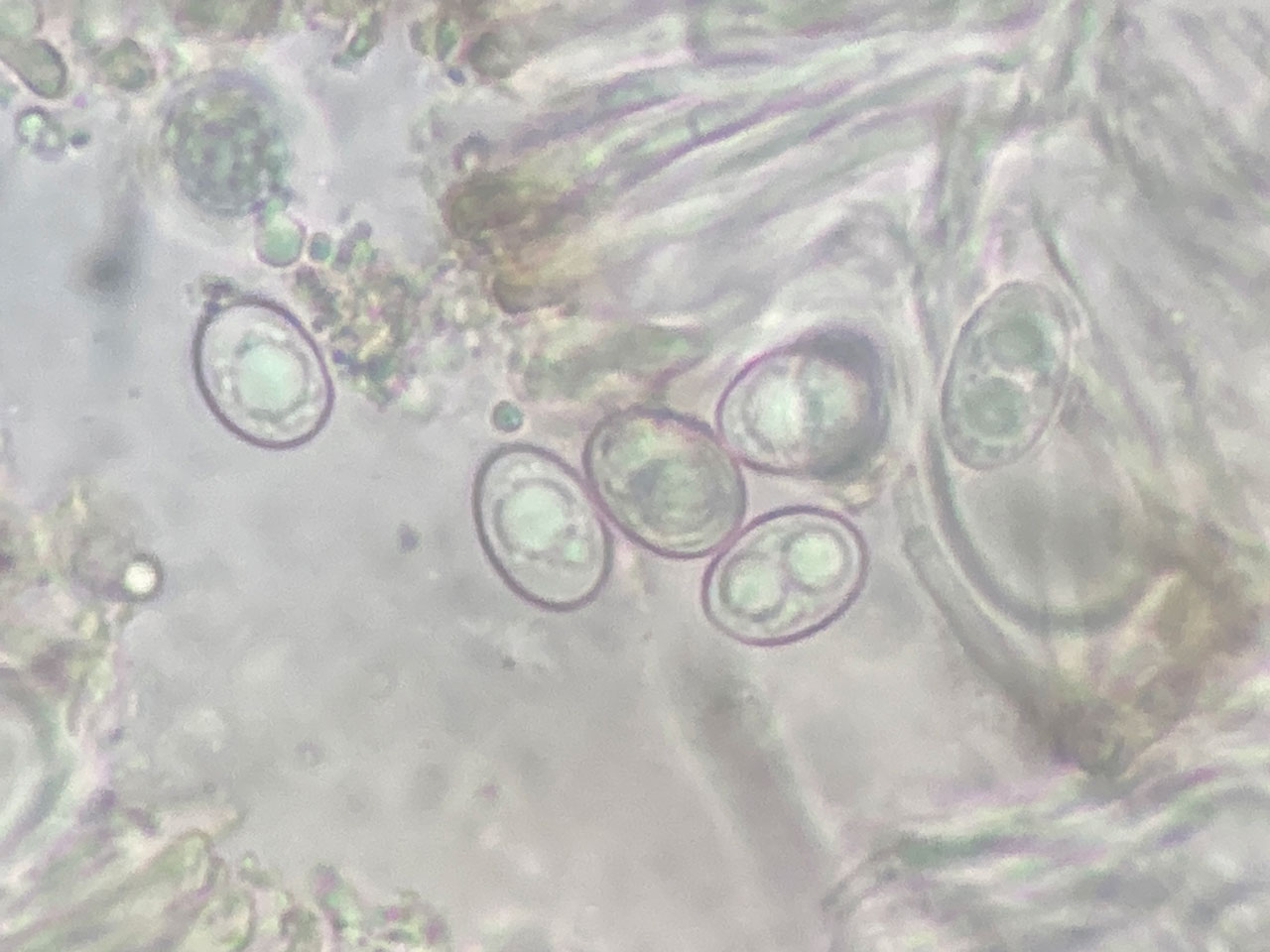
Now called Xanthosyne varians subsp. exigua. A small easily overlooked lichen found on twigs in humid valley woodlands, parklands & pasture woodlands. Long only known from the lower Tamar valley in South Devon and East Cornwall but its discovery further west in East Cornwall in 2022 and much further to the east in South Hampshire and W. Sussex in 2026, suggests it may be spreading and it should be looked out for elsewhere. Superficially similar to Japewiella tavaresiana but distinguished by the clustered apothecia, which sometimes merge and fuse with adjoining apothecia, smaller spores and K/UV(wet)+ bright yellow-green, KC+ orange and UV± pinkish orange thallus. More likely to be overlooked as poorly grown or damaged Lecidella elaeochroma f. elaeochroma with pale apothecia, but this has larger apothecia and spores and is UV+ very bright orange.
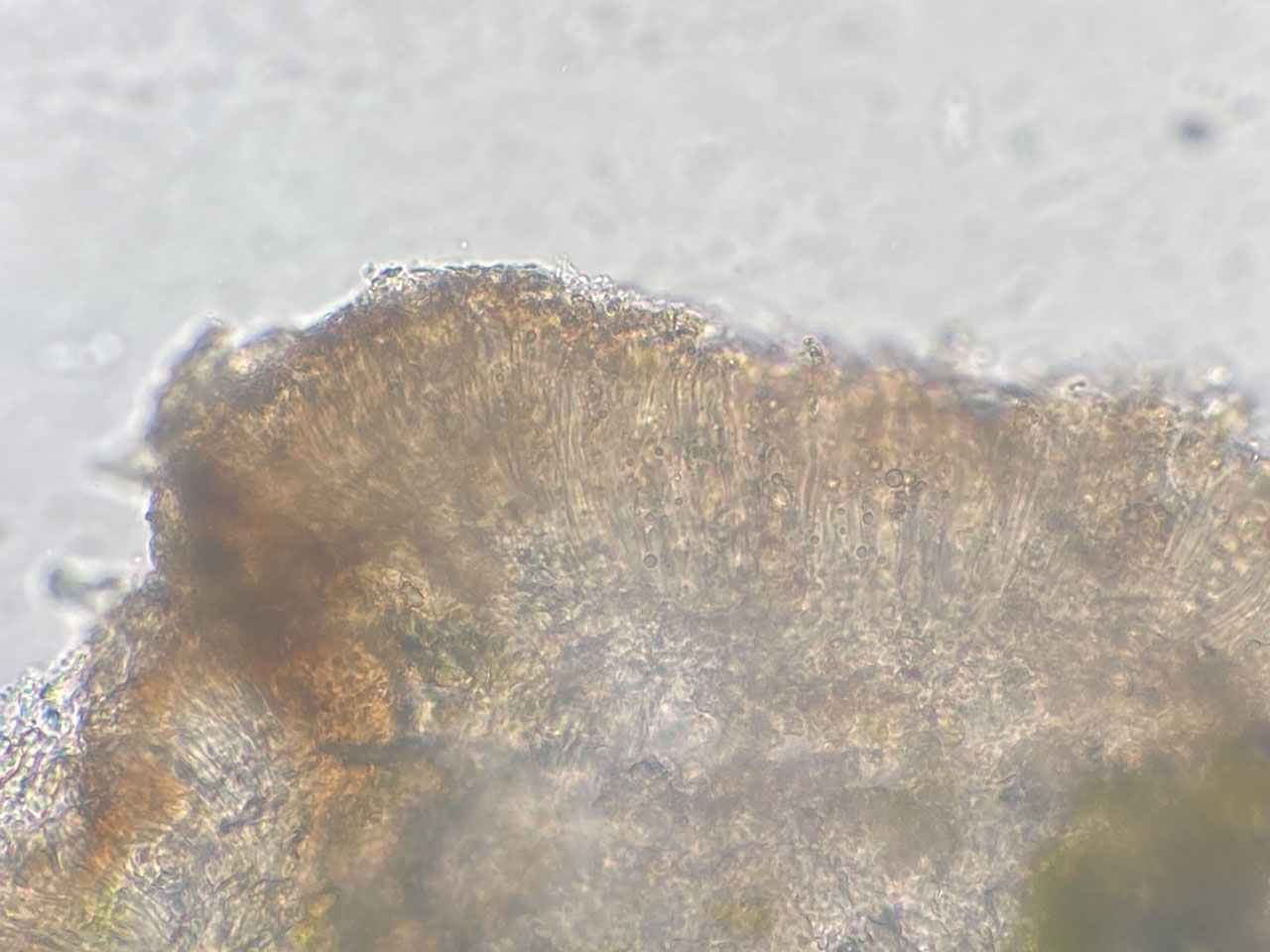
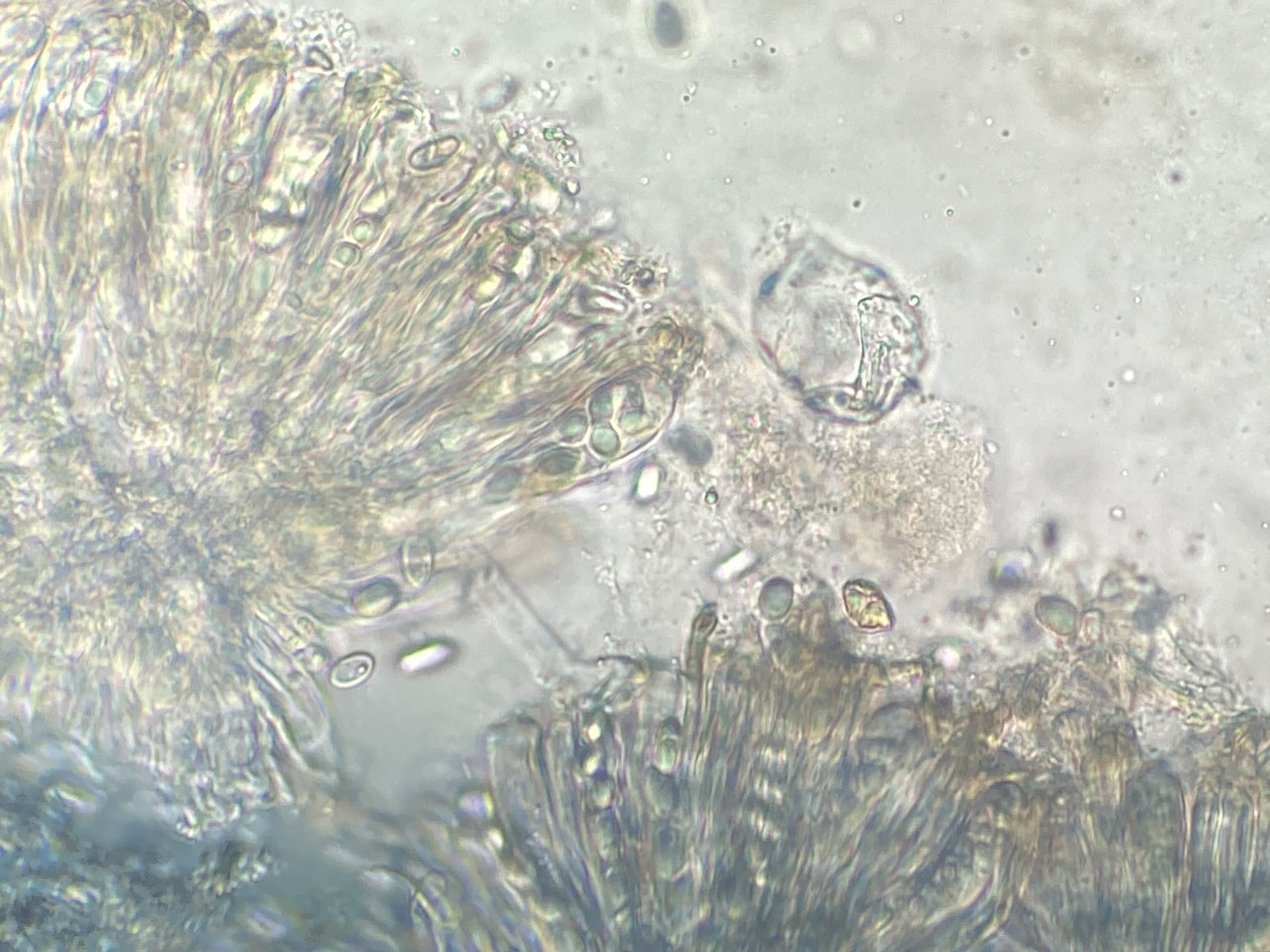
Thallus greenish gray to pale green or yellowish green, thin to somewhat thick, up to 0.7 mm thick, rimose or continuous, rough or smooth, frequently covered with epiphytic algae; often with a distinct dark gray to black line between adjoining thalli. Apothecia usually pale, rarely dark yellowish brown to reddish brown, typically epruinose but can be lightly or heavily pruinose, round to irregular in shape, clustered, sometimes merging and fusing with adjoining apothecia, immersed to broadly attached and sessile, 0.15–0.38(–0.45) mm in diameter, margins thin, only discernable in very young apothecia, even with disk, soon excluded; epihymenium pale yellowish brown to red-brown, unchanged in KOH or HNO3, birefringent in polarized light, but not appearing to be granular (due to walls ofasci and/or paraphyses, not to granules, which can be present, but are not birefringent), birefringence disappearing after KOH, but persistently birefringent in HNO3; hymenium clear, 50–62 (–70) µm; hypothecium hyaline, thin, ca 20–30 µm; paraphyses not or barely branched, 1.4–1.8 µm thick, tips not or barely expanded, 2.4–4.2 (–5.0) µm in diameter, not or slightly pigmented brown; exciple thin, reddish brown, especially at outer edge, consisting of radiating hyphae (prosoplectenchyme), birefringent in polarized light (like epihymenium); ascospores ellipsoid to broadly ellipsoid, (8.4–) 9.0–11.5 (–12.0) × (4.5–) 5.2–6.5 (–7.4) µm, L/W ratio 1.4–2.0. Pycnidia not seen. Thallus K−, K/UV(wet)+ bright yellow-green, C− or + yellow, KC+ pale orange, PD−, UV− [or UV+ pinkish orange*]; contains atranorin, thiophanic acid, confusa-unknown, arthothelin.*(Brodo et al (2024) give the European subsp. exigua as UV–, but some British material at least is UV+ pinkish orange.)
Superficially similar to Japewiella tavaresiana but distinguished by the KC+ orange and UV± pinkish orange thallus. More likely to be overlooked as poorly grown or damaged Lecidella elaeochroma f. elaeochroma with pale apothecia, but this has larger apothecia and spores and is UV+ very bright orange.
European material (Lecidea exigua) was included the within eastern American Lecidea varians and transferred Traponora varians by Kalb, J. & Kalb, K. (2017). However, the eastern American collections have somewhat different chemistry (Hertel & Printzen 2004). The problem was studied by Brodo et al (2024), who found a group of taxa that formed a distinct clade related to Lecidella, which they named Xanthosyne. The European material clustered with specimens from California and was named Xanthosyne varians subsp. exigua.
On bark, particularly twigs, of broadleaved trees in humid valley woodlands, parklands & pasture woodlands.
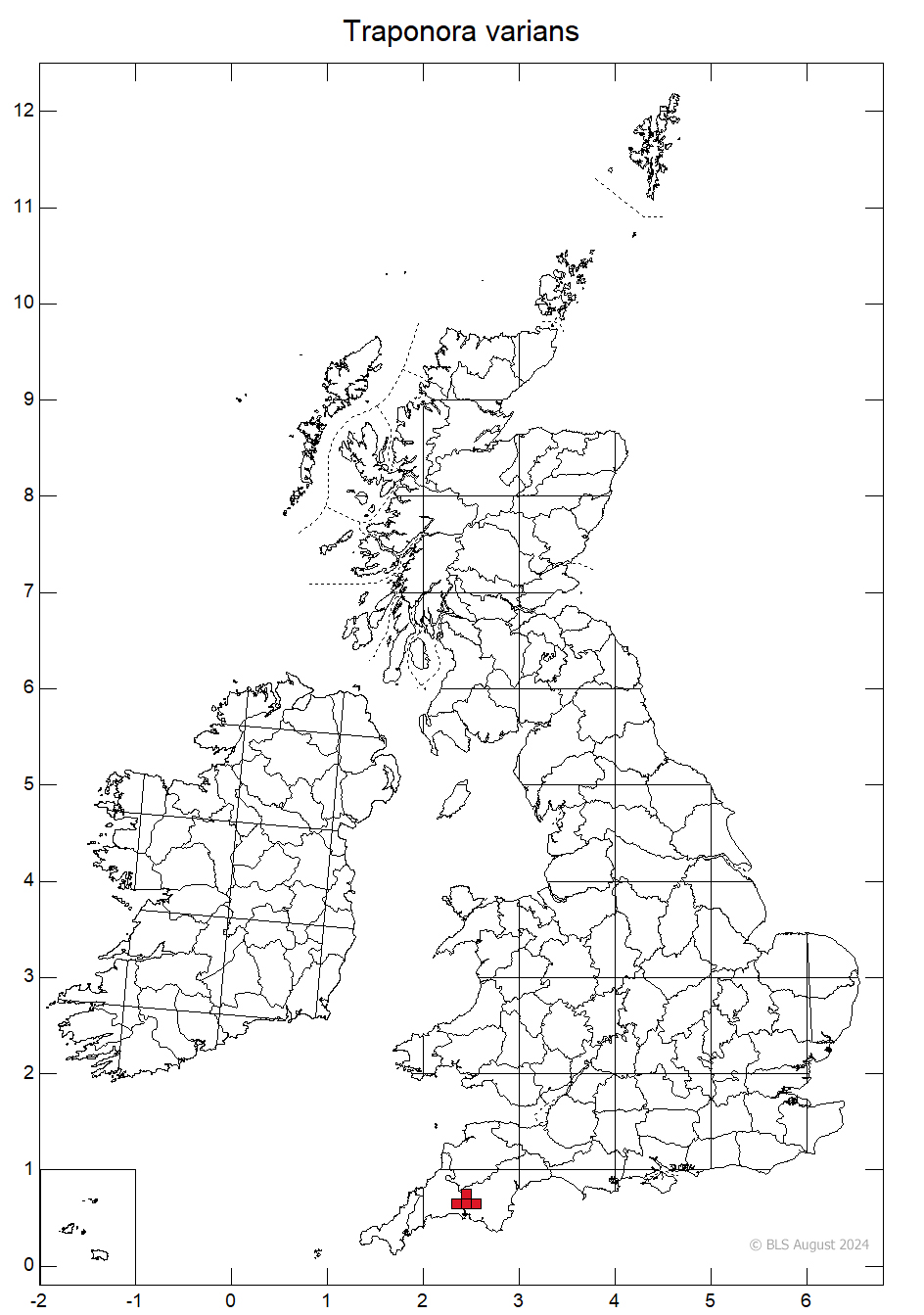

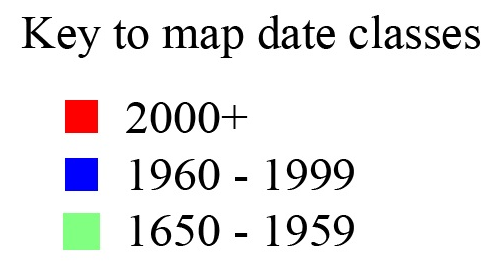
Rare, S.W. & S. England (Cornwall, Devon, Hampshire & W. Sussex) (Herefordshire and Worcestershire were given also in Cannon et al 2022, but were errors).
Assessed as Data Deficient in 2012. Certainly rare and potentially threatened by increasing ammonia pollution. Long only known from the lower Tamar valley in South Devon and East Cornwall but its discovery to the west in the Fowley valley, East Cornwall in 2022 and further to the east in the New Forest, South Hampshire and Iping Common, West Sussex in 2026, suggests it may be spreading but it still appears rare. It should be looked out for elsewhere in the south.
Britain: Data Deficient
Brodo, I. M., Lendemer, J. C., Harris,R. C., McMullin, R. T., López de Silanes M. E. , van Miltenburg, N., Bull, R., Paradis, M. & Ginter, A. (2024) Xanthosyne (Lecanoraceae), a new genus for Lecidea varians and related species in Europe and North America. The Bryologist 127: 169-219.
Cannon, P., Malíček, J., Ivanovich, C., Printzen, C., Aptroot, A., Coppins, B., Sanderson, N., Simkin, J. & Yahr, R. (2022). Lecanorales: Lecanoraceae, including the genera Ameliella, Bryonora, Carbonea, Claurouxia, Clauzadeana, Glaucomaria, Japewia, Japewiella, Lecanora, Lecidella, Miriquidica, Myriolecis, Palicella, Protoparmeliopsis, Pyrrhospora and Traponora. Revisions of British and Irish Lichens 25: 1-83.
Kalb, J. & Kalb, K. (2017) New lichen species from Thailand, new combinations and new additions to the Thai lichen biota. Phytotaxa 332: 141–156.
Hertel, H. & Printzen, C. (2004). Lecidea. In: Lichen Flora of the Greater Sonoran Desert Region (Nash, T.H., Ryan, B.D., Diederich, P., Gries, C. & Bungartz, F., eds), vol. 2: 287–309. Tempe, Arizona: Lichens Unlimited.
Text by Neil A Sanderson based on Brodo et al (2024) & Cannon et al (2022)