Toensbergia leucococca
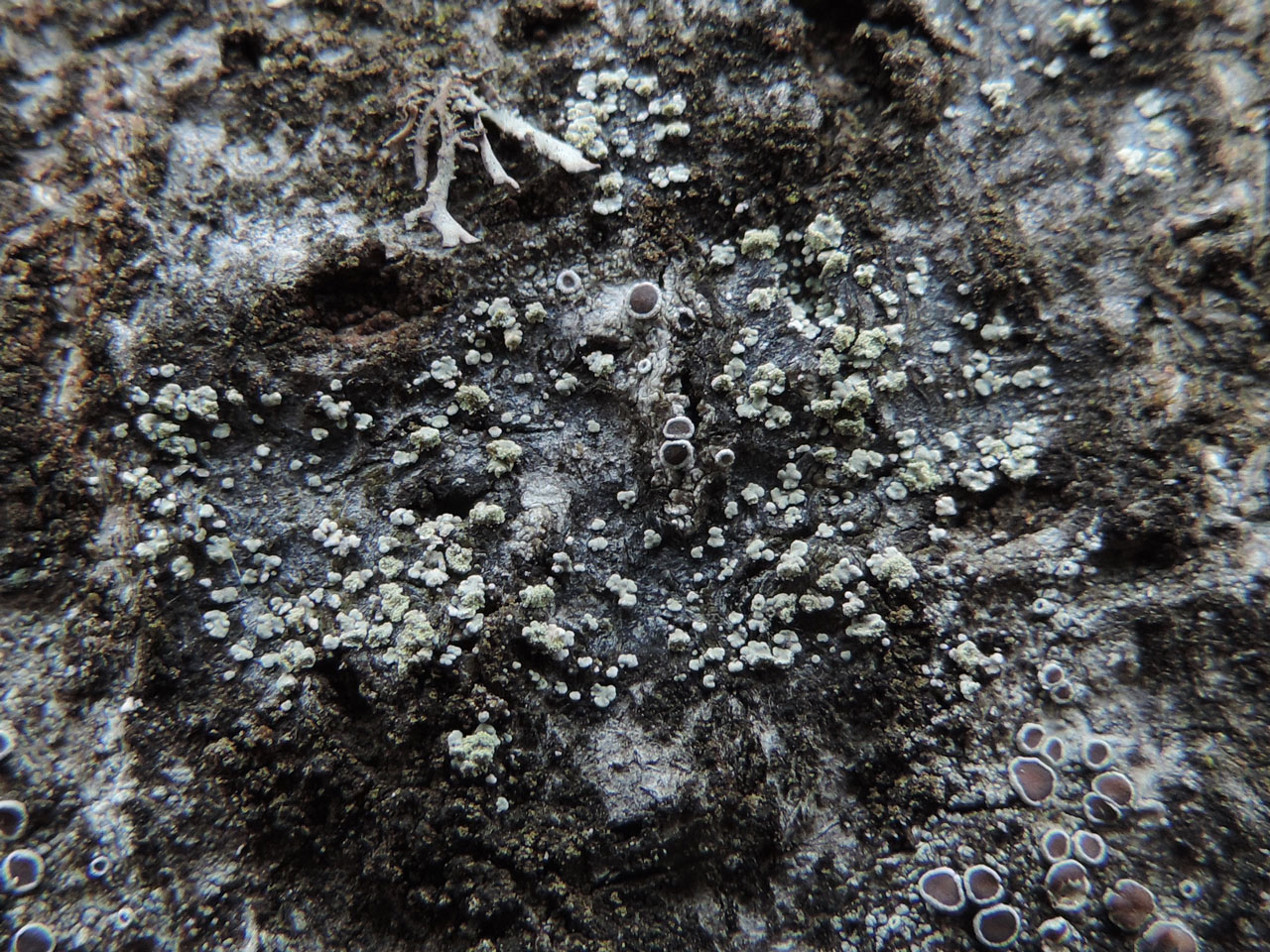
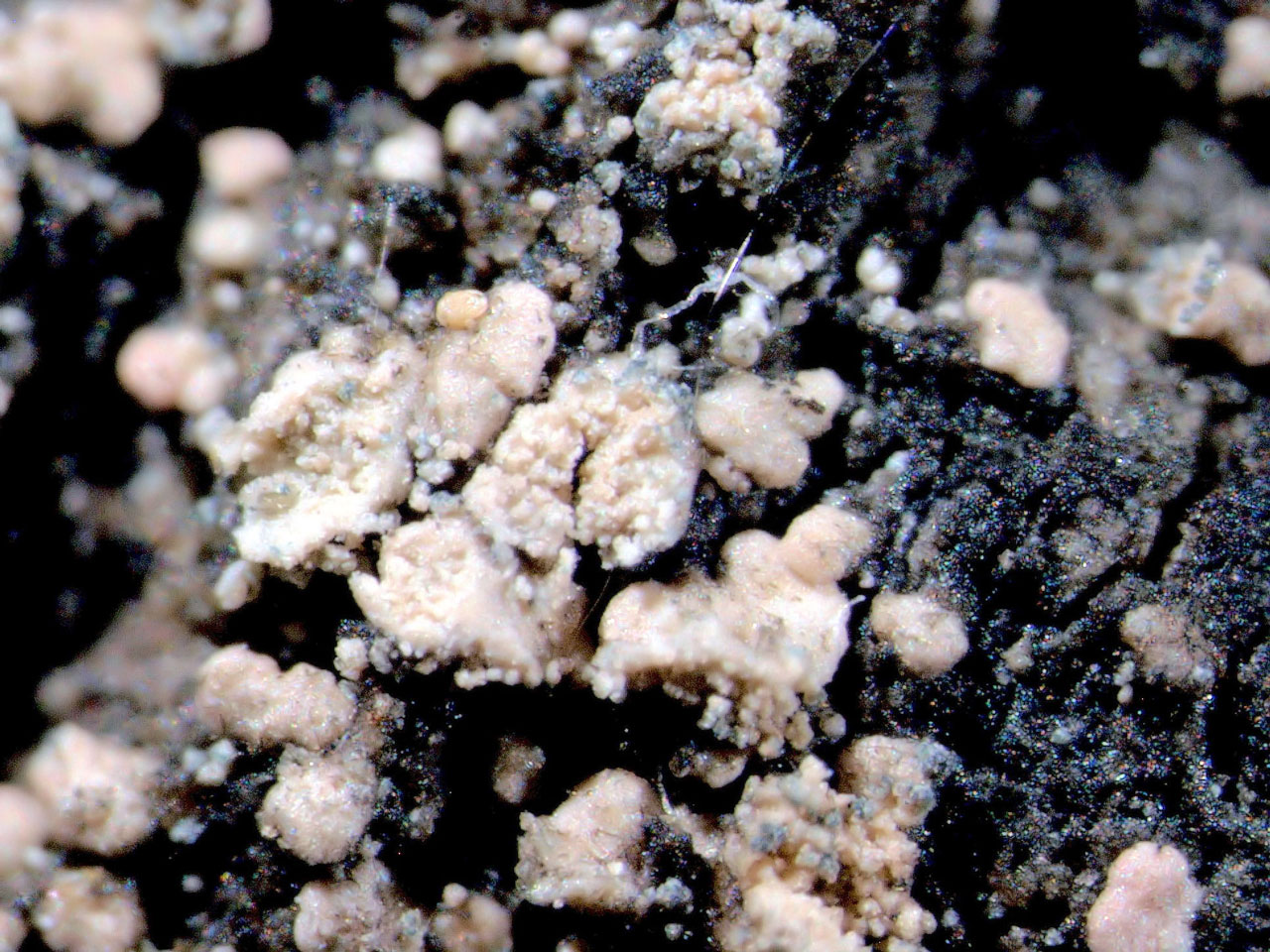
A very rare species of acidic bark found in a single a single old growth native pinewood within the temperate rainforest zone. An old growth species of humid woods, which is not easy to spot, but very distinctive once seen. The combination of a subsquamulose thallus with soralia developing on the squamules and the C+ red and Pd+ yellow spot tests is definitive. Should be looked for in other acid old growth rainforest woods, but it is likely to be rare and threatened.
Thallus crustose to subsquamulose, episubstratal, usually indeterminate, thick, forming small patches between other lichens or, more rarely, spreading irregularly up to 10 mm or more across, areolate, sorediate; prothallus usually as an indistinct pale greyish brown stain or, more rarely, distinctly brown, blue or blackish; areoles usually persistently discrete, rarely becoming contiguous or, very rarely, more or less imbricate, almost circular to irregular, often distinctly incised and constricted at the base (subsquamiform), occasionally tending to become raised at the edge, flat to convex, conspicuous, to 0.4 (–1.0) mm across, non-sorediate surface usually distinct, smooth, dull, greyish white, pale yellowish green or pale yellowish brown; in dried collections often becoming more distinctly yellowish brown or pink; soralia pale green to pale yellowish with a brown tinge (usually becoming distinctly yellowish brown in dried collections), occasionally distinctly aeruginose due to a pigment (fading in K, N+ brown) in the external soredia, usually marginal and ± labriform, sometimes laminal and more or less orbicular, or apical and more or less capitate, usually delimited; soredia mostly fine, 20–45 µm diam.; wall distinct; medulla distinct, white. Apothecia and pycnidia not known. Thallus and soralia C+ red, K+ yellow, KC+ red, P+ yellow, UV+ yellow (alectorialic acid).
The P+ yellow reaction separates it from similar-looking species of Trapelia or Trapeliopsis. Also similar to Pycnora sorophora, which also contains alectorialic acid, but that species forms an endosubstratal thallus with soralia bursting through the wood or, when well developed, small, rounded episubstratal areolae which are never lobed or subsquamiform and soon burst into soralia.
On bark of Scots Pine; very rare. In Scandinavia, mostly found on Birch and Alder and in central Europe mainly on the acid bark on Beech and Rowan and in humid montane forests above 1000 m in the Czech Republic link.
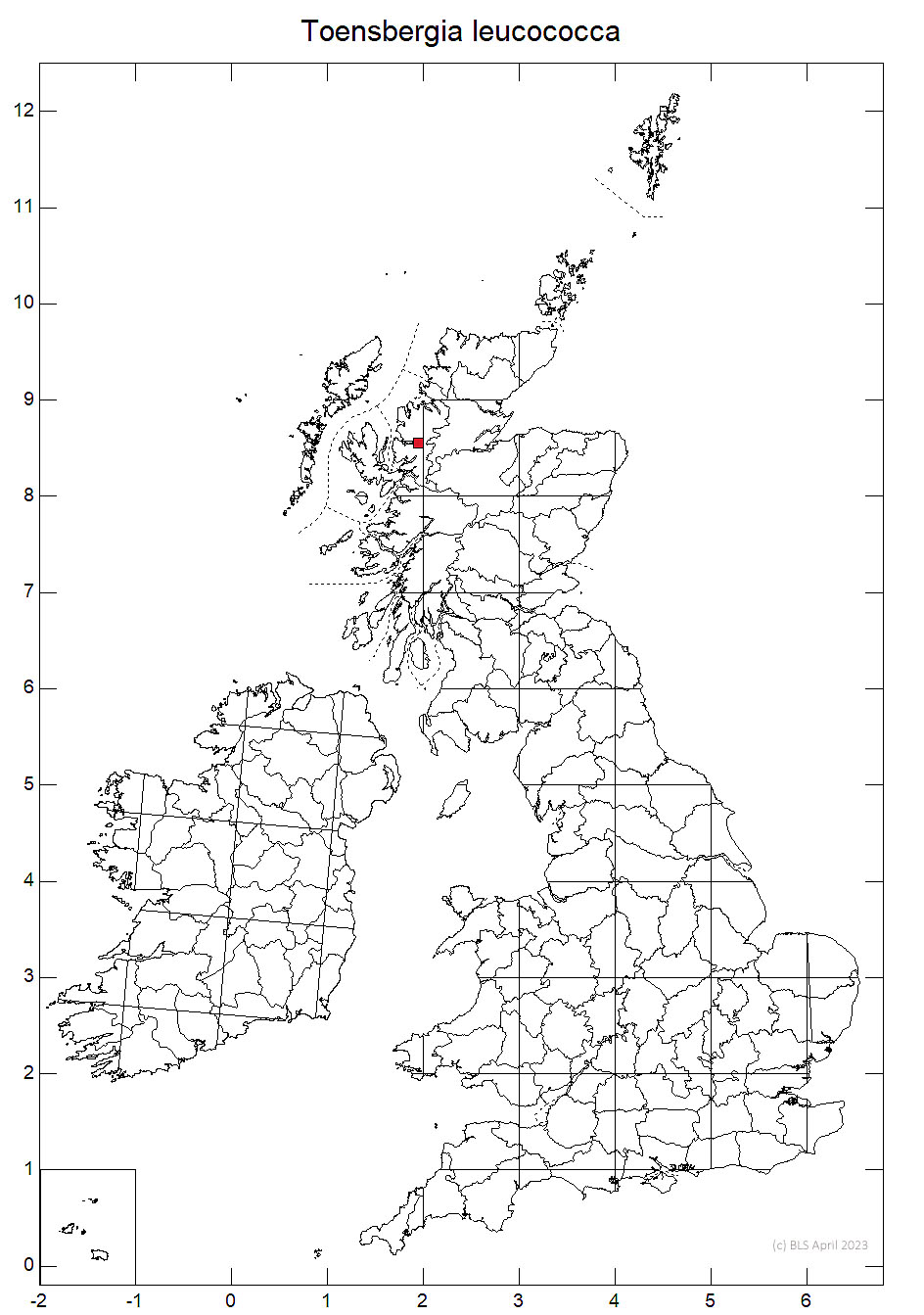

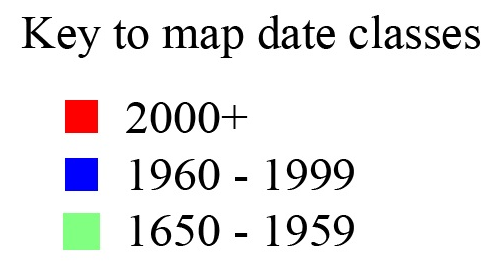
Scotland (Coulin Pinewood, W. Ross)
Known from a single old growth native pinewood within the temperate rainforest zone, where it was found on an atypical habitat of Scots Pine bark. Not easy to spot, but very distinctive once seen, so it is likely to be rare and threatened. It should be looked for in other Pine and acidic Birch woods in the western Highlands and also on more typical tree species.
Britain: Data Deficient & Notable
Fryday, A., Möller, E.J., Timdal, E., Yahr, R., Cannon, P., Coppins, B., Sanderson, N. & Simkin, J. (2024). Rhizocarpales, including Catolechia, Epilichen, Haugania, Poeltinula and Rhizocarpon (Rhizocarpaceae), and Sporastatia and Toensbergia (Sporastatiaceae). Revisions of British and Irish Lichens 41: 1–30.
Text by Neil A Sanderson based on Fryday et al (2024)