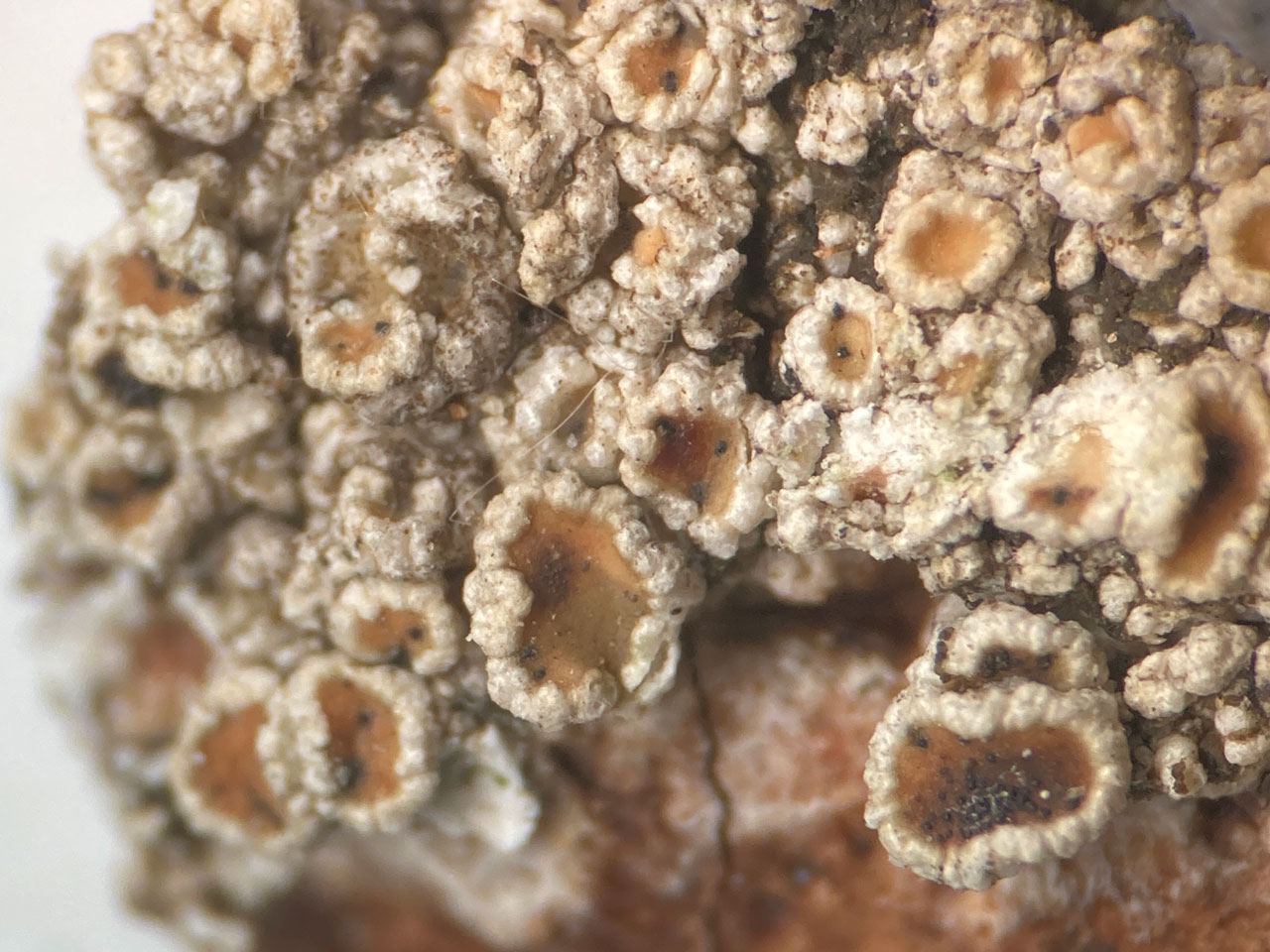
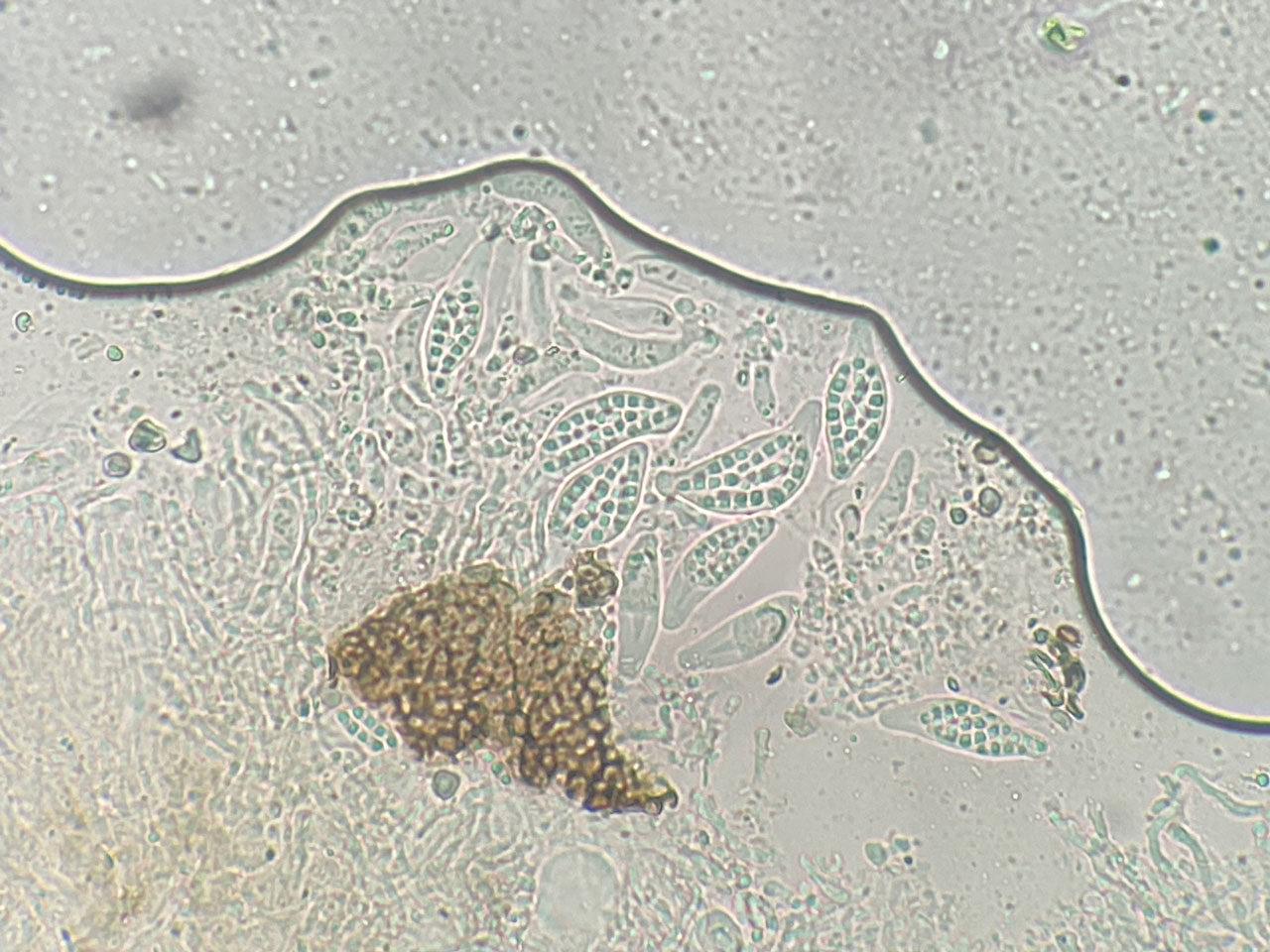
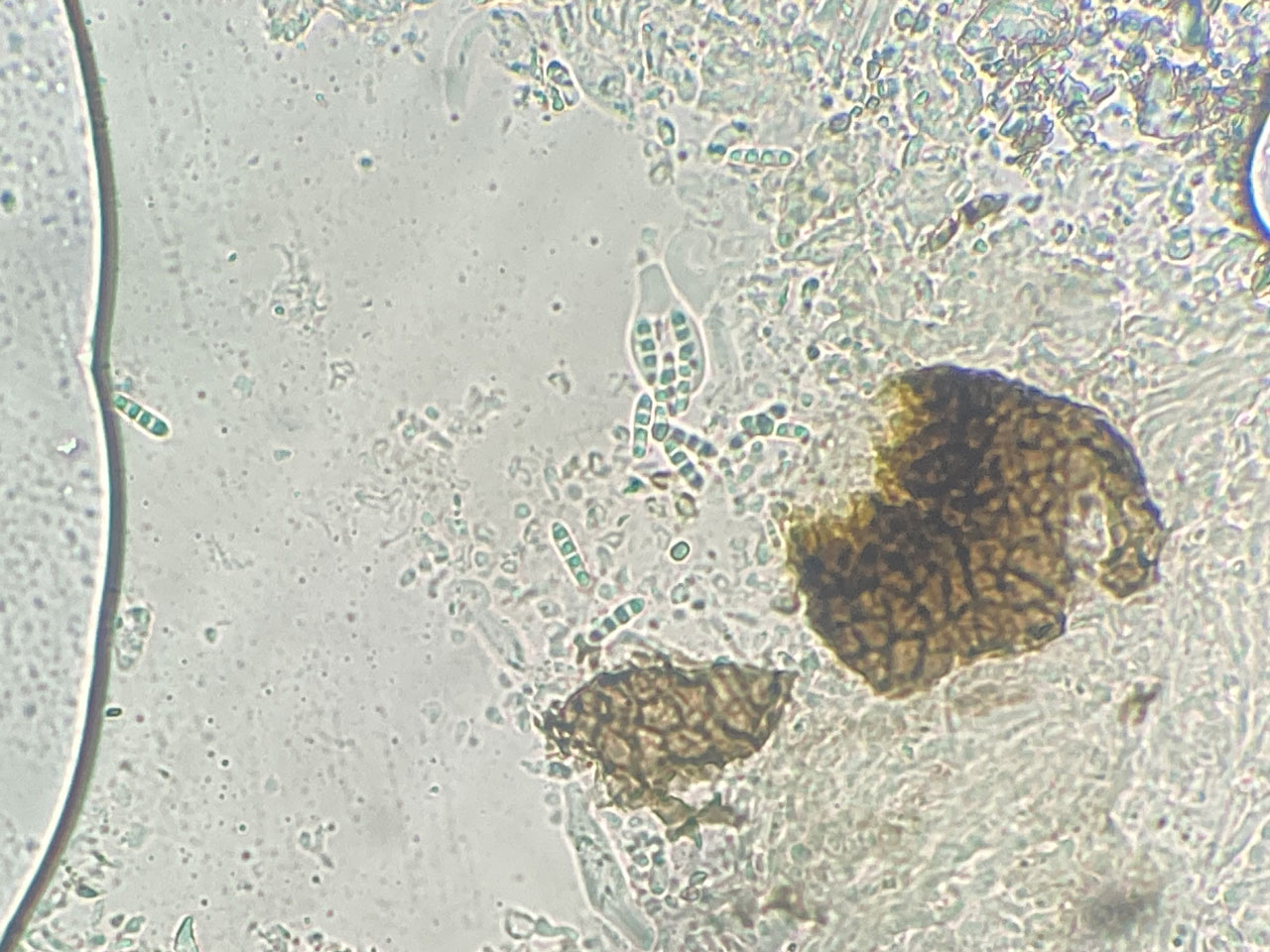
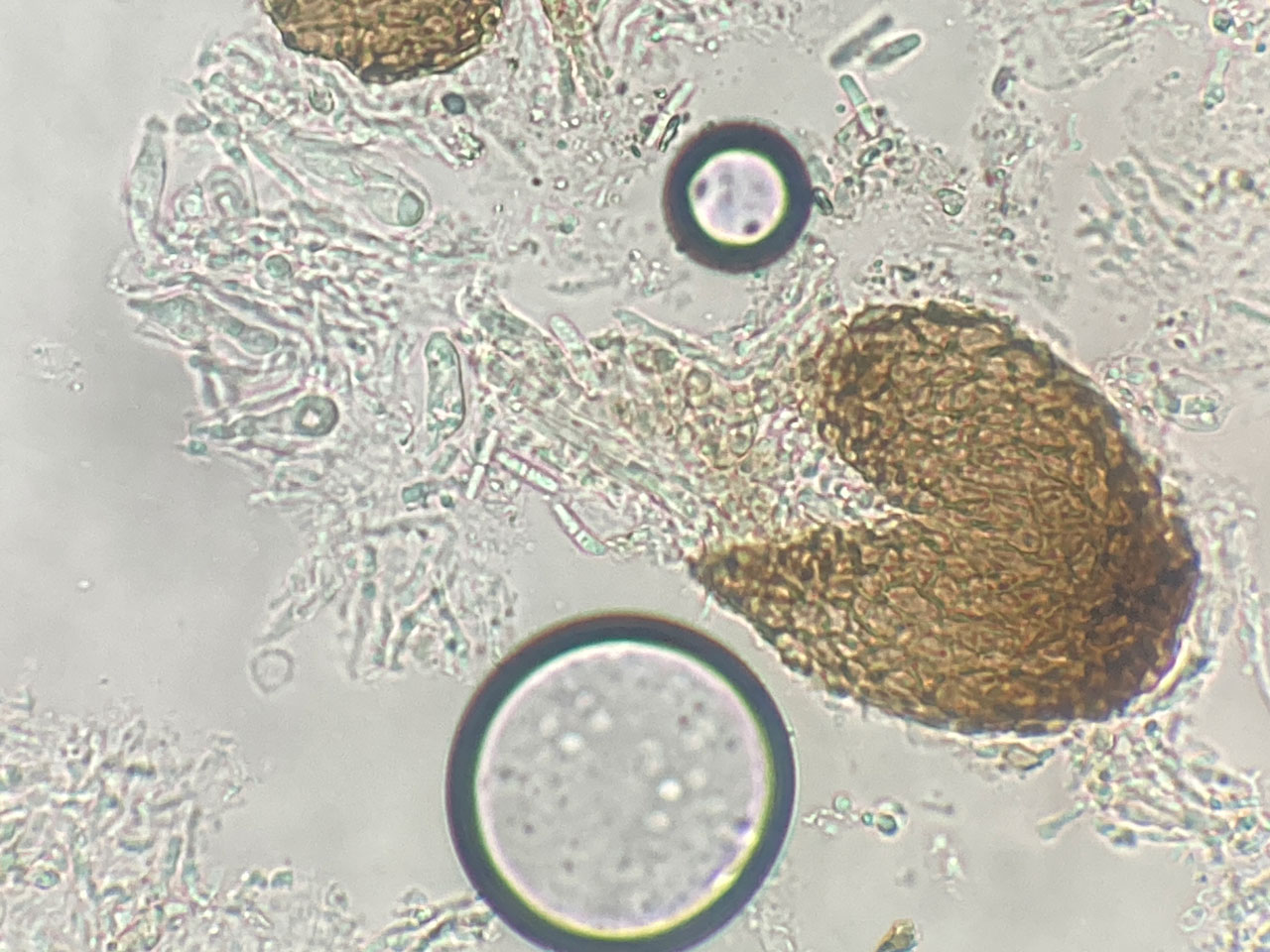
This lichenicolous fungus infests the apothecia of Lecanora chlarotera s. lat., with the tiny perithecia densely packed on the apothecial discs. The spores are one septate but can appear three septate due to two persistent oil droplets in each cell. It seems a rather local species, which is most frequently recorded in the Highlands and in south west England.
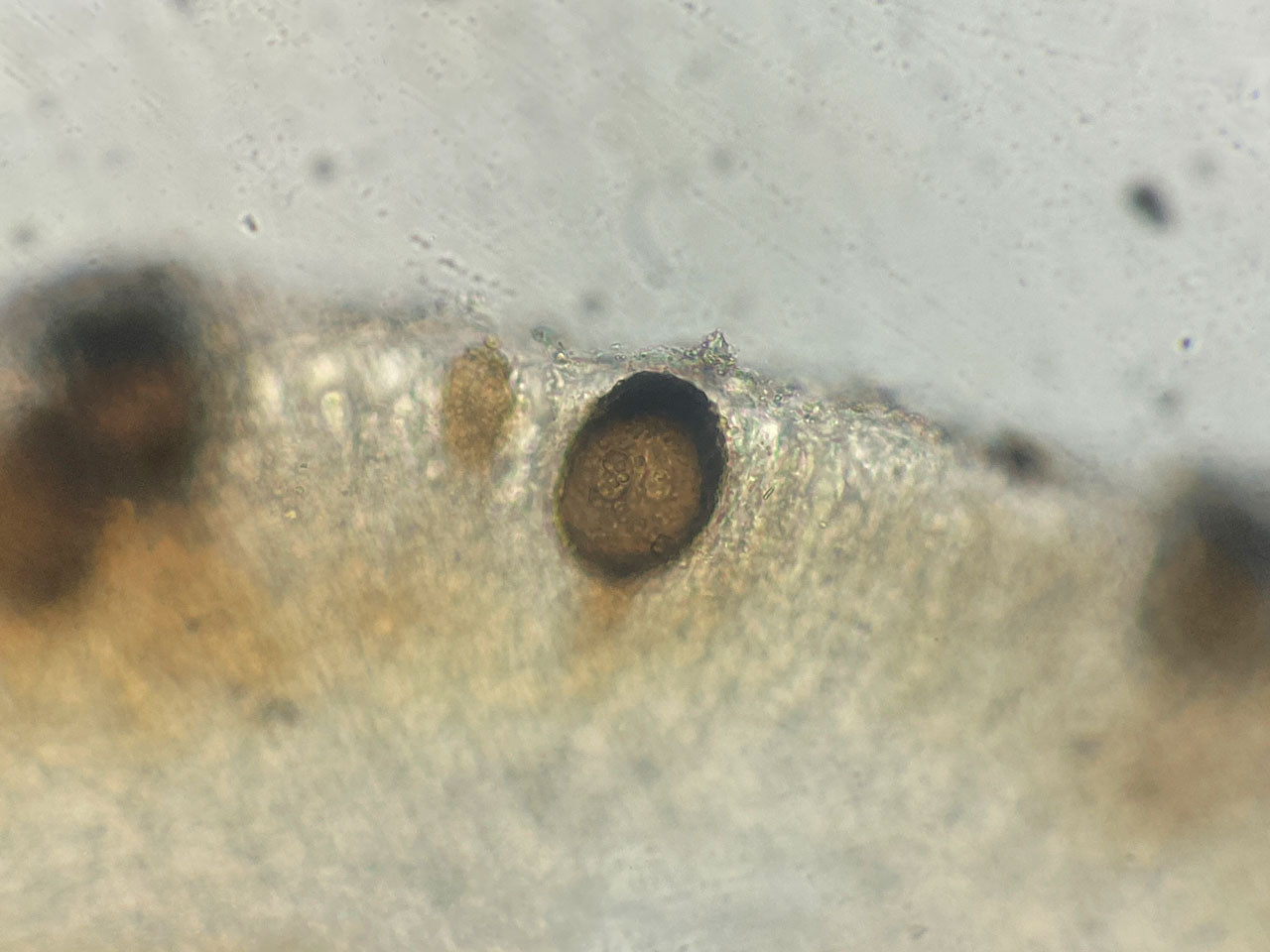
Ascomata globose to ellipsoidal, 40–85 × 30–80 μm, black, numerous and densely packed on apothecial discs of the host, immersed or partly erumpent, with a barely visible ostiole; wall medium to dark brown; periphyses and periphysoids 5–11 × 1–2.5 μm. Asci 24–37 × 10–18 μm, broadly cylindrical, clavate to subglobose, 8-spored. Ascospores ellipsoidal to cylindrical, rounded at both ends, 12–14 (–16) × (2.5–) 3–4 μm, colourless, 1-septate, not or barely constricted at the septum, thin-walled, the cells usually with two oil droplets, with a finely verruculose outer wall. Pycnidia intermixed with ascomata, 27–50 × 20–38 μm, brown but with a very pale or even colorless lower part. Conidia short and straight, 2–3 × 0.5–1 μm (description from Roux & Triebel 1994).
A collection on Glaucomaria carpinea might need reassessment. This fungus was previously named Stigmidium schaereri, but S. congestum is now known to be the correct name.
In apothecia of Lecanora chlarotera agg.
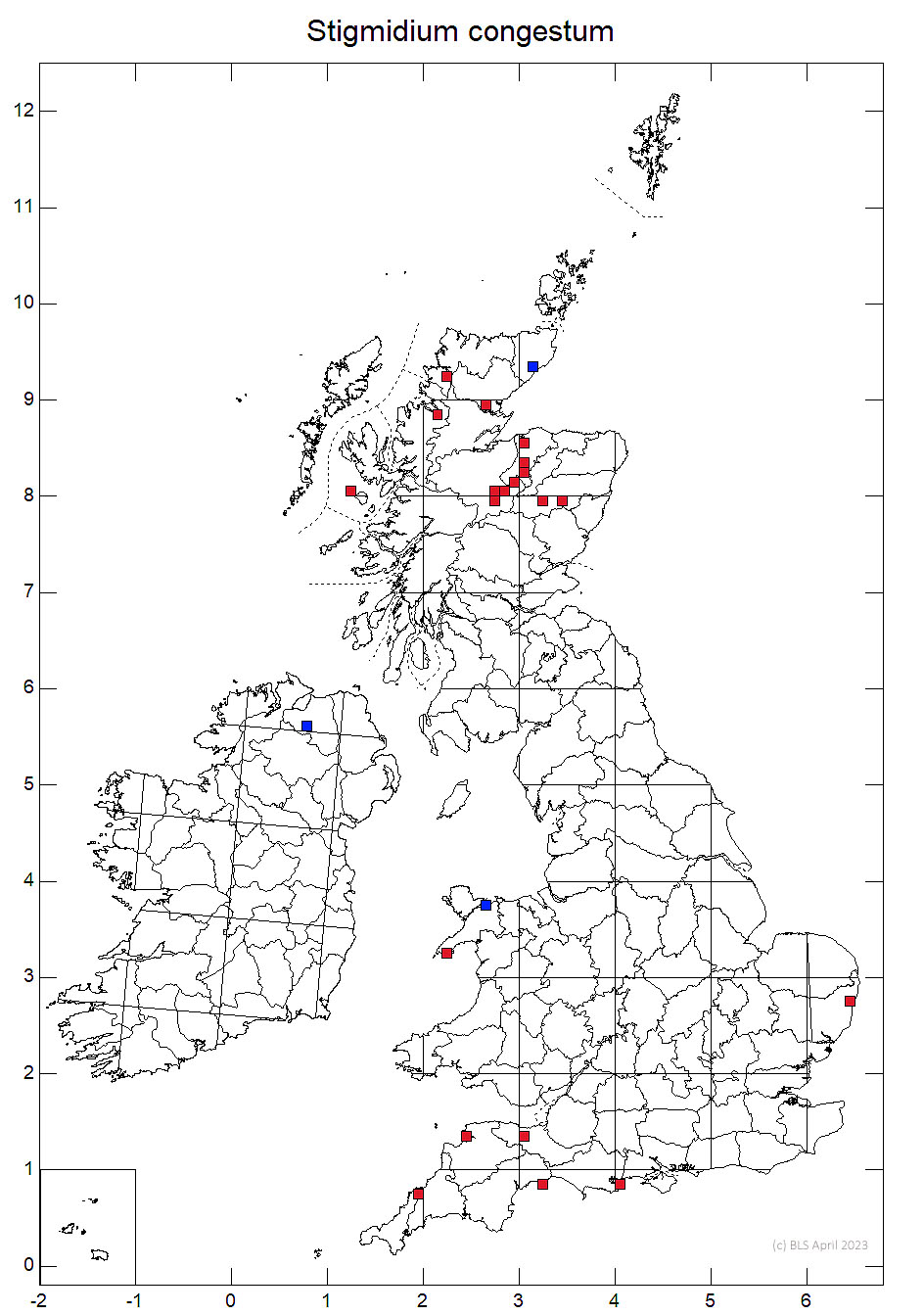

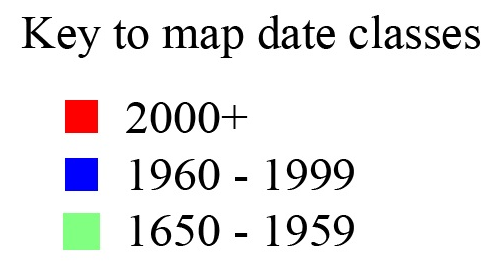
Common in Highland Scotland and S.W. England, also known from N. Wales, E. England (Suffolk) and N. Ireland, proabably over looked but infrequent elsewhere.
Cannon, P., Coppins, B., Aptroot, A., Sanderson, N. & Simkin, J. (2025). Miscellaneous lichens and lichenicolous fungi, including Aphanopsis and Steinia (Aphanopsidaceae), Arthrorhaphis (Arthrorhaphidaceae), Buelliella, Hemigrapha, Melaspileella, Stictographa and Taeniolella (Asterinales, family unassigned), Phylloblastia (Chaetothyriales, family unassigned) Cystocoleus (Cystocoleaceae), Sclerococcum (Dactylosporaceae), Eiglera (Eigleraceae), Epigloea (Epigloeaceae), Euopsis (Harpidiaceae), Lichenothelia (Lichenotheliaceae), Lichinodium (Lichinodiaceae), Melaspilea (Melaspileaceae), Epithamnolia and Mniaecia (Mniaeciaceae), Lichenostigma (Phaeococcomycetaceae), Pycnora (Pycnoraceae), Racodium (Racodiaceae), Chicitaea and Loxospora (Sarrameanaceae), Schaereria (Schaereriaceae), Strangospora (Strangosporaceae), Botryolepraria and Stigmidium (Verrucariales, family unassigned), and Biatoridium, Mycoglaena, Orphniospora, Piccolia, Psammina and Wadeana (order and family unassigned). Revisions of British and Irish Lichens 57: 1–78.
Roux, C. & Triebel, D. (1994). Révision des espèces de Stigmidium et de Sphaerellothecium (champignons lichénicoles non lichénisés, Ascomycetes) correspondant à Pharcidia epicymatia sensu Keissler ou à Stigmidium schaereri auct. Bulletin de la Société. Linnéene de Provence 45: 451–542.
Text by Neil A Sanderson based on Cannon et al (2025)