Pycnora xanthococca
Lecidea xanthococca
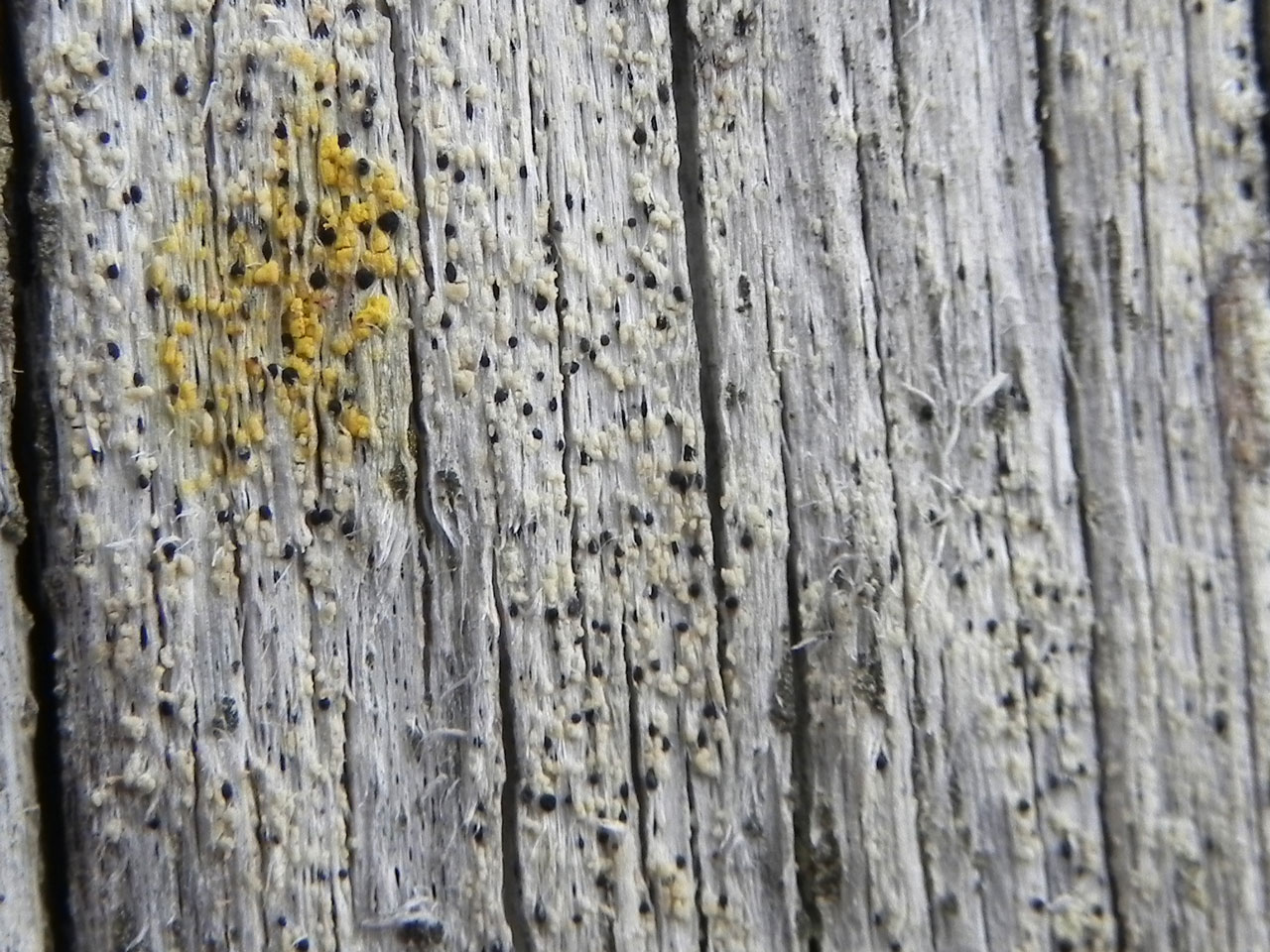
A rare fertile crust found on weathered lignum on old Scots Pines in native pinewoods in the eastern Central Highlands. Distinctive in the areolate thallus which is C+ red and Pd+ yellow, combined with flat, black apothecia with a persistent raised exciple. Distinguished from the similar Pycnora praestabilis most easily by conidial shape, but this species is mainly found on worked timber.
Thallus crustose, areolate, areoles to 0.7 (–1.2) mm diam., not sorediate; surface pale grey to yellowish brown, dull. Apothecia to 0.8 (–1.2) mm diam., often present, attached to areoles, flat with a raised persistent margin, black, not pruinose. Epithecium greenish, sometimes brownish, K+ violet, N+ red. Ascospores 7–13 × 3–7 µm, aseptate, ellipsoidal. Pycnidia usually numerous, the wall greenish, N+ reddish; conidia 2.5–4 × 1.5–3 µm, subglobose. Thallus C+ red, K+ yellow, KC+ red, Pd+ yellow, UV– (alectorialic acid and unidentified substance).
Characterised by the crustose, areolate thallus which is C+ red and Pd+ yellow, and the flat, black apothecia with a persistent raised exciple. Distinguished from P. praestabilis most easily by conidial shape.
On lignum of old pines in native pinewoods.
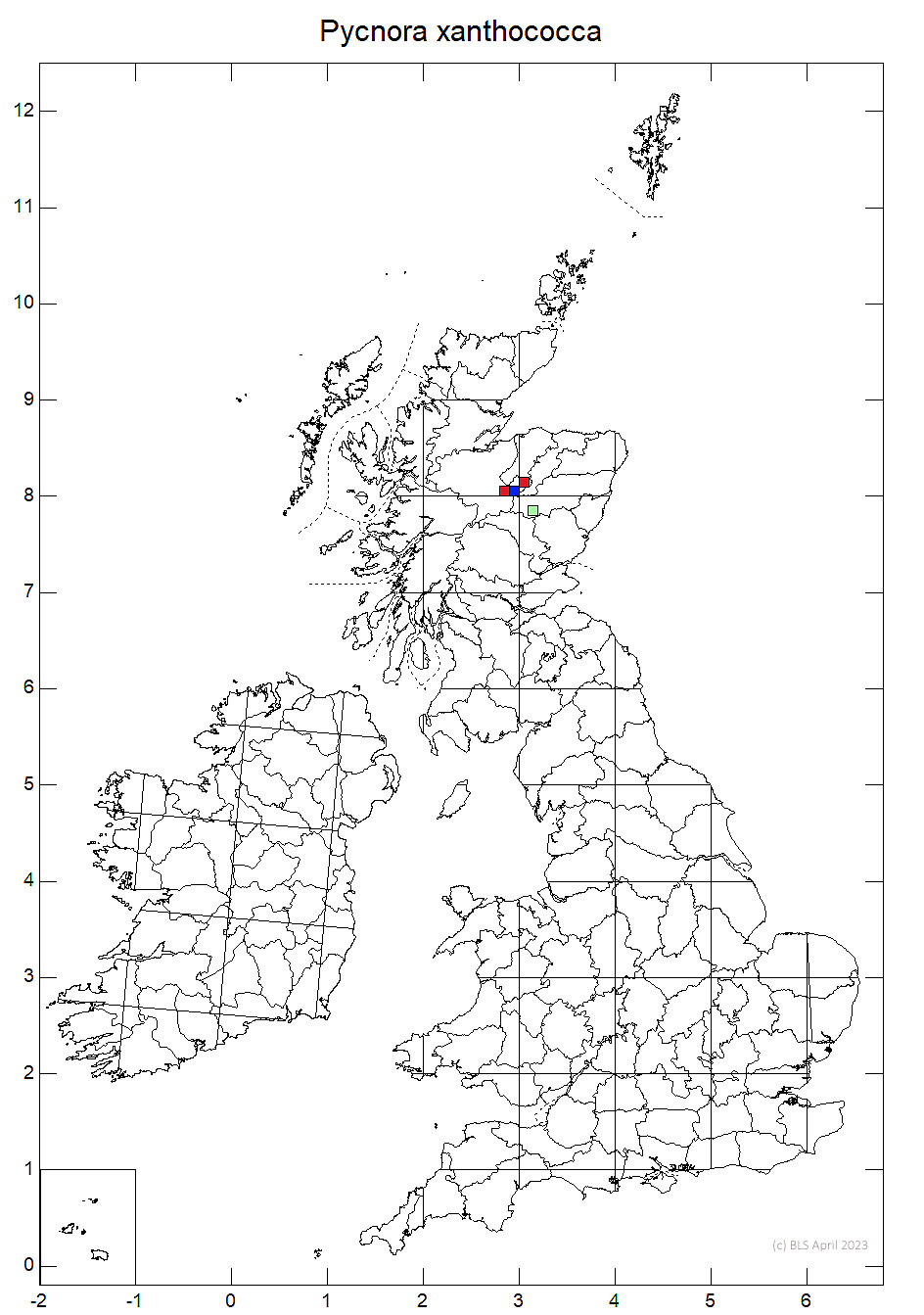

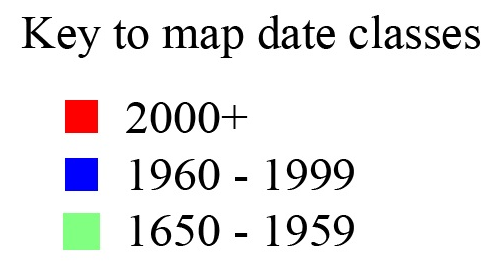
Rare, Scotland, only recorded recently from Strath Spey, with a 19th century record from Deeside.
A strongly boreal species of weathered lignum on old Scots Pines in native pinewoods, only recorded recently from Strath Spey, with a 19th century record from Deeside, with few trees recorded recently. Shading of the lignum habitat by dense natural regeneration resulting from well intention reductions in grazing pressure is a threat. The conservation objectives for native pinewood sites need to take account of the biodiversity importance of the combination of open space and dead wood within this iconic habitat.
Britain: Vulnerable
Scotland: Priority Taxon for Biodiversity in Scotland
Cannon, P., Coppins, B., Aptroot, A., Sanderson, N. & Simkin, J. (2025). Miscellaneous lichens and lichenicolous fungi, including Aphanopsis and Steinia (Aphanopsidaceae), Arthrorhaphis (Arthrorhaphidaceae), Buelliella, Hemigrapha, Melaspileella, Stictographa and Taeniolella (Asterinales, family unassigned), Phylloblastia (Chaetothyriales, family unassigned) Cystocoleus (Cystocoleaceae), Sclerococcum (Dactylosporaceae), Eiglera (Eigleraceae), Epigloea(Epigloeaceae), Euopsis (Harpidiaceae), Lichenothelia (Lichenotheliaceae), Lichinodium(Lichinodiaceae), Melaspilea(Melaspileaceae), Epithamnolia and Mniaecia (Mniaeciaceae), Lichenostigma (Phaeococcomycetaceae), Pycnora (Pycnoraceae), Racodium (Racodiaceae), Chicitaea and Loxospora (Sarrameanaceae), Schaereria (Schaereriaceae), Strangospora (Strangosporaceae), Botryolepraria and Stigmidium (Verrucariales, family unassigned), and Biatoridium, Mycoglaena, Orphniospora, Piccolia, Psammina and Wadeana (order and family unassigned). Revisions of British and Irish Lichens 57: 1–78.
Text by Neil A Sanderson based on Cannon et al (2025)