Protoparmeliopsis muralis
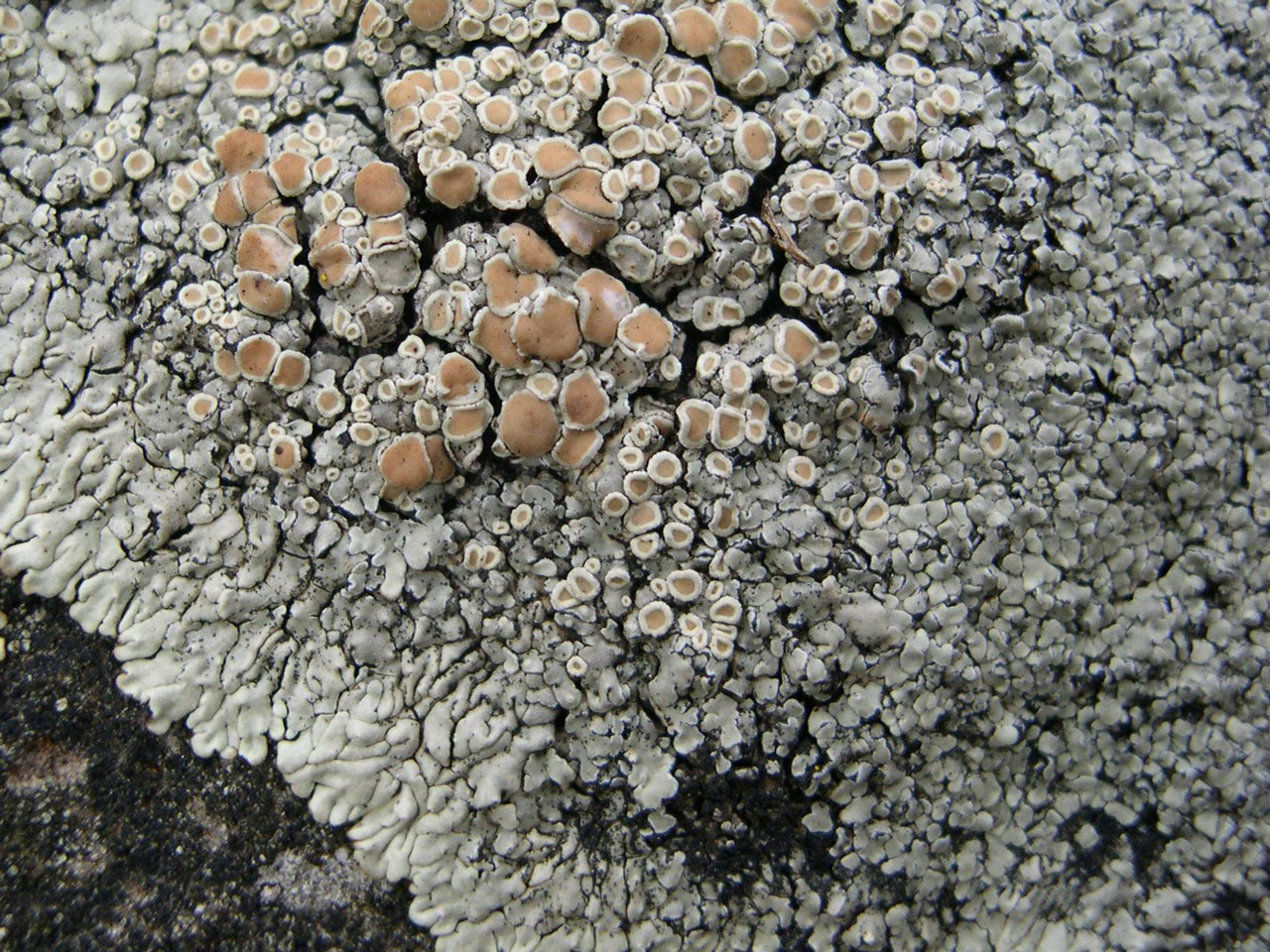
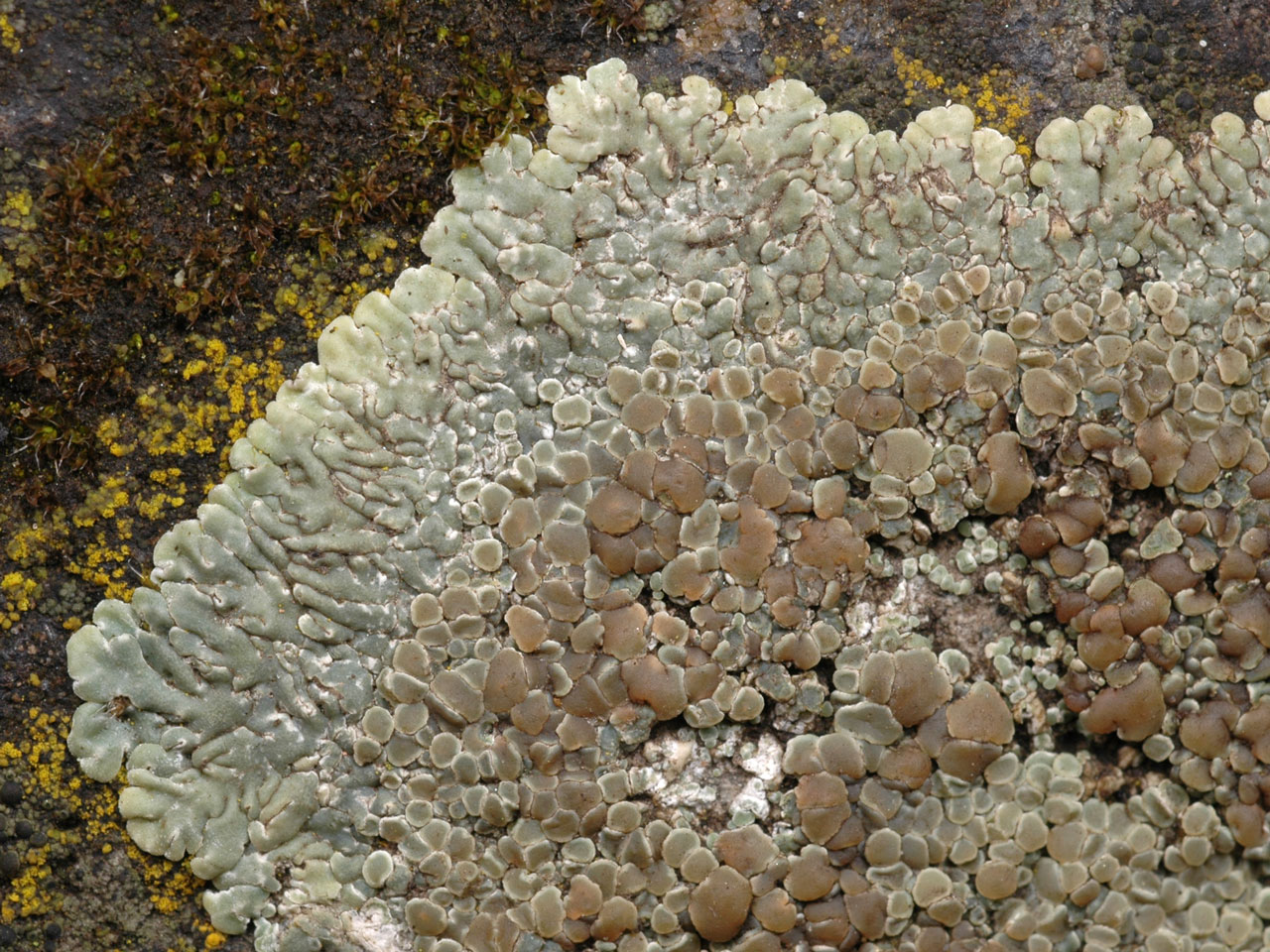
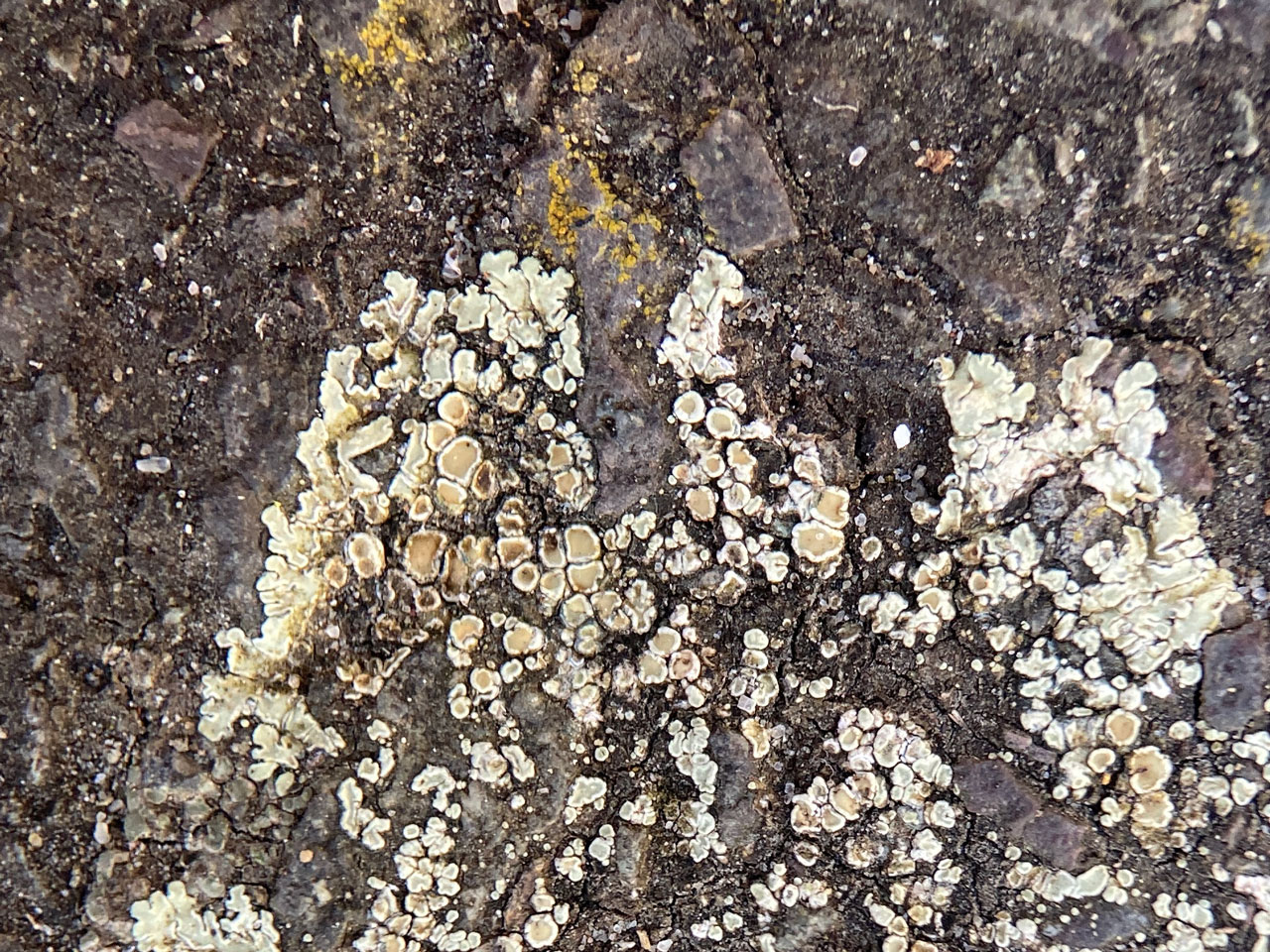
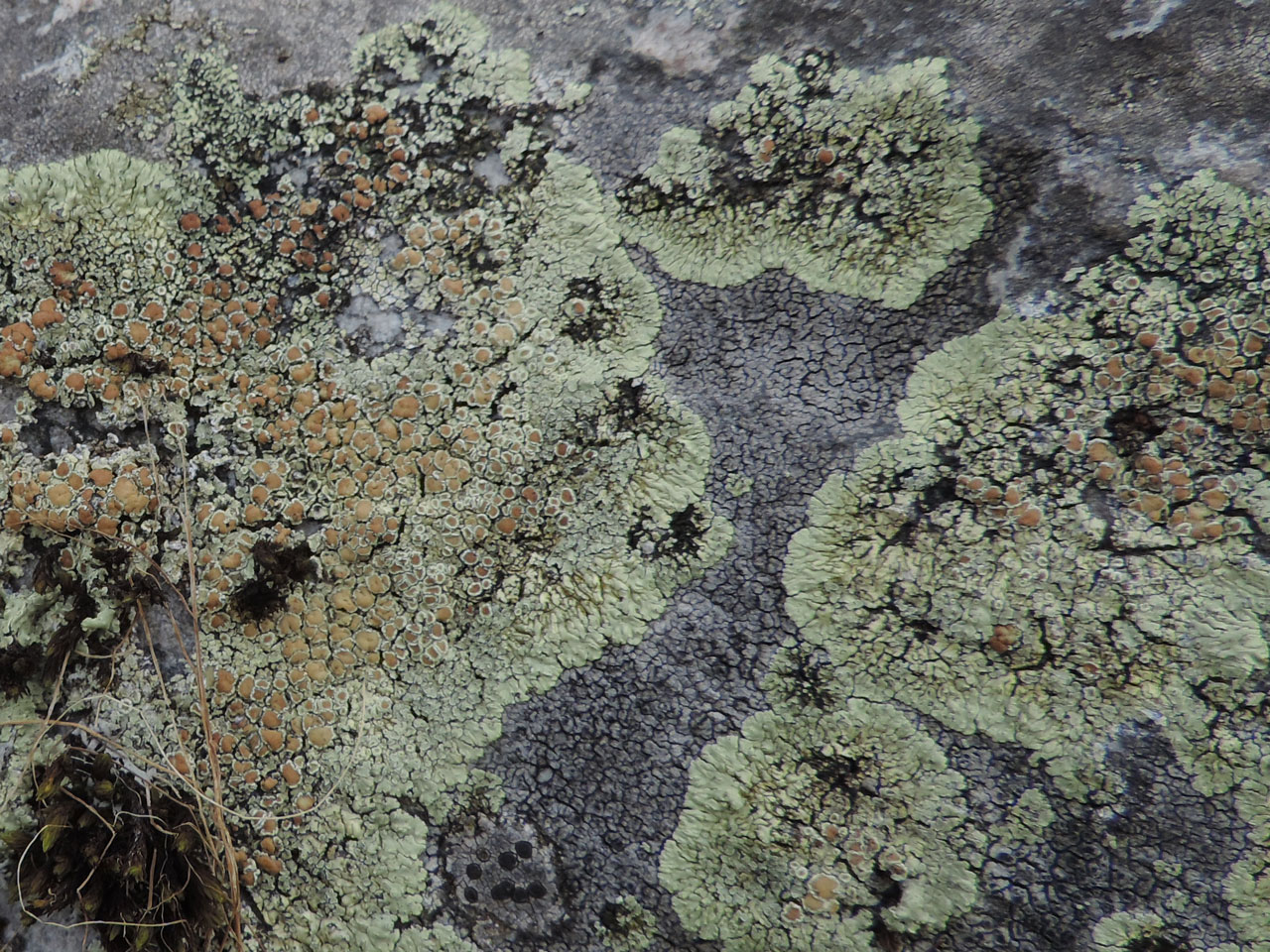
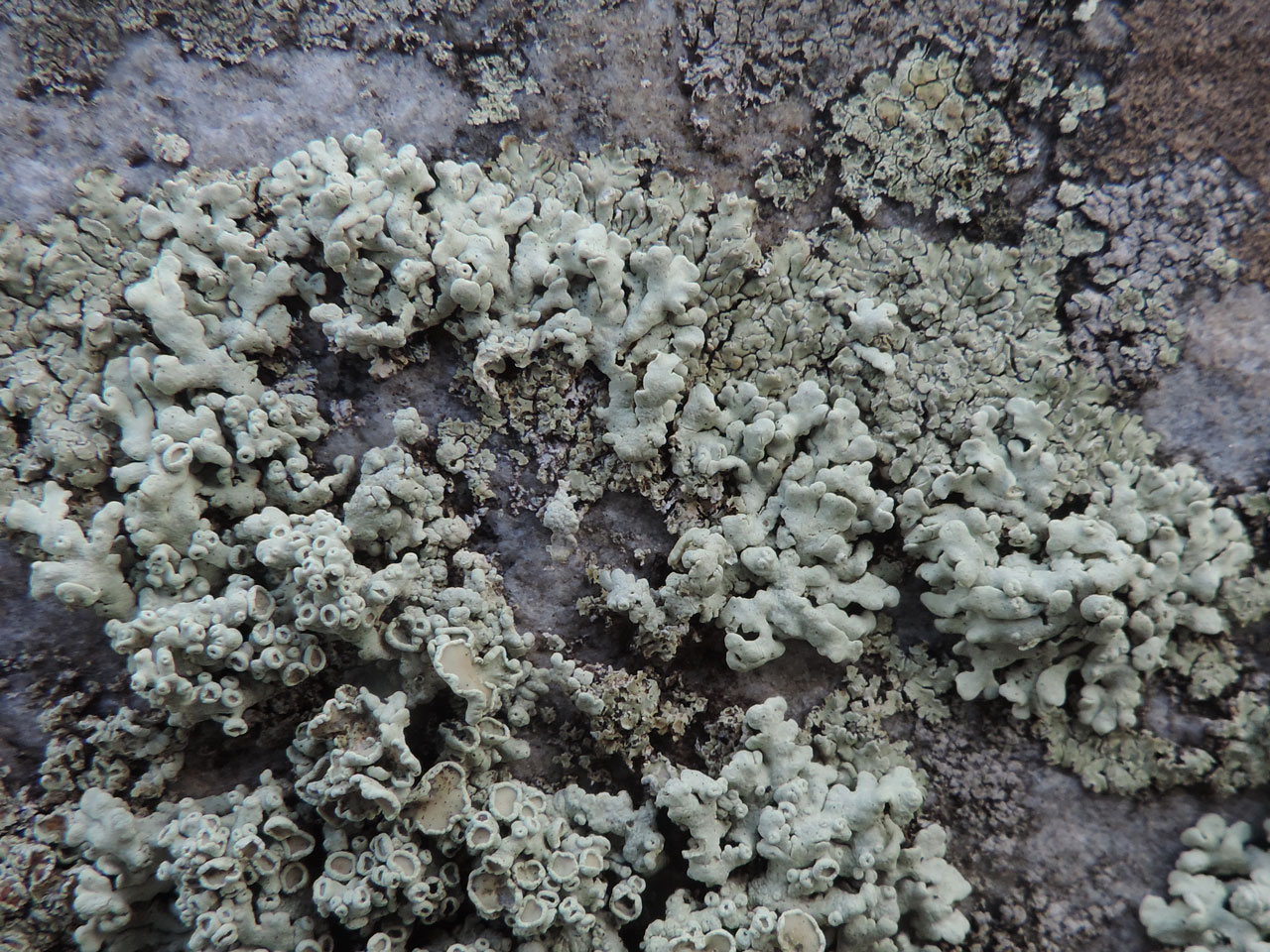
A distinctive lichen with a wide range of occurrence. It is found as large spreading thalli on bird perching rocks by isolated upland tarns and lochans through to trampled scraps on urban pavements resembling dropped chewing-gum. It forms placodioid circular patches and is unlikely to be confused with any other widespread British species. Similar species are the northern, exclusively coastal, Myriolecis straminea which has a C+ orange thallus or the very similar Protoparmeliopsis achariana which has more loosely attached and ± convex lobes. The latter is a very rare species but occurs with P. muralis on rocks by upland tarns.
Thallus to 10 cm diam., forming placodioid circular patches or rosettes, usually closely appressed but becoming uneven when old; marginal lobes 0.5–0.8 mm broad, flat to concave, corticate below, thallus centre sometimes areolate, in extreme habitats reduced to dispersed granules or areoles, pale green-yellow to yellow-brown, tending to be darker centrally, ± shiny to slightly pruinose, the undersurface and edges of the marginal lobes pale grey. Apothecia 0.5–1.5 (–2) mm diam., sessile, densely aggregated in the centre of the thallus; thalline margin well-developed, entire to crenulate or flexuose, often angular by compression, pruinose, generally persistent, sometimes almost excluded in old apothecia; disc yellow-brown to red-brown, flat to slightly convex, not pruinose; epithecium pale yellow to brown, with granular crystals on the surface that do not dissolve in K; hymenium (50–) 65–75 (–80) µm tall; paraphyses 2–3 µm diam., mainly unbranched or sparsely branched above, apices not swollen or capitate. Asci 30–40 × 8–12 µm. Ascospores 9–15 (–16) × (4–) 5–7 µm. Conidia 20–25 × 0.75–1 µm, thread-like to curved. Thallus C–, K–, KC+ pale yellow, Pd± yellow, UV+ dull orange (usnic acid, zeorin, ± murolic acid, ± psoromic acid).
Unlikely to be confused with any British species apart from the northern, exclusively coastal Myriolecis straminea which has a C+ orange thallus with convex lobes and the very rare Protoparmeliopsis achariana which has more loosely attached and ± convex lobes. Specimens with a thallus reduced to round, isolated, apothecium-like areoles are easily confused with Lecanora polytropa. Urban populations may represent a different ecotype from the montane, ornithocoprophilous ones. Popularly called the chewing-gum lichen.
On nutrient-enriched bird perches in unpolluted areas and calcareous rocks, common on a wide variety of man-made substrata in urban areas (concrete, asbestos-cement, tarmac, paving slabs, tiles, etc.), also dust and nutrient-rich bark, wood and worked timber; air-pollution tolerant.
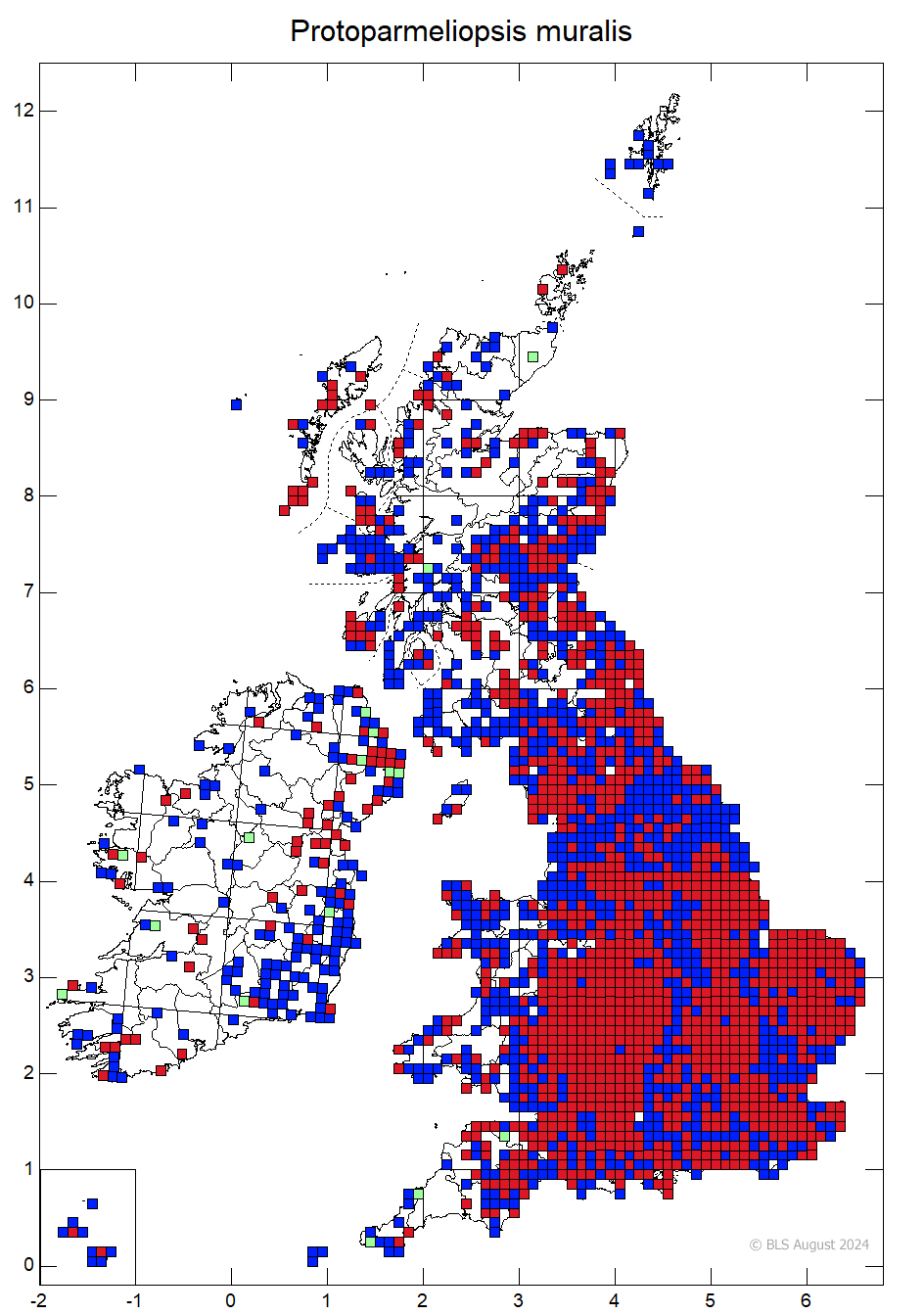

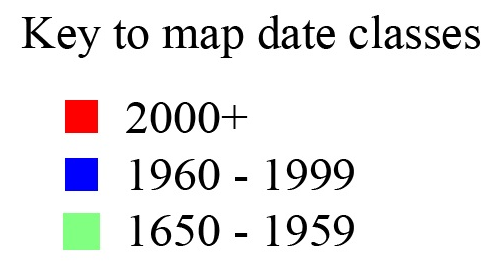
Extremely common in lowland Britain and Ireland, but becoming rarer in S.W. England and the Scottish Highlands.
Cannon, P., Malíček, J., Ivanovich, C., Printzen, C., Aptroot, A., Coppins, B., Sanderson, N., Simkin, J. & Yahr, R. (2022). Lecanorales: Lecanoraceae, including the genera Ameliella, Bryonora, Carbonea, Claurouxia, Clauzadeana, Glaucomaria, Japewia, Japewiella, Lecanora, Lecidella, Miriquidica, Myriolecis, Palicella, Protoparmeliopsis, Pyrrhospora and Traponora. Revisions of British and Irish Lichens 25: 1-83.
Text by Neil A Sanderson based on Cannon et al (2022)