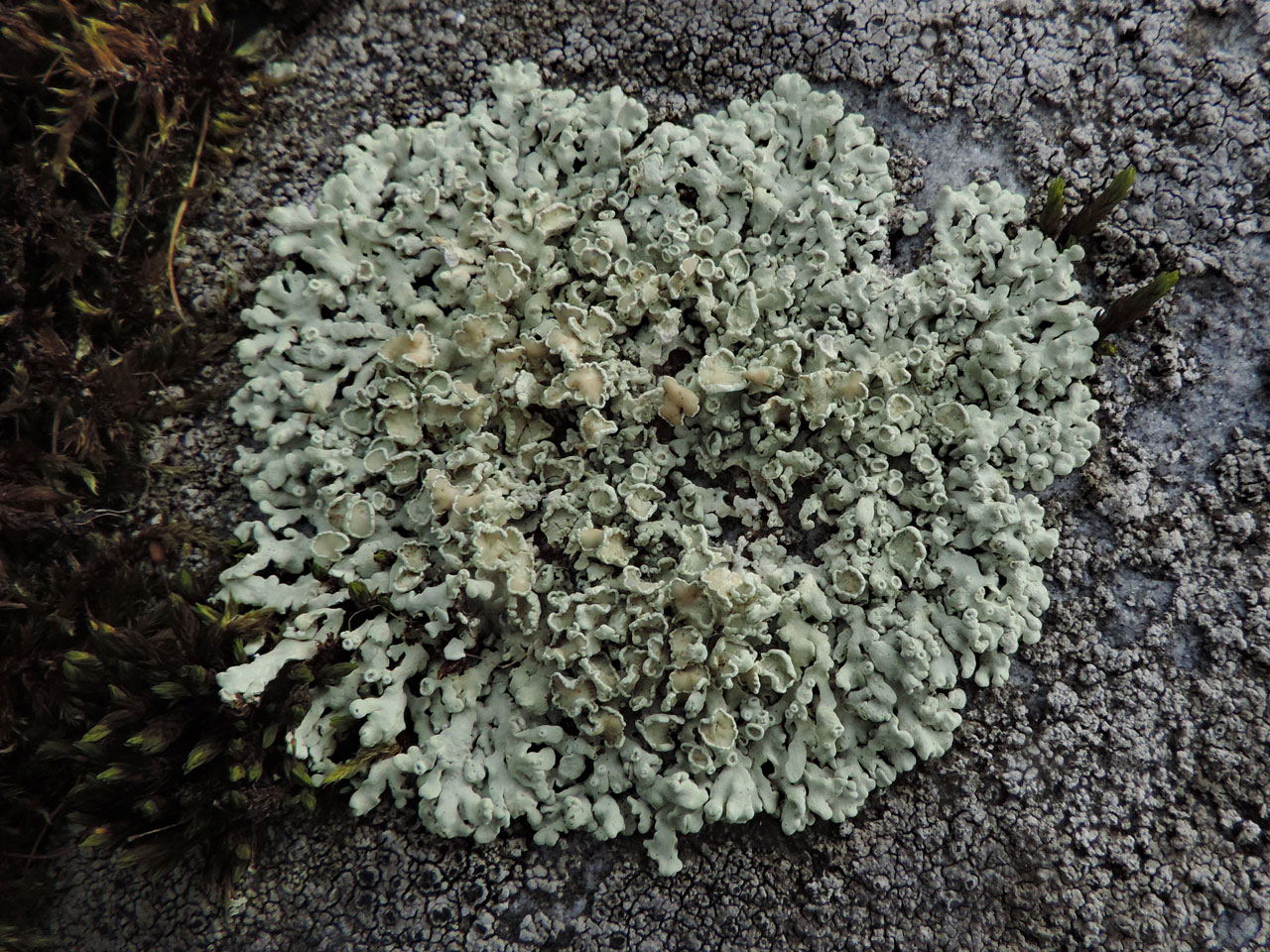
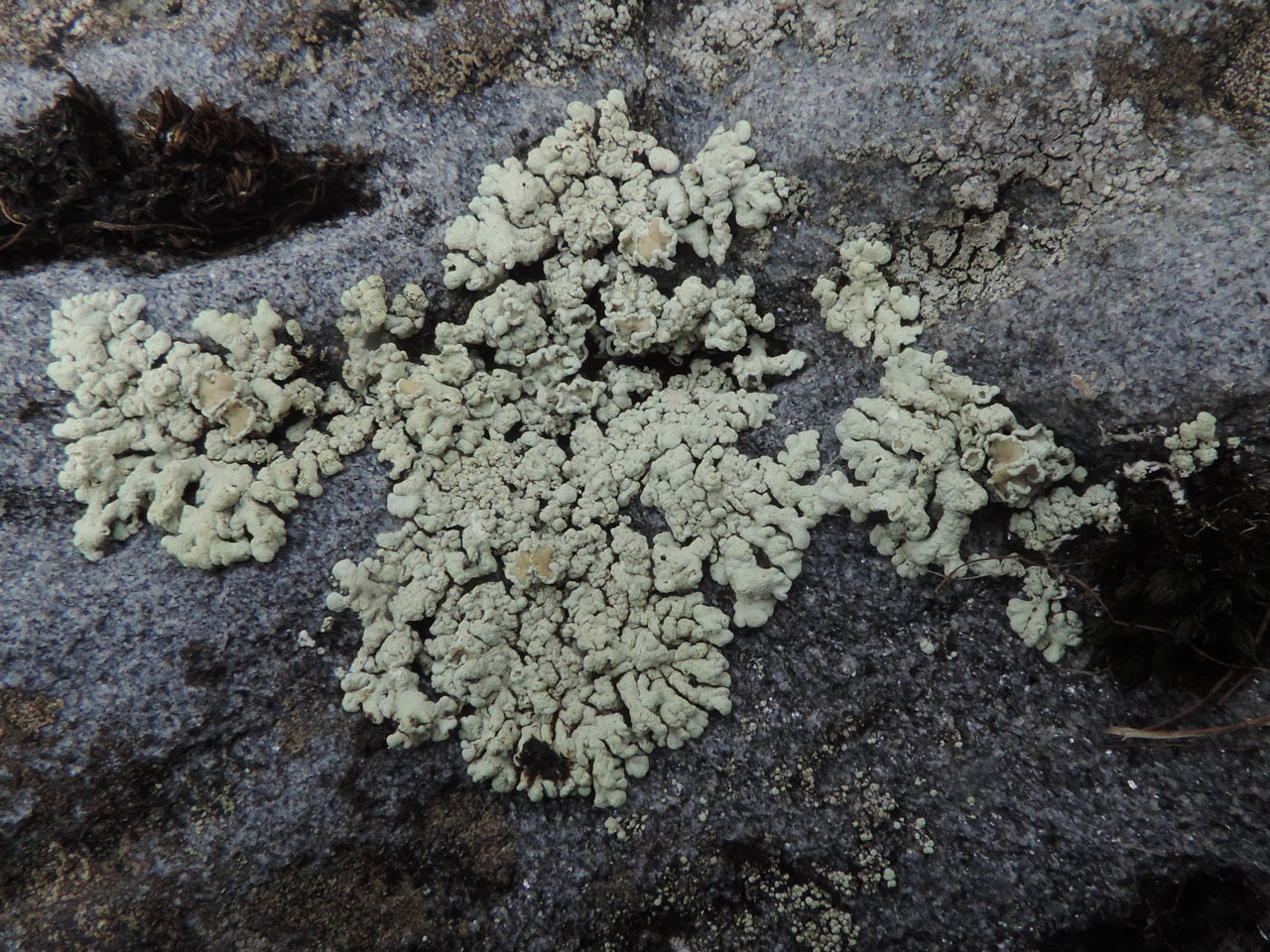
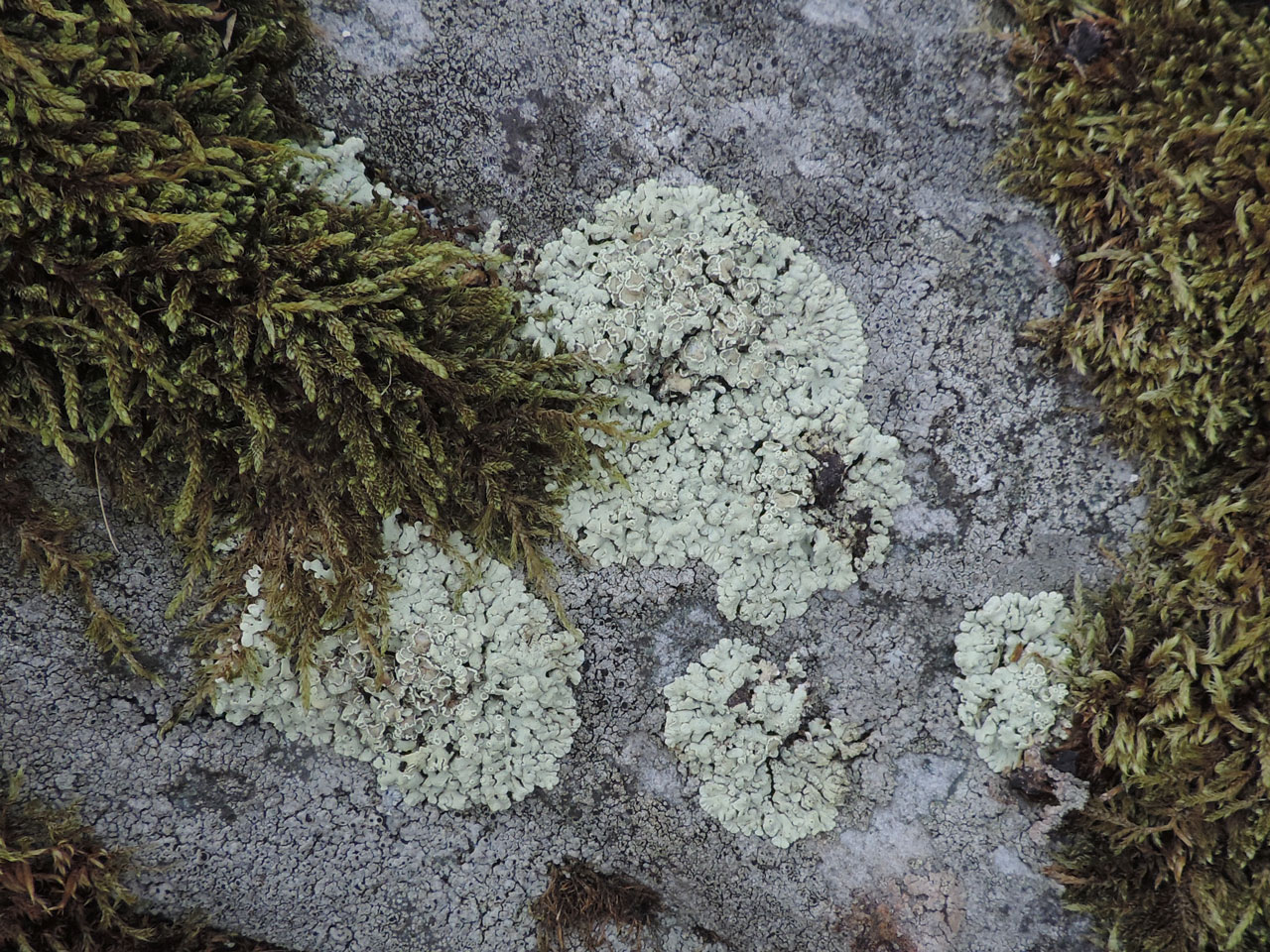
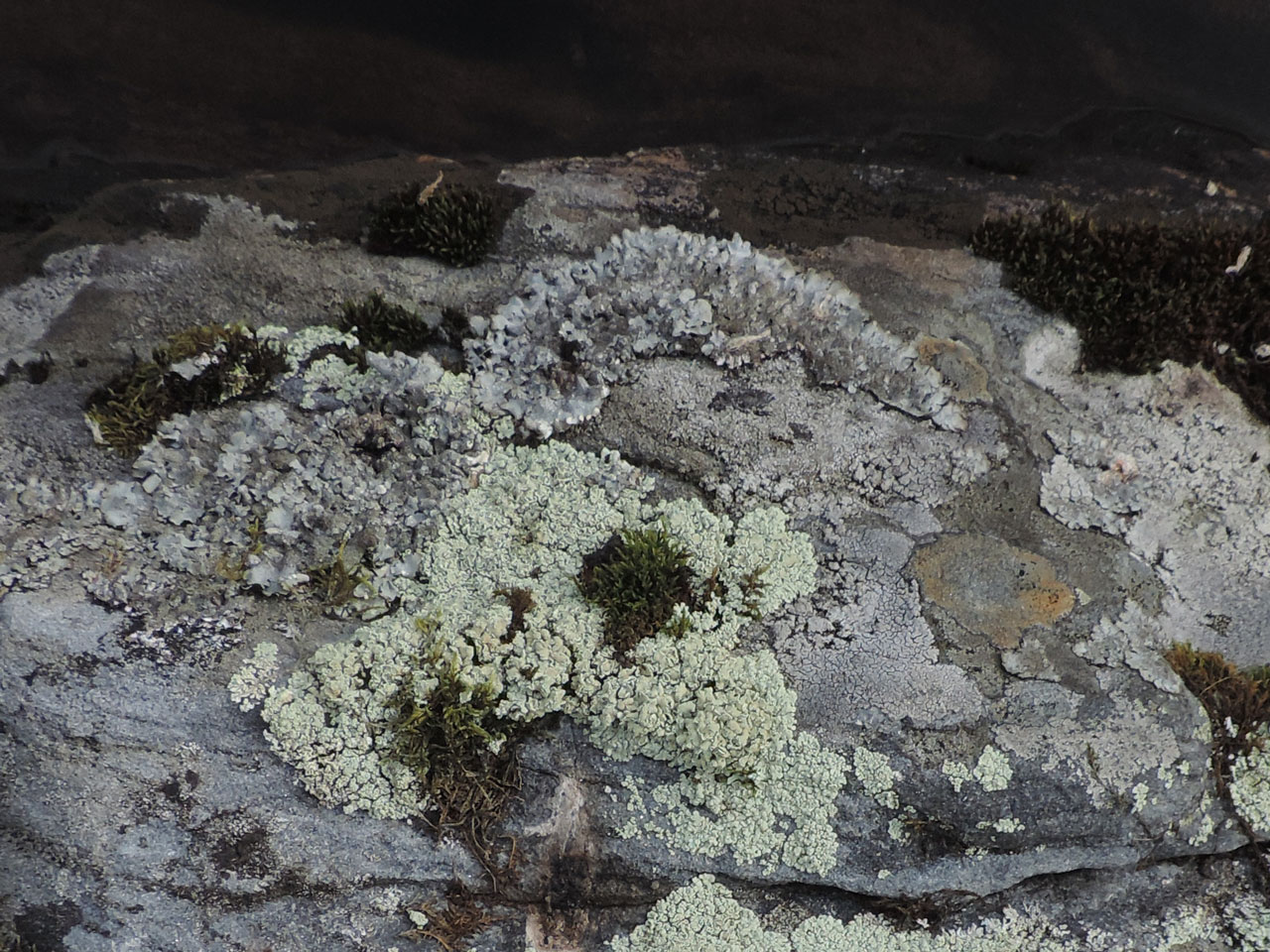
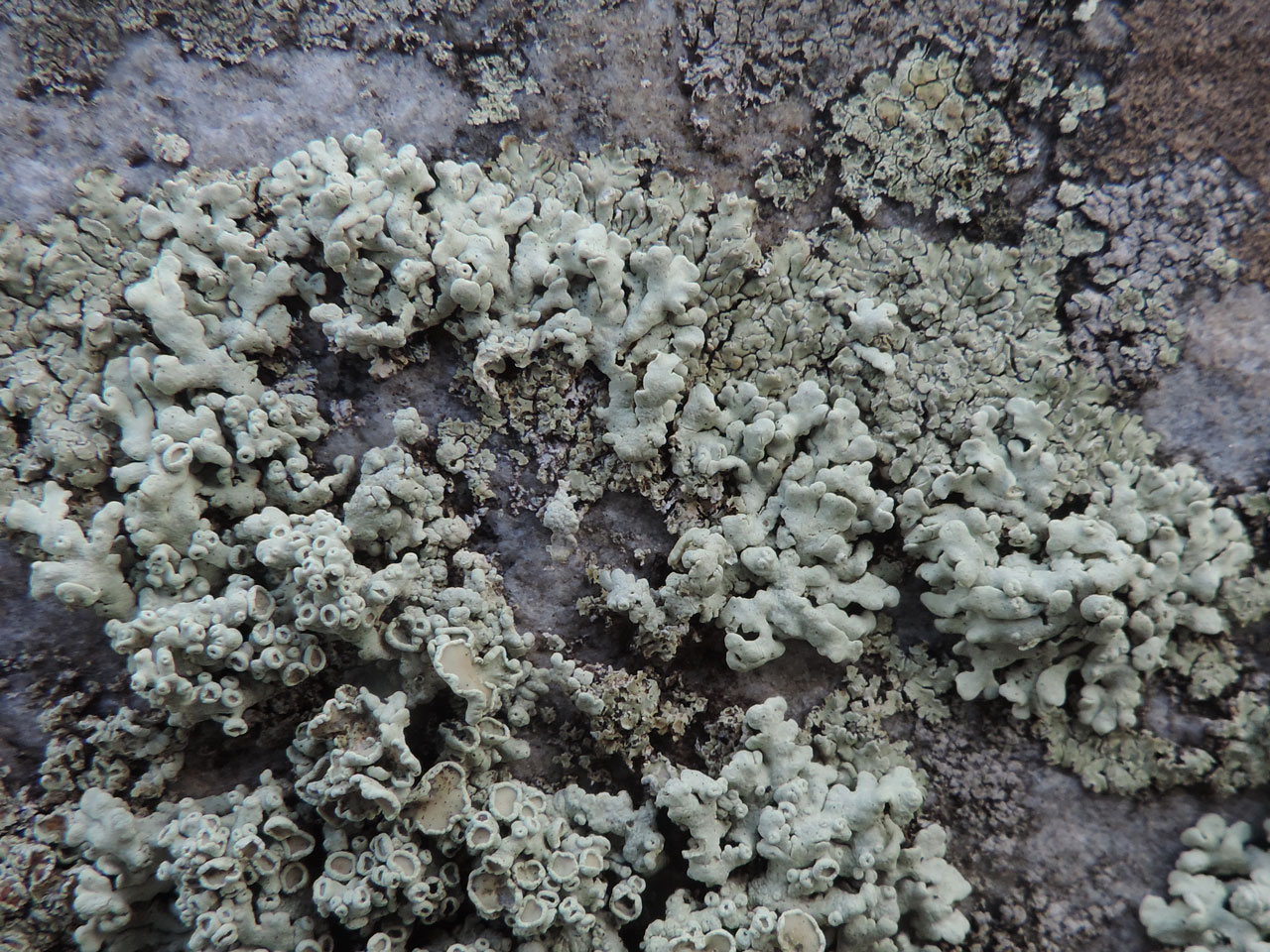
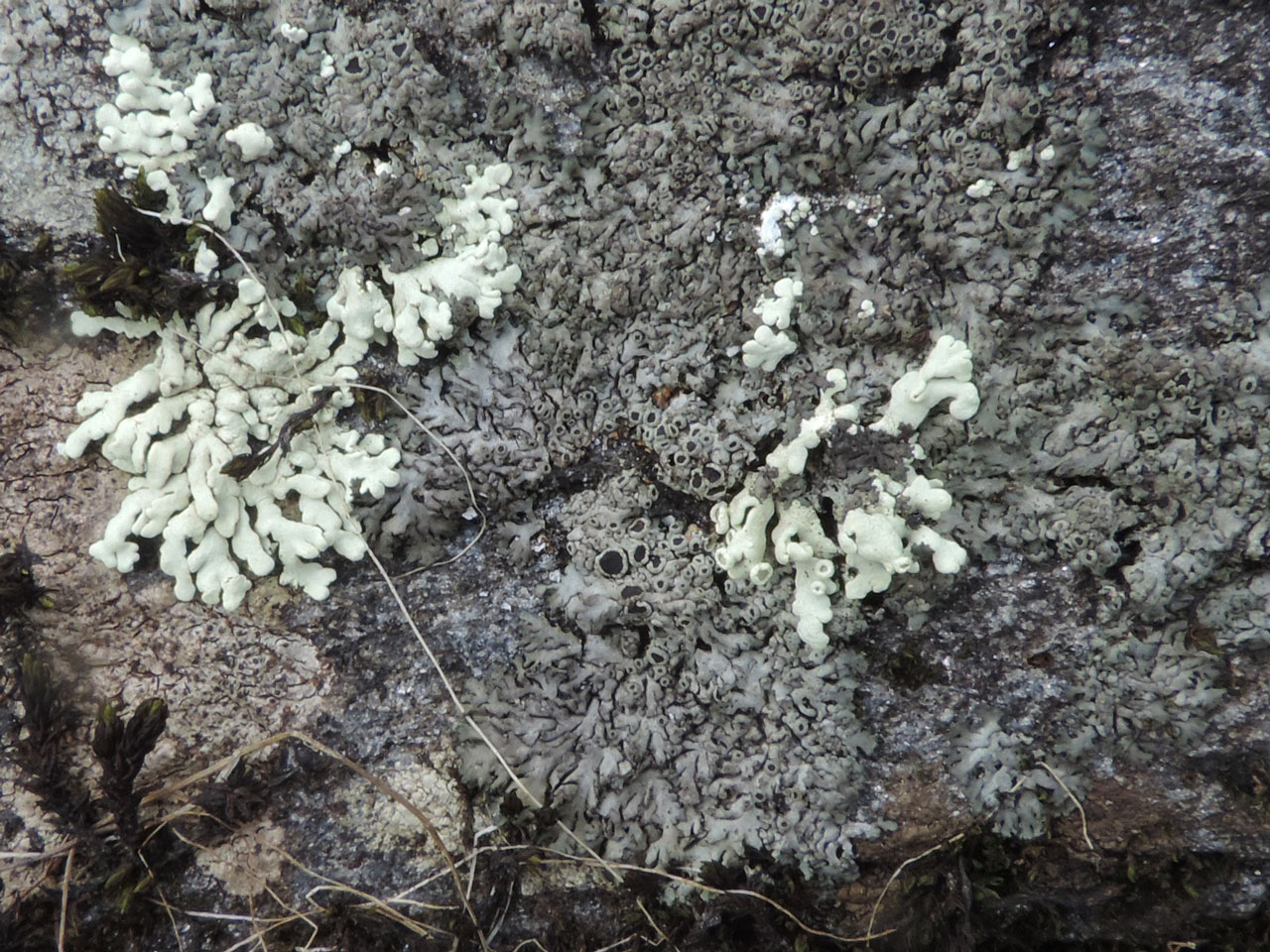
A very rare and attractive lichen, similar to Protoparmeliopsis muralis, with which it often grows, but has a more yellow-green thallus and with less appressed, flat to convex lobes, which tend to overlap towards the centre of the thallus giving the whole thallus a more robust appearance. Found in and by a few upland tarns, lochans and streams on bird perching boulders in non acid waters (pH 6.7 to 6.8) at seven known sites. Potentially occurring in more sites in the north west Highlands and exploration is encouraged. Threatened by acid rain and reservoir construction in the past. The latter could also again be a threat to unknown sites in the Scottish Highlands with the rush to build new pump storage hydroschemes.
Thallus placodioid, forming rosettes or cushions, pale yellow to yellow-green or grey-white, central lobes often ± ascending, overlapping and loosely attached, marginal lobes 0.8–1.5 (–2) mm broad, white below, not marginate, flat to slightly convex. Apothecia 1–2 mm diam., generally abundant, sessile to short-stalked; thalline margin becoming crenulate and wavy; disc pale grey-brown to pinkish brown, sometimes greenish in shade, not pruinose. Ascospores 10–15 (–16) × 4–6 µm. Medulla C–, K– (rarely K+ yellow→red), Pd–, UV– (zeorin, usnic acid, unidentified triterpenoids).
Similar to Protoparmeliopsis muralis, with which it often grows, but has a more yellow-green thallus and paler apothecia. P. achariana also has less appressed, flat to convex lobes, which tend to overlap towards the centre of the thallus giving the whole thallus a more robust appearance.
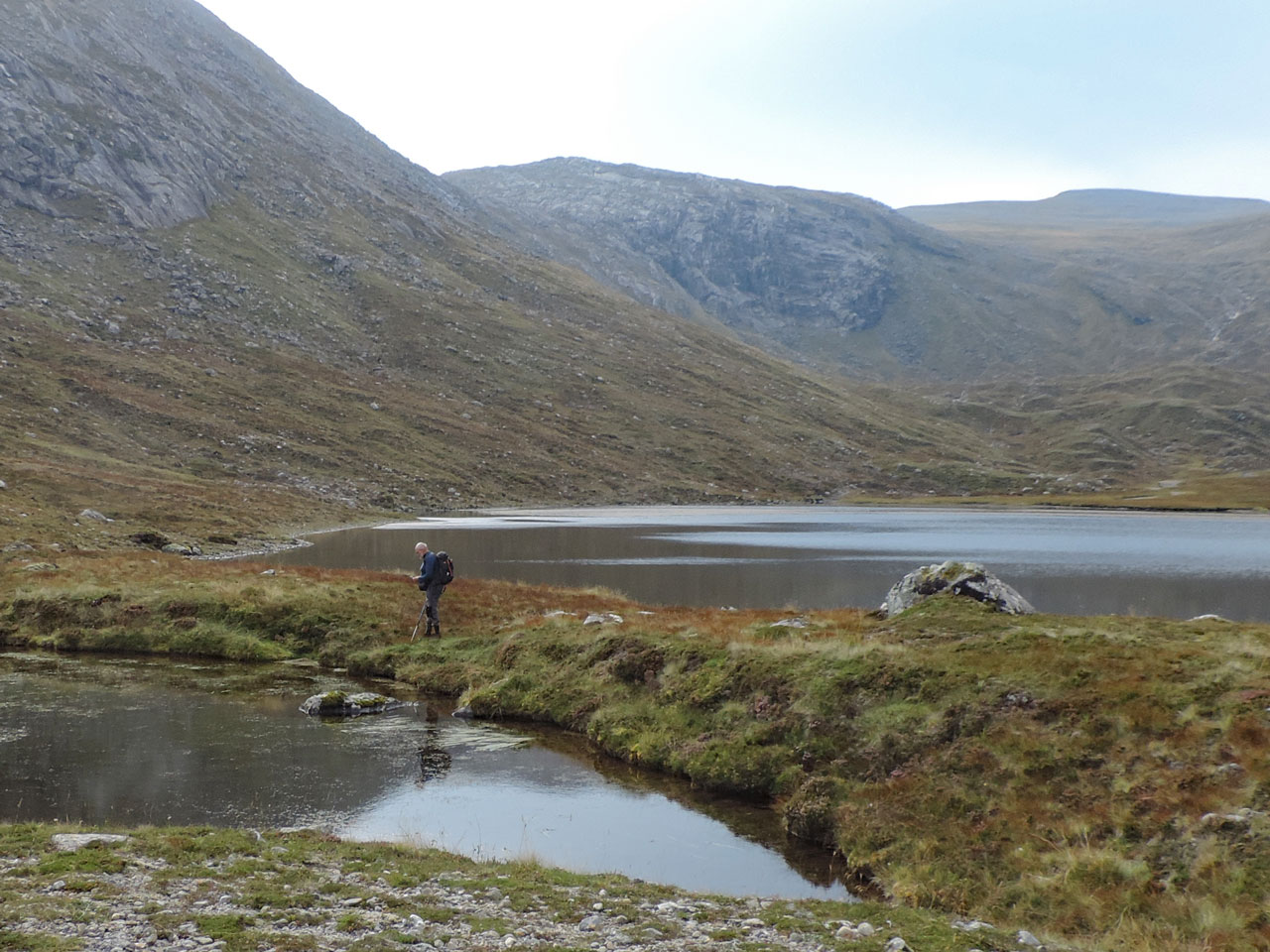
On upland siliceous rocks, typically bird-perching rocks in or at the edges of upland tarns, lochans or streams. The pH of the water is typically between 6.7 – 6.8 (Fryday & Coppins, 1999), excluding water bodies impacted by acidification and those with only acidic rocks or with extensive peatlands in their catchments.
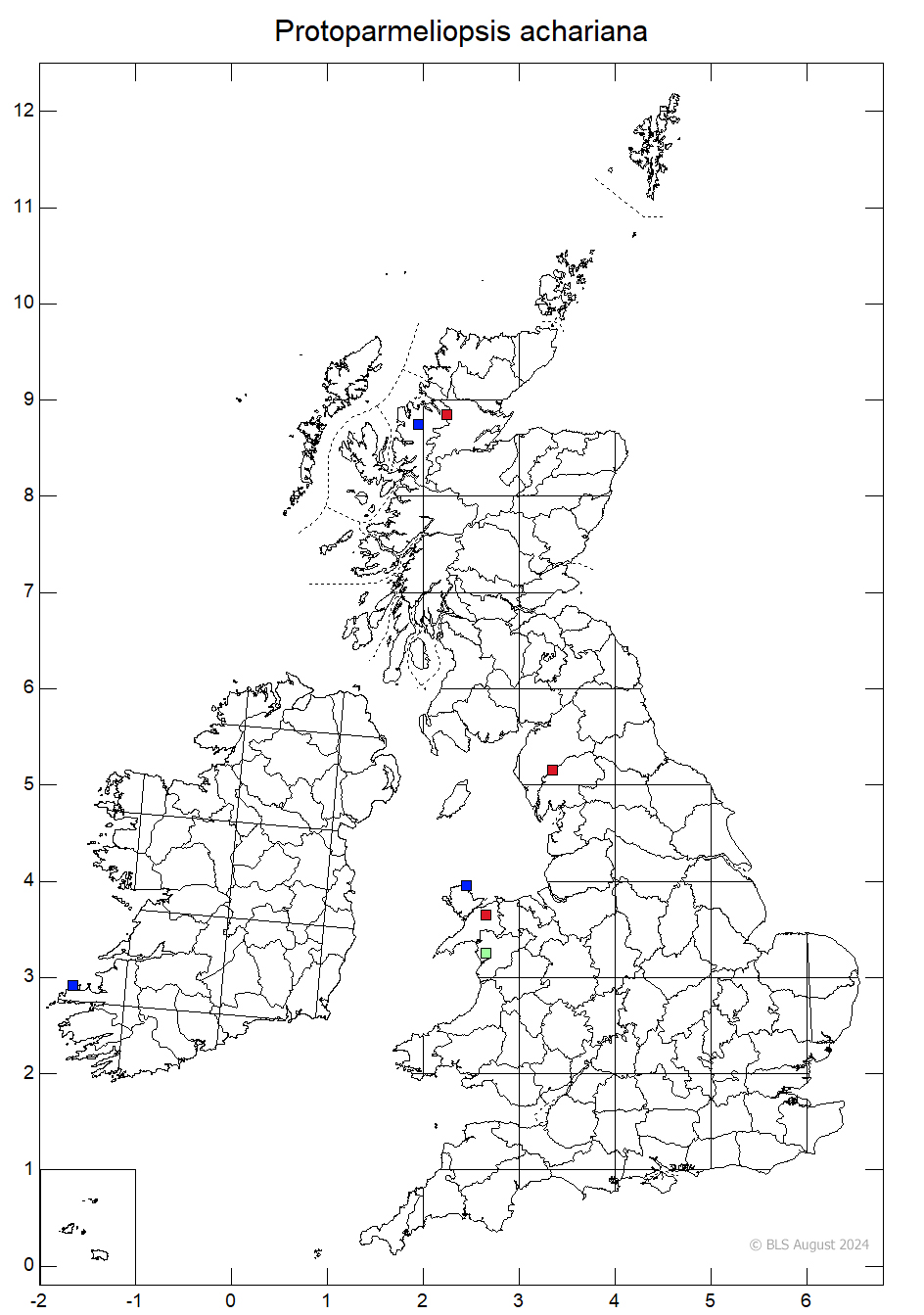


Very rare. N. Wales (Snowdonia), N. England (Lake District), W. Scotland (Beinn Dearg, Loch Maree) & W. Ireland (Brandon Mt.).
A very rare species in Britain, which appears to have always been a rare species of bird-perching rocks in or at the edges of upland lochs, tarns and streams, where the water was not acidic (pH 6.7 – 6.8). Historically lost to damming of tarns for extended reservoirs and acidification from acid rain. Long known from a single tarn in the Lake District; Brown Cove Tarn, Helvelyn [add population details]. In 2025 an exciting discovery was of made of a second Lake District site for this species on a boulder in Measand Beck above Haweswater by Chris Cant & Caz Walker.
See Lichens of Wales for details of the two then known extant Welsh sites in Snowdonia; the tarn of Ffynnon Lloer, Carneddau (on 25 boulders in 2010) and the stream below and a few boulders in the flood zone of the Afon Llafer above Bethesda. Since this account it has also been found in a stream site at Afon Caseg, also above Bethesda, on three small boulders (Orange, 2017).
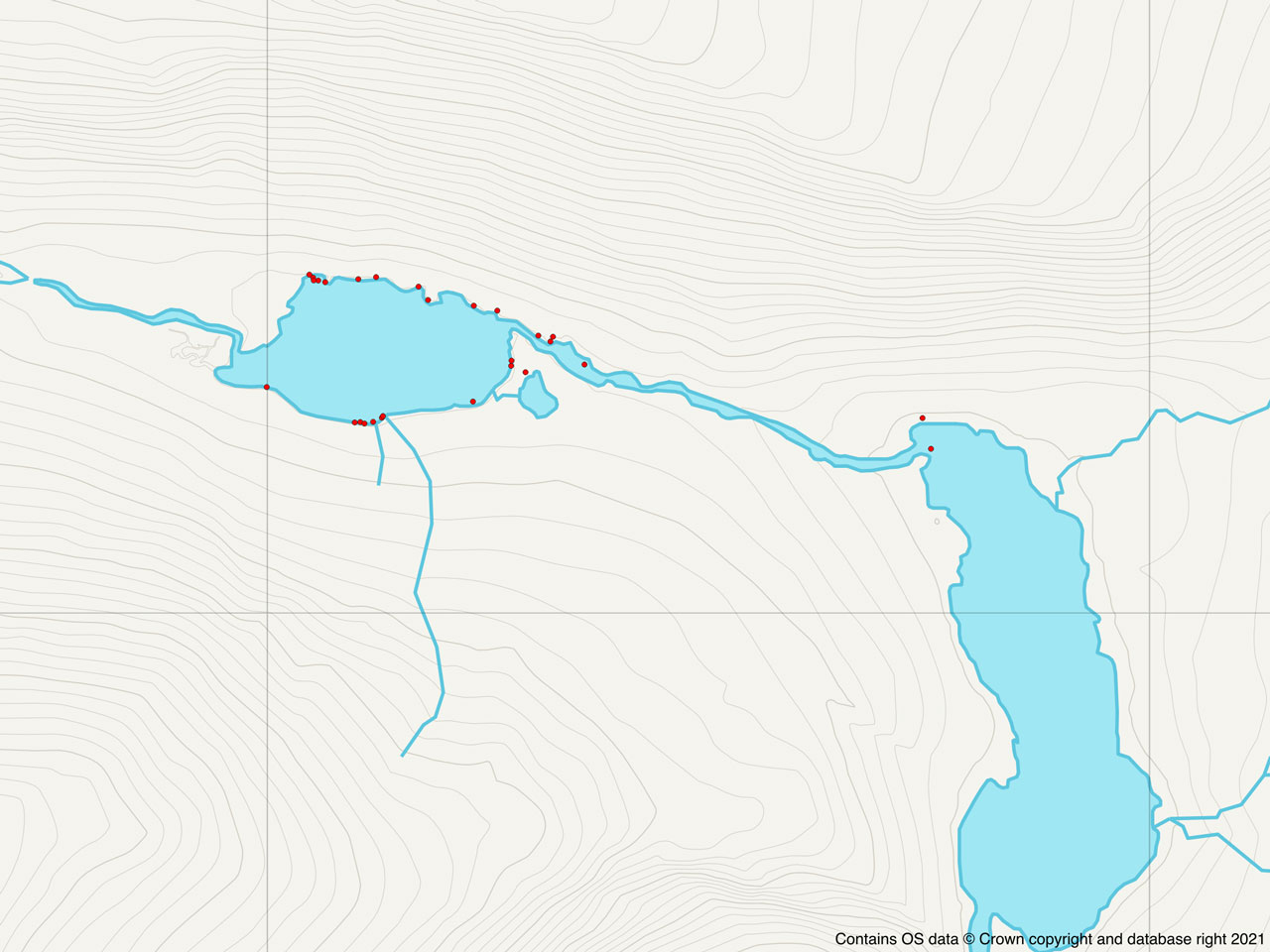
Scotland is much less well explored and there is scope for finding new major sites here. Fryday & Coppins (1999) described the then known sites: “the Scottish locality at Beinn Dearg represents the headquarters of the British distribution with a well developed population in pools and lochans along a I km long stretch of the River Lael and a second smaller population at a single lochan 3 km to the north. At Loch Maree is known from two localities, each with 5 or 6 individual thalli, but a more systematic search may well reveal further populations.” There were over 100 boulders in the River Lael population in 1995, with a single boulder at Coire an Lochan Sgeirich to the north in 1996. The known sites do not appear to have been visited since 1996, which needs to be remedied. In particular the 2021 BLS mountain field meeting to Alladale confirmed the potential for finding new populations. At this meeting a completely new population was found on the east side of the Beinn Dearg massif at Loch Tuath and Loch Prille, amounting to about 30 occupied boulders, with Loch Tuath fully surveyed, but Loch Prille only briefly examined (see map in pictures).
There is a need for more monitoring and survey work in Scotland in paticular, where the bulk of the British population occurs and there are renewed threats of high altitude reservoirs for pump storage schemes with limited evidence of aquatic lichen surveys being carried during the planning process for most of these.
Britain: Critically Endangered
Scotland: Priority Taxon for Biodiversity in Scotland
Wales: Endangered & Section 7 species
England: Section 41 species
Cannon, P., Malíček, J., Ivanovich, C., Printzen, C., Aptroot, A., Coppins, B., Sanderson, N., Simkin, J. & Yahr, R. (2022). Lecanorales: Lecanoraceae, including the genera Ameliella, Bryonora, Carbonea, Claurouxia, Clauzadeana, Glaucomaria, Japewia, Japewiella, Lecanora, Lecidella, Miriquidica, Myriolecis, Palicella, Protoparmeliopsis, Pyrrhospora and Traponora. Revisions of British and Irish Lichens 25: 1-83.
Fryday A. M. & Coppins, B. J. (1999) Action Plans for Lower Plants in Scotland Project - Lichens - Lecanora achariana Species Dossier. Scottish Natural Heritage & Royal Botanic Garden Edinburgh. PDF download below.
Orange, A. (2017) The Importance of Watercourses for Lichens in Eryri SSSI. NRW Evidence Report No. 224. Download link.
Text by Neil A Sanderson based on Cannon et al (2022)