Peltigera scabrosa
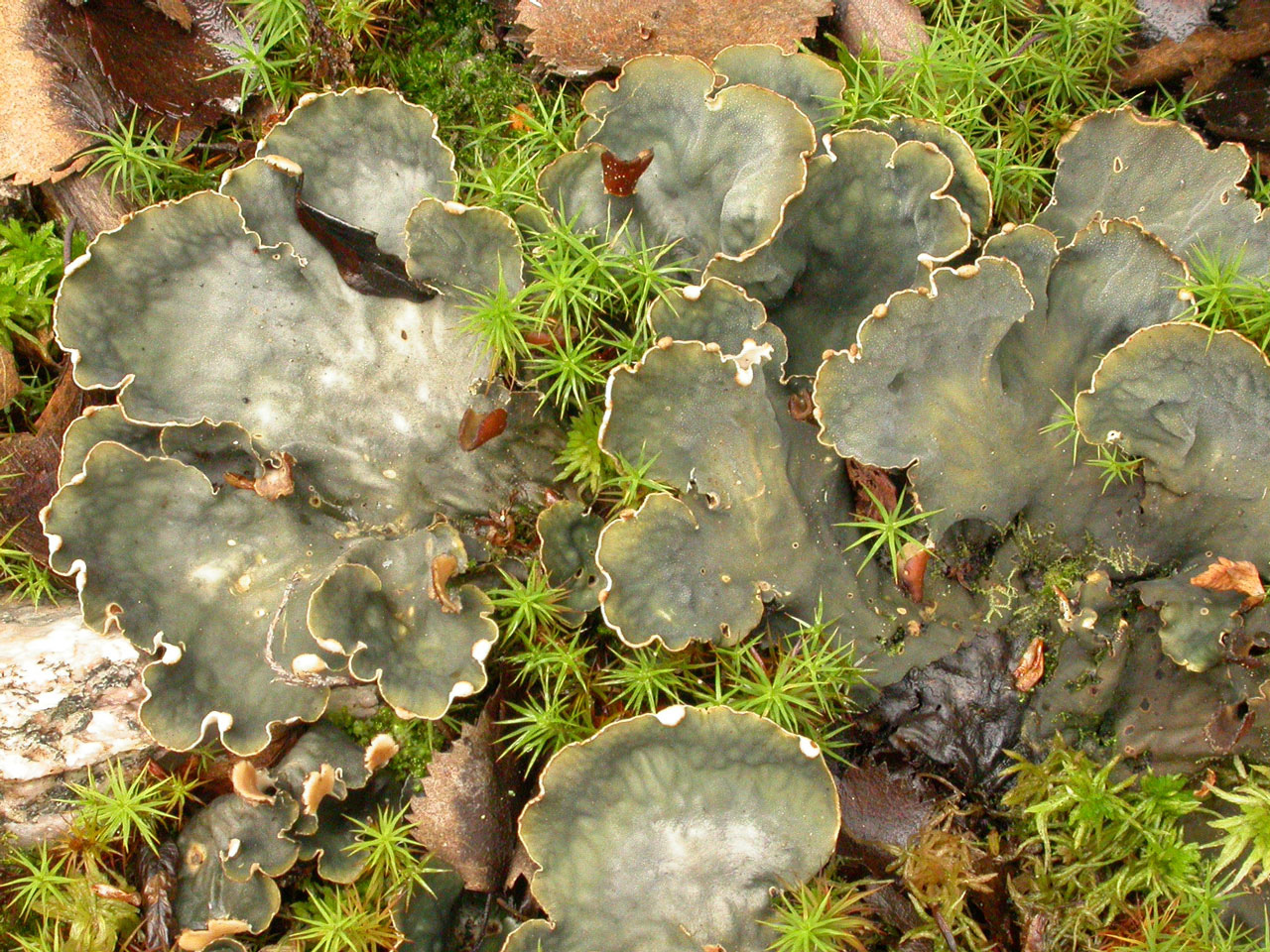
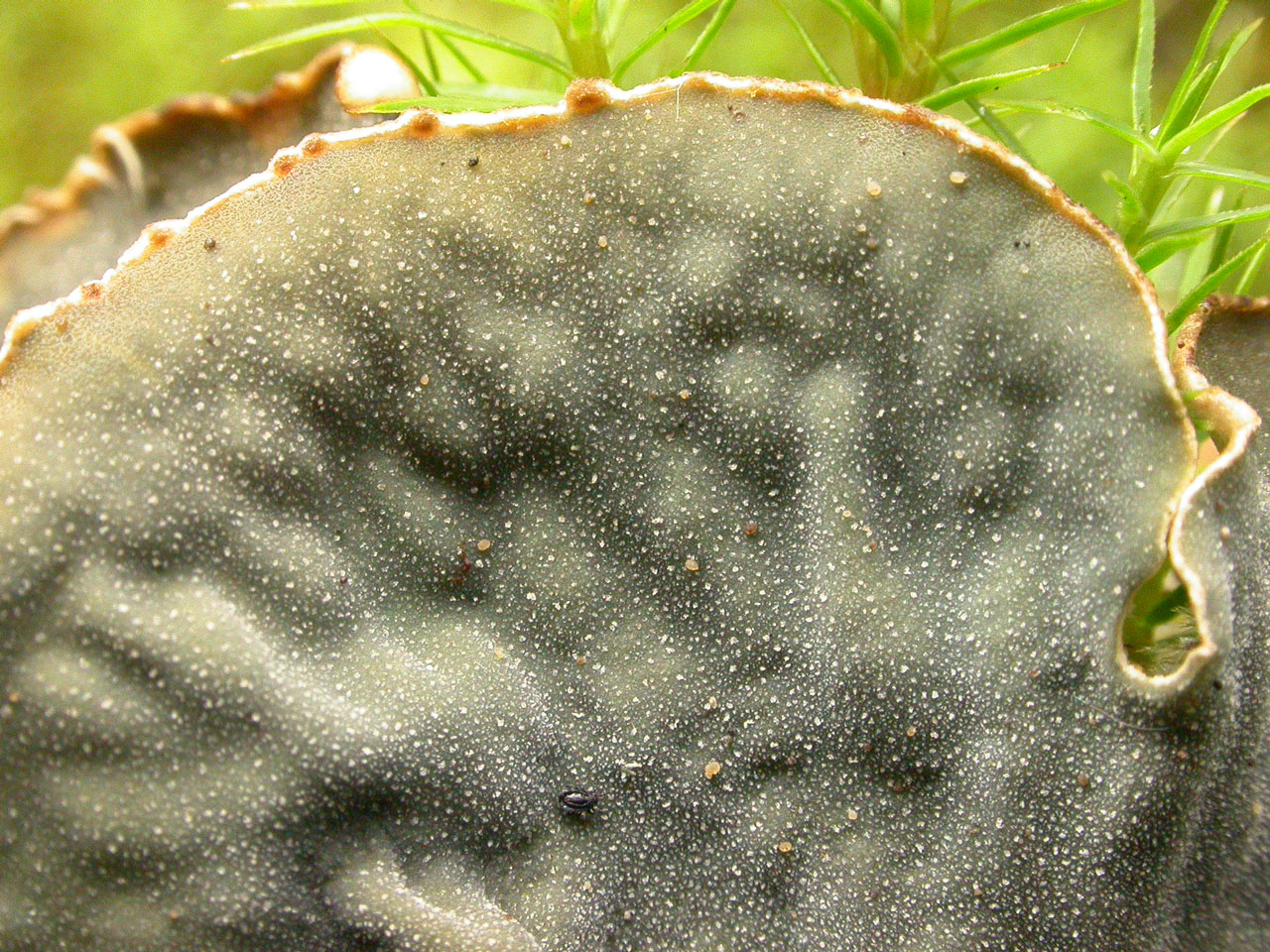
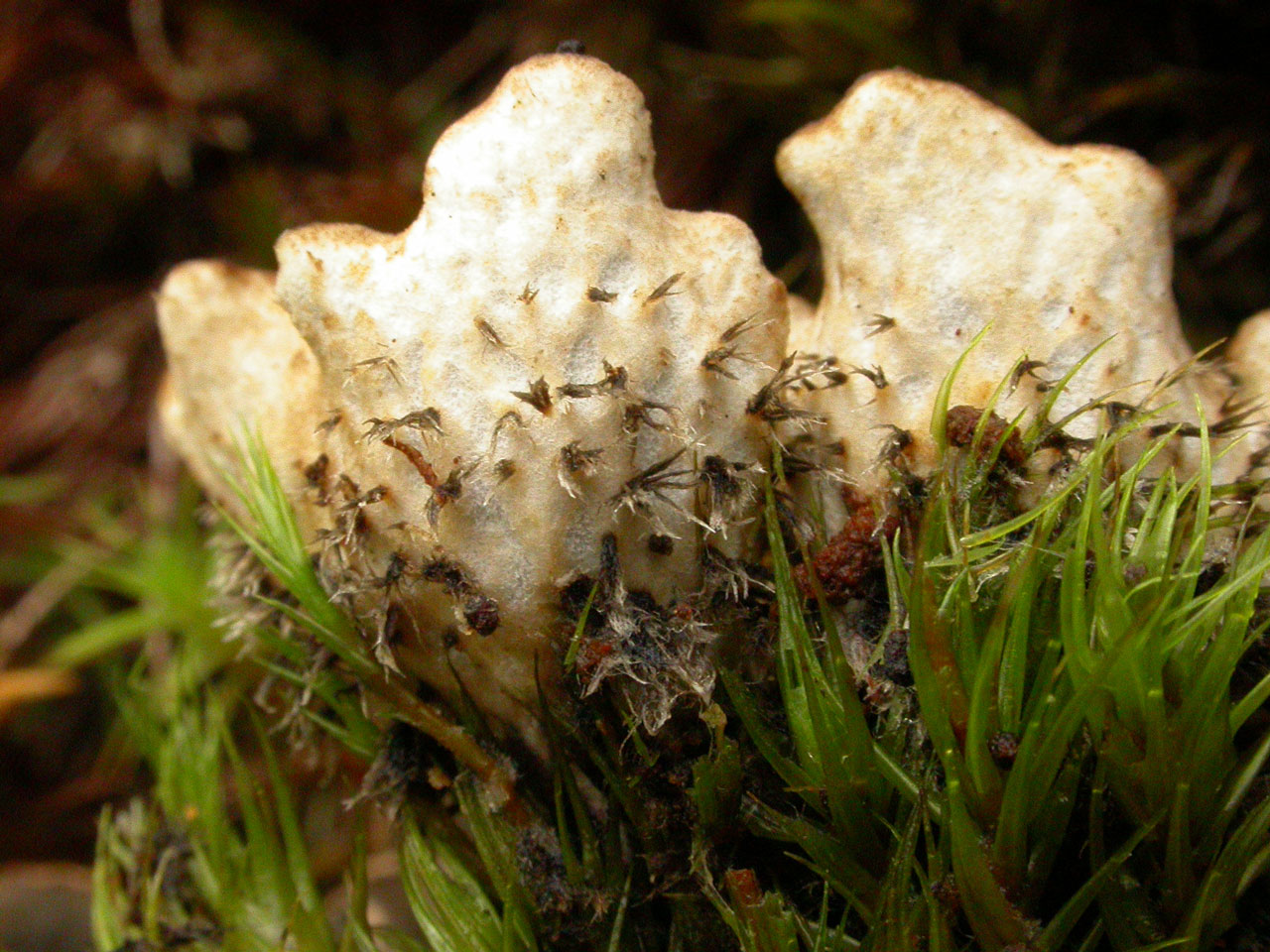
A rare boreal Dogtooth, the Scabby Dogtooth, with only two pre 2000 records from Scotland. It has large lobes, which are roughened but not tomentose and with upturned margins, separating it from the Peltigera membranacea group. Below are brown to black-brown distinct veins with dark clusters of fasciculate rhizines. One to look out for when hill walking in the north, probably on shaded mossy rocks.
Thallus wide-spreading, to 5–10 (–20) cm diam., subcoriaceous; lobes 1–3 (–4) cm broad and to 10–18 cm long, margins ± raised, rounded; upper surface roughened, scabrid, blue- to brown-green when moist, brown when dry, not tomentose; lower surface with brown to black-brown distinct veins in the central region; rhizines dark brown to black, fibrillose to fasciculate. Apothecia not seen in British material (disc 3–6 mm diam., convex, on extended lobes. Ascospores 75–90 × 3–5 µm). Thallus with tenuiorin, methyl gyrophorate, gyrophoric acid (C+ red), T1, T2, T3, T6 and two unidentified triterpenoids.
The similar Peltigera scabrosella, has pale, simple rhizines which may be in loose bundles, a pale underside and a pink-red triterpenoid on TLC plates, in P. scabrosa the rhizines are fasciculate or fibrillose, soon blackened and the lower side is darkened in the centre. Potentially overlooked as the common Peltigera membranacea, but this has down turned margins and is tomentose not scabrid. The upturned margins on the lobes of P. scabrosa are likely be a good field character for spotting this species.
Peltigera scabrosa is an aggregate of four species (Magain et al., 2017) and TLC or molecular identification should be performed to confirm the presence of P. scabrosa s. str. in Britain.
On acid soil, upland-montane.
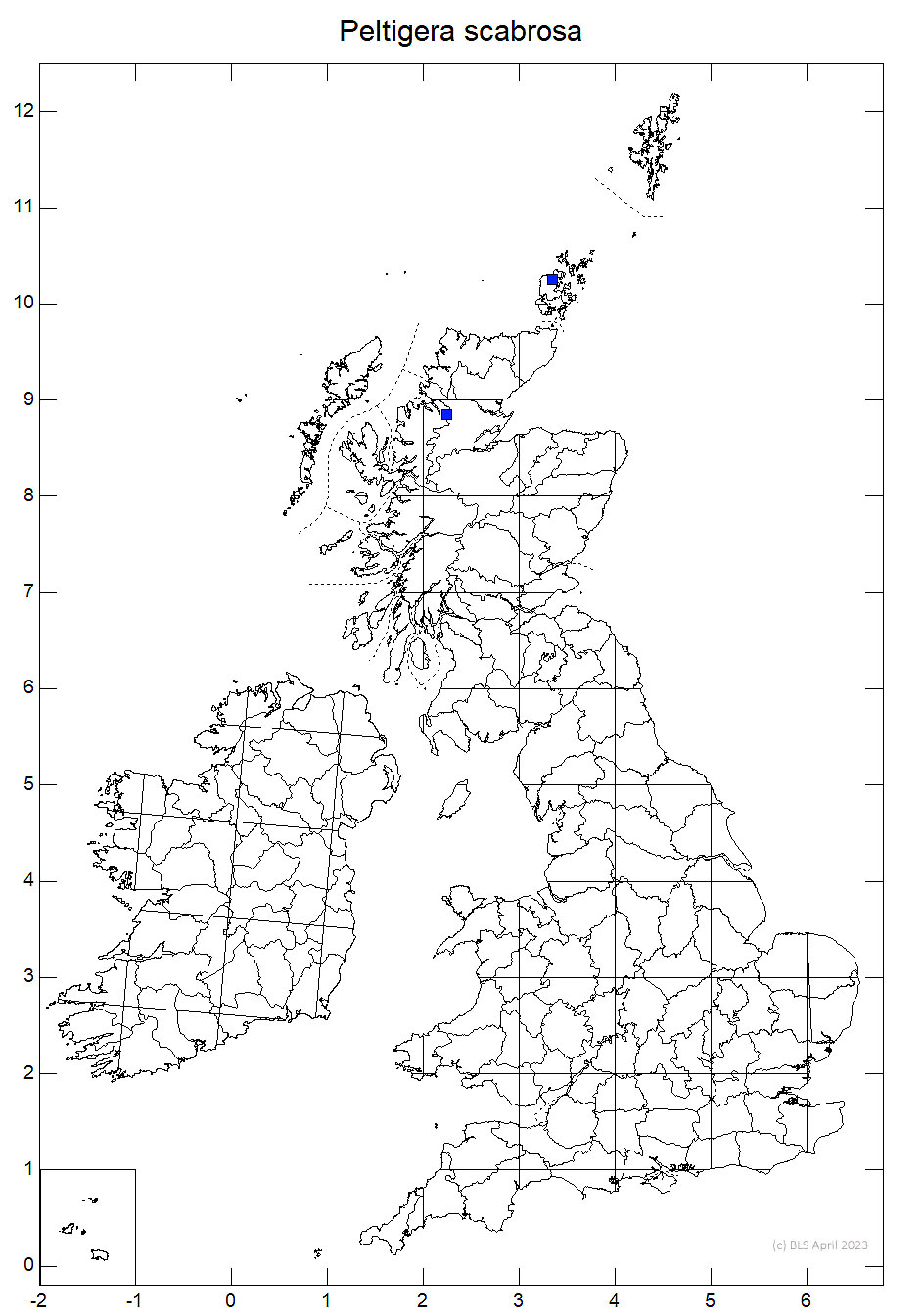

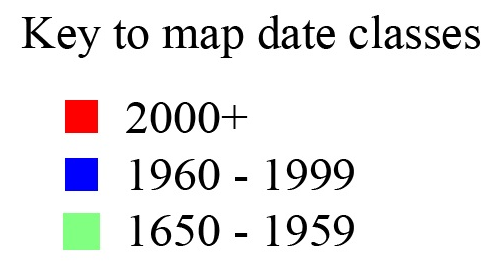
Very rare. N. Scotland (Highlands, Ross, Orkney Isles).
There are only two records of this Peltigera, one from Mid Hill, Brisay Moors, Orkney in 1979 and Seana Bhraigh, Ross in 1984. The latter is a dramatic high plateau dissected vast corries, with a rich montane lichen flora, but the former is an unremarkable partly cutover blanket bog, with an average moorland lichen assemblage recorded, which suggests a wide range of possible habitats. The Nordic Lichen Flora describes it as widespread in boreal habitats but mainly on shaded rocks and boulders in the south of Scandinavia (Vitikainen, 2007). This gives a hint of where to look for the species in Scotland; the species is likely to be overlooked but rare.
Britain: Vulnerable
Scotland: Priority Taxon for Biodiversity in Scotland
Cannon, P., Magain, N., Sérusiaux, E., Yahr, R., Coppins, B., Sanderson, N. & Simkin, J. (2021). Peltigerales: Peltigeraceae, including the genera Crocodia, Lobaria, Lobarina, Nephroma, Peltigera, Pseudocyphellaria, Ricasolia, Solorina and Sticta. Revisions of British and Irish Lichens 20: 1-34.
Magain, N., Miądlikowska, J., Mueller, E., Gajdeczka, M, Truong, C., Salamov, A.A., Dubchak, I., Grigoriev, I.V., Goffinet, B., Sérusiaux, E. & Lutzoni, F. (2017). Conserved genomic collinearity as a source of broadly applicable fast evolving markers to resolve species complexes: A case study using the lichen-forming genus Peltigera section Polydactylon. Molecular Phylogenetics and Evolution 117: 10–29.
Vitikainen, O. (2007) Peltigeraceae. Nordic Lichen Flora 3: 87-90.
Text by Neil A Sanderson based on Cannon et al (2021)