Peltigera lepidophora
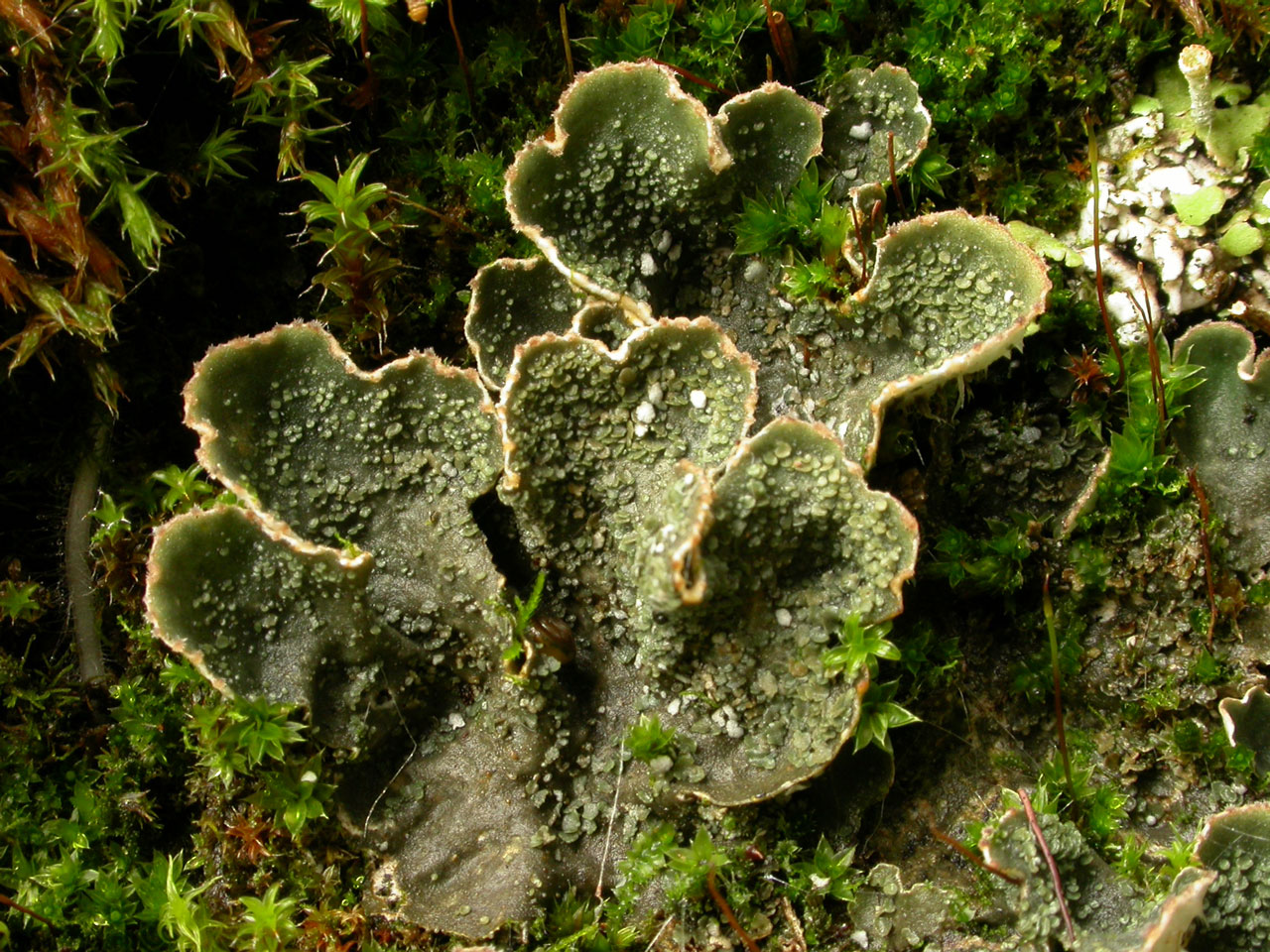
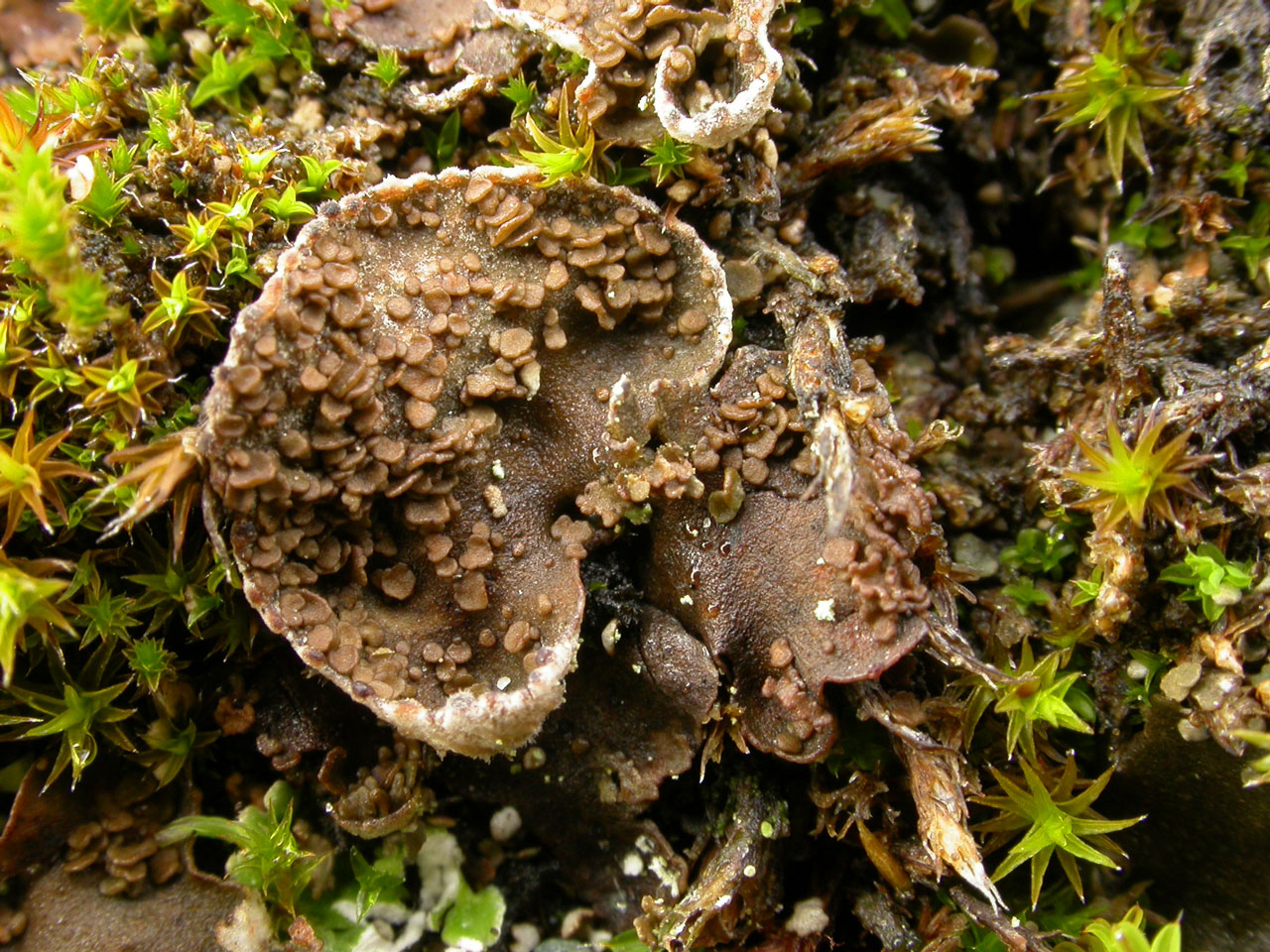
A small but distinctive Dogtooth, the Scaly Dogtooth, with numerous flattened isidia on the partly thinly tomentose upper surface. A very rare species in Britain, only known form a single wooded gorge in eastern Perthshire. An easy species to identify, so definitely worth looking out for elsewhere in the north.
Thallus to 5–7 cm diam., often smaller, level with or sunken into the substratum; lobes to 1 cm broad, ca 3.5 cm long, concave to ear-shaped, with ascending, entire or ± eroded and sometimes inrolled margins; upper surface grey-brown, smooth, glabrous in part or ± thinly tomentose to somewhat scabrous; isidia to 1 mm diam., numerous, button-like, resembling cephalodia, crowded and contiguous, sometimes overlapping or widely dispersed; lower surface with often rather indistinct white to pale grey, rarely pale brown anastomosing veins and discrete unbranched pale rhizines; photobiont Nostoc. Apothecia not known in Britain. Thallus with negative reactions; no lichen products detected by TLC.
Distinguished by the small size and numerous dorsiventral peltate cephalodium-like isidia on the partly thinly tomentose upper surface. Rather similar to the juvenile stage of Peltigera didactyla, which is sorediate and widespread.
On flat mossy rock ledges in a river gorge.
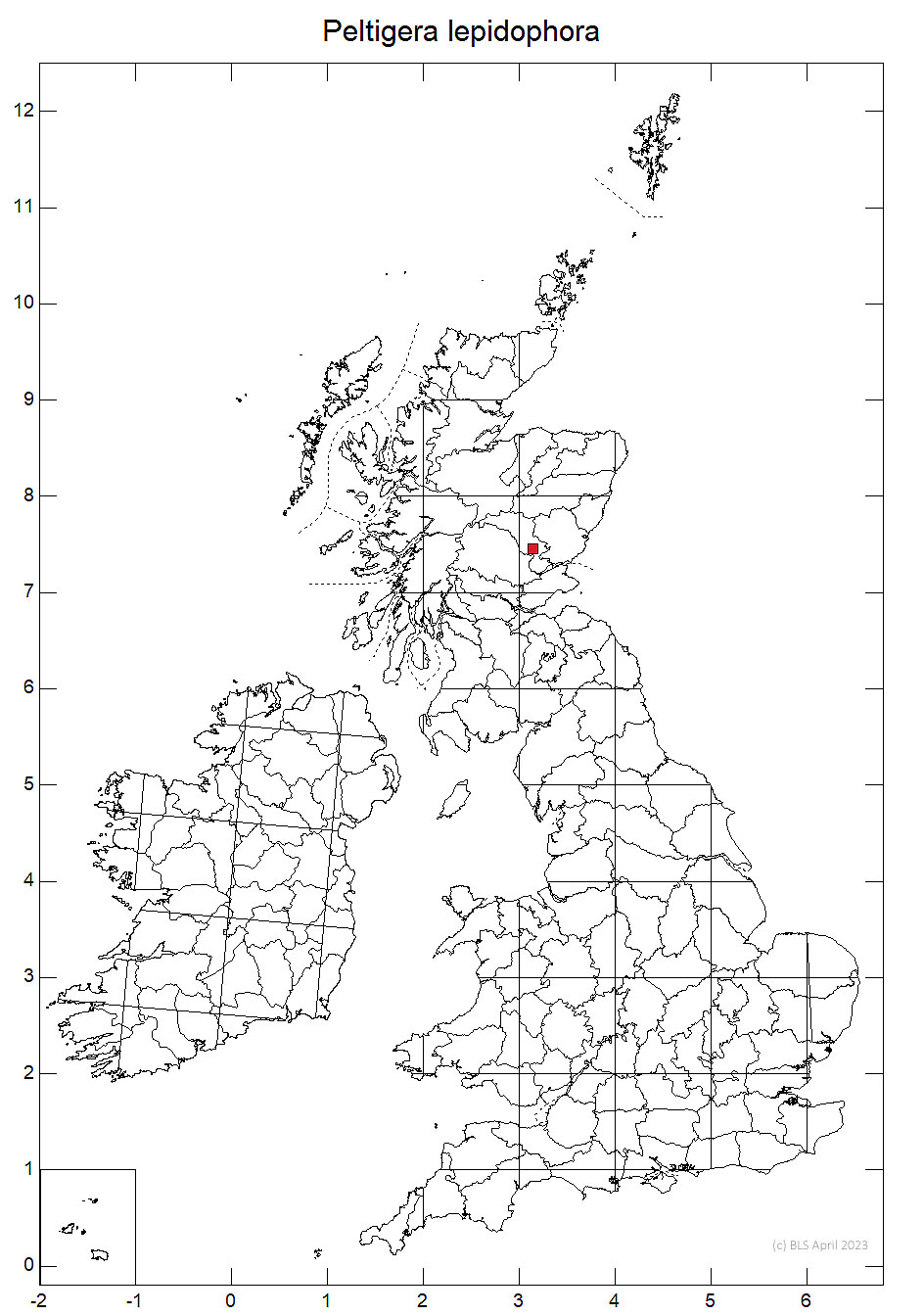


Very rare in a single ravine in E. Perthshire, Scotland.
Known only from a single location in a wood gorge on flat mossy rock ledges above the river. Potentially overlooked elsewhere but quite a distinctive Peltigera, so likely very rare. As a single population vulnerable to loss to random events.
Britain: Critically Endangered
Scotland: Priority Taxon for Biodiversity in Scotland
Cannon, P., Magain, N., Sérusiaux, E., Yahr, R., Coppins, B., Sanderson, N. & Simkin, J. (2021). Peltigerales: Peltigeraceae, including the genera Crocodia, Lobaria, Lobarina, Nephroma, Peltigera, Pseudocyphellaria, Ricasolia, Solorina and Sticta. Revisions of British and Irish Lichens 20: 1-34.
Text by Neil A Sanderson based on Cannon et al (2021)