Peltigera degenii
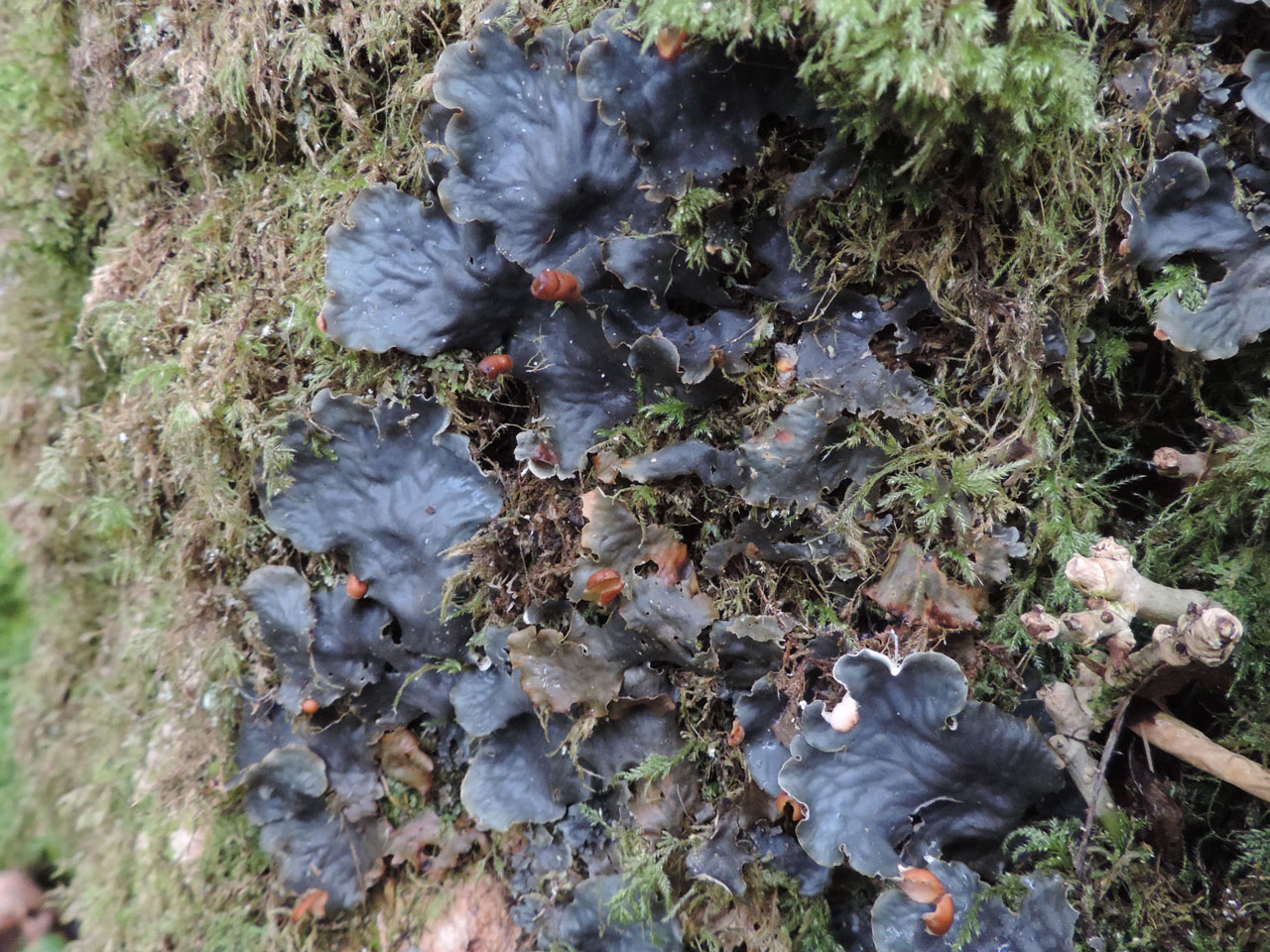
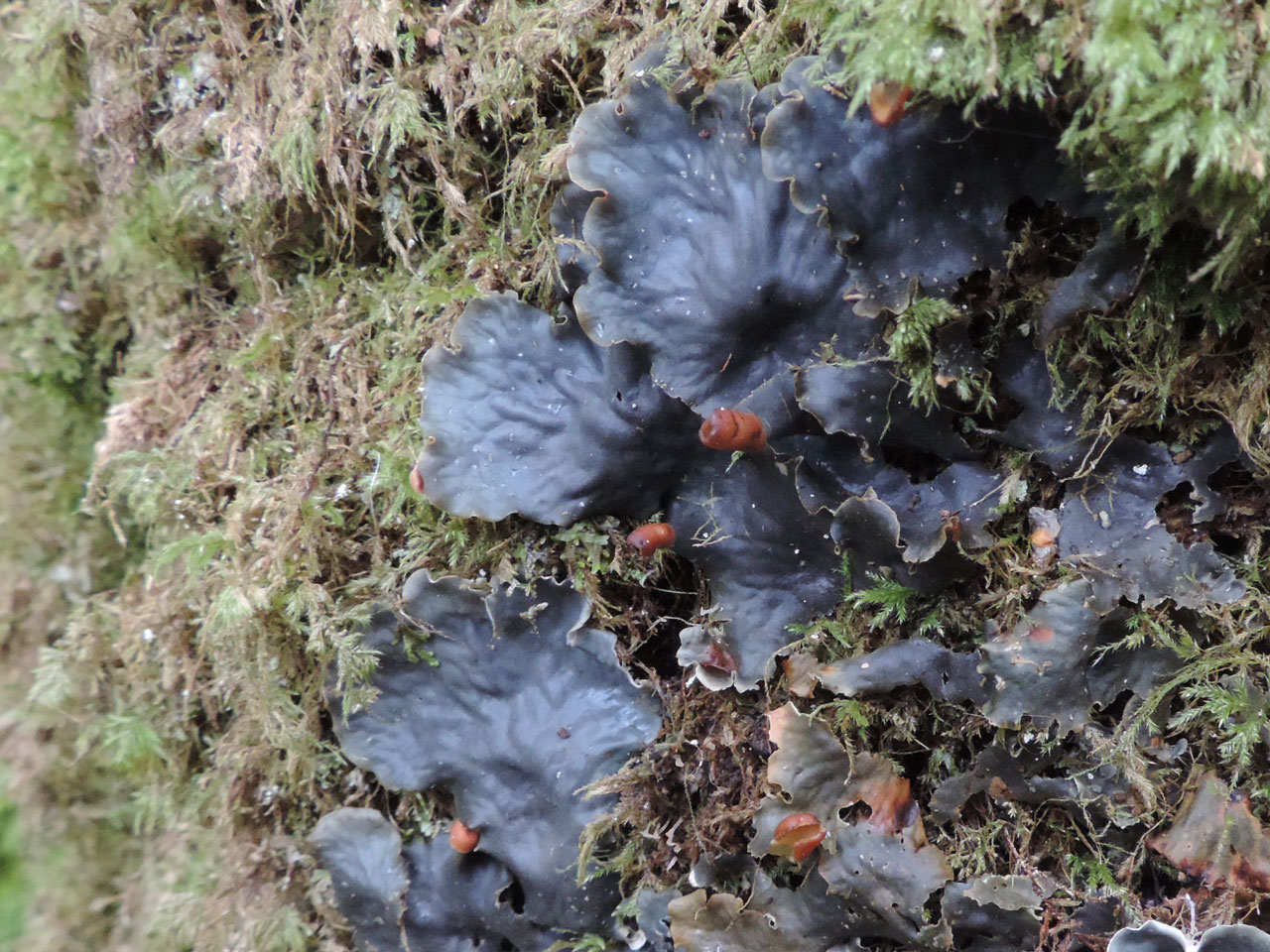
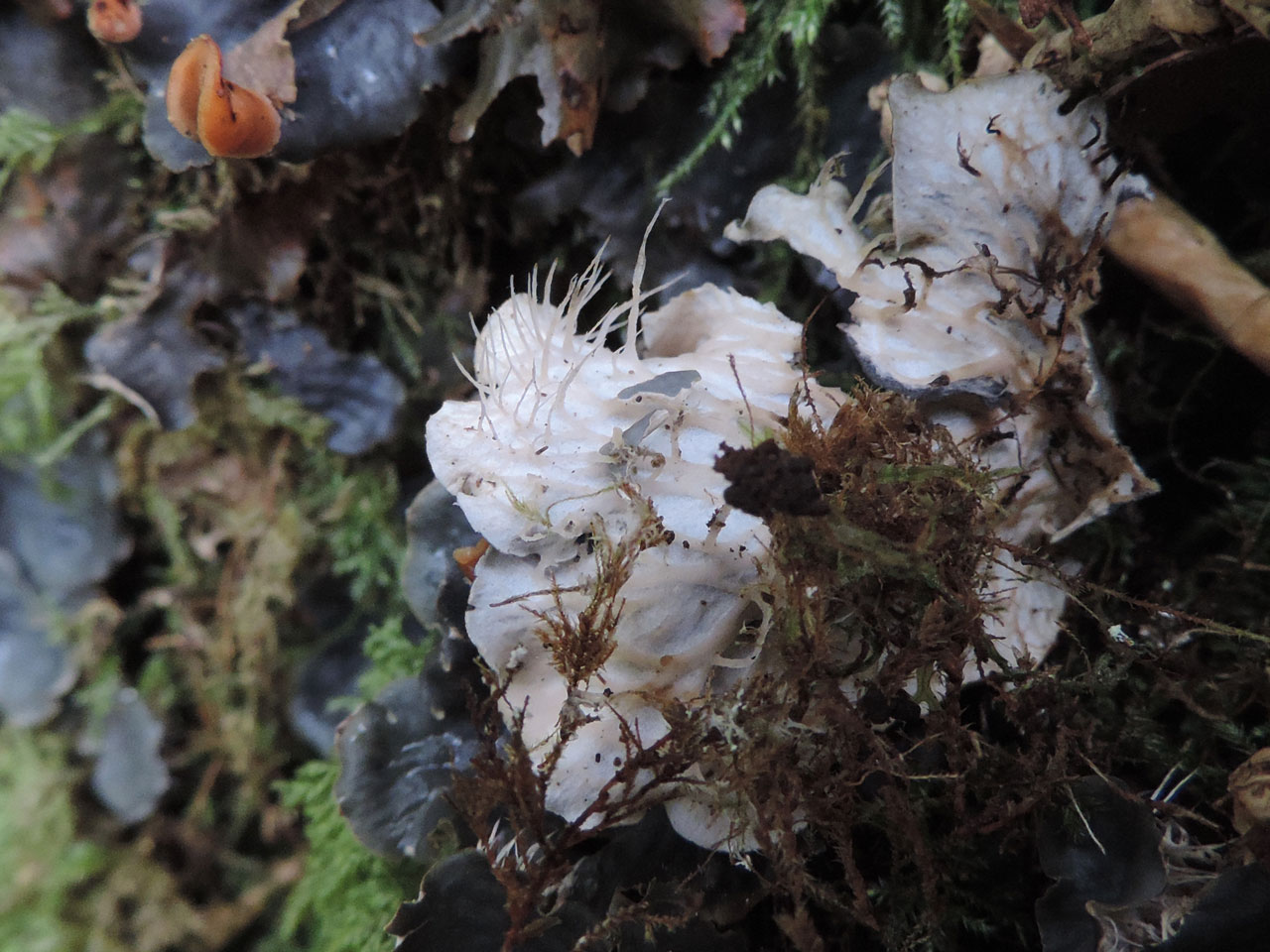
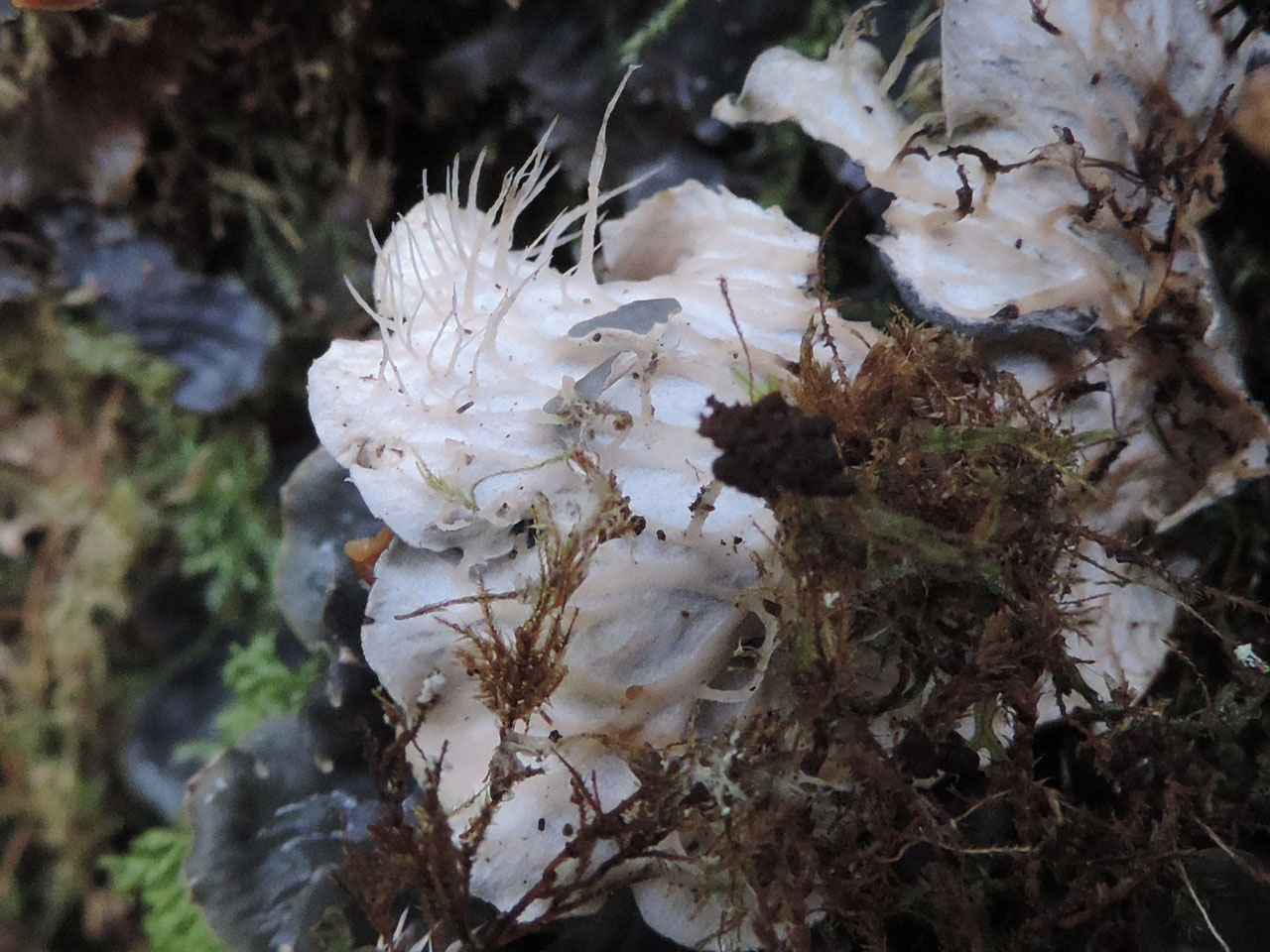
A probably overlooked Dogtooth, the Whitestart Dogtooth, of mossy rocks and tree bases in humid locations. The upper side is similar to Peltigera horizontalis but the apothecia are not held horizontally and it has a distinctive underside, with pale narrow and well defined veins with simple or little-branched pale rhizines. Well developed Peltigera hymenia can look similar but lacks the well defined veins. Scattered records from the north and west.
Thallus to 10 (–20) cm diam., wide-spreading; lobes 0.5–1 cm broad, 2–4 cm long; upper surface blue-grey, occasionally brown, glossy, tomentum absent, smooth or bullate-wrinkled, marginal isidia and lobules often present; lower surface white-cream, with narrow ± conspicuous elevated white to pale yellow-brown veins and slender, simple or little-branched pale cream or grey brown rhizines with a ± smooth surface, occasionally slightly pubescent. Apothecia round, becoming recurved, on erect elongate lobes. Ascospores 45–65 × 2.5–5 µm. Conidiomata unknown. Thallus with negative reactions; no lichen products detected by TLC.
The narrow, uniformly pale raised veins and simple, unbranched rhizines as well as the absence of lichen products are diagnostic. Care is needed to distinguish this species from morphs of P. praetextata with sparse tomentum.
On mossy rocks, fallen trunks in ravines, rotting logs and tree bases in humid habitats.
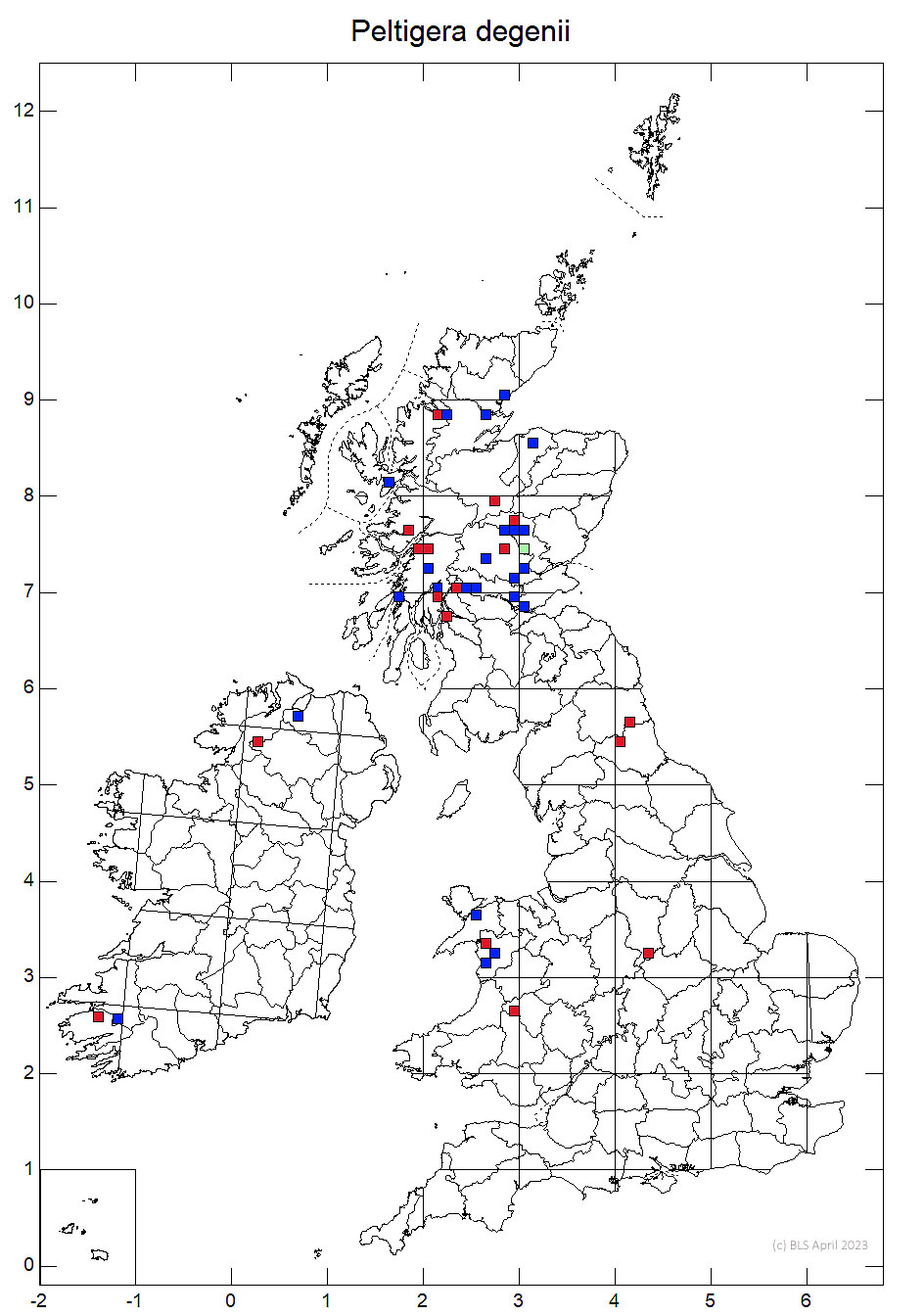


Local, England (Durham & Derbyshire), Scotland, C. to N. Wales, Ireland (N. Ireland, Kerry), likely to be very under recorded.
A little known species, but usually found in quality habitats. Certainly uncommon, but also likely to be very under recorded.
Britain: Notable species
Cannon, P., Magain, N., Sérusiaux, E., Yahr, R., Coppins, B., Sanderson, N. & Simkin, J. (2021). Peltigerales: Peltigeraceae, including the genera Crocodia, Lobaria, Lobarina, Nephroma, Peltigera, Pseudocyphellaria, Ricasolia, Solorina and Sticta. Revisions of British and Irish Lichens 20: 1-34.
Text by Neil A Sanderson based on Cannon et al (2021)