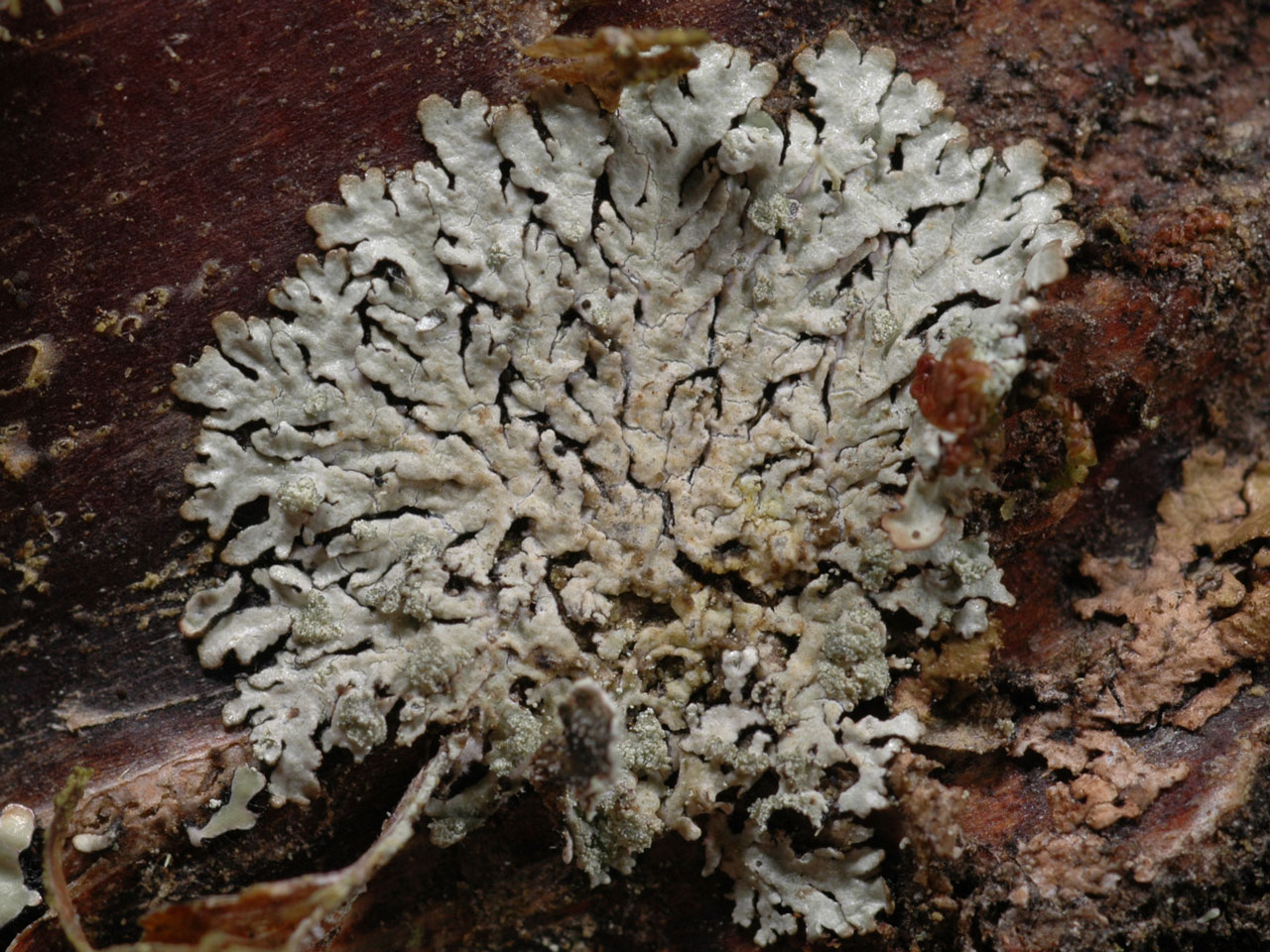
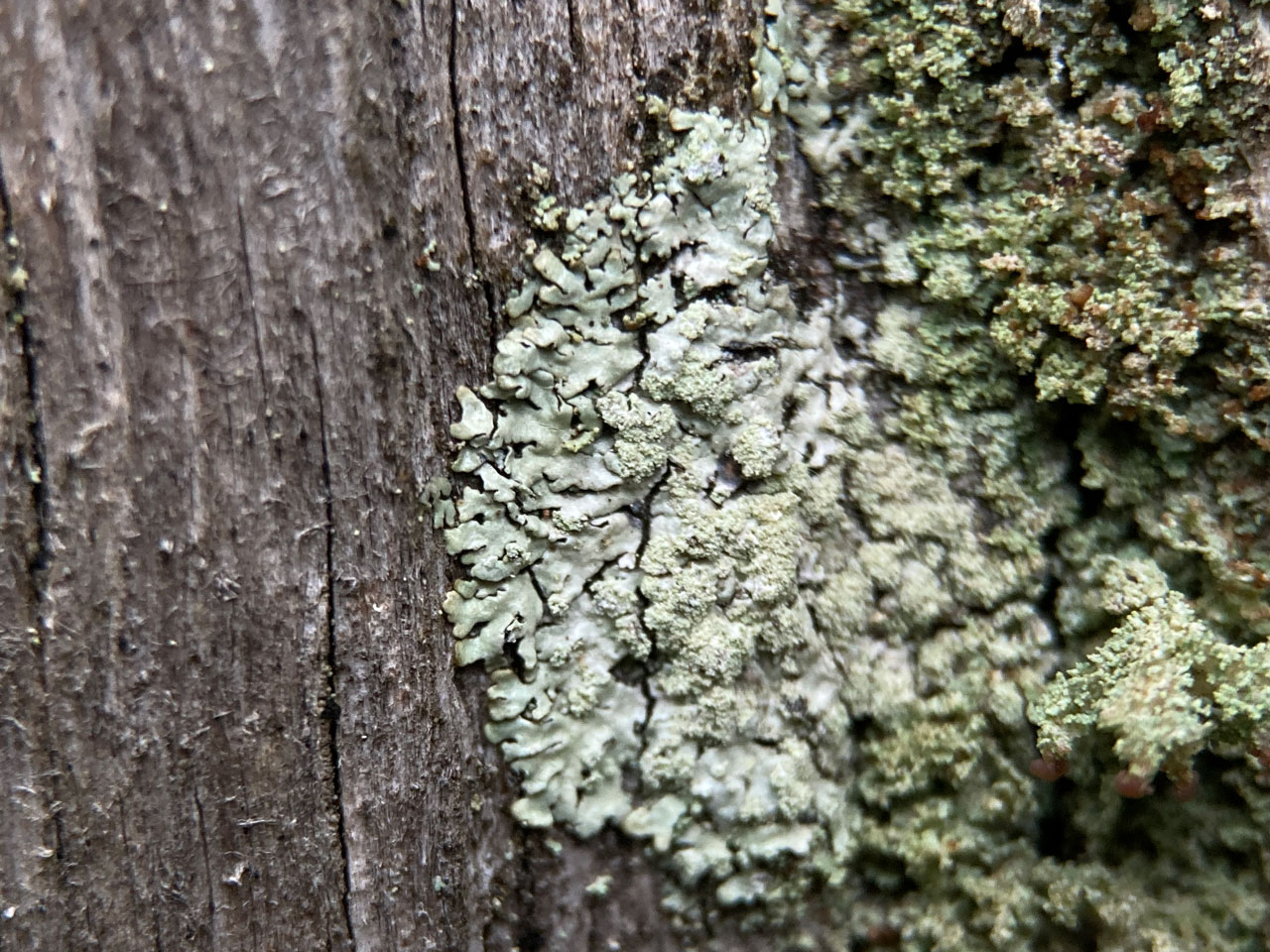
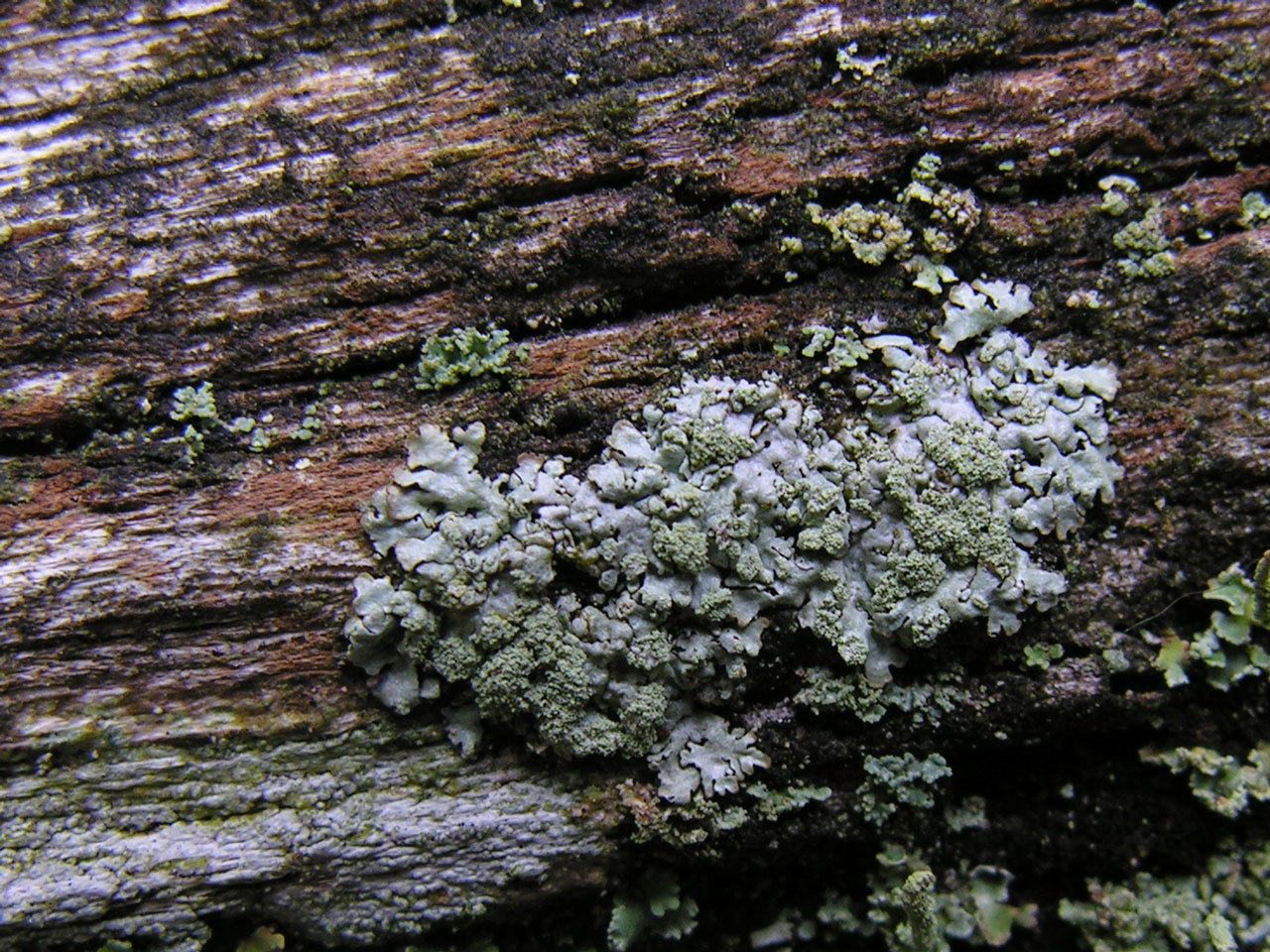
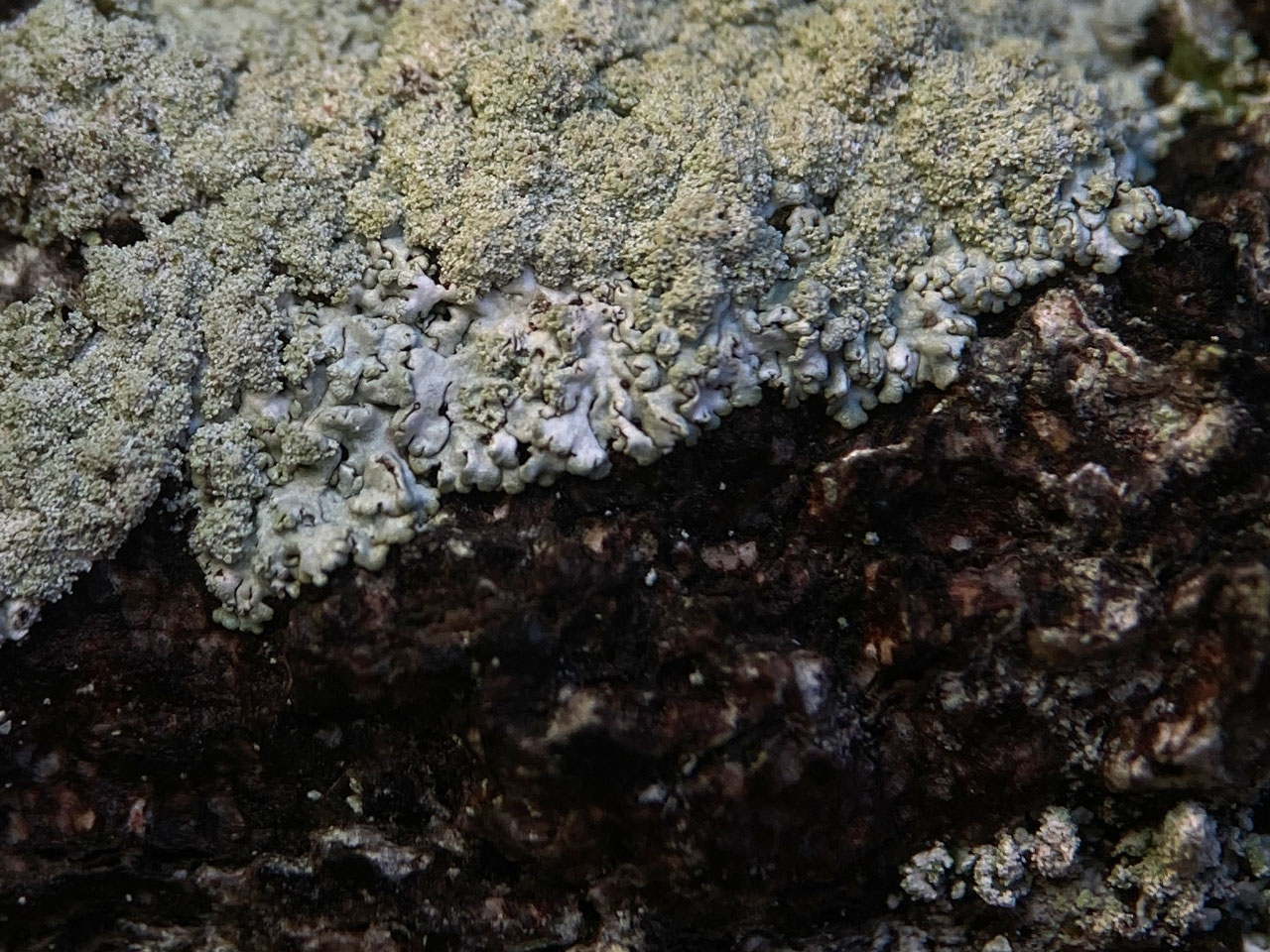
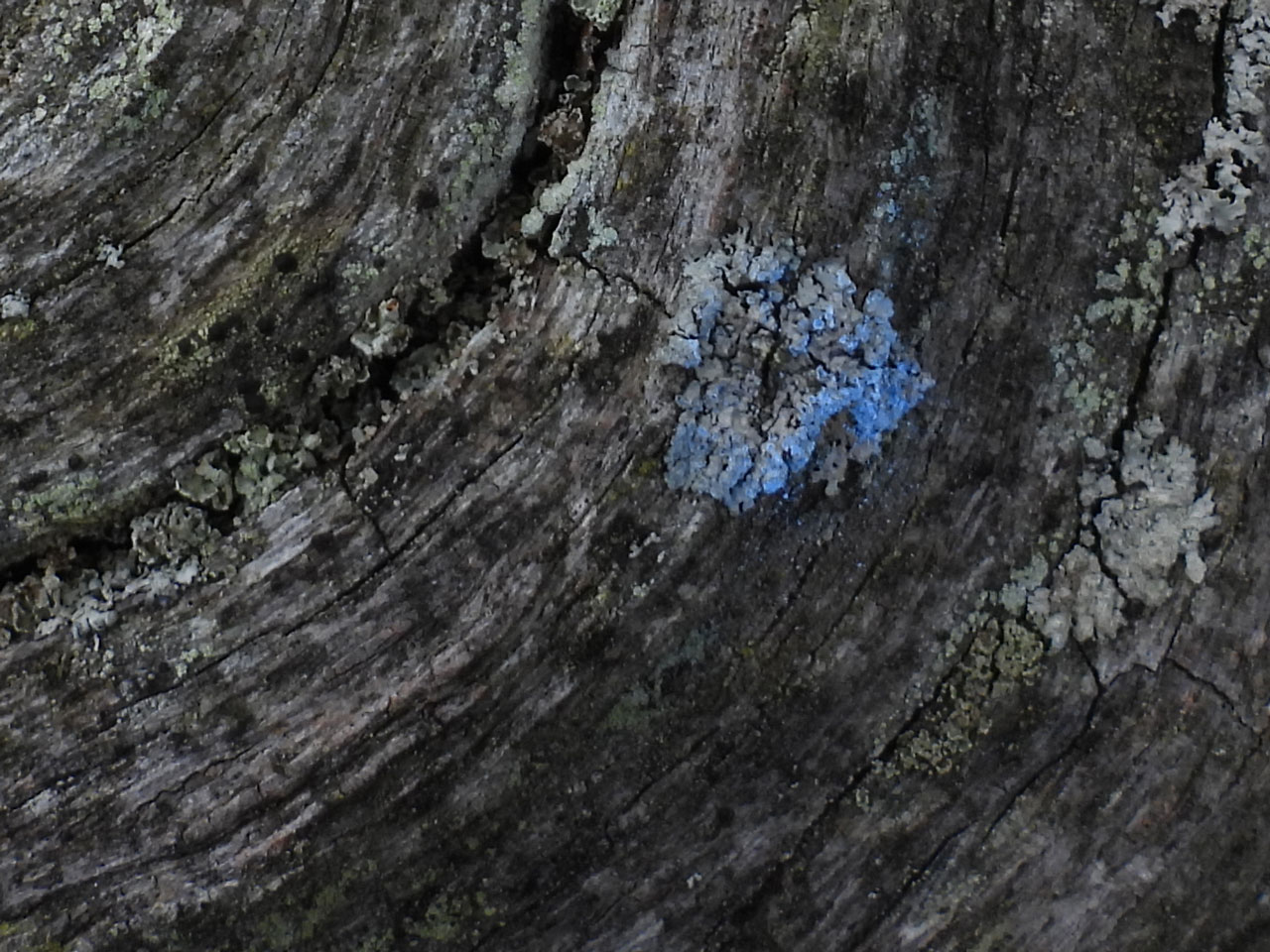
A grey small leafy lichen, with paler laminal pustular soralia, bursting open like little cauliflowers, the latter are UV+ glaucous-white. Found on acid bark and lignum in woodlands and frequent in the Scottish Highlands. Occasional in the uplands to the south and rare in the south.
Like Parmeliopsis ambigua but thallus grey or blue-grey, the upper surface with scattered to contiguous laminal white to blue-grey-white pustular soralia, bursting open like little cauliflowers; soredia granular. Cortex K+ weakly yellow; medulla C–, K–, KC–, Pd–, UV+ glaucous-white (atranorin and divaricatic acid).
Thalli of Imshaugia aleurites with damaged and eroded isidia could be confused with Parmeliopsis hyperopta, and the two species acn befound together on weathgered hard lignum, that species is most easily separated by the presence of isidia instead of pustular soredia and the UV– medulla, and it also has a paler thallus, ellipsoidal ascospores, shorter and partly swollen conidia and a K+ orange and Pd+ orange medullary reaction (thamnolic acid). Physcia clementei has a white lower surface and soredia that arise from isidia rather than pustules.
Mainly restricted to bark of old conifers, also occasionally on acid-barked, broad-leaved trees (e.g. Birch, Oak), also on natural acid lignum and wood palings in open, dry woodlands; local. Declining due to atmospheric ammonia pollution.
Parmeliopsis hyperopta has not shown the same recent, rapid spread that occurred in P. ambigua in response to changes in SO2 pollution levels, and was likley long present in the south as a possibly relict species in old growth woodland and on wooden palings in deer parks. It also extends futher west and into temperate rainforests, where the small thalli can easily be overlooked on acid bark on broadleaved trees.
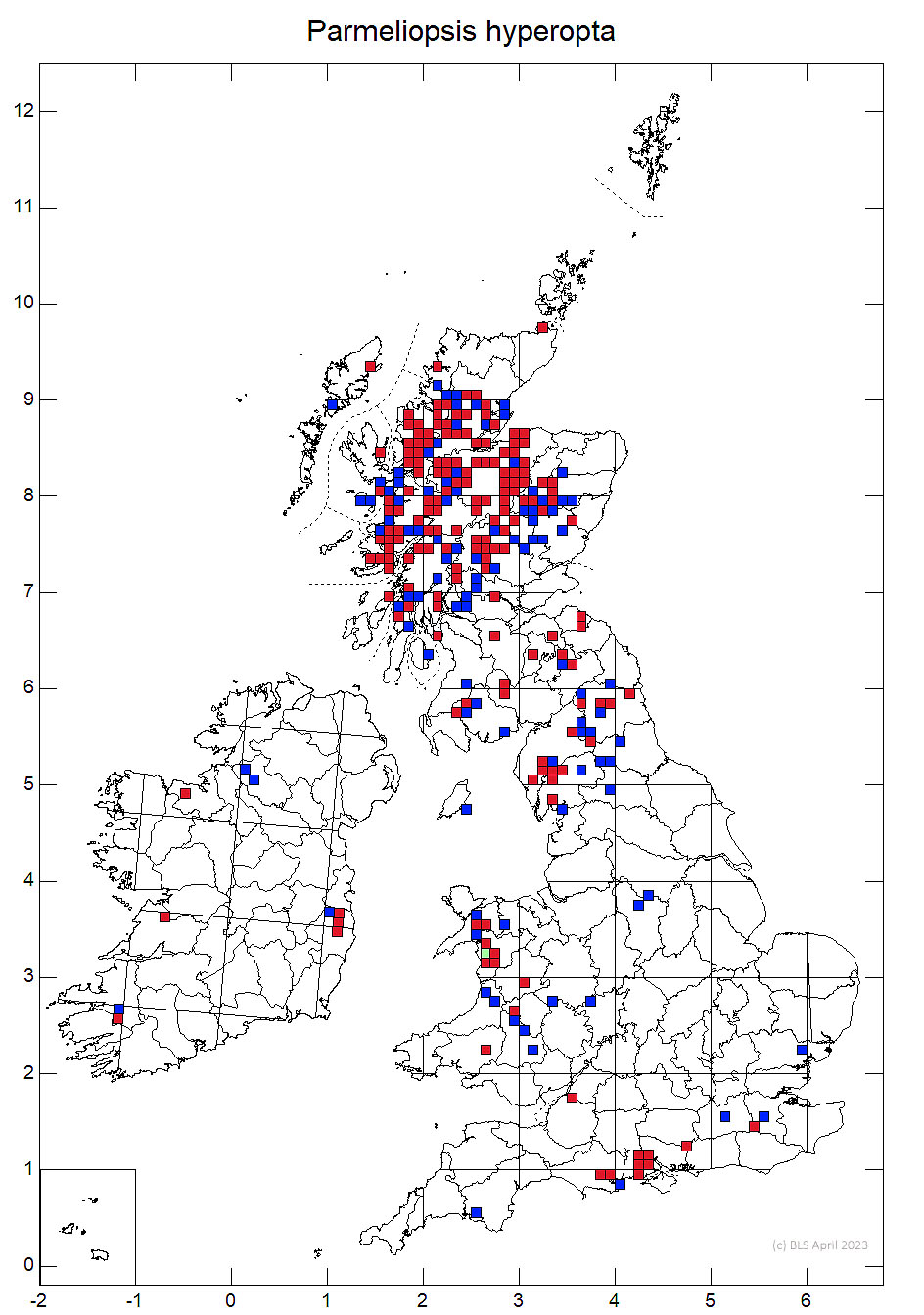

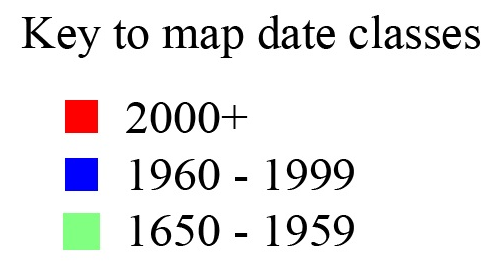
Frequent in the Scotland (Highlands), local N. England, Wales, extending locally to S. England but very rare in Ireland.
Cannon, P., Divakar, P., Yahr, R., Aptroot, A., Clerc, P., Coppins, B., Fryday, A., Sanderson, N. & Simkin, J. (2023). Lecanorales: Parmeliaceae, including the genera Alectoria, Allantoparmelia, Arctoparmelia, Brodoa, Bryoria, Cetraria, Cetrariella, Cetrelia, Cornicularia, Evernia, Flavocetraria, Flavoparmelia, Hypogymnia, Hypotrachyna, Imshaugia, Melanelia, Melanelixia, Melanohalea, Menegazzia, Montanelia, Nesolechia, Parmelia, Parmelina, Parmeliopsis, Parmotrema, Platismatia, Pleurosticta, Protoparmelia, Pseudephebe, Pseudevernia, Punctelia, Raesaenenia, Tuckermannopsis, Usnea, Vulpicida and Xanthoparmelia. Revisions of British and Irish Lichens 33: 1-98.
Text by Neil A Sanderson based on Cannon et al (2023)