Mycoblastus alpinus
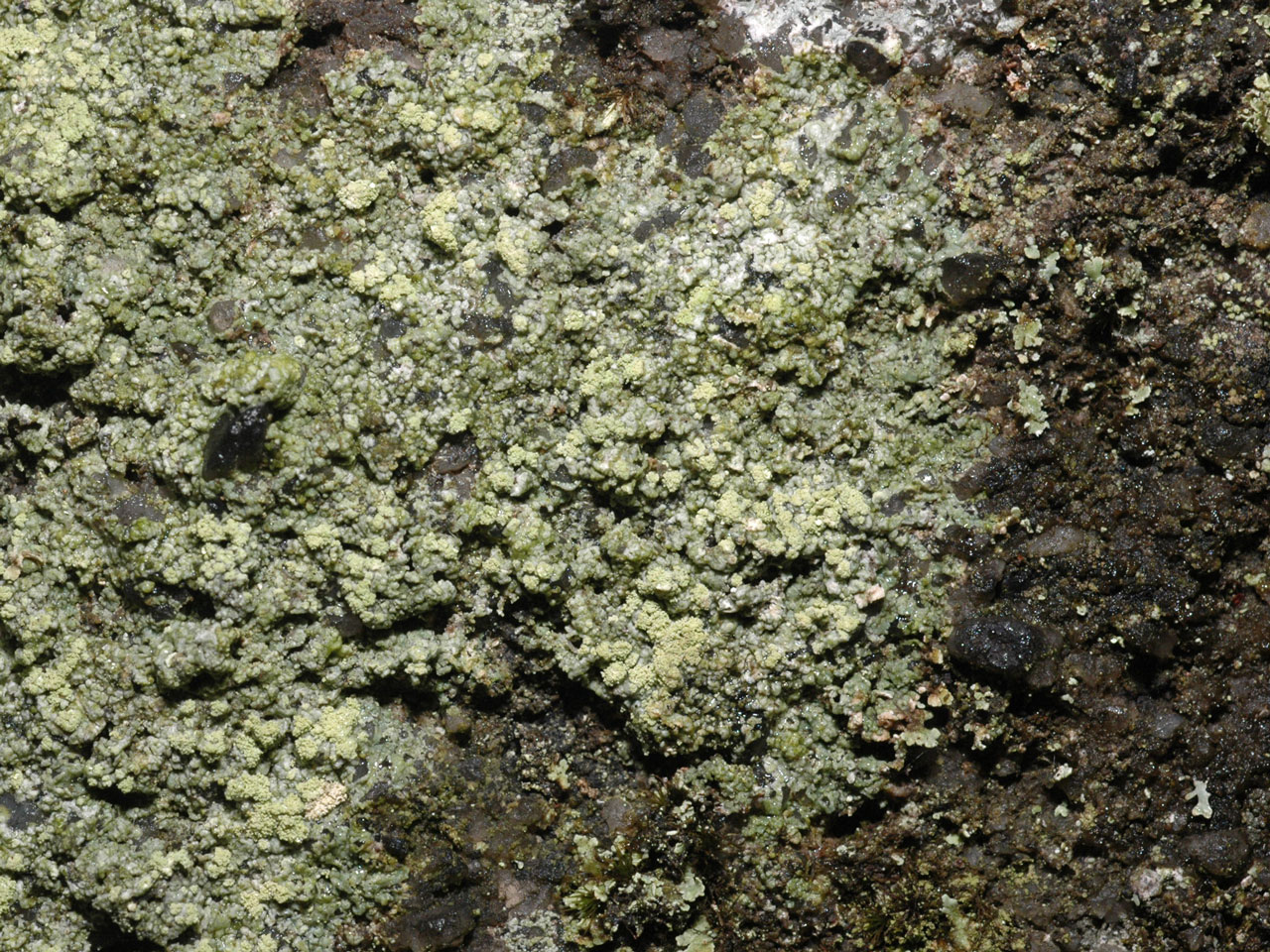
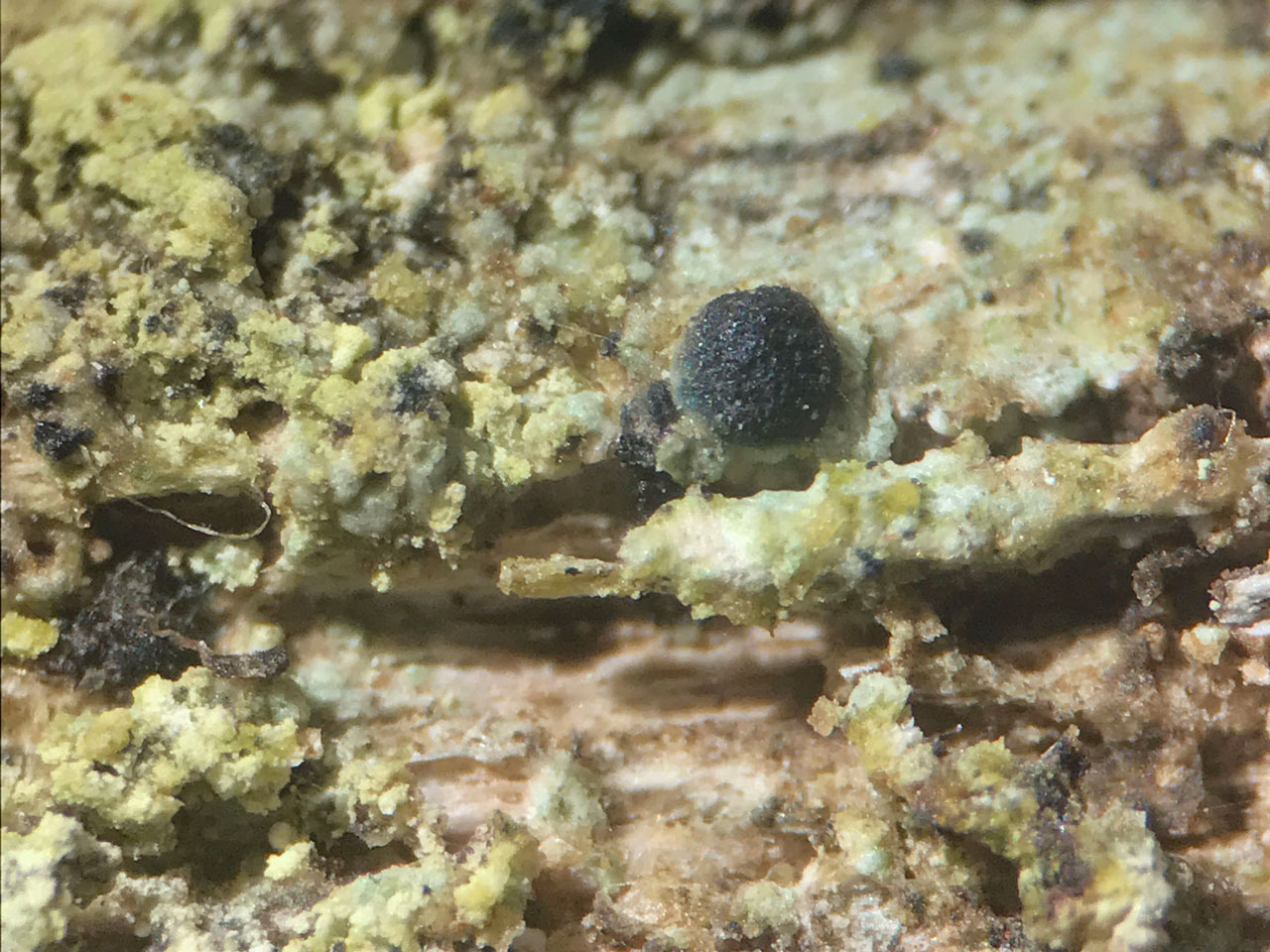
A scarce lichen of lignum in old woods and vertical slabs of acid rock found in north Wales, northern England and Scotland. Likely to be a mainly sterile sorediate morph of Mycoblastus affinis. Characterised by a grey thallus with low warts with bright or citrine-yellow punctiform soralia bursting from the low warts, often becoming efflorescent and forming irregular granular-sorediate patches.
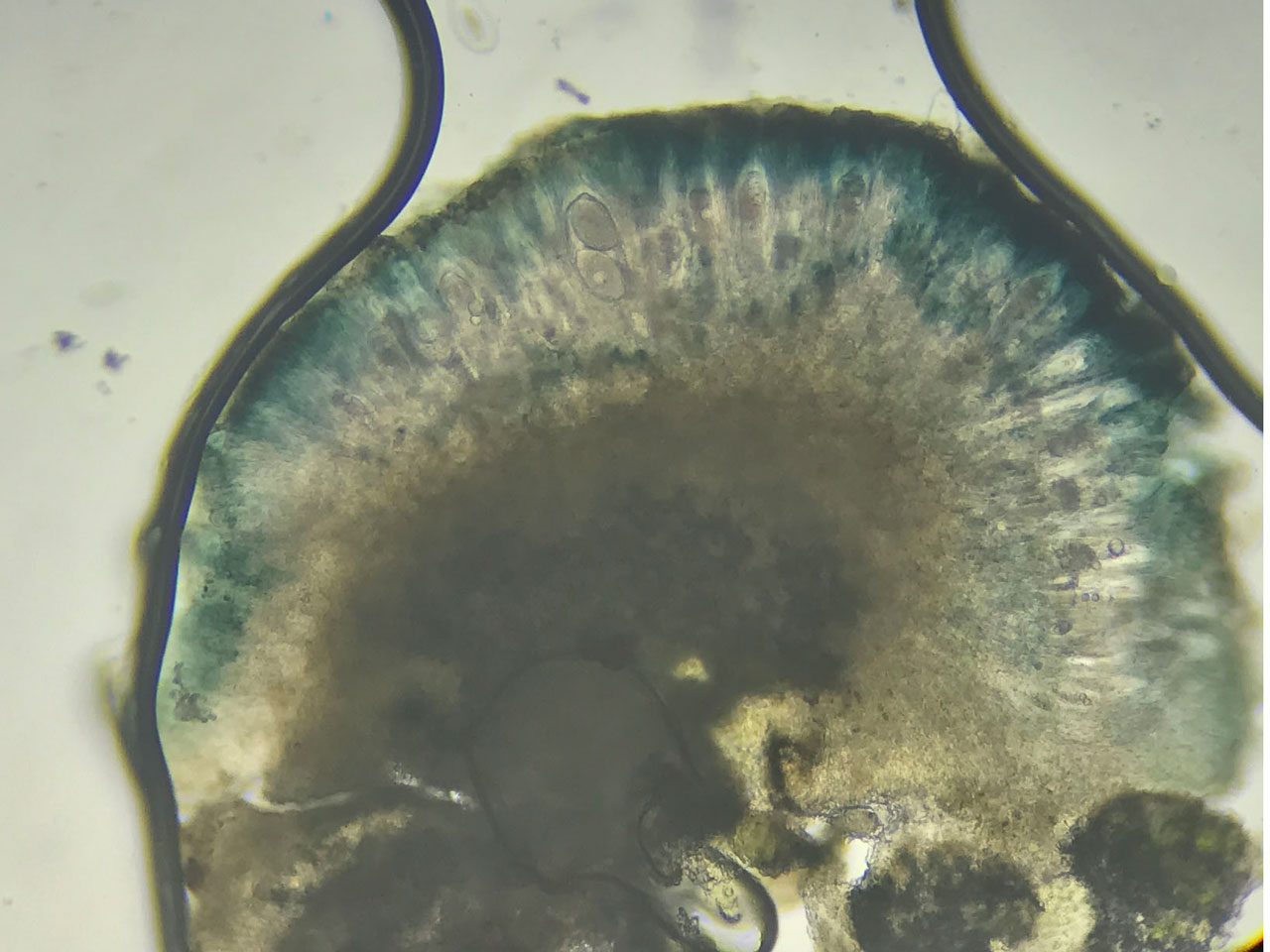
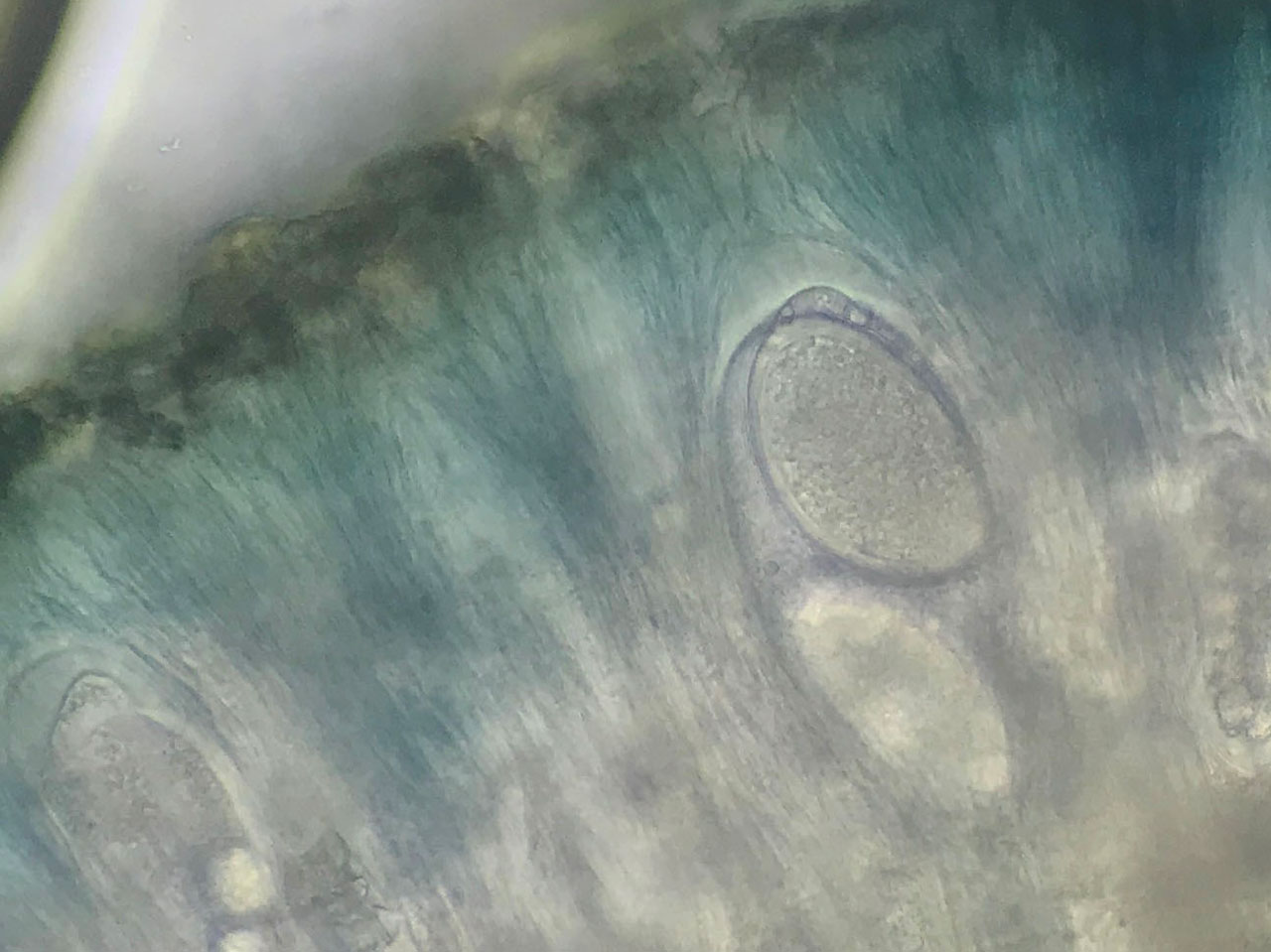
Thallus ± spreading, film-like, effuse, with scattered to contiguous grey, low warts; prothallus grey to blackish; soralia at first scattered, punctiform, bright or citrine-yellow, bursting from low warts, often becoming efflorescent and forming irregular granular-sorediate patches, ± covering the entire thallus. Apothecia very rare, bluish black, glossy, < 1 mm diam., similar to those in M. affinis. Asci 1-spored, spores 50–80 × 30–38 µm, wall uniformly thickened, 1 or 2 aborted spores often also present in the asci. Thallus C–, K± yellow, KC± yellow, Pd–, UV– (atranorin, planaic acid, usnic acid is restricted to the soralia).
Spribille et al. (2011a, b) found that populations of Mycoblastus alpinus clustered within a strongly supported M. affinis clade, and their separation in Britain merits further study. It appears that the number of spores per ascus and the thickness of the spore wall in the two ‘species’ is not convincingly diagnostic. The thalli of both species have an identical chemistry including atranorin and planaic acid; usnic acid in M. alpinus is strictly confined to the yellow-green soralia in that species. Sparingly sorediate but fertile specimens have sometimes been assigned to M. affinis and suggest that there may be a continuum between the two ‘species.’ Sterile morphs of M. alpinus resemble Ochrolechia inaequatula, which is C+ red.
Lignicolous on fallen pine trunks in native pinewoods, on oak lignum in upland rainforests, or on rocks (north-facing vertical granite crags, or sandstone outcrops).
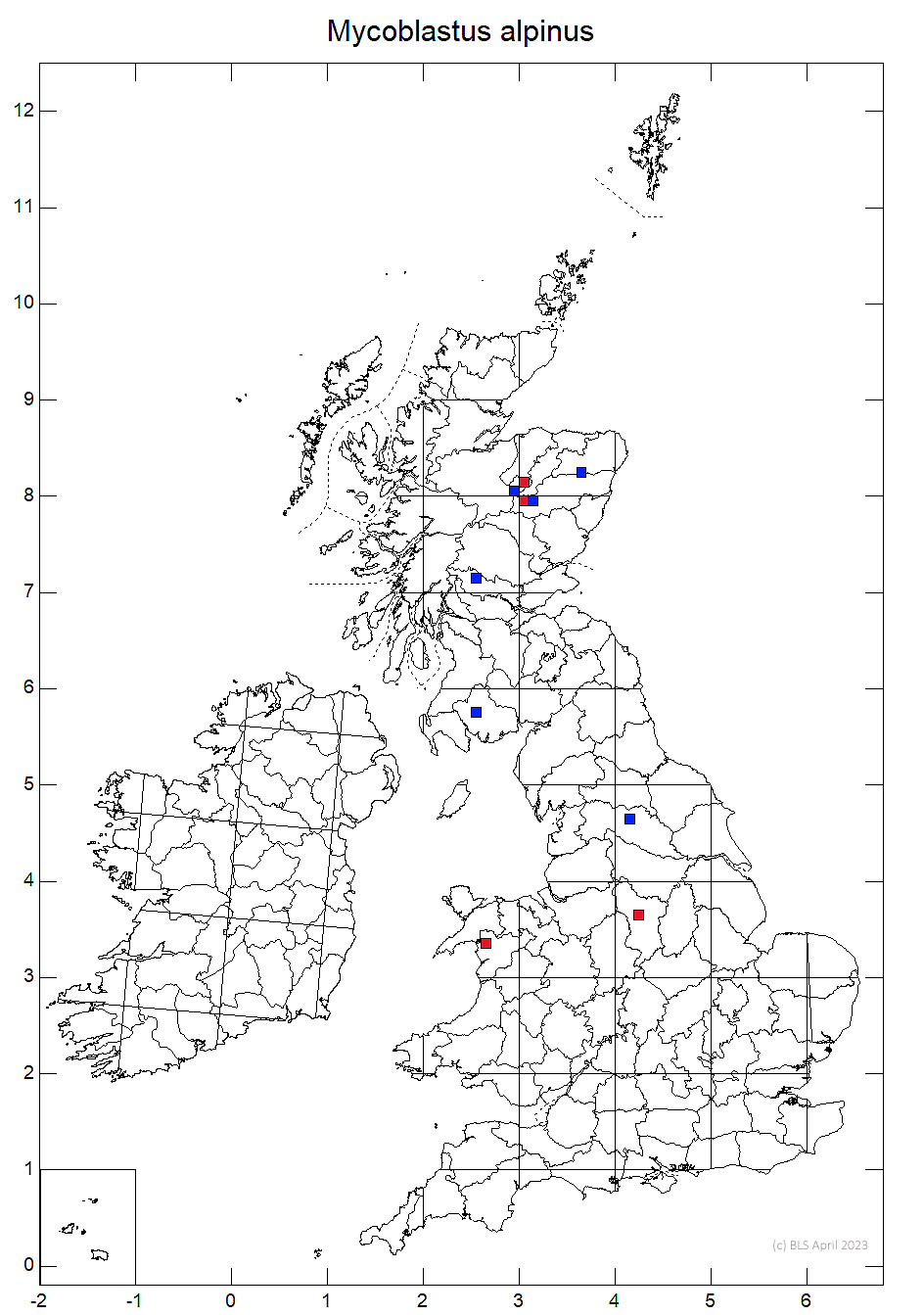


Rare. N.E. & S.W. Scotland (Kirkcudbright), England (Peak District), N. Wales.
Very thinnly distibuted and scarce but proabaly overlooked to an extent.
Britain: Notable
Scotland: Priority Taxon for Biodiversity in Scotland
Cannon, P., Aptroot, A., Coppins, B., Orange, A., Sanderson, N. & Simkin, J. (2022). Lecanorales: Tephromelataceae, including the genera Calvitimela, Mycoblastus, Tephromela and Violella. Revisions of British and Irish Lichens 29: 1-10.
Spribille, T., Goffinet, B., Klug, B., Muggia, L., Obermayer, W. & Mayrhofer, H. (2011a). Molecular support for the recognition of the Mycoblastus fucatus group as the new genus Violella (Tephromelataceae, Lecanorales). Lichenologist 43: 445-466.
Spribille, T., Klug, B. & Mayrhofer, H. (2011b). A phylogenetic analysis of the boreal lichen Mycoblastus sanguinarius (Mycoblastaceae, lichenized Ascomycota) reveals cryptic clades correlated with fatty acid profiles. Molecular Phylogenetics and Evolution 59: 603-614.
Text by Neil A Sanderson based on Cannon et al (2022)