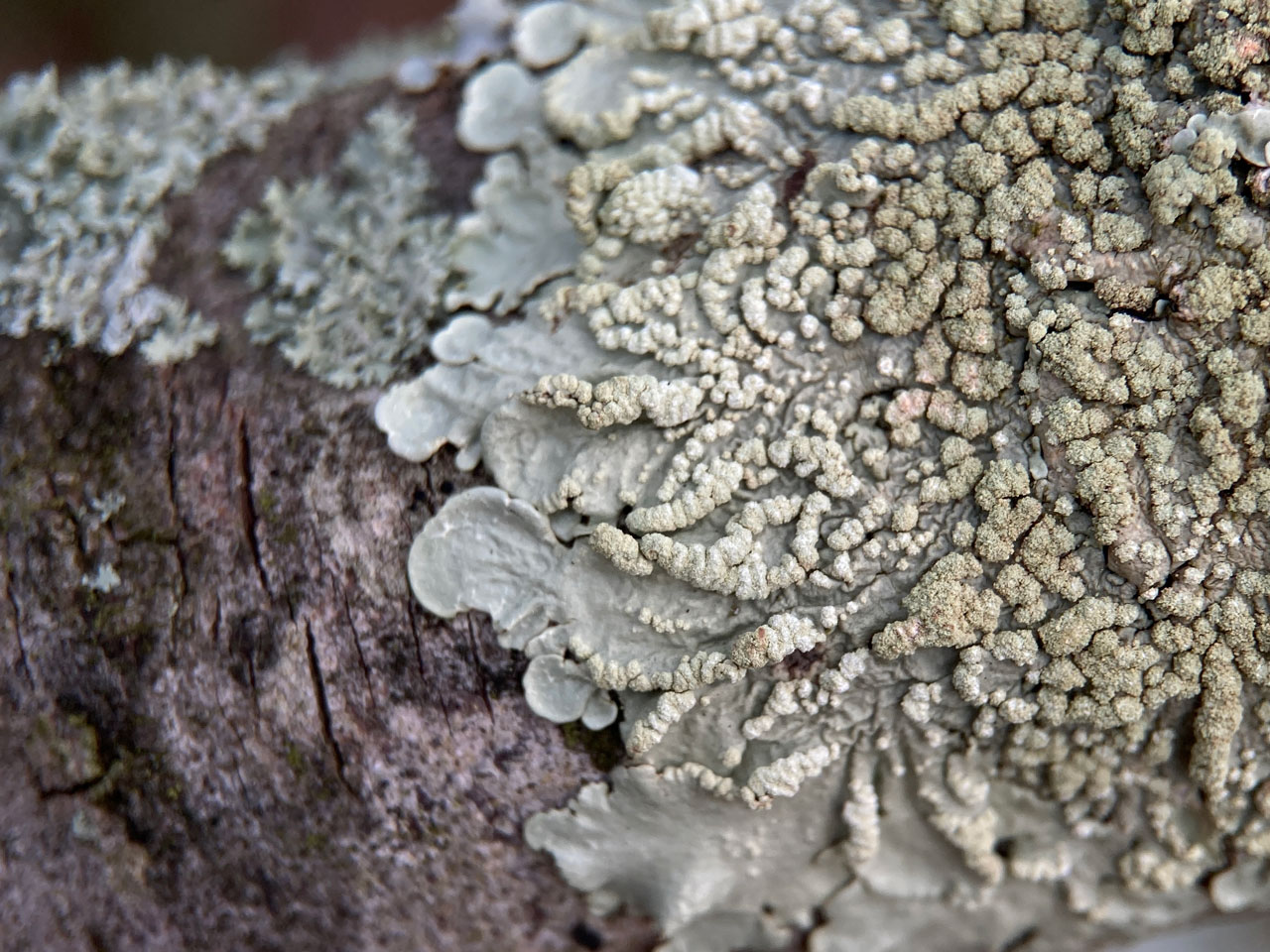
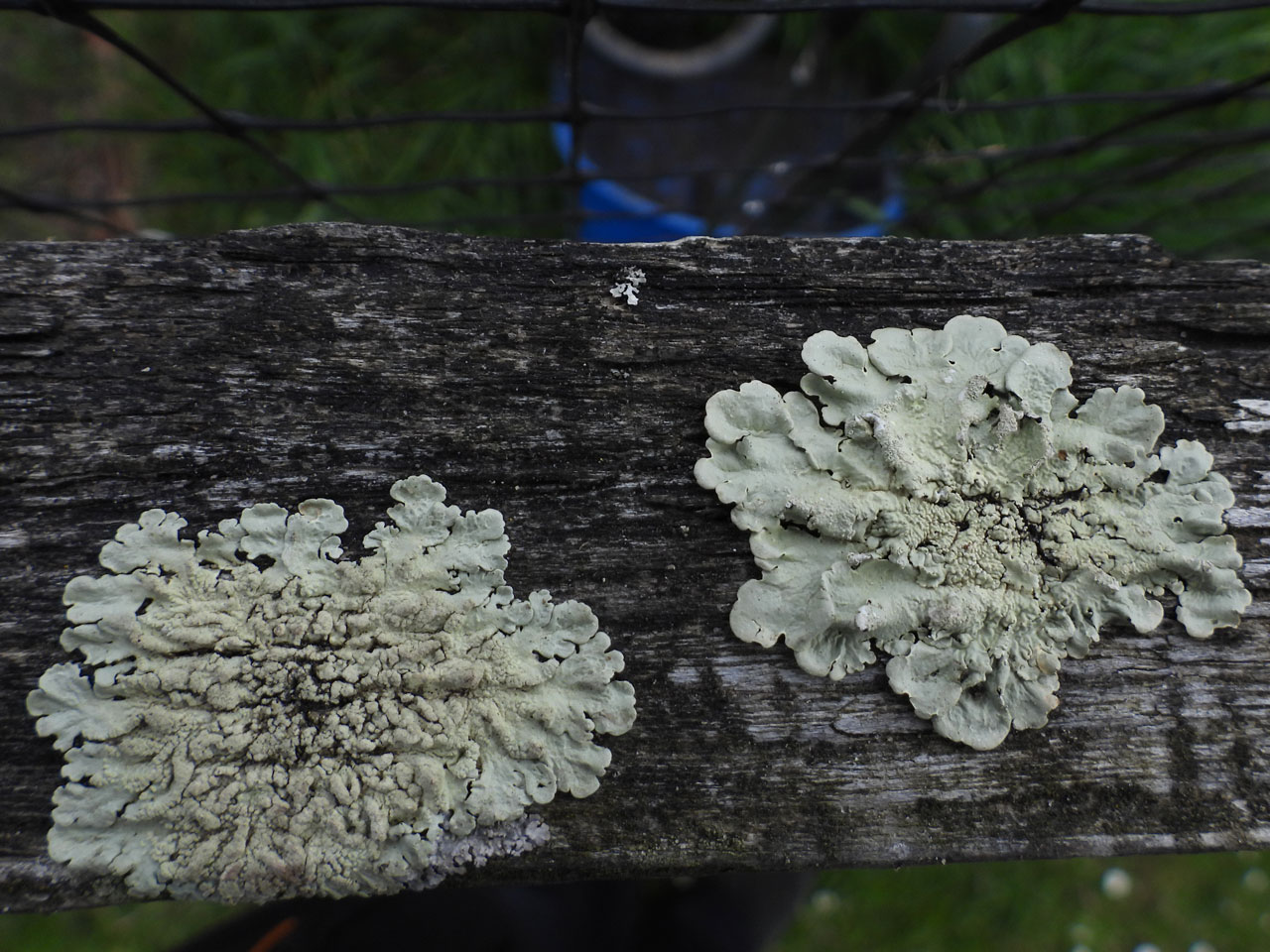
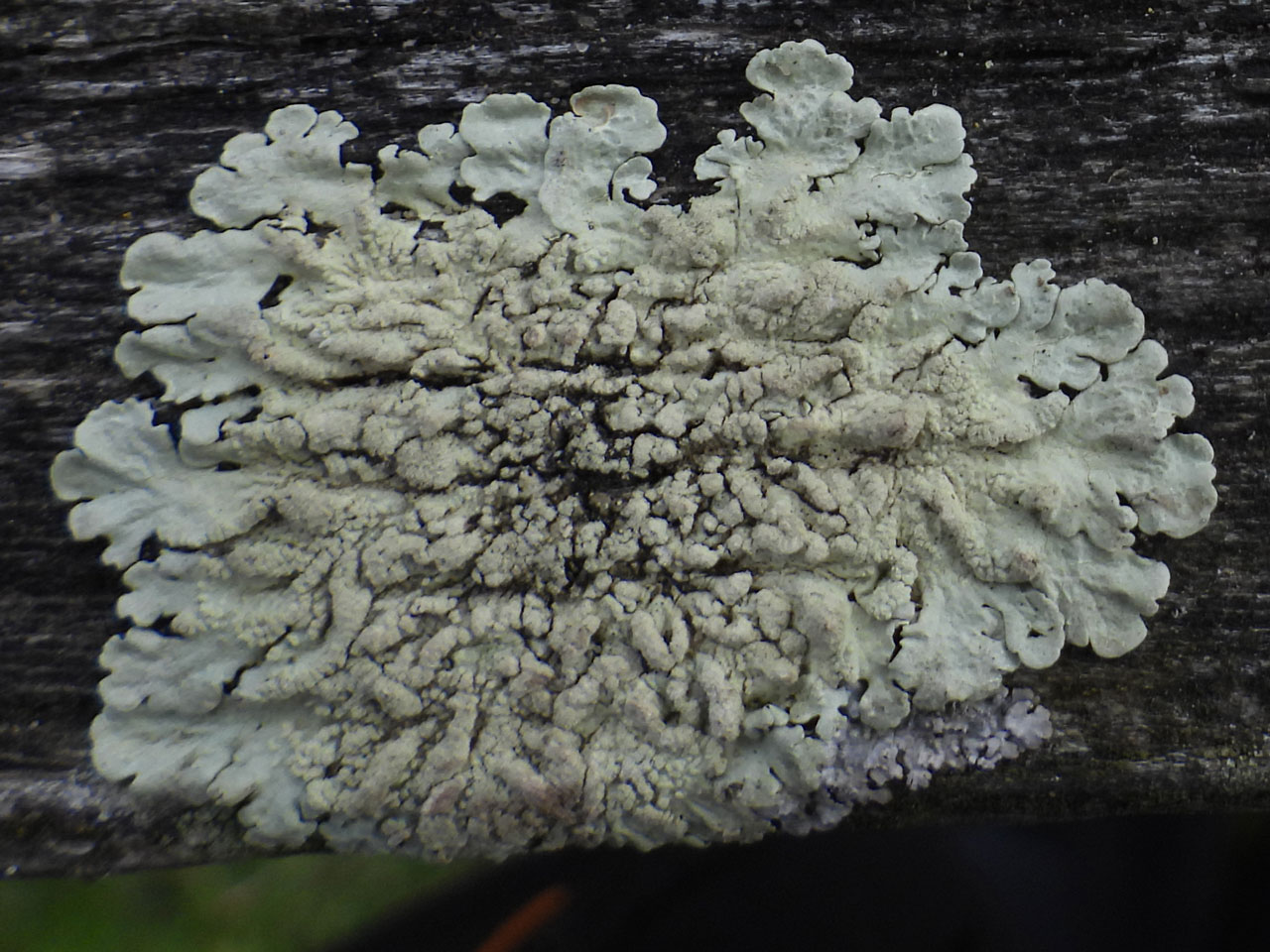
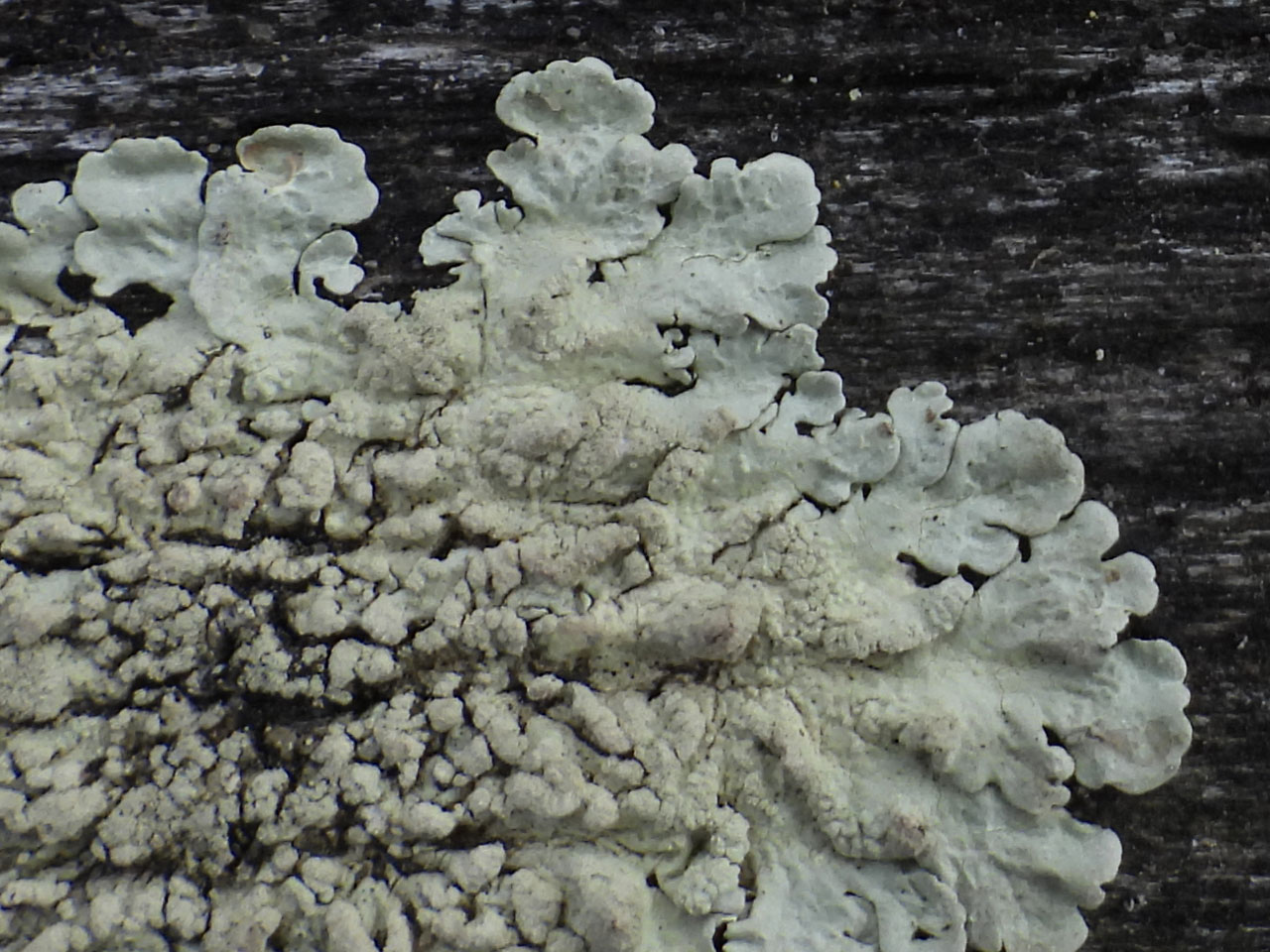
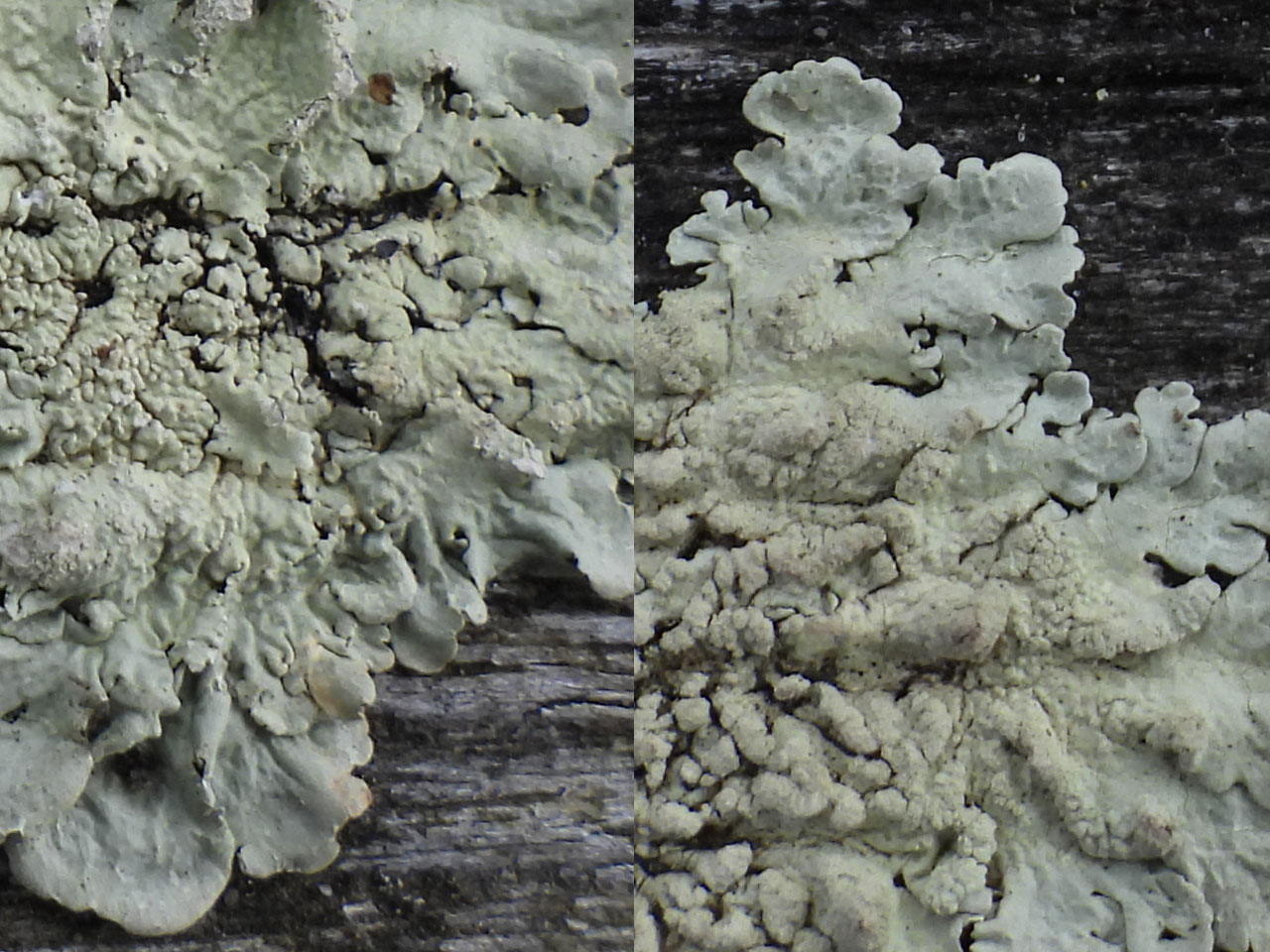
A medium sized Parmelia with a very distinctive slivery yellow-green colour, forming neat rosettes with soralia not arising from pustules. Found mainly on mildly nutrient enriched acid tree bark and worked wood but also siliceous rocks in sunny exposed sites. As an epiphyte, the colour distinguishes it from most species except the commoner Flavoparmelia caperata. The latter is a lager and less neat species with pustular soralia with the soredia coarse and granular and a K- or K+ yellow medulla. A southern species, but currently spreading north rapidly.
Like Flavoparmelia caperata but with a generally smaller thallus in neat rosettes to ca 5 cm diam. (rarely to 10 cm diam.), usually more closely appressed, lobes narrower (to 7 mm broad), becoming congested centrally, soralia not arising from pustules, inconspicuous at first, fusing to form finely sorediate patches; soredia farinose. Apothecia rare, when present usually with mature spores; ca 17–18 × 7–8 µm, ellipsoidal, spore wall ca 1 µm thick. Cortex K–; medulla C–, K+ yellow→red, KC+ red, P+ orange, UV– (usnic and salazinic acids).
Flavoparmelia caperata, has pustular soralia with the soredia coarse and granular and the medulla is K– or K+ dirty yellow (protocetraric acid).
On dry, neutral or ± acid-barked broad-leaved trees, normally somewhat nutrient-enriched, weathered fences, walls and monuments, siliceous rocks in sunny exposed sites, originally restricted near the southern coast, but now also along inland urban roadsides, usually within the Parmelietum revolutae. Often with Flavoparmelia caperata, but that species also thrives in less nutrient-enriched habitats where Flavoparmelia soredians is absent.
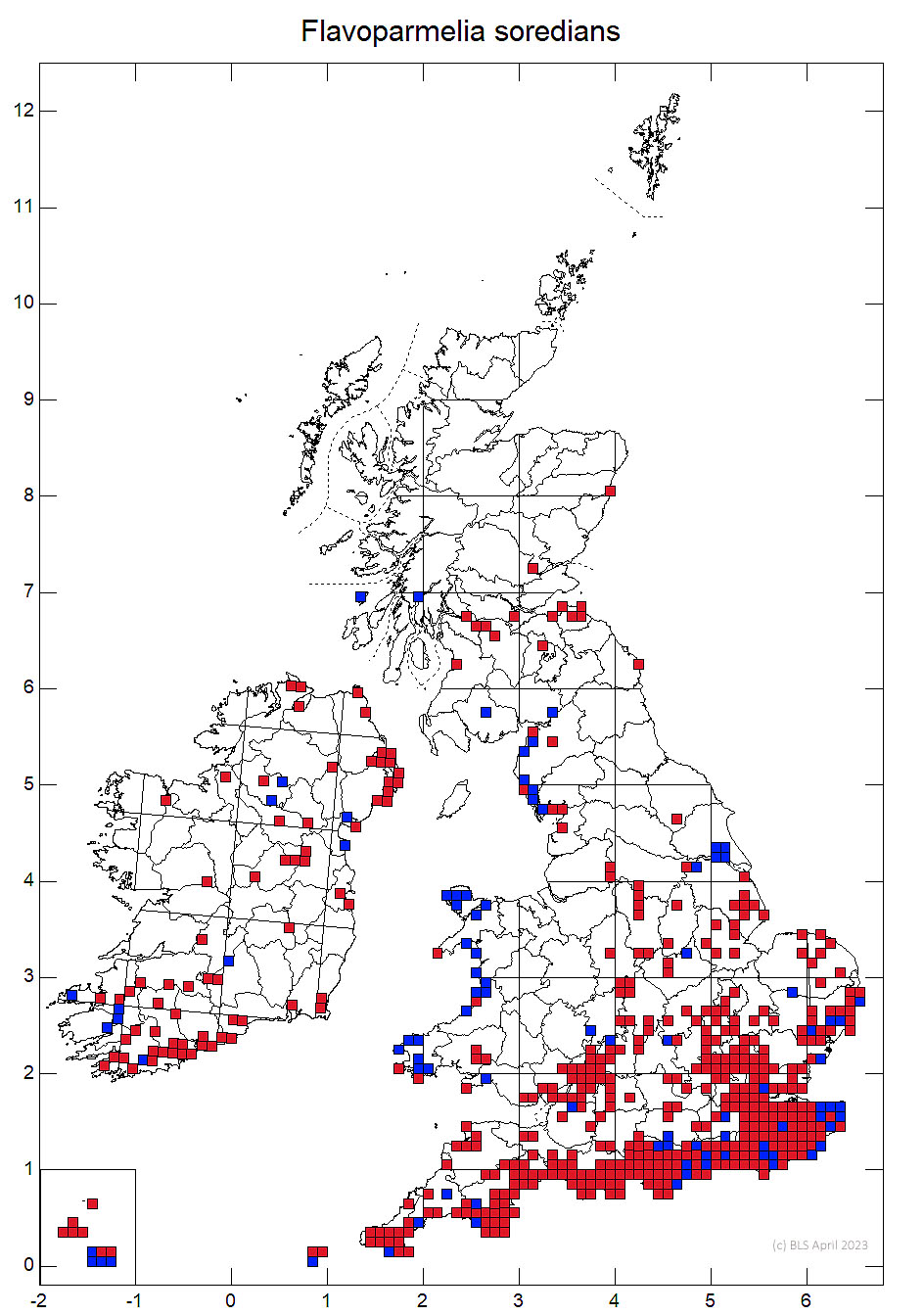


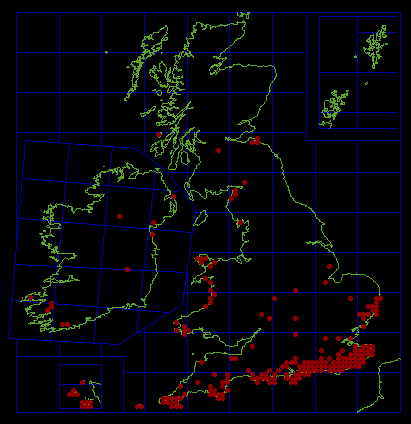
Locally common; southern and central England, S. & W. Wales, extending locally to central and E. Scotland, throughout Ireland, currently rapidly increasing in range, especially in England. A comparison with the 2006 BLS map of Flavoparmelia soredians is interesting, this shows a distribution where, the species is only frequent in the most sunny parts of the south coast and southern west coasts. It has since spread widely into areas that were unpolluted in the late 20th century as well as formerly acidified areas. This appears to be a combined response to declining acidifying air pollution and climate warming.
Cannon, P., Divakar, P., Yahr, R., Aptroot, A., Clerc, P., Coppins, B., Fryday, A., Sanderson, N. & Simkin, J. (2023). Lecanorales: Parmeliaceae, including the genera Alectoria, Allantoparmelia, Arctoparmelia, Brodoa, Bryoria, Cetraria, Cetrariella, Cetrelia, Cornicularia, Evernia, Flavocetraria, Flavoparmelia, Hypogymnia, Hypotrachyna, Imshaugia, Melanelia, Melanelixia, Melanohalea, Menegazzia, Montanelia, Nesolechia, Parmelia, Parmelina, Parmeliopsis, Parmotrema, Platismatia, Pleurosticta, Protoparmelia, Pseudephebe, Pseudevernia, Punctelia, Raesaenenia, Tuckermannopsis, Usnea, Vulpicida and Xanthoparmelia. Revisions of British and Irish Lichens 33: 1-98.