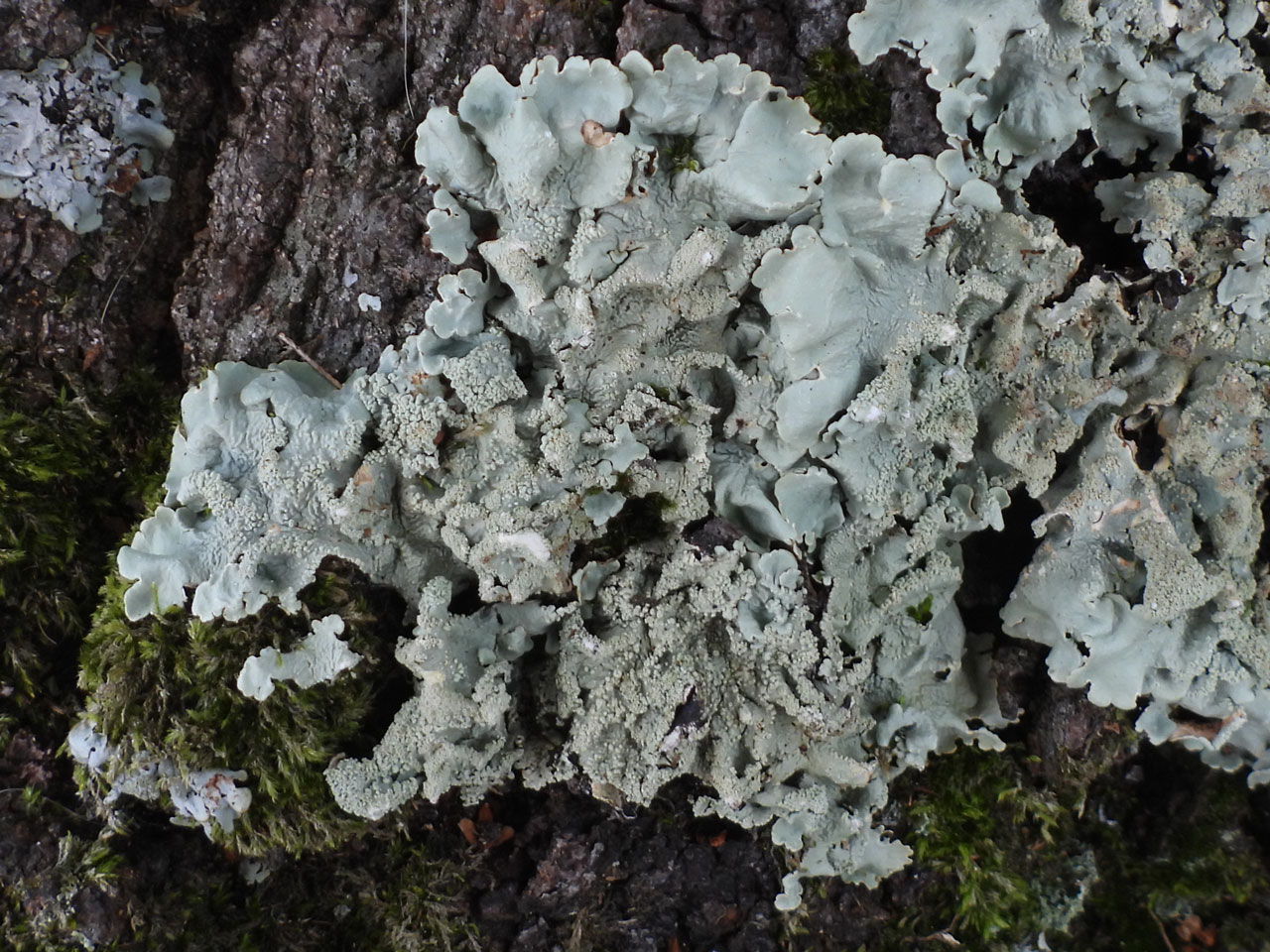
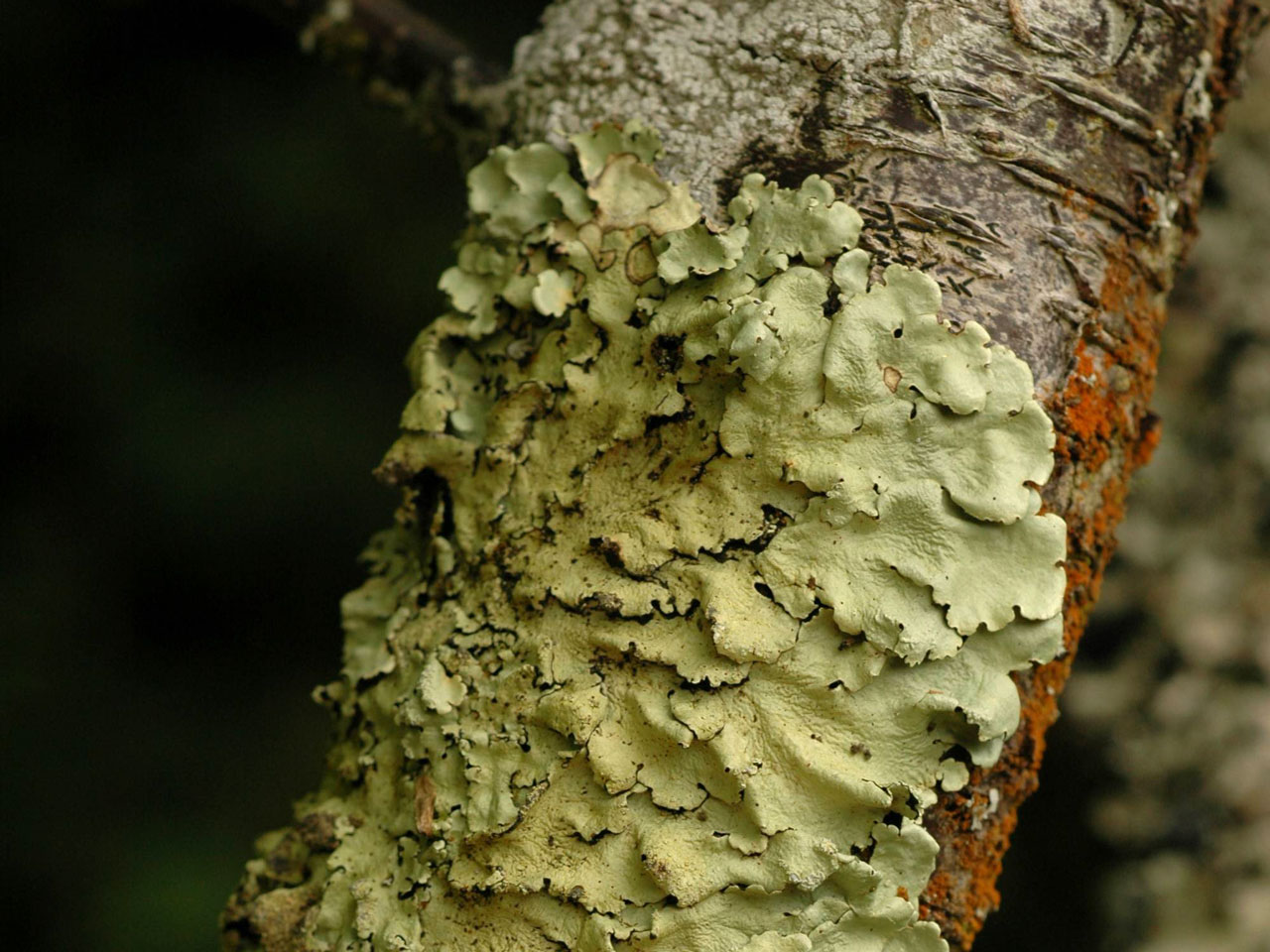
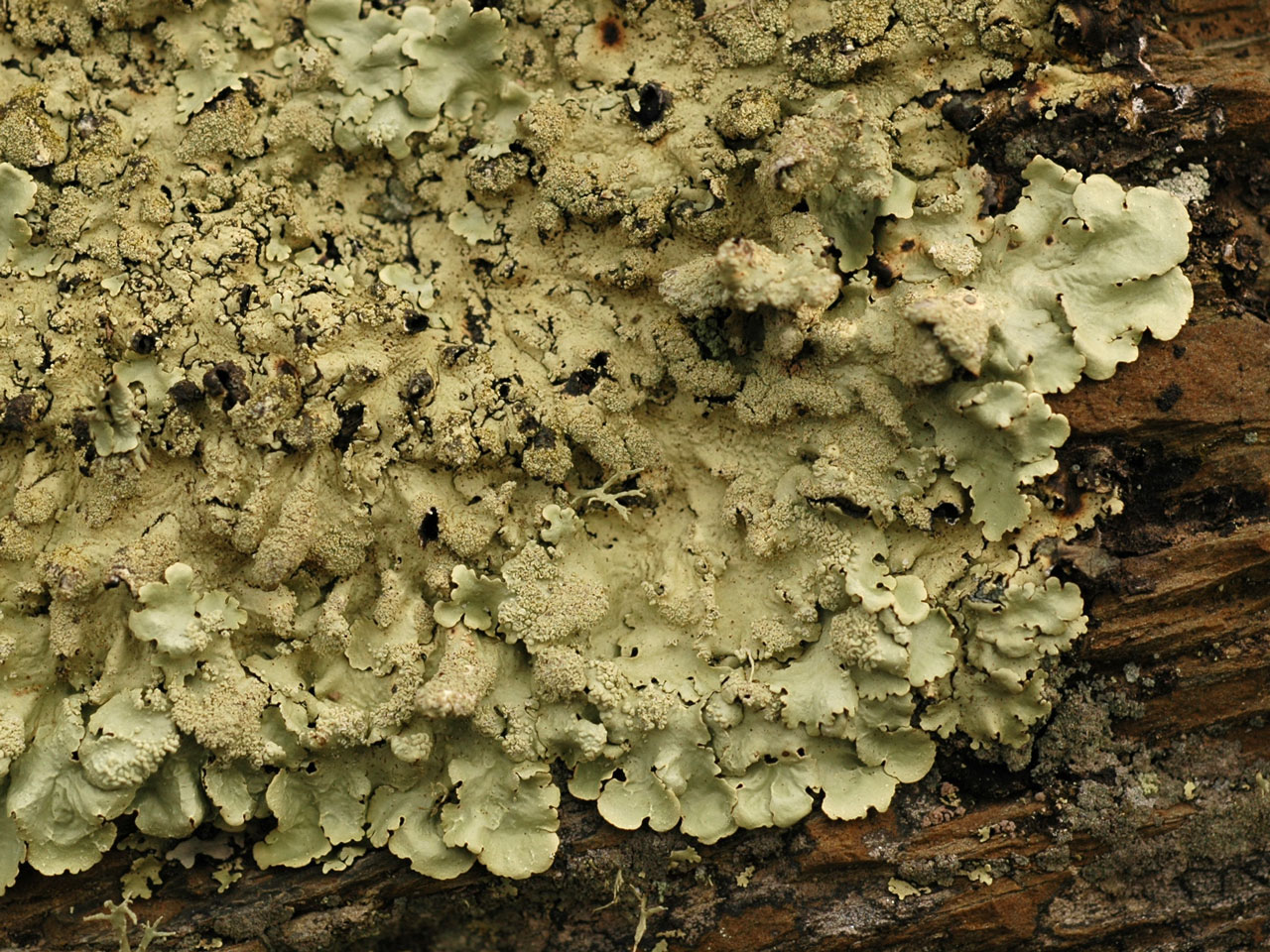
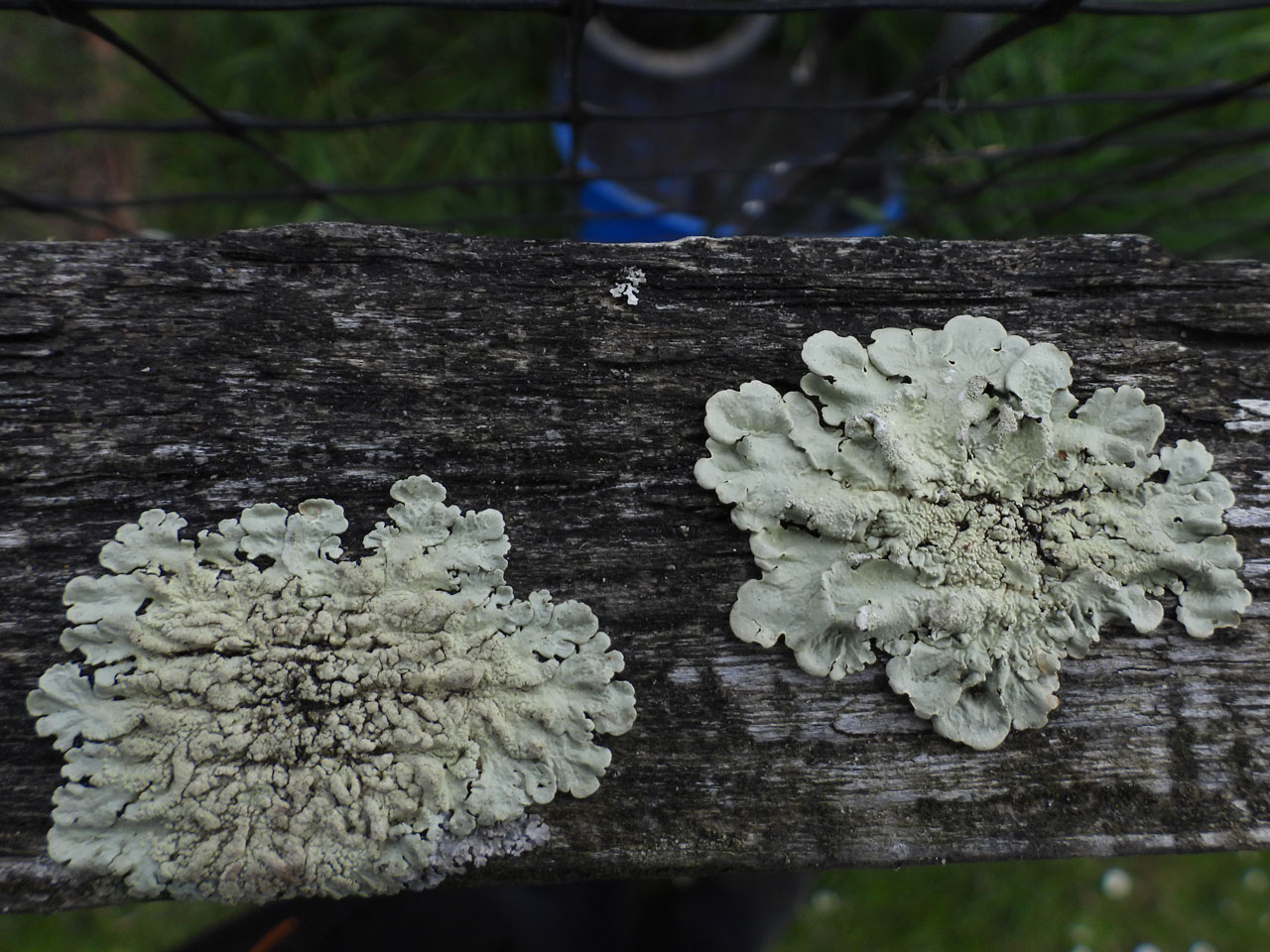
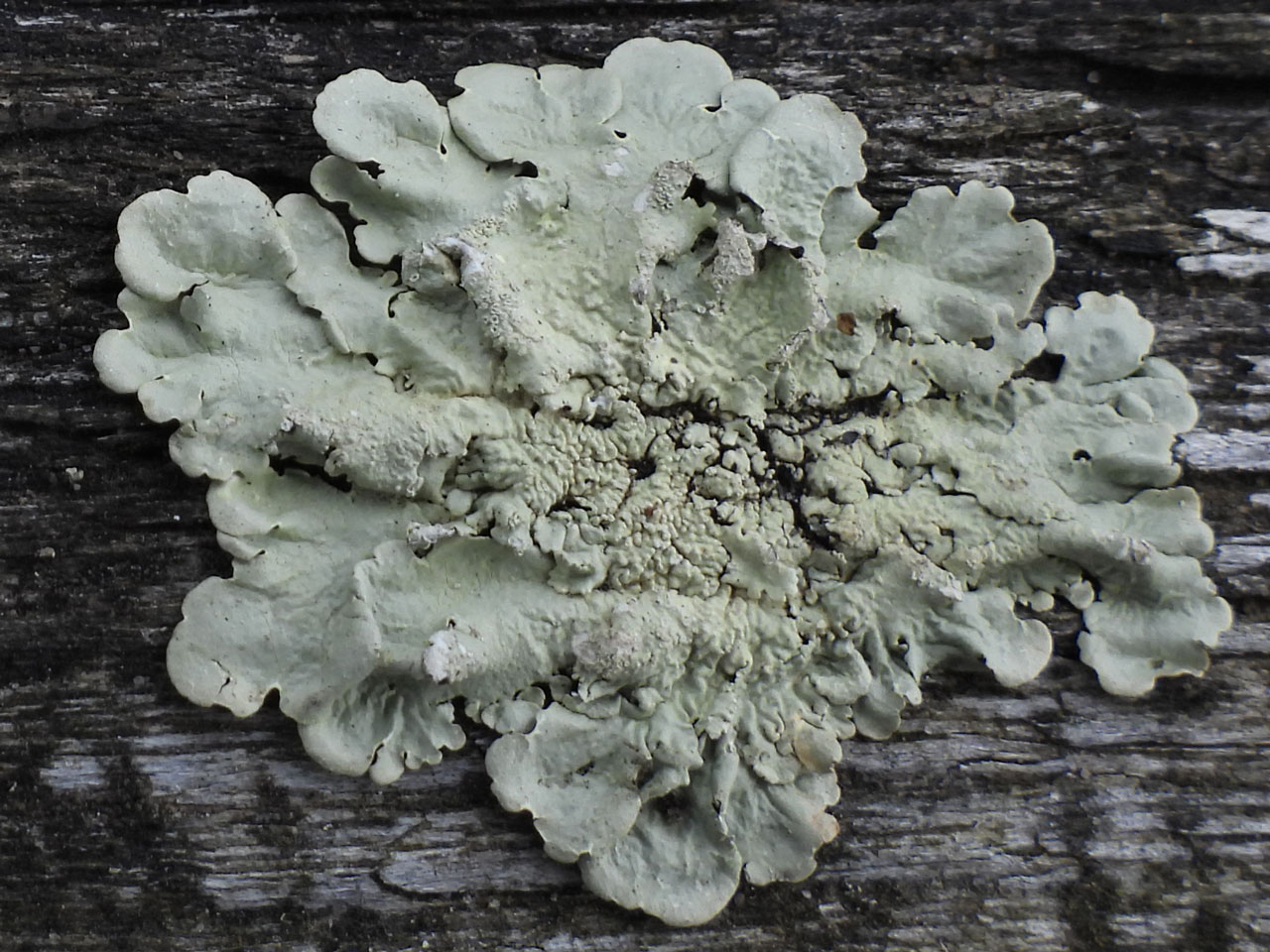
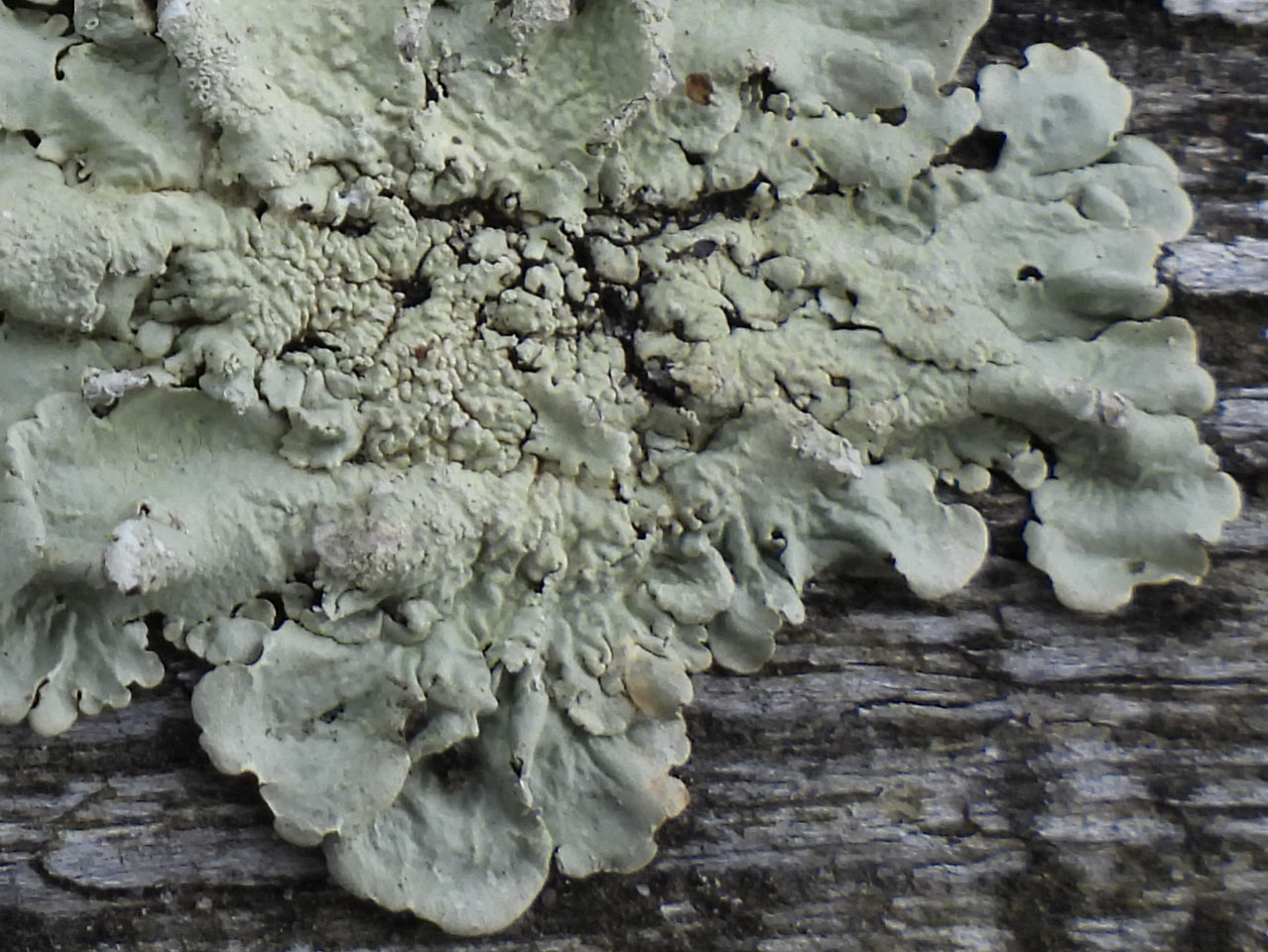
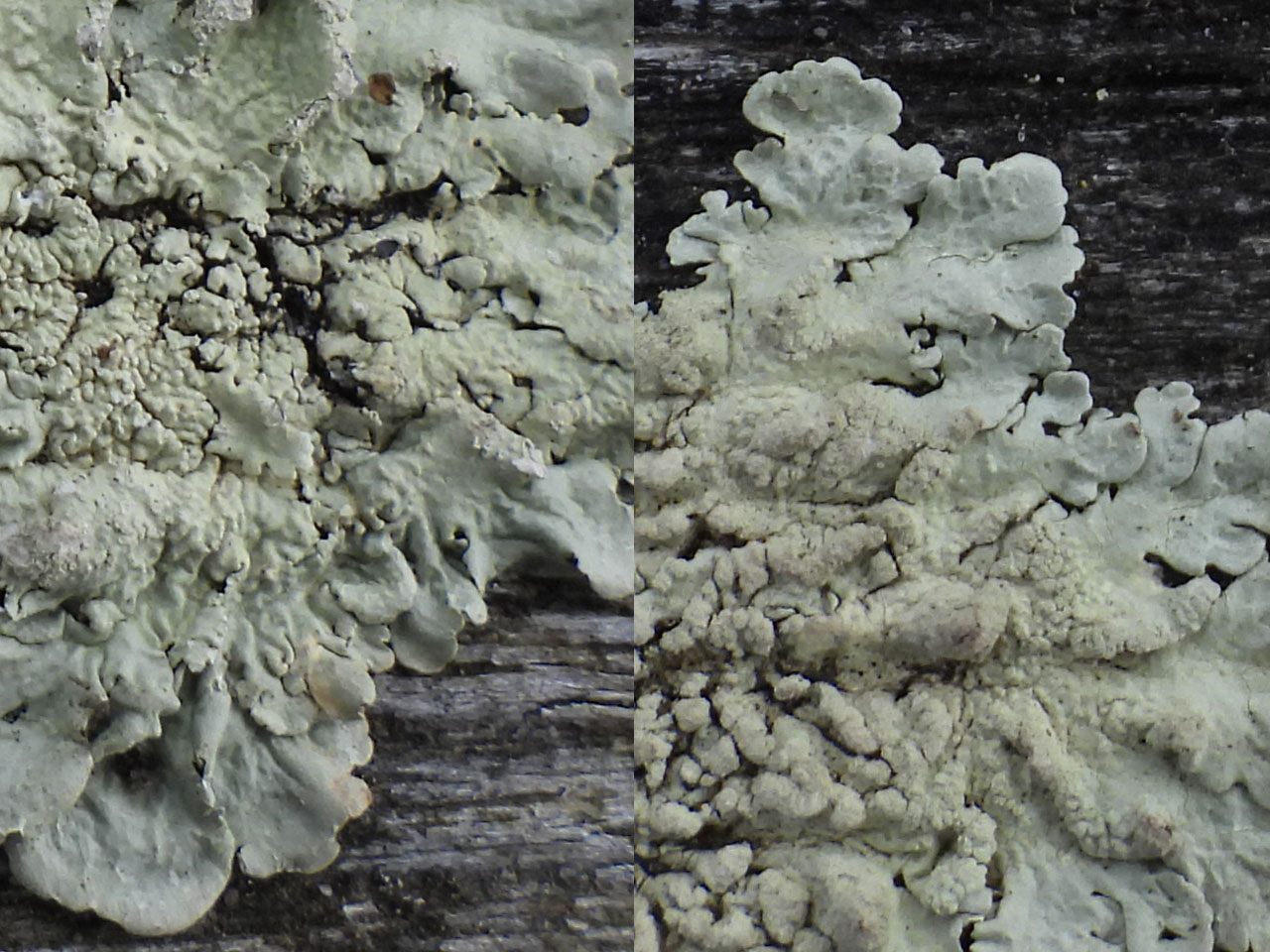
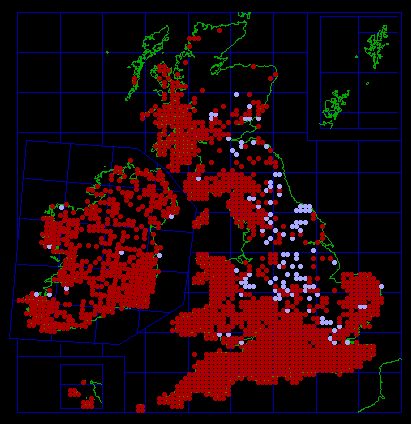
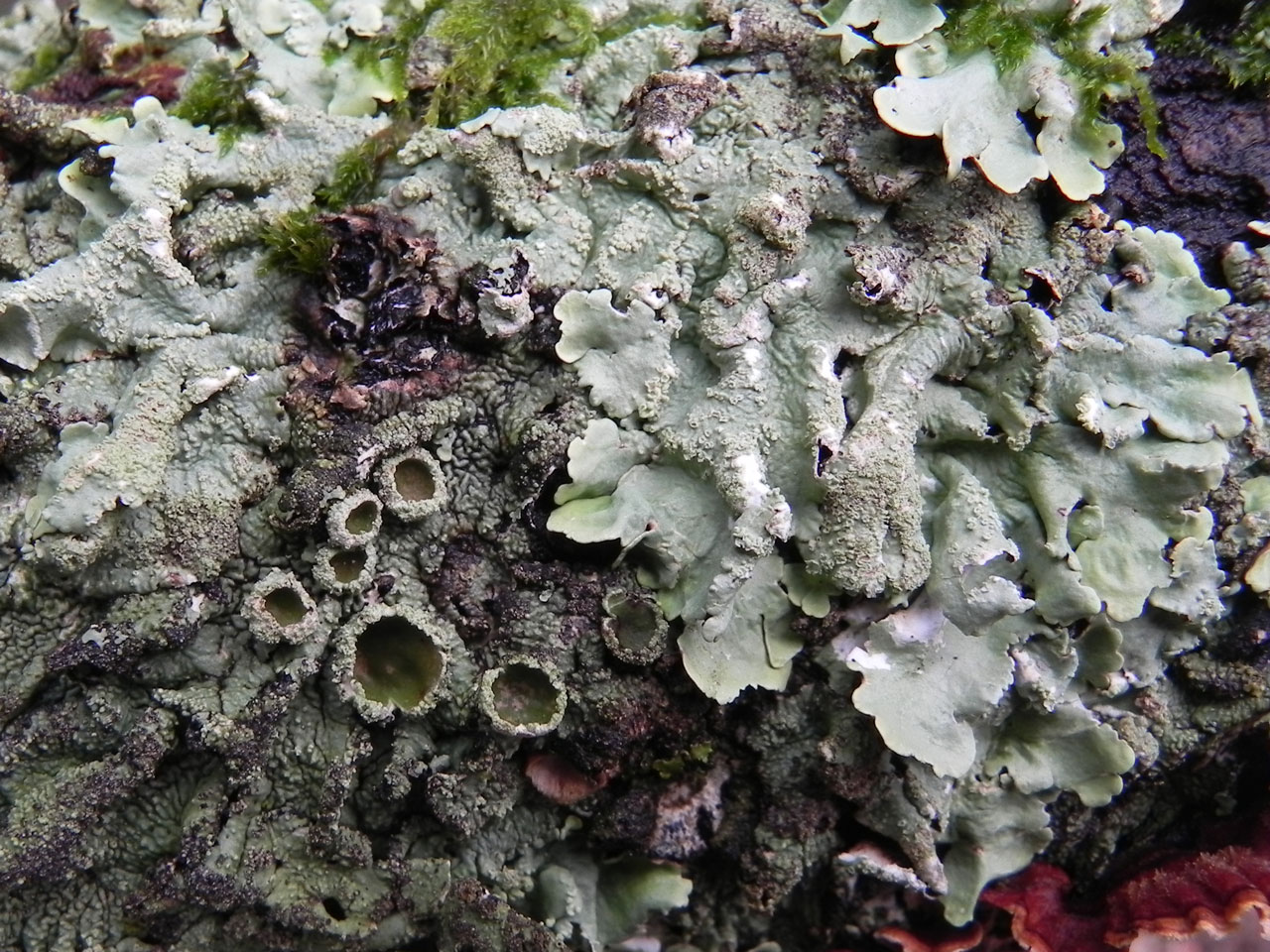
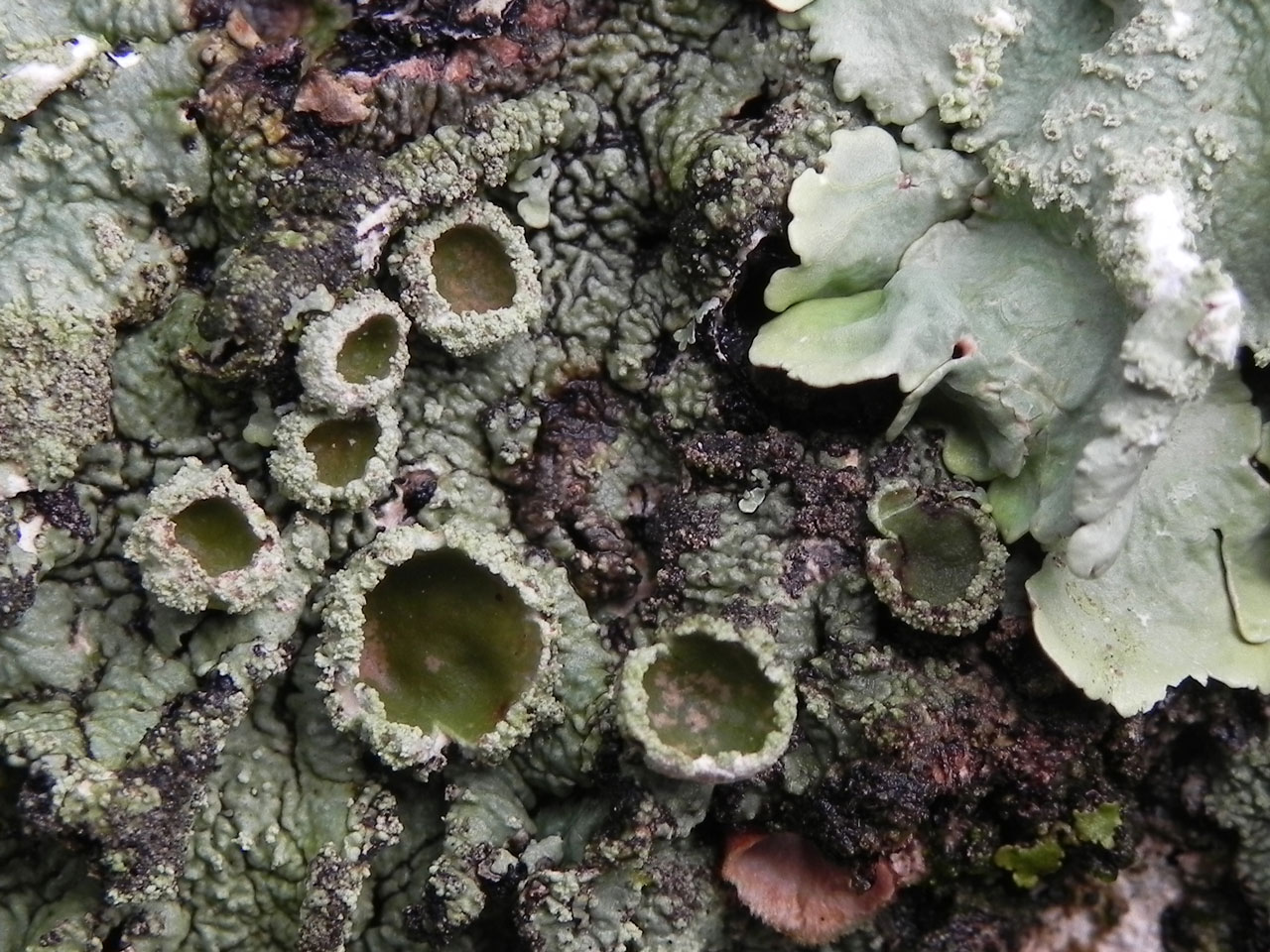
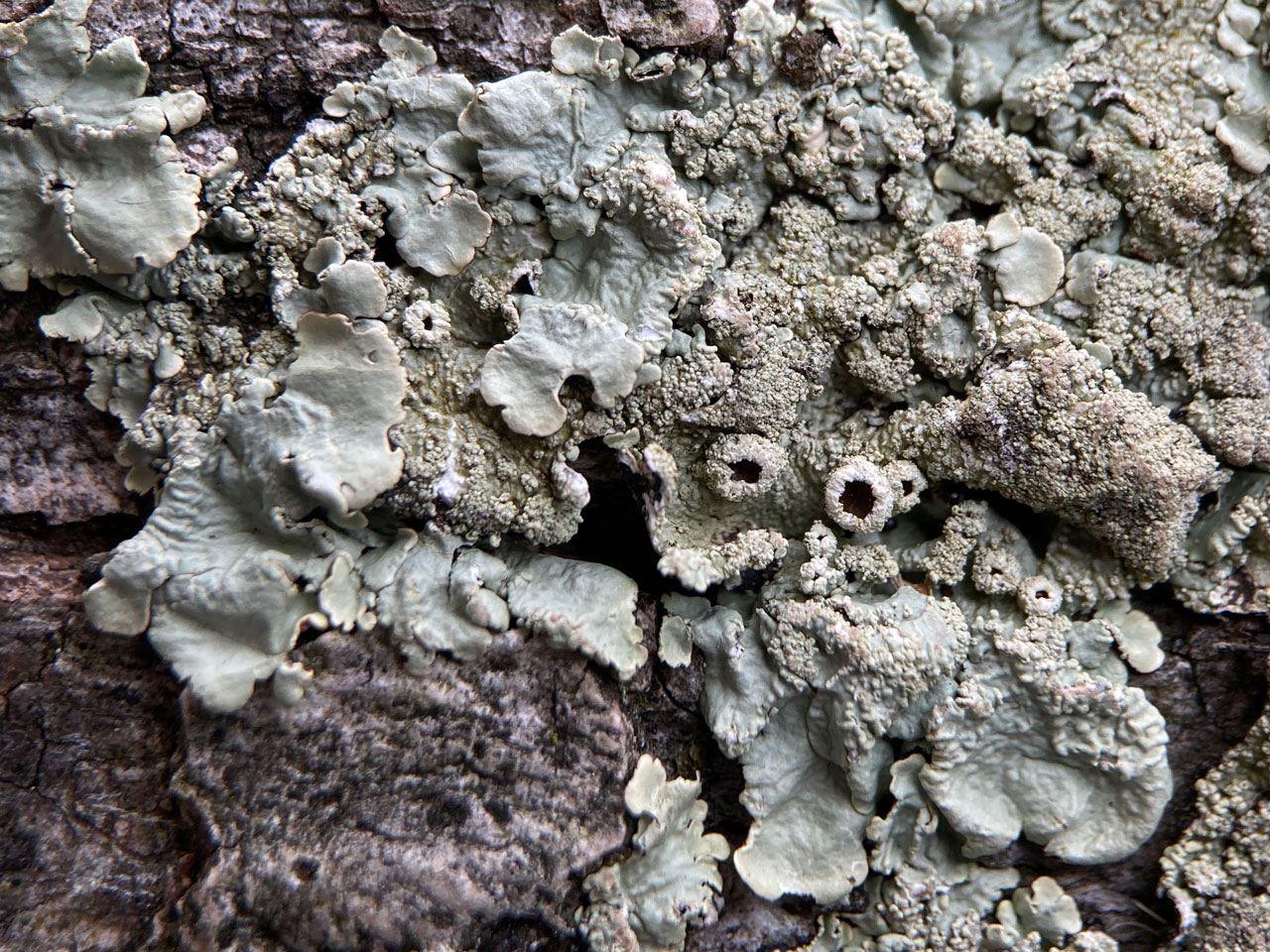
A large Parmelia with a very distinctive slivery yellow-green colour and pustular soralia with coarse and granular soredia, found mainly on mildly acid tree bark. As an epiphyte, the colour distinguishes it from most species except the more southern Flavoparmelia soredians. This has a much neater appearance with soralia that are not pustular with fine and farinose soredia and the medulla is K+ yellow→red. Flavoparmelia caperata is a very common species in the south and west and is absent only in the sub-oceanic areas of Scotland, very polluted areas and upland areas.
Thallus to 20 cm diam., often forming conspicuous, extensive patches, ± closely appressed but becoming somewhat detached towards the centre; lobes 5–13 mm broad, wavy, rounded at the apices, ± separate at tips but overlapping at the centre; margins often indented; upper surface pale yellow-green, occasionally grey-green (in shade), often coarsely corrugate, especially towards the centre, pustulate-sorediate; pustules laminal, initially punctiform and intact, eventually coalescing to form more extensive erose spreading areas; soredia coarse and granular, occasionally adhering and then forming gnarled lumps; lower surface black, brown towards the apices; rhizines absent from a narrow (ca 1 mm wide) zone along the margin. Apothecia rare, to 8 mm diam.; disc red-brown; thalline exciple ± sorediate. Ascospores 15–19 (–22) × (8–) 9–10 µm, ellipsoidal. Pycnidia not seen. Cortex K–; medulla C–, K– or K+ dirty yellow, KC+ red or KC–, P+ orange-red, UV– (usnic, protocetraric and caperatic acids).
Similar to Flavoparmelia soredians, but that has soralia that are not pustular with fine and farinose soredia and the medulla is K+ yellow→red (salazinic acid). Flavoparmelia caperata in contrast has pustular soralia with the soredia coarse and granular and the medulla is K– or K+ dirty yellow (protocetraric acid).
On well-lit ± acid-barked broad-leaved trees, a major species of the Well-lit Mesic Bark Community Parmelietum revolutae, also on conifers, fences, siliceous rocks, memorials, roofing tiles, coastal turf and heath. Dominates well lit branches in areas with low ammonia pollution, declining in cover as levels increase, to be replaced by Xanthoria parietina in badly polluted areas. The change in colour of tree branches from slivery yellow-green to bright yellow can be seen on car journeys across pollution gradients.
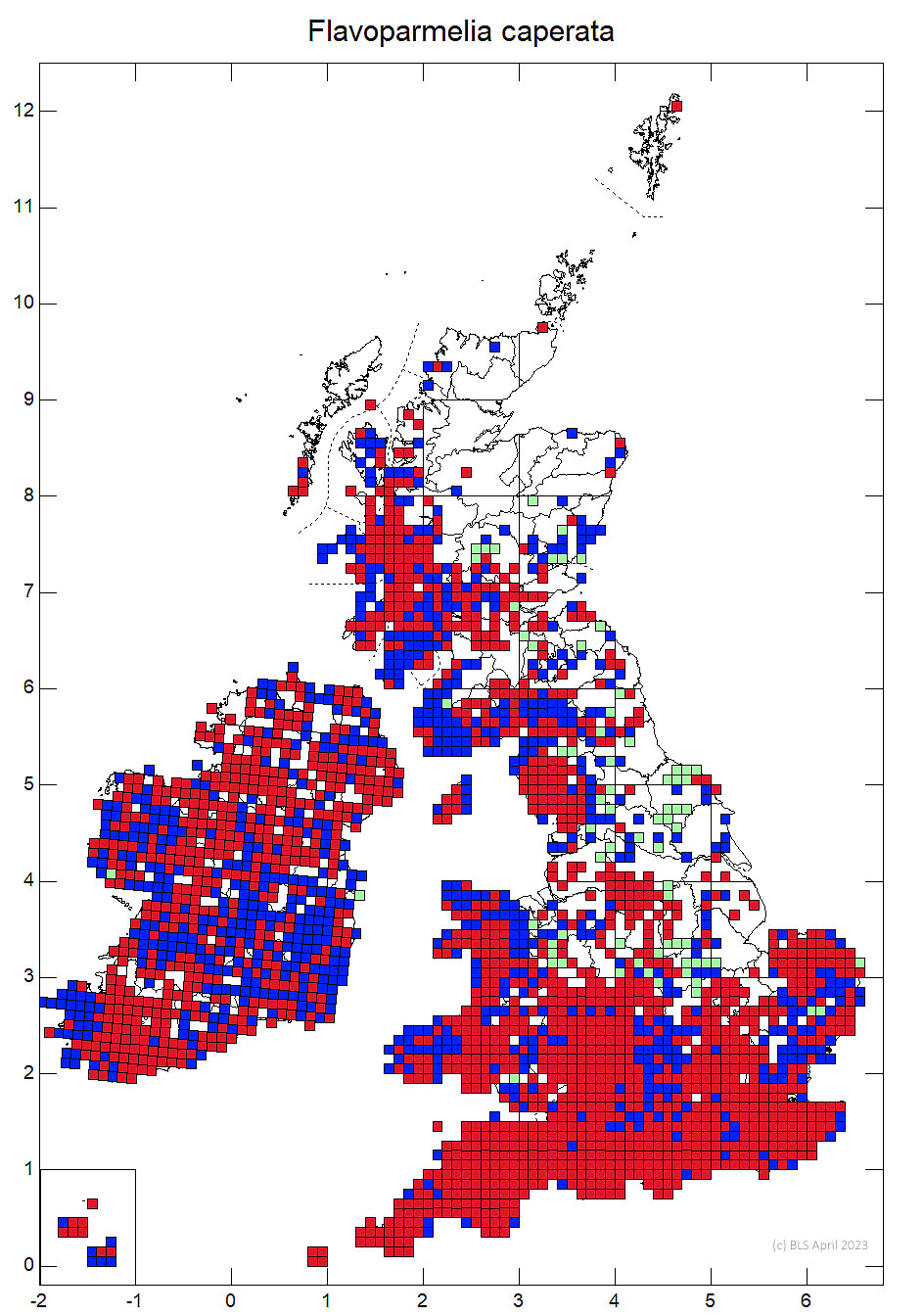

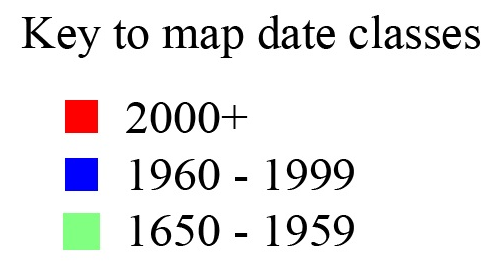
Common, at one time restricted in distribution due to SO2 pollution, but now almost ubiquitous except in the northern Scottish Highlands and north east Scotland. It is however suppressed by high ammonia pollution. There is an interesting comparison with the 2006 BLS and modern maps of this species and Flavoparmelia soredians. While the southern Flavoparmelia soredians has expanded its distribution northwards to a considerable degree, possibly a combined response to declining acidifying air pollution and climate warming, Flavoparmelia caperata has begun to infill gaps in its distribution caused by past acidifying air pollution its northern limit has remained stable.
Cannon, P., Divakar, P., Yahr, R., Aptroot, A., Clerc, P., Coppins, B., Fryday, A., Sanderson, N. & Simkin, J. (2023). Lecanorales: Parmeliaceae, including the genera Alectoria, Allantoparmelia, Arctoparmelia, Brodoa, Bryoria, Cetraria, Cetrariella, Cetrelia, Cornicularia, Evernia, Flavocetraria, Flavoparmelia, Hypogymnia, Hypotrachyna, Imshaugia, Melanelia, Melanelixia, Melanohalea, Menegazzia, Montanelia, Nesolechia, Parmelia, Parmelina, Parmeliopsis, Parmotrema, Platismatia, Pleurosticta, Protoparmelia, Pseudephebe, Pseudevernia, Punctelia, Raesaenenia, Tuckermannopsis, Usnea, Vulpicida and Xanthoparmelia. Revisions of British and Irish Lichens 33: 1-98.
Text by Neil A Sanderson, based on Cannon et al (2023)