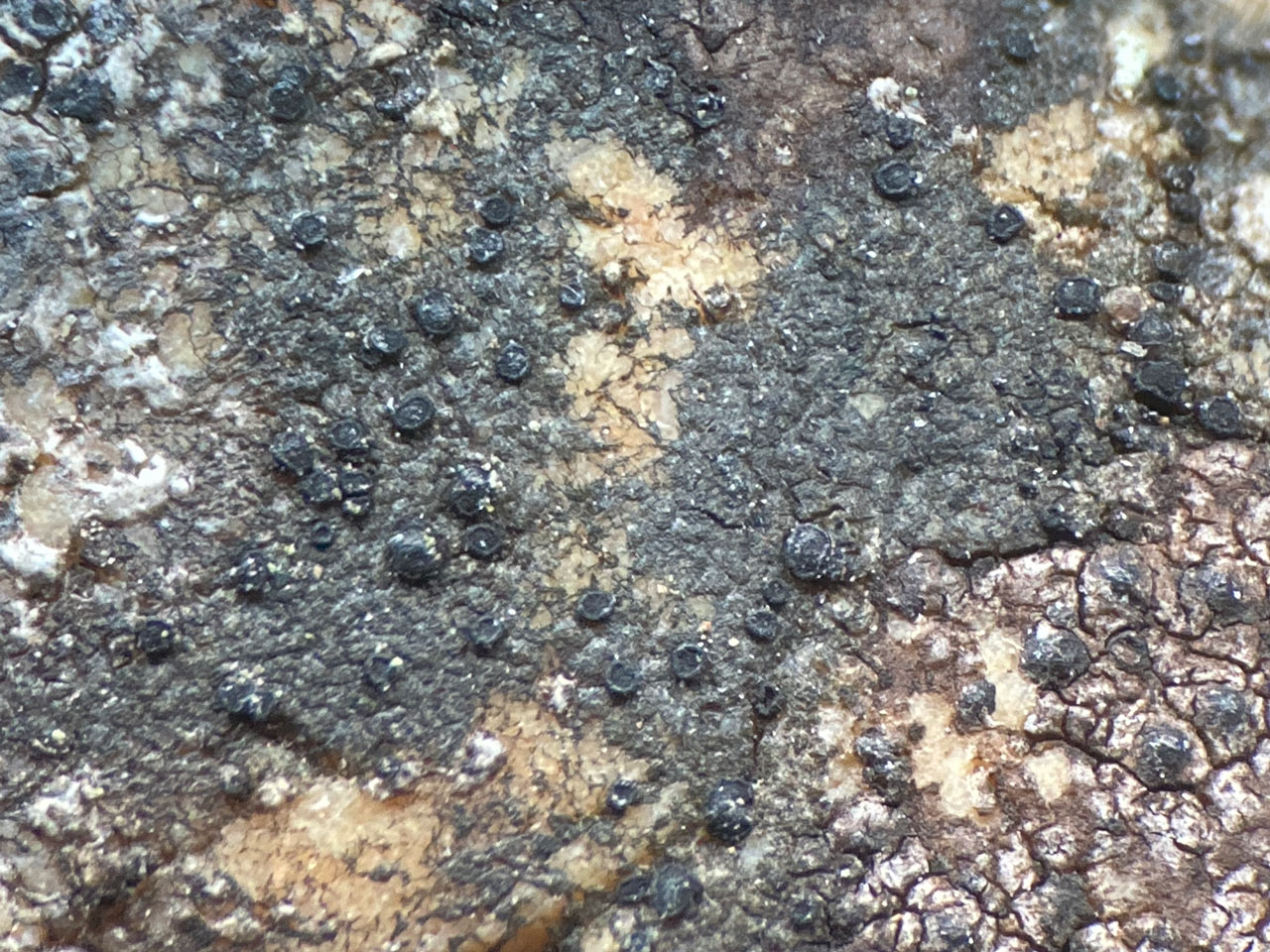
A tiny and easily overlooked lichen, resembling a diminutive form of Catillaria chalybeia, but the tiny black appothecia on a grey-black thallus on hard, siliceous rocks are quite distinctive.
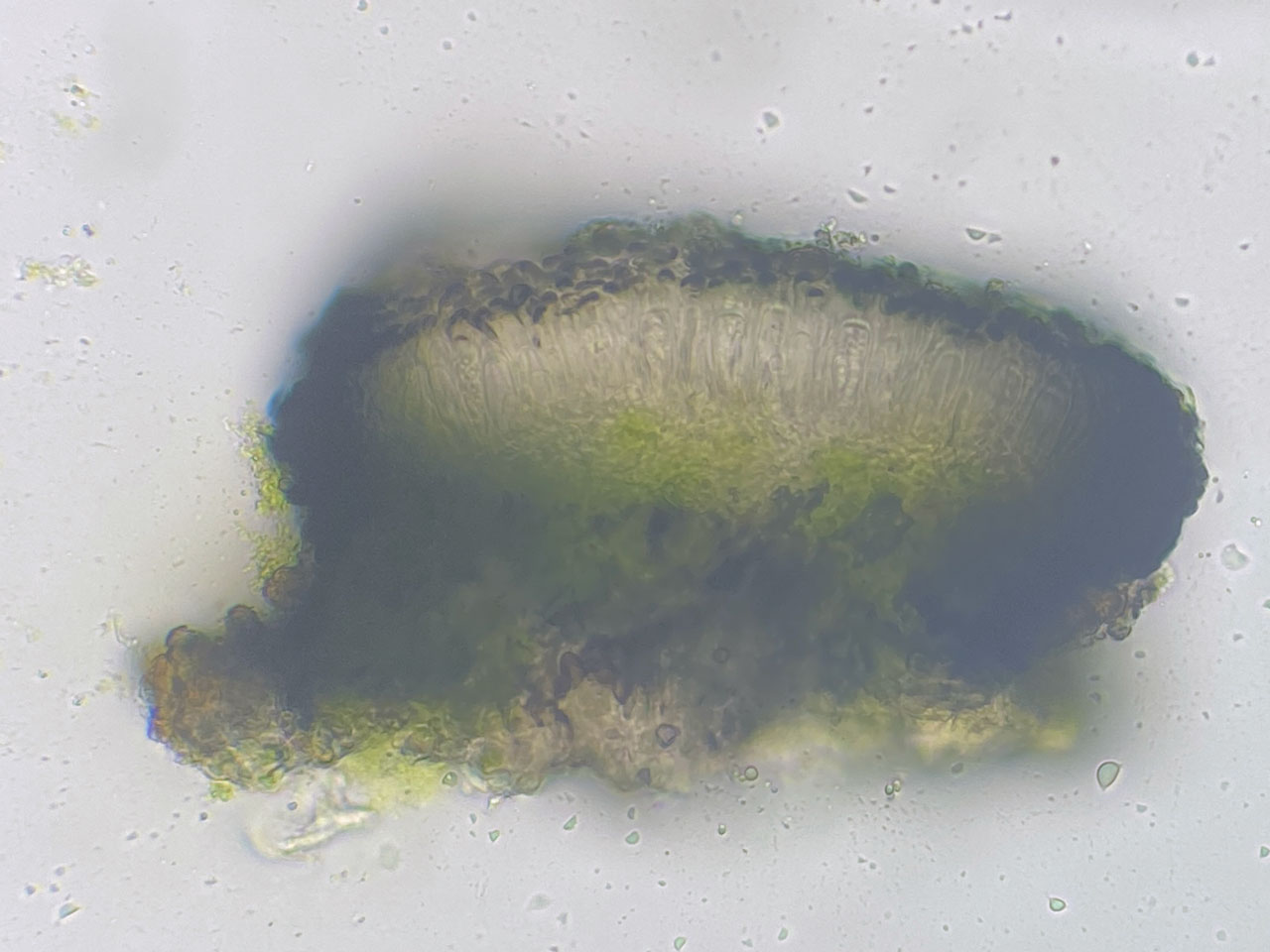
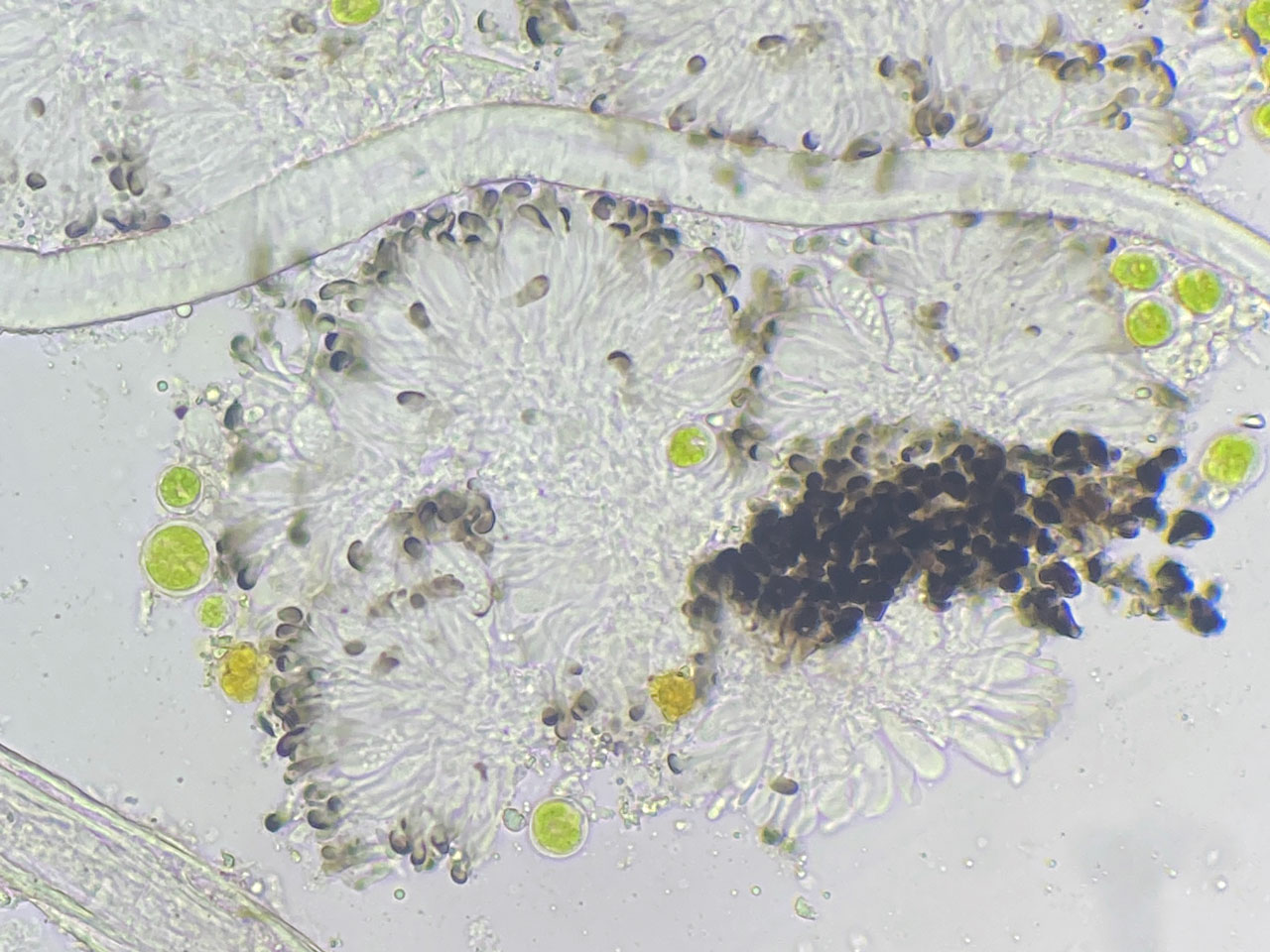
Like Catillaria chalybeia, but apothecia 0.1–0.2 mm diam.; hymenium 30–40 µm tall, colourless; true exciple green-black throughout; hypothecium colourless; ascospores 7–10 × 2.3–3.5 µm. Chemistry unknown.
Easily mistaken for a diminutive form of Catillaria chalybeia (epithecium dark brown to green-black) or C. subviridis (coastal, pale inner true exciple), or even Amandinea punctata (brown spores). Leimonis erratica (Micarea erratica), found in similar habitats, usually has abundant black pycnidia. The species may be a non-specific facultative parasite of other lichens, though this has not been observed in Britain and Ireland.
Svensson et al (2026) have placed this species in the genus Caelochroma as Caelochroma atomarioides.
On hard, siliceous rocks (including river shingle and slate), brick and stonework; frequent.
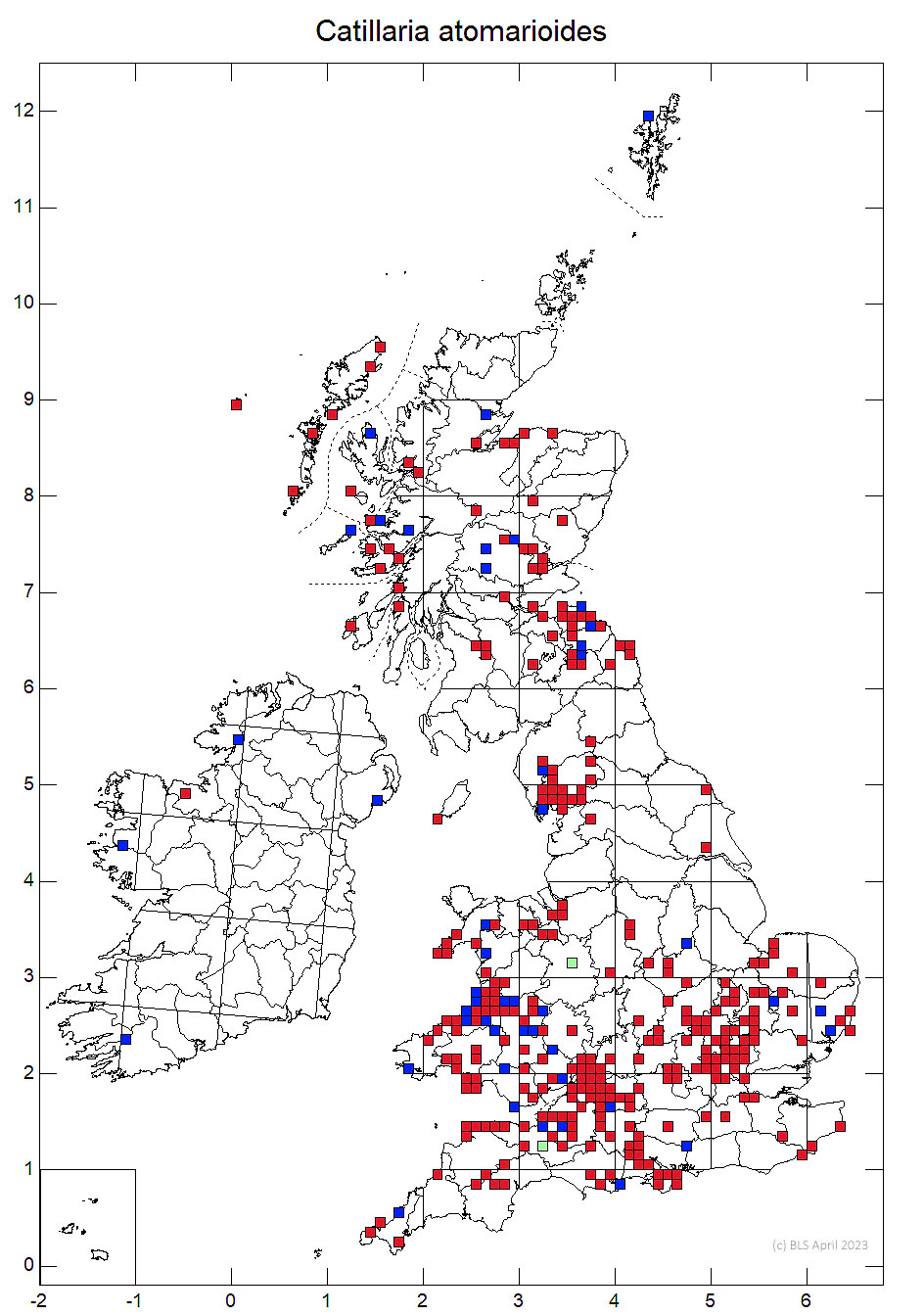


Throughout most of Britain and Ireland, but previously much overlooked.
Cannon, P., Orange, A., Aptroot, A., Coppins, B., Fletcher, A., Fryday, A., Sanderson, N., Simkin, J. & Van den Boom, P. (2022). Caliciales: Catillariaceae, including the genera Catillaria and Solenopsora. Revisions of British and Irish Lichens 22: 1-13.
Svensson, M., Ekman, S. & Westberg, M. (2026), An improved phylogeny and revised taxonomy of Catillariaceae (Lecanoromycetes, Ascomycota). Taxon 75: e70069. Link.
Text by Neil A Sanderson based on Cannon et al (2022)