Byssoloma leucoblepharum
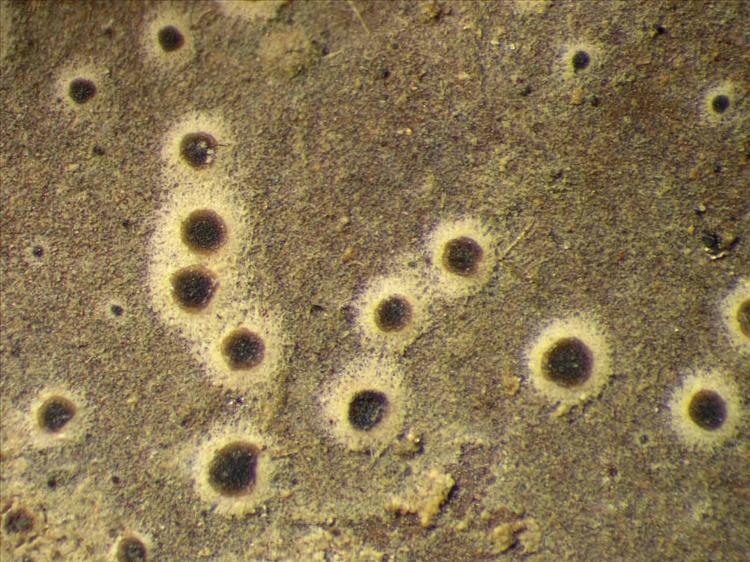
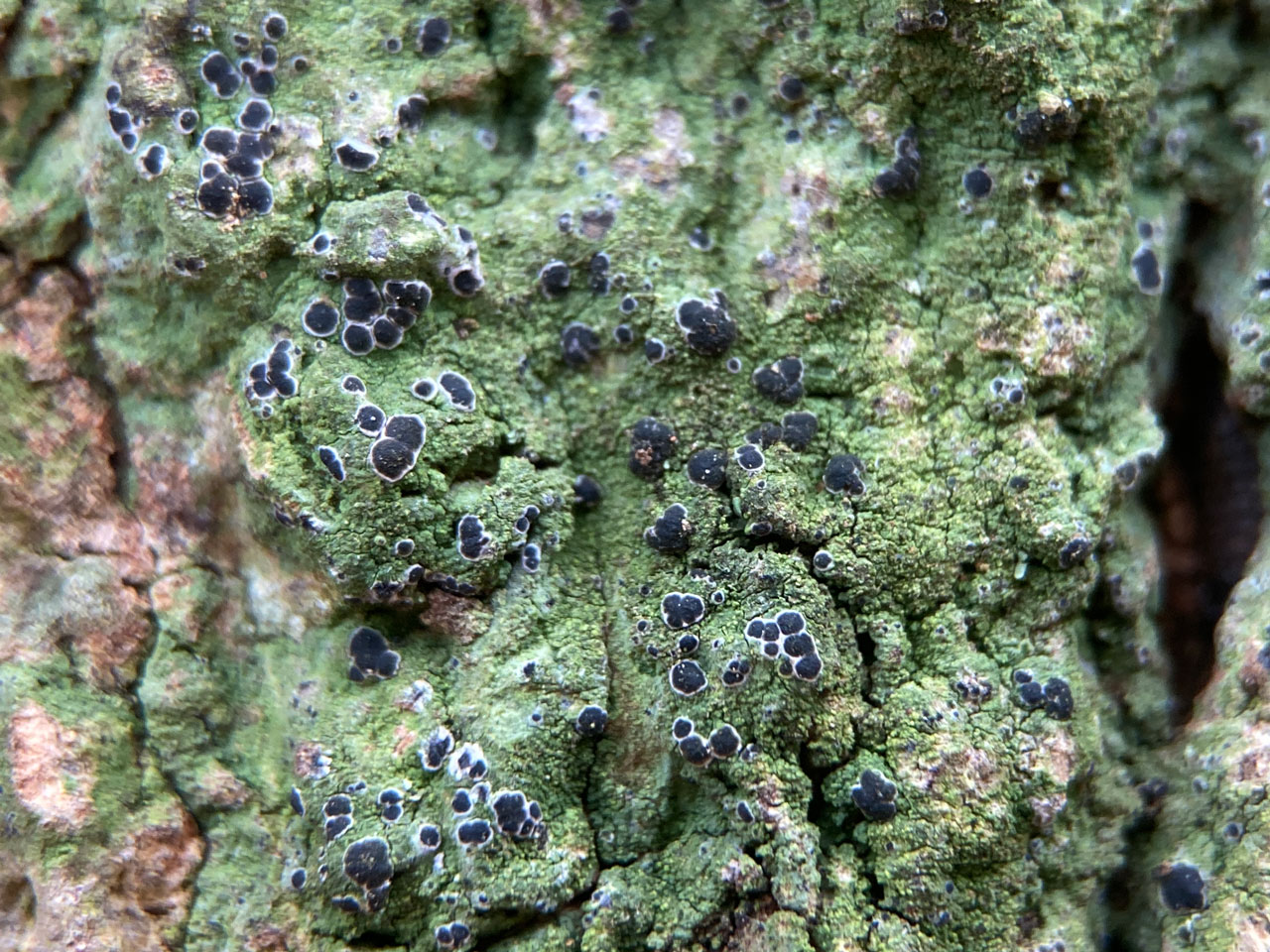
A striking and rather exotic lichen with numerous apothecia with orange-brown to dark brown disks fringed by a yellow-white tomentose-arachnoid exciple set on a grey-green thallus. The similar Byssoloma maderense has recently been separated Byssoloma leucoblepharum (Breuss, 2016); B. maderense has crystals (best seen in polarised light) inspersed in the exciple and epithecium and tends to have darker disks and is mainly found on bark. Byssoloma leucoblepharum lacks these crystals and is more often found on leaves. So far all previous records of B. leucoblepharum from the south coast (Hampshire, Isle of Wight, Sussex) have proved to be B. maderense where it is found on base-rich bark of old trees in old-growth pasture woodlands. Records of B. leucoblepharum from Lundy have not yet been checked, but as they were from Heather stems, they are more likely be correct.
Thallus to 3 cm diam., continuous, grey to greenish grey, smooth or irregularly farinose, usually thin, sometimes rather thick and irregularly cracked; prothallus sometimes conspicuous, brown to black, sometimes bluish. Apothecia 0.3–0.5 mm diam., flat or slightly convex, sometimes clustered in groups and becoming ± distorted; disc orange-brown to dark brown, sometimes with a bluish tinge, with a tomentose-arachnoid margin, yellowish white to yellowish grey. Ascospores 10–18 × 2.5–4 µm. Conidia ± pyriform. Argopsin Pd+ (orange-red) sometimes detected in the apothecial margin and thallus.
Macroscopically very similar to B. maderense, which has its exciple and epithecium inspersed with small colourless crystals; records of B. leucoblepharum from the New Forest and Sussex all appear to refer to that species. Collections from Lundy and Ireland need re-examination. B. leucoblepharum is a polymorphic species (Breuss 2016) and may represent an aggregate even after exclusion of B. maderense; molecular data (Wang et al. 2020) support this hypothesis.
On old Heather stems S.W. England (Lundy), also potentially Ireland (Offaly, Clonmacnois).
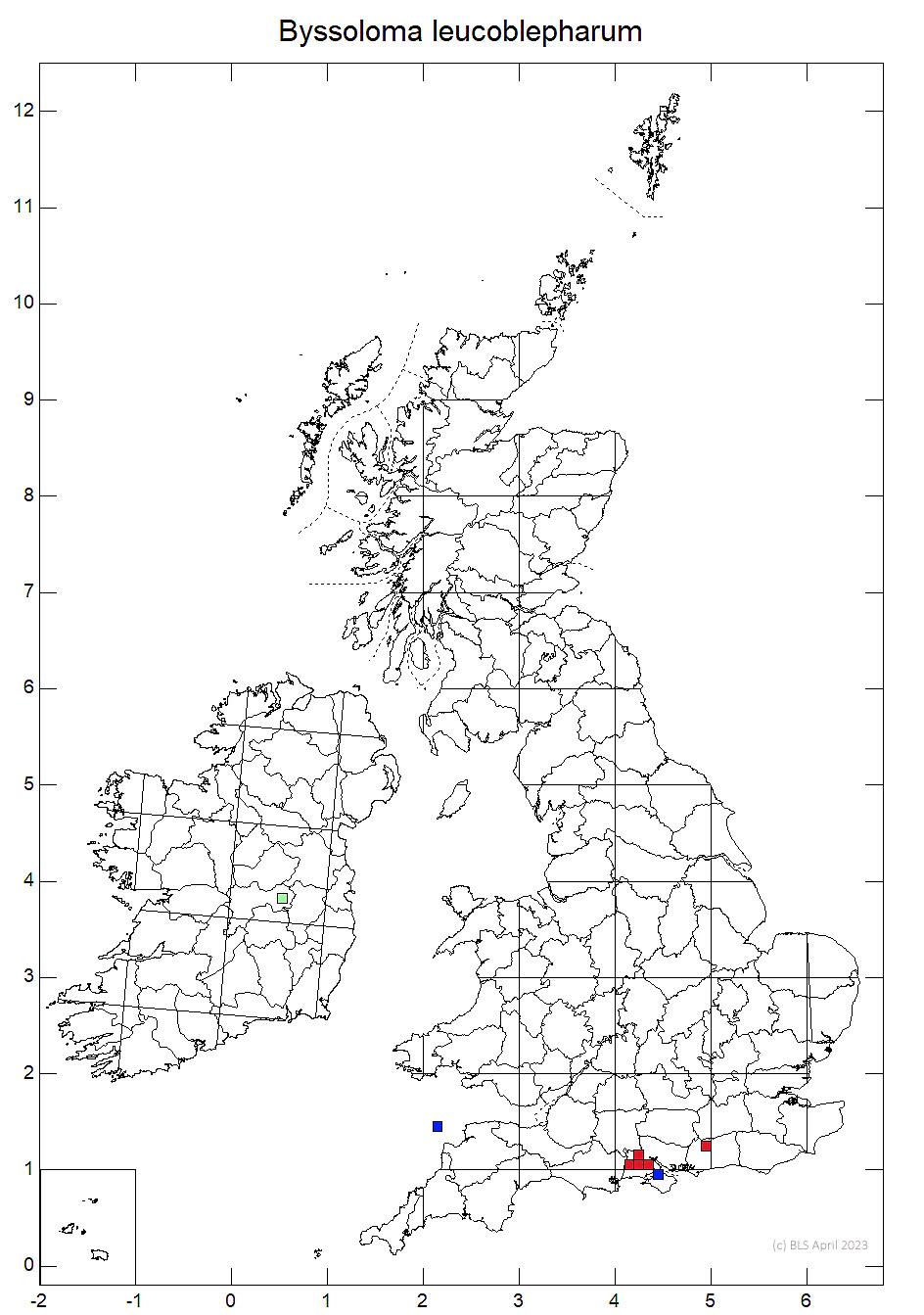

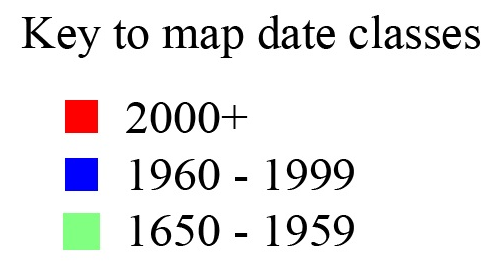
Uncertain but rare if it occurs. The map is of Byssoloma leucoblepharum s. lat. records not confirmed as either Byssoloma leucoblepharum s. str. or Byssoloma maderense [NB the Isle of Wight record is of Byssoloma maderense].
Byssoloma leucoblepharum s. lat. was assessed as Near Threatened in 2012, but as the majority of the assessed records have since been referred to B. maderense, this status should also be applied to B. maderense. The records from Lundy are quite likely to be Byssoloma leucoblepharum s. str., in which case the species could be very rare and threatened.
Breuss, O. (2016b). Byssoloma maderense is not endemic to Macaronesia. Evansia 33: 54–62.
Cannon, P., Orange, A., Aptroot, A., Sanderson, N., Coppins, B. & Simkin, J. (2022). Lecanorales: Pilocarpaceae, including the genera Aquacidia, Byssoloma, Fellhanera, Fellhaneropsis, Leimonis and Micarea. Revisions of British and Irish Lichens 27: 1-48.
Wang, W.-C., Van den Boom, P., Sangvichien, E. & Wei, J.-C. (2020b). A molecular study of the lichen genus Byssoloma Trevisan (Pilocarpaceae) with descriptions of three new species from China. Lichenologist 52: 387–396.
Text by Neil A Sanderson based on Canon et al (2022)