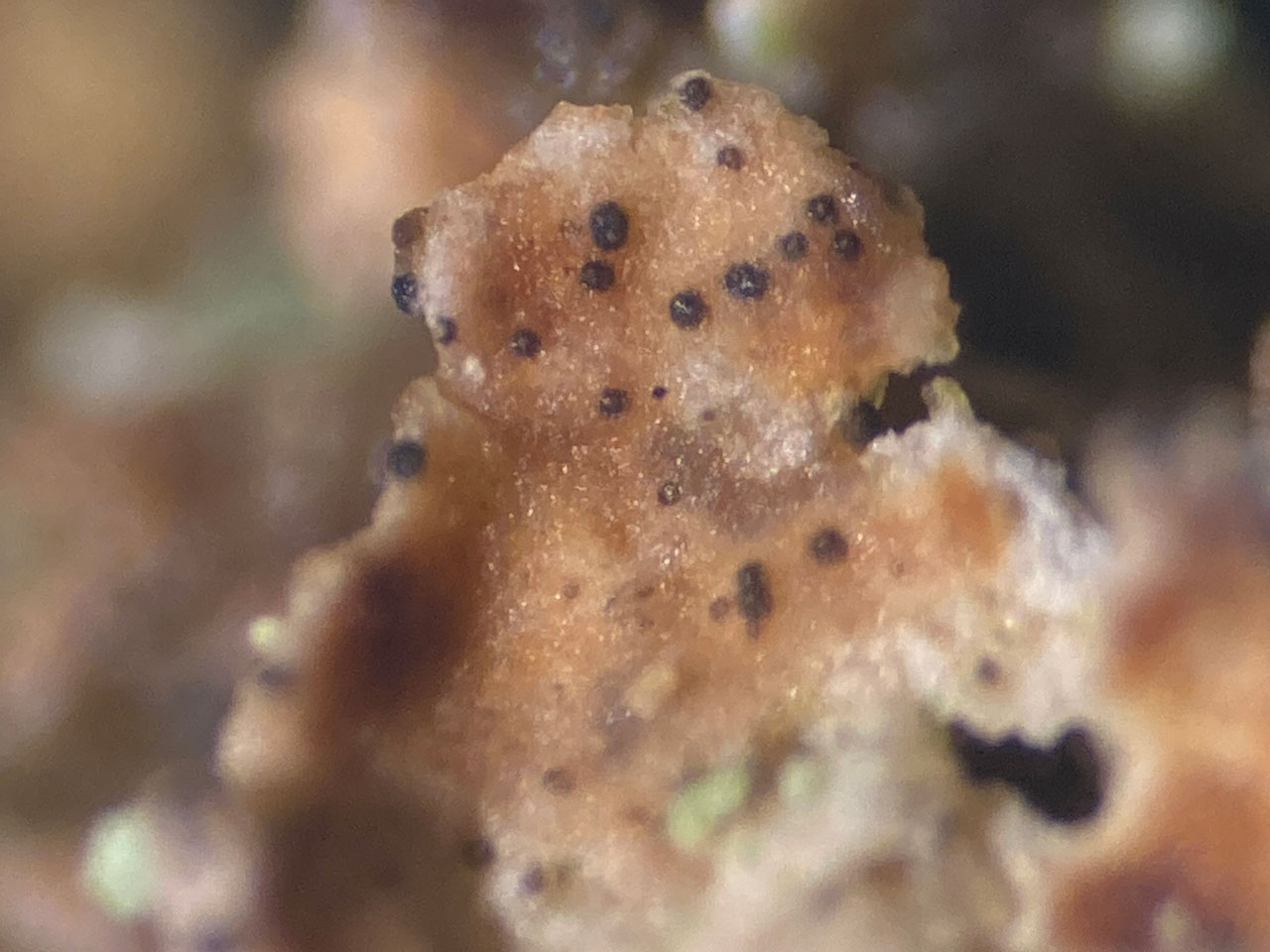
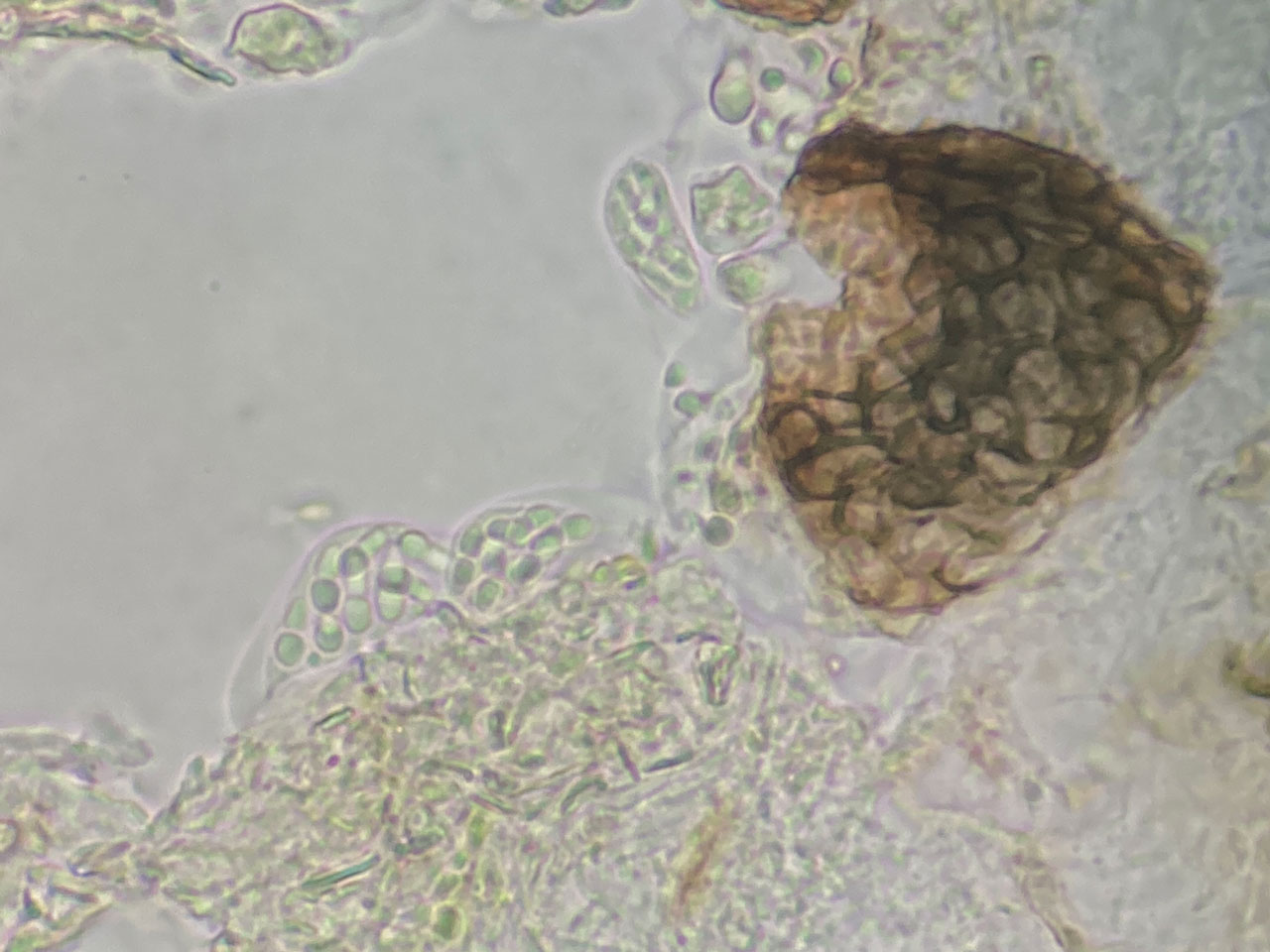
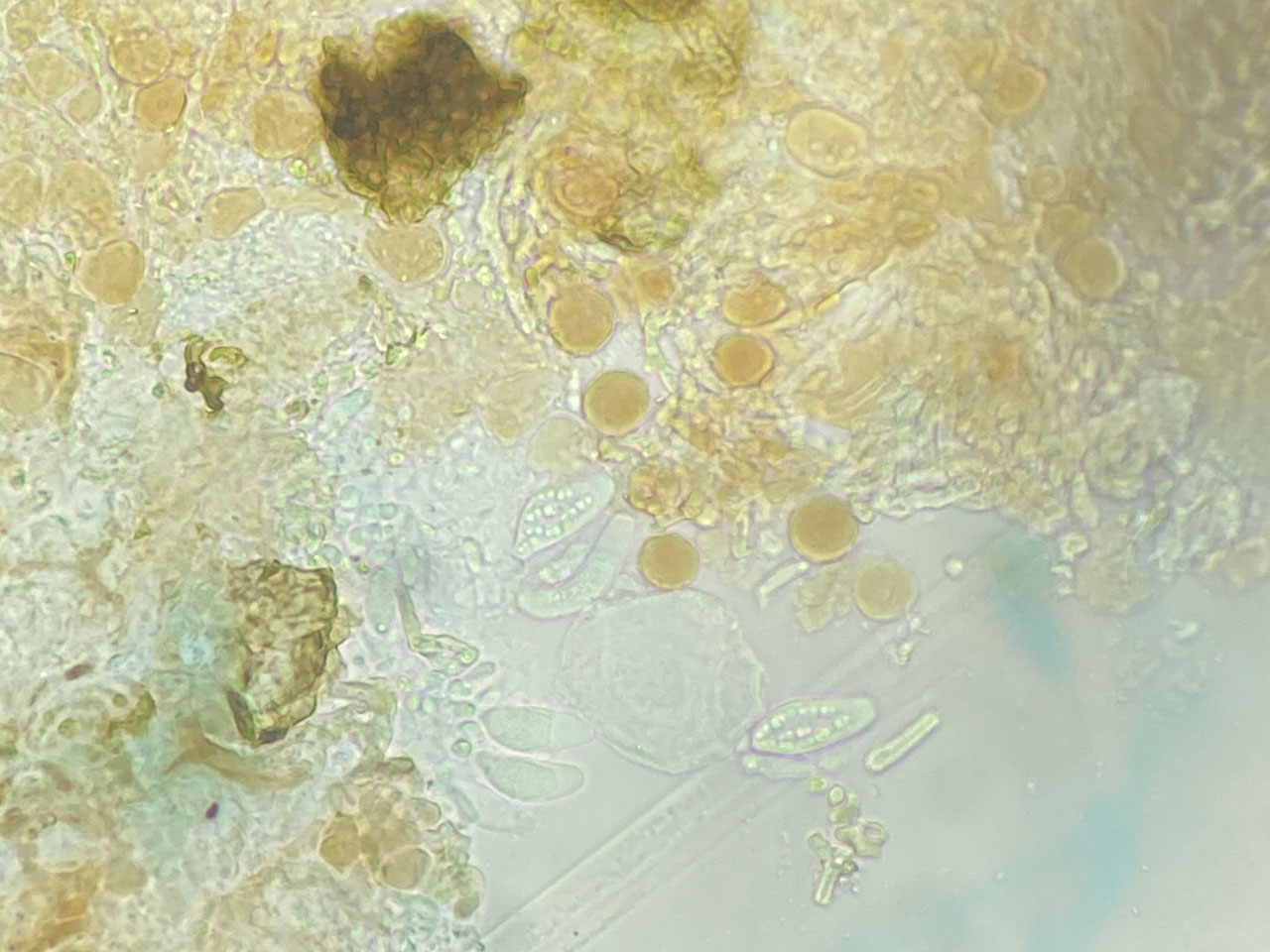
A tiny fungus found parasitising Cladonia polydactyla and Cladonia parasitica on dead wood in the New Forest. Characterised by the Cladonia hosts and the small size of the perithecia (30–50 μm diam) and the one septate spores ((6–) 6.5–7 × 2–2.5 μm).
Ascomata partially or fully immersed in the host thallus, subglobose to globose, 30–50 μm diam., sometimes somewhat conical above, brownish black, glossy; wall brown, evenly coloured; periphysoids and periphyses not observed. Asci broadly cylindrical to saccate, often with a distinct short stalk, strongly thickened above, internal apical beak often distinct, 17–25 × 7–9 μm, 8-spored. Ascospores narrowly ellipsoidal, occasionally narrowly obovoid with the greatest breadth above the middle, (6–) 6.5–7 × 2–2.5 μm, 1-septate, often slightly constricted at the septum, colourless, old spores sometimes pale brown, the cells usually biguttulate, smooth, without a perispore. Pycnidia not observed [description from Van den Boom 2016].
Stigmidium cladoniicola Zhurb. et Diederich (not recorded from our region), was described from Cladonia macrophylla (Schaer.) Stenh. and differs in larger ascomata and much larger ascospores.
On Cladonia polydactyla and Cladonia parasitica on dead wood in old growth woodland.
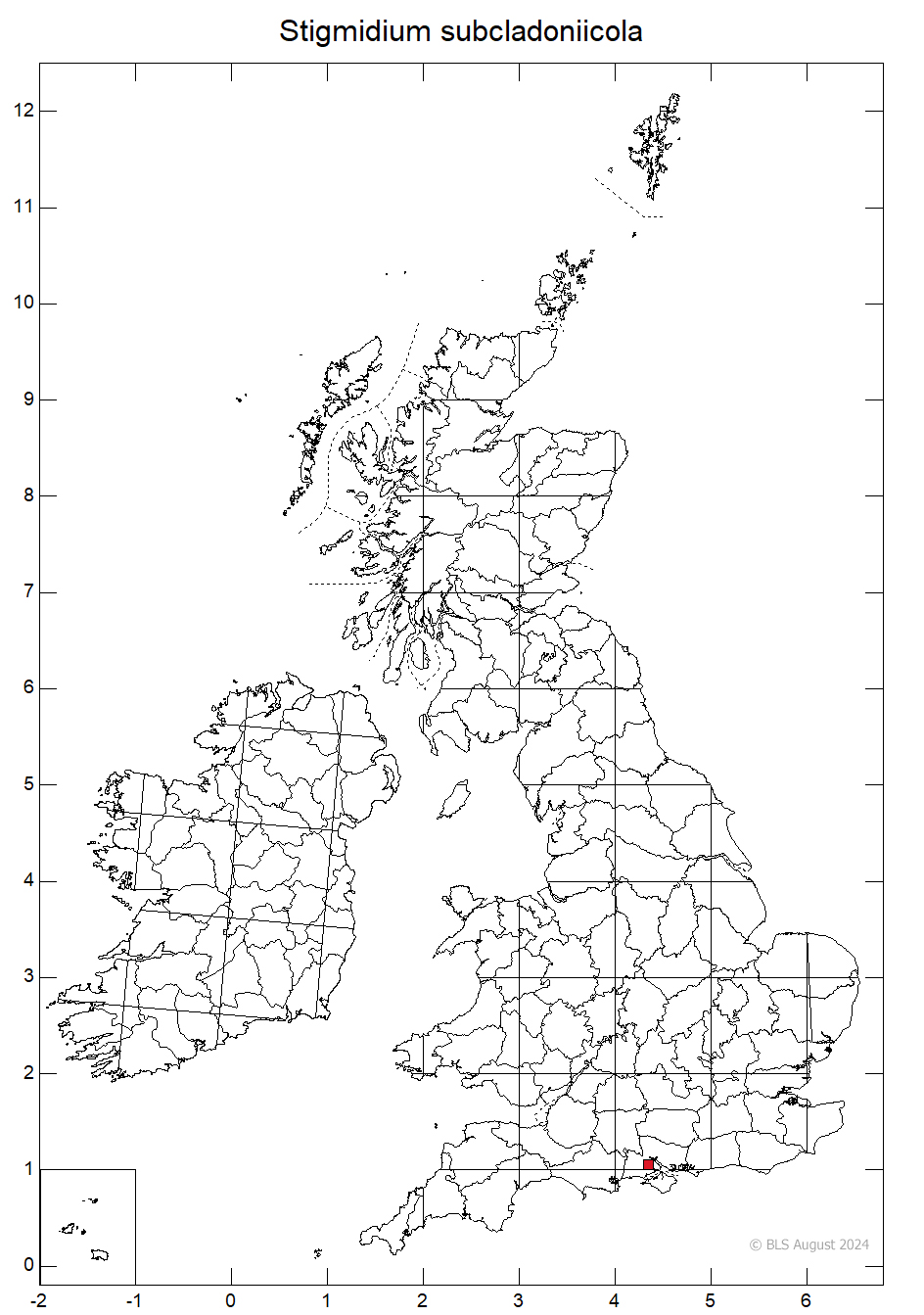

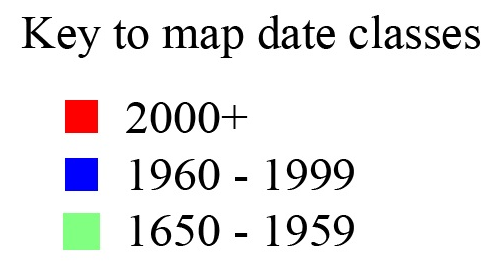
Known from two woods in the New Forest, Hampshire England.
Not assessed but only known from two woods in the New Forest, where it appears rare and confined to Cladonia species on dead wood in old growth pasture woodland. Potentially could be threatened, so may be best assesed as Data Deficient.
Cannon, P., Coppins, B., Aptroot, A., Sanderson, N. & Simkin, J. (2025). Miscellaneous lichens and lichenicolous fungi, including Aphanopsis and Steinia (Aphanopsidaceae), Arthrorhaphis (Arthrorhaphidaceae), Buelliella, Hemigrapha, Melaspileella, Stictographa and Taeniolella (Asterinales, family unassigned), Phylloblastia (Chaetothyriales, family unassigned) Cystocoleus (Cystocoleaceae), Sclerococcum (Dactylosporaceae), Eiglera (Eigleraceae), Epigloea (Epigloeaceae), Euopsis (Harpidiaceae), Lichenothelia (Lichenotheliaceae), Lichinodium (Lichinodiaceae), Melaspilea (Melaspileaceae), Epithamnolia and Mniaecia (Mniaeciaceae), Lichenostigma (Phaeococcomycetaceae), Pycnora (Pycnoraceae), Racodium (Racodiaceae), Chicitaea and Loxospora (Sarrameanaceae), Schaereria (Schaereriaceae), Strangospora (Strangosporaceae), Botryolepraria and Stigmidium (Verrucariales, family unassigned), and Biatoridium, Mycoglaena, Orphniospora, Piccolia, Psammina and Wadeana (order and family unassigned). Revisions of British and Irish Lichens 57: 1–78.
Roux, C. & Triebel, D. (1994). Révision des espèces de Stigmidium et de Sphaerellothecium (champignons lichénicoles non lichénisés, Ascomycetes) correspondant à Pharcidia epicymatia sensu Keissler ou à Stigmidium schaereri auct. Bulletin de la Société. Linnéene de Provence 45: 451–542.
Text by Neil A Sanderson based on Cannon et al (2025)