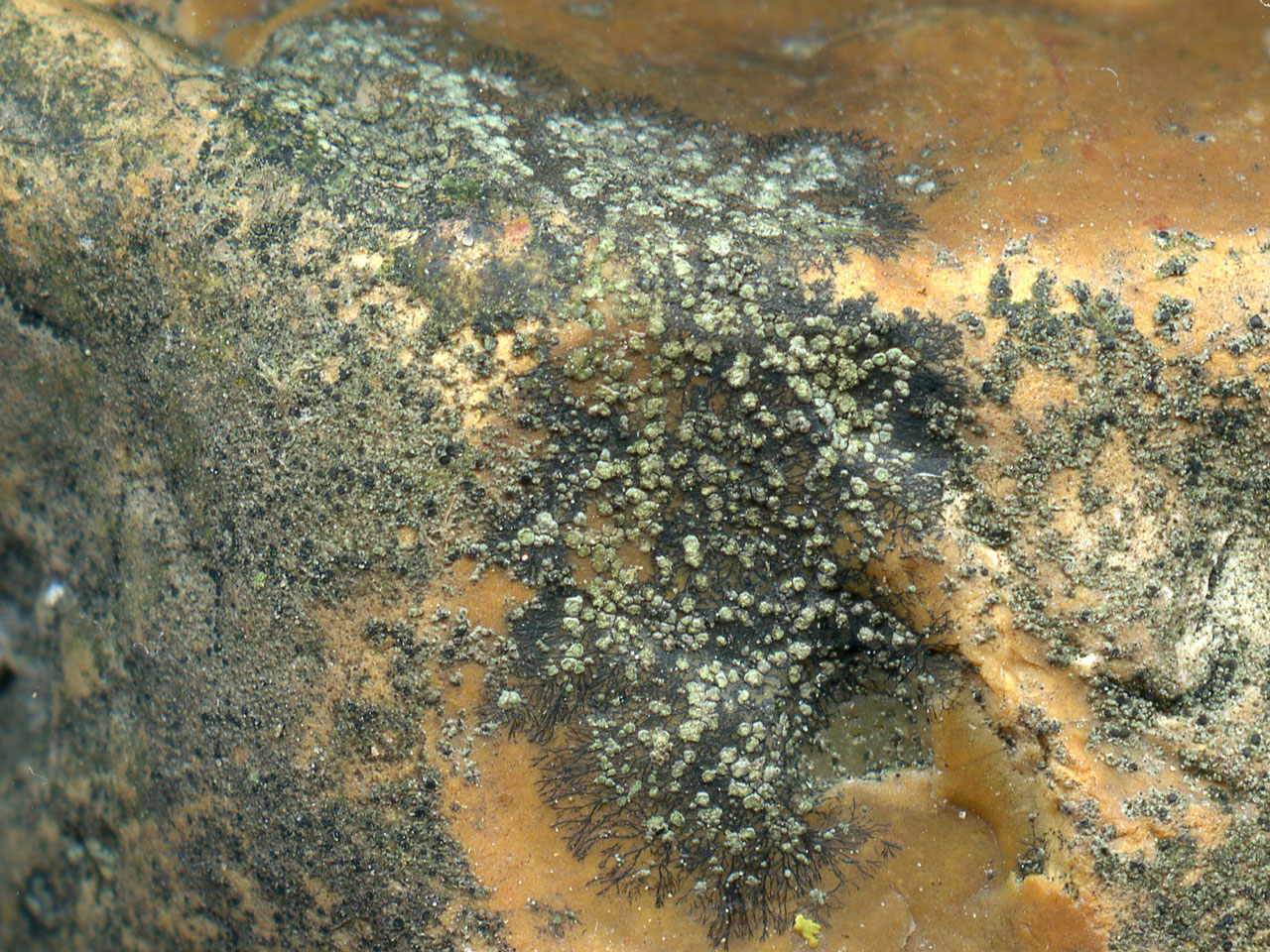
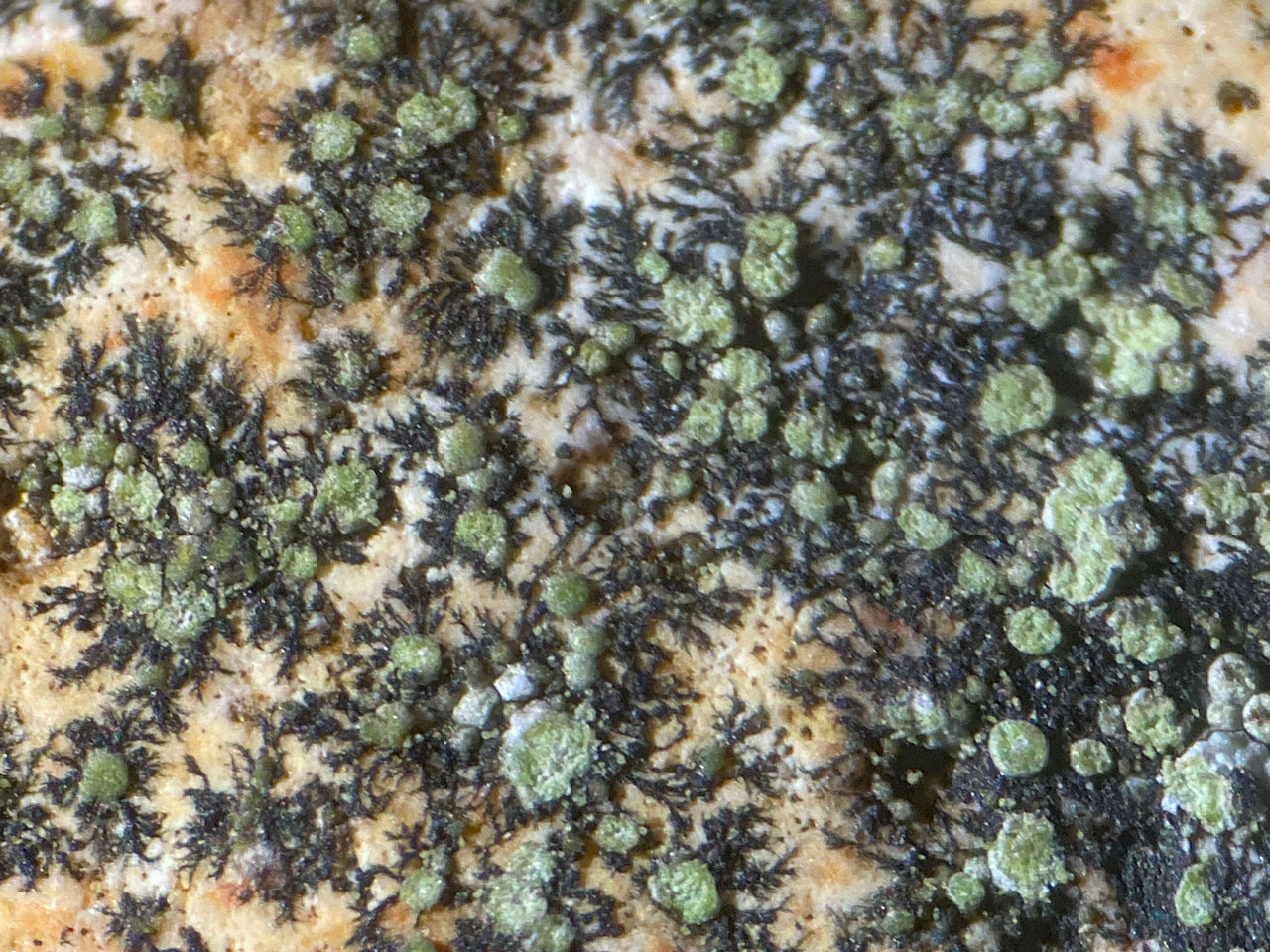
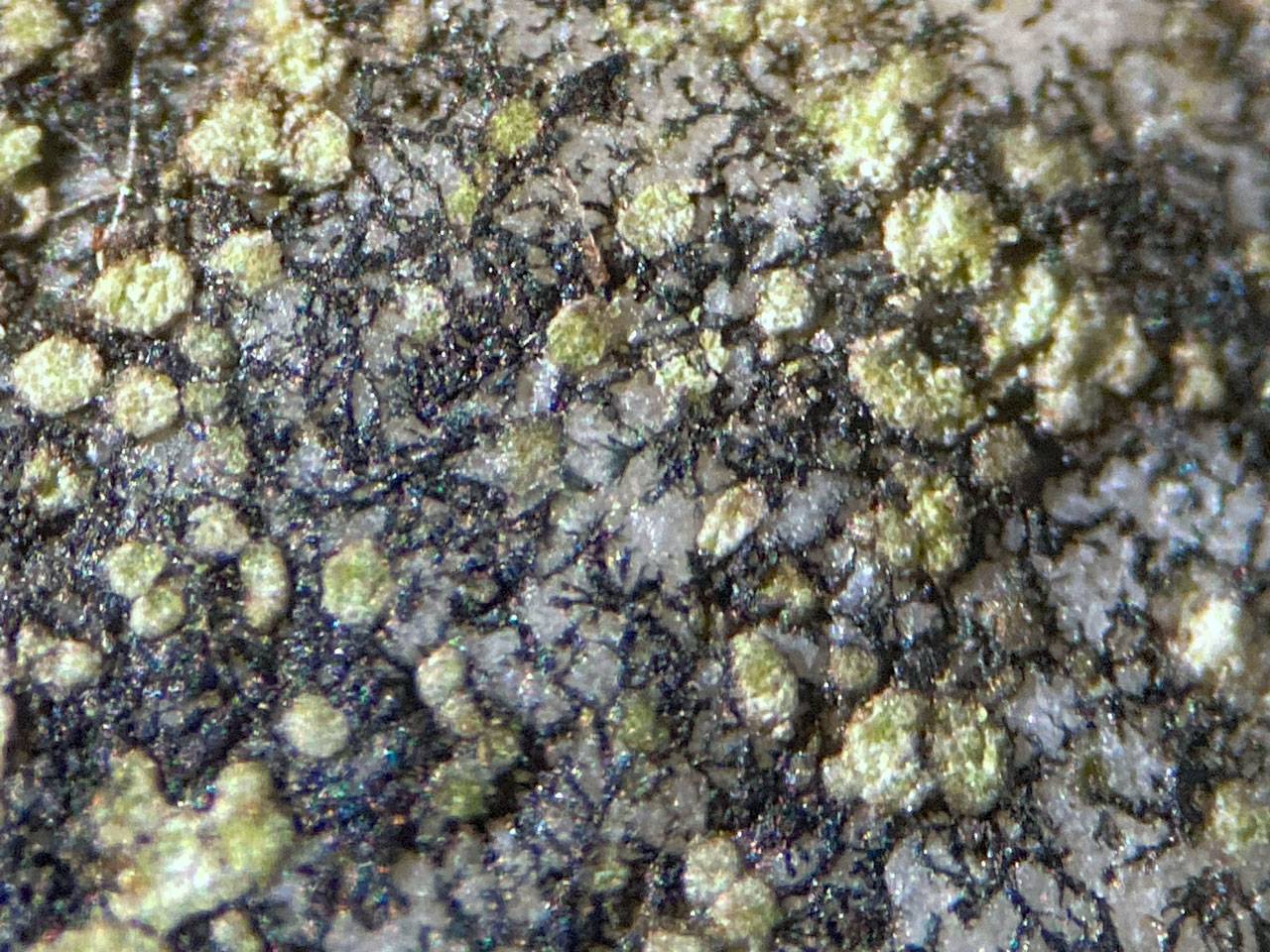
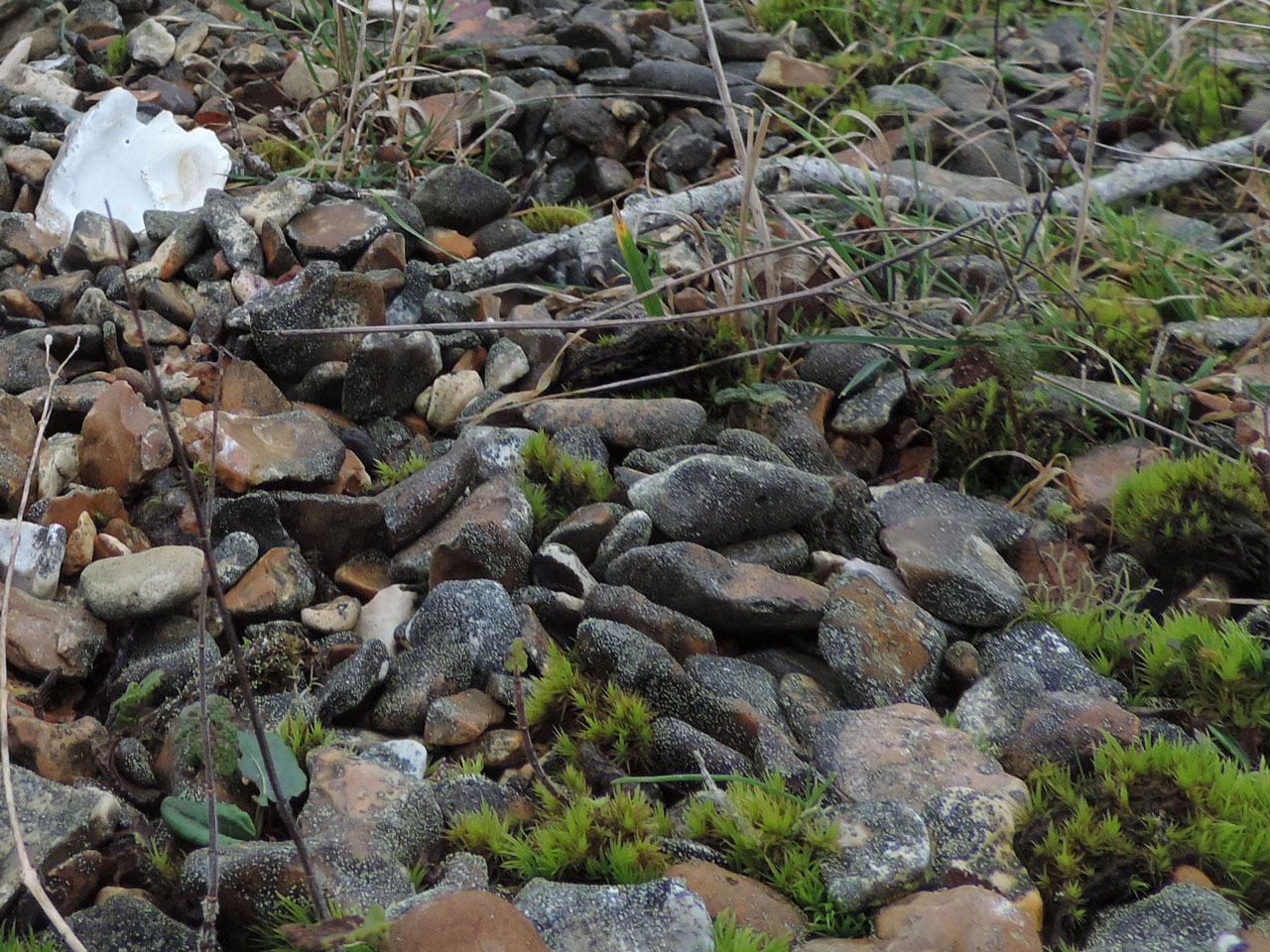
A special species of flints in older stable sections of shingle beaches, but possibly overlooked elsewhere as a pioneer species of siliceous pebbles. Often consists of scattered greyish areoles on a conspicuous black fimbriate prothallus. Usually sterile, with the areoles with punctiform greenish-white to yellowish soralia. The combination of a C+ red and a K/UV(dry)+ bright yellow spot tests is distinctive.
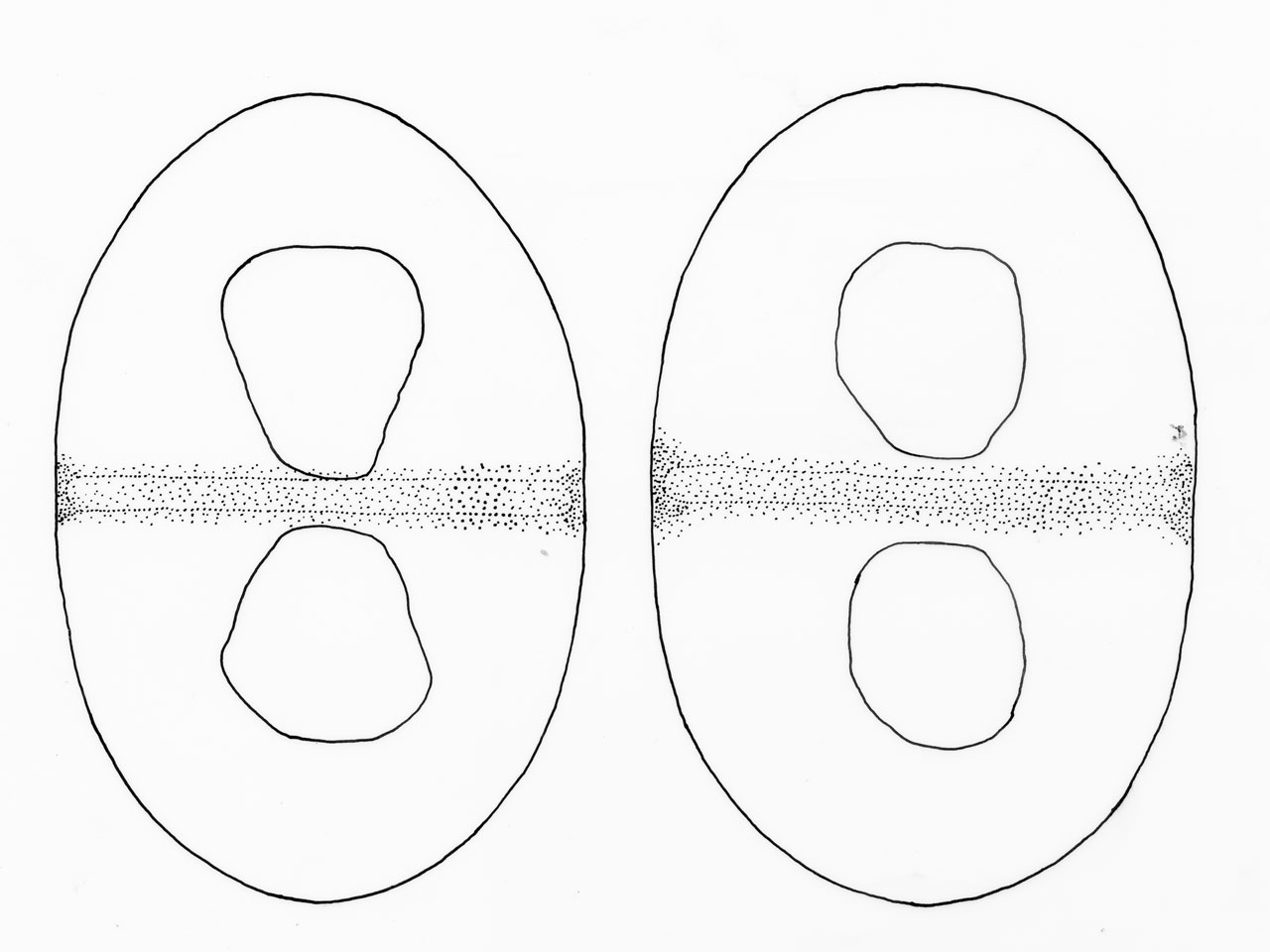
Thallus poorly developed, small, of scattered or ± contiguous areoles, greyish; prothallus usually conspicuous, sometimes marginally fimbriate, black; soralia ca 0.5 mm diam., greenish-white (becoming yellowish at the margin when dry), delimited, punctiform, mostly discrete, flat, superficial, somewhat elevated; soredia farinose. Apothecia rare in Britain, to 1 mm diam.; thalline exciple well-developed; hymenium 80–100 µm high; hypothecium colourless; disc brown to black. Ascospores 15–20 × 13–20 µm, Pachysporaria-type (Fig. 1j). Soralia C+ fleeting red, K± yellow, K/UV(dry)+ bright yellow, Pd± yellow, UV– (atranorin, gyrophoric acid, ovoic, umbilicaric and 5-O-methylhiascic acids).
Care is needed when separating this species from Lecidella scabra, which lacks a defining prothallus, has a different chemistry (spot test C+ orange; xanthones) and has a continuous or ± rimose (not areolate) thallus. Confusion has occurred with sorediate Trapelia obtegens, due to the C+ red spot test, but this lichen lacks atranorin and the K± yellow, K/UV(dry)+ bright yellow, Pd± yellow spot tests.
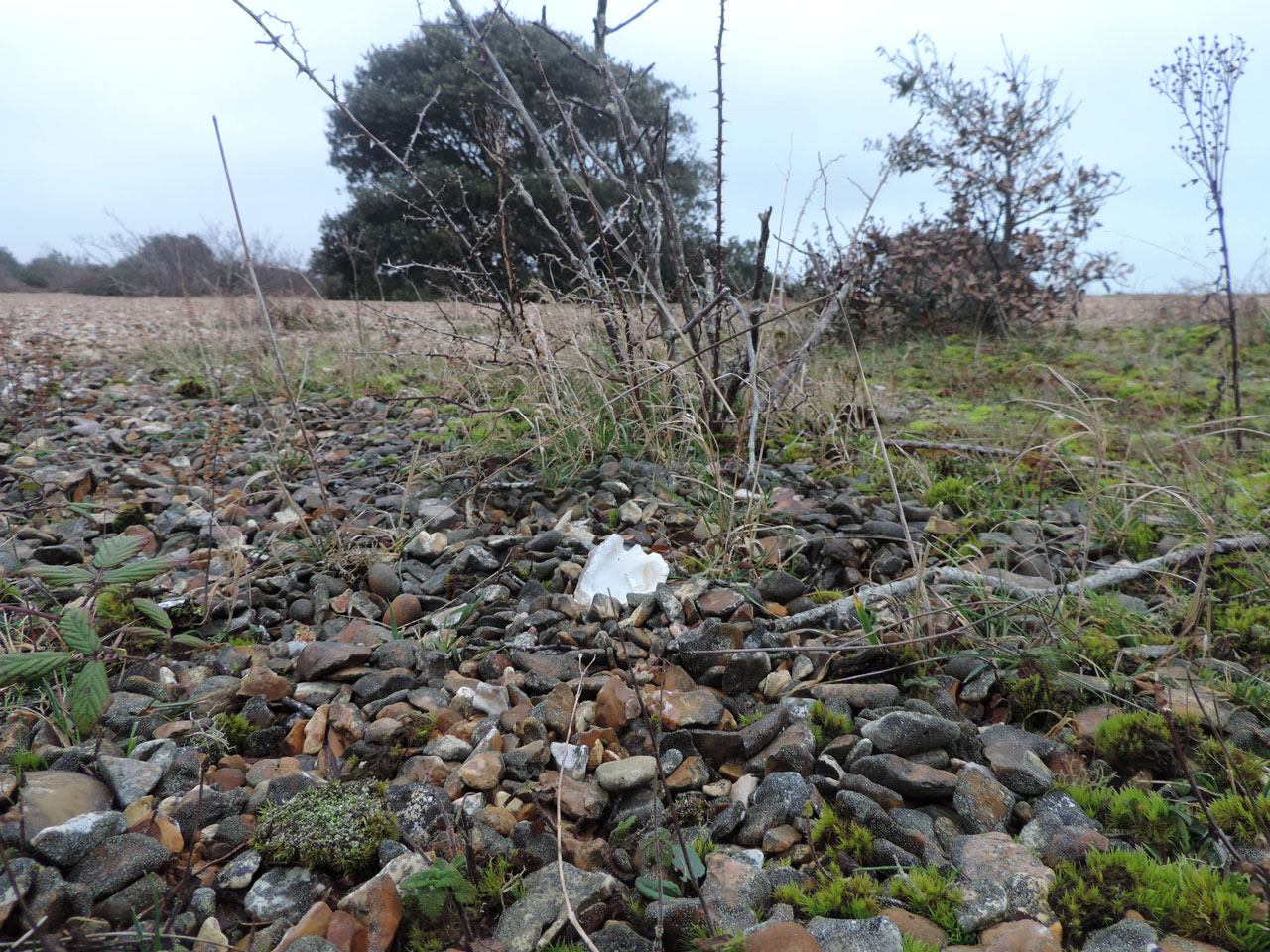
On siliceous pebbles and flints, usually with Porpidia species, on stabilised coastal shingle beaches. Also recorded occasionally inland as a pioneer on siliceous rocks where it may be overlooked.
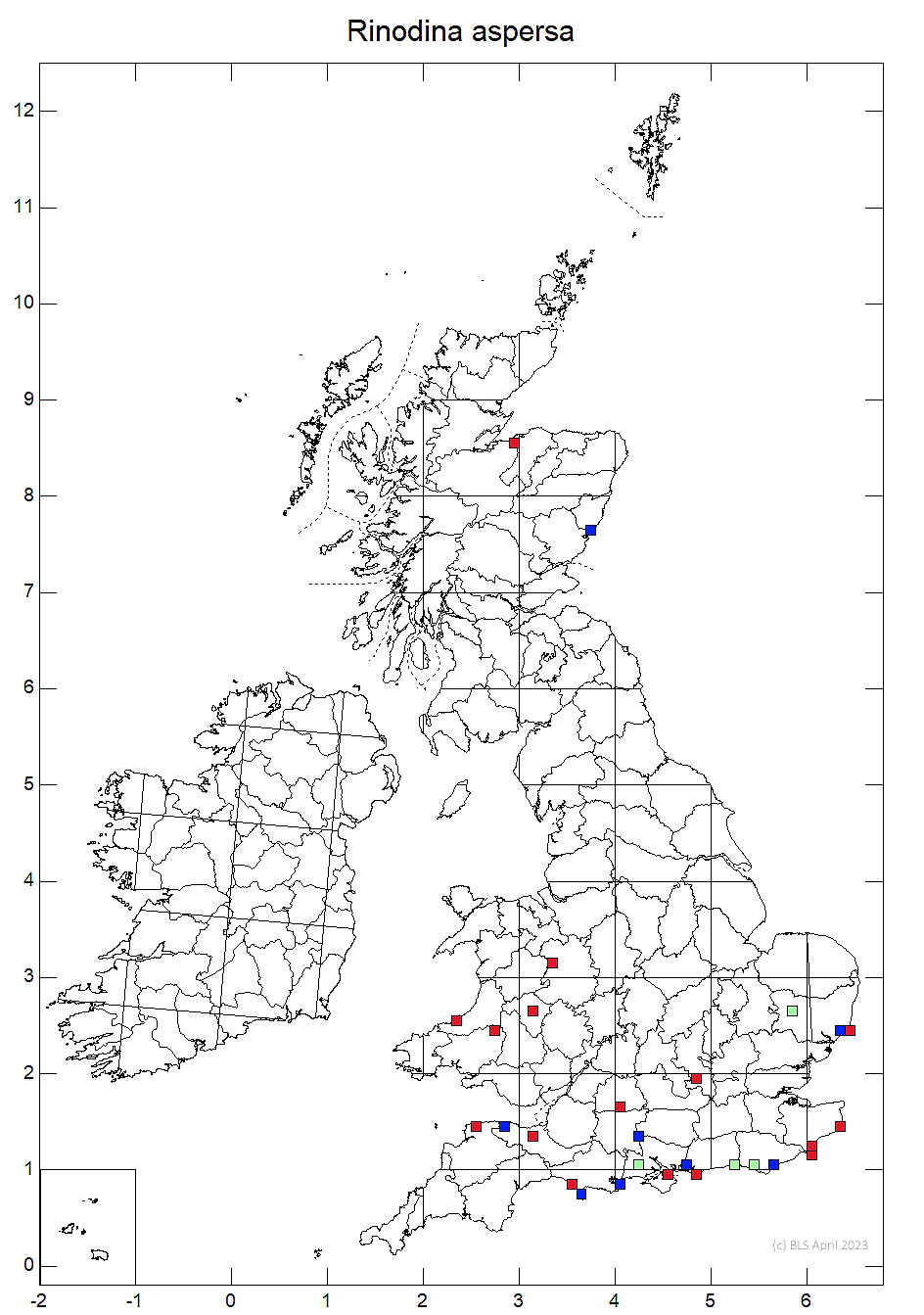

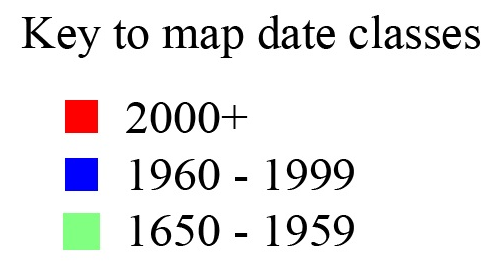
Very local, S. England, Wales and E. Scotland (Angus).
A very local species with a few large populations on old stable shingle beaches such as Browndown, Hampshire and Dungeness, Kent but otherwise rare, but possibly overlooked as an early pioneer species inland.
Scotland: Priority Taxon for Biodiversity in Scotland
Wales: Near Threatened
Britain: Near Threatened
Cannon, P., Thüs, H., Aptroot, A., Coppins, B., Orange, A., Sanderson, N. & Simkin, J. (2022). Caliciales: Physciaceae, including the genera Anaptychia, Heterodermia, Hyperphyscia, Mischoblastia, Phaeophyscia, Physcia, Physciella, Physconia, Rinodina and Tornabea. Revisions of British and Irish Lichens 23: 1–37.
Text by Neil A Sanderson based on Cannon et al (2022)