Palicella filamentosa
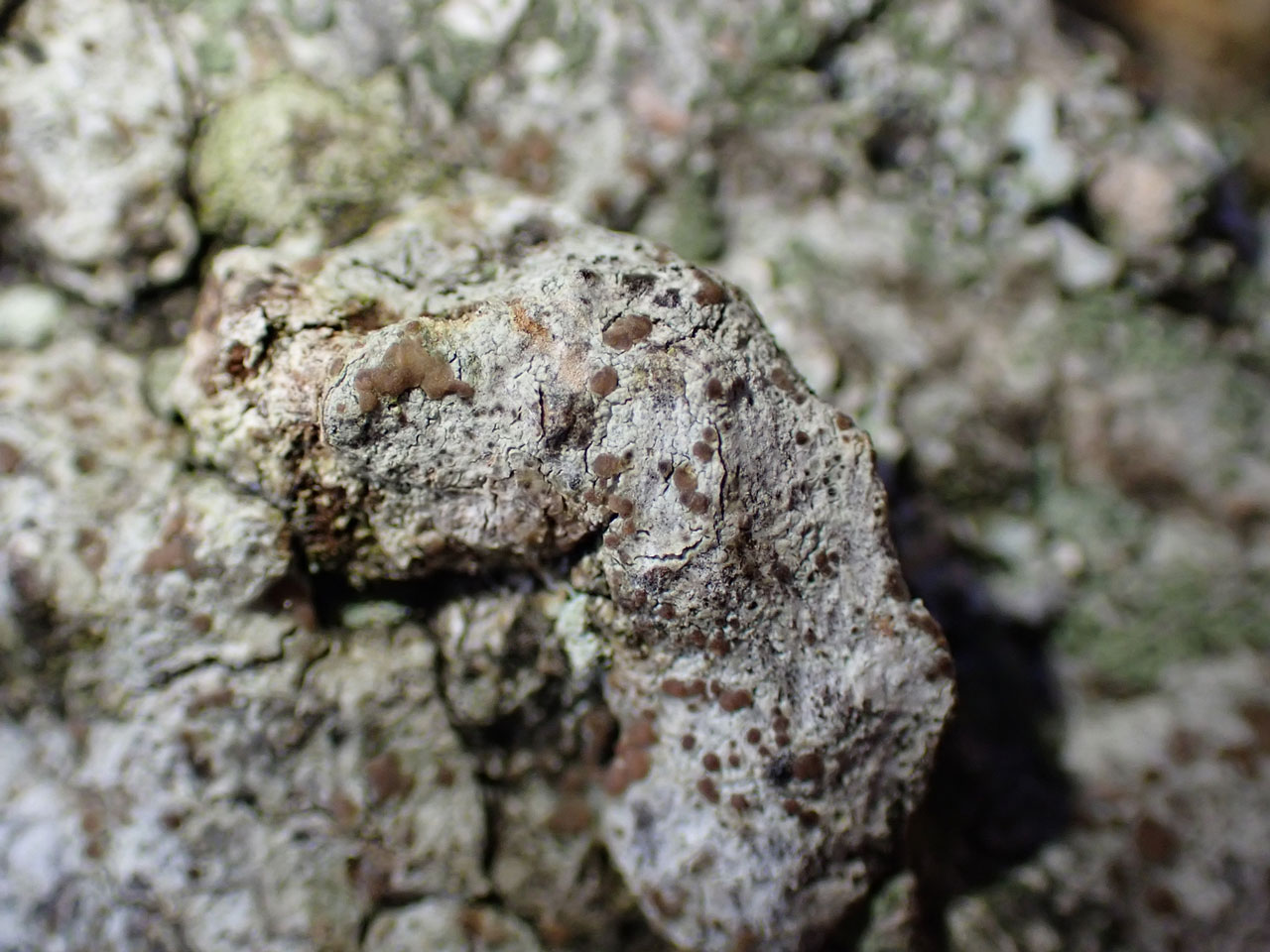
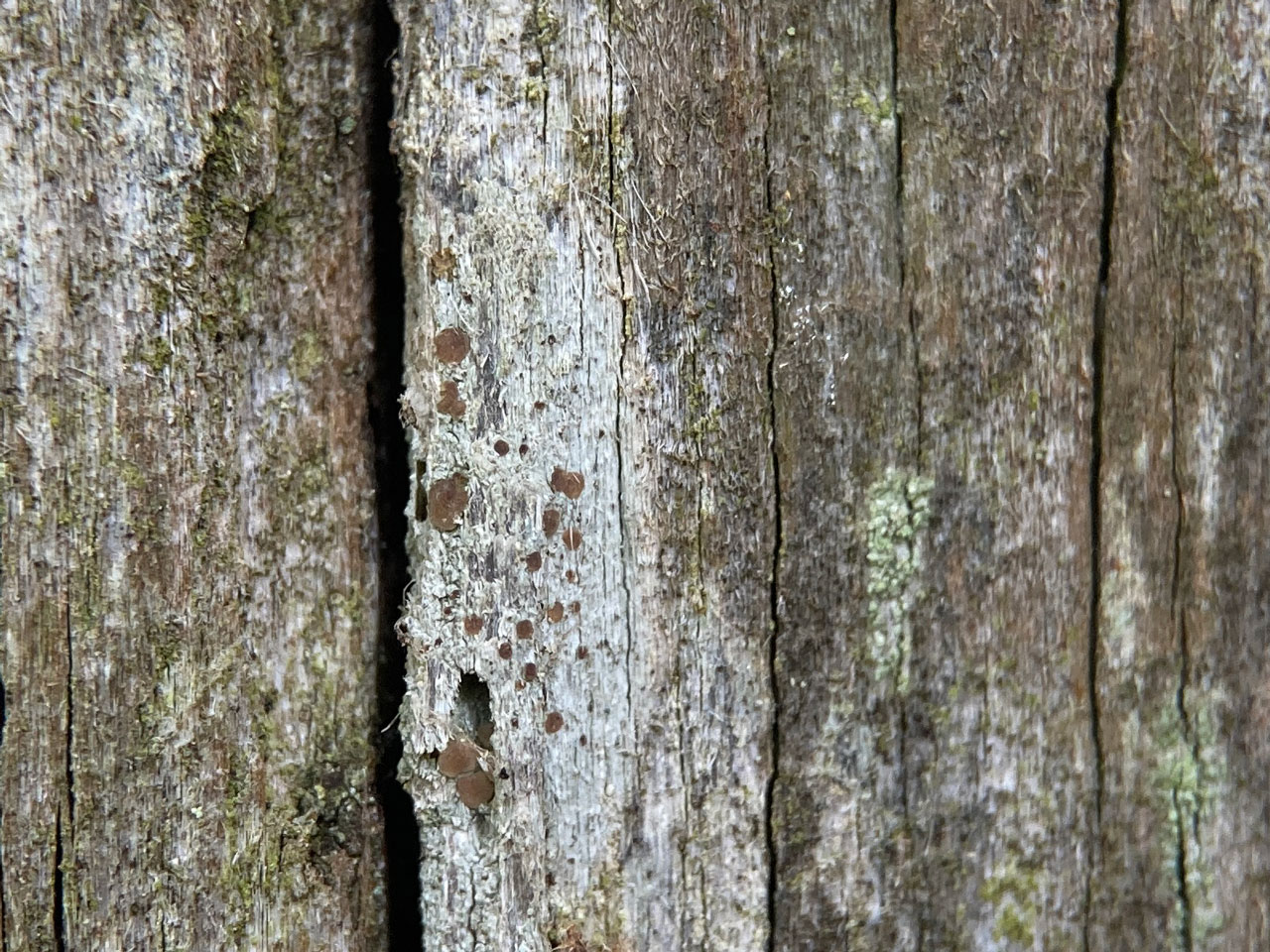
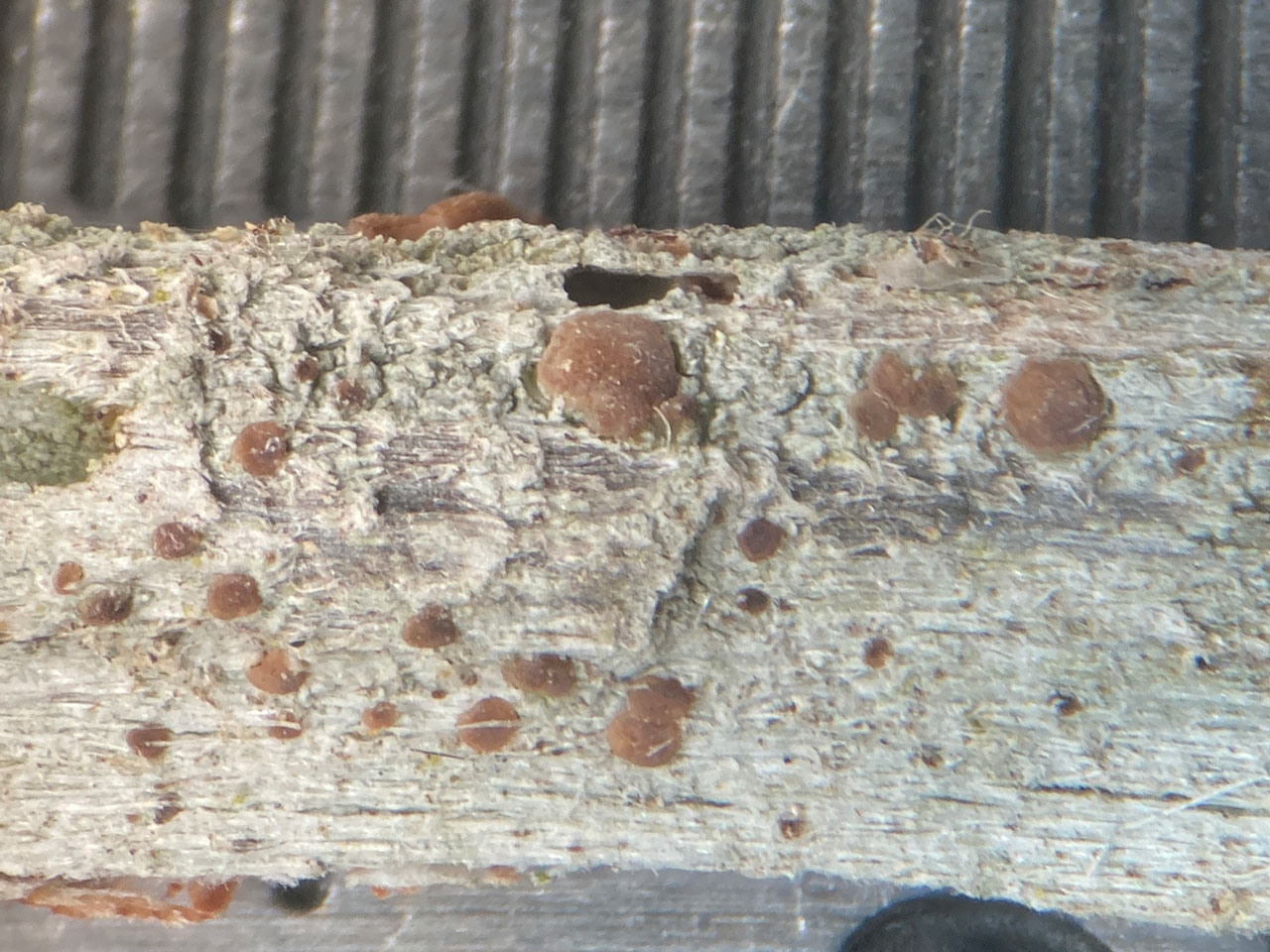
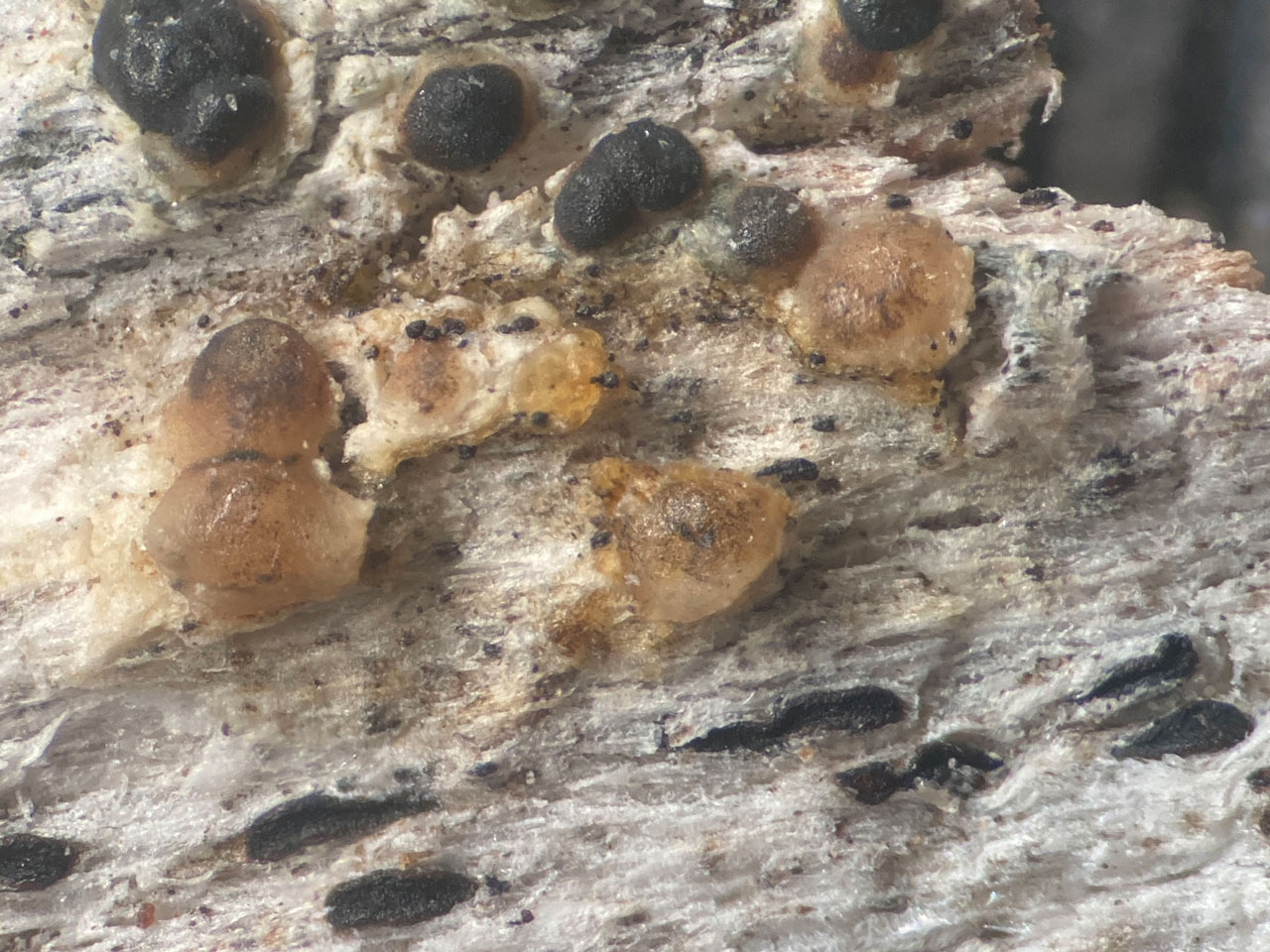
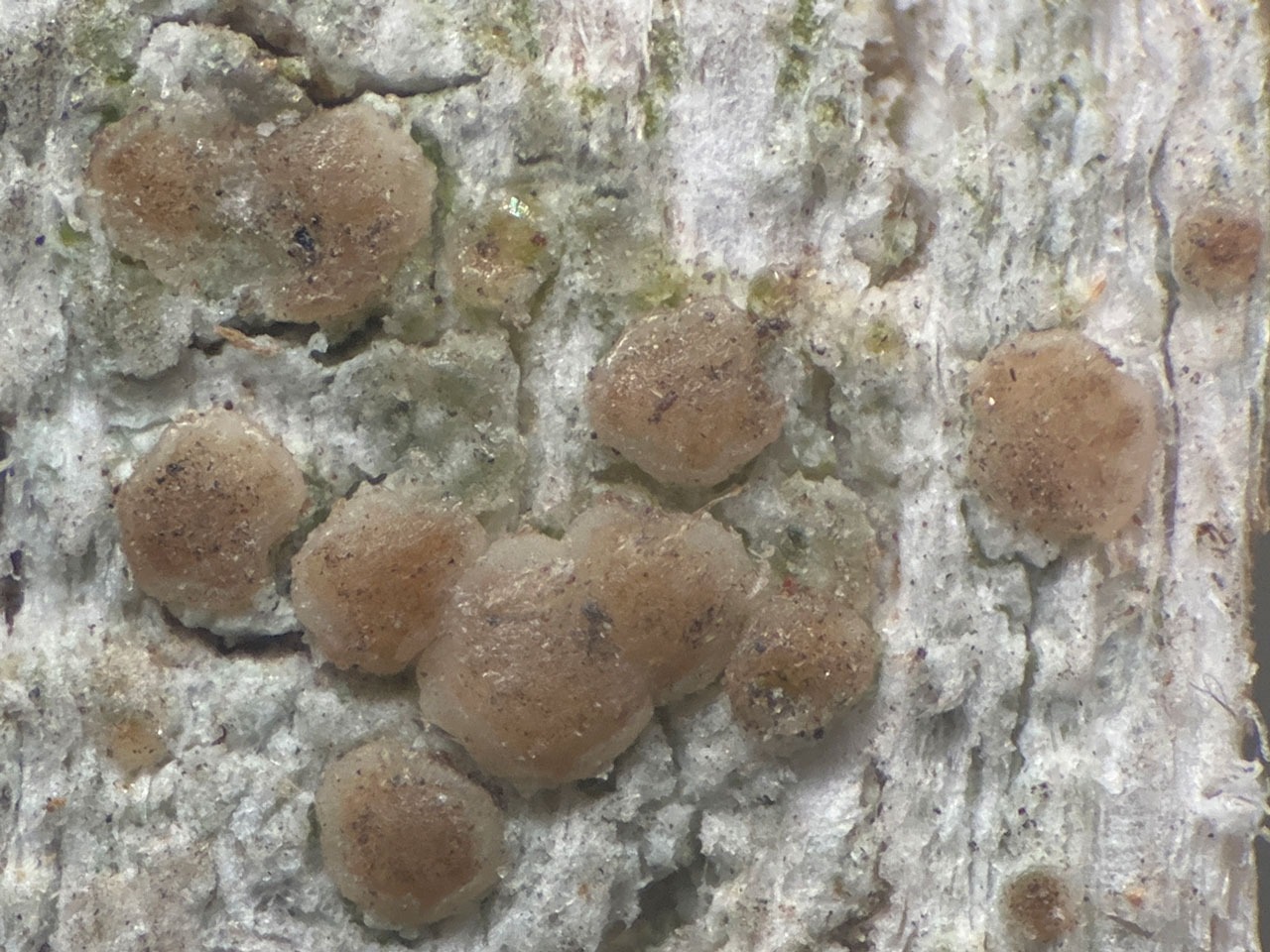
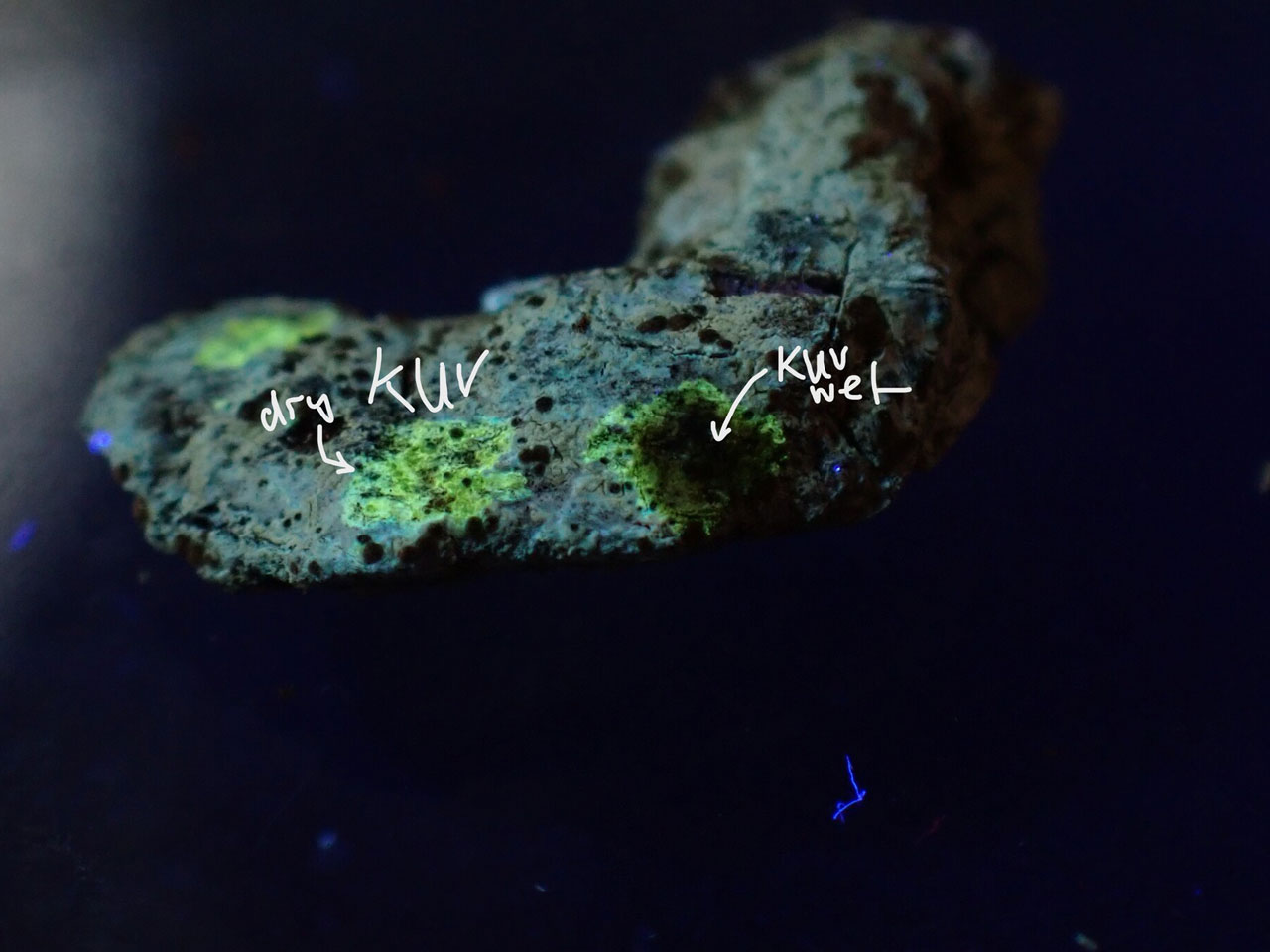
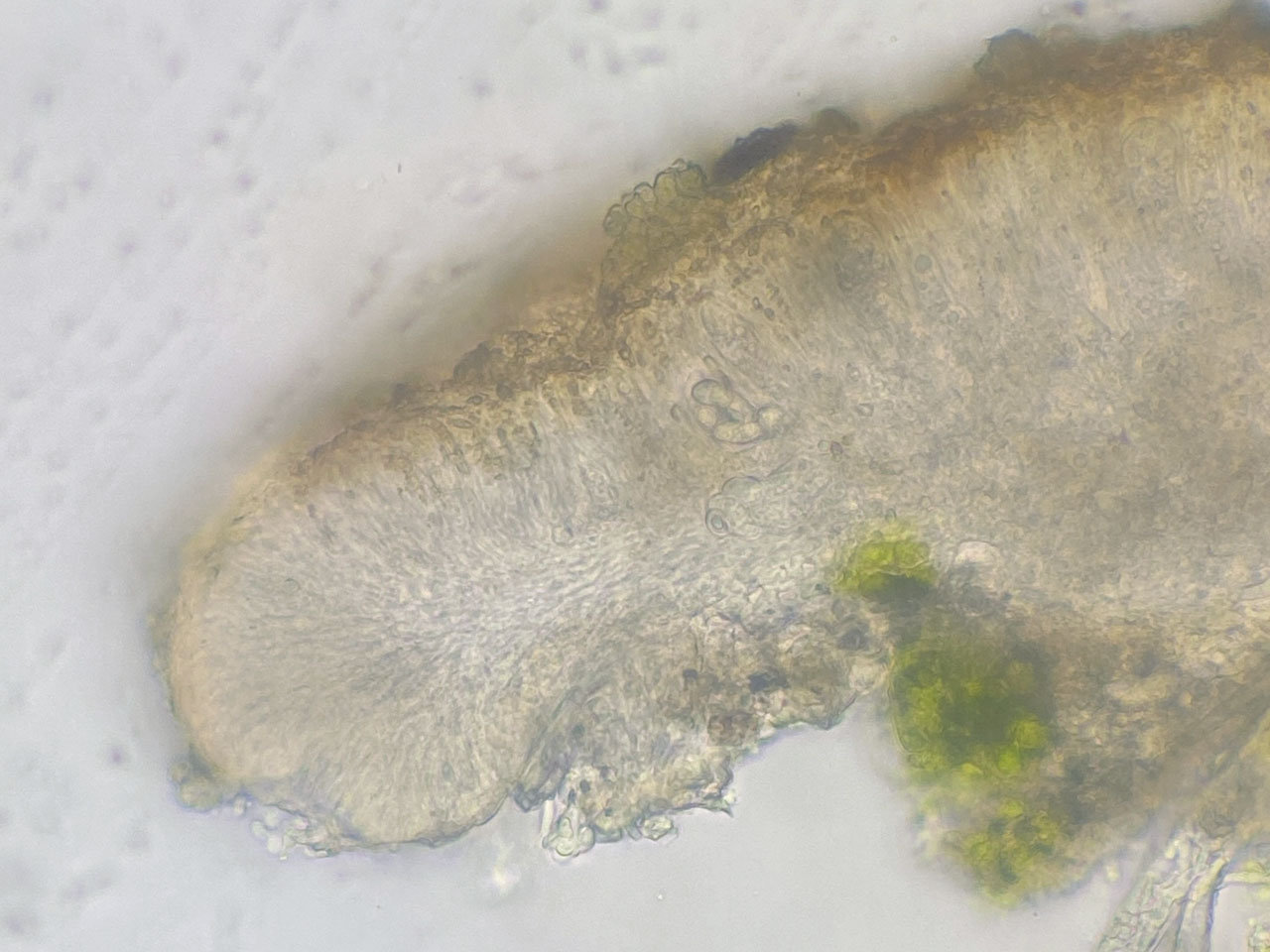
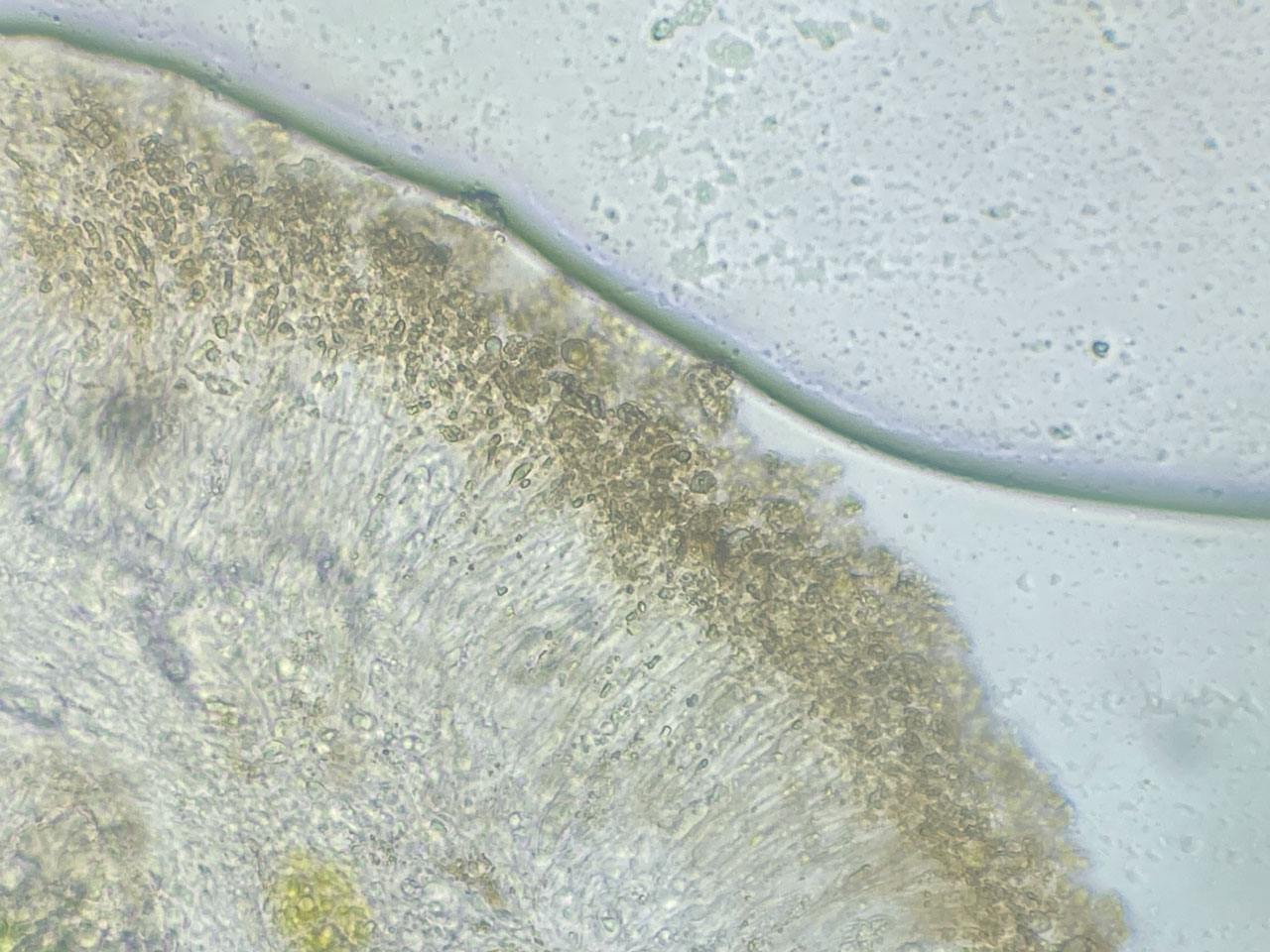
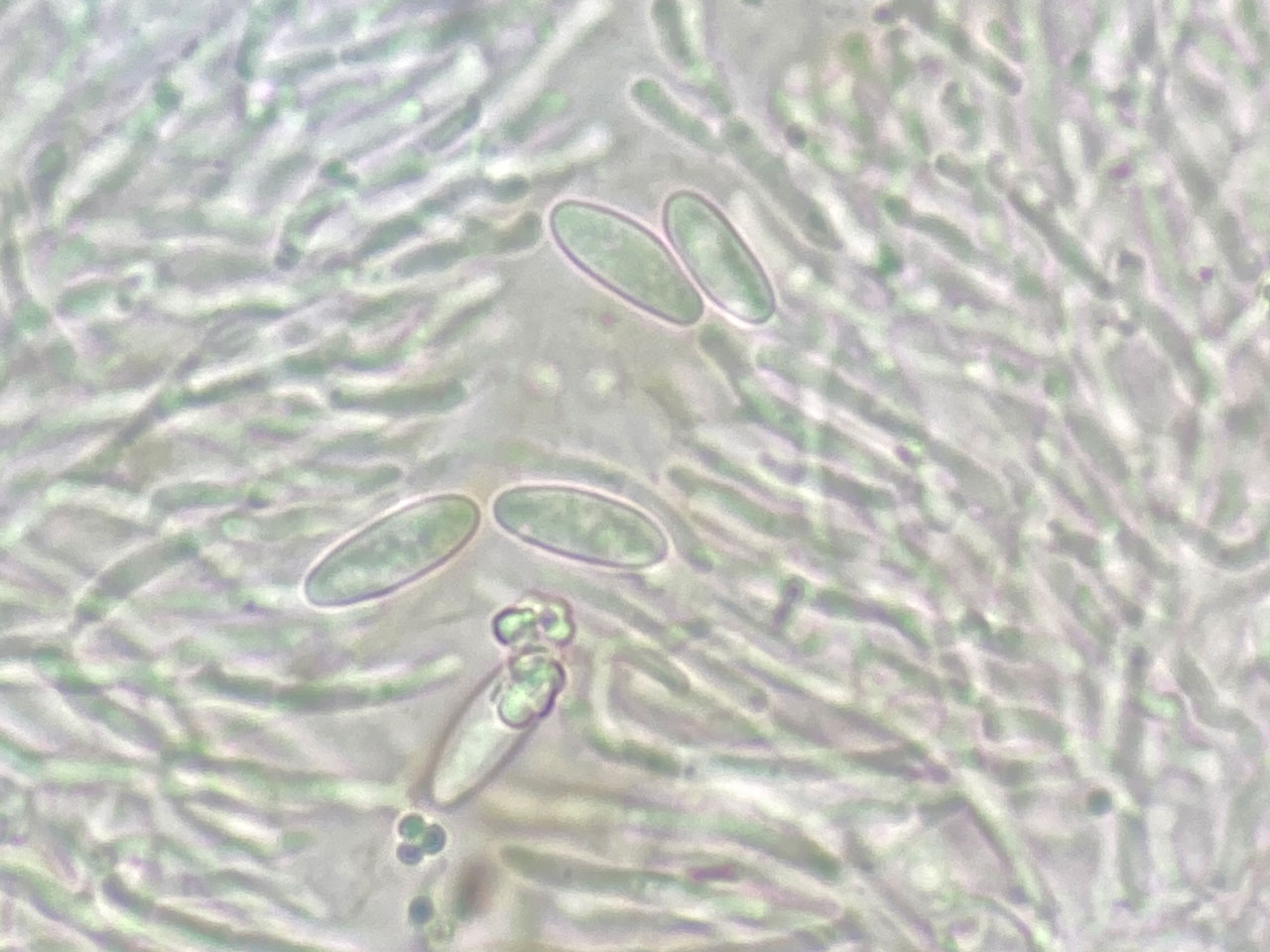
Until recently, this lichen was thought to be regionally Extinct, but it was refound in 2026 and proves to have been overlooked as Lecanora symmicta or Lecanora aitema. It is most similar to Lecanora symmicta but is always C– and can be definitively determined by the K/UV(dry)+ bright yellow spot test for atranorin, which is absent in the other two species. The apothecia are also usually pale brown, sometimes with a thin whitish pruina; the combination is distinctive with the pale thallus. On bark and lignum of coniferous trees, hard Oak lignum, and worked timber, probably widespread but not frequent.
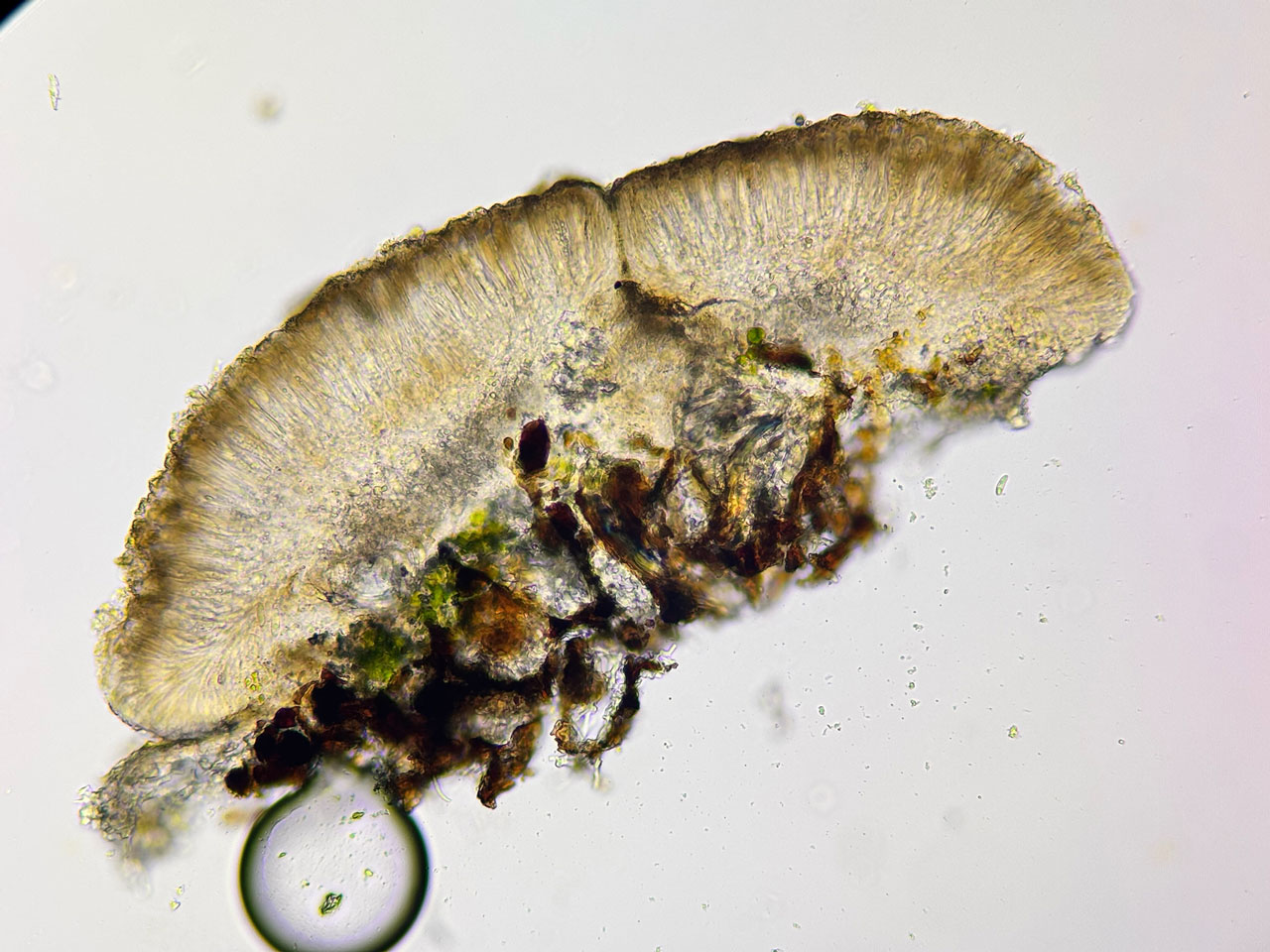
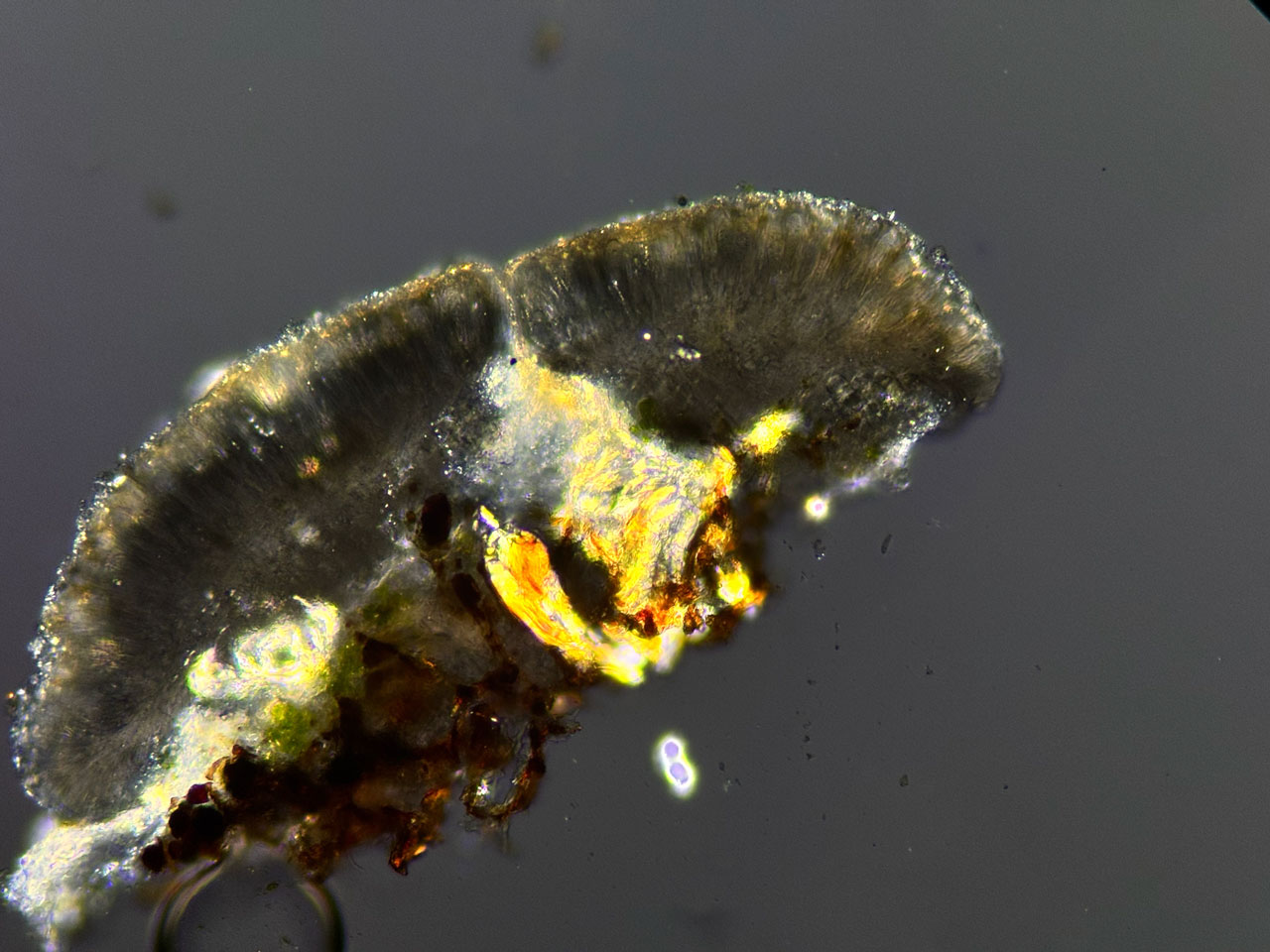
Thallus crustose, usually indeterminate, usually rimose-areolate and strongly warted, not glossy, light grey or greenish white to greenish grey; prothallus white. Apothecia 0.2–0.6 (–0.9) mm diam., single or densely crowded and then angular due to compression, sessile with a weakly constricted base; disc yellow-brown pinkish or dull greyish brown, sometimes darkening to charcoal grey, flat to moderately convex, sometimes with a very thin whitish pruina; true exciple present except in very young apothecia, not prominent, excluded in older apothecia; thalline margin usually only present in young, innate apothecia; hypothecium 15–90 (–150) µm thick, colourless to weakly yellowish, IKI+ weakly blue; hymenium (35–) 40–50 µm thick, colourless to pale ochre above, IKI+ blue; epithecium 5–15 (–20) µm thick, ochre to orange-brown with copious coarse grains between the tips of paraphyses, often streaking deeply into the hymenium, dissolving in KOH but not in N; paraphyses moderately branched and anastomosing, not or only slightly swollen at the apex; asci clavate, 30–35 (–45) × 9–11 µm; ascospores aseptate or rarely one-septate, (10–) 12.5–13.5 (–16) × (3.5–) 4–5 µm. Pycnidia uncommon, immersed in the thallus; conidia (9–) 11–15 (–17) × 0.8–1.0 µm, the longer conidia sometimes gently curving. Thallus C–, K+ yellowish, K/UV(dry)+ bright yellow, Pd± yellowish; secondary metabolites atranorin, usnic acid in small amounts.
A variable species especially in disc pigmentation and extent of pruina. Some forms with pale discs are very similar to Lecanora symmicta (with which the species was formerly placed in synonymy), which can be distinguished by a C± orange, K– and K/UV(wet)+ yellow-green rather than C–, K+ yellowish and K/UV(dry)+ bright yellow, reaction and a generally more yellowish green tinge of thallus and apothecia. Lecanora aitema can also be similar to forms with darker disk, but this usually has darker disks and is C–, K– & K/UV–.
On bark and lignum of coniferous trees, hard Oak lignum, and worked timber, probably widespread but not frequent. At least in Central Europe, P. filamentosa does not seem to be that rare. There, it has a rather special ecology, often being found on conifer twigs in humid or boggy places.
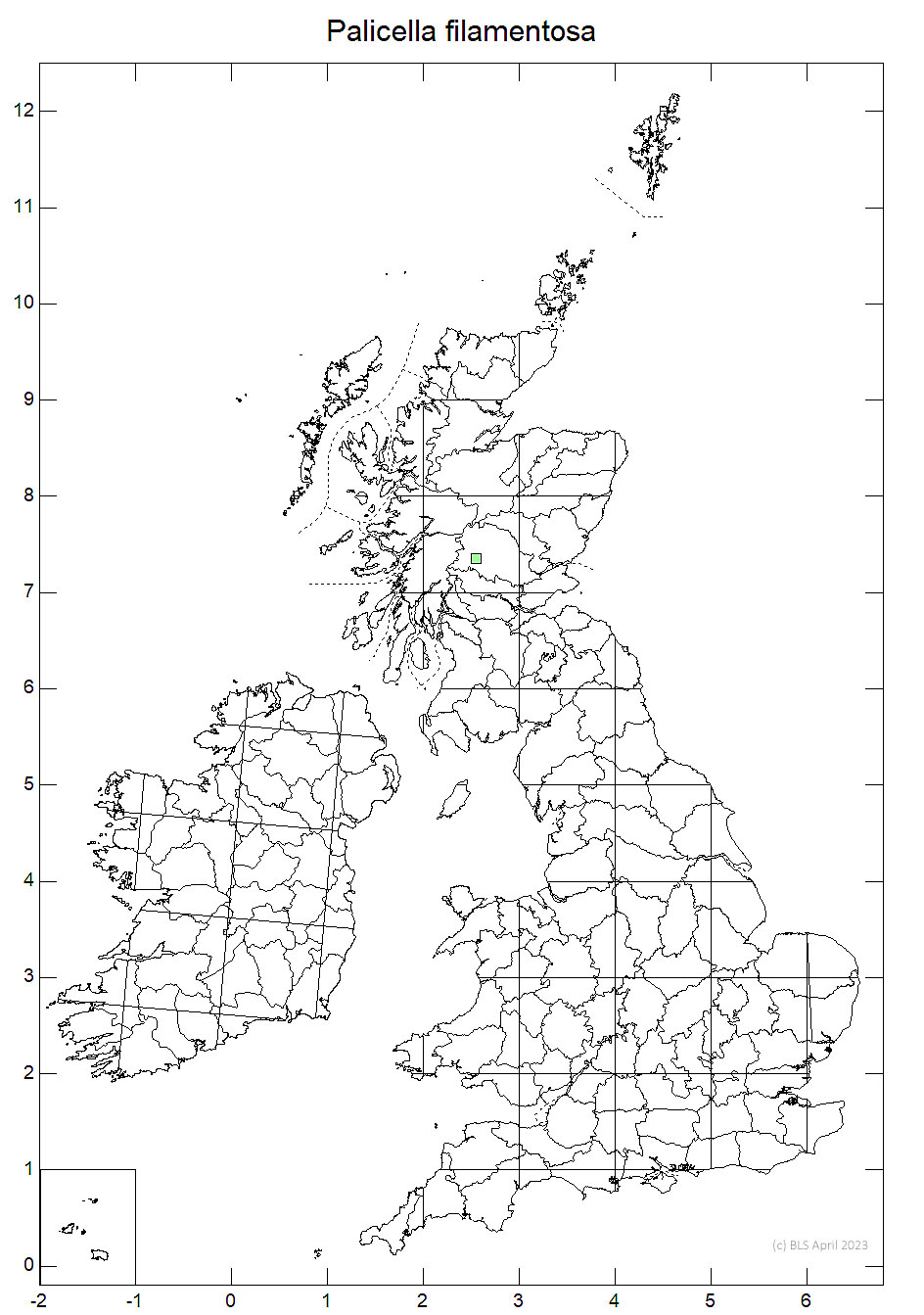

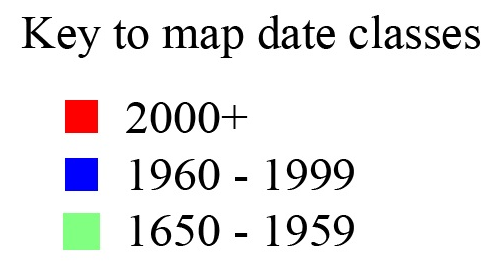
This lichen was thought to be potentially extinct in our region and not recorded since 1934 with only two records from central Scotland (Argyll and Mid Perths) and W. Yorkshire. In 2026, it was refound in Exmoor and appears to have been overlooked previously, with the new K/UV(dry)+ bright yellow test for atranorin being very useful for field determinations. Also recorded in 2026 in Randor, Hampshire and East Inverness and likely to be widespread but probably not frequent.
Not assesed
Cannon, P., Malíček, J., Ivanovich, C., Printzen, C., Aptroot, A., Coppins, B., Sanderson, N., Simkin, J. & Yahr, R. (2022). Lecanorales: Lecanoraceae, including the genera Ameliella, Bryonora, Carbonea, Claurouxia, Clauzadeana, Glaucomaria, Japewia, Japewiella, Lecanora, Lecidella, Miriquidica, Myriolecis, Palicella, Protoparmeliopsis, Pyrrhospora and Traponora. Revisions of British and Irish Lichens 25: 1-83.
Text by Neil A Sanderson based on Cannon et al (2022)