Myriolecis zosterae
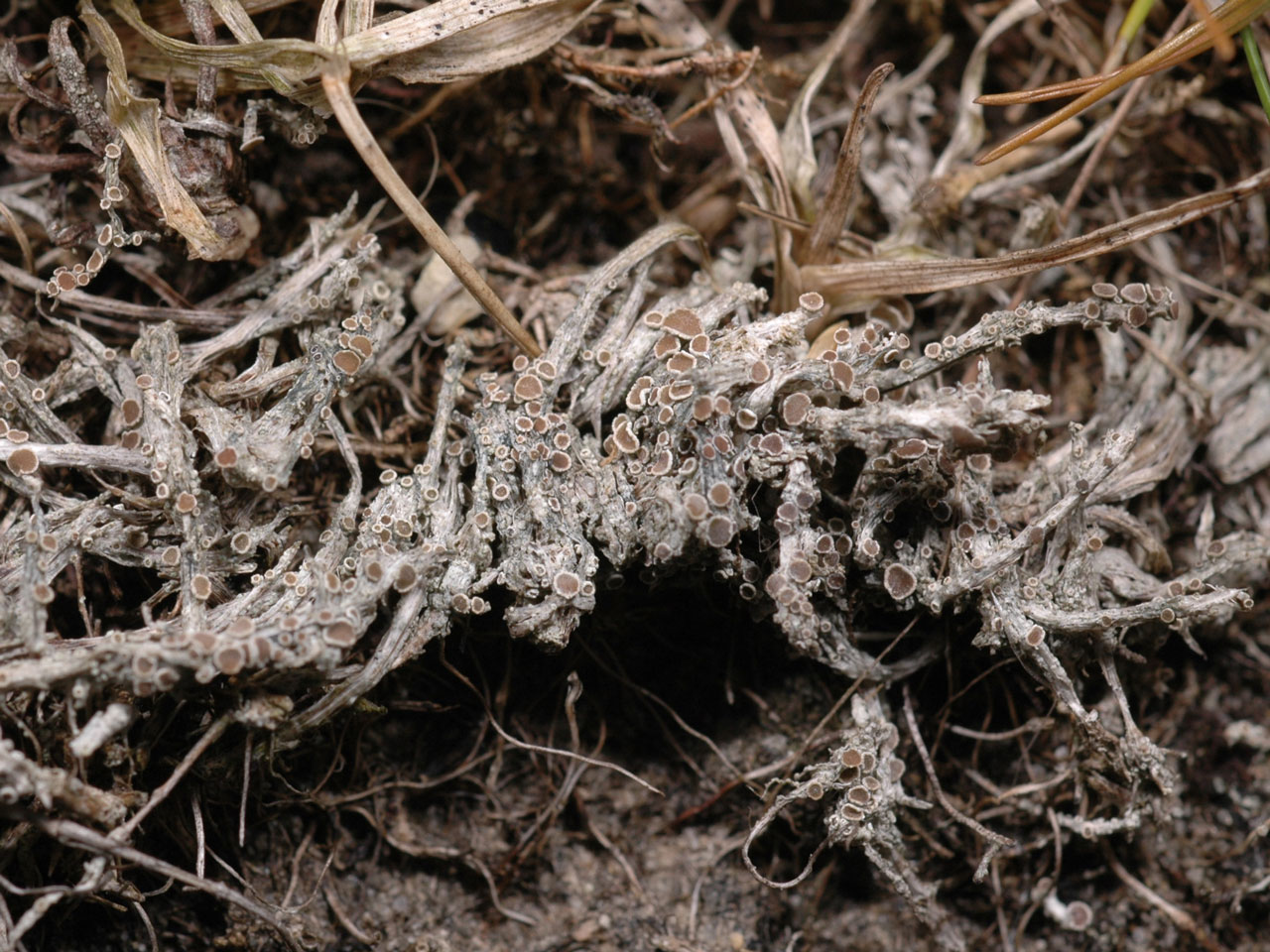
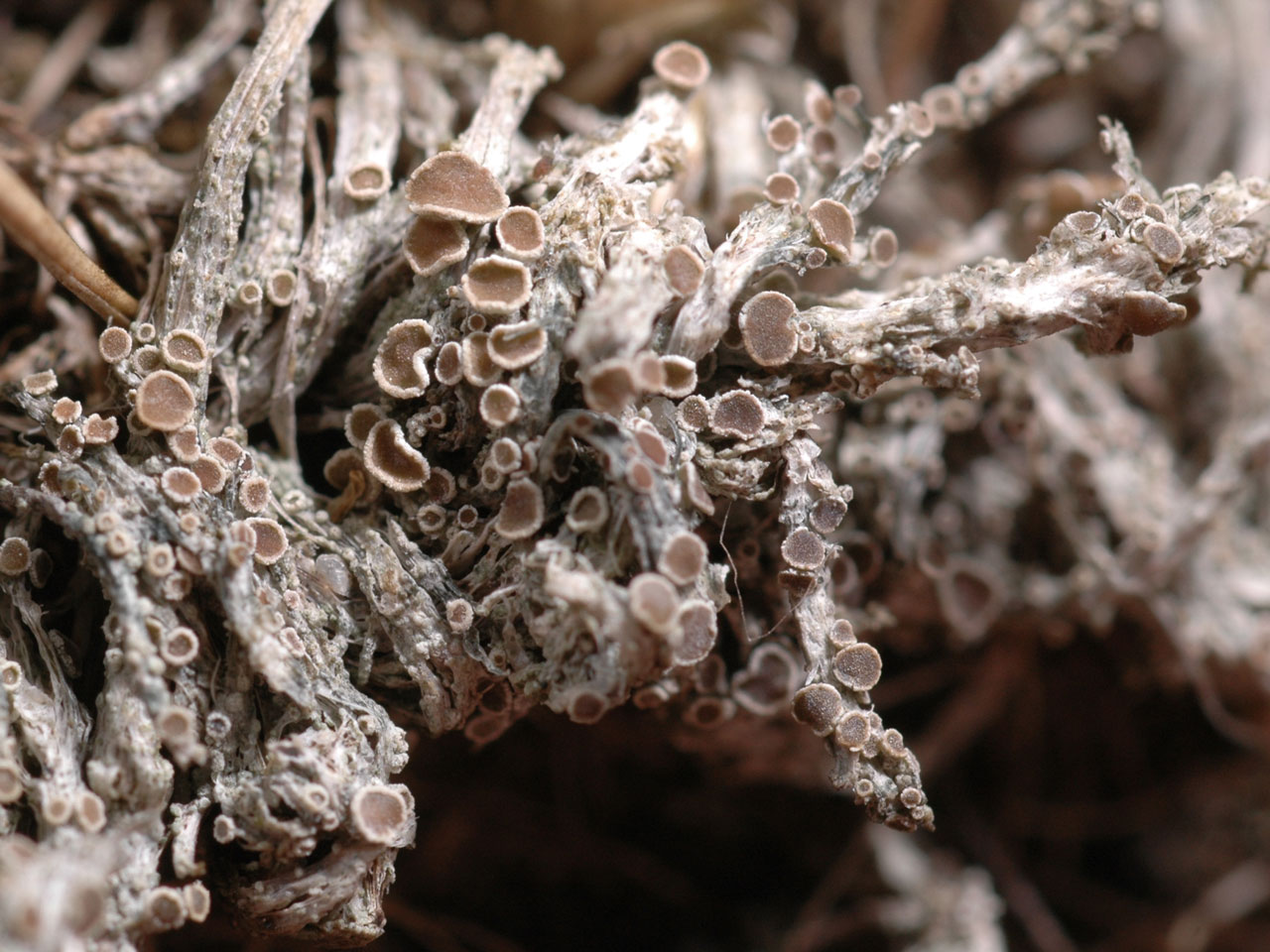
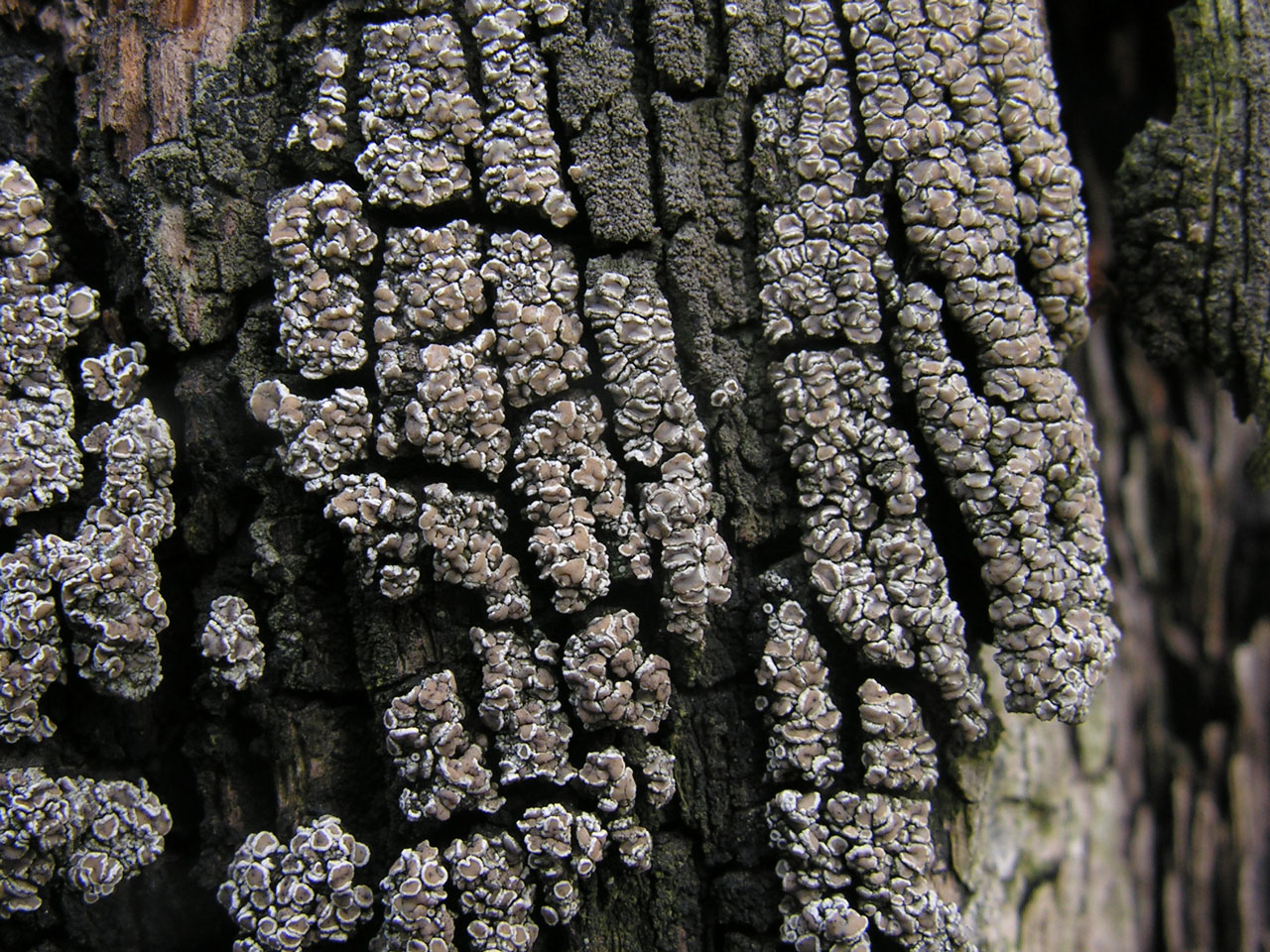
A distinctive Myriolecis species, characterised by the large, peltate (attached to the substrate only at a central point on its lower surface) apothecia with a thin, white, flexuose margin contrasting with the brown discs, the negative reactions and the coastal habitat.
Thallus thin to evanescent, pale grey; prothallus not apparent. Apothecia to 3.5 mm diam., scattered or clustered, flat and orbicular at first, peltate, becoming concave and sinuous when old; thalline margin 60–140 µm thick, persistent, entire, becoming raised above the disc and involute to flexuose when old, pale grey; disc smooth, becoming concave, pale to mid brown, not pruinose; hypothecium colourless; hymenium 45–60 µm tall; epithecium narrow, colourless to brown, with a few crystals which dissolve in K; paraphyses compact, ca 1 µm diam., septate, unbranched or sparsely branched, the apices colourless, not or slightly swollen to ca 3 µm diam. Asci clavate, 33–45 × 10–15 µm. Ascospores ellipsoidal to ovoid, aseptate, colourless, 9–13 (–16) × 4–6 µm. Thallus and apothecia C–, K–, KC–, Pd–, UV– (no lichen substances detected by TLC).
A distinctive species, characterised by the large, peltate apothecia with a thin, white, flexuose margin contrasting with the brown discs, the negative reactions and habitat. Separated from Lecanora subfusca group species by the presence of atranorin in the thallus of those species (K+ yellow & K/UV(dry)+ bright yellow spot test).
On dead and decaying Thrift Armeria tufts, plant debris, soil and worked timber, or more rarely epiphytic. Mainly found on dead vegetation and soil on exposed sea coasts but also found widely on old posts in the intertidal projecting above the high tide line on more sheltered coasts.
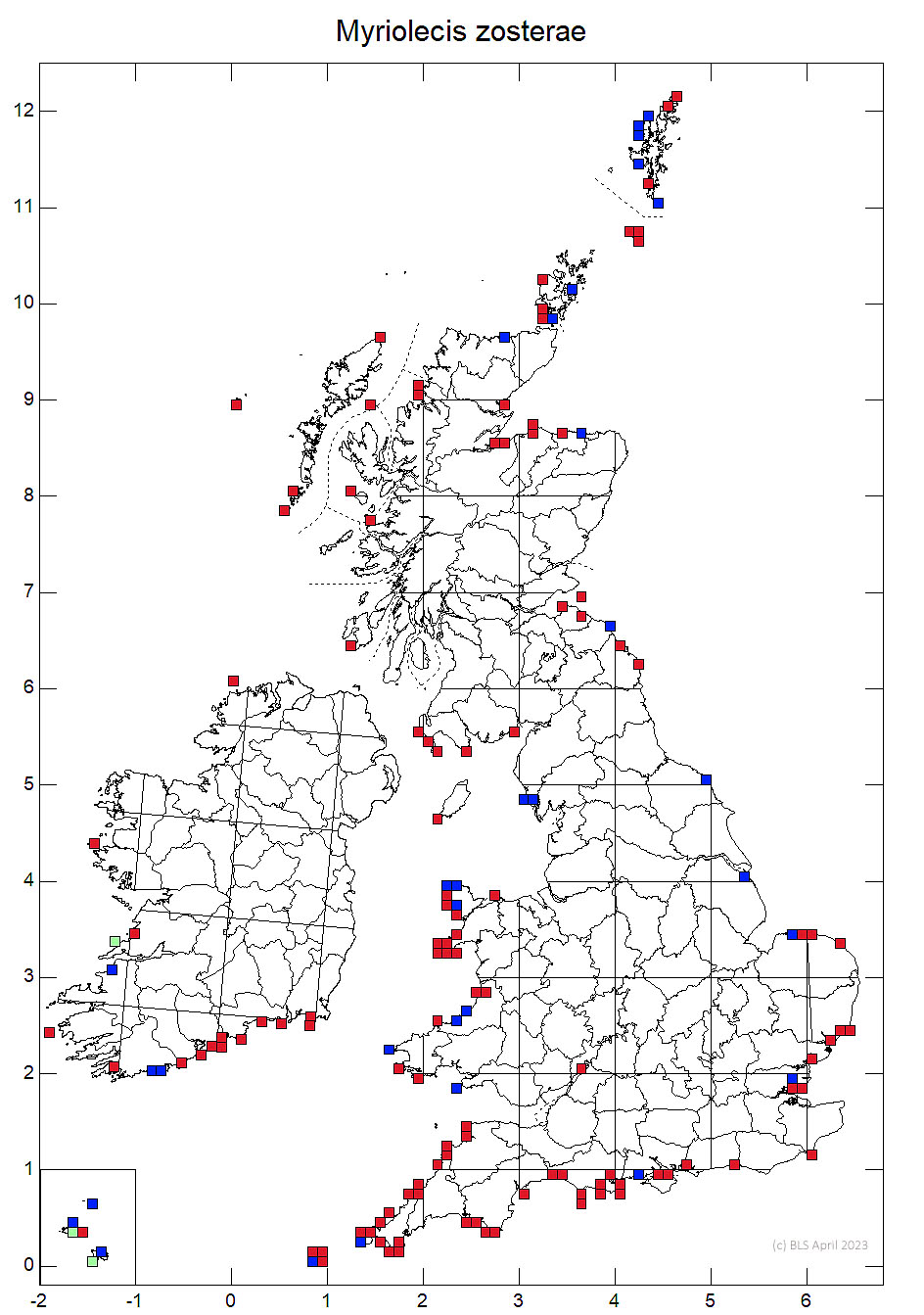


Local, scattered around the coastline of Britain and Ireland.
A local species of more open coastal habitats and old posts and timber on saltmarshes
Britain: Notable
Wales: Data Deficient (likely no longer applicable)
Cannon, P., Malíček, J., Ivanovich, C., Printzen, C., Aptroot, A., Coppins, B., Sanderson, N., Simkin, J. & Yahr, R. (2022). Lecanorales: Lecanoraceae, including the genera Ameliella, Bryonora, Carbonea, Claurouxia, Clauzadeana, Glaucomaria, Japewia, Japewiella, Lecanora, Lecidella, Miriquidica, Myriolecis, Palicella, Protoparmeliopsis, Pyrrhospora and Traponora. Revisions of British and Irish Lichens 25: 1-83.
Text by Neil A Sanderson based on Cannon et al (2022)