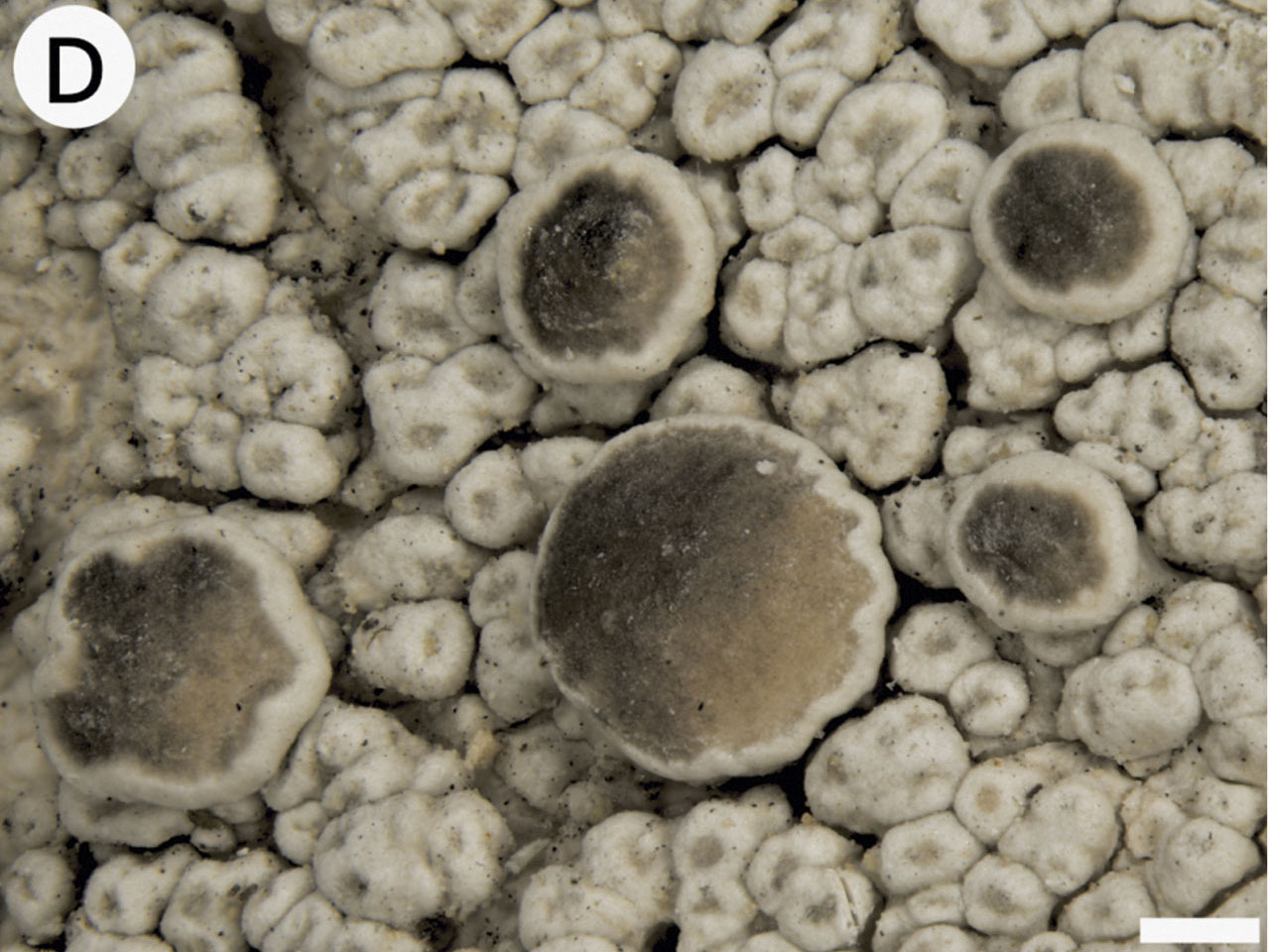
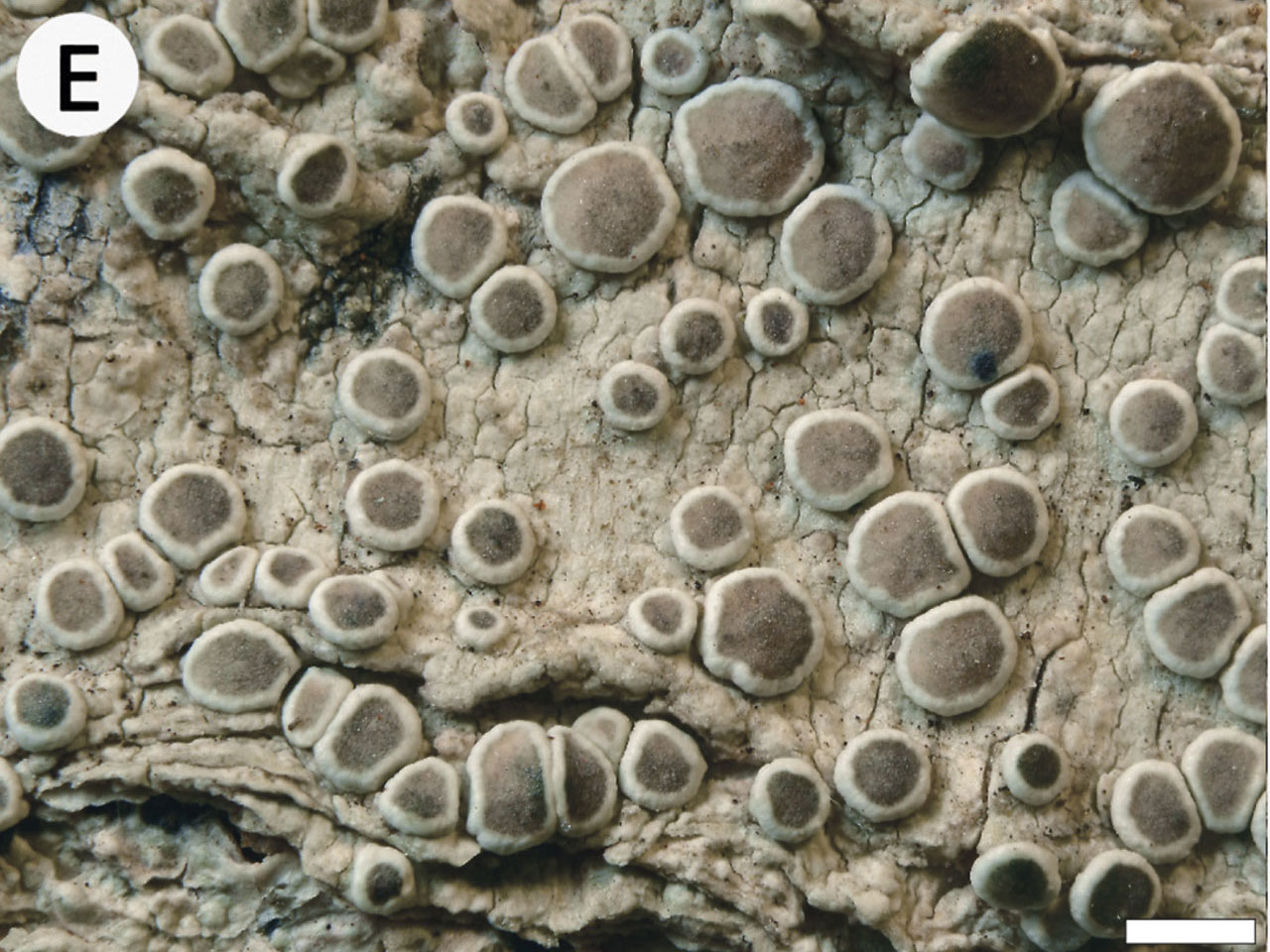
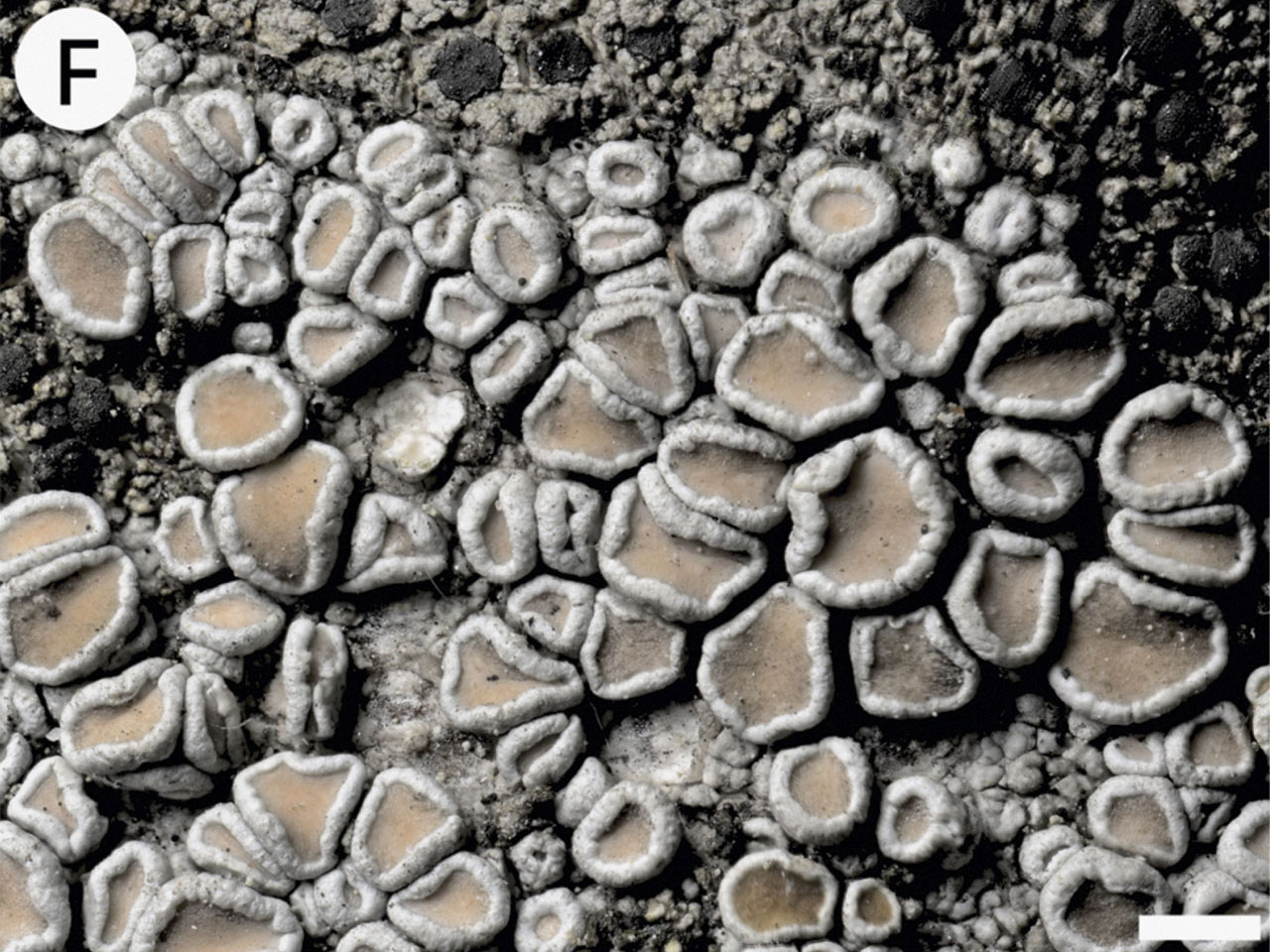
A member of Lecanora hybocarpa aggregate. Material referred to the American species Lecanora hybocarpa has now been shown not to belong to this species but to include three cryptic species in Britain: Lecanora sinuosa, L. subsinuosa & L. cryptosinuosa (Arup et al, 2025). The contorted morphs that were called Lecanora sinuosa are also shown to be extreme forms of Lecanora sinuosa or L. subsinuosa. The cryptic species have some slight morphological differences, but can only reliably be told apart by DNA analysis. Arup et al (2025) recommended that morphological identified material is called Lecanora hybocarpa s. lat. for the time being.
Similar to Lecanora sinuosa but differs in the ITS and mtSSU sequences, the darker apothecial discs with inconsistent pigmentation, occasional presence of a tiny pruina on young discs, and the usually thicker apothecial margin with the inner edge dentate.
Lecanora sinuosa has paler discs than those in L. subsinuosa which are often medium to ±dark or greyish brown. Additionally, the disc pigmentation in L. subsinuosa is often not uniform and shades of brown vary within a single apothecium. Young apothecia in L. subsinuosa are sometimes very thinly pruinose and their margin is often dentate in the inner edge. Macroscopically, the thalline margin is thicker in L. sinuosa (50–300 μm) compared to 50–150(–300) μm thick in L. subsinuosa. Finally, the apothecial cortex in L. sinuosa is usually somewhat thinner (12–25 μm) than in L. subsinuosa (20–50(–60) μm). Nevertheless, for accurate identification, a DNA barcode is recommended (Arup et al, 2025).
Lecanora subsinuosa is found on a wide range of deciduous trees and bushes. It grows both on the trunk and on small twigs and branches in exposed situations, quite often together with L. chlarotera or L. argentata. With a small number of exceptions, the collections in Arup et al (2025) come from oceanic lowland forests, and solitary and roadside trees.
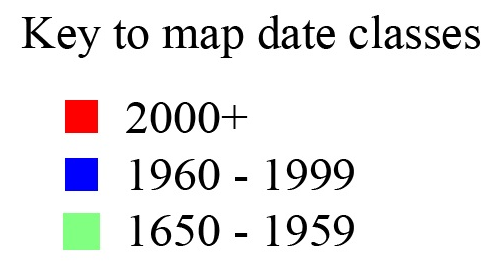
This new species is so far known from Denmark, Germany, Norway, Romania, Scotland and Sweden, which implies a mainly north-western distribution in Europe. Arup et al (2025) confirmed it from two locations in Scotland: on Ash at N edge of wood, adjacent to arable field, The Pineapple, Airth, Stirling and Hazel and Rowan twigs in grazed old-growth mixed deciduous forest with Hazel predominant, Glen Stockdale, Port Appin, Argyll. Material resembling the more distinctive morphs of Lecanora subsinuosa has also been observed occasionally in Hampshire in undisturbed open woods, field trees in farmland and street trees in suburbia but these have not yet been confirmed by sequencing.
The information available is limited as yet, but records from intensively farmed landscapes suggests the species is not threatened and is most likely Least Concern.
Arup, U., Malíček, J., Schiefelbein, U. & Holien, H. (2025) Lecanora hybocarpa and similar European species. The Lichenologist 57:239-255. doi:10.1017/S0024282925101291
Text by Neil A Sanderson based on Arup et al (2025).