Lecanora phaeostigma


A small but distinctive lichen, with small deep reddish- to dark brown apothecia with a pale fawn margin that is soon excluded, growing on an immersed, or superficial white thallus, found on dry lignum. Characteristic of dead wood in old woods and deer parks, mainly in boreal woodlands, especially native pinewoods, but also rarely on old Oak lignum in the south.
Thallus ± immersed, or superficial and then white, continuous; prothallus absent. Apothecia (0.2–) 0.3–0.5 (–0.7) mm diam., deep reddish- to dark brown or almost black, strongly convex to almost tuberculate; true exciple pale fawn, soon becoming excluded, giving the apothecia a piebald appearance, exciple colourless within, the outer edge pale brown; epithecium reddish brown, K± olivaceous brown; hymenium
25–40 µm tall, pigment from epithecium spreading down into the hymenium but paler; hypothecium colourless; paraphyses unbranched or sparsely branched; apical cells brown and swollen to 3–4 µm diam. Asci 30–40 × 10–12 µm, walls ± evenly thickened throughout; outer layer and the shallow apical dome K/I uniformly blue, Catillaria-type. Ascospores (8–) 9–12 × (2.5–) 3–4 (–5) µm, cylindric-ellipsoidal to slightly curved, often pale greyish brown and/or spuriously 1-septate. Conidia 14– 18 × 4–5 µm, curved. Thallus C–, K–, KC–, Pd–, UV– (lichen products not detected by TLC).
This species has been included in Lecanora (see Holien et al. 2016), but a thalline margin is absent and the asci are not characteristic of that genus; its affinities require further study. It was found to cluster with Puttea in a poorly understood clade within the Lecanorales by Stenroos et al. (2009) but it does not appear to belong to that genus. British collections are not conspecific with “Lecidea” hypopta but are referable to Lecanora phaeostigma (Körb.) Almb., but it seems unlikely that this generic placement will endure. See also Lecidea erythrophaea.
On dry wood of standing or fallen trunks or more rarely bark, of Birch, Oak and especially conifers, mostly in old woodland and deer parks.
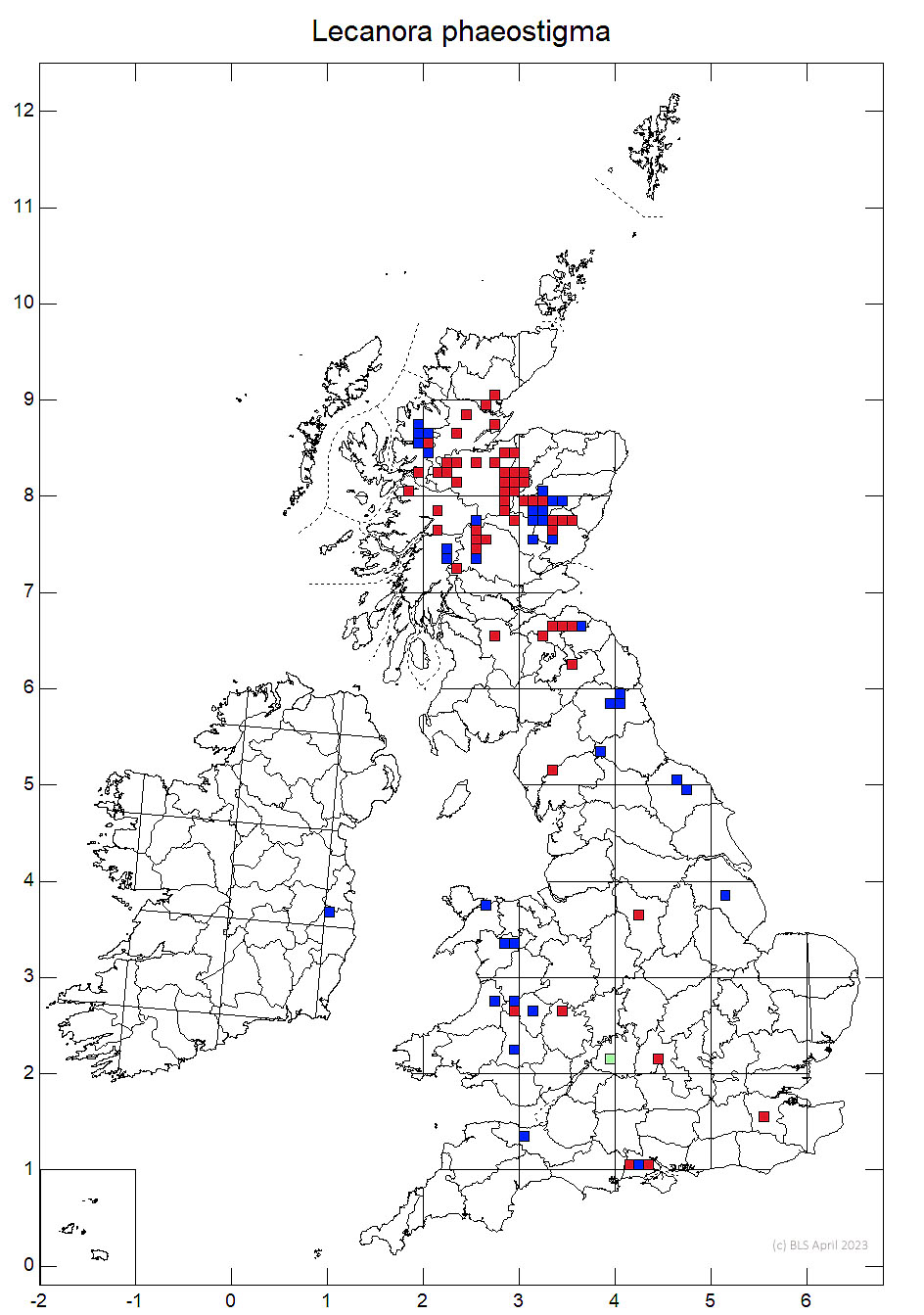

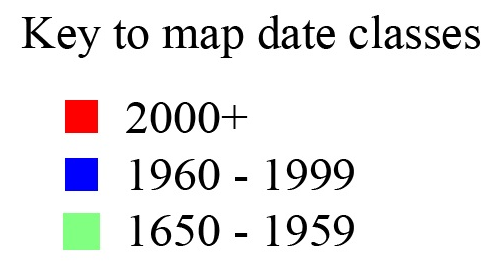
Widespread in the Scottish Highlands, where it is most frequent in the east, rare and scattered to the south. S. England (Somerset, Hampshire, Oxford & Kent), N. England (Derbyshire, N.E. Yorkshire, Northumberland), C. & N. Wales, Scotland.
Characteristic of high quality dead wood (lignum) habitats mainly in old woodlands and deer parks, rarely in more recent habitats, and included in the Boreal Woodland Index as a species characteristic of old woodland. Frequent in old woodlands in the Highlands, but rare and potentially threatened to the south in Wales and England.
Britain: Notable
Fryday, A., Cannon, P., Coppins, B., Aptroot, A., Sanderson, A. & Simkin, J. (2024). Lecideales, including Amygdalaria, Bellemerea, Bryobilimbia, Cecidonia, Clauzadea, Farnoldia, Immersaria, Koerberiella, Lecidea, Lecidoma, Porpidia, Porpidinia and Romjularia (Lecideaeae) and Lopadium (Lopadiaceae). Revisions of British and Irish Lichens 40: 1–51.
Holien, H., Palice, Z., Björk, C.R., Goward, T. & Spribille, T. (2016). Lecidea coriacea sp. nov., a lichen species from oldgrowth boreal and montane forests in Europe and North America. Herzogia 29: 412–420.
Stenroos, S., Huhtinen, S., Lesonen, A., Palice, Z. & Printzen, C. (2009). Puttea, gen. nov., erected for the enigmatic lichen Lecidea margaritella. Bryologist 112: 544–557.