Lecanora leptacina
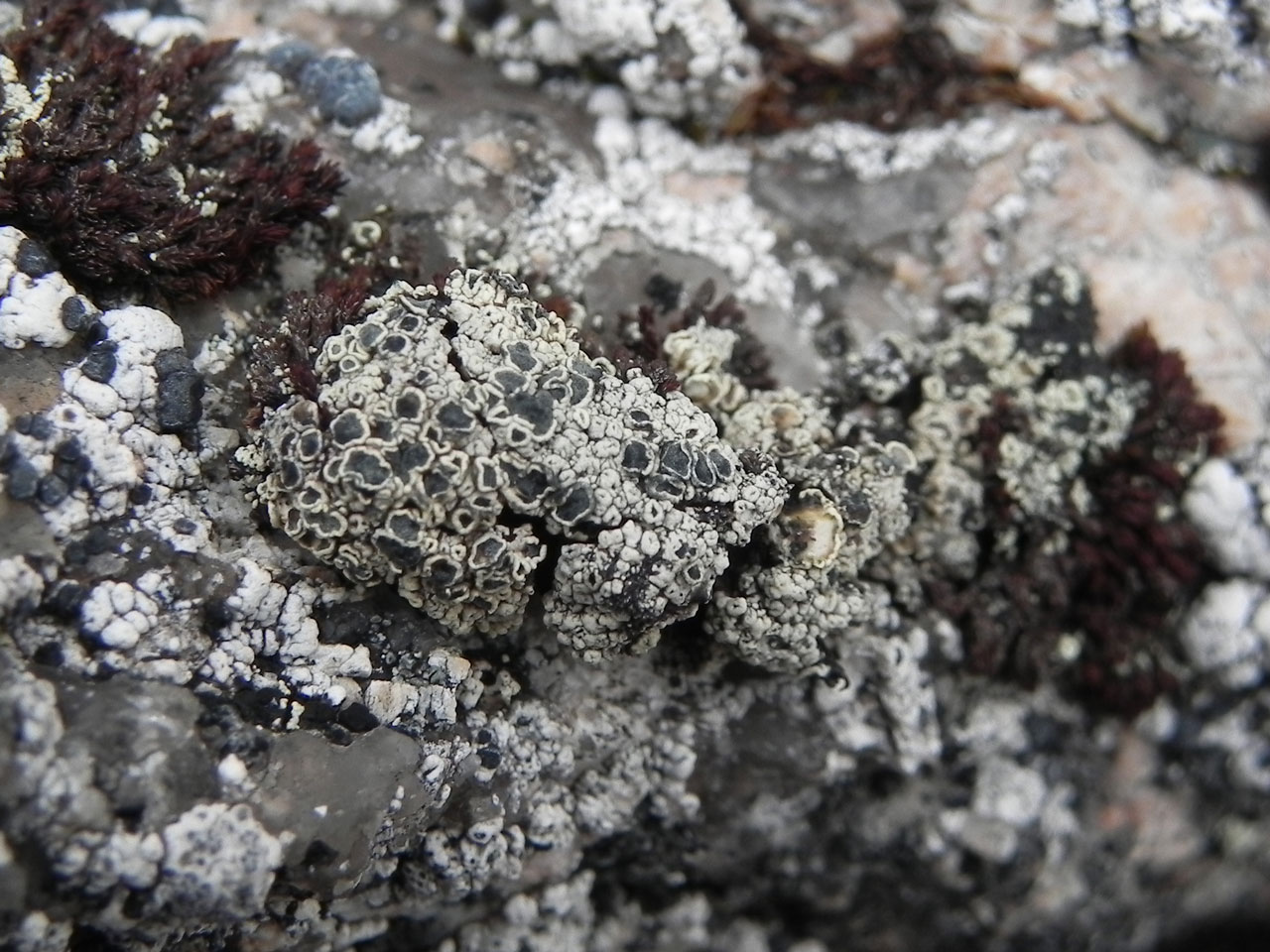
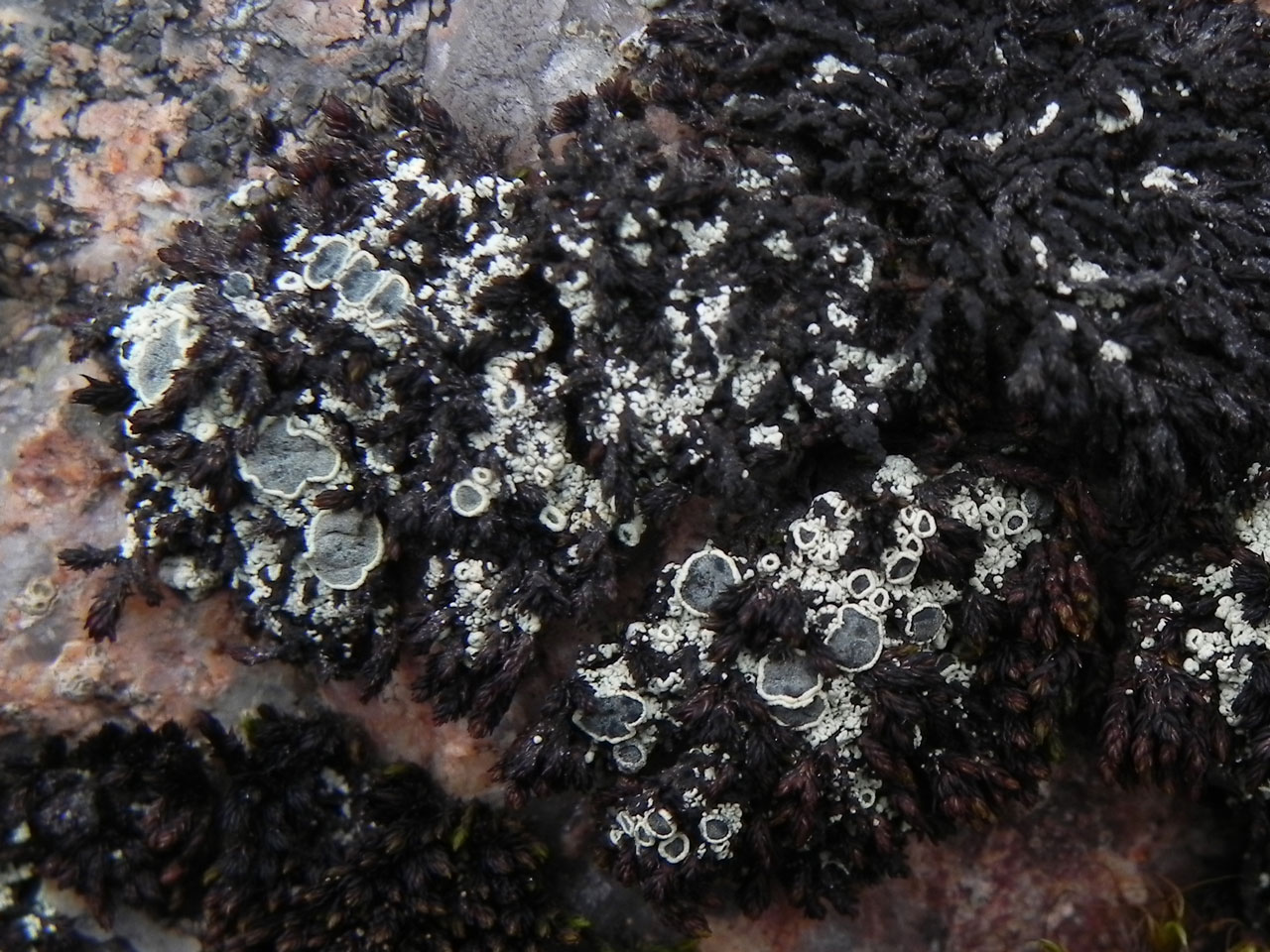
A distinctive late snow patch species, confined to the Scottish Highlands, with its main populations in the eastern Central Highlands, especially the Cairngorms. Recognised by the yellow to yellow-green squamules growing on mosses on rocks in late snow patches with lecaonorine apothecia with olivaceous to green-black or black discs.
Thallus of dispersed to aggregated, convex to subglobose squamules, the margins somewhat crenulate, tending to form an uneven areolate thallus with somewhat flattened and radiating margins, yellow to yellow-green; prothallus black. Apothecia (0.4–) 1–1.5 mm diam., at first immersed, becoming sessile but not or slightly constricted below; thalline margin persistent, well-developed, entire, becoming flexuose, crenate and bead-like with age; disc olivaceous to green-black or black, uneven to slightly convex, matt, often thinly white-blue pruinose; epithecium yellow-brown, with or without granules, K+ blue-green; hymenium 60–80 µm tall, yellow-brown above; paraphyses 1.5–2 µm diam., sparsely branched and anastomosed, apices to 4.5 µm diam., slightly thickened and brown. Ascospores (9–) 10–13 (–15) × (4.5–) 6–9 µm, ellipsoidal or narrowly ellipsoidal, walls ca 1 µm thick. Thallus C–, K–, Pd± yellowish, UV– (atranorin, psoromic and conpsoromic acids but see comments below).
Described as distinctive member of the L. subfusca group in its broad sense by Cannon et al (2022), but a sequence from material from Alaska (Spribille et al, 2020) indicates it is actually in an isolated branch between the Lecanora polytropa group and the clade that includes Myriolecis, Protoparmeliopsis and Rhizoplaca. Spribille et al (2020) also question the chemistry given above; the type specimen contains usnic acid, isousnic acid and zeorin. Specimens from coastal Norway are concordant with the type specimen in lacking psoromic acid, but may contain small amounts of atranorin. The Scottish material needs checking, but the spot tests given are not those expected of a lichen with psoromic acid but do suggest the presence of atranorin. See also L. chlorophaeodes.
On mosses (especially Andreaea spp) and decaying plant material, usually in areas of late-lying snow, montane, over 650 m alt.
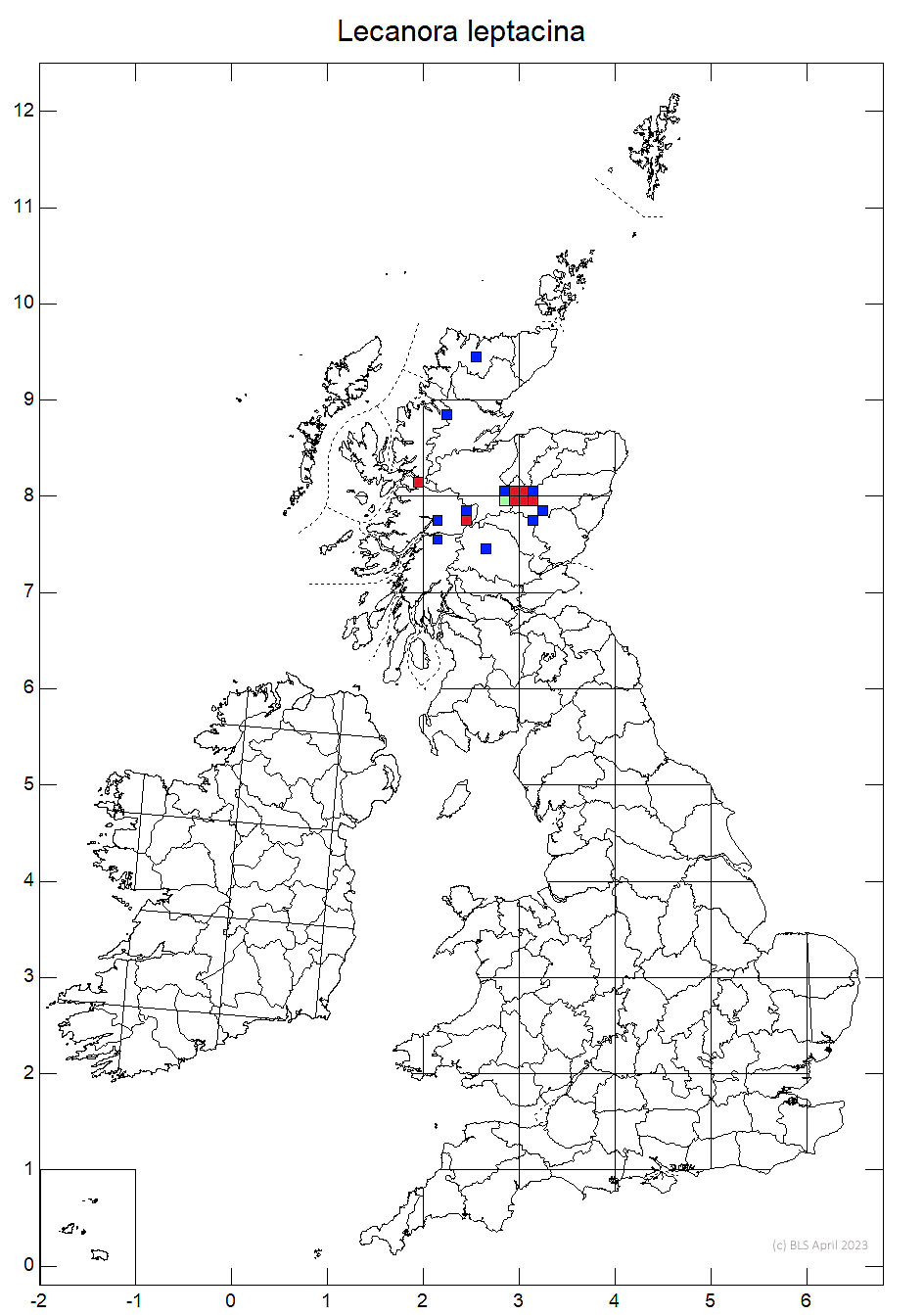

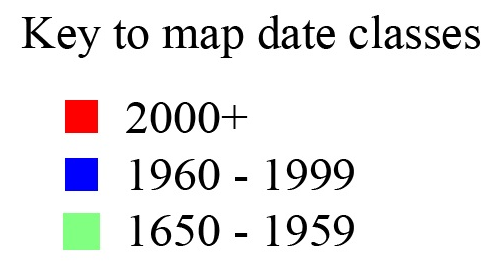
Rare, Scotland (Highlands).
A distinctive late snow patch species, confined to the Scottish Highlands, with its main populations in the eastern Central Highlands, especially the Cairngorms. Like all snow patch species likely to be threatened by climate change and, as a result will probably be assessed as threatened in the next Red List. This would be a good species to use in monitoring the impact of warmer summers on snow patch lichens as it is easily recognised.
Britain: Notable
Cannon, P., Malíček, J., Ivanovich, C., Printzen, C., Aptroot, A., Coppins, B., Sanderson, N., Simkin, J. & Yahr, R. (2022). Lecanorales: Lecanoraceae, including the genera Ameliella, Bryonora, Carbonea, Claurouxia, Clauzadeana, Glaucomaria, Japewia, Japewiella, Lecanora, Lecidella, Miriquidica, Myriolecis, Palicella, Protoparmeliopsis, Pyrrhospora and Traponora. Revisions of British and Irish Lichens 25: 1-83.
Spribille, T. et al. (2020) Lichens and associated fungi from Glacier BayvNational Park, Alaska. Lichenologist 52, 61–181. Open assess
Text by Neil A Sanderson based on Cannon et al (2022)