Lecanora intumescens
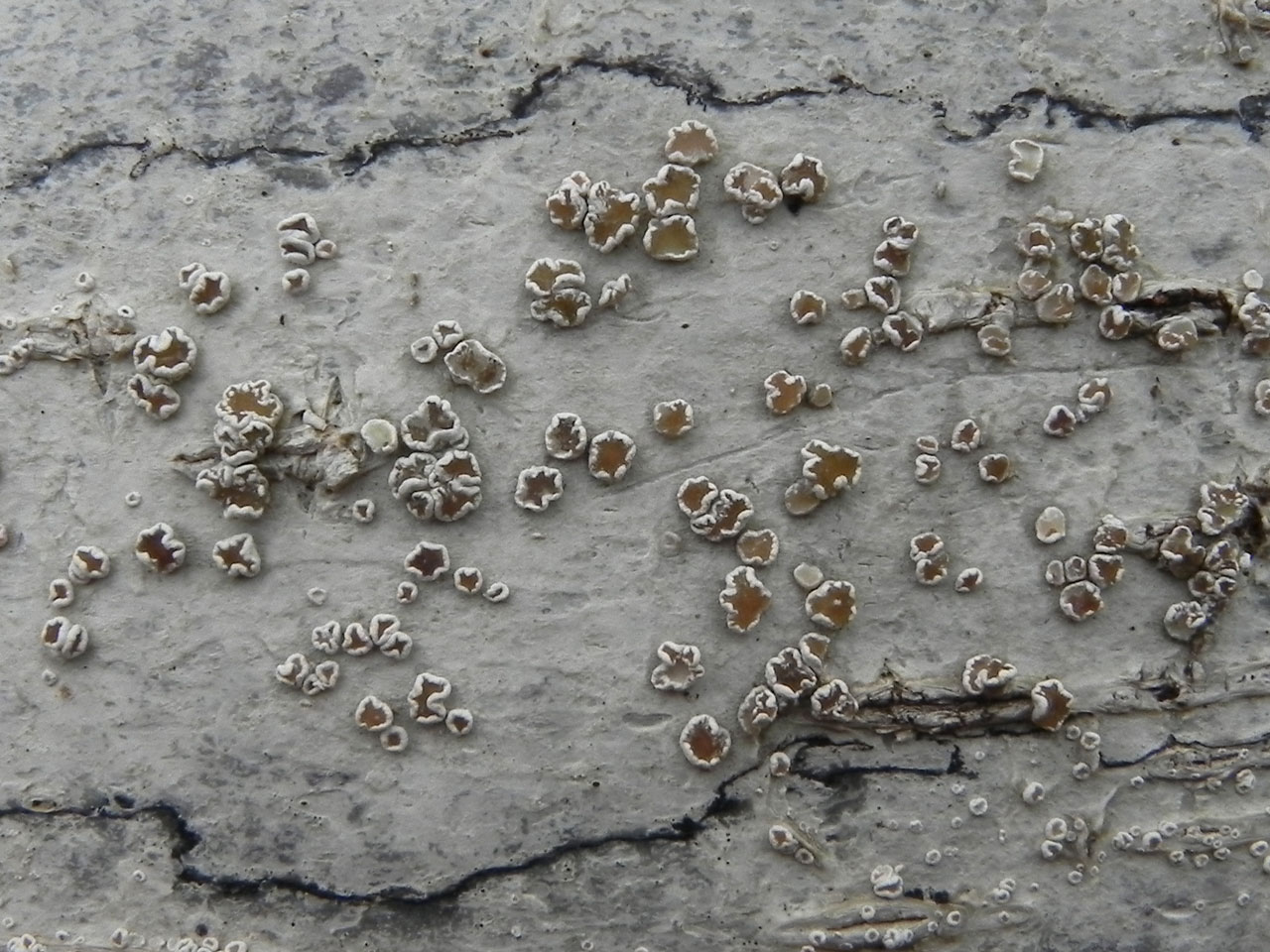
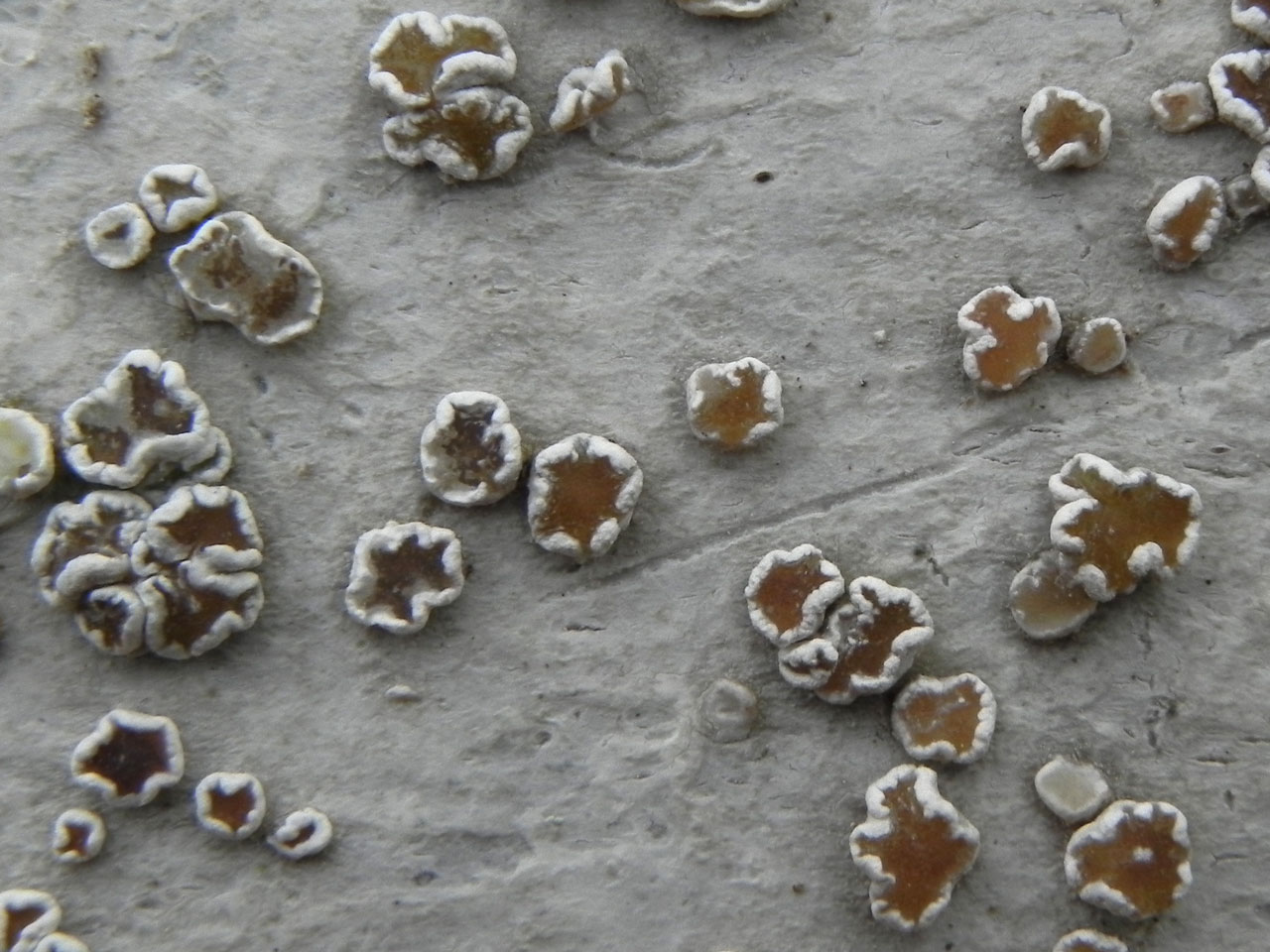
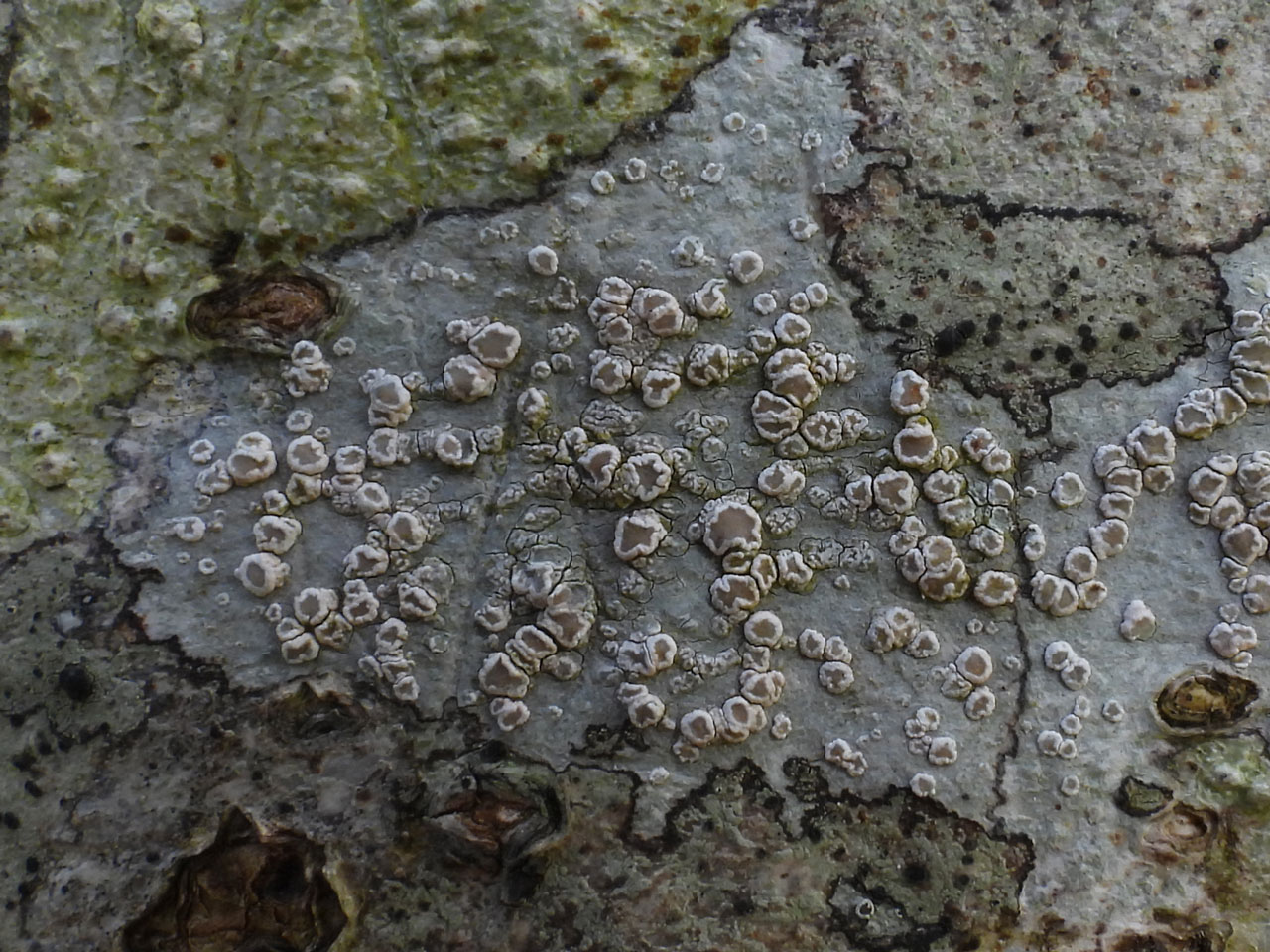
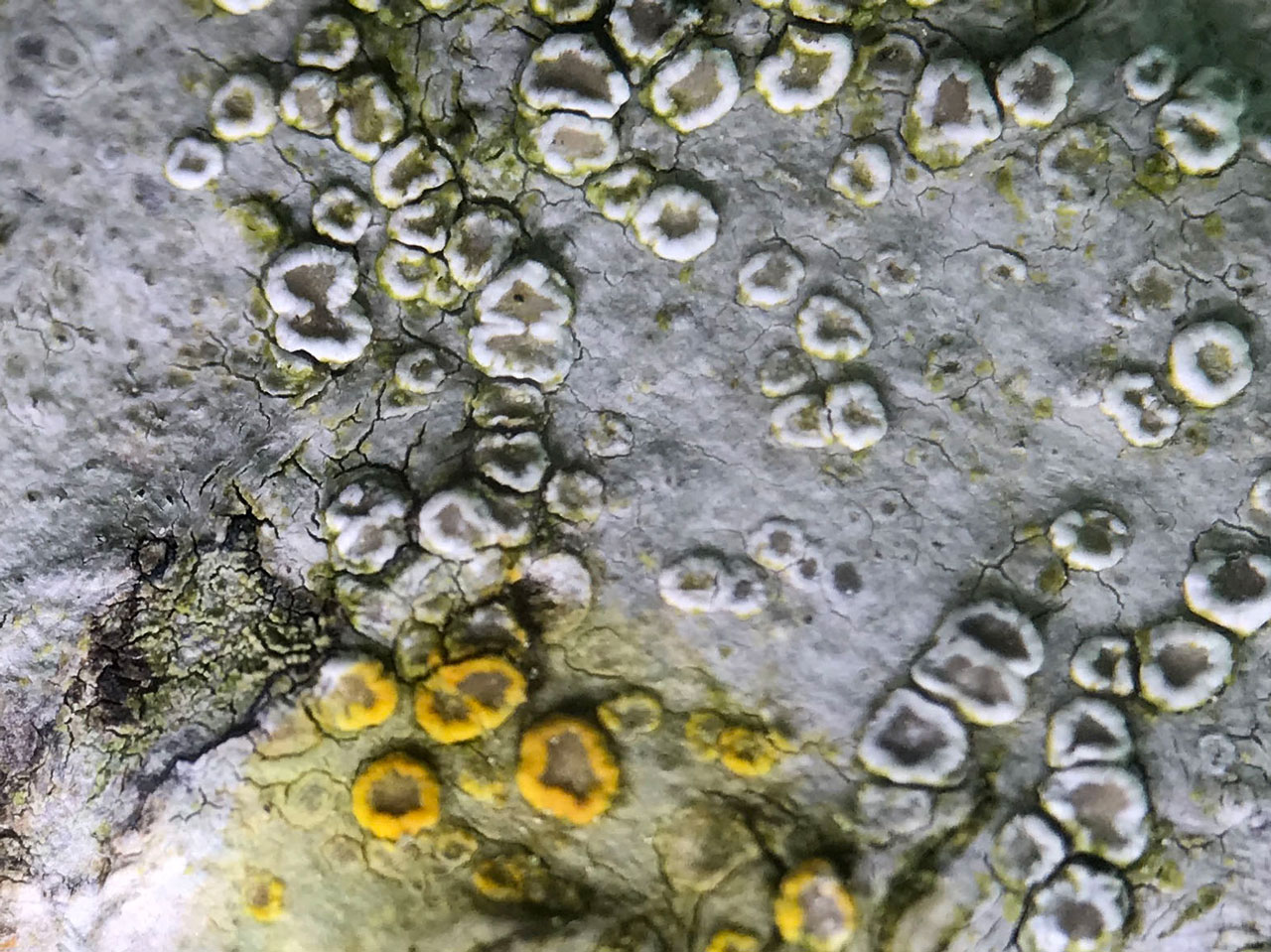
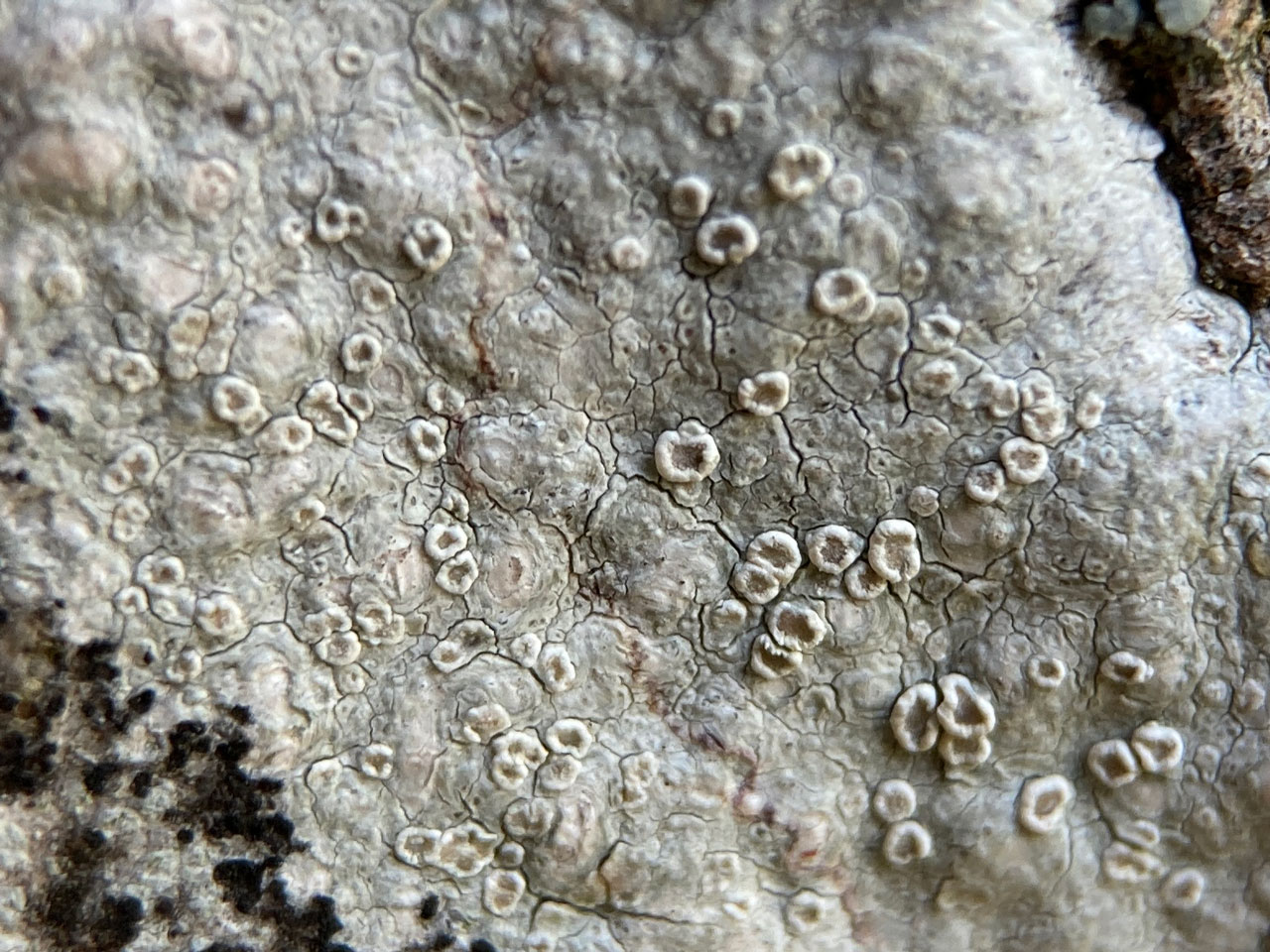
A rather lovely Lecanora with swollen and flexuose, white decorticate margins and orange-, red- or dark brown disks that are pruinose when young. A rather scarce, mainly northern species of smooth bark on deciduous trees that appears to have declined in the south.
Thallus continuous, smooth or minutely cracked, only becoming areolate in old central parts of the thallus, often poorly delimited, pale grey; prothallus black or absent. Apothecia (0.8–) 1–2.5 (–3) mm diam., sessile, slightly constricted at the base, dispersed or rarely aggregated when they may be angular by compression; thalline margin well-developed, appearing swollen, persistent, entire to flexuose, raised, white-grey, often pruinose, without a differentiated cortex, with small crystals; disc variably coloured, from pale to mid brown, also orange-, red- or dark brown, pruinose when young but becoming convex and non-pruinose with age; epithecium interspersed with coarse yellow granules dissolving in K; hymenium (70–) 80–110 µm tall; paraphyses 1.5–2.5 µm diam., unbranched or sparsely branched and anastomosed, apices to 3.5 µm diam., slightly swollen, colourless to yellow-brown. Ascospores 11.5–18 × 5–8 µm. Thallus C–, K+ yellow; exciple Pd+ deep yellow, UV+ pale orange to yellow (atranorin, chloratranorin, ± psoromic and 2′-O-demethylpsoromic acids, ± lichexanthone, zeorin).
A distinctive species of the L. subfusca group in its broad sense, characterised by the regular swollen white decorticate margins of the apothecia and (usually) the presence of psoromic acid (Pd+ deep yellow). A related species has been known for sometime from the Scottish Highlands and was described Arup et al (2023) as Lecanora caledonica. It is similar to L. intumescens, and shares the white decorticate margins, but the disks are medium brown to paler beige and never pruinose and the thalline margin is Pd–.
On smooth bark of deciduous trees in wayside and woodland situations.
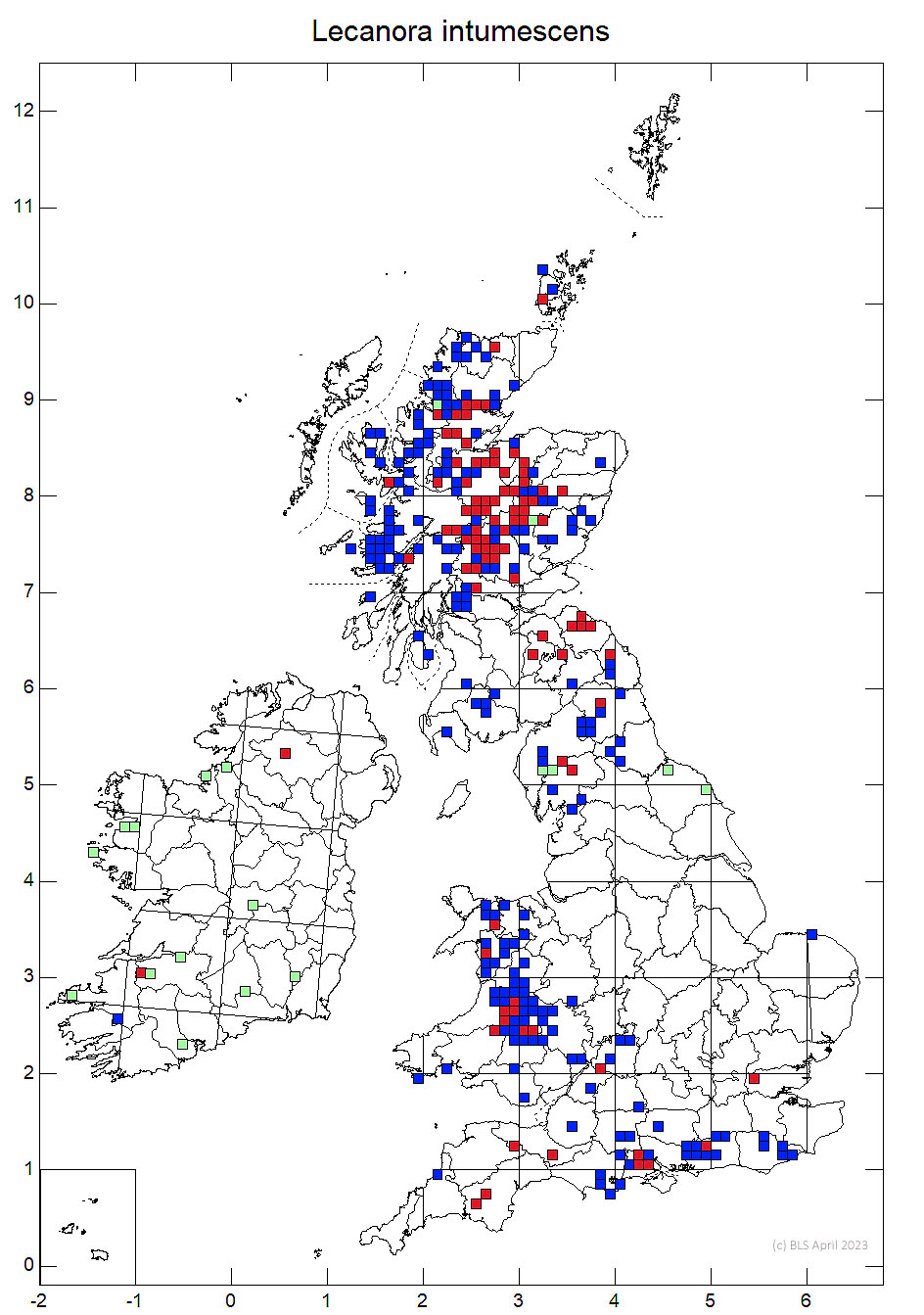


Widespread but rather scarce. C., S. & N. England, Wales and Scotland, has become rarer to the south in recent decades, rare in Ireland.
Although quite a distinctive lichen, there are relatively few recent records from the south of its range. It is likely to have been lost to acidifying pollution, but has made no significant recovery since this decline. A relic population survives in the New Forest, Hampshire but it appears very rare beyond there now in the south. Increased ammonia pollution may be hindering its recovery. If real, this degree of decline would merit Red List status.
Arup, U., Holien, H. and Coppins, B. J. (2023) Lecanora caledonica – a new species in the Lecanora intumescens group (Lecanoraceae) from north-western Europe. The Lichenologist 55: 107-114. Link
Cannon, P., Malíček, J., Ivanovich, C., Printzen, C., Aptroot, A., Coppins, B., Sanderson, N., Simkin, J. & Yahr, R. (2022). Lecanorales: Lecanoraceae, including the genera Ameliella, Bryonora, Carbonea, Claurouxia, Clauzadeana, Glaucomaria, Japewia, Japewiella, Lecanora, Lecidella, Miriquidica, Myriolecis, Palicella, Protoparmeliopsis, Pyrrhospora and Traponora. Revisions of British and Irish Lichens 25: 1-83.
Text by Neil A Sanderson based on Cannon et al (2022)