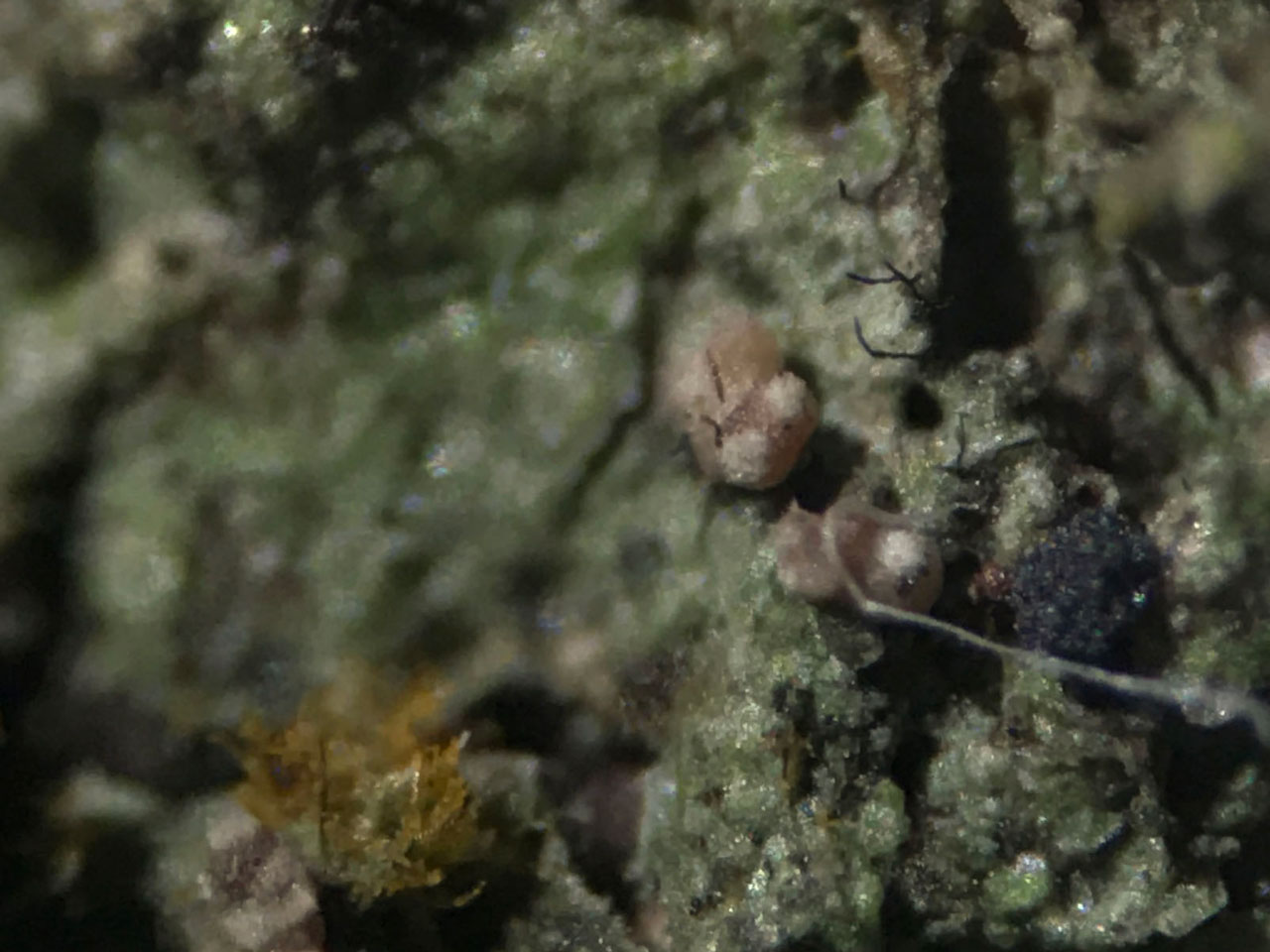
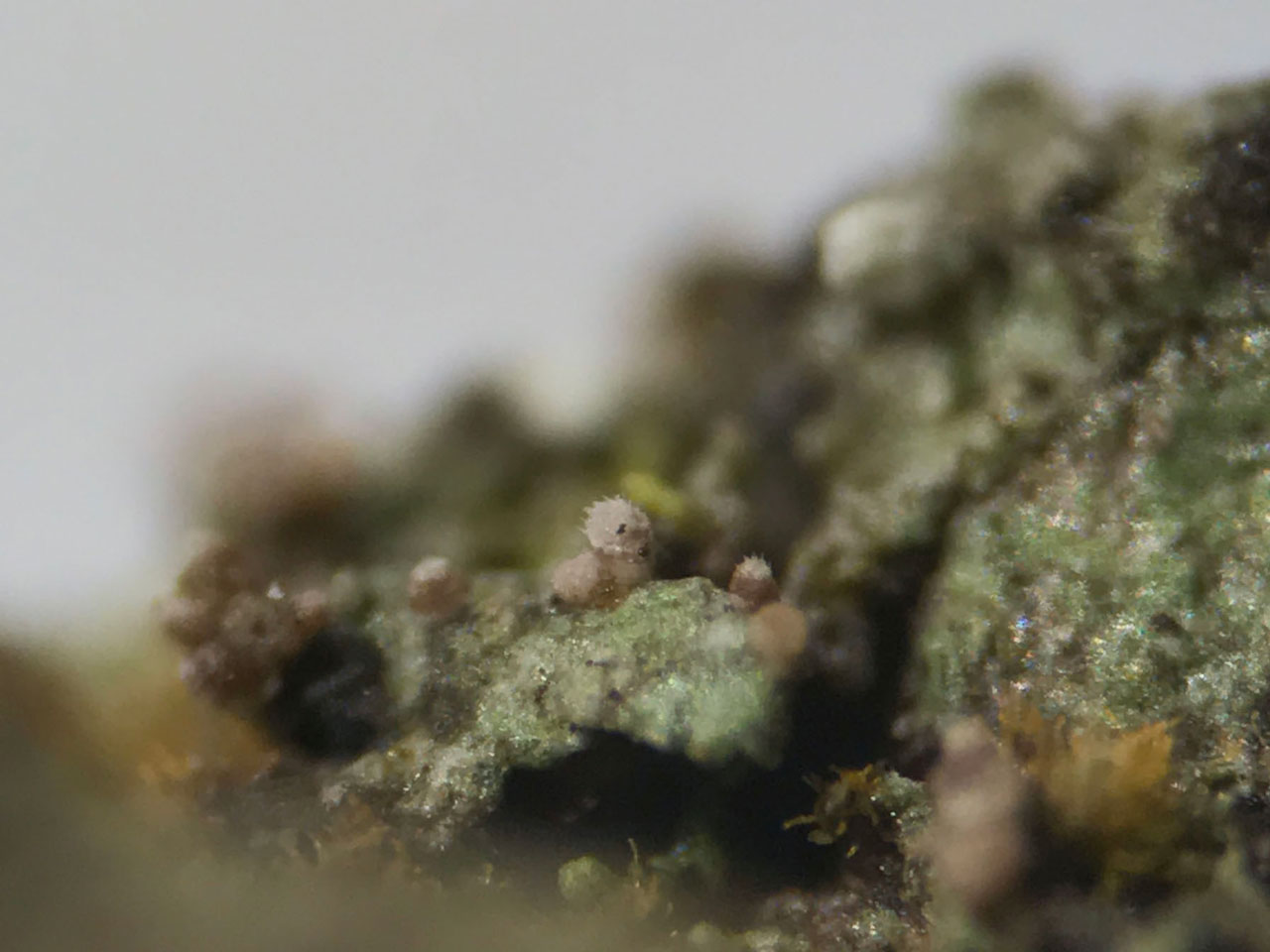
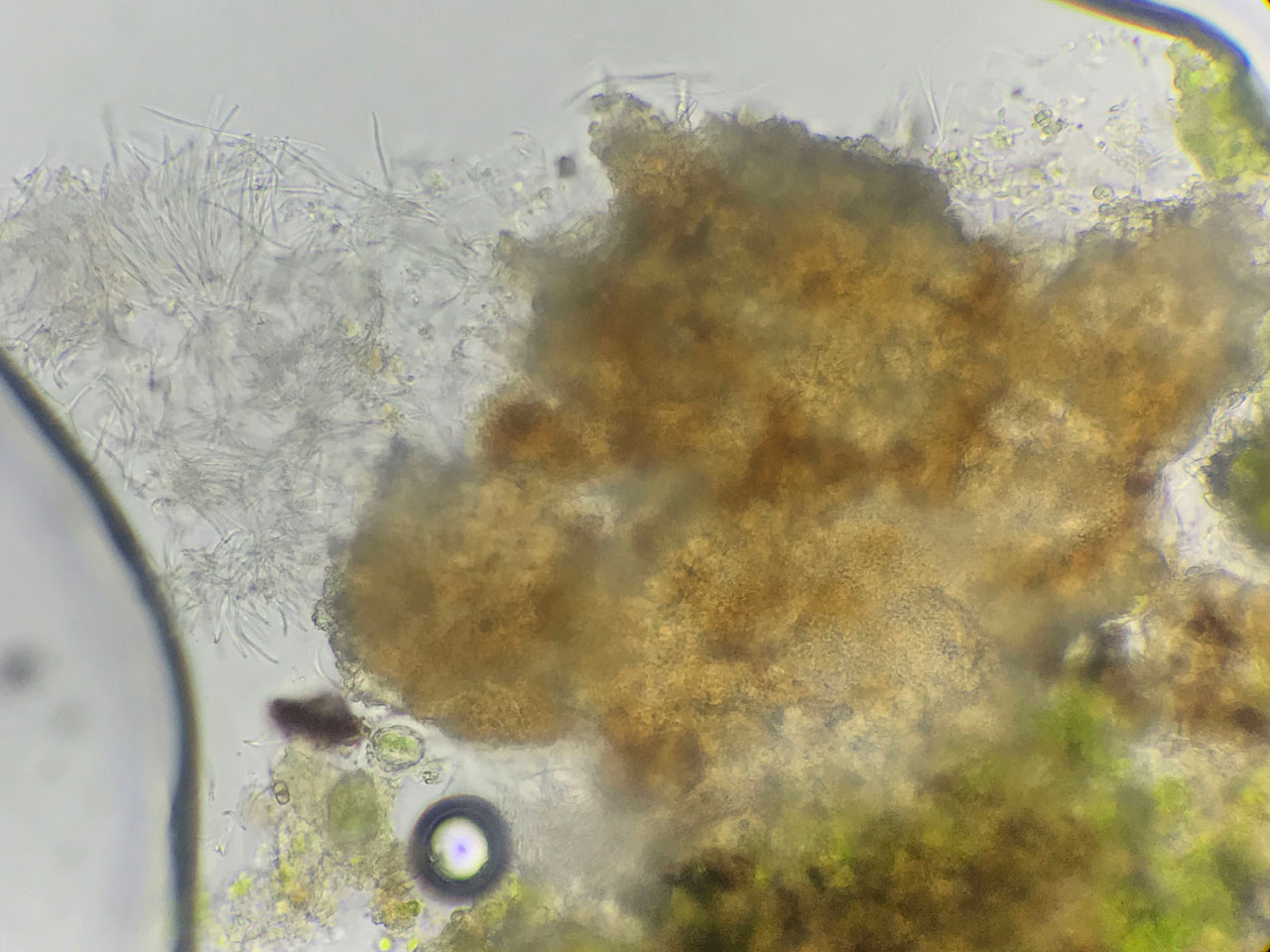
Generally an inconspicuous lichen but easily recognised species if spotted. The pale grey-green or pale grey thallus typically has numerous globose pink-brown to brown-black pycnidia producing long curved filiform conidia. The apothecia are sometimes absent, but are livid pink- or grey-brown and at first ± top-shaped, then becoming tuberculate. Once very common on acidic substrates in the south, especially in areas moderately impacted by sulphur dioxide based pollution, but now much declined.
Thallus pale grey-green or pale grey, thin, scurfy, photobiont cells 4–7 µm diam. Apothecia 0.2–0.4 mm diam., sometimes absent, at first ± top-shaped, some convex and becoming tuberculate, livid pink- or grey-brown; true exciple clearly apparent, colourless; epithecium red-brown, K–; hymenium 40–45 µm tall, colourless or pale brown; hypothecium darkish brown, K–; paraphyses 0.5–1 µm diam., branched and anastomosed, netted. Ascospores 30–35 (–42) × 3–4.5 µm, (3-) 5- to 7-septate, acicular-fusiform to acicular. Pycnidia 180–200 µm diam., to 300 µm tall, usually numerous, sessile, ± globose or elongated vertically, pink-brown to brown-black; conidia (20–) 30–43 × 0.5–1 µm, curved.
Generally an inconspicuous but easily recognised species, often sterile with small groups of pycnidia. Reminiscent of Fellhanera ochracea, which has pyriform conidia and 3-septate ascospores.
Usually on shaded acid bark, sometimes on bryophytes or other lichens, on deciduous trees in woodland including coppices and plantations, also on living conifer needles and twigs in sheltered situations and occasionally on sheltered mossy rocks, especially near the coast, tolerant of moderately polluted conditions.
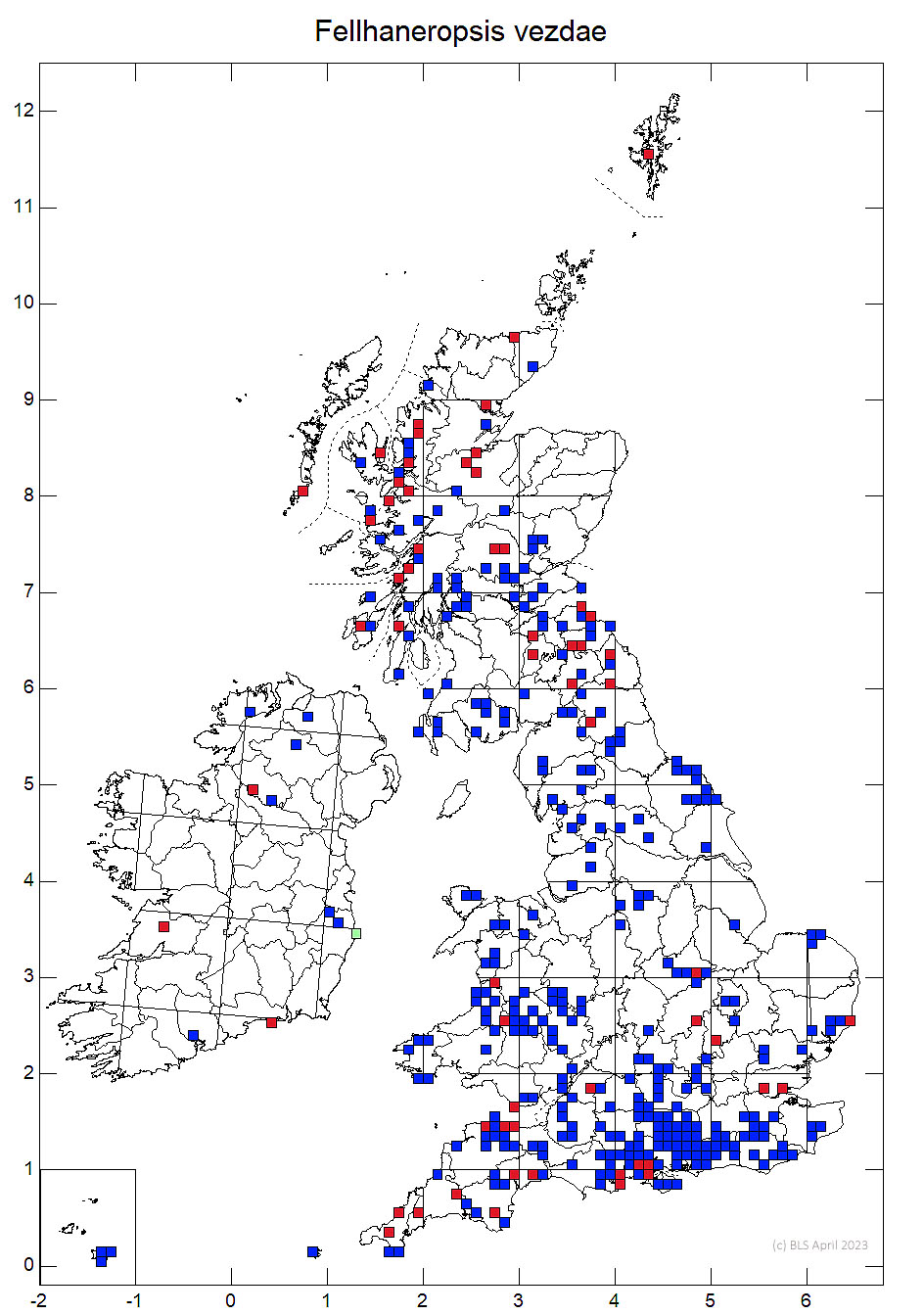

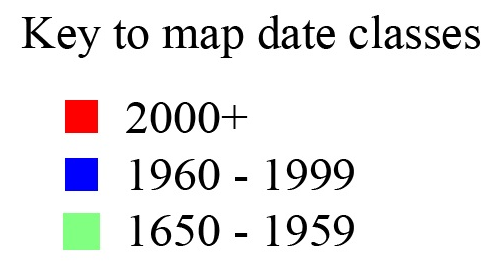
Once common in S. but apparently declining, most likely in response to the decline in acidifying air pollution, rare in N. Throughout Britain and Ireland.
Cannon, P., Orange, A., Aptroot, A., Sanderson, N., Coppins, B. & Simkin, J. (2022). Lecanorales: Pilocarpaceae, including the genera Aquacidia, Byssoloma, Fellhanera, Fellhaneropsis, Leimonis and Micarea. Revisions of British and Irish Lichens 27: 1-48.
Text by Neil A Sanderson based on Canon et al (2022)