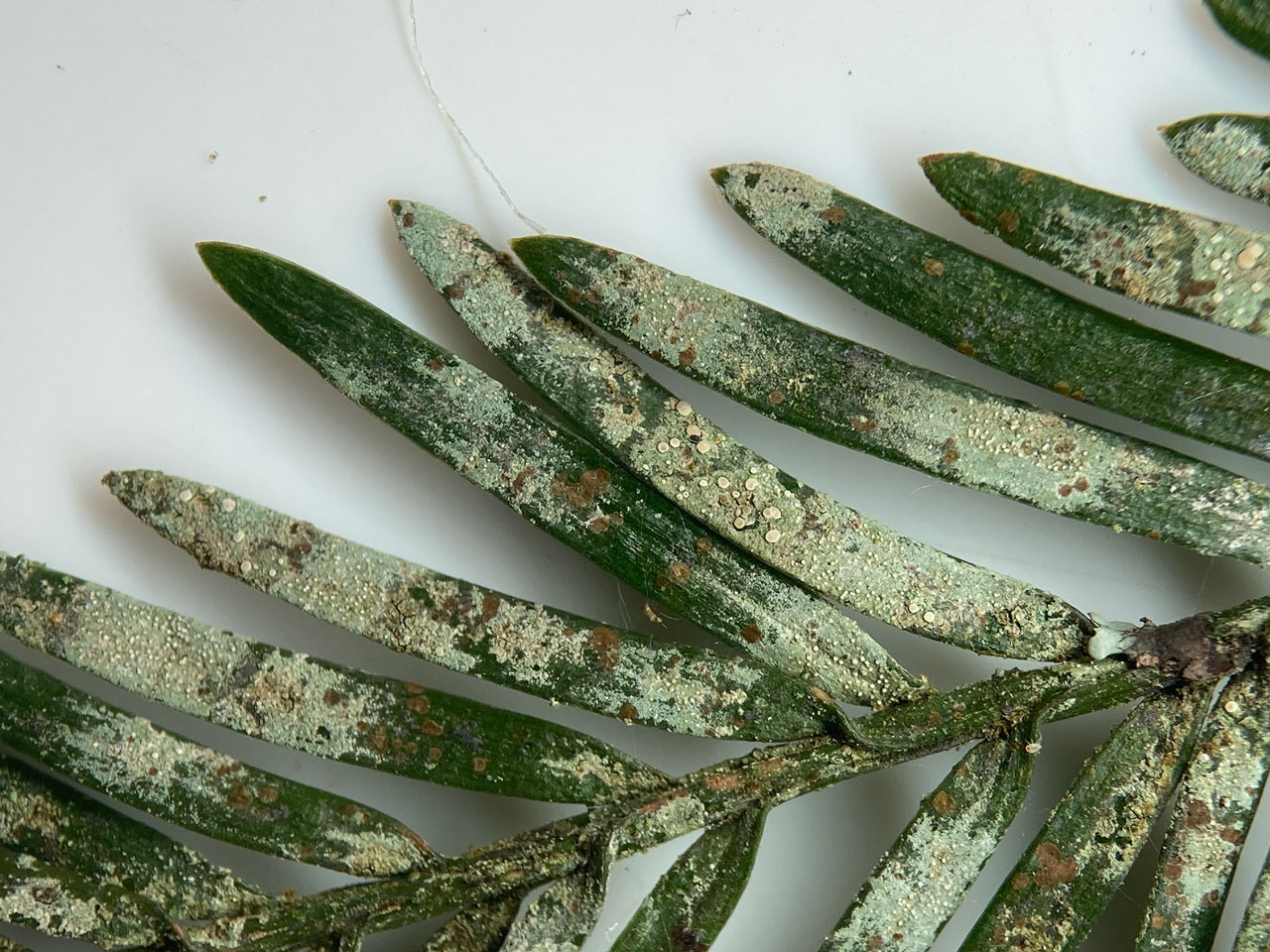
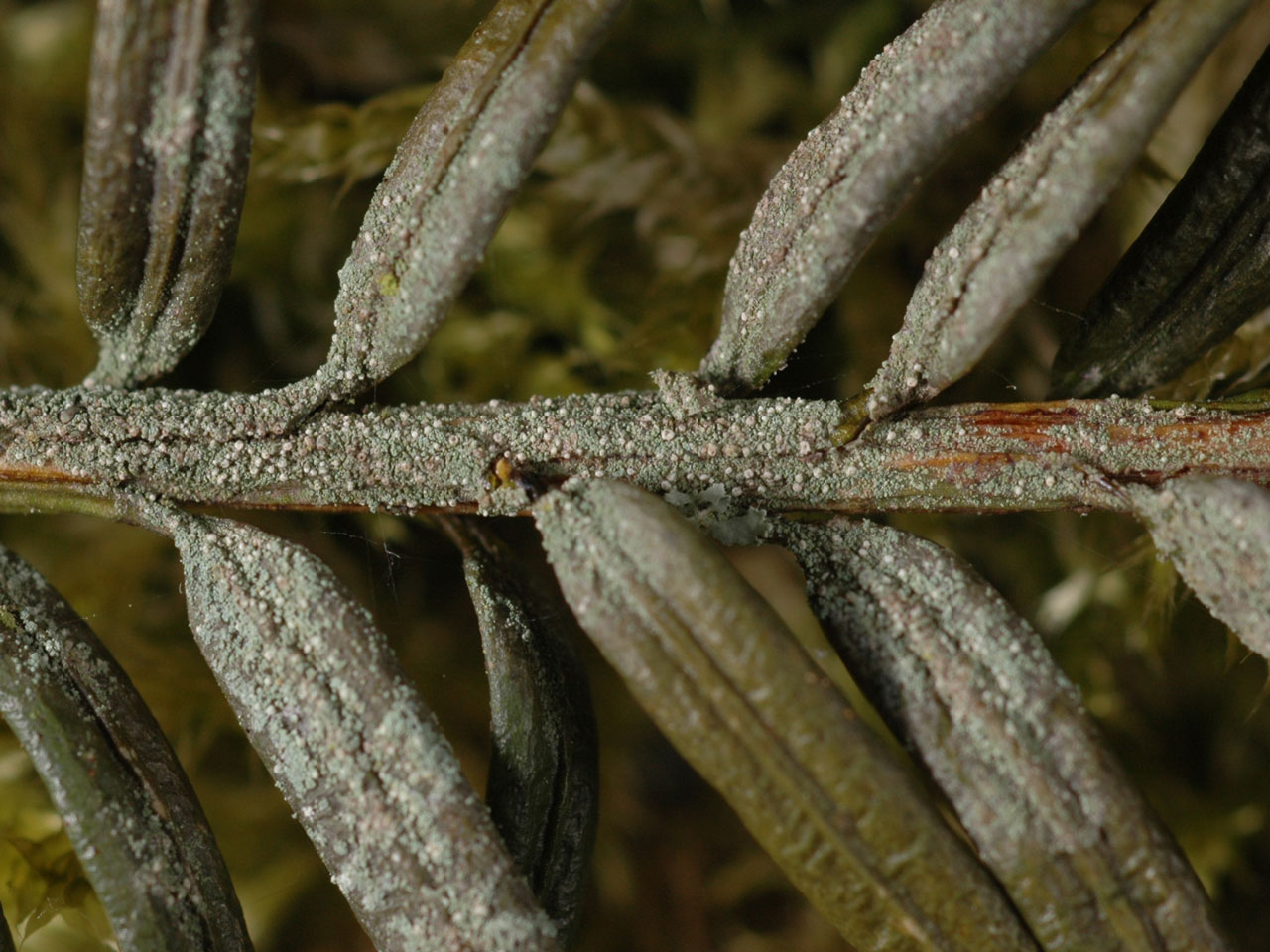
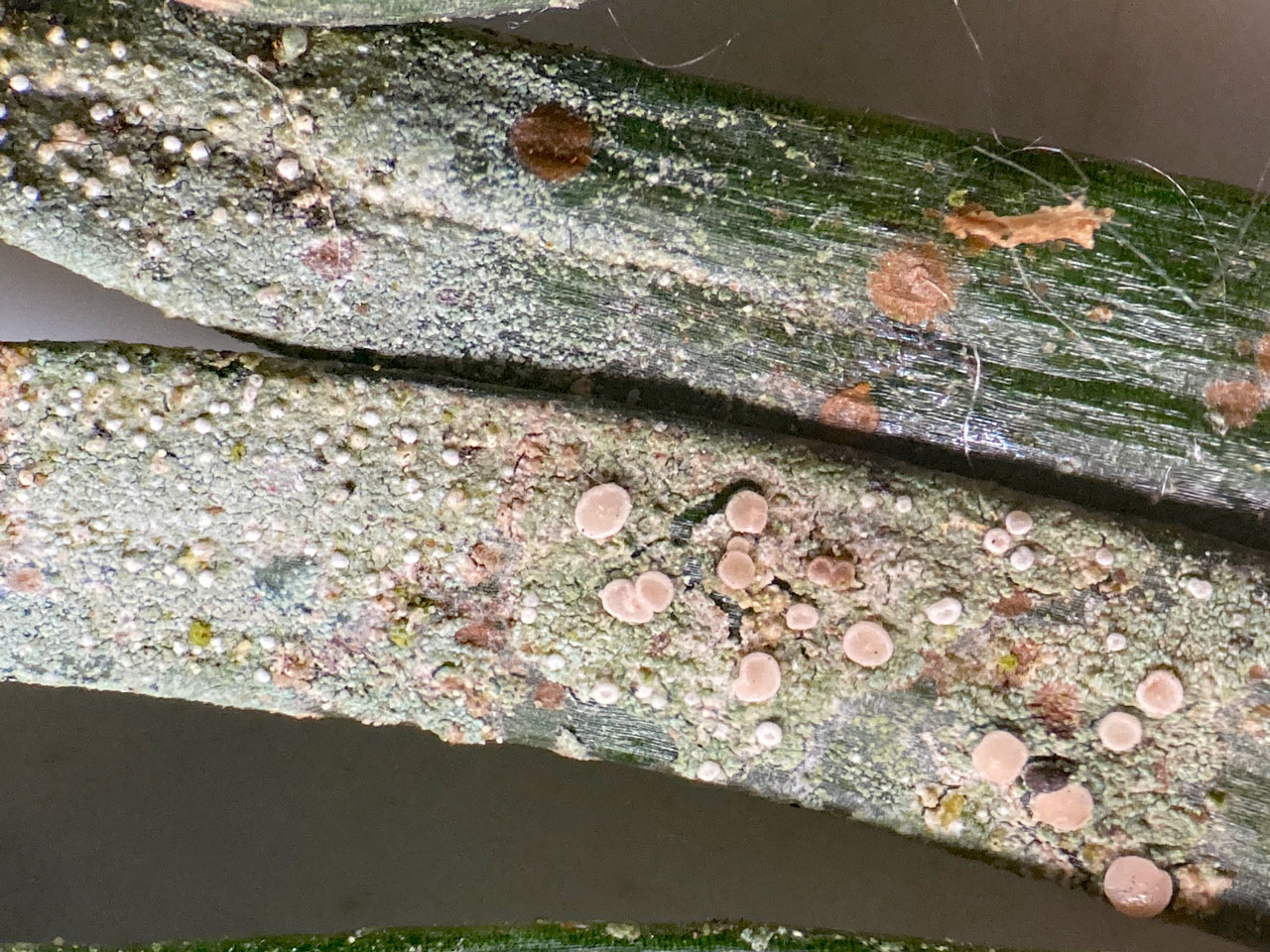
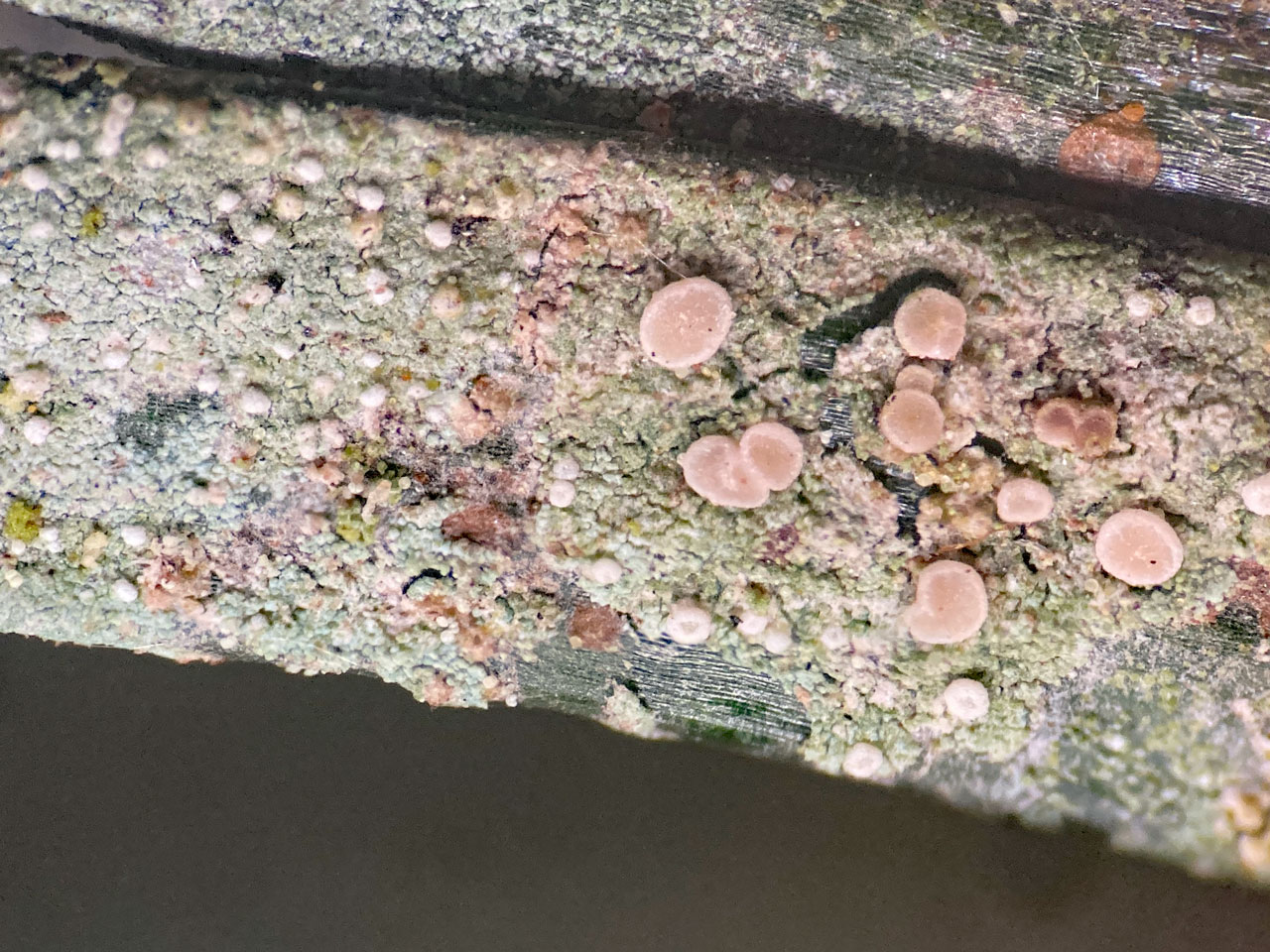
The most widespread foliicolous lichen (living on leaves) in Britain. With a bluish green to bluish grey farinose sorediate thallus with white to pale brown pycnidia and often with pale pinkish apothecia with one septate spores. The very similar Fellhanera subtilis, can be separated when fertile by its three septate spores.
Thallus thin to rather thick (up to 0.3 mm), verruculose-rimose, dispersed to continuous and entirely covered with farinose soredia, dull, bluish green to bluish grey. Apothecia rather common, pinkish, 0.1–0.3 mm diam, colourless in section; hypothecium colourless; hymenium 30–50 µm high; paraphyses numerous, often branched above, 0.5–1 µm diam., widening to 2 µm at the tips. Ascospores 9.5–14 (–16) × 3.5–7 µm, 1-septate, ovoid to ovoid-cylindrical, often constricted at the septum and sometimes ± soleiform. Conidiomata usually present, cupuliform to subglobose, 11 white to pale brown, 80–150 µm diam.; conidia pyriform, 3–4 × 1.3–1.7 µm. Chemical tests negative (usnic acid, zeorin and ± asemone).
Some records may be of Fellhanera subtilis, and examination of ascospores (ascospores three septate) or (when sterile) TLC (no lichen substances) are required for certain determination.
In sheltered situations, mostly on evergreen leaves and small twigs (especially Box and Bilberry) but occasionally on other substrata, including the bark of various tree species and damp siliceous rocks or stones.
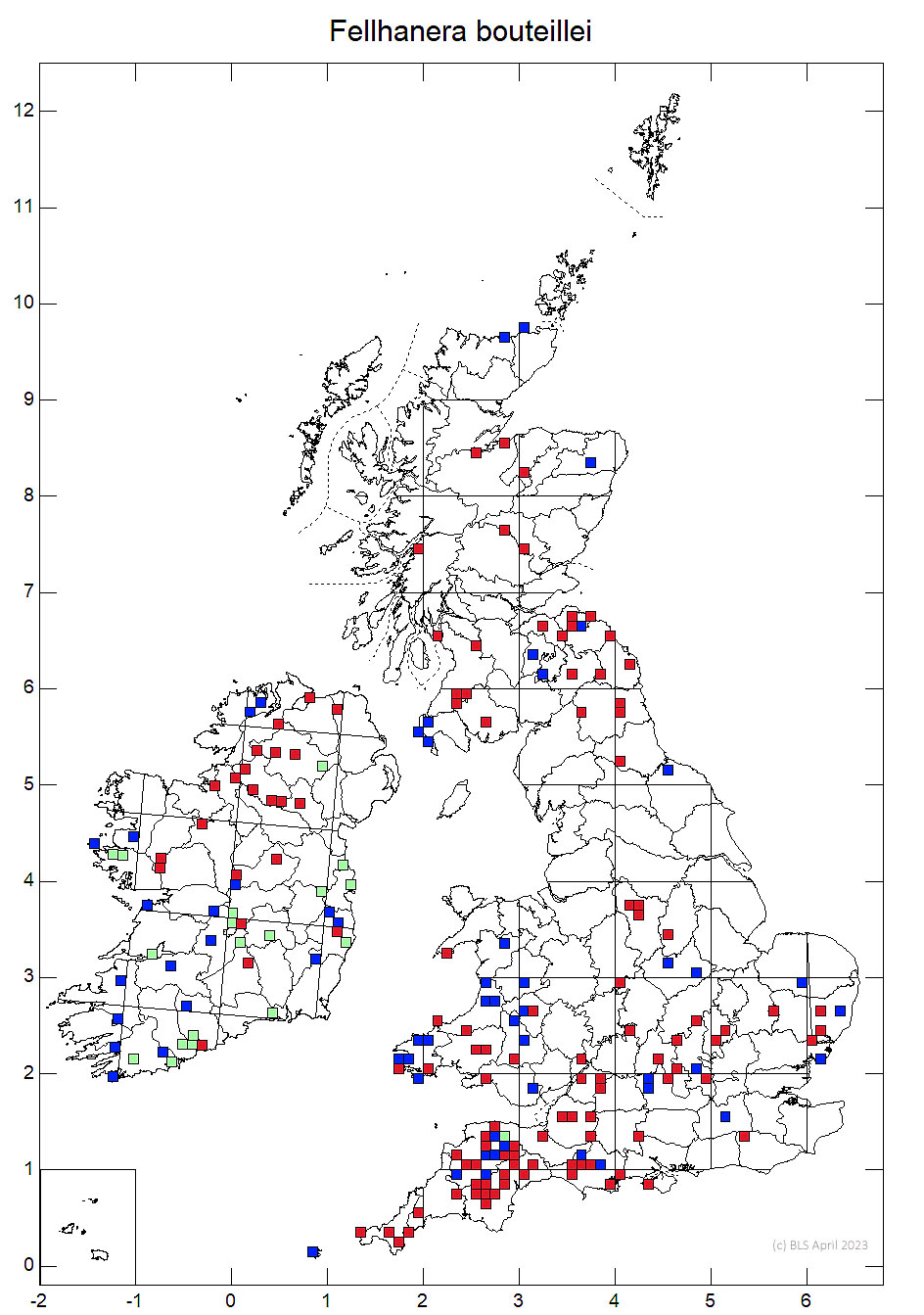


Throughout Britain and Ireland.
Cannon, P., Orange, A., Aptroot, A., Sanderson, N., Coppins, B. & Simkin, J. (2022). Lecanorales: Pilocarpaceae, including the genera Aquacidia, Byssoloma, Fellhanera, Fellhaneropsis, Leimonis and Micarea. Revisions of British and Irish Lichens 27: 1-48.
Text by Neil A Sanderson based on Canon et al (2022)