Caloplaca alstrupii
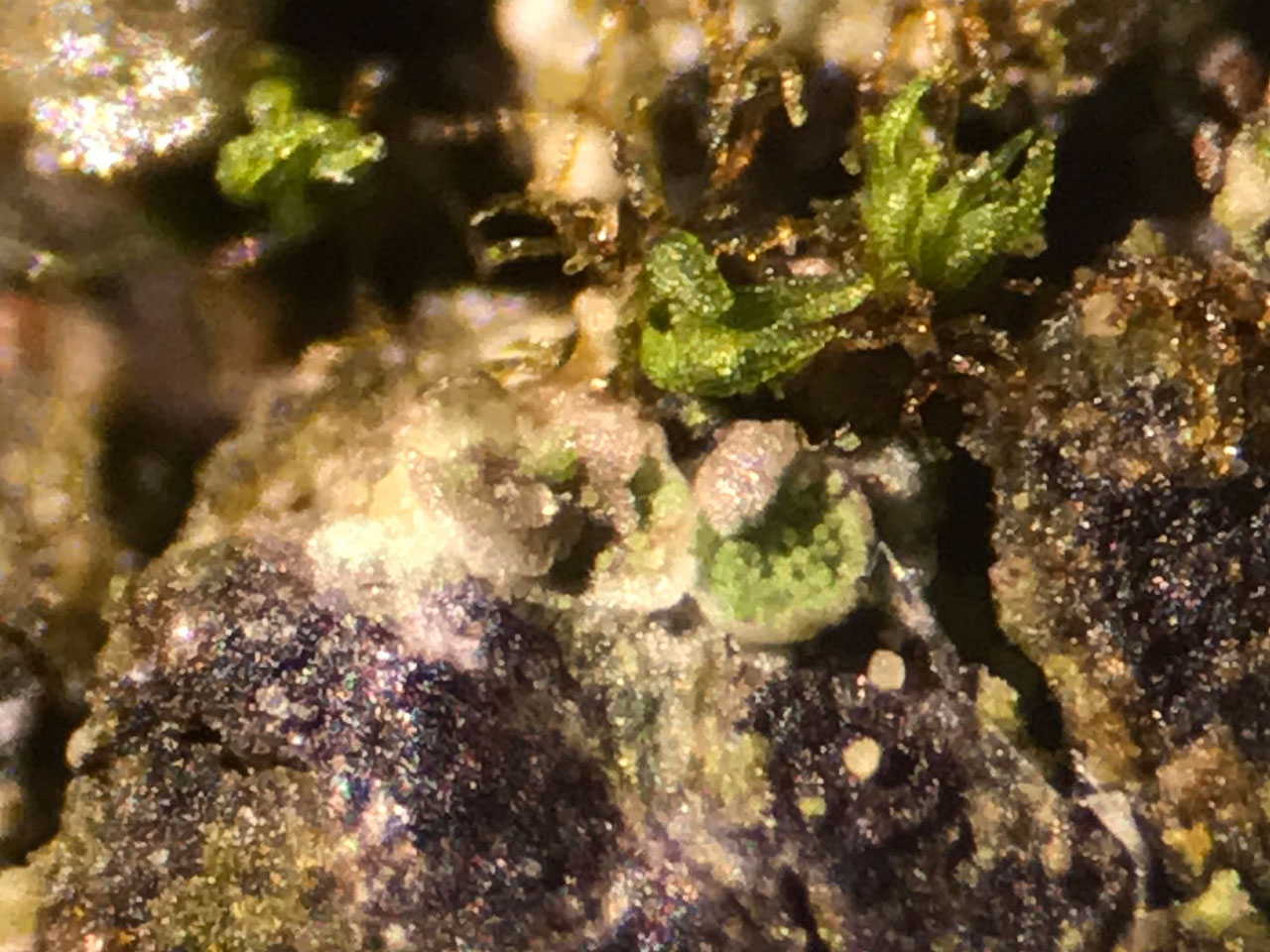
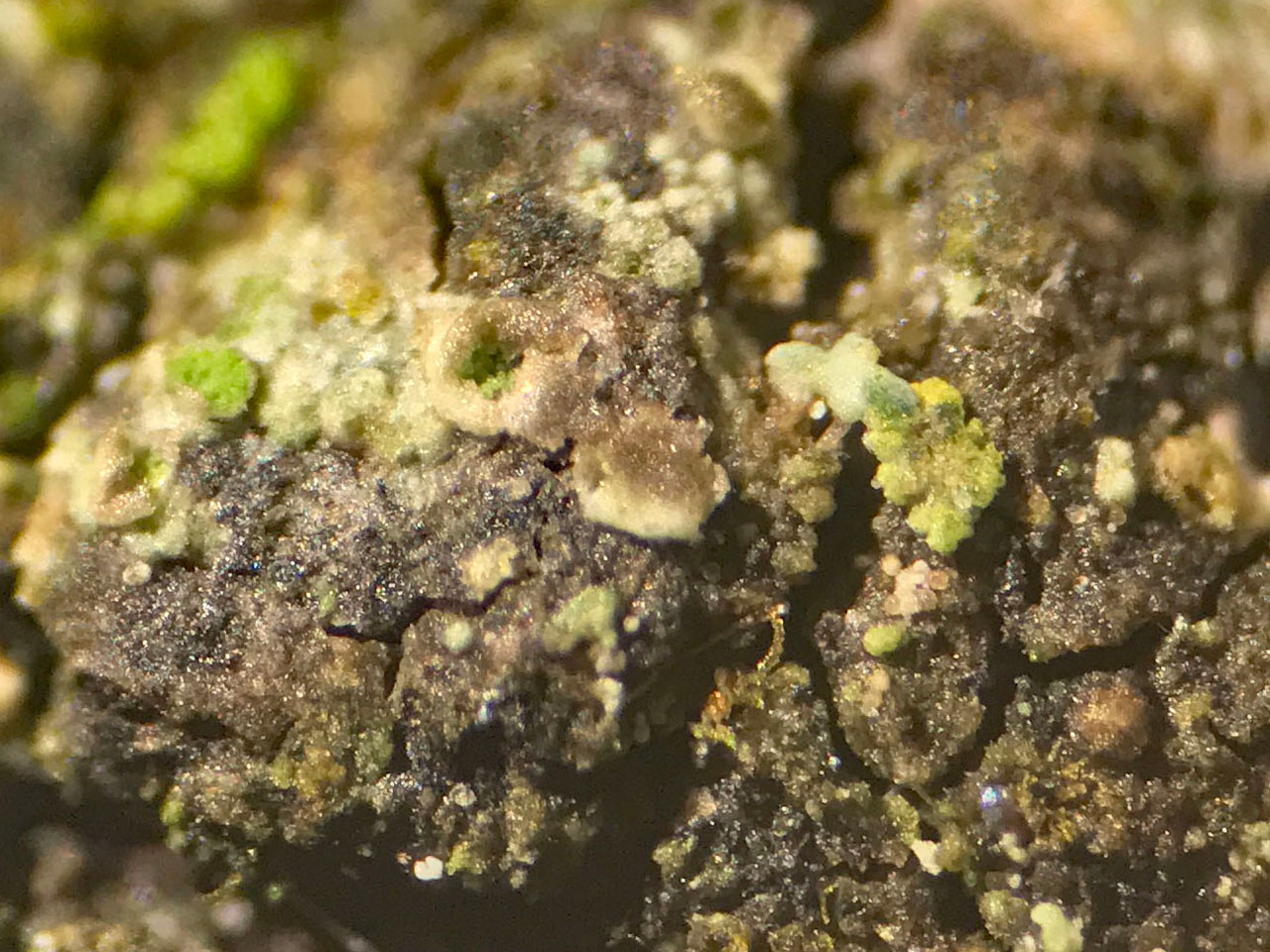
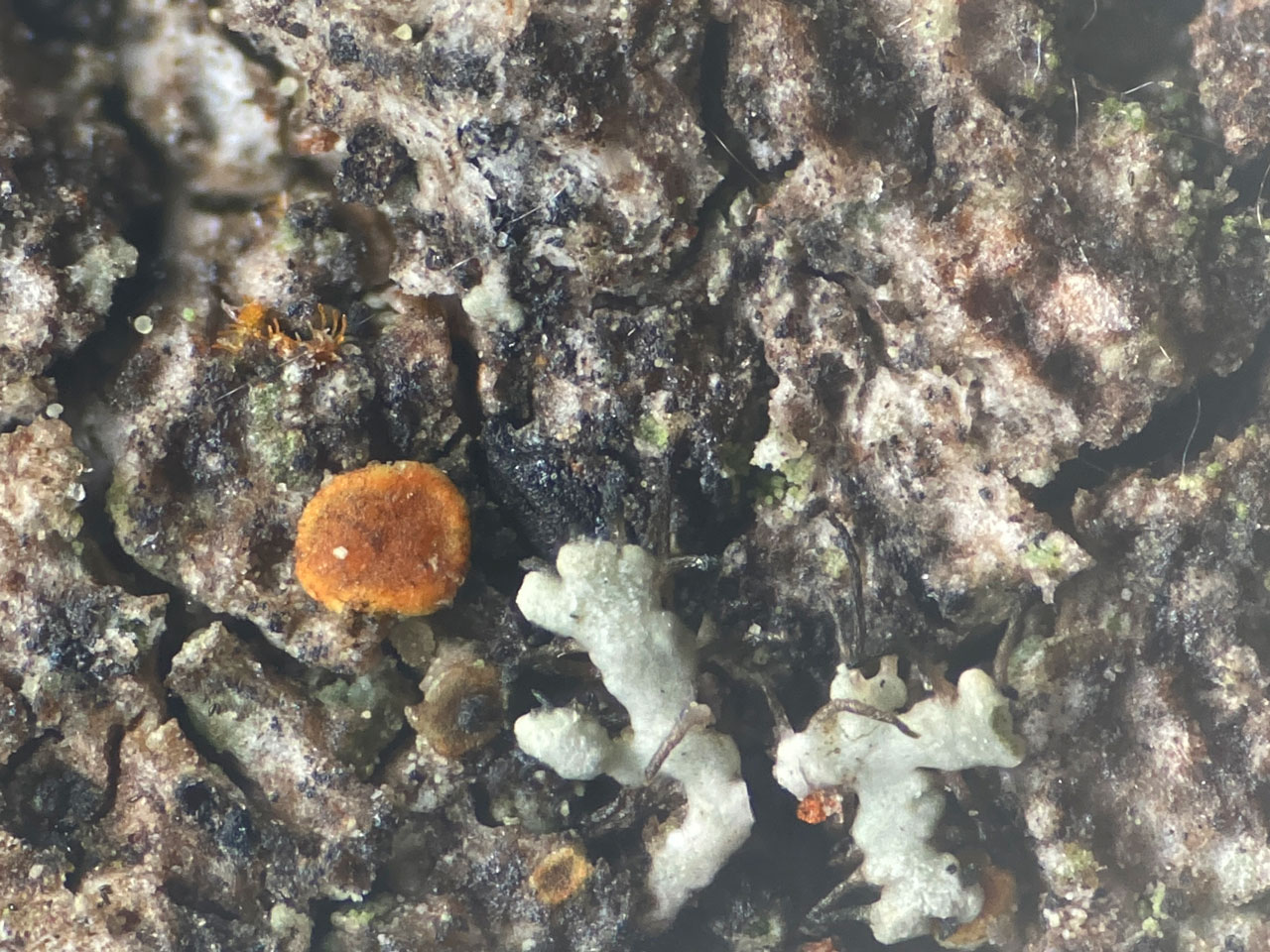
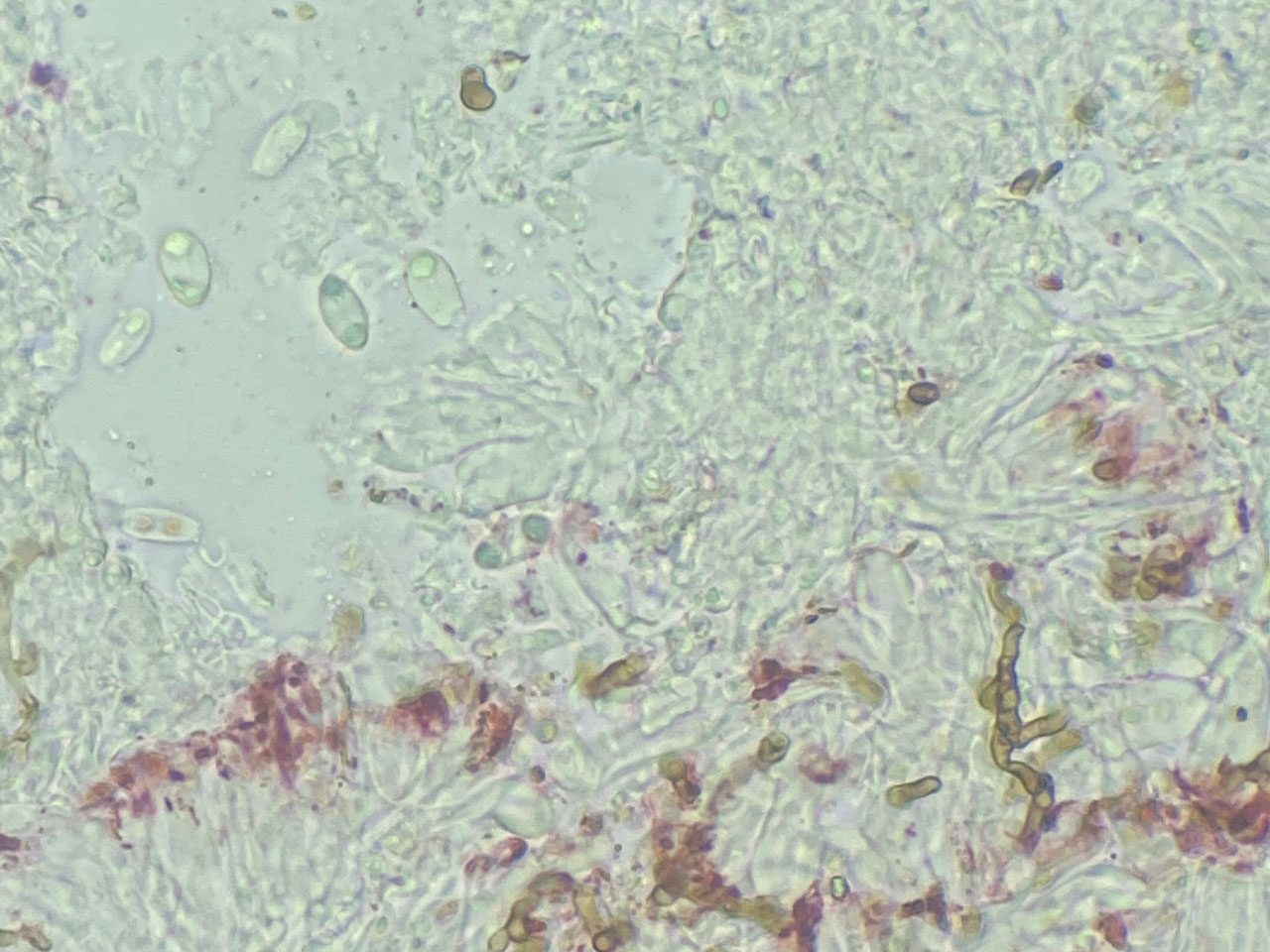
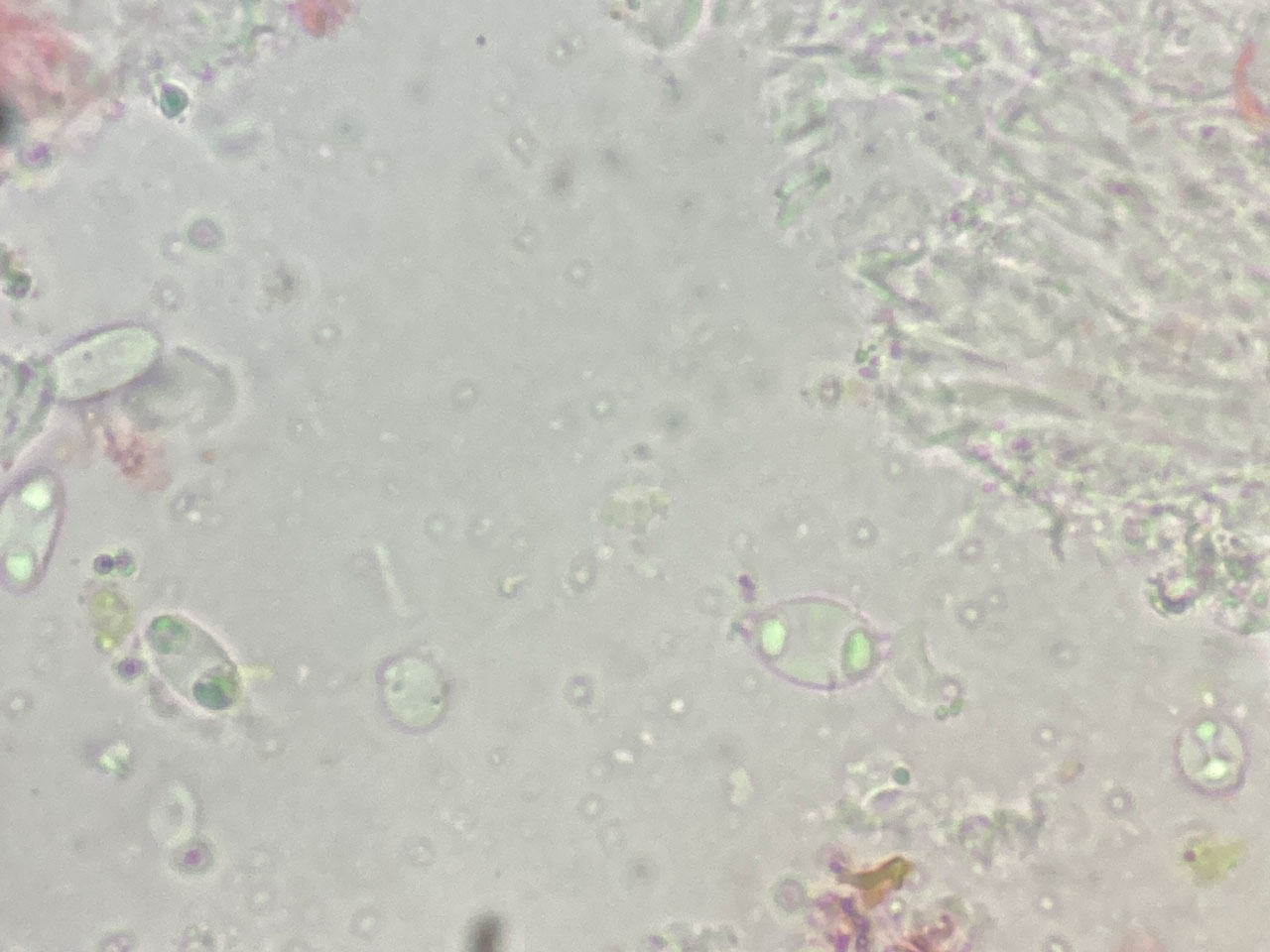
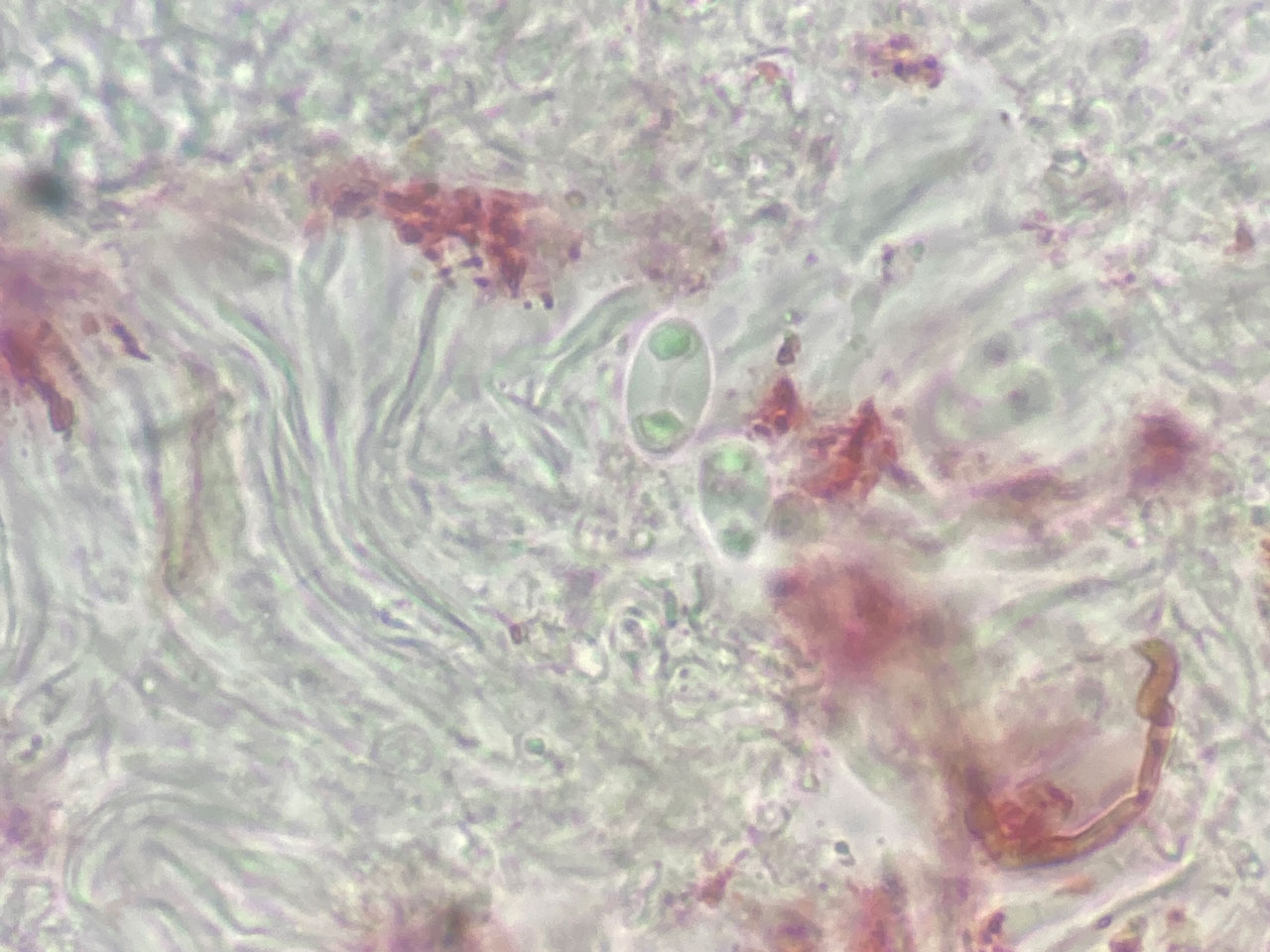
An easily overlooked, but probably frequent lichen, similar to Coppinsiella ulcerosa. Found in wound tracks on trees, including young trees. Usually sterile and distinguished by the form and colour of the soralia. The most distinctive feature are the abundant small soralia 100–250 μm diam., which are erumpent from the thallus, with the thallus cortex at least partly retained but which lifts away to expose the crateriform soralia with bright yellowish green soredia.
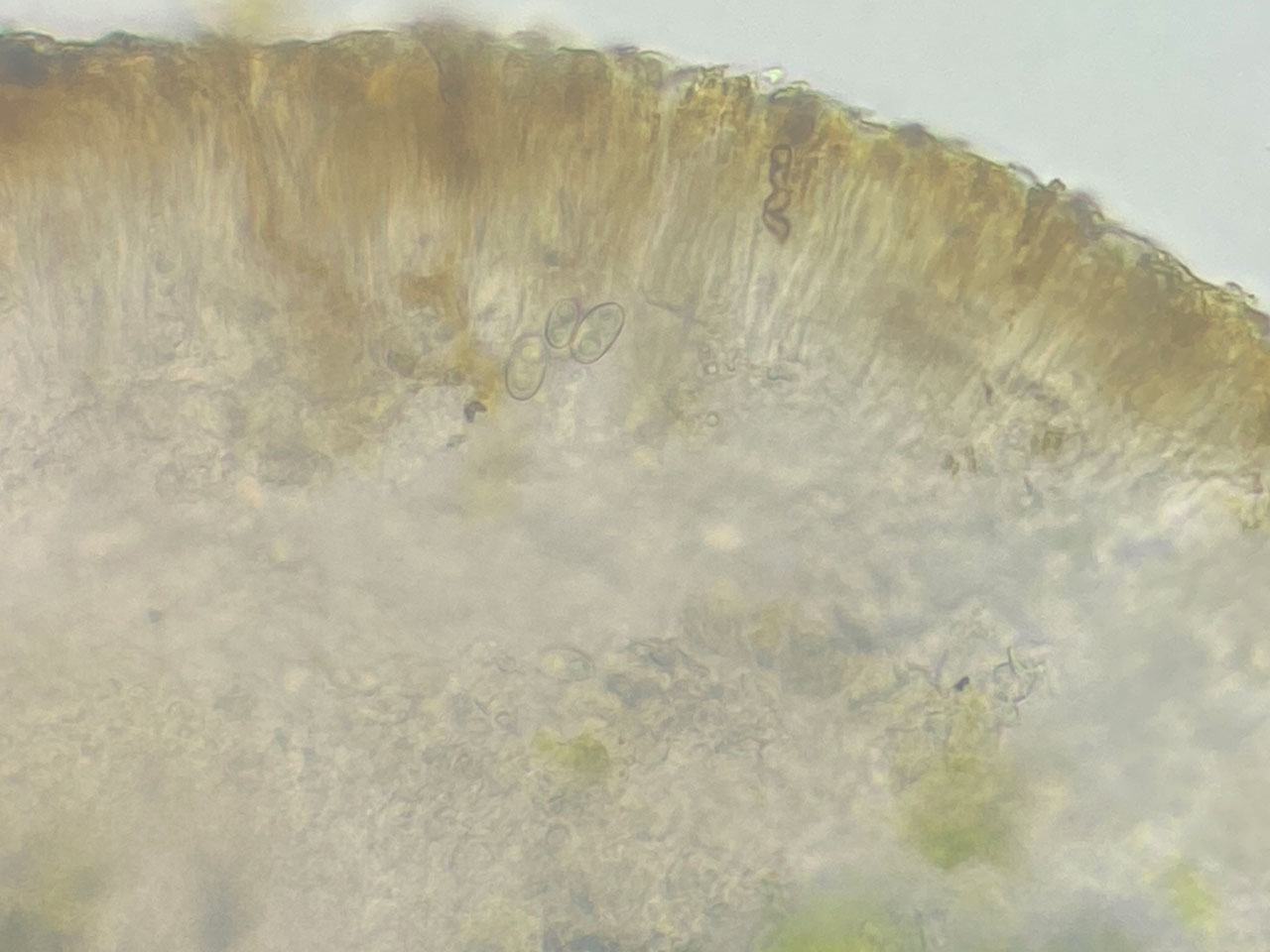
Thallus crustose, smooth, thin, with a few inconspicuous areoles 0.5–2 mm diam., forming extensive continuous crusts separated by bluish black hypothallus borders, which can be up to 0.2 mm wide. Thallus light grey to olive grey, covered with numerous dark olive semiglobose to globose soralia 0.1–0.25 mm diam., mostly regular, constricted at the base, developing from below the thallus cortex, which may in some cases be visible as a whitish necrotic rim, after dispersal of the soredia appearing as concave craters. Soredia loose, bright yellowish green, 15-30 µm diam. Apothecia very sparse, broadly sessile, 0.2–0.3 mm diam., lecanorine with an inconspicuous thalline margin; disc flat,
orange; exciple concolorous with the disc but slightly olive at the outer rim; hypothecium with oil droplets; hymenium ca 40 µm high, epithecium distinct, coarse-crystalling; paraphyses not inflated towards the apex. Asci 8-spores. Ascospores polarilocular, 9 – 11 × 6 – 8 µm, septa 4–5 µm thick.
Rarely fertile and distinguished by the form and colour of the soralia. Diagnostic features include the thallus with bluish black hypothallus borders, abundant small soralia 100–250 μm diam., with bright yellowish soredia. Similar to Coppinsiella ulcerosa, but with greener soralia erumpent from the thallus, the thallus cortex is at least partly retained but lifts away to expose the crateriform soralia. However, available sequence data do not show clear relationships with Coppinsiella or any other currently recognised Teloschistaceae genera. It might also be compared with Caloplaca obscurella, which has similar crater like soralia, but the soralia are grey-green to blue-grey and the apothecia are dull to dark brown, however, again sequence data do not indicate similarity. The description has been largely adapted from Søchting (1999).
On bark of broadleaved trees, mostly in slight wound tracks and damp nutrient enriched bark. Found on young trees and disturbed woodland as well as in less disturbed sites.
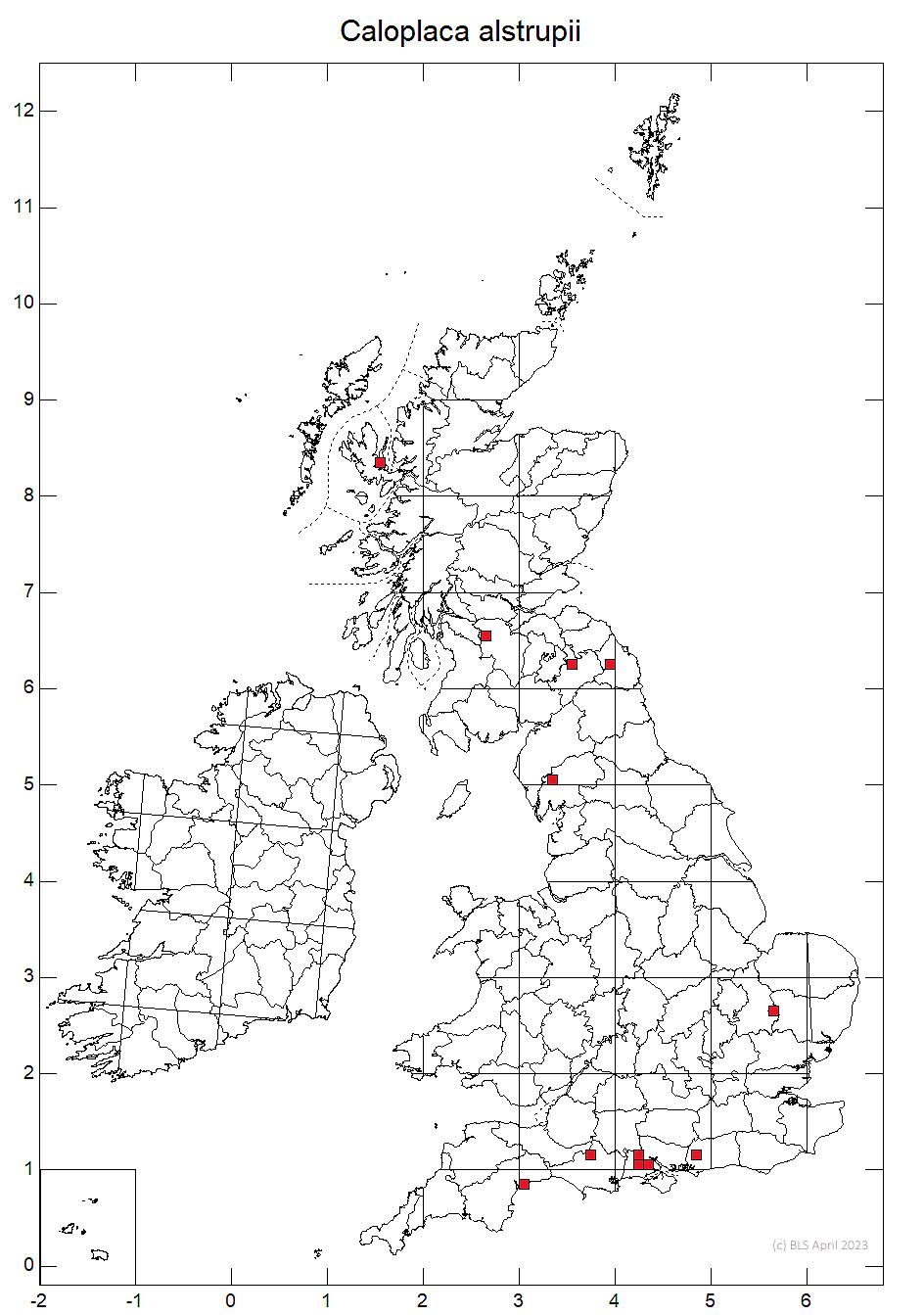

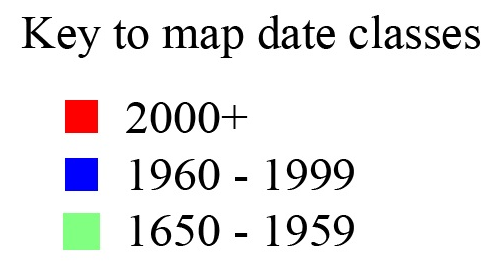
S. England (Devon to Cambridge), N. England (Cumbria, Northumberland), S. and W. Scotland. Probably widespread and much over-looked.
Cannon, P., Arup, U., Coppins, B., Aptroot, A., Sanderson, N., Simkin, J. & Yahr, R. (2024). Teloschistales, including Brigantiaea (Brigantiaeaceae), Megalospora (Megalosporaceae) and Amundsenia, Athallia, Blastenia, Calogaya, Caloplaca, Cerothallia, Coppinsiella, Flavoplaca, Gyalolechia, Haloplaca, Huneckia, Kuettlingeria, Leproplaca, Marchantiana, Olegblumea, Polycauliona, Pyrenodesmia, Rufoplaca, Rusavskia, Sanguineodiscus, Scythioria, Solitaria, Squamulea, Teloschistes, Variospora, Xanthocarpia, Xanthomendoza and Xanthoria (Teloschistaceae). Revisions of British and Irish Lichens 43: 1–75.
Søchting, U. (1999). Caloplaca alstrupii, a new species from Denmark. Graphis Scripta 10: 59–64.
Text by Neil A Sanderson based on Cannon et al (2022)