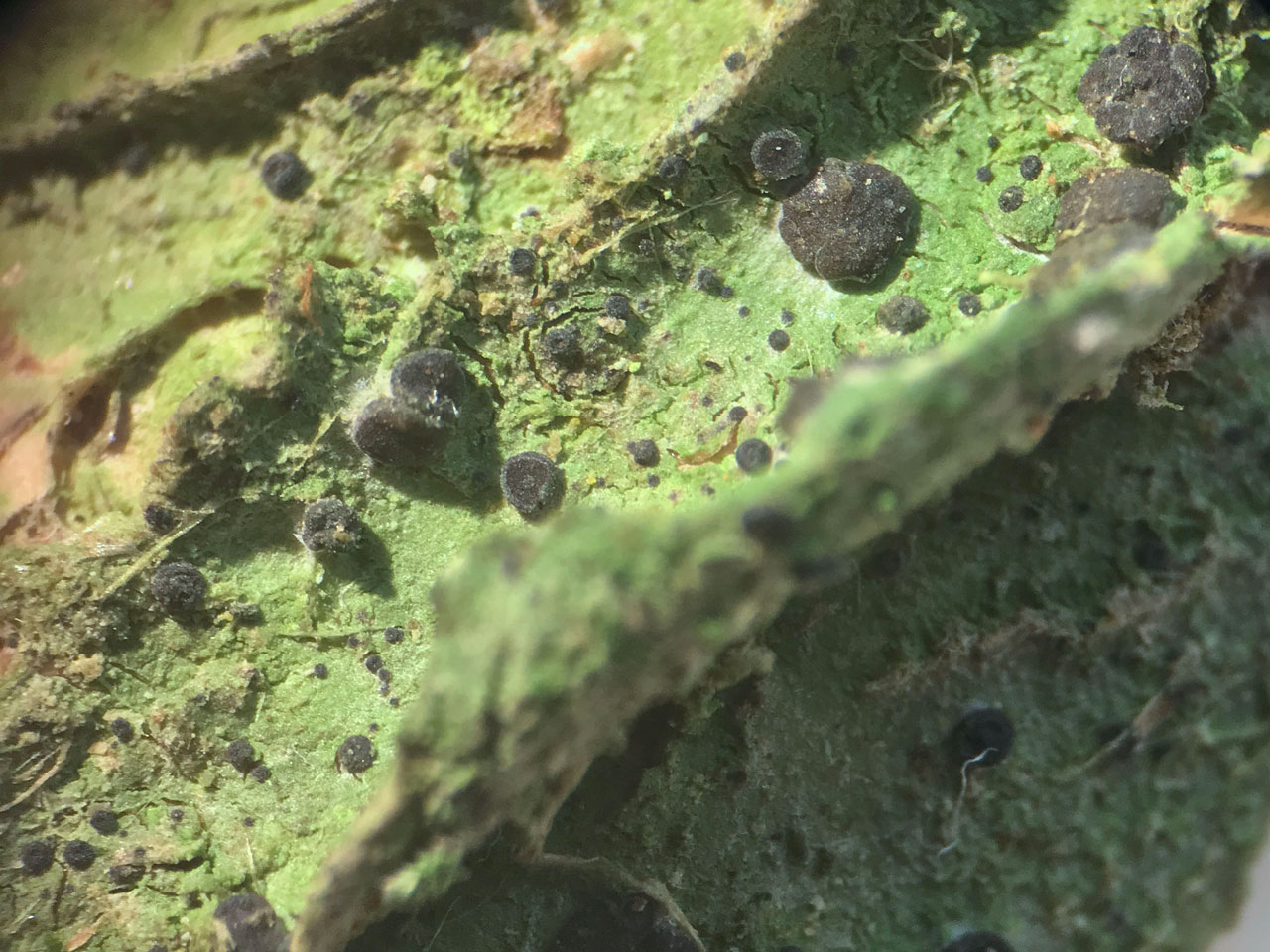
An apparently very rare lichen of old Hazel in southern oceanic coastal slope woodlands so far only found on the north coast of Devon and Cornwall. Once spotted this is a distinctive species with a bright yellowish green thallus with frequent apothecia which are variable in colour. Usually bluish grey to blackish when young, becoming brown or greenish grey when mature, and the margin is smooth to shortly byssoid. Although certainly likely to be overlooked to a degree, this lichen appears to be very rare in Britain and is likely to be assessed as Threatened and may also be globally Threatened.
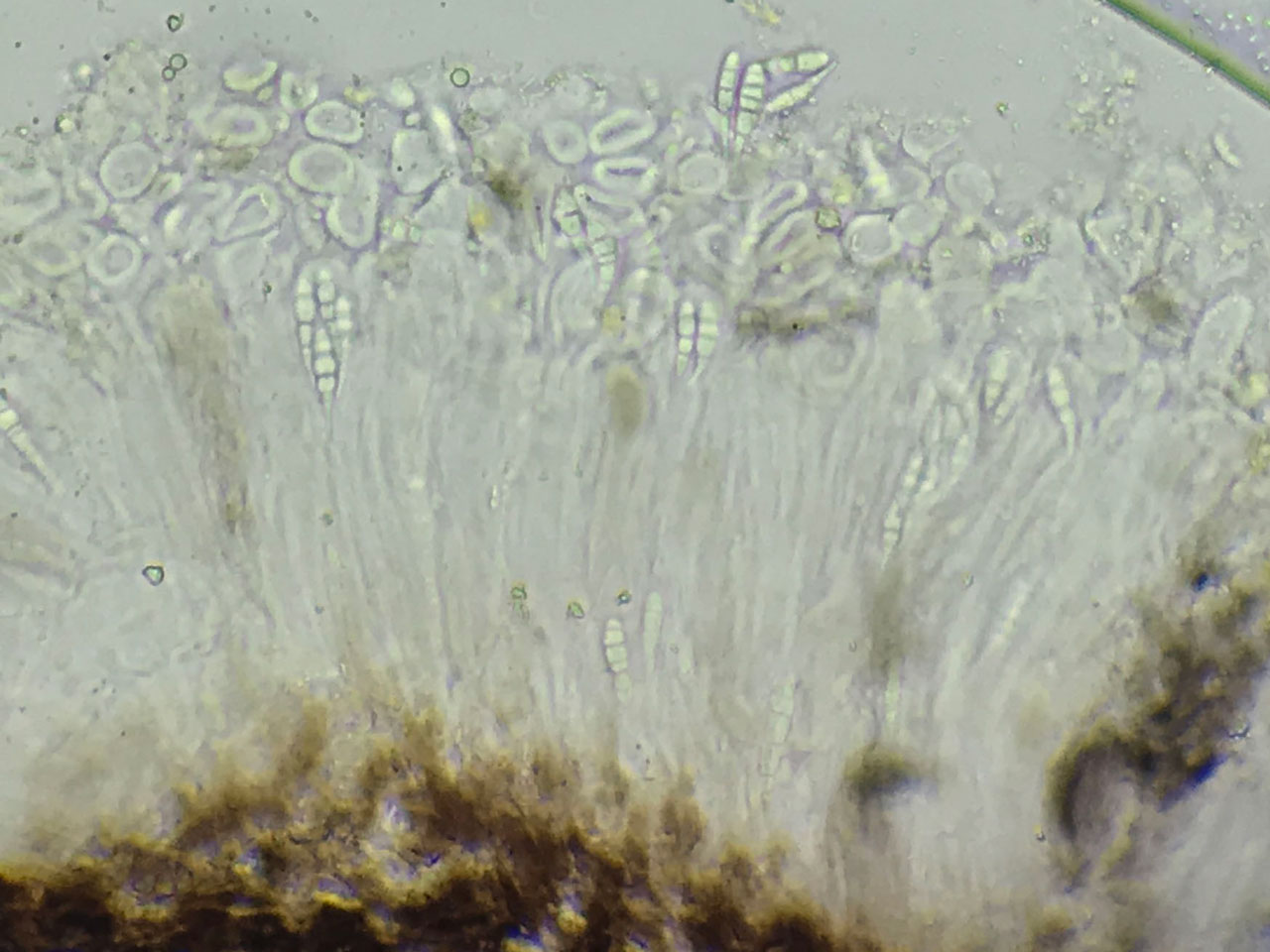
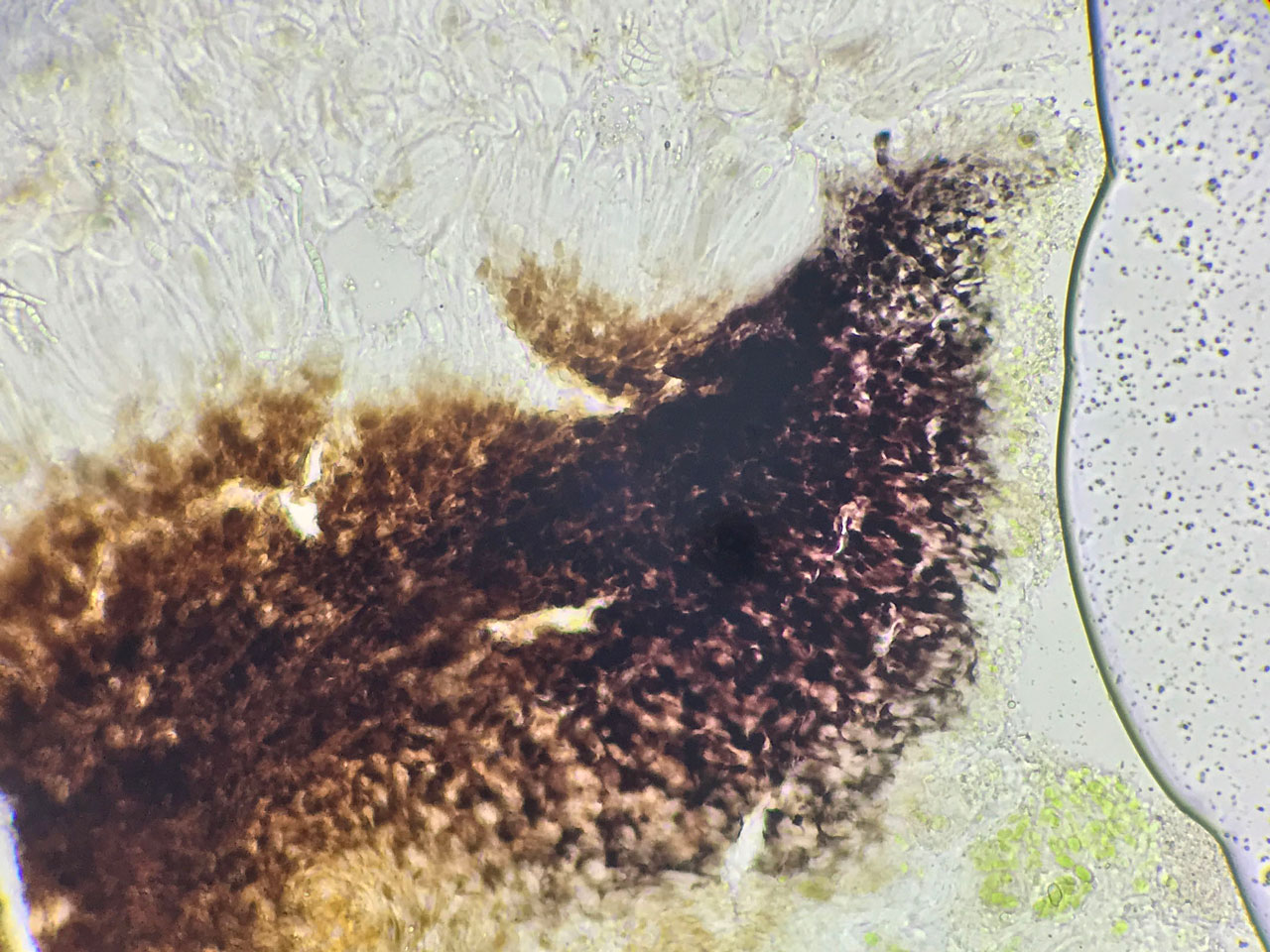
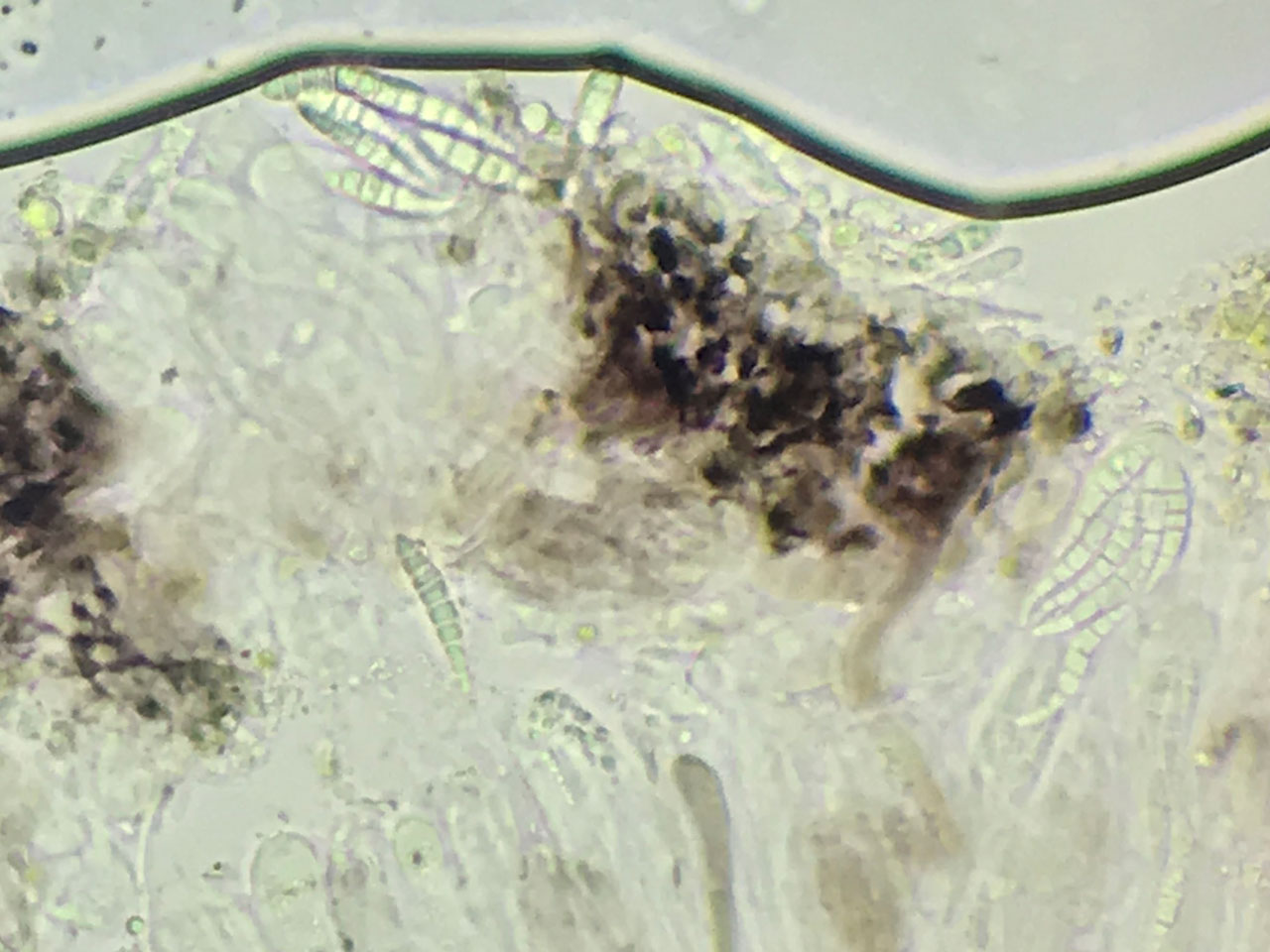
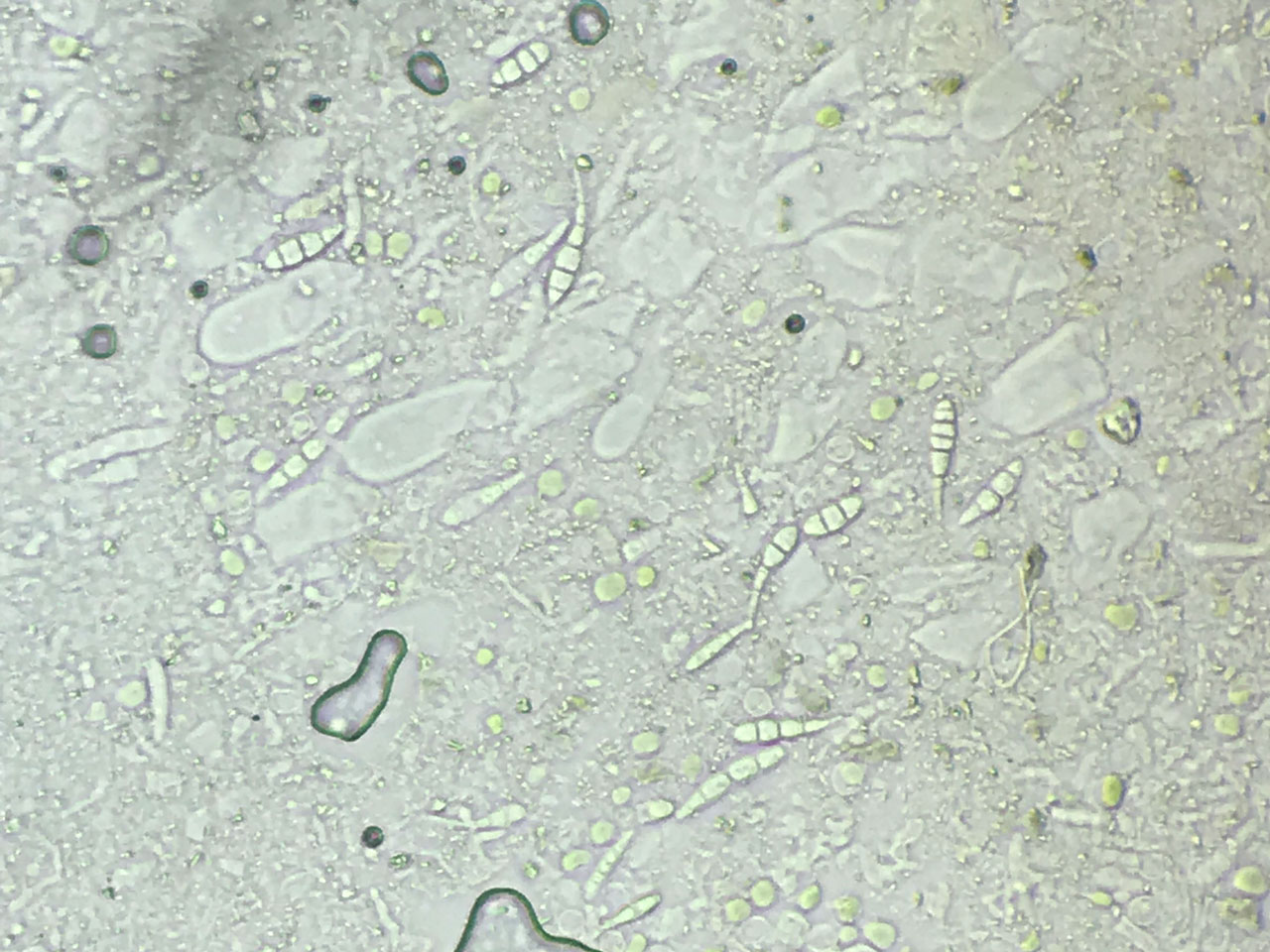
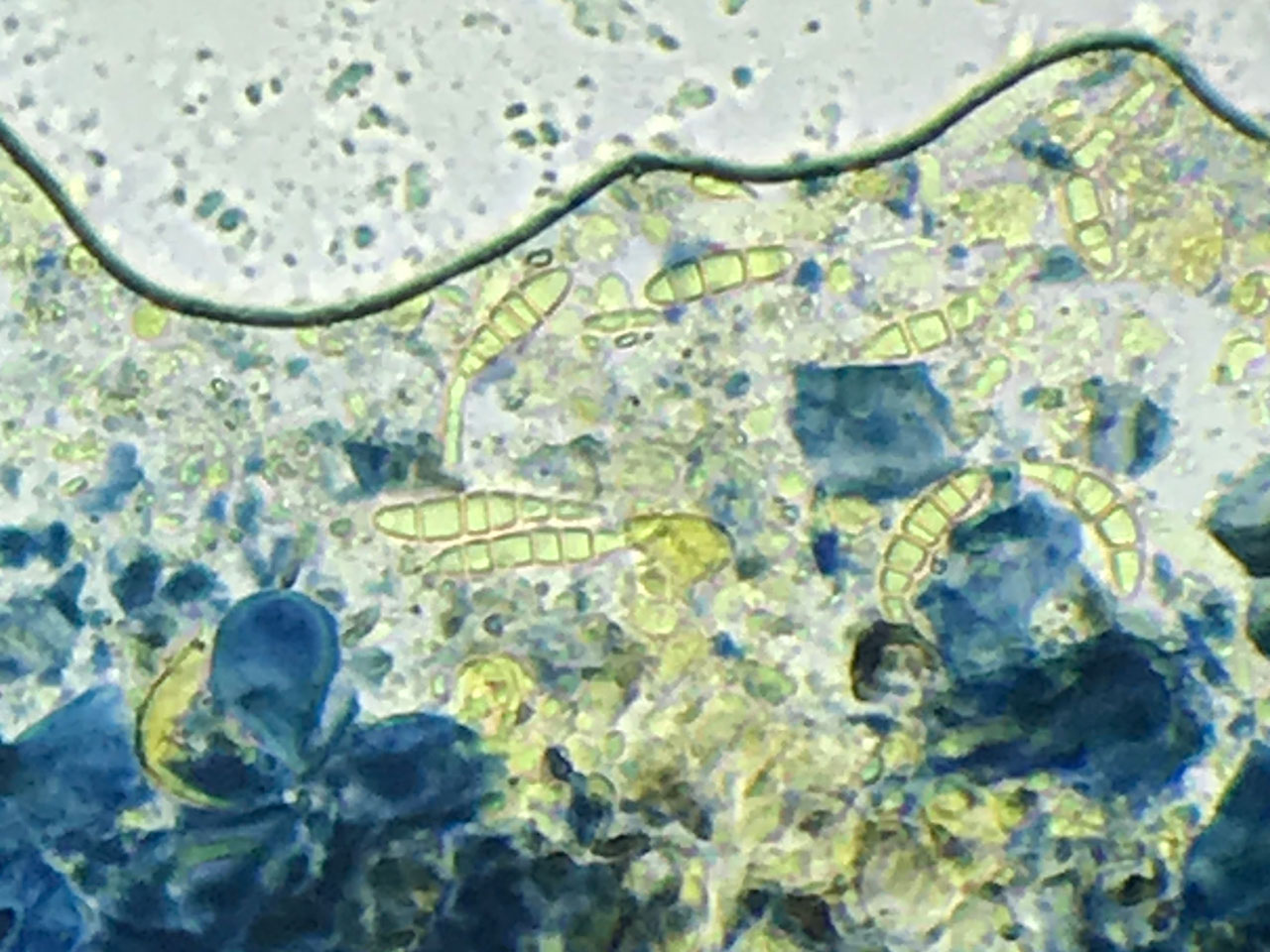
Thallus crustose, yellowish green when fresh, pale greenish when dry, with a slightly farinose appearance, to 100 µm thick. Apothecia rounded, 0.2–0.5 (–0.6) mm diam., sometimes proliferating from old apothecia and then forming clusters to 0.8 mm diam.; disc initially flat but becoming convex in old apothecia, variable in colour, usually bluish grey to blackish when young, becoming brown or greenish grey when mature, sometimes piebald, rarely slightly pruinose; margin at first distinct and rather thick, becoming thin or excluded, dark bluish or bluish grey when young but usually paler than the disc in old apothecia (sometimes almost white), smooth or shortly byssoid. Exciple 50–65 (–80) µm thick, composed of an outer layer of short hyphae with elongate or globose cells and an inner layer of polyhedral brown cells, K+ purple-brown; hypothecium 100–150 µm thick, orange to reddish brown, usually K+ darker; hymenium 60–75 µm thick; paraphyses rather coherent, ± branched and anastomosed 1–1.5 µm diam., the apices to 3 µm diam. ascospores narrowly ellipsoidal to fusiform, sometimes slightly tapering towards the base, 3-5 (-7) septate, (13–) 15–25 × (3–) 4–5 µm. Pycnidia abundant, flask-shaped, whitish to bluish grey or black, 0.1–0.15 mm diam., usually with a very wide ostiole. Conidia usually biclavate to obpyriform, sometimes almost bacillar, 3–4 (–5) × ca 1 um. Lichen substances not detected.
Formerly identified as Fellhanera christiansenii, prior to description of B. llimonae. The species is known elsewhere from N.E. Spain (Catalonia) and Macaronesia (Sérusiaux et al. 2002), and the description above is largely adapted from that work.
On Hazel bark in ancient southern oceanic costal slope woodlands.
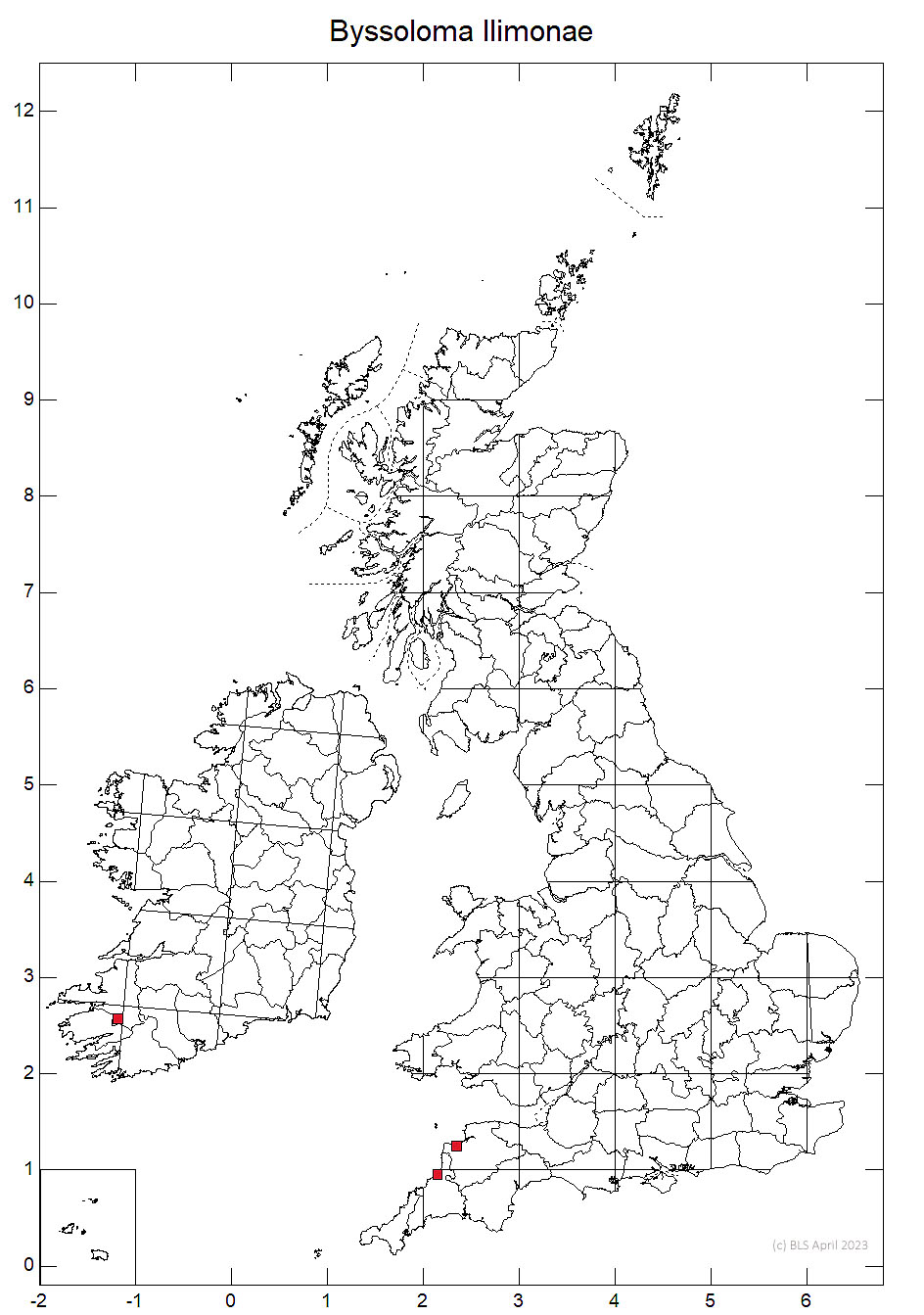


Rare, known only from two sites in N. Cornwall (The Dizzard) and N. Devon (Clovelly).
Not evaluated (as Fellhanera christiansenii) in 2012. Since then the taxon has become better understood and is referred to the apparently internationally rare Byssoloma llimonae, a species of oceanic southern Atlantic – Mediterranean old woodlands. Once spotted this is a distinctive species and, although certainly likely to be overlooked to a degree, it appears to be very rare in Britain and is likely to be assessed as Threatened and may also be globally Threatened.
Cannon, P., Orange, A., Aptroot, A., Sanderson, N., Coppins, B. & Simkin, J. (2022). Lecanorales: Pilocarpaceae, including the genera Aquacidia, Byssoloma, Fellhanera, Fellhaneropsis, Leimonis and Micarea. Revisions of British and Irish Lichens 27: 1-48.
Sérusiaux, E., Gómez-Bolea, A., Longán, A. & Lücking, R. (2002). Byssoloma llimonae sp nov., from continental Spain, Madeira and the Canary Islands. Lichenologist 34: 183–188.
Text by Neil A Sanderson based on Canon et al (2022)