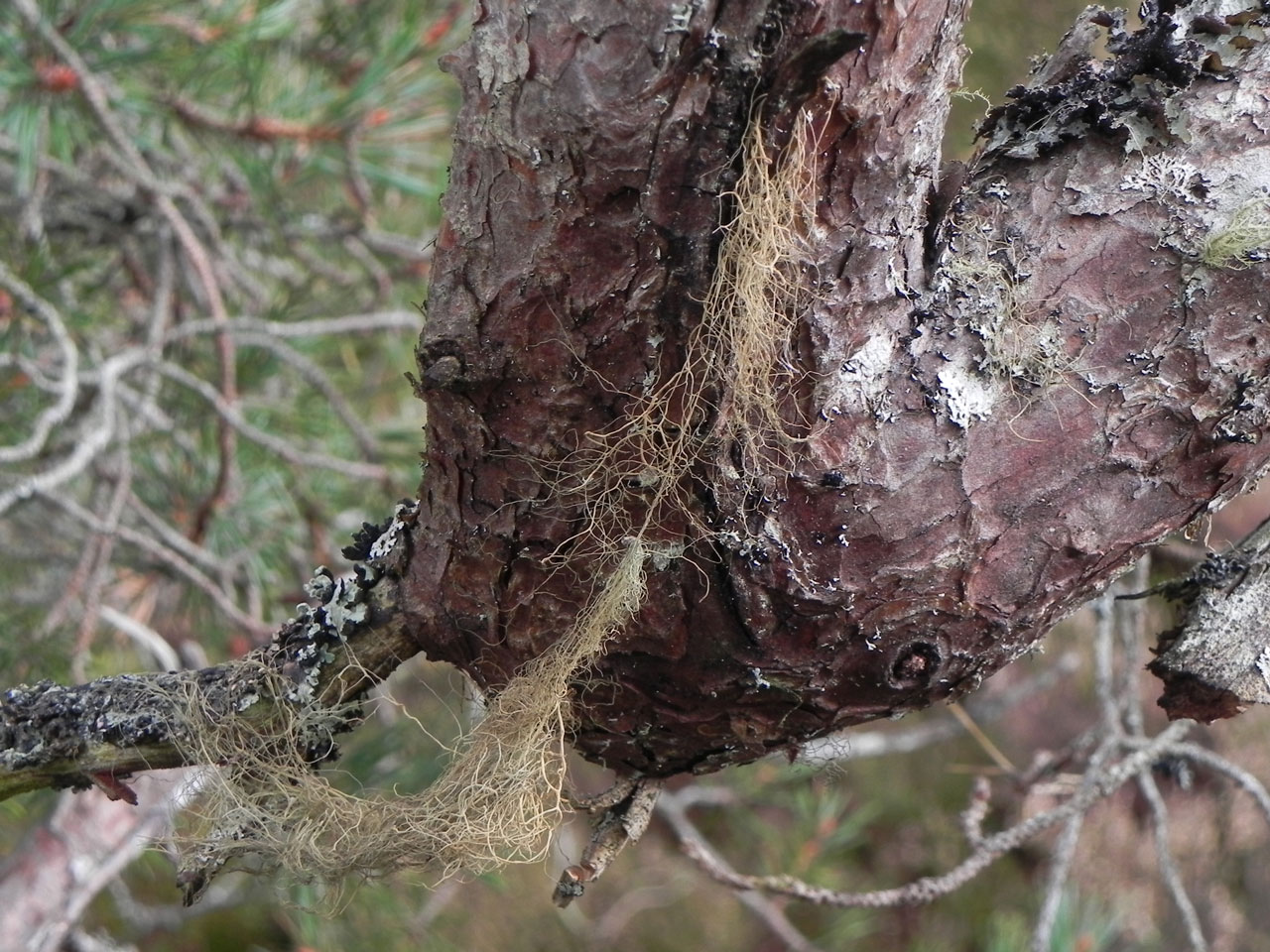
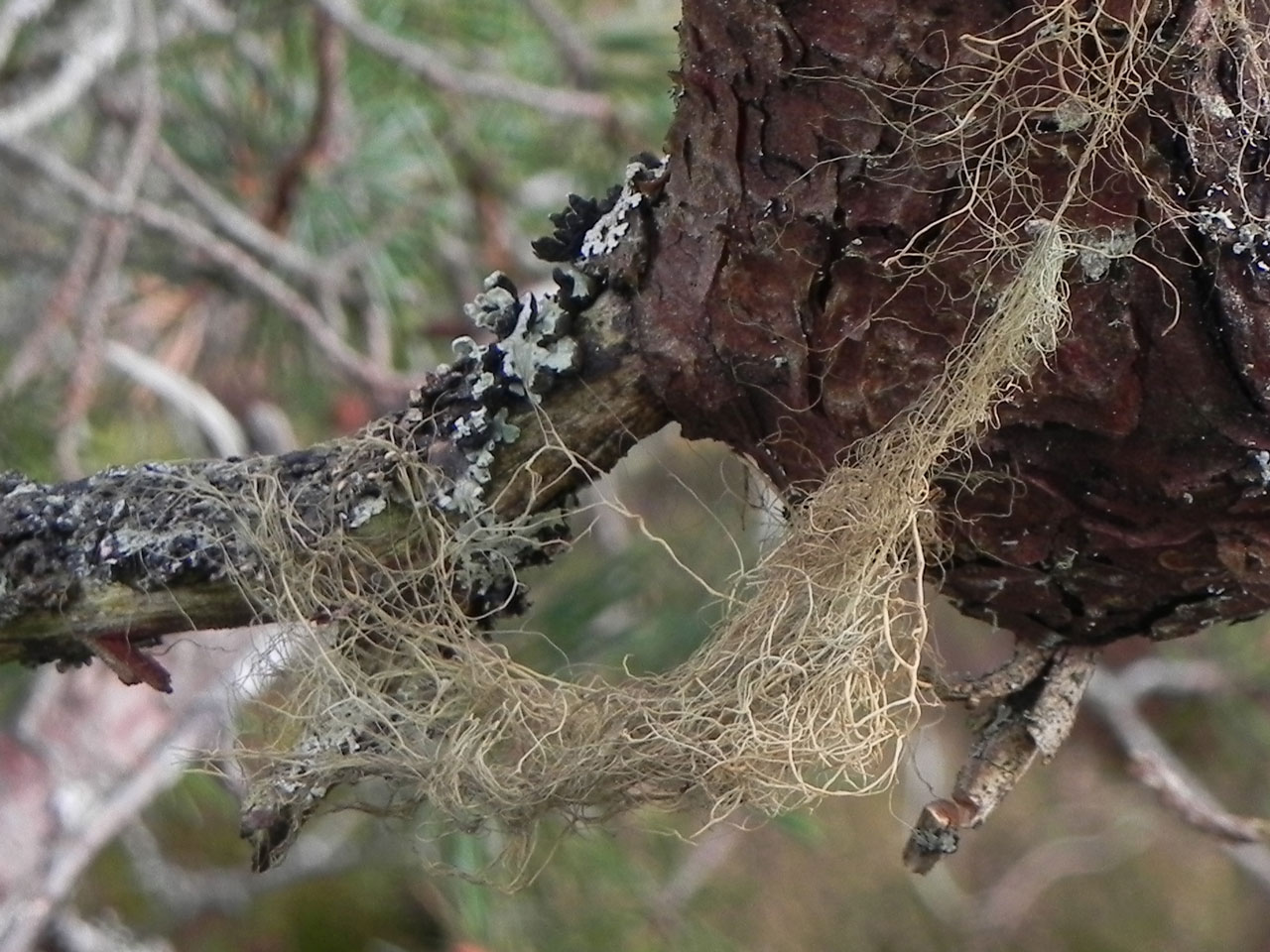
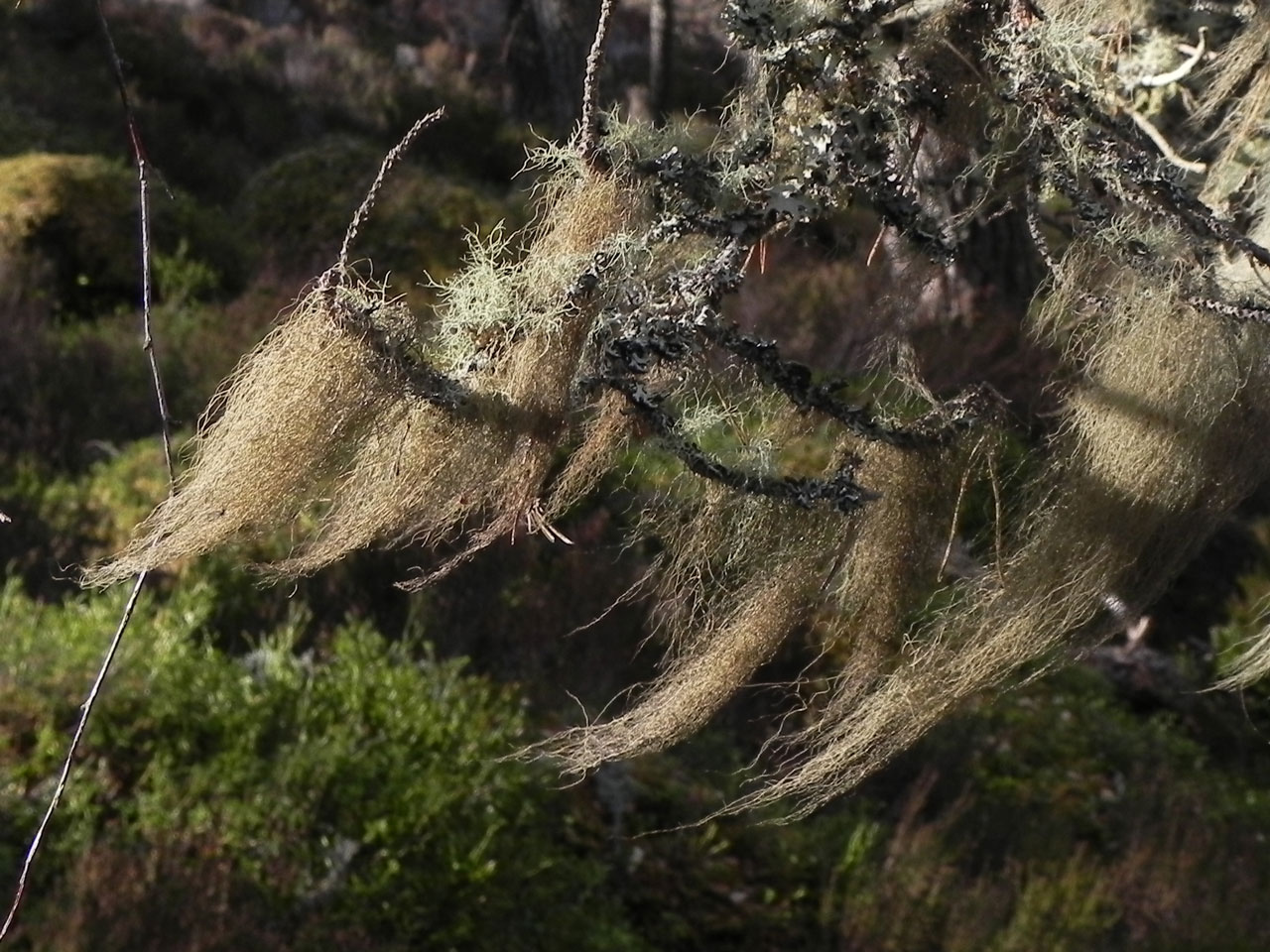
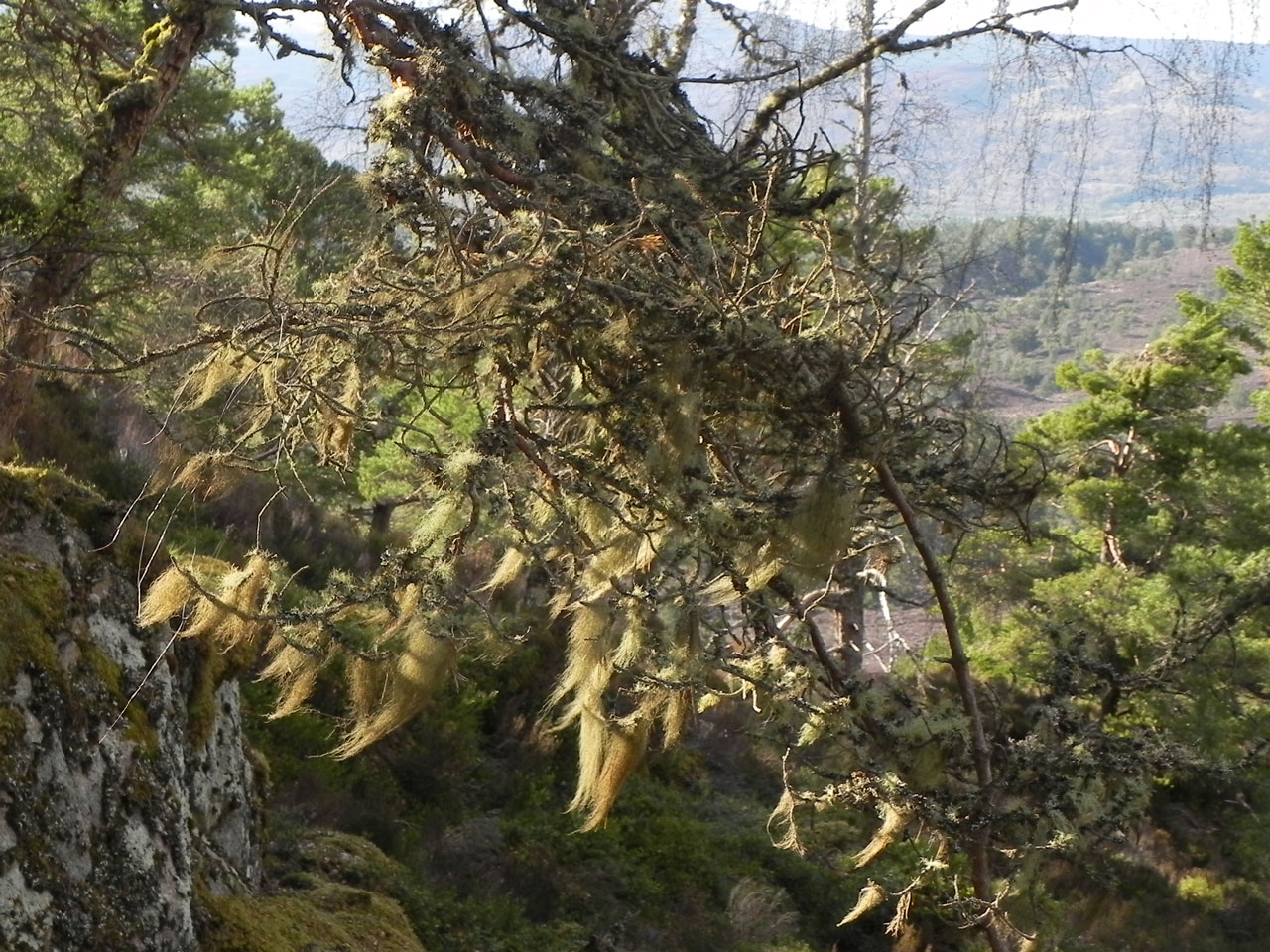
A chemical and ecology distinct morph of the Bryoria fuscescens complex, characterised by greyish white to pale to dark brown and pendent thalli with a K+ yellow reaction in the medulla. Largely restricted to branches in well lit and humid locations in woodland in the more sub-oceanic parts of the Scottish Highlands and characteristic of native pinewoods.
Thallus to 10 (–30) cm, pendent, rarely prostrate, the base often not persistent, often fragmenting with black and colourless areas; branches 0.3–0.5 mm diam., terete or compressed at the axils, abundant; branching irregular isotomic-dichotomous, greyish white to pale to dark brown; true lateral spinules ± absent; pseudocyphellae 0.1–0.25 mm, oval in outline, inconspicuous; soralia to 0.5 mm diam., mainly tuberculate, abundant to rare, or absent. Apothecia and pycnidia not observed in British material. Medulla C+ red or C–, K+ yellow, KC+ red, Pd+ yellow (barbatolic and alectorialic acids); soralia Pd+ orange-red (fumarprotocetraric acid).
Exhibits considerable variation in colour and abundance of soralia. Distinguished from most other British species by not being K– and KC–. B. nadvornikiana which is KC+ red, C+ red has spinulose lateral branches and dark main stems.
Along with several other species, Bryoria capillaris was included in a broad concept of B. fuscescens by Boluda et al. (2019), but the chemical distinction is consistent, the ecology distinct and the synonymy has some implications for recording in Britain and Ireland.
On conifers and Birch bark in relict pinewoods, mainly on twigs; also on exposed Birch and Beech in S.E. Scotland (E. Lothian).
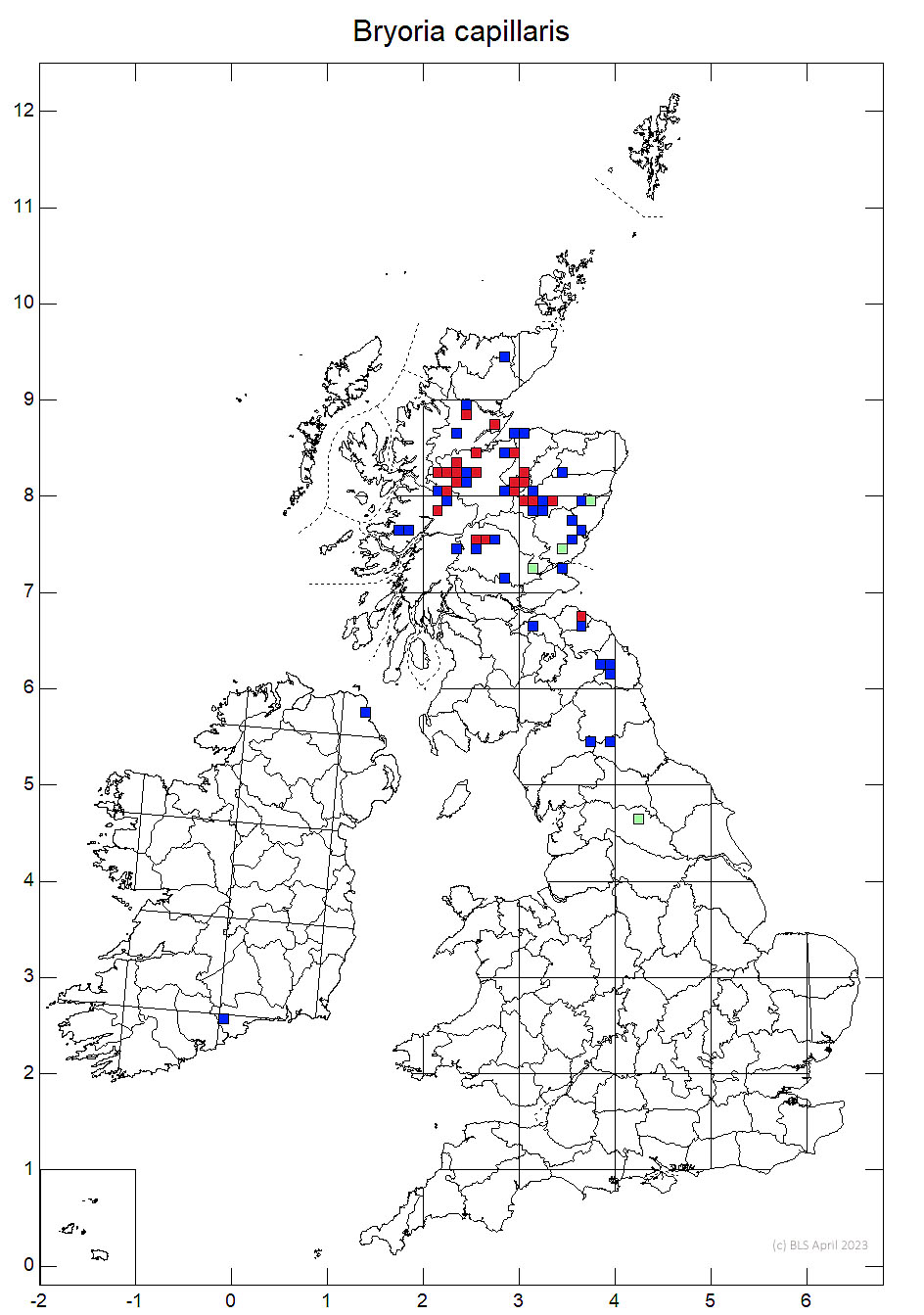

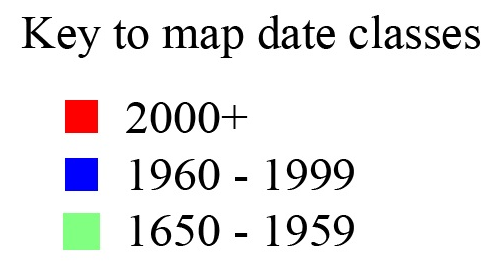
Rare but locally abundant. C. & E. Scotland; also in Ireland.
Largely restricted to branches in well lit and humid locations in woodland in the more sub-oceanic parts of the Scottish Highlands. Scattered old occurrences to the south may represent long distance dispersal events, but if so these appear not to be establishing any more, potentially due to increased ammonia pollution to the south.
Britain: Notable
Boluda, C.G., Rico, V.J., Divakar, P.K., Nadyeina, O., Myllys, L., McMullin, R.T., Zamora, J.C., Scheidegger, C. & Hawksworth, D.L. (2019). Evaluating methodologies for species delimitation: the mismatch between phenotypes and genotypes in lichenized fungi (Bryoria sect. Implexae, Parmeliaceae). Persoonia 42: 75–100.
Cannon, P., Divakar, P., Yahr, R., Aptroot, A., Clerc, P., Coppins, B., Fryday, A., Sanderson, N. & Simkin, J. (2023). Lecanorales: Parmeliaceae, including the genera Alectoria, Allantoparmelia, Arctoparmelia, Brodoa, Bryoria, Cetraria, Cetrariella, Cetrelia, Cornicularia, Evernia, Flavocetraria, Flavoparmelia, Hypogymnia, Hypotrachyna, Imshaugia, Melanelia, Melanelixia, Melanohalea, Menegazzia, Montanelia, Nesolechia, Parmelia, Parmelina, Parmeliopsis, Parmotrema, Platismatia, Pleurosticta, Protoparmelia, Pseudephebe, Pseudevernia, Punctelia, Raesaenenia, Tuckermannopsis, Usnea, Vulpicida and Xanthoparmelia. Revisions of British and Irish Lichens 33: 1-98.
Text by Neil A Sanderson based on Cannon et al (2023)