Bacidina assulata
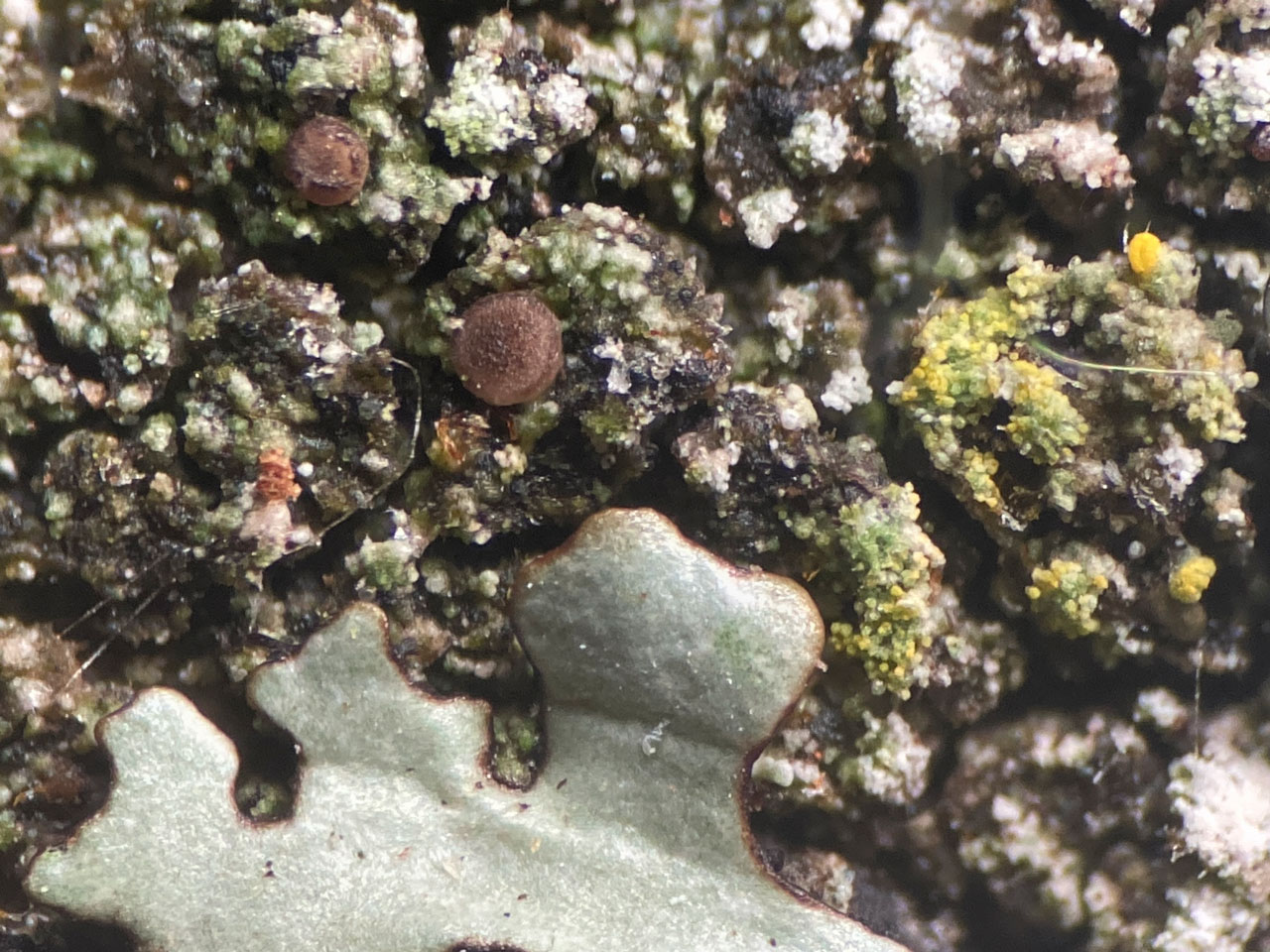
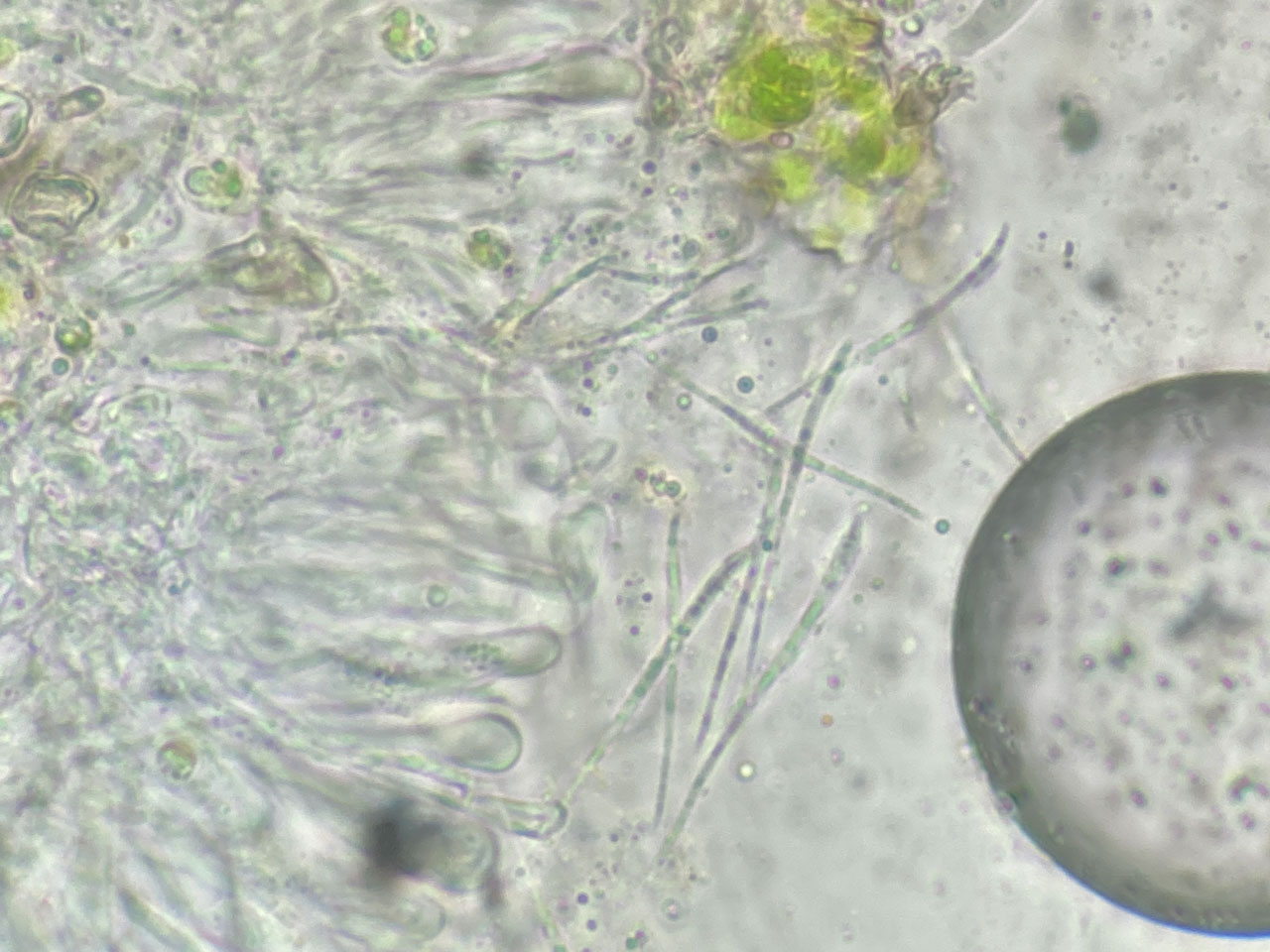
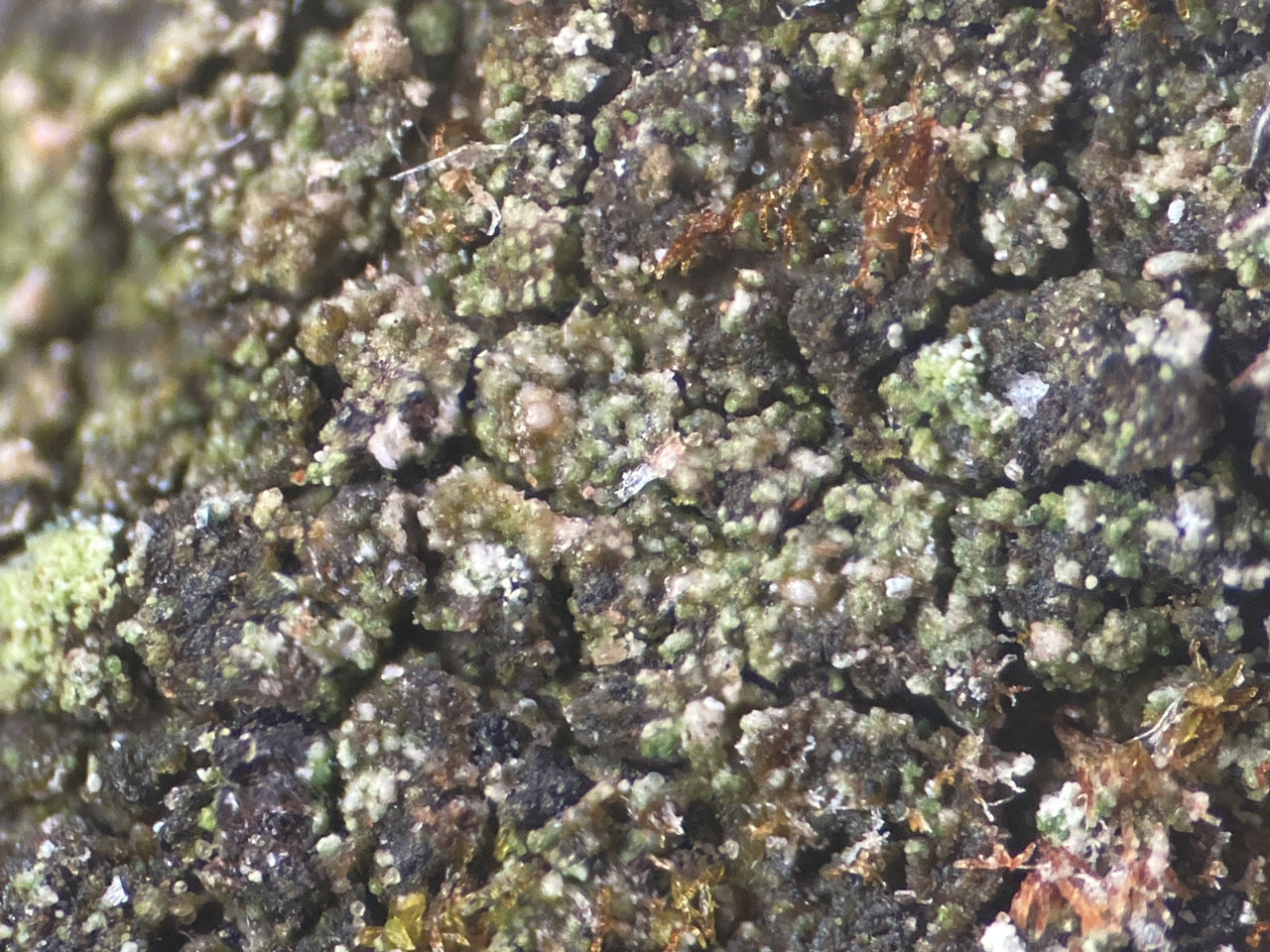
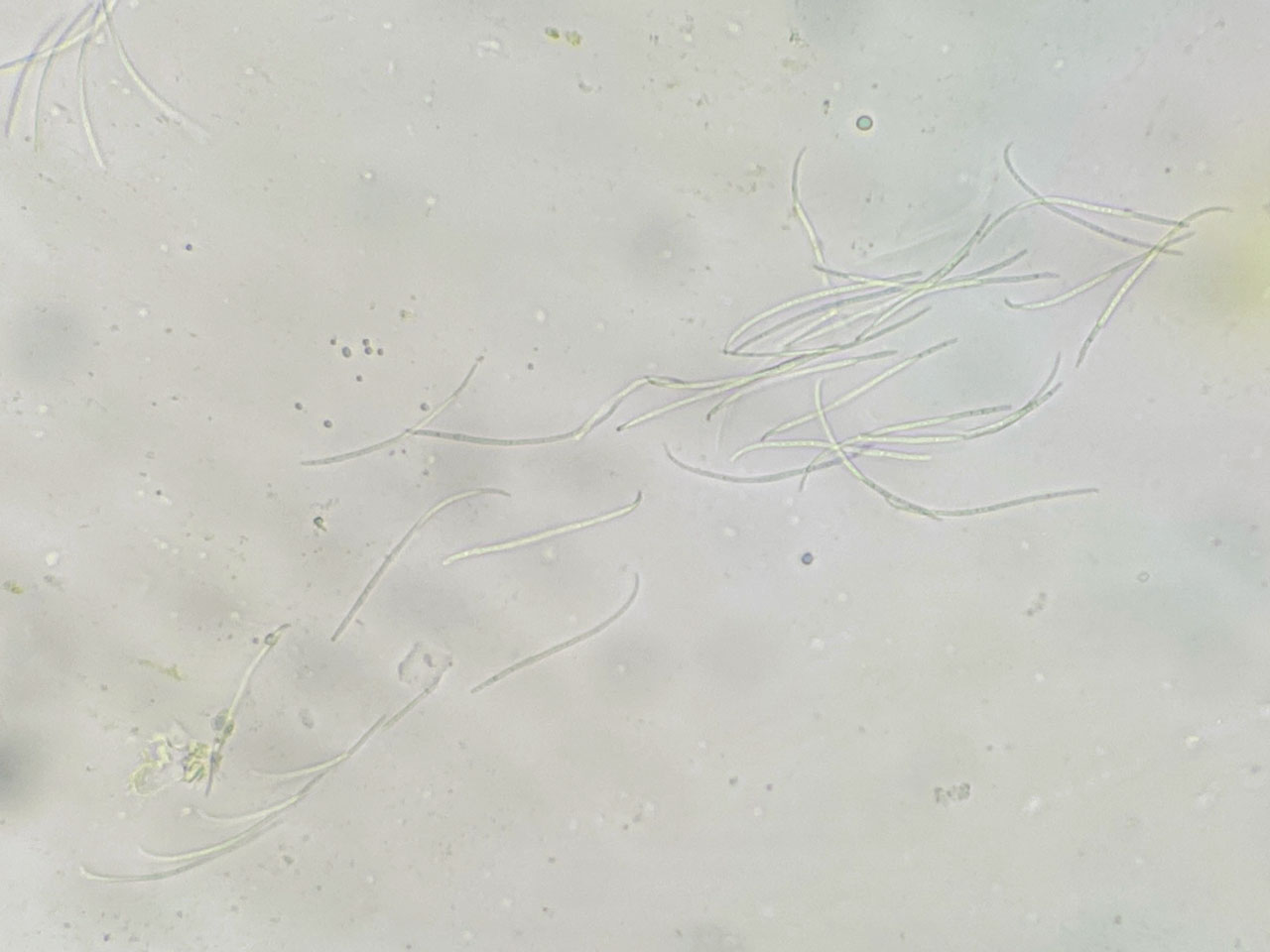
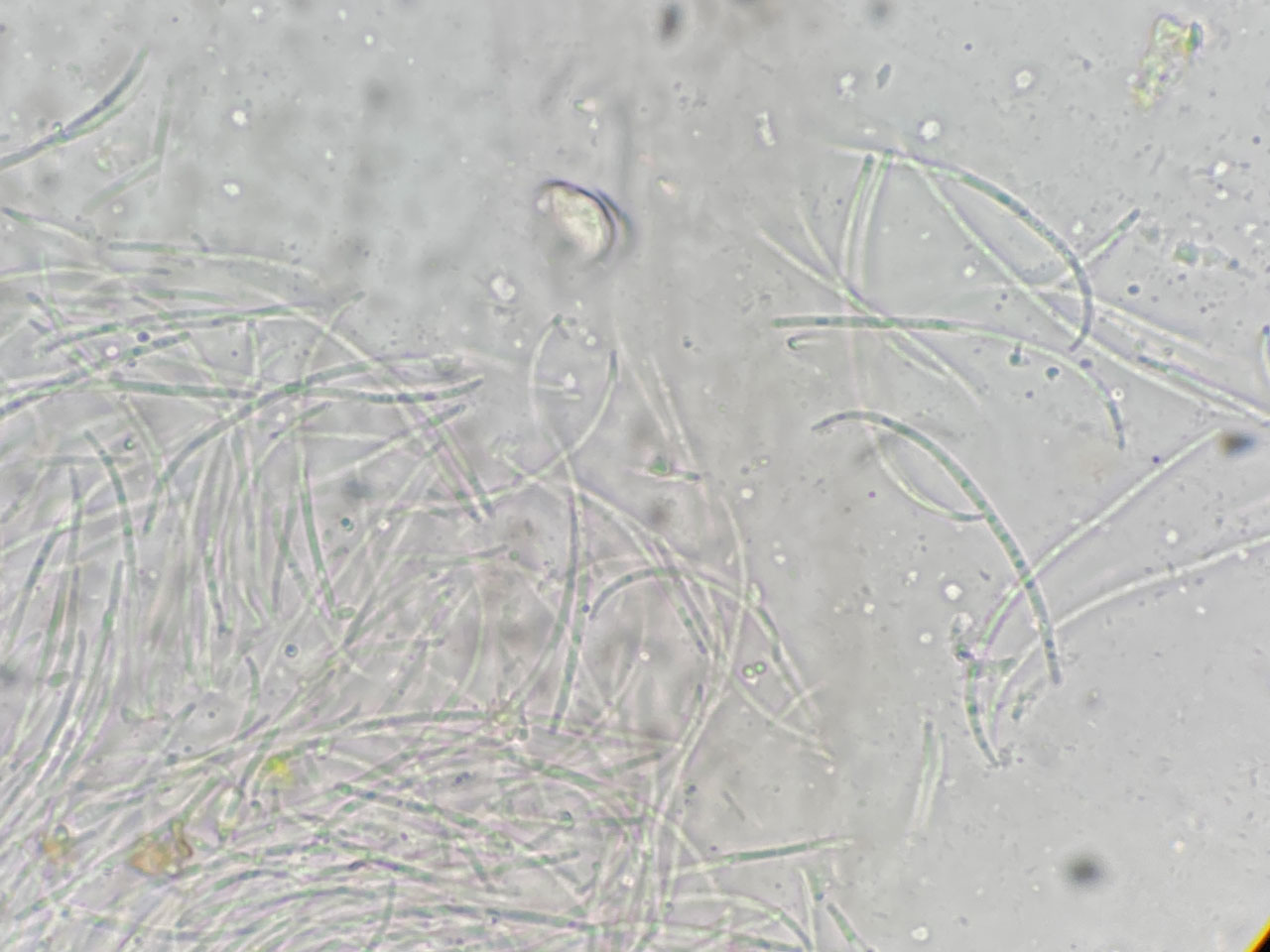
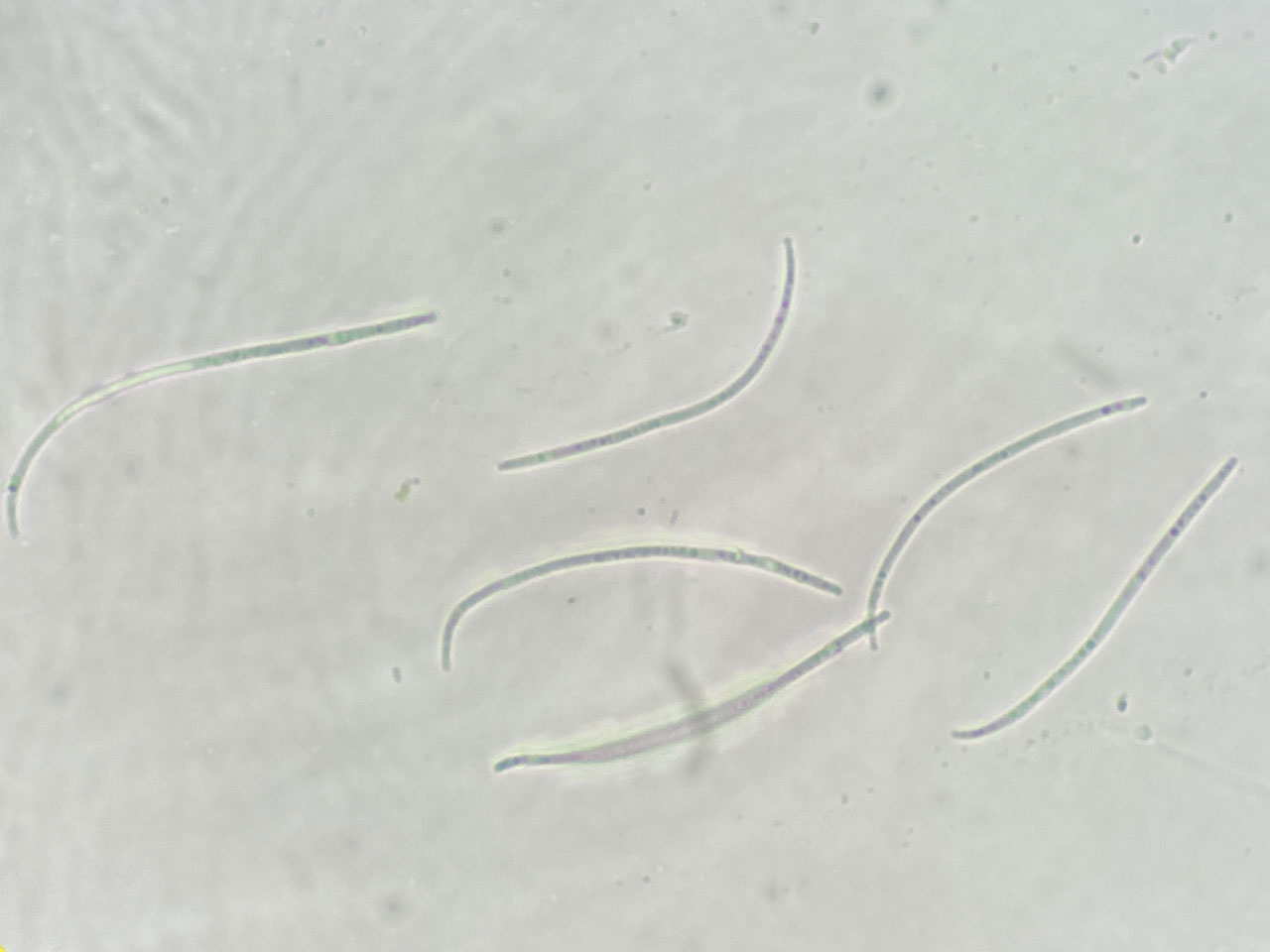
A small Bacidina of somewhat enriched bark, similar to Bacidina neosquamulosa, but lacking a subsquamulose thallus and has shorter spores. Differs from B. caligans in its longer and only slightly curved to apically hooked conidia and lack of a granular (sorediate) thallus except very rarely. Probably widespread but little recorded.
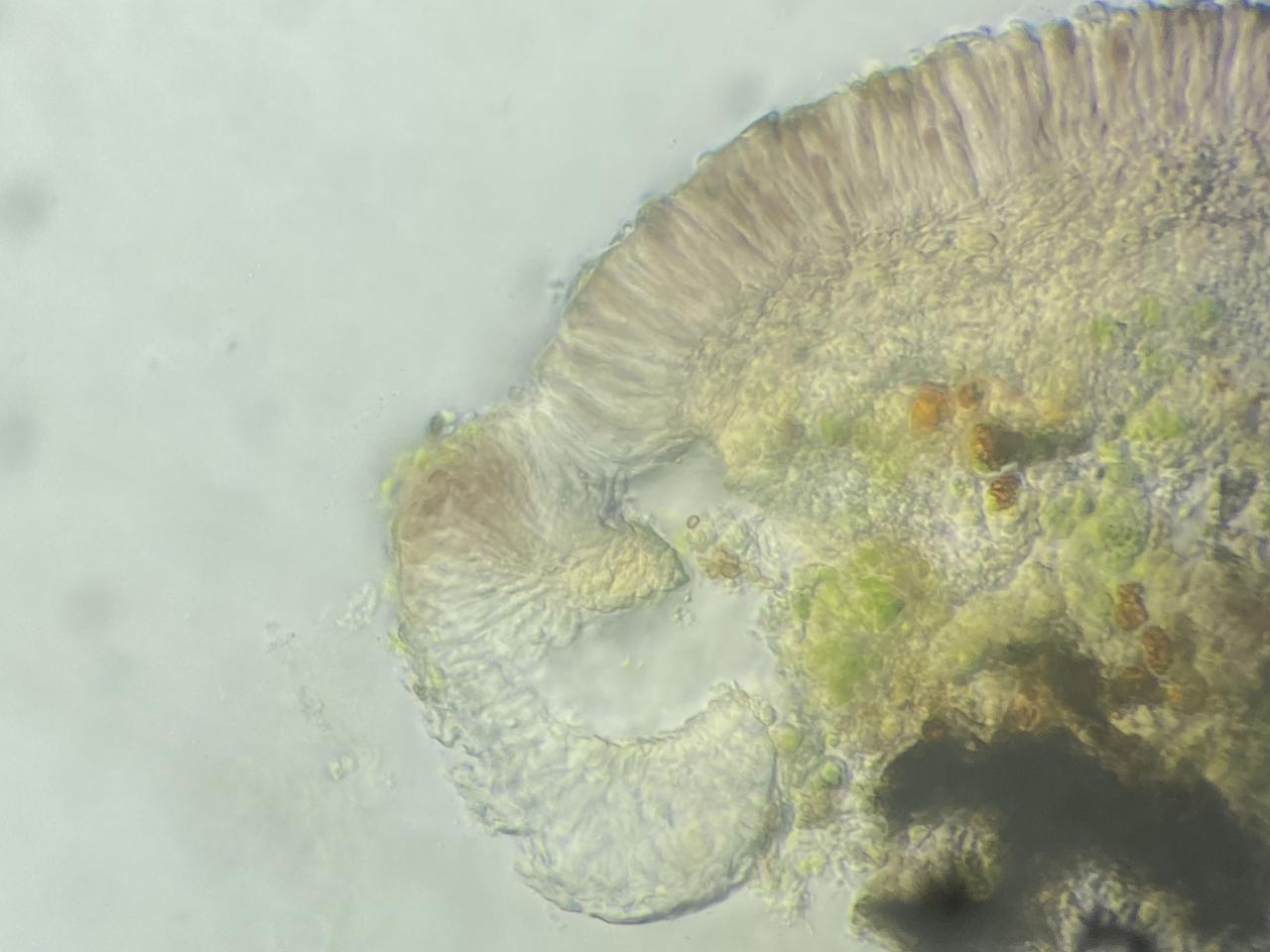
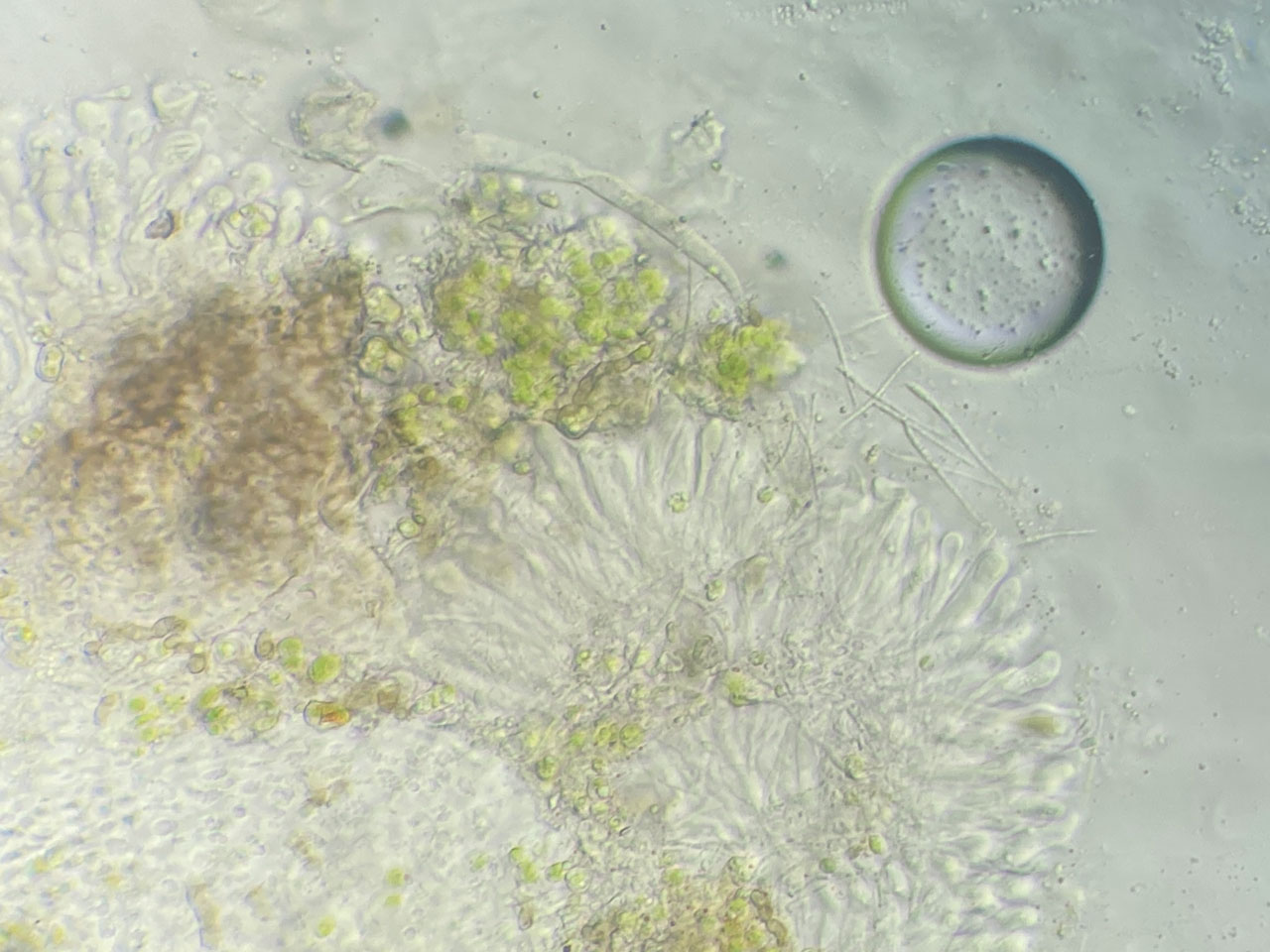
Thallus straw-coloured to bright green, composed of minute merged granules to form a thin scurfy uneven crust or small warts, rarely with the thallus disintegrated into fine, pale green thallus granules. Photobiont cells to 17 μm diam. Apothecia 0.2–0.7 mm diam., constricted at the base, variable in colour from whitish and flesh-coloured to beige, pinkish-buff, brownish to grey-brown and dark fuscous brown, the margin becoming excluded, concolorous, paler or darker than the disc. True exciple (30–) 40–60 (–70) μm thick, composed of radiating hyphae with 1–2 rows of cells of the outermost part with lumina widening to 5–7 μm; upper and outer part pinkish orange, brown, fuscous brown and then K– or K± pinkish to purplish or olive-brown, K± intensifying; hypothecium to 60 μm tall, colourless to ± straw-coloured. Hymenium (40–) 50–60 (–65) μm tall, colourless or sometimes with a ± pinkish to olive-brown, K− or K+ intensifying epithecium as well as vertical streaks; pigment confined to walls of paraphyses and asci. Paraphyses of two types: unbranched, 1·5–2 μm diam. with globose apical cells to 2.5 (–3) μm diam.; also irregular, stout, 3–4 μm diam., forked with pigmented globose to elongate apical cells to 6 μm diam. Asci cylindrical to narrowly clavate. Ascospores acicular, (25–) 30–38 (–40) × 1.2–1.5 μm, 3- to 5 (to 6)-septate, straight. Pycnidia pale throughout, ± immersed within the thallus warts, 0·15–0·3 mm diam. Conidia filiform, ± straight to slightly curved (usually in the upper half) or ± hooked, (25–) 35–55 (–62) × 1–1·2 μm, 3- to 6-septate. No substances detected by TLC.
This recently described species is likely to have been overlooked in the past. It differs from Bacidina neosquamulosa in the lack of a subsquamulose thallus and the shorter spores, and from B. caligans in its longer and only slightly curved to apically hooked conidia and lack of a granular (sorediate) thallus. Ekman (2023) reported one specimen where the thallus disintegrated into fine, pale green thallus granules, these forms can be seperated from B. caligans by their longer conidia. There were some soralia close to the apothecia of a New Forest specimen, but this had B. assulata type conidia and it was not clear if they were actually assocaited or not.
Czarnota & Guzow-Krzemińska (2018), state that in Central Europe it is a tolerant lichen found on deciduous trees and shrubs usually in mostly anthropogenic habitats, as well as in natural, old-growth forests. Associates include many lichens tolerant of both air pollution and nitrification, but it can also be found with old woodland species in woodlands. Ekman (2023) describes it as inhabiting non-eutrophicated bark of trunks, branches and even twigs of a variety of deciduous trees and shrubs in semi-open habitats. The limited observations in Britain indicates that it needs some nutrient enrichment but this can include naturally enriched habitats in woodlands in clean air areas as well as moderately enriched habitats in anthropogenic habitats.

Originally found on a shaded branches of a Willow and an Oak, North London, in association with Catillaria nigroclavata (Czarnota & Guzow-Krzemińska, 2018). Subsequently found on a Beech twig in an Oak plantation with Candelariella rubrisoli in the New Forest, Hampshire. Likely very overlooked and widespread.
Not assesed but its habitats and frequency elasewhere in Europe suggest it is not threatened.
Cannon, P., Ekman, S., Kistenich, S., LaGreca, S., Printzen, C., Timdal, E., Aptroot, A., Coppins, B., Fletcher, A., Sanderson, N. & Simkin, J. (2021). Lecanorales: Ramalinaceae, including the genera Bacidia, Bacidina, Bellicidia, Biatora, Bibbya, Bilimbia, Cliostomum, Kiliasia, Lecania, Megalaria, Mycobilimbia, Phyllopsora, Ramalina, Scutula, Thalloidima, Toninia, Toniniopsis and Tylothallia. Revisions of British and
Irish Lichens 11: 1-82.
Czarnota, P. & Guzow-Krzemińska, B. (2018) Bacidina mendax sp. nov., a new widespread species in Central Europe, together with a new combination within the genus Bacidina. The Lichenologist 50: 43–57. doi:10.1017/S0024282917000627.
Ekman, S. (2023) Four new and two resurrected species of Bacidina from Sweden, with notes and a preliminary key to the known Scandinavian species. Nordic Journal of Botany 2023: e03846. https://doi.org/10.1111/njb.03846
Text by Neil A Sanderson based on Cannon et al (2021)