Anaptychia runcinata
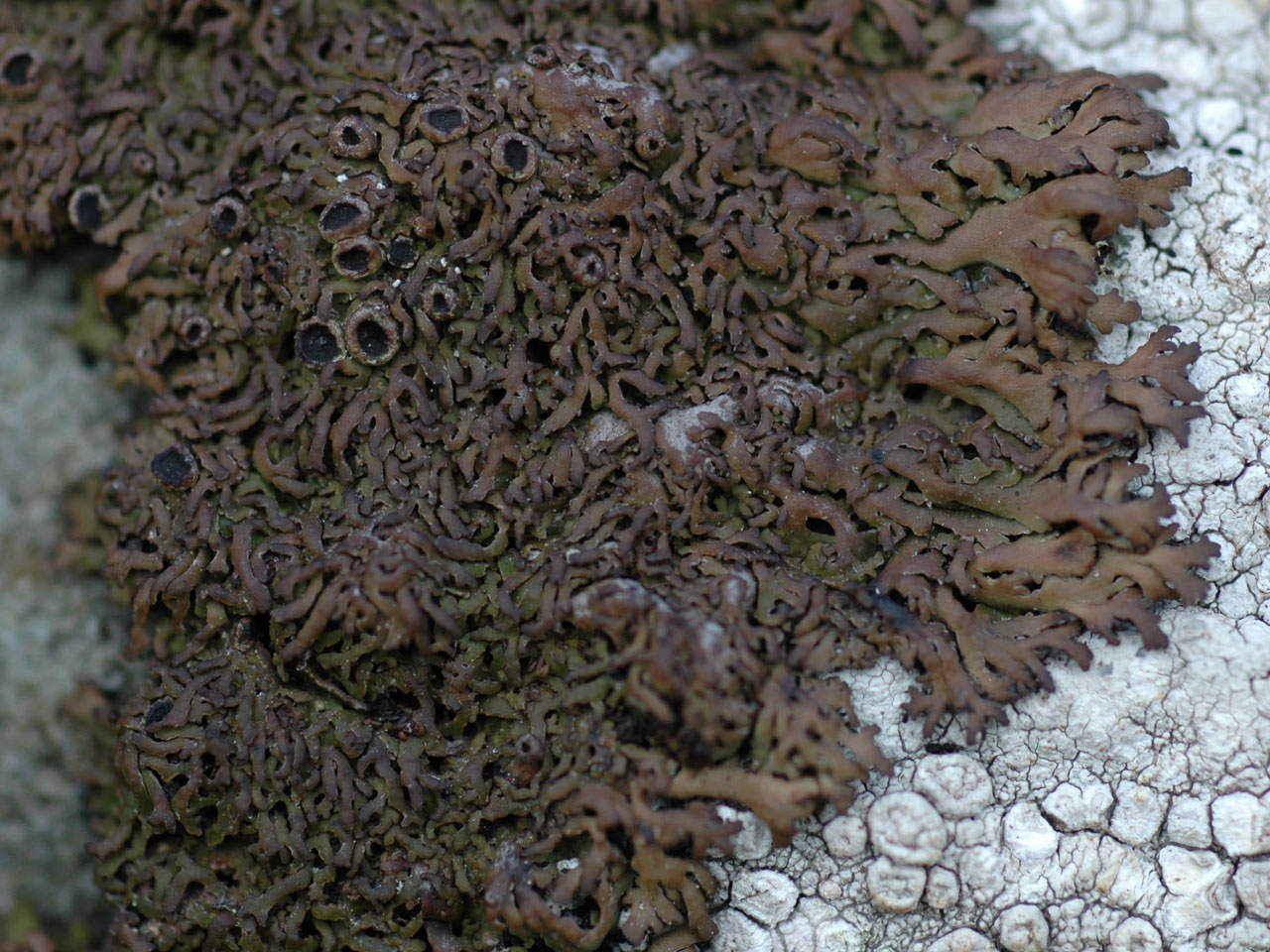
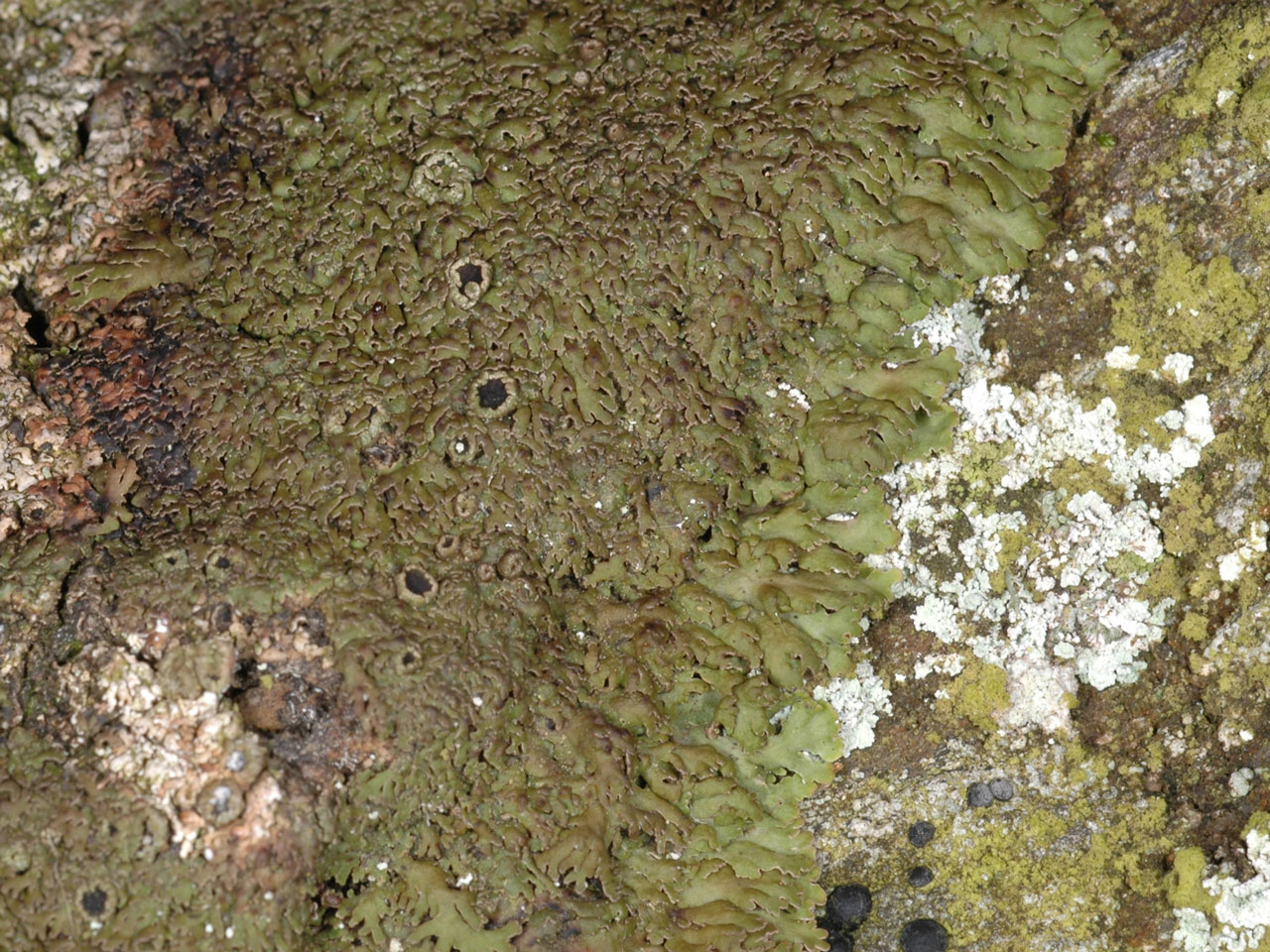
A distinctive coastal lichen, found on rocks but also on to on turf and soil, rarely found further inland on trees trunks and rocks. It has a closely appressed leafy thallus that is dark brown when dry and dull olive-green when moist.
Thallus to 10 cm diam., foliose, spreading, ± forming rosettes, or as scattered fragments amongst or upon other lichens, closely appressed throughout, rather thick; lobes 0.3–2.5 mm broad, often slightly wider at the apices, flat to convex, contiguous, densely overlapping towards the centre of the thallus; upper surface dark brown, dull, white to pale grey in shade, dull olive-green when moist, lobe tips often bleached white; lower surface pale to dark brown-black, with unbranched brown to black rhizines that are scattered or form a ± thick weft. Apothecia 1–3 mm diam., frequent; disc black-brown, roughened, with a coarsely crenulate thalline margin.
Distinguished by the appressed orbicular light to dark brown thalli, olive-green when moist. Dark morphs of Anaptychia mamillata have marginal cilia.
Abundant on hard coastal rocks, also on turf and soil, decaying Thrift tufts and occasionally on boles of wayside trees; in a few inland sites on rock outcrops, lakesides, standing stones, church walls and hedgerow trees.
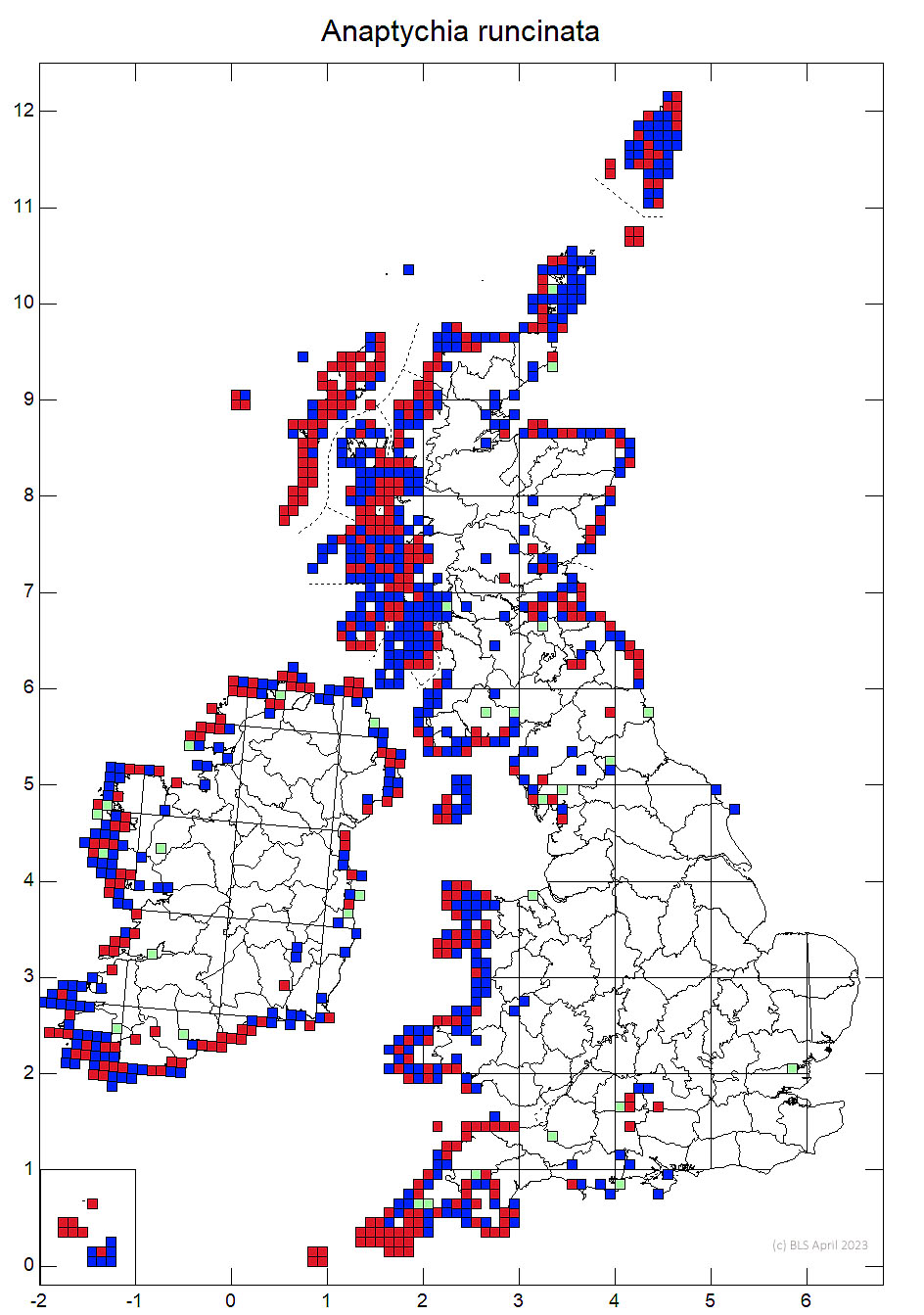


Throughout Britain in the west and north, all around Ireland.
Cannon, P., Thüs, H., Aptroot, A., Coppins, B., Orange, A., Sanderson, N. & Simkin, J. (2022). Caliciales: Physciaceae, including the genera Anaptychia, Heterodermia, Hyperphyscia, Mischoblastia, Phaeophyscia, Physcia, Physciella, Physconia, Rinodina and Tornabea. Revisions of British and Irish Lichens 23: 1–37.
Text by Neil A Sanderson based on Cannon et al (2022)