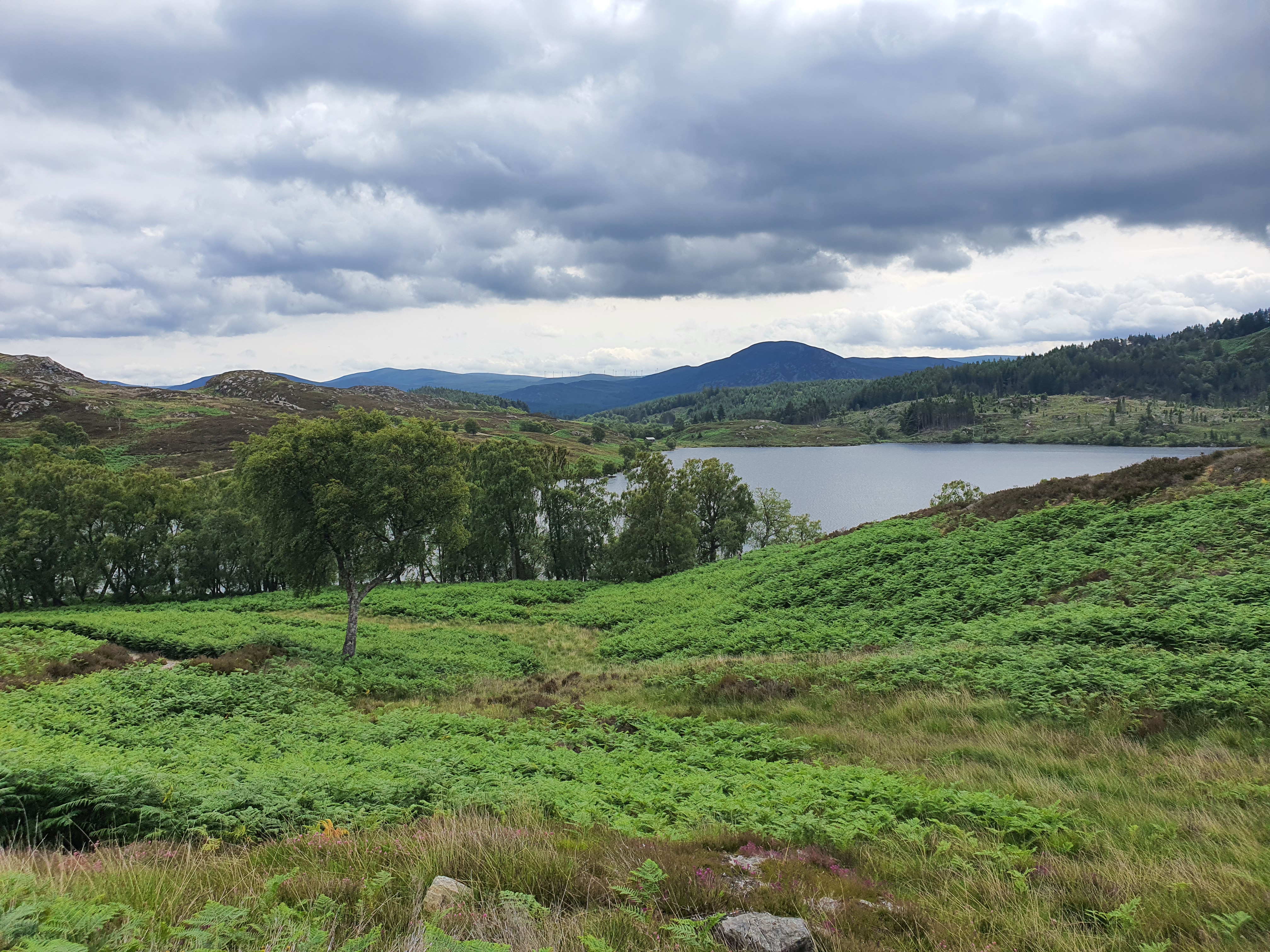
The British Lichen Society has joined with local community groups and other national wildlife organisations organisations to protect one of Scotland’s most iconic lochs and landscapes. Wildlife organisations are concerned about the threat posed by proposals for the Loch Kemp Pumped Hydro Scheme- one of four existing or proposed such schemes for Loch Ness. These threats include direct threats to the Ness Woods Special Area of Conservation (SAC), which includes the Easter Ness Forest Site of Special Scientific Interest (SSSI) lies on the eastern shore. This unbroken stretch of woodland has trees covered with mosses and lichen, and are home to internationally important communities of lichen, including the second largest British population of Nevesia sampaiana, while these rich lichen assemblages in turn provide suitable habitat for invertebrates, such as the Nationally Rare and superbly camouflaged Lichen Running Spider (Philodromus margaritatus).
With a planning inquiry imminent this spring to gather more evidence on the proposals, a ‘Protect the wildlife of Loch Ness and Loch Kemp’ crowd funder has been launched through CrowdJustice by the wildlife groups. This will allow them to get the expert legal advice needed to navigate the examination and ensure the best arguments possible are made to defend the habitats and species of Loch Ness.
See full press release Link
The Loch Kemp Storage Scheme is a proposed large pump storage scheme on the south side of Loch Ness. The development will damaged exceptionally lichen rich old growth woodland contained within the Ness Woods Special Area of Conservation (SAC). This is the highest level of environmental protection, however, the developers deem the scheme to pass the imperative reasons of overriding public interest test (‘IROPI’ test). That damage is caused to the SAC and the internationally important lichen assemblage is accepted by the developers but the BLS found the measures proposed to compensate for this damage unconvincing, given the outstanding nature of the site. As this was a complex case, the BLS contracted the ecological consultants EPR https://www.epr.uk.com to review the evidence and prepare an objection. This review and objection has been submitted to the Scottish Government Energy Consents Unit and is attached as a PDF below.
Neil A Sanderson, BLS Conservation Officer